
Tuesday Reads: A Trip Down Memory Lane
Posted: March 5, 2013 Filed under: Barack Obama, morning reads, U.S. Economy, U.S. Politics | Tags: Dura 1401, history of computers, Len Deighton, lost continents, psychology, science, technology, Wang word processor 46 Comments
Good Morning!!
I’m going to do something a little different this morning, so I hope you’ll indulge me.
Over the weekend I ran across a story at Slate by Matthew Kirschenbaum that brought back a rush of old memories: The Book-Writing Machine: What was the first novel ever written on a word processor?
The story is about thriller writer Len Deighton, who in 1968 wrote his novel Bomber on an early word processor called the IBM MTST (Magnetic Tape Selectric Typewriter).
It was 1968, and the IBM technician who serviced Deighton’s typewriters had just heard from Deighton’s personal assistant, Ms. Ellenor Handley, that she had been retyping chapter drafts for his book in progress dozens of times over. IBM had a machine that could help, the technician mentioned. They were being used in the new ultramodern Shell Centre on the south bank of the Thames, not far from his Merrick Square home.
A few weeks later, Deighton stood outside his Georgian terrace home and watched as workers removed a window so that a 200-pound unit could be hoisted inside with a crane.
….
Like many early technologies, the MTST began as a hybrid creation, a kind of mechanical centaur consisting of two separate devices fused to work in conjunction with one another. At the same instant a character was imprinted on the page from the Selectric’s typing mechanism, that keystroke was also recorded as data on a magnetic tape cartridge. There was no screen, but backspacing to correct an error on the page also resulted in the data being corrected on the tape. Unblemished hard copy could then be produced with the push of a button, at the rate of 150 wpm. What’s more, the printing process could be halted while in “playback” mode to allow for the insertion of additional text; sentence spacing, line-lengths, even hyphenated words were all adjusted automatically as revisions were introduced. In the States, the MTST retailed for $10,000…
It was one of the first “word processors,” although that expression had not yet been invented. You can see a photo of the one Deighton used at the link.

Keypunch machines
The reason this story triggered my mental way-back machine is that in the late 1960s I worked on a machine like that. When I first moved to Boston in 1967, I landed a job at Harvard University’s Widener Library.
The job was in the library’s shelflist automation project (pdf). The starting pay was $65 per week, a quarter of which went to half of the rent on an apartment one block from Harvard Yard ($165/mo.). Today, if you could get a unit in that building it would cost a rather large fortune. But I digress.
I started out working on a keypunch machine like the one at the right. the punch cards were then processed by an IBM 1401 computer like this one.

IBM 1401 computer
Here’s a video I found about an IBM 1401 computer purchased in 1959!
News Links
It’s hard to believe that in those days computers took up entire rooms! But I’m probably not the only one her at the Sky Dancing blog who remembers those days. Actually, I had worked in the data processing office when I was in college, beginning in 1965, so I already had some familiarity with computers and keypunch machines.
Pretty soon my office at Widener Library purchased a few more sophisticated data entry machines built by the Dura Business Machines Co. The Dura machine was similar to Deighton’s but much cheaper. It consisted of a modified IBM Selectric typewriter with an attachment that punched holes in paper tape instead of the more expensive magnetic tape in Len Deighton’s machine. You typed normally, and the words were converted to code on the paper tape. The tape was then converted to punch cards, read by the computer, and printed out. The printouts were checked by editors who marked any errors, deletions, or additions and you could make the corrections without retyping everything. You could also backspace over errors as you typed.
Here’s a 1968 photograph and description of the Dura 1401 from the ABA Journal. I’m posting it in large type so you can read the text.

Print ad for the Dura 1401
Now this is where my trip down memory lane started to feel a little less nostalgic. According to the ad, “your girl” operates this magnificent machine and “your girl’s output goes up as much as 100%.” Were things really that sexist in 1968? Yes, yes they were. Here’s a “help wanted” ad from the Toledo Blade that I came across when I was looking for information on the Dura machine. You’ll notice that only men need apply. In the column to the left are some ads for women’s jobs.

I couldn’t get all the text into the screen grab, but you can see the whole thing at the link. The text mentions a couple of times that the job is only available to men.
In the mid-1970s, when I worked at M.I.T., our office purchased a Wang word processor. This was a pretty advanced machine, dedicated only to word processing that was operated pretty much like Microsoft Word. It had a monitor, a printer, and a large CPU, I guess you’d call it.

Wang word processor
By the mid-1980s I was working in a different department that had rudimentary PCs. By then I was an “administrative assistant.” I left that job in 1986 and swore never to take another office job, and I never have.
The work could be interesting and challenging, but the condescending attitude toward clerical/secretarial workers was just too much to bear. “Women’s work,” you know. Keep in mind that in those days the people I worked for had no understanding whatsoever of the machines we learned to operate.
I went back to college in 1993, and by then there were much more advanced computers available in the university’s computer lab. Very few students had their own PCs or Macs then. I bought a little word processor to write papers on at home. It probably cost a few hundred dollars and could do everything the giant Wang word processor did and more.
I bought my first PC in 1997 when I started graduate school. At the time it was really state of the art. I spend about $1,500 on the computer and a laser printer. I think it had an Intel Pentium processor, 128 mb hard drive and 64 mg RAM–something like that–and ran on Windows 95. Unbelievable! I got hooked up to cable internet and was immediately hooked. So you can see that I’ve spent most of my adult life working with computers. Of course the young kids assume people my age know nothing about technology.
I hope I haven’t bored you stiff with this little nostalgia trip. I know some of you must recall these old machines too, so I hope you enjoyed the pictures anyway. It’s amazing how technology has changed our lives in the past 50 years, isn’t it?
I have some more up-to-date reads for you that I hope you’ll find interesting.
The Washington Post Magazine published a wonderful story about a family’s nightmarish experience of domestic violence, post-traumatic stress, and recovery: After Dad shot Mom, a family deals with the haunting legacy of gun violence The article by Neely Tucker builds on the story of Lynnie Vessels, who was 7 years old at the time of the shooting as well as interviews with her siblings. Lynnie has just published a book about her recovery, To Soften the Blow.
Of course the story is heartbreaking, but I highly recommend reading it as a reminder of what life was like for women and children in the 1960s–when the terms “child abuse” and “domestic violence” were completely unknown and there was no one to turn to when it happened. It was considered private family business and people mostly didn’t interfere even when they heard women screaming and children crying.
How well I remember. I grew up in a violent home–not as extreme as the Lynnie Vessels’ was. My dad was a rage-aholic, and you never knew when he’d lose his temper and lash out: screaming at the top of his lungs and hitting. There was no one to turn to for advice on how to deal with it, and we were taught to keep quiet about anything that happened within the family.
I couldn’t wait to get out, and I left for Boston when I was 19. My other siblings left home early too, but some of them still can’t admit to themselves that our home was violent and abusive. As the eldest, I probably got the brunt of it, I guess. Now I know that my dad probably had PTSD from his experiences in WWII.
Another important and timely read is this piece by Robert Parry: The Neo-Confederate Supreme Court. Here’s a short excerpt:
If white rule in the United States is to be restored and sustained, then an important first step will be the decision of the five Neo-Confederate justices on the U.S. Supreme Court to gut the Voting Rights Act, a move that many court analysts now consider likely.
The Court’s striking down Section Five of the Voting Rights Act will mean that jurisdictions with a history of racial discrimination in voting – mostly in the Old Confederacy – will be free to impose new obstacles to voting by African-Americans, Hispanics and other minorities without first having to submit the changes to a federal court.
This green light to renew Jim Crow laws also would come at a time when Republican legislatures and governors across the country are devising new strategies for diluting the value of votes from minorities and urban dwellers in order to protect GOP power, especially within the federal government.
Check it out if you can.
Ryan Lizza has a new article in the New Yorker about President Obama and sequestration: THE POWERLESS PRESIDENCY. The gist is that Obama has given up on his dream of bipartisanship and accepted that he can’t bring the parties together.
That Obama, who started his Presidency as a true believer, has now given up on the idea that he has any special powers to change the minds of his fiercest critics is probably a good thing. His devotion to post-partisan governance has long fed two mistaken ideas: that the differences between the parties are minor, and that divided government is inherently good for the country.
A fundamental fact of modern political life is that the only way to advance a coherent agenda in Washington is through partisan dominance. When Obama had large Democratic majorities in Congress during his first two years in office, he led one of the most successful legislative periods in modern history. After he lost the House, his agenda froze and the current status quo of serial fiscal crises began. Like it or not, for many years, Washington has been most productive when one party controlled both Congress and the White House.
The boring fact of our system is that congressional math is the best predictor of a President’s success. This idea is not nearly as sexy as the notion that great Presidents are great because they twist arms in backrooms and inspire the American people to rise up and force Congress to bend to their will. But even the Presidents who are remembered for their relentless congressional lobbying and socializing were more often than not successful for more mundane reasons—like arithmetic.
I’m not at all sure that Obama has really let go of his dream of unity, although I hope Lizza is right.
I missed Charlie Rose while I was writing this, so I’ll have to try to catch a rerun or watch it on-line. But Joe Weisenthal has published a few excepts of the battle between Paul Krugman and Joe Scarborough. Weisenthal says Bloomberg with air a repeat tonight at 8PM.
Here’s a piece on the human brain at The Guardian Observer: Our brains, and how they’re not as simple as we think. I found it fascinating and I hope you will too.
One more psychological article from The New Yorker: Up All Night: The Science of Sleeplessness, by Elizabeth Kolbert. It’s a problem I’m very familiar with.
Science AAAS has a article about a Lost Land Beneath the Waves (Atlantis?)
Geological detectives are piecing together an intriguing seafloor puzzle. The Indian Ocean and some of its islands, scientists say, may lie on top of the remains of an ancient continent pulled apart by plate tectonics between 50 million and 100 million years ago. Painstaking detective work involving gravity mapping, rock analysis, and plate movement reconstruction has led researchers to conclude that several places in the Indian Ocean, now far apart, conceal the remnants of a prehistoric land mass they have named Mauritia. In fact, they say, the Indian Ocean could be “littered” with such continental fragments, now obscured by lava erupted by underwater volcanoes.
The Seychelles, an archipelago of 115 islands about 1500 kilometers east of Africa, are something of a geological curiosity. Although a few of Earth’s largest islands, such as Greenland, are composed of the same continental crust as the mainland, most islands are made of a denser, chemically distinct oceanic crust, created midocean by magma welling up beneath separating tectonic plates. Geologists think they separated from the Indian subcontinent 80 million to 90 million years ago.
Freaky!
I guess that’s enough to get us started on the day’s discussions. Now it’s your turn. What’s on your reading and blogging list?
Animal Matters
Posted: June 10, 2012 Filed under: just because | Tags: animals, dian fossey, elephants, gorillas, nature, Oceans, Polar Bears, science, sea turtles, Sylvia Earle 33 Comments
I thought I would share some recent stories about wildlife that crossed my path. The first comes from NPR’s Weekend Edition. I was running my payday weekend errands yesterday and had a “driveway moment” in the parking lot of my grocery store. Rebecca Davis was reporting on her trip to Volcanoes National Park in Rwanda. She was there to see gorillas in the wild. I couldn’t pass up a chance to experience, vicariously of course, a visit to a group of wild gorillas. The icing on this cake, this group had a pair of young twins. You may not know that twins are rare for most large mammals, so this was a chance of a lifetime for the reporter and me! Listening to the quiet whispers of the reporter and guide transported me into the forest along with them.
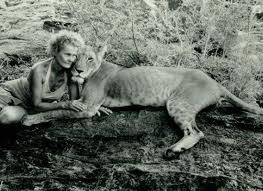
When I decided to change my major from mathematics as an undergraduate, I chose zoology. I had long been awestruck by the incredibly magnificent animals of Africa. Elephants, giraffes, rhinos, lions, cheetahs, what’s not to love? As a child, after seeing the film Born Free, I read all of the books written by Joy Adamson and her husband, George. I dreamed of going to Africa, if for no other reason than to visit the grave of Elsa the lioness. PBS’ Nature had an episode last year entitled Elsa’s Legacy. I have to admit that I cried, nearly uncontrollably watching this episode, mourning once again Elsa’s death. Both Joy and George met tragic ends with Joy being murdered by a former employee and George being killed by poachers.
At the same time I switched to my zoology major, something remarkable was taking place in the scientific world. Dr. Louis B. Leakey, the renowned archaeologist and anthropologist, had sent three young women into the field to study primates; Jane Goodall to study chimpanzees, Dian Fossey to study gorillas and Birute Galdikas to study orangutans. Tragically, Dian Fossey, author of Gorillas in the Mist, was murdered by poachers in 1985.
My major professor and advisor in college was Dr. Llewellyn Ehrhart. Although he was a vertebrate zoologist and mammologist, he chose to focus his field work and research on sea turtles. His mentor was the renowned turtle biologist, Dr. Archie Carr. Check out the links to find out more about Dr. Carr and the group he founded, the Sea Turtle Conservancy and the National Wildlife Refuge named for him I came across a report on leatherback turtles on Treehugger yesterday. Several species of sea turtles nest on Florida’s coasts. Each species is listed as endangered, and leatherbacks are of particular concern. I have closely followed the efforts here in Florida to protect these species, where volunteers patrol the beaches to locate nests, cover and mark them. In addition to human poachers, which are relatively rare along America’s coastlines these days, there are natural predators. Raccoons, in particular, dig into the nests for the eggs. The volunteers put wide spaced wire grates over the nests to keep the raccoons from destroying the incubating eggs. The leatherback story has some wonderful photos that accompany it. You can see how enormous these prehistoric creatures are in comparison to humans in a couple of the photos. Sea turtles evolved during the late Jurassic period, while dinosaurs (oh, my!) were still walking the earth.
Treehugger, once again, has a video of a polar bear in a zoo in the Netherlands who used a stone to fracture the glass in the pool habitat of his enclosure. Possibly the bear was just trying to get the attention of the two zoo visitors who were standing in front of the glass. Who knows? It certainly made me wonder why those guys were even there in the first place, since they obviously weren’t interested in the magnificent animal right in front of them. I couldn’t find any other recorded instances of a polar bear using a “tool” which is what makes this incident so fascinating. I will save my opposition to zoos and marine parks for another post. I will say that many larger, well funded zoos have improved the once bare and small enclosures with larger and enriched habitats. These changes have certainly improved the lives of captive animals during their lifetime imprisonment.
This link is to a sad, but not unusual story, also from Treehugger. The story entitled Half of Republic of Congo’s Forest Elephants Killed in Past Five Years naturally caught my eye. There are other links on the page to other stories about recent assaults on the elephant populations in Sumatra, Cameroon and the Eastern Congo. This information from Scientific American will give you an idea of how much damage has been done to African elephants in the past 80 years.
In 1930, there were between five and 10 million wild African elephants, plying the entire African continent in large bands. Just 60 years later, when they were added to the international list of critically endangered species, only about 600,000 were scattered across a few African countries. Today that number is likely less than 500,000.
This massive decline in African elephant populations is due to a combination of poaching for ivory and habitat loss. With an ivory ban still in place, but might not be for much longer, and stepped up conservation efforts in many areas, some countries are seeing a slight increase in numbers of individuals. Unfortunately not every country or areas within the countries are on board with protecting this magnificent species. Population declines of 50% for already endangered species can spell their imminent extinction. When the size of the gene pool is dramatically reduced, rare traits or mutations are more likely to occur and, thus, weaken the species.
A final dose of science geekiness is an interview with Dr. Sylvia Earle, featured on the American Public Media radio show, On Being. Dr. Earle has been at the forefront of ocean exploration and discovery for about 50 years. She will be 77 later this year, and Krista began the interview this way:
Sylvia Earle: That’s the joy of being a scientist and explorer. You do what little children do: you ask questions. Like who, what, why, when, where, how? (laughs). And you never stop and you never cease being surprised. It’s just impossible to be bored.
Ms. Tippett: And you’re still diving, aren’t you?
Dr. Earle: Well, yeah. I breathe. So I can dive. (laughter)
Dr. Earle is the only person who has walked on the bottom of the ocean,in a specially designed, pressurized suit, similar to the suits worn by astronauts. She is one of the leading voices on protecting the Earth’s oceans. As I listened to the interview, the child like sense of wonder and excitement in her voice was uplifting and helped me recall that same feeling within myself. Despite the fact she has witnessed the decline of species and habitat in oceans around the world, there is no despair in her voice or her message. If you do nothing else today, please listen to this delightful, informative and hopeful discussion with a truly amazing woman. I seriously doubt that the phrase I CAN’T has ever been a part of her vocabulary.
Whether it is development, a need for fuel or simply money, so many species are on the brink of extinction worldwide at the hands of humans. For me, a world without non-human animals is not a place worth living in. Our species’ need to commodify and conquer everything around us must stop. Science is how our eyes will be opened, which is why science education is so critical now more than ever. Will we learn to appreciate the wonders and marvels of the natural world surrounding us before it is too late?
I will leave you with my favorite quote, one which sums up my feelings toward our planet and all the life upon it. It’s from Henry Beston’s book The Outermost House:
We need another and a wiser and perhaps a more mystical concept of animals. Remote from universal nature, and living by complicated artifice, man in civilization surveys the creature through the glass of his knowledge and sees thereby a feather magnified and the whole image in distortion. We patronize them for their incompleteness, for their tragic fate of having taken form so far below ourselves. And therein we err, and greatly err. For the animal shall not be measured by man. In a world older and more complete than ours they move finished and complete, gifted with extensions of the senses we have lost or never attained, living by voices we shall never hear. They are not brethren, they are not underlings; they are other nations caught with ourselves in the net of life and time, fellow prisoners of the splendour and travail of the earth.”
Why don’t Science and Reason prevail over Superstitions and Ideological Wishful Thinking?
Posted: December 30, 2011 Filed under: just because | Tags: ideology, kat rant, reason, science 21 CommentsPaul Krugman asks one more time why over 80 years of economic study, data, and theory have been thrown to the wind for failed ideological hypotheses. He asks why conventional wisdom denies  everything that thousands of economists have studied, researched, and debated that now has become accepted theory? Our current experience shows that what we’ve learned over the years is correct. Why are failed hypotheses based on ideological wishful thinking running policy these days? I ask this about my own discipline, but we could just as well ask about why we have to fight to keep iron age myths out of biology classes and fight to keep basic scientific theory like evolution and climate science in? Why do people keep relying on disproved hypotheses, conspiracy theories, and absolutely outdated religious stories?
Here’s the narrative that applies to my discipline from Krugman.
Unfortunately, in late 2010 and early 2011, politicians and policy makers in much of the Western world believed that they knew better, that we should focus on deficits, not jobs, even though our economies had barely begun to recover from the slump that followed the financial crisis. And by acting on that anti-Keynesian belief, they ended up proving Keynes right all over again.
In declaring Keynesian economics vindicated I am, of course, at odds with conventional wisdom. In Washington, in particular, the failure of the Obama stimulus package to produce an employment boom is generally seen as having proved that government spending can’t create jobs. But those of us who did the math realized, right from the beginning, that the Recovery and Reinvestment Act of 2009 (more than a third of which, by the way, took the relatively ineffective form of tax cuts) was much too small given the depth of the slump. And we also predicted the resulting political backlash.
So the real test of Keynesian economics hasn’t come from the half-hearted efforts of the U.S. federal government to boost the economy, which were largely offset by cuts at the state and local levels. It has, instead, come from European nations like Greece and Ireland that had to impose savage fiscal austerity as a condition for receiving emergency loans — and have suffered Depression-level economic slumps, with real G.D.P. in both countries down by double digits.
The stupidity is killing our economy. The stupidity is also forcing medical research back to the dark ages too. Taliban-like forces in the US have made up research that says that fetuses with no developed central nervous systems ‘feel pain’. They have invented bogus ‘partial birth abortion’ procedures out of thin air. They’ve even based laws on these falsehoods. We have crazies defining zygotes as fully functional human beings with some narrative that a fertilized egg is just some little microscopic person encased in a membrane.
We have tons of Taliban-like idiots trying to convince every one that the data on global warming is just some made up agenda. Yet, tons of biologists have studied and published research articles on the radical changes in habitat and migration patterns. Meteorologists have reams of data showing the extremes in weather and temperatures that have shifted significantly in statistical terms. It is so pervasive and significant that no scientist that’s not associated with some whacky religion denies global warming. Geologists have documented the changes in water levels and ice formations. Yet, I can still read some one that notes one cold day in summer and on the basis of that anecdote declares global warming to be a hoax. They obviously don’t understand that extreme cold in one area of the globe means extreme heat someplace else. However, some one without one college science course can get on TV and proclaim an entire discipline to be deluded.
One possible answer to my question is there is an evil partnership of corporations and the rich who profit from ignorance and those who follow strict religious ideology who thrive on ignorance period. These folks have overwhelming political power and access to media. The media these days refuses to call out lies and fact check blowhards. They bring on a politician or a media pundit but NEVER an actual scientist with years of learning and research in the area. The media even goes along by repeating the change in word meanings that have plagued us recently. Radical ideas are being put forth as “conservative”. Conspiracy theories are being held up as just another point of view. Ever since media has been driven by profits, we have media more interested in ratings and not getting boycotted than actually putting out some useful information. It is no wonder that we are seeing a systematic destruction of public schools and universities. The only way this march of ignorance can continue is with a systematic destruction of institutions that actually teach science to people. There has never been a time when this quote by Jonathan Swift is more relevant since the Dark Ages which were brought on by the same group of religious nuts that tanked scientific thought hundreds of years ago.
“When a true genius appears in the world, you may know him by this sign, that the dunces are all in confederacy against him.”
The same thing can be said about true and genius theories. The confederacy of dunces will thump their books full of myths and conspiracies and deny people access to science, reason, and truth.
Here’s a pretty good list of how insane the Republican Party has become in terms of irrational, unscientific, and unreasonable positions per the UK’s The Economist. Notice the use of the term “fatwahs” which implies they’re waging a religious war. Also please remember that this magazine is not exactly a bastion of socialist thought.
Nowadays, a candidate must believe not just some but all of the following things: that abortion should be illegal in all cases; that gay marriage must be banned even in states that want it; that the 12m illegal immigrants, even those who have lived in America for decades, must all be sent home; that the 46m people who lack health insurance have only themselves to blame; that global warming is a conspiracy; that any form of gun control is unconstitutional; that any form of tax increase must be vetoed, even if the increase is only the cancelling of an expensive and market-distorting perk; that Israel can do no wrong and the “so-called Palestinians”, to use Mr Gingrich’s term, can do no right; that the Environmental Protection Agency, the Department of Education and others whose names you do not have to remember should be abolished.
These fatwas explain the rum list of candidates: you either have to be an unelectable extremist who genuinely believes all this, or a dissembler prepared to tie yourself in ever more elaborate knots (the flexible Mr Romney). Several promisingly pragmatic governors, including Mitch Daniels, Chris Christie and Jeb Bush, never even sought the nomination. Jon Huntsman, the closest thing to a moderate in the race (who supports gay marriage and action to combat climate change), is polling in low single figures.
More depressingly, the fatwas have stifled ideas, making the Republican Party the enemy of creative positions it once pioneered. The idea of requiring every American to carry health insurance (thus broadening the insurance pool and reducing costs) originated in the conservative Heritage Foundation as a response to Clinton-care, and was put into practice by then-Governor Romney in Massachusetts. All this Mr Romney has had to disavow, just as Mr Gingrich has had to recant his ideas on climate change, while Rick Perry is still explaining his appalling laxity as governor of Texas in allowing the children of illegal immigrants to receive subsidised college education.
WTF is wrong with our country? Our religious freedom was enshrined in the first amendment. Our scientific advances led to men on the moon, the elimination of some of the world’s worst plagues, and the lap top computer. Our melting pot of people fleeing class systems and oppression all over the place evolved into a great democracy that provided public education for all and opportunity for any one that wanted it. Why has it come down to this?
Late Night Climate Change Open Thread
Posted: December 9, 2011 Filed under: Climate Change, Environment | Tags: Climate change, glaciers, global warming, Jorge Montt glacier, Patagonia, science 4 Comments
From Mother Nature Network Blog:
Patagonia’s Jorge Montt glacier is melting faster than any other glacier in Chile, having shrunk by more than half a mile in just 12 months, researchers announced Wednesday. And they have 1,445 photos to prove it.
The glacier is located 1,000 miles south of Santiago in the Southern Patagonian Ice Field, which covers 4.1 million acres in the Andes between Chile and Argentina. According to the Center for Scientific Studies in Valdivia, which has made a time-lapse video of the retreating glacier, Jorge Montt’s snout shrunk by 1 kilometer (0.6 miles) from January 2010 to February 2011.
“Patagonia has experienced climate change at rates much more moderate than those observed in the rest of the world,” glaciologist Andres Rivera says in a press release about the findings. “However, almost all the glaciers of the region have lost area. And Jorge Montt is the one that has the record retreat.”
….
That retreat has already altered the surrounding landscape, including the emergence of the 12-mile-long, 1,300-foot-deep fjord, which wasn’t previously listed on local maps. It also highlights the plight of glaciers across Patagonia — according to a study published in April, Patagonia’s glacial melting has “increased markedly” in recent decades, contributing about 10 percent of global sea-level rise related to mountain glaciers in the past 50 years. And as glaciologist Michel Barer tells the Associated Press, the problem of retreating glaciers “is really hot in South America” overall.
Pun intended? Watch the video:
Kewl Science
Posted: March 5, 2011 Filed under: just because | Tags: alien life, life in outter space, science 8 CommentsThere’s always been a hypothesis out there in science world that argues that meteors may actually have planted the  seeds of life on earth. It appears NASA has evidence that this hypothesis may make it theory status.
That’s the stunning conclusion one NASA scientist has come to, releasing his groundbreaking revelations in a new study in the March edition of the Journal of Cosmology.
Dr. Richard B. Hoover, an astrobiologist with NASA’s Marshall Space Flight Center, has traveled to remote areas in Antarctica, Siberia, and Alaska, amongst others, for over ten years now, collecting and studying meteorites. He gave FoxNews.com early access to the out-of-this-world research, published late Friday evening in the March edition of the Journal of Cosmology. In it, Hoover describes the latest findings in his study of an extremely rare class of meteorites, called CI1 carbonaceous chondrites — only nine such meteorites are known to exist on Earth.
Though it may be hard to swallow, Hoover is convinced that his findings reveal fossil evidence of bacterial life within such meteorites, the remains of living organisms from their parent bodies — comets, moons and other astral bodies. By extension, the findings suggest we are not alone in the universe, he said.
“I interpret it as indicating that life is more broadly distributed than restricted strictly to the planet earth,” Hoover told FoxNews.com. “This field of study has just barely been touched — because quite frankly, a great many scientist would say that this is impossible.”
You can consider this an open thread.


 peej
peej Carissa
 bostonboomer
 dakinikat
 ecocatwoman
 mablue2
 Mama Lopez
 peggysue22
 quixote
 skydancingguestblogger
 Mona (aka Wonk the Vote)



 Sky Dancing
Recent Comments