
Driving as Act of Radical Feminism
Posted: June 17, 2011 Filed under: Foreign Affairs, Saudi Arabia, Women's Rights | Tags: civil disobedience, Saudi Women, wheels of change 19 CommentsToday has been a very special day in Saudi Arabia. Some Saudi women are participating in “Wheels of Change” by driving 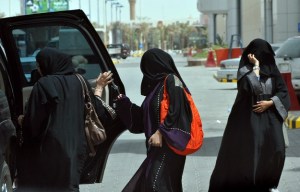 their vehicles as an act of civil disobedience against treatment of women in the nation.
Saudi activists, encouraged by the Arab Spring and by the outlets for expression offered through Facebook and Twitter, declared Friday a day for Saudi women to take to the streets, behind steering wheels.
Saudi Arabia remains perhaps the only country in the world where women are banned from driving — even though no law explicitly bars Saudi women from driving. Saudi leaders from King Abdullah on down have said they believe Saudi women should be allowed to drive.
Inside and outside Saudi Arabia, some tend to see the ban as a frivolous issue — the stereotype being a Saudi woman princess in sunglasses wanting a little independence as she drives to Starbucks for a latte.
Activists and writers like Eman Fahad al Nafjan, a blogger, doctoral student, and mother in Riyadh, call the impact of the ban profound, saying that it limits women’s mobility into female employment and education, despite efforts by King Abdullah to boost both. And in a kingdom that the International Labor Organization says is the only country in the Gulf Cooperation Council with a significant poverty rate, the ban is a drain on the resources of women, forcing many households to pay thousands of dollars a year for drivers, opponents say.
AJ is also reporting on these acts of civil disobedience against one of the most conservative monarchies in the area. This is truly an act of bravery in this country. Saudi Arabia has not yet experienced much civil unrest during the so-called “Arab spring’.
The subject of women driving was as puzzling as every woman-related issue in the tribal, patriarchal, and religious alloy of the Saudi mindset.
Women have driven in rural areas and in some compounds within cities all the time. There were no religious or legal pretexts to prevent women from driving. The opposition came from a group of religious scholars – purportedly for fear of “gender mixing” and anticipated sins – a fallacy that is obviously refuted by the fact that gender mixing is already in effect, whether women are in the back or the front seats of the cars – unless a parallel public world can be created for each sex, an idea which must occupy many scholars’ minds.
This was nothing new; religious views opposing women’s autonomy were the norms of Saudi scholars, fearing changes in the traditional gender roles. And when religious unrest contradicts official plans, the government often acts to keep the clerics in check. Examples are many, such as the beginnings of women’s education half a century ago and the opening of KAUST, the first co-educational university – which cost a known scholar his elevated position at the supreme committee of scholars.
I would like every one here to be aware of the bravery of the people in Saudi Arabia–the women and men–who are trying to bring modernity and women’s rights to what is unquestionably a misogynist society. For more information on the role of social media in this movement, see the BBC’s story here. Many Saudi women are posting videos and stories like the one above.

 peej
peej Carissa
 bostonboomer
 dakinikat
 ecocatwoman
 mablue2
 Mama Lopez
 peggysue22
 quixote
 skydancingguestblogger
 Mona (aka Wonk the Vote)



 Sky Dancing
Recent Comments