
Friday Reads: An Immodest Proposal
Posted: January 9, 2015 Filed under: 2014 elections, morning reads, U.S. Economy | Tags: Ghost States, Red State Welfare, the Buffalo Commons 37 Comments Good Morning!
One of the many things that continues to fascinate me these days is that the number of people voting for Democrats and indicating more faith in that party than the Republican one begins to grow. Yet, the results of the recent election show that it hardly matters. States with more cows than people get an equal say in the U.S. Senate and that is a problem. In fact, “Senate Democrats got 20 million more votes than Senate Republicans. Which means basically nothing.”
Here’s another: Democratic candidates in all of the races won by Republicans or Democrats got about 98.7 million votes. Republican candidates in those same races got 94.1 million.
The 20 million figure, in other words, is cherry-picked to accentuate the gap. Vox’s analysis comes from a researcher at FairVote, which advocates for reforms to how members of Congress are elected.
Interestingly, Republicans got as many votes when losing to Democrats (about 47 million) as they did when beating Democrats. Democratic losers, though, got only about 31.3 million votes in losing. In other words: Democrats won their races by 20.3 million votes combined — Republicans won theirs by 15.7 million.
Trende points out a key reason for this: Most of the Republicans won in lower-turnout elections. It’s true that there were smaller states up for grabs this year: If you total the population from every state with an election this year — including Oklahoma and South Carolina twice — and divide by the number of races, you get about 48.7 million, compared to 72.7 million on average in 2012. But Republicans won 46 of their 54 seats in 2010 and 2014, compared to the Democrats, who won 23 of their 44 in 2012. In 2010, total turnout was about 90 million. Two years later, thanks to the presidential election, it was 40 million votes higher.
Another interesting tidbit is that these states cost the country a lot more than they are literally worth. They are a huge drain on the country’s finances and require a vast number of subsidies while decrying the use of subsidies by people.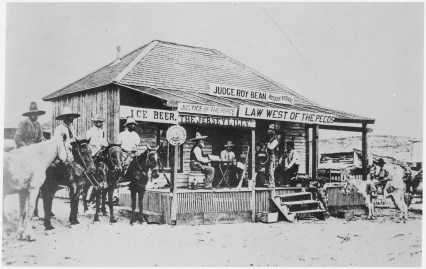
Many “red states” beat their chest as being fiscally conservative. Proud of their low income tax, business friendly environment, and self-reliance rhetoric.
But is it fair?
California, a “blue state,” gets just $.80 back for every $1 they put in. New York, even worse. They get less than $.75 on their dollar.
Whose going to start calling out the hypocrisy of some of the red states who point fingers at states like California and New York as the problem? These states want self-reliance? On what? California and New York’s goodwill?
This isn’t something Democrats should be proud of. They’re leaders are the one’s sitting there while their citizens get the short end of the stick.
Not something Republicans should be proud of either. Kinda hard to be the fiscal conservative when you ask Uncle Sam to pay your bills.
 A lot of these states were brought in as territories via the Louisiana Purchase or at the close of the Mexican American War. Most of these states have a vast amount of land–a lot of it actually owned and managed by the Federal Government–and they were probably brought in at a time when a lot of folks thought the middle of the country would eventually fill up with people or at least become a place with a viable economy. Many Native American nations were literally rolled over to create vast wastelands of ranches and natural resource extraction outposts. Does it really makes sense to continue to support the way these outback states were carved out and is there any legal way to consolidate them now?
Yes, this would decrease the number of Senators in the Senate. But, it would mean each Senator would be slightly more powerful. It actually might improve the odds of an outback state’s House delegation having more power. I mean, really, Nebraska has 3 Congressmen. Who ever listens to even one of them? They’re a basic flyover state in terms of the presidential election too. They usually get a hit and run by a vice president or vice presidential candidate. If they were part of a larger state with similar topography and concerns, they’d be part of state with a larger congressional block even though they’d fold into one or more states and thereby share a Senator with more people and antelope.
So, why can’t we look at Outback States like Idaho, the Dakotas, Oklahoma, Arizona, Utah, Idaho, Nebraska, Montana, Wyoming, Nevada, etc. and just consolidate them? Why shouldn’t Nebraska and the Dakotas become one state? Or say, why not fold Idaho, Montana and Wyoming into Washington? Why should every one in the country suffer from the leadership these outback states send to the Senate while having to pay so much for them even to exist? Is there some way to redo these old territories into larger, consolidated states with a more economically viable level of population to support the vast areas of nothing but nature that basically define their states? Could we do it?
A long time ago, I remember a proposal called The Buffalo Commons made by Frank and Deborah Popper. It was a suggestion to turn a large part of the middle of the country into a huge National Park that would be left to the wild. I bet it would still be controversial today and more impossible given that setting up more National Parks is likely to be more unpopular today than it was 40 years ago. But, many of the same problems the concept worked to solve still exist, and now we have even bigger issues since our outback states are high maintenance and tend to send representatives with a coup mentality to Congress. Why can’t we just consolidate a few of them and try to at least make them less costly to the rest of us? It’s even more important from a resource protection standpoint as indicated by the stupidity surrounding the Keystone Pipeline. This is a boondoggle which benefits the special interests of a few politicians and is likely to create risk to the many including the folks living in these states. Wouldn’t it be nice for them to have a lot more say in the future of how federal lands and federal co-option of private land operates?
In 1987, Drs. Frank and Deborah Popper developed their bold new idea for a Buffalo Commons, (Popper and Popper, “The Great Plains: From Dust to Dust, PLANNING, 1987). Their continuing research showed that hundreds of counties in the American West still have less than a sparse 6 persons per square mile — the density standard Frederick Jackson Turner used to declare the American Frontier closed in 1893. Many have less than 2 persons per square mile.
The frontier never came close to disappearing, and in fact has expanded in the Plains in recent years. The 1980 Census showed 388 frontier counties west of the Mississippi. The 1990 Census shows 397 counties in frontier status, and the 2000 Census showed 402. Most of this frontier expansion is in the Great Plains. Kansas actually has more land in frontier status than it did in 1890.
Great Plains Restoration Council mounted a Plains-wide mapping project at the county level, using a series of economic and social indicators, to show exactly where the frontier is and how much further it has expanded. GPRC than did more sophisticated mapping that scrutinized these and other factors down to the Census Block level, allowing for a much more rigorous and exact understanding of ecological, biological, geographical, topographical, demographic and political conditions. Since then, we have specifically honed our focus onto a few, key target ecological areas while developing a new model of youth education.
There once were over 400 million acres of wild prairie grasslands in the central part of North America. The backbone of the Buffalo Commons movement is the work — over a period of decades — to re-establish and re-connect prairie wildland reserves and ecological corridors large enough for bison and all other native prairie wildlife to survive and roam freely, over great, connected distances, while simultaneously restoring the health and sustainability of our communities wherever possible so that both land and people may prosper for a very long time. Future generations may choose to expand these reserves and corridors, as the new culture of caring and belonging we have started today becomes an integral, ingrained part of life in the world of tomorrow, especially as extensive grasslands become needed to help absorb carbon from the atmosphere. (Highly biodiverse native prairies are excellent carbon sequesters.)
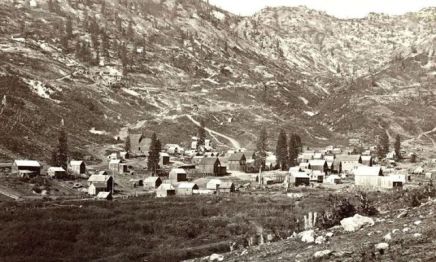 So, I’m not a legal expert, but it seems if a state can be made out of a territory then several states can be merged into something more viable for the modern country. I’d love to hear if anyone thinks this is way to bring more democratic representation to the country. Frankly, I think this could be a win win situation if some of these people would give up their provincial loyalties.
Again, the consolidation would bring a larger delegation to the House for a combined state, and it might make them feel more relevant to the Presidential election process. Right now, everyone ignores nearly every state but Colorado on the way across the Mississippi to hear about California. I’ve actually lived in states that I think would make good candidates to consolidate with other states so I do have some knowledge of what it’s like to live in the Great American Outback. I certainly believe it makes a lot of sense to look to see if those territories would’ve been dealt a better situation had they be carved out into different looking states. This is especially true since so many of them really don’t have all that many people in them and most of them are have been losing population for some time. What exactly constitutes a ghost state?
Here’s a few other things you can think on today.
Here are two studies on the Affordable Healthcare Act. One is by the Rand Corporation and the other by the Brookings Institute. It’s especially relevant to look at the link between the law and the tax credits since this is the next challenge to the law to come before SCOTUS. The last was the idea that states could opt out of the Medicaid Expansion which created a horrible situation for those of us in states ruled by Red State Crazies. First some points from the Brookings Institute.
In “The Early Impact of the Affordable Care Act State-by-State,” Brookings nonresident fellow in Economic Studies and Yale University Economics Department faculty member Amanda Kowalski finds that national enrollment trends obscure significant variation across states, as a result of the types of people who opted in and how insurers set premiums. Across all states, from before the fourth quarter of 2013 to the first half of 2014, enrollment-weighted average per-person premiums in the individual health insurance market rose by 24.4% beyond what they would have had they simply followed state-level seasonally-adjusted trends. This large increase stands in contrast to the experience in Massachusetts, which saw premium decreases after its 2006 reform, as documented by Kowalski in previous joint research. Massachusetts also saw decreases in markups (premiums minus costs), which have been rare in other states in 2014.
Kowalski focuses on the individual insurance market using data through the second quarter of 2014 after the open enrollment period ended. She characterizes states into five groups, based on their involvement in the implementation of the ACA. On one extreme were the 5 “direct enforcement” states that ceded all enforcement of the ACA to the federal government (Alabama, Missouri, Oklahoma, Texas, and Wyoming). On the other extreme were 8 states (Colorado, Connecticut, DC, Kentucky, New York, Rhode Island, Vermont, and Washington) that took the implementation of the ACA into their own hands by implementing the Medicaid expansion and setting up their own exchanges. Another group of 5 of these states also set up their own exchanges and expanded Medicaid, but experienced severe technology glitches (Hawaii, Maryland, Minnesota, Nevada, and Oregon), so she examines them as a distinct group. The two groups in the middle of the implementation spectrum include a set of 11 states that adopted the Medicaid expansion but did not set up their own exchanges (Arkansas, Arizona, Delaware, Iowa, Illinois, Michigan, North Dakota, New Hampshire, New Mexico, Ohio, and West Virginia) and a set of 19 “passive” states that did not fit into any of the other four groups (Alaska, Florida, Georgia, Idaho, Indiana, Kansas, Louisiana, Maine, Mississippi, Montana, North Carolina, Nebraska, Pennsylvania, South Carolina, South Dakota, Tennessee, Utah, Virginia, and Wisconsin) – they took some role in implementing the ACA, but did not implement the Medicaid expansion, and they used the federal exchange. All comparisons exclude California and New Jersey because their data are not complete, and they also exclude Massachusetts, because Massachusetts implemented its own reform in 2006.
She finds that individuals in “direct enforcement” states – those states that that ceded all enforcement of the ACA to the federal government (Alabama, Missouri, Oklahoma, Texas, and Wyoming) – are worse off by approximately $245 per participant on an annualized basis, relative to participants in states that were passive implementers of the ACA.
Kowalski also finds, not surprisingly, that the 5 states that had severe glitches with their exchanges (Hawaii, Maryland, Minnesota, Nevada, and Oregon) are worse off than other states with well-functioning state exchanges (Colorado, Connecticut, DC, Kentucky, New York, Rhode Island, Vermont, and Washington), by a large magnitude – approximately $750 per participant on an annualized basis. On the other hand, participants in states that set up well-functioning exchanges were better off than they would have been had their states been passive by approximately $420 per enrollee.
Reviewing data on the 27 states that adopted the Medicaid expansion, she finds that those that expanded were better off than all other states, although the amount is not statistically significant.
Kowalski also divides states based on whether they allowed renewal of non-grandfathered plans in response to the backlash that if people “liked their plan they could keep it” (27 did, but DC and the remaining 23 did not). She finds that participants in states that allowed renewal of non-grandfathered plans are worse off by around $220 annually than participants in other states who did not allow grandfathered non-compliant plans – likely because the people who remained in non-grandfathered plans were healthier than other people in the individual health insurance market.
Using the most recent data collected by the National Association of Insurance Commissioners (NAIC) and compiled by SNL Financial, which includes individual health insurance enrollment outside of the exchanges, Kowalski takes a broader view than the widely-cited report from the U.S. Department of Health and Human Service’s Office of the Assistant Secretary for Planning and Evaluation (ASPE), which reported 8 million exchange enrollees in May. By taking a broader view, Kowalski is able to observe trends in the individual health insurance market from before the exchanges opened for business. Taking these trends into account, at least 4.2 million enrollees are newly-covered in this market (many were likely previously uninsured, but some may have switched from other types of coverage).
Looking at the states individually, she finds that the law benefitted enrollees in at least 13 states (Alaska, Connecticut, DC, Indiana, Kentucky, Maryland, Maine, North Dakota, New Hampshire, Nevada, New York, Rhode Island, and Vermont), with Maine enrollees gaining the most at around $1500 per market participant annually, whereas Oregon (a state with severe glitches on its website and roll-out) experienced the greatest loss – around $850 annually per participant.
The Rand Study has these findings.
In this research report, RAND Corporation researchers assess the expected change in enrollment and premiums in the Patient Protection and Affordable Care Act (ACA)–compliant individual market in federally facilitated marketplace (FFM) states if the U.S. Supreme Court decides to eliminate subsidies in FFM states. The analysis used the Comprehensive Assessment of Reform Efforts (COMPARE) microsimulation model, an economic model developed by RAND researchers, to assess the impact of proposed health reforms. The authors found that enrollment in the ACA–compliant individual market, including plans sold in the marketplaces and those sold outside of the marketplaces that comply with ACA regulations, would decline by 9.6 million, or 70 percent, in FFM states if subsidies were eliminated. They also found that unsubsidized premiums in the ACA–compliant individual market would increase 47 percent in FFM states. This corresponds to a $1,610 annual increase for a 40-year-old nonsmoker purchasing a silver plan.
Key Findings
Enrollment in the Patient Protection and Affordable Care Act (ACA)–Compliant Individual Market Would Decline Significantly in Federally Facilitated Marketplace (FFM) States
- Individual-market enrollment would decline by an estimated 70 percent, or 9.6 million people.
- This decline includes plans sold in the marketplaces and those sold outside of the marketplaces that comply with ACA regulations.
Unsubsidized Premiums in the ACA-Compliant Individual Market Would Increase 47 Percent in FFM States
- This corresponds to a $1,610 annual increase for a 40-year-old nonsmoker purchasing a silver plan.
As you can see, eliminating Federal Subsidies would basically make health insurance unaffordable for many many people again.
So, I’ve been a little radical today. What’s on you reading and blogging list today?

 peej
peej Carissa
 bostonboomer
 dakinikat
 ecocatwoman
 mablue2
 Mama Lopez
 peggysue22
 quixote
 skydancingguestblogger
 Mona (aka Wonk the Vote)



 Sky Dancing
Recent Comments