Posted: April 5, 2025 | Author: bostonboomer | Filed under: cat art, caturday, Donald Trump, U.S. Economy | Tags: destruction of scientific research, Hands Off rallies, insanity, polls, Stock Market, tariffs, Trump decision-making |

By Linda Benton
Good Afternoon!!
The news is mostly awful today. If you think too much about what is happening, you’ll sink into depression and despair. I heard a woman on TV (I can’t remember her name, unfortunately) argue that Trump wants to return to the world of his childhood–the 1950s. But there is simply no way to do that. We are no longer an industrial society and we aren’t going to return to being one. We are no longer a segregated society either. Trump can’t rid public life of Black people, women, and immigrants. It’s not going to happen. But he is going to keep trying, because he is certifiably insane. The Republicans could stop him but they won’t, because they are terrified and they are cowards.
I’m going to begin with one bit of good news. Today, Americans with gather to fight back against Trump and Musk and their efforts to destroy our government and turn most of us into serfs.
AP: ‘Hands Off!’ protests against Trump and Musk are planned across the US.
Opponents of President Donald Trump and billionaire Elon Musk plan to rally across the U.S. on Saturday to protest the administration’s actions on government downsizing, the economy, human rights and other issues.
More than 1,200 “Hands Off!” demonstrations have been planned by more than 150 groups, including civil rights organizations, labor unions, LBGTQ+ advocates, veterans and elections activists. The protests are planned for the National Mall in Washington, D.C., state capitols and other locations in all 50 states.
Protesters are assailing the Trump administration’s moves to fire thousands of federal workers, close Social Security Administration field offices, effectively shutter entire agencies, deport immigrants, scale back protections for transgender people and cut federal funding for health programs.
Musk, a Trump adviser who owns Tesla, SpaceX and the social media platform X, has played a key role in government downsizing as the head of the newly created Department of Government Efficiency. He says he is saving taxpayers billions of dollars.
Asked about the protests, the White House said in a statement that “President Trump’s position is clear: he will always protect Social Security, Medicare, and Medicaid for eligible beneficiaries. Meanwhile, the Democrats’ stance is giving Social Security, Medicaid, and Medicare benefits to illegal aliens, which will bankrupt these programs and crush American seniors.”
No, asshole. That’s not “Democrat’s stance.”
Before I get going with the rest of today’s news, I want to highlight this piece by JV Last at The Bulwark from a couple of days ago: The American Age Is Over. The United States commits imperial suicide.
Fittingly, it was the Canadian prime minister, Mark Carney, who declared the official time of death.
“The global economy is fundamentally different today than it was yesterday. The system of global trade anchored on the United States, that Canada has relied on since the end of the Second World War—a system that, while not perfect, has helped to deliver prosperity for our country for decades—is over.
Our old relationship of steadily deepening integration with the United States is over.
The eighty-year period when the United States embraced the mantle of global economic leadership—when it forged alliances rooted in trust and mutual respect, and championed the free and open exchange of good and services—is over.
While this is a tragedy, it is also the new reality.”

By Stephanie Lambourne
And just like that, the age of American empire, the great Pax Americana, ended.
We cannot overstate what has just happened. It took just 71 days for Donald Trump to wreck the American economy, mortally wound NATO, and destroy the American-led world order.
He did this with the enthusiastic support of the entire Republican party and conservative movement.
He did it with the support of a plurality of American voters.
He did not hide his intentions. He campaigned on them. He made them the central thrust of his election. He told Americans that he would betray our allies and give up our leadership position in the world.
There are only three possible explanations as to why Americans voted for this man:
- they wanted what he promised;
- they didn’t believe what he promised; or
- they didn’t understand what he promised.
Pick whichever rationale you want, because it doesn’t matter. Whatever the reason was, it exposed half of the electorate—the 77 million people who voted for Trump—as either fundamentally unserious, decadent, or weak.
And no empire can survive the degeneration of its people….
If, tomorrow, Donald Trump revoked his entire regime of tariffs, it would not matter. It might temporarily delay some economic pain, but the rest of the world now understands that it must move forward without America.
If, tomorrow, Donald Trump abandoned his quest to annex Greenland and committed himself to the defense of Ukraine and the perpetuation of NATO, it would not matter. The free world now understands that its long-term security plans must be made with the understanding that America is a potential adversary, not an ally.
This realization may be painful for Americans. But we should know that the rest of the world understands us more clearly than we understand ourselves.
Vladimir Putin bet his life that American voters would be weak and decadent enough to return Donald Trump to the presidency. He was right.
Please go read the rest at The Bulwark link.
This week, Trump took a wrecking ball to the U.S. economy.
Stephen Rattner at the New York Times: I Watch the Markets for a Living. This Week, Everything Changed.
In the past, the one constituency President Trump has sometimes listened to has been our stock market. Well, it has spoken, falling 10.5 percent in one of the largest two-day stock market swoons in decades.
In the 50 years I have been immersed in markets and economic policy, I have never before witnessed a signature economic policy initiative that was met with such unalloyed criticism. What’s worse, the damage was entirely self-inflicted.

By Stephanie Lambourne
Why such a reaction? One reason the S&P 500 fell was that the tariffs Mr. Trump rolled out were so much greater than investors anticipated. (Give the White House an F for failing to prepare the market for what to expect.) Then on Friday, China announced its own 34 percent tariff on our goods, making it clear that our trading partners were not going to simply give in to Mr. Trump’s demands, as he had suggested they would.
As Mr. Trump was doubling down, asserting that “my policies will never change,” the Federal Reserve chairman, Jerome Powell, was delivering his own bombshell: Given the higher-than-predicted tariffs, higher inflation and slower growth were likely to ensue, he said. That’s drastically different from just a couple of weeks ago, when Mr. Powell called the potential impact of new tariffs on prices “transitory.”
The business community, which by my count heavily supported Mr. Trump in the election five months ago, seems stunned. Few have spoken publicly, but the Business Roundtable, the premier corporate trade association, on Wednesday warned that universal tariffs run “the risk of causing major harm to American manufacturers, workers, families and exporters.”
Privately, several chief executives told me that they recognized that imposing the tariffs, as well as Mr. Trump’s intractable support of them, was a potentially cataclysmic mistake. “Few of us ever imagined he would go this far,” one told me. “He could well bring down the economy and himself.”
A bit more:
The Trump-supporting business leaders I’ve spoken to in the last two days don’t yet regret their votes, mostly because of their intense distaste (if not hatred) for the Biden-Harris administration. And they remain broadly supportive of the efforts by the tech billionaire Elon Musk to reform the federal government, even if they acknowledge that his DOGE team may be going too far in its slashing of spending and personnel.
But I wonder how some other major Trump-supporting leaders whose stock prices have been particularly hard hit now feel, like Stephen Schwarzman, chief executive of Blackstone, the investment group (down 15 percent in two days), and Safra Catz, chief executive of Oracle, the database company (down 12 percent).
Mr. Trump’s actions aren’t the only problem. Almost as important is the lack of clarity as to what policies he is pursuing and why. At times, Mr. Trump implies that the purpose of the tariffs is to bring back manufacturing, which suggests that they will stay in place indefinitely. At other times, he suggests that the goal is to negotiate tariff reductions by other countries (even though much of what Mr. Trump asserts about their tariffs is inaccurate).
The dithering takes a real toll. I see this from my role as a professional investor. How do we evaluate a company that imports goods or engages in international commerce? We seek a lower price, or we grit our teeth, or we pass on the opportunity. As a result, our pace of investing has slowed sharply this year.
And it’s not just us. In the year’s first quarter, the number of newly announced mergers and acquisitions dropped to its lowest level since the financial crisis. “Folks are looking but not pulling the trigger,” one leading investment banker told me. Equity offerings have become similarly challenged; multiple companies planning to go public have postponed their fund-raising since Wednesday.
Aaron Zitner at The Wall Street Journal: Americans Were Souring on Trump’s Economic Plans Even Before Tariff Bloodbath.
Americans elected Donald Trump with a favorable opinion of his economic plans. But his expansive push for tariffs has helped turn that confidence into skepticism, a new Wall Street Journal poll finds.
Tepid support for tariffs through the past year has become disapproval, with 54% of voters opposing Trump’s levies on imported goods, 12 points more than those who support his plans. Three quarters of voters say that tariffs will raise prices on the things they buy, up from 68% who said so in January.

By Lucy Almay Bird
The Journal survey was conducted from March 27 through April 1, when Trump had imposed new tariffs on China and certain goods from Canada, Mexico and elsewhere, but before his announcement Wednesday of a sweeping program of levies on nearly all U.S. trading partners. That announcement shocked America’s trading partners and on Thursday prompted the biggest selloff of U.S. stocks since the early days of the Covid pandemic in 2020. The selloff deepened Friday.
The poll suggests that a president who promised that “tariffs are about making America rich again” is facing unease with his economic leadership, especially over rising prices, the issue that bedeviled Democrats in last year’s election. By 15 percentage points, more voters hold a negative view of Trump’s handling of inflation than a positive one. Negative views of his economic stewardship outweigh positive views by 8 points….
That is a substantial change from late October, when voters by a 10-point margin said they favored rather than opposed Trump’s economic plans. The negative view of tariffs contrasts with earlier Journal surveys that found voters keeping an open mind. In both January and August, before Trump took office and his tariff program became concrete, Journal polls found voters mildly supportive of import levies as a general proposition.
The survey finds the president’s political standing to be resilient in many ways. Some 93% of voters who backed him in November give him favorable job reviews now, suggesting that few are regretting their vote. Majorities approve of his handling of immigration and border security….
Still, the survey shows the political gamble Trump has taken by using America’s muscle to try to reshape the global trading system. Voters are evenly split on whether they believe Trump’s promise that short-term economic “disruption” caused by tariffs, as he put it, will help American workers and companies by forcing other nations to lower their own trade barriers and prompting manufacturers to make more goods in the U.S.
I don’t know how people who aren’t super-rich can support what Trump is doing. I have to believe that these people are either stupid or not paying attention.
On Trump’s Insanity:
Daniel Drezner at Drezner’s World: There Are No Adults in the Room.
On Thursday, as the stock market nosedived from the Trump administration’s stupid, unthinking, destructive, error-ridden tariff policies, a respected reporter from a well-known media outlet pinged me for an interview. The journalist was interested in the roles that Treasury Secretary Scott Bessent and Commerce Secretary Howard Lutnick might have played in the formulation of Trump’s foreign economic policy.

Sardines, by Jennifer Pease
As we started talking, I realized that the reporter and I were starting from rather different premises. The reporter was thinking about the story as how one would cover a significant policy pronouncement in a normal administration: Who is the president listening to on policy? What are the possible faultlines within the administration? Who are the key power brokers? What was their decision-making process?
And I was thinking: there was no process. There are no power brokers. On questions of trade, there’s Donald Trump’s whims, his collection of clown car enablers, and maybe an intern who plugs some things into ChatGPT. That’s pretty much it.
I know why both of us were thinking the way we were. For reporters, looking for power brokers makes sense even when even when the policies themselves seem inexplicable. Bad policy outcomes can nonetheless be explained by rational actors pursuing their interests. Maybe it’s the result of powerful interest groups pushing their narrow interests. On occasion, bureaucratic politics are responsible. Sometimes bad policies are the result of powerful ideas that percolate within particular groups — you know, ideas like “risk assessment is bad” or “democracy is overrated.” This is slightly more unusual but it’s certainly conceivable….
As someone who has studied Donald Trump’s decision-making style at great length, however, I come at questions about Trump’s second-term advisors from a different perspective. The key to understanding Trump’s second term is to understand three basic premises:
- Trump has eliminated all executive branch guardrails;
- Trump has appointed only sycophants to serve him this time around;
- Trump’s policy instincts are the most immature, retrograde opinions out there.
Drezner refers readers to this Washington Post story by Natalie Allison, Jeff Stein, Cat Zakrzewski, and Michael Birnbaum: Inside President Trump’s whirlwind decision to upend global trade.
Not long after President Donald Trump’s inauguration, the administration’s economic staff went to work on a daunting task: determining tariff rates for dozens of countries to fulfill the president’s campaign pledge of imposing “reciprocal” trade barriers.
After weeks of work, aides from several government agencies produced a menu of options meant to account for a wide range of trading practices, according to three people familiar with the matter.
Instead, Trump personally selected a formula that was based on two simple variables — the trade deficit with each country and the total value of its U.S. exports, said two of the people, who spoke on the condition of anonymity to recount internal talks. While precisely who proposed that option remains unclear, it bears some striking similarities to a methodology published during Trump’s first administration by Peter Navarro, now the president’s hard-charging economic adviser. After its debut in the Rose Garden on Wednesday, the crude math drew mockery from economists as Trump’s new global trade war prompted a sharp drop in markets.
The president’s decision to impose tariffs on trillions of dollars of goods reflects two key factors animating his second term in office: his resolve to follow his own instincts even if it means bucking long-standing checks on the U.S. presidency, and his choice of a senior team that enables his defiance of those checks.
Inside and outside the White House, advisers say Trump is unbowed even as the world reels from the biggest increase in trade hostilities in a century. They say Trump is unperturbed by negative headlines or criticism from foreign leaders. He is determined to listen to a single voice — his own — to secure what he views as his political legacy. Trump has long characterized import duties as necessary to revive the U.S. economy, at one point calling tariffs “the most beautiful word in the dictionary.”
There simply isn’t any method to his madness.
At Liberal Currents, Alan Elrod writes about Trump and RFK Jr. destroying American scientific research: You’re Not Crazy. America Has Gone Mad.
“Never has our future been more unpredictable, never have we depended so much on political forces that cannot be trusted to follow the rules of common sense and self-interest—forces that look like sheer insanity, if judged by the standards of other centuries.”
This is an oft-quoted passage from Hannah Arendt’s The Origins of Totalitarianism. And it’s one that has proven especially popular in the years since the rise of Trump and explosion of global authoritarianism.

Sanctuary, Lucy Almay Bird
I open with it here because I want to offer an extended reflection on what it feels like to be trapped inside the sort of madhouse she describes. Because I think sheer insanity now rules America. We have gone mad, and the consequence is that sanity now feels itself like a disorder.
We aren’t the first society to come unglued. We almost certainly will not be the last. But right now, each day in America for those of us who do not favor the president or hold to the MAGA worldview feels like we have been sent to some dilapidated asylum by mistake, like the protagonist of a pulp thriller.
Nothing is working as it should. No one is speaking in sentences that add up to anything sensible.
We are throwing the most advanced health science research system into the sea and have turned over our public health infrastructure to quacks and crooks. We are destroying our prosperity to sate the president’s desire to play at 19th century political economy. We are blithely ignoring the potential for war with former allies as Trump crows about annexing Canada and Greenland.
In a rational world, we would already have seen markets balk at Trump’s trade policies, investigations into the mismanagement of our health services, and impeachment proceedings against a man who continues to menace treaty allies for nothing but personal ego.
But it isn’t a rational world, at least not this American corner of it. And so I want to explore madness as the ordering principle of American life by looking at some of the key sites of breakdown. There is nothing curative in this essay, but diagnosis is a first step. And our symptoms are many.
On RFK Jr.’s wrecking ball:
How did a man who admitted he has brain damage from a worm and who has spent decades spreading deadly disinformation about the efficacy of modern medicine become the head of our nation’s health services?
RFK Jr. has done what we all knew he would do. On Tuesday, mass layoffs gutted HHS, threatening everything from the CDC to the FDA to programs like Meals on Wheels.
These are moves that will make Americans less safe and healthy. Our food will be more dangerous. Diseases we might have cured in the not-so-distant future will go under-researched for years. Loved ones will get sick and die. And medicine that should have been available will be stuck in an understaffed and underfunded regulatory pipeline.
Before this, he had already driven out some of HHS’s top scientists, who have warned about the damage his views on healthcare and medical research will do. Under his watch, measles has killed two Americans, and numerous children have been diagnosed with Vitamin A toxicity after their parents followed Kennedy’s recommendation that it be used as a treatment.
Kennedy’s beliefs on medicine and health are bizarre, conspiratorial, and, in some cases, simply hateful.
Read specific examples at the link.
More stories to check out today:
Politico: ‘Everyone is terrified’: Business and government officials are afraid to cross Trump on tariffs.
The New York Times: Senate Approves G.O.P. Budget Plan After Overnight Vote-a-Thon.
The Guardian: I was a British tourist trying to leave America. Then I was detained, shackled and sent to an immigration detention centre.
The New York Times: Trump Weakens U.S. Cyberdefenses at a Moment of Rising Danger.
Greg Sargent at The New Republic: Obama’s Blistering New Takedown of Trump Gives Dems a Way Forward.
The New York Times: These Are the 381 Books Removed From the Naval Academy Library.
Politico: RFK Jr. said HHS would rehire thousands of fired workers. That wasn’t true.
That’s all I have for you today. What’s on your mind?
Did you like this post? Please share it with your friends:
Posted: August 17, 2024 | Author: bostonboomer | Filed under: 2024 presidential Campaign, cat art, caturday, Donald Trump, Kamala Harris 2024 | Tags: Chicago, debates, Democratic National Convention 1968, Democratic National Convention 2024, Economic policy, medal of honor, political snark, polls, Veterans of Foreign Wars |
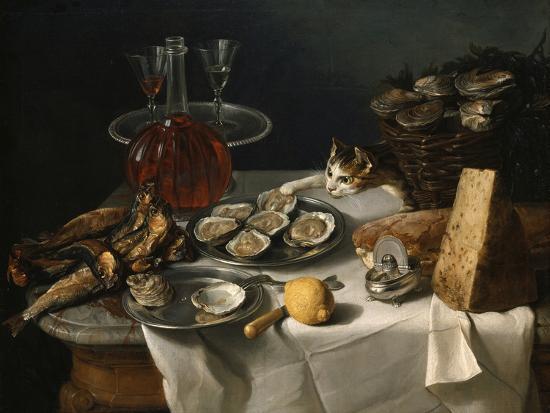
Alexandre-Francois Desportes, Still Life with Cat, 1705
Happy Caturday!!
Some folks in the media are trying to convince us that the excitement generated by the Harris-Walz campaign is fizzling out. I don’t think so. Harris gave a speech on her economic policies yesterday, tomorrow they will take a bus tour of Pennsylvania beginning in Pittsburgh, and on Monday the Democratic National Convention will begin in Chicago. So there is lots happening. Harris is also moving up in the polls. Here’s the latest on the campaign.
Mediaite: Polls Find Kamala Harris Taking Lead From Trump in States He Was Running Away with Just Weeks Ago.
New surveys from The New York Times/Siena College show Vice President Kamala Harris has put four Sun Belt states in contention, taking the lead in two.
Harris has edged ahead of Donald Trump in Arizona and North Carolina and tightened the margin in Nevada and Georgia compared to when President Joe Biden was still running for reelection. The polls, conducted August 8-15, show Harris and Trump averaging a tie of 48% across the four states.
According to Times/Siena data taken when Biden was still running, Trump was leading the president 50% to 41% in Arizona, Georgia, and Nevada. North Carolina was not included in those surveys, but Trump won the state in both 2016 and 2020. Harris has closed some of these gaps with the vice president pulling 50% to Trump’s 45% in Arizona and 49% compared to Trump’s 47% in North Carolina.
In Georgia, Trump still holds the lead with 50% compared to Harris’s 46% and in Nevada he leads by one point, pulling 48% compared to Harris’s 47%. The margin of error for the Times poll is 4.4% for Arizona, Georgia, and Nevada and 4.2% for North Carolina results….
Harris has also grown in favorability, according to the new data with 48% saying they have a very or somewhat favorable opinion of the vice president. In a February survey, Harris’s unfavorable score was ahead by 19% while now she’s running even. Trump has remained unchanged in this department, pulling a 48% favorable rating compared to 50% unfavorable.
Voters who were polled were also asked who could “unify” the country as president and 46% backed Harris compared to 42% who backed Trump.
Sahil Kapur of NBC News on Harris’s economic speech in Raleigh, North Carolina yesterday afternoon: Harris pitches plans to tackle food, housing, medicine and child care costs in N.C. speech.
At a campaign speech Friday in North Carolina, Vice President Kamala Harris promised to “make it a top priority to bring down costs” if elected president and touted her new plans to tackle food and housing costs, slash prescription drug prices and expand the child tax credit.
Harris said the Biden administration has made progress, given the Covid economy it inherited from former President Donald Trump, but that it isn’t enough as “many Americans don’t yet feel that progress in their daily lives.”

Still Life with Cat and a Mackerel, by Giovanni Rivalta, 1760
“Costs are still too high. And on a deeper level, for too many people, no matter how much they work, it feels so hard to just be able to get ahead,” she told the crowd. “As president, I will take on the high costs that matter most to most Americans, like the cost of food. We all know that prices went up during the pandemic, when the supply chains shut down and failed, but our supply chains have now improved and prices are still too high.”
The Harris campaign outlined her proposals prior to the speech. She said she’d work with Congress to impose a “federal ban on price gouging on food and groceries,” setting rules “to make clear that big corporations can’t unfairly exploit consumers” to boost their profits. She would also seek new powers for the Federal Trade Commission and state prosecutors to slap “strict new penalties on companies that break the rules,” her campaign said….
Harris noted in her Raleigh remarks: “Look, I know most businesses are creating jobs, contributing to our economy and playing by the rules, but some are not, and that’s just not right, and we need to take action when that is the case.”
She touted her plans to create a tax break for homebuilders who construct starter homes for first-time buyers and said she will provide a $25,000 subsidy for first-time homeowners buying a house. She vowed to cut “needless bureaucracy and unnecessary regulatory red tape” as part of that and said she’ll promote “innovative technologies while protecting consumers.” She vowed to set “a stable business environment with consistent and transparent rules of the road.”
The vice president pitched her plan to expand the child tax credit and offer “$6,000 in tax relief to families during the first year of a child’s life.” She said she’ll seek to extend Medicare’s $35-per-month insulin out-of-pocket cap to everyone and expand the administration’s Medicare drug price negotiation program.
Read more at NBC News.
And from CNN: Harris has a plan to fix one of America’s biggest economic problems. Here’s what it means for you.
Americans across the political spectrum can agree on this: Rent is expensive, and buying a home can feel nearly impossible.
America’s housing affordability crisis has a number of origins, but it largely stems from two key factors that you learned in Econ 101: supply and demand. The supply of homes on the market is extraordinarily low, as sellers hang onto their houses, waiting on the sidelines out of fear that historically high mortgage rates will make their next place to live too expensive. Demand exploded during the pandemic and it never slowed down, despite high prices and rates.
Although there are signs that the worst of the housing affordability nightmare may be over, the market remains tight. That’s why housing a top issue for voters in the 2024 presidential election.
Vice President Kamala Harris on Friday unveiled her plan to help make homes more affordable. Although analysts cheered some of her plans to assist buyers, some feared that parts of Harris’ plan may exacerbate the problems in the market.
The plan, which builds on proposals that President Joe Biden has already announced, promises:
- Up to $25,000 in down-payment support for first-time homebuyers.
- To provide a $10,000 tax credit for first-time homebuyers.
- Tax incentives for builders that build starter homes sold to first-time buyers.
- An expansion of a tax incentive for building affordable rental housing.
- A new $40 billion innovation fund to spur innovative housing construction.
- To repurpose some federal land for affordable housing.
- A ban on algorithm-driven price-setting tools for landlords to set rents.
- To remove tax benefits for investors who buy large numbers of single-family rental homes.
Adding more homes to the market through incentives would certainly help, multiple economists agreed. Adding housing to the market will increase inventory and should help drive prices down. But capping rent was met with skepticism.
“What I’ve seen is three parts substance and one part symbolism,” said Joe Brusuelas, principal and chief economist at RSM US, “The substance is increasing or focusing on supply conditions via the financial channel. It’s a good, solid proposal that’s forward-looking and can actually be accomplished. The symbolism is more organized around price caps on rents.”
Read more analysis at the CNN link.

Still life with Cat. Sebastiano Lazzari, 1728
Oldsters like me remember the last time the Democrats met in Chicago in the chaotic year 1968. What will happen this time?
David Smith at The Guardian: ‘The world is watching’: 1968 protests set stage for Democratic convention.
Sean Wilentz was in the convention hall when someone handed out copies of a news wire report. “I remember the first line,” he says. “It said, ‘The lid blew off of this convention city tonight.’” The article went on to describe chaos and bloodshed in Chicago as police clashed with protesters against the Vietnam war.
Just 17 at the time, Wilentz and a couple of friends raced to the scene in downtown Chicago. “It was horrible. The cops were angry and didn’t like the kids and the kids were angry and didn’t like the cops. I saw a motorcycle cop go on a sidewalk and pin a kid against the wall. I was very scared.”
More than half a century has passed since a police riot scarred the Democratic national convention of 1968. On Monday Democrats return to Chicago with a spring in their step as they prepare to anoint Kamala Harris their presidential candidate. Yet some comparisons with the events of 56 years ago are irresistible.
Just as in 1968, a would-be assassin has sought to change the course of political history. Just as in 1968, an incumbent president has stepped aside and a vice-president will gain the Democratic nomination without winning a single primary vote. And just as in 1968, protesters will gather to demonstrate their anger over US involvement in an unpopular war.
Democrats are praying that the similarities end there. When the teargas cleared in Chicago, Hubert Humphrey, a self-styled “happy warrior”, emerged as the standard-bearer of a bitterly divided party. He went on to lose the election to Richard Nixon who, like fellow Republican Donald Trump, pushed a “law and order” message to exploit white voters’ fears and prejudices.
Of course there’s really no comparison between this year and the horrifying violence of 1968–riots in many cities, the assassinations of Martin Luther King and Bobby Kennedy, the war in Vietnam and the antiwar protests all over the country. Back to the Guardian article:
Much has changed since Trump secured the Republican nomination at the party’s own convention in Milwaukee last month. With 81-year-old Joe Biden fading in opinion polls, the Democratic campaign had come to resemble a death march. But his decision to quit the race and throw his weight behind Harris triggered an explosion of relief, self-belief and surging enthusiasm.
Next week’s Democratic convention will put the capstone on the dramatic turnaround. Harris and running mate Tim Walz, who have been drawing huge crowds at rallies and millions of dollars in donations, will be formally nominated and deliver the most important speeches of their careers – probably resulting in a further polling bump.

Still Life with Soup, Fernando Botero, 1972
But the carefully stage-managed event – also featuring Biden, Barack Obama, Bill Clinton and A-list celebrities – could yet go off script. Thousands of pro-Palestinian protesters are expected to gather outside to demand that the US end military aid to Israel amid the ongoing war in Gaza, where the death toll has surpassed 40,000, according to the healthy ministry there.
The March on the DNC, a coalition of more than 200 organisations from all over the US, plans to hold demonstrations on Monday and Thursday, the days when Biden and Harris are due to speak. Its website brands the president “Genocide Joe Biden” and warns: “Democratic party leadership switching out their presidential nominee does not wash the blood of over 50,000 Palestinians off their hands.”
Although a sprawling security plan has been drawn up by federal, state and city governments, some activists have vowed a replay of 1968, when years of unrest over the American misadventure in Vietnam came to a head in Chicago. Then, as now, students took up the anti-war cause with campus protests, including at Columbia University in New York, where Hamilton Hall was occupied in both 1968 and 2024.
Read the rest at The Guardian.
ABC News: As Chicago braces for Democratic National Convention, concerns over safety mount.
With more than 50,000 people estimated to descend on Chicago next week for the Democratic National Convention, the city said it is prepared to make sure the week is a success, not just for visitors, but for city residents themselves.
“Our plan is to make sure we keep everyone within the city safe. We want this to be successful,” Chicago Police Superintendent Larry Snelling told an audience at the City Club of Chicago.
While thousands of protestors are expected in Chicago, Snelling said the city is better prepared than it was in 2020, when street protests following the murder of George Floyd in Minneapolis led to arsons, looting, and rioting downtown.
Officers and police leadership have been engaged in extra training for more than a year to prepare for civil disobedience, he said. Hundreds of extra law enforcement from across the state will also be on hand, not just to strengthen security around the United Center on Chicago’s west side, but also to make sure 50 neighborhoods in the city are protected.
“We have a city to protect. The Chicago Police Department will be in every single neighborhood protecting the neighborhoods so we will not deplete resources from our neighborhoods,” he said….
Meanwhile, activists have been battling the city of Chicago in federal court over permitting rights. The Coalition to March on the DNC, which represents 200 social justice organizations from throughout the Midwest, filed for permits in 2023, however, they sued the city for violating its First Amendment right to protest.
While permits for the coalition are approved, the organization said the city, citing safety reasons, is unfairly restricting them by preventing the organization from constructing stages, connecting sound equipment and having portable toilets at Union Park.
During an emergency hearing on Friday, however, the city agreed to allow for the stage and speaker system for both rallies. U.S. District Judge Andrea Wood also ruled last week that activists must follow a protest route outlined by the city which is shorter and a further distance from the United Center.
More details on the planned protests at ABC.

Jean Baptiste Simeon Chardin, Still Life with Cat and Fish, 1631
Dakinikat wrote about Trump’s so-called “news conference” yesterday, but I just want to touch on it briefly. I actually watched it, and it was a disaster. Trump read from sheets of paper in a monotone, interspersed with his usual insane diatribes like the one about birds being massacred by wind turbines, angry denunciations of Harris, Walz, Biden, and his many other “enemies”–and of course a few of his “sir stories.” This went on for close to an hour, and then he took about 5 questions. Why any reporter would show up for his dog and pony shows is a mystery.
But one of his remarks was particularly egregious. As Daknikat wrote, he denigrated the Medal of Honor that is awarded to military service members “who have distinguished themselves with acts of valor.” Here Some military organizations have responded.
From Military Times: Trump belittles Medal of Honor award in campaign speech.
Former President Donald Trump on Thursday said the Presidential Medal of Freedom is a “better” award than the Defense Department’s Medal of Honor because service members have to sacrifice their lives or health to receive the military’s highest honor, the latest in a series of controversial campaign comments from the Republican presidential candidate….
Trump…compared the civilian medal to the Medal of Honor, the highest military award for battlefield valor, which has been awarded to just 3,517 troops out of the 41 million who have served their nation.
“It’s the equivalent of the congressional Medal of Honor,” Trump said of the Presidential Medal of Freedom. “But the civilian version, it’s actually much better because everyone that gets the Congressional Medal of Honor, they’re soldiers.”
“They’re either in very bad shape because they’ve been hit so many times by bullets or they’re dead,” he said….
According to Defense Department rules, the Medal of Honor is awarded to servicemembers who distinguish themselves “through conspicuous gallantry and intrepidity at the risk of life above and beyond the call of duty.”
That list includes Sgt. 1st Class Alwyn Cashe, awarded the honor in posthumously in 2021. Cashe died from burn wounds suffered in 2005 attempting to save six fellow soldiers trapped in a burning vehicle following a roadside bomb attack in Iraq.
Army Sgt. 1st Class Leroy Petry received the honor in 2011 for valor in Afghanistan. He lost his hand in a enemy grenade blast after picking up the explosive and hurling it away from two fellow soldiers, saving their lives.
Individuals recognized for honor often have to wait years for military reviews and reports to validate their bravery. Since the start of the Vietnam War, 264 individuals have received the honor for battlefield valor. Only 60 are still living.
From The Veterans of Foreign Wars: VFW Admonishes Former President for Medal of Honor Remarks.
“On Thursday, former President Donald Trump spoke at an event where he made some flippant remarks about the Medal of Honor and the heroes who have received it. In the video that has circulated online and in the media, the former president was recognizing Miriam Adelson in the audience who he awarded the Presidential Medal of Freedom during his time in office. As he described the medal as the civilian version of the Medal of Honor, he went on to opine that the Medal of Freedom was “much better” than the military’s top award, because those awarded the latter are, in his words, “ … either in very bad shape because they’ve been hit so many times by bullets or they’re dead.” He continued by comparing Miriam to MoH recipients saying, “She gets it and she’s a healthy beautiful woman. They are rated equal.”
These asinine comments not only diminish the significance of our nation’s highest award for valor, but also crassly characterizes the sacrifices of those who have risked their lives above and beyond the call of duty.
When a candidate to serve as our military’s commander-in-chief so brazenly dismisses the valor and reverence symbolized by the Medal of Honor and those who have earned it, I must question whether they would discharge their responsibilities to our men and women in uniform with the seriousness and discernment necessary for such a powerful position. It is even more disappointing when these comments come from a man who already served in this noble office and should frankly already know better….
We would like to remind Mr. Trump that the 12 times he had the honor of awarding the Medal of Honor as president of the United States, those were heroes not of his own choosing. He bestowed those medals on behalf of Congress, representing all Americans of a grateful nation. We hold the donation of their lives in service to our country in the highest esteem, and so should he.”
Trump is such an asshole.
 Supposedly, Harris and Trump agreed to a debate schedule that was released yesterday, but Paige Oamek of The New Republic writes that Trump is still wavering: Trump Is Pissed at Harris for Trapping Him in Two Debates.
Is Donald Trump really trying to get out of debating Kamala Harris again? Or is it the opposite?
On Thursday, it seemed like the dust had finally settled. “The debate about debates is over,” said Michael Tyler, the Harris campaign communications director, in a statement. “Donald Trump’s campaign accepted our proposal for three debates—two presidential and a vice presidential debate.”
“Assuming Donald Trump actually shows up on September 10 to debate Vice President Harris, then Governor Walz will see JD Vance on October 1 and the American people will have another opportunity to see the vice president and Donald Trump on the debate stage in October,” the Harris campaign continued.
But now, Trump’s team claims that the Democrat lied when she said the two sides reached a debate agreement. At the moment, there is only one confirmed debate between the presidential nominees, to be held September 10 by ABC News.
Nevertheless, the Trump campaign’s press secretary Karoline Leavitt told the Daily Caller Friday that Trump will be doing three debates and Vance will be doing two.
Huh? Apparently, Trump is still claiming there will be a debate on Fox News.
“Let’s be clear: President Trump will be on the debate stage THREE times with Fox News, ABC, and NBC/Telemundo. Likewise, Senator Vance will show up to debate Tim Walz on TWO occasions, on September 18 with CNN and October 1 with CBS. If Harris and Walz don’t show up, an empty podium can stand in their place, proving to the American people just how weak they are,” Leavitt told the Caller.
Trump had waffled for months on whether he would debate Harris, finally announcing he wanted to debate her three times on ABC, CBS, and Fox News. Harris accepted the invitations for the ABC and CBS debates but not for the one hosted by the Trump-adoring Fox.
Vance, confusingly, proposed two vice presidential debates as opposed to the traditional one. One of his proposed dates is the same day Trump is due to be sentenced for his hush-money trial.
Okay, well, I guess they will work it out eventually. Frankly I don’t care if there are debates or not.

It’s no use crying over spilt milk, by Frank Paton, 1880
The Harris campaign has got Trump’s number. I just love the way they are trolling him and getting under his skin. Irie Sentner of Politico has a piece about it: ‘When they go low, we go with the flow’: Dems ramp up attacks on Trump.
If Democrats in 2016 rallied around Michelle Obama’s mantra that “when they go low, we go high,” today they’re burying that ambition under a hill of insults, memes and snark.
In recent weeks, they’ve taken to the cable circuit to call former President Donald Trump and his running mate Sen. JD Vance “creepy” and “weird.” During his first speech as a vice presidential candidate, Minnesota Gov. Tim Walz referenced a false viral meme about Vance having intimate relations with a couch. And in a stream of official communications, Vice President Kamala Harris’ campaign has taken on a voice less Oval Office than extremely online provocateur.
On Thursday, ahead of a Trump news conference in New Jersey, her campaign issued an “advisory” warning: “Donald Trump To Ramble Incoherently and Spread Dangerous Lies in Public, but at Different Home.”
The jabs attack a former president who has exhibited almost no boundaries in hurling his own, crude insults at Harris. Trump has questioned her racial identity and her intelligence, calling her “low IQ” and “dumb.”
And the posture is not entirely new for Democrats, who began sharpening their edges after Trump won in 2016 — and “we go high” didn’t work. But less than three months before the election, it marks an all-out abandonment of the old rules of political politesse.
“We saw what happened when we let them define us. Now, we define their messaging about us,” said Democratic strategist Antjuan Seawright. “We went from ‘when they go low, we go high,’ to ‘when they go low, we go with the flow.’ That’s what’s happening.” [….]
As Trump adheres to his standard campaign playbook — including name calling and attacks on the vice president’s race and gender — Harris has rarely responded directly. When asked about a litany of criticisms Trump made about her at a news conference last week, Harris told reporters: “I was too busy talking to voters, I didn’t hear them.”
Read more examples of Democratic snark at the Politico link.
Those are my recommended reads for today. What’s on your mind?
Did you like this post? Please share it with your friends:
Posted: July 24, 2024 | Author: bostonboomer | Filed under: 2024 presidential Campaign, Donald Trump, Joe Biden, Kamala Harris 2024 | Tags: age issue, Elon Musk, Hillary Clinton, polls |
Good Morning!!
I feel like I’m pretty much over my cold, but I’m still very tired and keep dozing off in the daytime. Then I realized that my mother died a year ago yesterday, so maybe that partially explains why I’m feeling sad and tired. At least I’m no longer going through box after box of Kleenex. Despite everything, I’m very excited about Kamala Harris and I really believe we have a shot at beating Grandpa Trump.
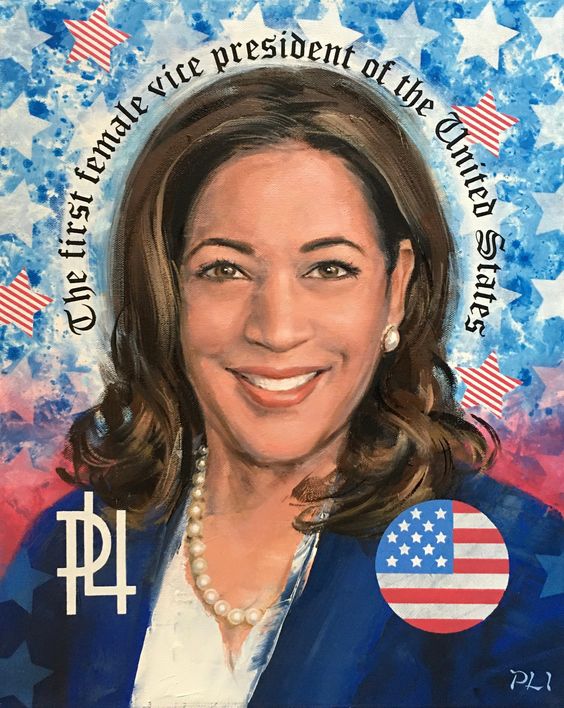 Reuters: Exclusive: Harris leads Trump 44% to 42% in US presidential race, Reuters/Ipsos poll finds.
Vice President Kamala Harris opened up a marginal two-percentage-point lead over Republican Donald Trump after President Joe Biden ended his re-election campaign and passed the torch to her, a Reuters/Ipsos poll found.
That compares with a marginal two-point deficit Biden faced against Trump in last week’s poll before his Sunday exit from the race.
The new poll, conducted on Monday and Tuesday, followed both the Republican National Convention where Trump on Thursday formally accepted the nomination and Biden’s announcement on Sunday he was leaving the race and endorsing Harris.
Harris, whose campaign says she has secured the Democratic nomination, led Trump 44% to 42% in the national poll, a difference within the 3-percentage-point margin of error.
Harris and Trump were tied at 44% in a July 15-16 poll, and Trump led by one percentage point in a July 1-2 poll, both within the same margin of error.
Ali Vitali at NBC News: Democrats are cautiously optimistic that they finally have the first female president.
In Vice President Kamala Harris’ quick, if unorthodox, rise to the top of the Democratic ticket, elected officials, activists and operatives see in her a new chance to beat Donald Trump and make history in one swoop.
Eight years after Trump beat Hillary Clinton, Harris could be the first female president and the first Black woman to hold the nation’s top job, as well.
Democrats are somewhat optimistic, now set in a landscape they didn’t have in 2016: a messenger in Harris who is uniquely positioned to energize voters following the Supreme Court’s decision to overturn national abortion rights, more proof from the ballot box that women can win in battleground areas and the knowledge that Trump himself is beatable — if still politically dangerous.
“The lessons that still apply [from 2016] are that people need to take Trump and his supporters seriously,” Shaunna Thomas, who co-founded and runs the pro-women group Ultraviolet, told NBC News. “That’s even more of a top-line message than whether or not a woman can win the presidency.” [….]
Now, many of the party operatives and groups who pushed for Clinton to be the first female president are working, to borrow a phrase from President Joe Biden, to “finish the job.”
“‘Let’s finish the job’ is actually for us, too, from 2016,” said Mini Timmaraju, who leads the pro-abortion-rights group Reproductive Freedom for All and was the women’s vote director on Clinton’s 2016 campaign. “We ran and lost against Donald Trump and we suffered an incredible, horrific loss nationwide overturning Roe and so much damage to our country that this is sort of the ultimate fight back for us.”
A Harris victory in November would mean finishing the job that many of those operatives started with Clinton, one that extends further back to Shirley Chisholm, of New York, the first Black woman in Congress, who ran her own historic long-shot presidential bid in 1972.
“The arc of the moral universe is long, but it bends towards justice,” Rep. Barbara Lee, D-Calif., who once worked to elect Chisholm and now backs Harris, told NBC News.
 Hillary Clinton speaks for herself at The New York Times this morning: How Kamala Harris Can Win and Make History.
History has its eye on us. President Biden’s decision to end his campaign was as pure an act of patriotism as I have seen in my lifetime. It should also be a call to action to the rest of us to continue his fight for the soul of our nation. The next 15 weeks will be like nothing this country has ever experienced politically, but have no doubt: This is a race Democrats can and must win.
Mr. Biden has done a hard and rare thing. Serving as president was a lifelong dream. And when he finally got there, he was exceptionally good at it. To give that up, to accept that finishing the job meant passing the baton, took real moral clarity. The country mattered more. As one who shared that dream and has had to make peace with letting it go, I know this wasn’t easy. But it was the right thing to do.
Elections are about the future. That’s why I am excited about Vice President Kamala Harris. She represents a fresh start for American politics. She can offer a hopeful, unifying vision. She is talented, experienced and ready to be president. And I know she can defeat Donald Trump.
There is now an even sharper, clearer choice in this election. On one side is a convicted criminal who cares only about himself and is trying to turn back the clock on our rights and our country. On the other is a savvy former prosecutor and successful vice president who embodies our faith that America’s best days are still ahead. It’s old grievances versus new solutions.
On the attacks Harris will face:
Ms. Harris’s record and character will be distorted and disparaged by a flood of disinformation and the kind of ugly prejudice we’re already hearing from MAGA mouthpieces. She and the campaign will have to cut through the noise, and all of us as voters must be thoughtful about what we read, believe and share.
I know a thing or two about how hard it can be for strong women candidates to fight through the sexism and double standards of American politics. I’ve been called a witch, a “nasty woman” and much worse. I was even burned in effigy. As a candidate, I sometimes shied away from talking about making history. I wasn’t sure voters were ready for that. And I wasn’t running to break a barrier; I was running because I thought I was the most qualified to do the job. While it still pains me that I couldn’t break that highest, hardest glass ceiling, I’m proud that my two presidential campaigns made it seem normal to have a woman at the top of the ticket.
Ms. Harris will face unique additional challenges as the first Black and South Asian woman to be at the top of a major party’s ticket. That’s real, but we shouldn’t be afraid. It is a trap to believe that progress is impossible. After all, I won the national popular vote by nearly three million in 2016, and it’s not so long ago that Americans overwhelmingly elected our first Black president. As we saw in the 2022 midterms, abortion bans and attacks on democracy are galvanizing women voters like never before. With Ms. Harris at the top of the ticket leading the way, this movement may become an unstoppable wave.
Time is short to organize the campaign on her behalf, but the Labour Party in Britain and a broad left-wing coalition in France recently won big victories with even less time. Ms. Harris will have to reach out to voters who have been skeptical of Democrats and mobilize young voters who need convincing. But she can run on a strong record and ambitious plans to further reduce costs for families, enact common-sense gun safety laws and restore and protect our rights and freedoms.
Read more at the link. I got past the paywall by using the link at memorandum.com.
 Noah Berlatsky at Public Notice: The Kamala Harris hype is real.
Just three days after President Joe Biden dropped out of the presidential race and endorsed Vice President Kamala Harris, Harris has already secured enough delegates to be the presumptive Democratic nominee. The speed with which the party came together around her is inspiring.
Harris has been endorsed by almost everyone who matters in Democratic politics — senators, governors, key organizations, unions. She’s also raised some $100 million and counting from more than 880,000 small donors, more than 60 percent of whom hadn’t contributed before this cycle. If anyone was on the fence about whether Biden stepping aside was the right move, they probably aren’t now.
The past three days have been a remarkable display of Democratic consensus and unity after a bitter intra-party argument over whether Biden should be the nominee. The rush to support Harris also indicates that the party believes she can beat the Republican candidate — giant orange fascist blight Donald Trump.
New Harris-Trump polling started trickling out yesterday, and it contained good news for Democrats. A Reuters/Ipsos poll taken entirely after Biden announced his decision to step aside showed Harris up two points nationally (and up four points when RFK Jr. is included). Another poll showed Harris and Trump tied.
Given that Harris just had her first rally as the presumptive candidate yesterday, we’ll need more time to figure out exactly how the race has changed. But there are already a number of reasons to be hopeful about her prospects of winning this November.
Of course there are risks.
The first indication of Harris’s strength is … well, pretty much everything that’s happened since Sunday.
Harris has been pilloried over the last four years as a middling politician, largely on the grounds that she suspended her 2020 presidential campaign before Iowa. The reliably confused Pamela Paul at the New York Times, for example, argued this week that “Harris is a fundamentally weak candidate” who “fizzled out” in the presidential race.
As political scientist Jonathan Bernstein points out, though, Harris’s candidacy didn’t fizzle out. She had solid endorsements and decent polling — but she figured out that Biden was too far ahead to beat in a very crowded field and dropped out early. That allowed her to stay on good terms with party actors and put her in a position to get the vice presidency. That’s not losing. It’s winning.
We have even better recent evidence that Harris is a skillful politician, though. Namely, she just nailed down the presidential nomination in around 48 hours and raised $100 million.
The rush to endorse Harris and the flood of donations was so speedy and so uniform that it looked easy. But there was no guarantee it would go so well. AOC warned last week before Biden stepped down that many donors “do not want to see the VP be the nominee.” Some leading Democrats, including former House Speaker Nancy Pelosi, were calling for an open process or some kind of mini primary.
Harris certainly benefited from the fact that Democrats are sick of division and eager to move on to uniting against Trump. But her strength also indicates that she has used her vice presidency to solidify her standing with most party actors and interest groups — not least with Joe Biden himself. Harris engineered an unprecedented victory immediately following an unprecedented moment of uncertainty for the party. That’s the work of a talented politician.
Read more specifics at Public Notice.
Jill Filipovic from her Substack: It’s Fun When Politics Are Fun.
Going with Harris also more or less splits the difference in risk aversion within the party. The core of the debate over whether Biden should drop out hinged on one’s perception of where the biggest risks sat: Were they primarily vested in the candidate himself? Or were they in the potential for chaos?
 The Democrats who thought the risks sat with the candidate got their way when Biden dropped out. Those who feared chaos are getting their way now, as the party rallies around Harris and avoids an open primary. It’s not how I would have chosen to do things, but there’s nevertheless a lot to recommend it.
Also: This is fun, isn’t it?
The Biden-Trump debate and the attempted Trump assassination and the days after were very much not fun; they were dreadful, scary, and divisive, and I was ultimately feeling pretty resigned to four more years of a Trump presidency. It frankly didn’t seem like Republicans were having much fun either. And not that politics need to be entertainment or a party — I frankly wish more people would elect boring highly competent technocrats — but also, people like parties because parties are fun.
For the first time this cycle, the election feels fun. The memes are not dark. The soundtrack is good. Harris is inspiring people not because she promises to stick it to Trump, but because she promises something better. Republicans are mocking her laugh, but god, how good does it feel to have a candidate who really laughs? Her dorky mom-isms feel sweet and endearing. The girls and the gays love her, and the youngs are talking about her in ways I frankly don’t understand, and isn’t that great. Sure, we danced in the streets when Biden won in 2020 because it was such a relief to see four years of Trump come to an end and also we had been so cooped up inside thanks to Covid. But no one was dancing at a Biden rally. Harris, on the other hand, is the chief executive of Brat Summer.
No, fun alone doesn’t win elections. But it sure doesn’t hurt. And Trump knows this as well as anyone.
Max Burns at The Hill: It’s time to talk about Donald Trump’s age.
At 78, former President Donald Trump is now the oldest presidential nominee in American history. If he wins re-election in November, Trump will end his term just a few months shy of his 83rd birthday, making him two years older than President Joe Biden is now.
In short, Donald Trump has a serious age problem.
The media and Republican political leaders should treat concerns about Trump’s advanced age every bit as seriously as they did in Biden’s case. Trump can put those concerns to rest by making good on his promise to take a public cognitive test. Is he still willing to “do it for the good of the country,” as he said back on July 12?
After all, comparing footage from Trump’s 2015 presidential announcement to footage from earlier this year shows that Trump isn’t quite the man he used to be. The former president now routinely confuses names when speaking off the cuff — including the name of his own doctor — and struggled to finish his sentences during a Nashville rally earlier this year. How can the American people be sure Trump’s stumbles aren’t part of a sustained pattern of cognitive decline?
Trump has repeatedly said he believes all presidential candidates should be “mandated to take a cognitive test” regardless of age. There’s no time like the present, because the concerning evidence of Trump’s mental decline has been mounting for years.
His memory problems are well-documented; the former president doesn’t seem able to recall what he was doing or who he spoke to for most of the day on Jan. 6, 2021. He also regularly forgets who the sitting president is, often confusing Joe Biden and Barack Obama during unscripted remarks. That seems pretty important.
Concerns about how Trump’s age could weigh on the Republican ticket aren’t exclusive to Democrats like me. Sixty percent of voters now believe Trump is too old to serve, according to a post-debate ABC News/Washington Post/Ipsos poll. That’s up from 44 percent a little over a year ago. Of voters who watched Trump’s rambling debate performance last month, fully 50 percent believe the former president should withdraw from the race and focus on his mental health.
Hahaha! Trump looks really old compared to Kamala, who is extremely energetic and enthusiastic.
 You probably heard about the Fortune scoop yesterday about Elon Musk donating to Trump. The story is behind a paywall, but here’s the gist from The Guardian: Elon Musk denies report he will donate $45m a month to Trump Super Pac.
Tesla CEO Elon Musk has denied reports that emerged last week that he was planning to donate $45m a month to a Super Pac focused on getting Trump elected.
On Tuesday, Musk appeared on Jordan Peterson’s show, where he said the claim was “simply not true”. “I am not donating $45m a month to Trump,” he said.
“Now what I have done is that I have created a Pac or Super Pac or whatever you want to call it,” he said. It is called the America Pac.”
Super Pacs, short for Political Action Committees, are independent political organisations to which donors can give unlimited amounts of money, while donations to individuals or non-Super Pacs are capped.
After the Peterson interview, Musk replied on X to a clip from the interview saying, “Yeah”, and to another tweet referencing the reports saying, “Yeah, it’s ridiculous. I am making some donations to America PAC, but at a much lower level and the key values of the Pac are supporting a meritocracy & individual freedom. Republicans are mostly, but not entirely, on the side of merit & freedom”.
The denial comes days after Joe Biden withdrew from the presidential race, endorsing his vice-president Kamala Harris, who now has enough delegates to claim the Democratic nomination in August.
Also on Tuesday, the New York Times reported that the Super Pac was being staffed by former aides to Florida Governor Ron DeSantis’s presidential campaign. “The Super Pac has acquired an air of mystery in the Trump orbit, with other outside groups largely in the dark about its plans,” the Times reported….
“The intent is to promote the principles that made America great in the first place,” Musk said on Peterson’s show. “I wouldn’t say that I’m for example Maga,” he added, referring to the Trump catchphrase. “I think America is great. I’m more M-A-G, make America greater.”
It sounds like Trump probably couldn’t use this money for legal expenses.
Amanda Marcotte at Salon: Kamala Harris makes Donald Trump do the one thing he fears most: Get up and get out.
The joyful reception that Vice President Kamala Harris received from Democrats when President Joe Biden dropped out of the race and endorsed her was rooted largely in the contrast between the relatively youthful 59-year-old woman and the increasingly frail 81-year-old president. She gives good speeches! She’s fun and energetic! And she can campaign aggressively, especially with Biden remaining president, allowing Harris to make campaigning her full-time job. People in focus groups frequently say they haven’t seen much of Harris these past four years. Well, that’s about to change, since she is well-positioned to give endless interviews, attend frequent events, and give oh-so-many speeches. The contrast with Biden, who struggled to find the energy to campaign on top of running a country, will be notable.
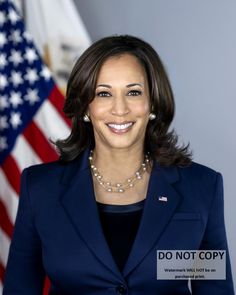 The contrast stands not only with her boss but with her new opponent. It isn’t just Biden who has to limit public appearances, lest he get tired and cranky. Donald Trump, at age 78, has also been mostly absent from the traditional campaign rigamarole. He goes to occasional rallies, where his fans swoon over him, but which get relatively little press. There’s no incentive to cover his usual incoherent stump speech because he doesn’t break any news. He gives interviews to right-wing outlets, which mostly ask him how he got to be so darn perfect while avoiding topics that might draw interest from the larger public. He unloads his far-right venom on Truth Social, but since most journalists ignore that, he might as well be blogging into the void. He golfs a lot and, of course, had to sit in the untelevised trial in May, which resulted in 34 felony convictions. But to average Americans, especially swing voters who will decide the race, Trump is mostly out of sight and out of mind.
This appears very much by design. While they are being graded on a steep curve, Trump’s campaign managers are, as reported, more professional and competent than his previous hires. They’re no doubt aware that the biggest obstacle to persuading skeptical voters to back Trump is the candidate himself. His overt racism, sociopathic impulsivity, and off-the-charts narcissism turn off everyone who isn’t deeply in the MAGA cult. Every time Trump talks, it confirms the Biden campaign’s narrative that the former president is a self-centered jerk who will sell out the country for his own interests.
Trump has so far been able to stay out of the spotlight because of Biden. The president had a lightweight campaign presence. He barely did any interviews or press conferences, which only fueled speculation that the Biden team was hiding their candidate’s condition from public view. This enabled Trump to hang back, as well. Trump’s campaign created the illusion that he was campaigning more vigorously than Biden, by putting him out there in situations noticed by the press but not by ordinary voters. The rallies looked campaign-like while keeping Trump out of the news. Trump gave a lengthy interview to Time, in which he hinted at election violence and supported abortion bans. These views hurt him with swing voters, but almost no one heard about it, because it was a print interview in a publication few people outside of the Beltway read.
I have to admit, I was wrong. I’m still sad that Biden was forced to step down in such a humiliating way. But he handled it very well by waiting until the Republican Convention was over. Now they have to complete retune their arguments and attacks. No more Hunter Biden to kick around, no more old age insults, no more “Let’s go, Brandon.” Back to Marcotte:
Astute readers will remember that the reason Biden wanted a June debate was to remind voters what a vile person Trump is since so many memories had faded. If Biden had been coherent, the plan would have worked. As Heather “Digby” Parton wrote, Trump “couldn’t control himself and behaved once again like the undisciplined, lying, vulgarian who half the country already hates.” He told laughable lies, such as denying sex with Stormy Daniels. The post-debate fact-checker spoke as fast as he could to debunk Trump’s lies and finally had to quit from exhaustion after three minutes.
But once again, Biden’s age worked to cover up Trump’s myriad deficiencies. It was too troubling, watching the president stumble, to even pay that much attention to Trump’s same old lie-and-hate routine. Not just for journalists, either. Voters who watched the debate were too worried about Biden to pay much mind to Trump.
With Harris as the Democratic nominee, however, Trump is caught in a no-win situation. If he continues to hang back from the campaign trail while she’s out there hustling, he’ll start inviting the questions about whether he’s too old and weak, the exact questions that plagued Biden. But if he starts doing more media and events that are outside the MAGA bubble, he will draw negative attention and remind voters why they hate him. In the face of this paradox, Trump’s first impulse was to keep pretending Biden is his opponent. As reality sets in, Trump’s freaking out.
There more at the Salon link.
That’s all I have for you today. I’m very anxious to see what happens next in this reinvigorated campaign.
Did you like this post? Please share it with your friends:
Posted: February 28, 2024 | Author: bostonboomer | Filed under: 2024 Elections, 2024 presidential Campaign, Donald Trump, Joe Biden | Tags: 2024 Michigan primaries, Alabama IVF ruling, Birth Control, Gaza, low quality polls, Niki Haley, polls, separation of church and state, Simon Rosenberg, uncommitted voters, voters concerned about extremism |
Good Morning!!

Henri Matisse, Three Sisters
I’m going to get this out of the way before I get to the real news. Last night President Biden won 81.1 percent of the votes in the Michigan Democratic primary, but it isn’t easy to find that out from the press reports. All of the focus is on the uncommitted votes, which got 13.3 percent. Here is one representative sample:
The Washington Post: Biden wins Michigan primary but faces notable showing by ‘uncommitted.’
President Biden won Michigan’s Democratic primary on Tuesday but faced a notable challenge from voters selecting “uncommitted” to protest his handling of Israel’s military campaign in Gaza, a potential sign of vulnerability for Biden among rank-and-file Democrats.
Democratic leaders in the state were bracing for tens of thousands of “uncommitted” votes, as Biden aides and allies sought to tamp down concerns about the strong showing by those aiming to warn the president he could lose the pivotal state in November if he does not change course and push for a cease-fire in Gaza.
With nearly 99 percent of the ballots counted, there were more than 100,000 “uncommitted” votes….
In the weeks leading up to the Democratic primary, Arab American and liberal activists launched a concerted push to get Democrats to vote “uncommitted” as a way to protest Biden’s handling of the Israel-Gaza war, especially his decision not to call for a cease-fire. The group Listen to Michigan declared victory soon after polls closed, noting that it had surpassed its stated goal of 10,000 uncommitted votes.
manager and sister of Rep. Rashida Tlaib (D-Mich.), said in a statement Tuesday. “Tens of thousands of Michigan Democrats, many of whom who voted for Biden in 2020, are uncommitted to his re-election due to the war in Gaza.”
She added: “We don’t want a Trump presidency, but Biden has put [Israeli Prime Minister Benjamin] Netanyahu ahead of American democracy. We cannot afford to pay the bill for disregarding Palestinian lives should it come due in November.”
They don’t want a Trump presidency, but they plan to try to enable one anyway, in the process ending American democracy. But here’s some history on uncommitted votes in Michigan:
Biden campaign officials, however, said the group’s goal of 10,000 votes was artificially low, as 20,000 people have voted uncommitted in each of Michigan’s past three Democratic presidential primaries, even without any organized effort urging them to do so. The president’s allies also cited comments by some of those who threw their support behind the campaign that despite their anger at Biden’s policies, they plan to vote for him in November. A campaign official also noted that there were several “uncommitted” delegates for Barack Obama in 2012, coming from North Carolina, Maryland, Alabama and Kentucky.

Family group reading, by Mary Cassatt
I don’t know any Democrat who doesn’t want a cease fire in the brutal Israel-Hamas war, including President Biden. But Biden can’t magically force either Netanyahu or Hamas to agree to one. Negotiations take place behind closed doors; making them public would defeat their purpose.
Other mainstream news sources also emphasize the uncommitted vote against Biden, but there is little attention to the fact that Trump underperformed the polls, just as he did in New Hampshire and North Carolina. He got only 68 percent of the vote in Michigan, while Niki Haley won nearly 27 percent, once again demonstrating that close to 30 percent of Republicans don’t want Trump as their nominee.
From Simon Rosenberg at Hopium Chronicles: Trump Is Not Strong, Or Winning – No Red Waving 2024 Please.
It Is Wrong To Say Trump Is Winning The Election, Or Is Somehow Favored. He Is Weak, Not Strong – In 2022 a narrative developed about the election – that a red wave was coming – that commentators just couldn’t shake even though there was plenty of data suggesting the election could end up being a close competitive one. I feel like that we are beginning to enter a similar moment in 2024 with the various assertions of Trump’s strengths. The “red wave” over estimated Republican strength and intensity, discounted clear signs of Democratic strength and intensity and was it would be ridiculous, given what happened in 2022, for us to do this all over again this year.
Let me say it plainly – Donald Trump is not ahead in the 2024 election. He is not beating Joe Biden. He is not in a strong position. Signs of Trumpian and broader GOP weakness is all out there for folks to see – if they want to see it. Let’s dive in a bit:
Trump is not leading in current polling – For Trump to be “ahead” all polls would have be showing that. They aren’t. The last NYT poll had Biden up 2, the new Quinnipiac poll has Biden up 4.
Given the spike in both junky, low quality polls and GOP-aligned polls the averages can no longer be relied on – this was a major lesson of 2022. Remember using the averages Real Clear Politics predicted that Republicans would end up with 54 seats. They have 49.
Stripping out GOP aligned polls, and less reliable polling, we find the race clearly within margin of error, which means the election is close and competitive. In a recent analysis, “Trump’s lead over Biden may be smaller than it looks,” The Economist broke down recent polling by pollster quality and found the race dead even among the highest quality pollsters [click the link to see the chart]….
Asserting that somehow Trump leads is pushing data beyond what it can tell you. With margin of error a 1-2 point lead is not an actual lead – it signifies a close, competitive election.
It is also early, and Democrats have not had a competitive primary. Lots of folks are not engaged. Look at this chart from Morning Consult. If the Democratic coalition starts coming home as Biden ramps up and Trump becomes the R nominee he will jump ahead by a few points….
We learned in 2022 that centering our understanding of American politics around wobbly polling and polling averages was risky. No reason we should be doing it again this cycle. Lots of other things we can throw into the strategic blender to understand where we are.
Read the rest at Hopium Chronicles. It’s quite interesting.
The mainstream press seems to want another Trump presidency, because that will make them more money. Biden is competent and doing a good job, but that’s so boring. They want the chaos back again–never mind that Trump would likely prosecute journalists in a second term.

Rene Magritte, The Subjugated reader
Apparently, Trump is a bit nervous about how many votes Niki Haley is getting in the Republican primaries.
Adam Wren at Politico: Trump tried to ignore Haley. He barely lasted a day.
For a full 24 hours on Saturday, Donald Trump did not mention Nikki Haley by name, ignoring her both in a freewheeling address to the Conservative Political Action Conference and after he won the primary in South Carolina.
His campaign said they were turning the page, focusing squarely on the general election. One aide, when asked about the absence of Haley, quipped: “Who?”
By Sunday, that strategic restraint was gone.
In a torrent of posts on Truth Social, just weeks before he is expected to clinch the nomination, Trump had no appetite for comity, blasting Haley as “BRAINDEAD” and “BIRDBRAIN.” He relished the news that Americans for Prosperity would stop spending on Haley’s presidential campaign. He touted a polling lead in Michigan’s primary. “When will Nikki realize,” he posted, “that she is just a bad candidate?”
Maybe when she stops getting 30 percent of the Republican primary votes?
This was not a magnanimous candidate looking to mend the intraparty fracture on full display in exit polls from each of the early electoral contests. This was not a competitor looking to pivot to going after President Joe Biden.
This was a former president entering the general election actively exacerbating divisions within the GOP — at a time when some Republicans are openly warning about the risk of alienating even a small segment of the Republican electorate. Trump has every rational incentive to make overtures to Haley and her supporters, who delivered her roughly 40 percent of the vote in New Hampshire and South Carolina and who are the kind of voters Trump will need to turn out in Michigan and Pennsylvania in November. But he refused to do so — or, perhaps, was incapable of it — despite making head feints in that direction.
“In the exit polls in the three early states, roughly 20 percent are saying they’re not going to vote for Trump,” said Christine Matthews, a Republican pollster and president of Bellwether Research and Consulting. “If that’s true, you need to have like 85 to 90 percent of your base. I do think that he’ll have some problems consolidating, particularly your well-educated, suburban Republicans.”
This is interesting, from Reuters: Exclusive: Extremism is US voters’ greatest worry, Reuters/Ipsos poll finds.
Worries about political extremism or threats to democracy have emerged as a top concern for U.S. voters and an issue where President Joe Biden has a slight advantage over Donald Trump ahead of the November election, a new Reuters/Ipsos poll showed.
Some 21% of respondents in the three-day poll, which closed on Sunday, said “political extremism or threats to democracy” was the biggest problem facing the U.S., a share that was marginally higher than those who picked the economy – 19% – and immigration – 18%.
Biden’s Democrats considered extremism by far the No. 1 issue while Trump’s Republicans overwhelmingly chose immigration.
Extremism was independents’ top concern, cited by almost a third of independent respondents, followed by immigration, cited by about one in five. The economy ranked third.
During and since his presidency, Trump has kept up a steady drumbeat of criticism of U.S. institutions, claiming the four criminal prosecutions he faces are politically motivated and holding to his false claims that his 2020 election defeat was the result of widespread fraud.
That rhetoric was central to his message to supporters ahead of their Jan. 6, 2021, assault on the U.S. Capitol.
Overall, 34% of respondents said Biden had a better approach for handling extremism, compared to 31% who said Trump, the frontrunner for the Republican presidential nomination.
The poll helps show the extent to which Biden’s re-election bid could rely on voters being motivated by their opposition to Trump rather than enthusiasm over Biden’s candidacy.
The fallout from the Alabama IVF ruling is still in the news.
Lisa Neeham at Public Notice: They’re coming for birth control next.
In brief, the reason the Alabama Supreme Court’s opinion implicates and outlaws IVF is that the state has a Wrongful Death of a Minor statute, and the court decided this applies to “all unborn children, without limitation.” But there’s no language in the statute that says this. Rather, it’s just that over the last 15 years, the Alabama Supreme Court has issued a series of rulings saying that the undefined term “minor child” in the statute can be stretched to “unborn children” regardless of what state of development the embryo is at. Once the court created such an expansive definition, the decision that frozen embryos are people was inescapable.

By Utagawa Kuniyoshi
To be fair, though, the Alabama Supreme Court is entirely made up of conservative Republicans, they were a bit hamstrung in their decision. Alabama’s state constitution states that “it is the public policy of this state to ensure the protection of the rights of the unborn child in all manners and measures lawful and appropriate.” But that doesn’t necessarily mean the court was required to, as it did here, extend that “unborn child” definition to what it calls “extrauterine children” — embryos frozen by people pursuing IVF….
For people not saddled with the misguided anti-choice belief that a tiny clump of cells is the same as a person, this is a non-controversial process. It enhances the chance of pregnancy and allows people to plan for future children without undergoing multiple invasive egg retrieval cycles. But if one subscribes to the notion of fetal personhood — that a fetus is quite literally a person, with all the attendant privileges that confers — then those frozen embryos are the same as babies.
This is, of course, a religious, not scientific belief. Chief Justice Parker, in his concurring opinion, made clear that his vote, at least, stems directly from his religious beliefs rather than being grounded in the law. Citing Augustine, Thomas Aquinas, John Calvin, the Ten Commandments, and the King James Bible, Parker concludes that “even before birth, all human beings bear the image of God, and their lives cannot be destroyed without effacing his glory.”
Notably, none of those things are legal precedent. Indeed, in a country founded on the separation of church and state, they shouldn’t inform a court holding. However, since religious conservatives dominate the US Supreme Court, that separation has largely collapsed. This has emboldened conservative litigants and conservative state and federal judges to take ever more anti-choice stances.
A bit more:
Reproductive health activists have been sounding the alarm about the anti-choice attacks on IVF for years, particularly in the wake of the Dobbs decision overturning Roe v. Wade. At least two prominent anti-choice groups, Americans United for Life and Students for Life, have railed against IVF. The chief legal officer for Americans United for Life, Steve Aden, called IVF “eugenics” and said that IVF created “embryonic human beings” that were destroyed in the process. Students for Life called IVF “damaging and destructive.”
These same anti-choice groups also hate birth control, and the Dobbs decision paved the way for them to mount a theocratic attack on it too. Christopher Rufo, who ginned up a panic over benign diversity initiatives and helped force out the first Black president of Harvard, Claudine Gay, has already telegraphed that this is his next attack.
Over on Elon Musk’s increasingly Nazi-fied social media site, X, Rufo is spewing rhetoric about how “the family structure disintegrated precisely as access to birth control proliferated” and that recreational sex is bad and leads to single-mother households.
Rufo isn’t alone. The Heritage Foundation, which is also busy with a blueprint for a second Trump presidency that would destroy the administrative state and whose leader is still pushing the big lie that Trump won the 2020 election, has also called for the end of birth control. Also over on X, Heritage’s official account posted last year that “a good place to start would be a feminist movement against the pill and … returning the consequentiality to sex” [….]
And there you have it. Religious conservatives are calling for a return to a world where sex isn’t recreational or for pleasure but is instead fraught with consequences — namely, pregnancies that can’t be terminated even when the pregnant person’s life is in danger. To do this, however, they would need to succeed in getting the Supreme Court to overturn Griswold v. Connecticut, the 1965 case that invalidated restrictions on birth control.
There’s more at the link.
Sarah Lipton-Lubet at Slate: Republicans’ Absurdist Reproductive Policies Are Coming for Us All.
Nearly two years ago, late into the night on a Monday, I had the terrifying realization that I needed to move my embryos. Immediately.
A few hours earlier—just as I was starting to wrap up work for the day—my phone had lit up in what felt like one long, continuous stream of alerts. Politico had just obtained a leaked copy of the Supreme Court’s draft Dobbs opinion overturning Roe v. Wade. As a reproductive rights attorney leading a Supreme Court reform organization, I knew my immediate next steps. Conference call. Media statement. Email to our supporters. I’d been preparing for this moment since Donald Trump was elected.

I am a child, by Gustav Adolph Hennig
But what I had spent less time thinking about was how this would affect me personally. I wasn’t at all prepared for what to do about my embryos. After years of miscarriages and egg retrievals, I did not have a baby. But I had my embryos. Sitting in nitrogen tanks. In a red state—a red state that had recently passed a draconian anti-abortion bill that, among other things, granted “an unborn child at every stage of development, all rights, privileges and immunities available to other persons.”
That legislation was being challenged in federal court, but now Roe would be gone by the end of June. Amid a swirl of unknowns (What would happen with the litigation? How would that law impact IVF? Would I somehow be prohibited from moving my embryos in the future?) I knew one thing with absolute certainty: If I wanted to control what happened to my embryos, I had to get them the heck out of Arizona, and fast.
Unfortunately, the clinics I called in my attempt to find a new home for the embryos didn’t seem to match my urgency. They couldn’t understand why we would move the embryos at all. Their pace and paperwork was business as usual. Even some of my like-minded friends understood my concern, but not my level of panic, and action. I’ll admit, I had momentary doubts about whether my alarm was misplaced.
Needless to say, the recent Alabama Supreme Court decision—effectively outlawing IVF by declaring that embryos are, legally speaking, children—put to rest any lingering questions about whether I was right to be concerned. As Mark Joseph Stern reported, embryo shipping services have already said they will no longer ship to or from Alabama.
And isn’t that the story of reproductive freedom in America in a nutshell? Time and again, advocates sound the alarm only to be told that we are being hysterical. Then we watch in horror as our worst fears materialize.
Read the rest at Slate.
One more on this topic, from Politico: Senate GOP poised to block IVF protection bill.
Senate conservatives are signaling they’ll block Wednesday’s planned Democratic bid to enshrine protections for in-vitro fertilization into federal law – and they’re calling IVF a states-rights issue.
Sen. Tammy Duckworth (D-Ill.) is planning to seek unanimous consent to pass her proposal to federally protect IVF, which means any one senator can easily block its passage. This isn’t the first time she’s brought up her bill — Sen. Cindy Hyde-Smith (R-Miss.) objected when Duckworth tried to pass it unanimously in 2022.
But Duckworth’s bill is surging back to the forefront as Republicans face uncomfortable questions about an Alabama Supreme Court ruling restricting IVF.
Hyde-Smith’s office did not respond when asked if she would object again to Duckworth’s bill, and the GOP senator ignored Capitol hallway questions from reporters, as is her usual practice. Other Republicans are already expressing reservations about the bill, though – meaning its chances at slipping through the chamber are slim, at best.
“I don’t see any need to regulate it at the federal level,” said Sen. Roger Marshall (R-Kan.), an OB-GYN by trade, who would not say whether he’d block the bill. “I think the Dobbs decision puts this issue back at the state level, and I would encourage your state legislations to protect in-vitro fertilization.”
“It’s idiotic for us to take the bait,” said Sen. J.D. Vance (R-Ohio), who clarified he was referring not to Duckworth’s bill on its face but to Democrats’ attempts to use the proposal as an IVF messaging tool. Vance said he’s not yet reviewed the actual bill.
Regardless, Republicans’ hesitation over the IVF protection bill highlights their election-year jam: Democrats will continue trying to tie them to the Alabama ruling, which has shut down IVF facilities in the state.
And GOP statements supporting IVF — as the Senate Republican campaign arm and several candidates put out last week — might fall flat with voters if Democrats can point to specific instances when their opponents failed to protect the procedure. Exhibit A: Speaker Mike Johnson, who recently issued a statement supporting IVF but has previously supported legislation that could restrict access to the fertility tech.
That’s all I have for you today. What do you think? What other stories have captured your interest?
Did you like this post? Please share it with your friends:
Posted: November 8, 2022 | Author: bostonboomer | Filed under: 2022 Elections, just because | Tags: DOJ Civil Rights Division, midterm elections 2022, polls, train wreck |
Good Day, Sky Dancers!!
The big day has arrived. This election truly has historic significance. We won’t know the results for sure tonight, but in a day or so we’ll have a sense of whether U.S. democracy can survive. I’m no expert, but this guy is:
No one really know whether to believe the polls, but the media has already decided that a red wave is coming. It’s also likely that results in a number of states won’t be clear for some time, and of course we know that Republicans plan to contest any losses and generally cause mayhem wherever they can. Here’s a piece from a couple of days ago on the coming confusion.
Charlie Mahtesian at Politico: The looming election disaster.
It’s time to talk about it out loud: This year’s election is going to be a train wreck. Not just Election Day, but the weeks and perhaps even months to come.
For starters, it might not be clear who controls the House for days, or longer. In the Senate, it could be weeks. In fact, if the polling averages are correct, we might not know who controls the Senate until after a potential early December runoff in Georgia.
But that’s the least of the trouble ahead. All the elements of a perfect storm are present: a rise in threats against election administrators and poll workers; outdated and overstrained election infrastructure; a brain drain of officials experienced with the complexities of administering elections; external cyber threats; and an abundance of close races that could extend long past Election Day as mail-in and provisional ballots are counted, recounted and litigated.
Then, there are the hundreds of Republican candidates up and down the ballot with a record of denying or expressing doubts about the 2020 presidential results — a few were even present at the Jan. 6 Capitol riot. At least a dozen candidates running in competitive Senate and governor and secretary of state contests refused to commit or declined to respond when asked whether they’ll accept the results of their races.

Great train wreck of 1918
A blowout Republican victory might remove many of the most combustible elements. But short of a red wave Tuesday, we’re looking at an ugly finish.
If those prominent election-denying candidates lose, it will not be graciously — remember, these are candidates whose political brands are rooted in their refusal to accept the 2020 election results, and their own high-profile and extra-legal efforts to overturn them. For them, the traditional pain and disappointment of defeat will be amplified because of the high expectations of midterm GOP success. And there are no party graybeards who will be able to talk them down — in fact, the post-election recriminations will likely find backing from party leaders and elected officials who fear antagonizing a base that’s been primed to believe the 2020 election was rigged.
The wellspring of these false claims, former President Donald Trump, is already laying the predicate — last week, he sought to cast doubt on the integrity of Pennsylvania’s results by claiming the 2022 results there are rigged as well.
Click the link to read the rest.
Another article on the upcoming confusion by Kelly Weill at The Daily Beast: These Counties Already Want a Recount and the Votes Aren’t Even In Yet.
The morning before polls opened in Cochise County, Arizona, a judge still had not ruled on how local votes would be counted.
On one side of the case were state officials and voters who opposed an effort to audit Tuesday’s election by hand. Arguing in favor of an audit were some of Cochise County’s Republican officials, backed by lawyers previously involved in a chaotic 2021 election audit in Arizona’s Maricopa County. Only on Monday evening—hours before the election—did a judge rule against a hand recount of the entire Cochise vote.

Train wreck in Iowa with hazardous materials, May 2021
Cochise, a rural county on the southern border, is one of several to preemptively call for an audit of its 2022 midterm vote. Although counties routinely review their elections, this new wave of audit enthusiasts is cozy with conspiracy theorists, and promotes methods like hand-counting ballots, which elections security experts describe as one of the most surefire ways to accidentally introduce errors into a vote count.
Hand-counting ballots is a bad idea, elections experts say. They cost more, take longer, and open opportunities for meddling from partisan kooks (see: the Maricopa audit, during which conspiracy-driven volunteers searched ballots for bamboo fibers, under the mistaken belief that ballots had been imported from China). Even without involvement from election truthers, hand counts are more error-prone than electronic counts. A 2018 study found hand counts to be less accurate than machine-counts, and a 2012 study found hand counts to have 2 percent error rate—a worryingly high margin that could tip elections, particularly in neck-and-neck races like several in this year’s midterms….
But Republicans are demanding hand recounts anyway.
Some of the loudest calls for preemptive audits come from Republican strongholds in swing states like Arizona, Pennsylvania, and Nevada. Officials in Pennsylvania’s Lycoming and York counties have already committed to hand recounts, although York County officials said it would only examine ballots from three of its 161 precincts.
York County’s decision to hand-audit its election came after a meeting between York County President Commissioner Julie Wheeler and Audit the Vote PA, the York Dispatch reported. ATVPA, an election-denial group, previously made headlines for an error-riddled “canvass report” of Pennsylvania voters. While conducting that survey, ATVPA volunteers knocked on doors and asked questions about residents’ votes, leading to York County locals accusing the group of intimidation and voter suppression efforts. ATVPA has also attempted to remove electronic voting machines in York County.
Wheeler, who did not return a request for comment on Monday, told CBS21 that the hand recount “is not tied to any election issues in the past. This is not an indication that we believe that prior election results that we certified are inaccurate.”
No, it’s an indication that Republicans want to fuck things up.
The DOJ is planning to monitor the polls in 24 states.
From the Justice Department website:
The Justice Department announced today its plans to monitor compliance with federal voting rights laws in 64 jurisdictions in 24 states for the Nov. 8, 2022 general election. Since the passage of the Voting Rights Act of 1965, the Civil Rights Division has regularly monitored elections in the field in jurisdictions around the country to protect the rights of voters. The Civil Rights Division will also take complaints from the public nationwide regarding possible violations of the federal voting rights laws through its call center. The Civil Rights Division enforces the federal voting rights laws that protect the rights of all citizens to access the ballot.
For the general election, the Civil Rights Division will monitor for compliance with the federal voting rights laws on Election Day and/or in early voting in 64 jurisdictions….
Monitors will include personnel from the Civil Rights Division and from U.S. Attorneys’ Offices. In addition, the division also deploys monitors from the Office of Personnel Management, where authorized by federal court order. Division personnel will also maintain contact with state and local election officials.
The Civil Rights Division’s Voting Section enforces the civil provisions of federal statutes that protect the right to vote, including the Voting Rights Act, the Uniformed and Overseas Citizens Absentee Voting Act, the National Voter Registration Act, the Help America Vote Act and the Civil Rights Acts. The division’s Disability Rights Section enforces the Americans with Disabilities Act (ADA) to ensure that persons with disabilities have a full and equal opportunity to vote. The division’s Criminal Section enforces federal criminal statutes that prohibit voter intimidation and voter suppression based on race, color, national origin or religion.
On Election Day, Civil Rights Division personnel will be available all day to receive complaints from the public related to possible violations of the federal voting rights laws by a complaint form on the department’s website https://civilrights.justice.gov/ or by telephone toll-free at 800-253-3931.
Individuals with questions or complaints related to the ADA may call the department’s toll-free ADA information line at 800-514-0301 or 833-610-1264 (TTY) or submit a complaint through a link on the department’s ADA website, at https://www.ada.gov/.
Complaints related to disruption at a polling place should always be reported immediately to local election officials (including officials in the polling place). Complaints related to violence, threats of violence or intimidation at a polling place should be reported immediately to local police authorities by calling 911. These complaints should also be reported to the department after local authorities have been contacted.
See the list of cities and counties that will be monitored at the link above.
What polling experts are writing about this morning:
When we launched our midterms forecast on June 30, Republicans had a 53 percent chance of taking over the Senate from Democrats, and an 87 percent chance of taking over the House.
We could almost have turned our servers off and let that forecast stand. Today, in our final forecast of the cycle, Republicans have a 59 percent chance of winning the Senate and an 84 percent chance of winning the House….
First, let’s talk a bit more about that final GOP Senate number, 59 percent. It’s in an annoying zone as far as I’m concerned. If I met you on the street, I wouldn’t know how to describe the race. It’s on the brink between a toss-up and one that we say leans toward Republicans. And to make matters more confusing, that 59 percent figure comes from our Deluxe forecast, which includes the input of human expert forecasters like the Cook Political Report. The Lite forecast (essentially a “polls only” version) and the Classic forecast (polls plus other objective indicators) have Republicans as just 50 and 51 percent “favorites,” respectively.
I don’t want to blow off that 59 percent number. Deluxe is supposed to be the most accurate version of our model. To be blunt, 59 percent is enough of an edge that if you offered to let me bet on Republicans at even money, I’d take it. (If I bet on politics, that is. Which I don’t.) Still, Democrats holding the Senate, or the race coming down to a runoff in Georgia, would not be surprising in the least.
In the House, meanwhile, you shouldn’t round the Republicans’ 84 percent chance up to 100 or the Democrats’ 16 percent chance down to zero. Two years ago, Republicans had just a 3 percent chance of winning the House in our final forecast and yet came within five seats of doing so. The balance of the evidence suggests a national political environment that favors Republicans by only 2 to 3 percentage points. And the polling itself, if anything, has been a little tighter than that. (Democrats have a 25 percent chance to keep the House in the polls-only Lite version of our forecast. After the redistricting process, Republicans have less of an advantage from gerrymandering and district boundaries than they did previously, so a roughly tied national environment would lead to a highly competitive race for the House — see yesterday’s post for much more detail on this.)
At the same time, the upside case for Republicans has perhaps been understated. Our model puts the 80th percentile range of outcomes in the House at between a one-seat and a 33-seat GOP gain; and remember, 20 percent of the time, the number will fall outside that range. Just as it isn’t that hard for the race in the House to become rather competitive, it also won’t take much to turn it into a Republican landslide.
Similarly, just because we’ll start the night with roughly 50-50 odds in the Senate does not necessarily mean we’ll finish the night with the balance of power determined by just one or two seats. Fairly often, all the competitive races break the same way in races for Congress. There’s almost a 25 percent chance that Republicans wind up with 53 or more seats, according to our Deluxe forecast (and a 7 percent chance that Democrats do so).
Cohn attempted to test whether there are really Trump voters who refuse to take polls and so are invisible. They compared the results of a poll that paid participants $25 to respond with a traditional poll. You can read aboaut it at the NYT. if you’re interested. The gist is that paying people worked to get more responses:
The data is still preliminary, and it will probably take at least six months, if not longer, before we can reach any final conclusions. But there is one immediate difference between the two groups, and that is in the polls’ response rates: Nearly 30 percent of households have responded to the survey so far — a figure dwarfing the 1.6 percent completion rate in the parallel Times/Siena poll.
But do Democrats also refuse to respond to poll callers? I know I rarely answer calls from numbers I don’t recognize, and rarely respond to polls when they do get through to me.
One more from Simon Rosenberg, who thinks things are looking good for Democrats. Check out his election morning thread on Twitter:
Simon Rosenberg at NDN last night: On This 2022 Election Eve Would Rather Be Us Than Them.
So I just published an updated analysis of the 2022 election with a day to go. My bottom line – it’s a close, competitive election. Dems have checked all the recent intensity boxes – strong performance in 5 House specials/Kansas, spiked voter registration post-Dobbs, far superior candidate fundraising, big early vote performance. Rs haven’t checked any of these intensity boxes. Polls and early vote on balance have been far better for Dems in recent days than Rs. A red wave may be coming but it is not here yet.
Heading into Election Day I’d rather be us than them.
You can catch me talking about the 2022 elections in a new Politico Playbook Deep Dive interview with Ryan Lizza; a new Deep State Radio podcast with Cecile Richards; a MSNBC segment with Joy Reid; a Meidas Touch pod; a NoLie pod with Brian Tyler Cohen; and a memorable chat with the venerable Rick Wilson. You can find all of these via this link.
Some of Rosenberg’s analysis–go to the link to read the rest.
Dems Lead 50-39 In The Early Vote, Now With 4.4m Vote Lead
Using TargetEarly, the official data source for NBC News, we know the early vote is running between 8-10% higher than 2018, an election which had the highest turnout in almost 100 years. Dems are running way above both 2018 and 2020, something which is a very direct challenge to the red wave narrative. This is how the vote breaks down at this point in the last 3 elections:
2018 – 46%-45% (+1) – 600k vote lead
2020 – 48%-41% (+7) – n/a
2020 – 50%-39% (+11) – 4.4m vote lead
It should be noted this 11 point lead is with an electorate older and whiter than 2018 and 2020, and with two of the nation’s largest states, CA/FL seeing drop offs for Dems from 2020. All of this is very good news for Democrats.
Last night, citing the strong Dem performance in the early vote, famed journalist John Ralston called Nevada for Senator Cortez Masto. In what must be concerning to Republicans here is a list of states where Dems are currently doing better relative to 2020 than Dems are in Nevada right now: AZ, GA, MI, MN, IA, IN, NC, NE, NJ, NY, OH, PA, TX, VA, WA, WI. To be clear that means the early Dem vote “firewall” that led Ralston to call Nevada is actually bigger in all these states. This too is good news for Democrats.
The Washington Post has a new story today from Arizona today, “Some in the party worry their assaults on early voting could ultimately suppress GOP turnout,” where questions have begun to be raised about why Rs decided to try to turn their voters out on a single day rather than over 2-3 weeks, as Democrats are doing. It’s a good question, as having more time to turn out voters in an election with far more irregular voters is kind of a no-brainer. The weeks Dems have had to turn out our voters has built powerful early vote leads in these states that may just be too big for the Rs to match tomorrow, particularly if their enthusiasm for voting has waned, as this new NBC News poll finds….
In another worrisome bit of data for the Rs the variance from the final early vote results and the final election results in 2018 and 2020 was 2-4 points. Tomorrow Dems will enter Election Day with an 11 point lead, meaning Rs will have to have an Election Day turnout many magnitudes better than either party in the last two elections. Can it be done? We will find out.
We have a big day and night ahead, and probably difficult days and weeks will follow. Hang in there everyone, and please post your thoughts and links in the comment thread. Have a great day and, of course, vote if you haven’t already done so.
Did you like this post? Please share it with your friends:


 peej
peej Carissa
 bostonboomer
 dakinikat
 ecocatwoman
 mablue2
 Mama Lopez
 peggysue22
 quixote
 skydancingguestblogger
 Mona (aka Wonk the Vote)



 Sky Dancing
Recent Comments