
All Talk, No Action on Jobs
Posted: August 4, 2011 Filed under: jobs, Stock Market, U.S. Economy, U.S. Politics, unemployment, voodoo economics | Tags: Barack Obama, confidence fairy, Dylan Ratigan, free trade agreements, homework, Jake Tapper, Jay Carney, jobs, Newt Gingrich, patent reform, pharmaceutical companies, Tim Geithner, Wall Street 17 Comments
Disappoint Mints*
A couple of days ago Newt Gingrich made the bizarre claim that
President Barack Obama’s tenure in the White House “is a Paul Krugman presidency.”
Of course we know that Obama cannot stand Paul Krugman, because Krugman has been criticizing Obama since the back in 2008. No, Obama’s is not “a Krugman presidency.” It’s “a ‘the dog ate my homework'” presidency. It’s a “smoke and mirrors” presidency. Or maybe a “confidence fairy” presidency.
In the morning post today, I quoted both White House Press Secretary Jay Carney and Treasury Secretary Tim Geither holding forth on what Digby calls “the confidence fairy.”
Spokesman Jay Carney says there is no question that economic growth and job creation have slowed over the past half year.
But, Carney told a White House briefing, “We do not believe that there is a threat of a double-dip recession.”
Really? And how do you know this, Jay?
He blamed the earthquake and tsunami in Japan, higher energy prices, default worries in Europe and recently resolved uncertainty over raising America’s borrowing limit. Carney said, “We believe the economy will continue to grow.”
Uh huh. But what’s that based on? Where is your evidence? Carney never produced any.
Now here’s Tim Geithner on the dramatic spending cuts included in the debt ceiling bill:
GEORGE STEPHANOPOULOS: So this won’t cost us jobs?
TIM GEITHNER: No, it will not. Now … if we put this behind us then we can turn back to the important challenge of trying to find ways to make sure that we do everything we can to get more people back to work, strengthen our growth. And we’ll have more ability to do that now with people more confident and we can start to get our arms around the long-term problems.
Leaving aside the fact that no one I know is “more confident,” and Wall Street sure doesn’t seem “confident,” how will “confidence” translate into jobs? Especially now that there are caps on domestic spending that will prevent the government from helping create jobs?
Thursday Reads: A Poverty Tour, Confidence Fairies, A-Rod, D.B. Cooper, and Wingnut Censors
Posted: August 4, 2011 Filed under: 2012 presidential campaign, Barack Obama, Crime, Democratic Politics, poverty, religion, Republican politics, Surreality, Team Obama, U.S. Economy, U.S. Politics, voodoo economics | Tags: Alex Rodriguez, Barack Obama, bible, censorship, confidence fairy, Cornel West, D.B. Cooper, FBI, Jay Carney, Keith Olbermann, Newt Gingrich, Paul Krugman, Poverty Tour, ratings agencies, Slaughterhouse Five, Tavis Smiley, Tim Geithner, Twenty Boy Summer, U.S. Economy 27 Comments
Good Morning!! Let me get a sip of my breakfast tea, and then I’ll share what I found in the news today.
After doing his level best to wreck the U.S. economy, President Obama headed to Chicago to celebrate his birthday and rake in some campaign donations.
Taking a brief hometown respite Wednesday night, President Barack Obama used a 50th birthday bash in Uptown to raise re-election money from a friendly crowd as he sought to recharge a presidency showing signs of scars from Washington’s partisan battles.
The president told supporters at the Aragon Entertainment Center that the nation doesn’t have time to “play these partisan games.”
“I hope we can avoid another self-inflicted wound like we saw over the last couple weeks,” Obama said of the recent debt-ceiling gridlock.
Although Obama doesn’t turn 50 until Thursday, his visit symbolized presidentially and politically a need to turn the corner following weeks of bruising debate over raising the nation’s debt ceiling and cutting the country’s deficit.
Awww, poor guy. Screwing the poor, the elderly, baby boomers, and the working- and middle-classes must be really exhausting.
Meanwhile, Tavis Smiley and Cornel West are heading up a “poverty tour”
to highlight what they see as deficiencies in the Obama’s administration and to force the president and Congress to pay more attention to poor people who have been hit hardest by the recession.
Smiley called the legislation, signed by the president, “a declaration of war on the poor.”
“I don’t understand how the president could agree to a deal that does not extend unemployment benefits, does not close a single corporate loophole and doesn’t raise the taxes on the rich,” said Smiley. “The poor are being rendered more and more invisible in this country. Nobody, not the president, not the Republicans in Congress, is speaking to the truth of the suffering of everyday people.”
Paul Krugman was on Keith Olbermann’s show last night. I keep forgetting to watch that! Krugman discussed a number of things related to the debt ceiling bill, including Newt Gingrich’s remark that the Obama’s is “the Krugman Presidency.” It is to laugh!
Vodpod videos no longer available.Today, Obama’s press secretary Jay Carney said there won’t be a double-dip recession and the economy is going to grow.
He blamed the earthquake and tsunami in Japan, higher energy prices, default worries in Europe and recently resolved uncertainty over raising America’s borrowing limit. Carney said, “We believe the economy will continue to grow.”
Al-righty then! I guess we have nothing to worry about.
At his blog, Krugman responded that “hope is not a plan.”
Of course there’s a threat. Larry Summers puts the odds at one in three; I might be slightly more optimistic, but the risk is very real. Who, exactly, is at the White House who knows better?
And think about the politics here. For two years the White House has been determinedly cheerful, always declaring that the recovery was on track, that its policies were working fine. And all it did was squander its credibility. Maybe admitting the truth, saying that in fact we hadn’t done nearly enough, would not have helped get useful legislation through Congress. But at least it would have conveyed the message that the WH was living in the same reality as ordinary workers.
Now they’re doing it again. To what purpose? Do they think the markets will be reassured? Do they think consumers will be reassured? At this point, after the “summer of recovery” came and went a whole year ago?
Apparently, that is what they think. Via Digby, Tim Geithner, who seems to be the person Obama listens to most on economic issues, strongly believes in the “confidence fairy.” He must also be the source of Jay Carney’s belief that we won’t have another recession, because that’s what Geithner told George Stepanopoulos a couple of days ago.
GEORGE STEPHANOPOULOS: But don’t you think that any deficit reduction now will — will hurt the attempts of the economy to recover?
TIM GEITHNER: You know, I think the — basic reality we live with and, you know, part of governing is recognize we live with — we don’t have unlimited resources, and we inherited and are left with unsustainable deficits long term. And the president understands that for the sake of the economy long-term it’s very important we demonstrate to the American people, to people around the world that we can get our arms around this and start go back to living’ within our means.
Now, we want to do that very carefully so we create room for the economy to grow and we have the resources necessary to invest in things that are going to be very important to the future like education, like infrastructure, like incentives for private investment. And to do that, it is absolutely essential to lock in these long term savings. Now — the president was very strong on this and made sure that we were not going to accept spending cuts that would damage the prospects for near term recovery. Now, with this behind us, and we get this —
GEORGE STEPHANOPOULOS: So this won’t cost us jobs?
TIM GEITHNER: No, it will not. Now … if we put this behind us then we can turn back to the important challenge of trying to find ways to make sure that we do everything we can to get more people back to work, strengthen our growth. And we’ll have more ability to do that now with people more confident and we can start to get our arms around the long-term problems.
WTF?! Is this guy for real? As Krugman said, “hope is not a plan,” but they don’t seem to have anything else.
At The Nation, George Zornick asks a very good question: Is it time to downgrade the ratings agencies?
…by almost all accounts inside the beltway, a downgrade in the federal government’s credit rating would be catastrophic. But a closer look at who issues these ratings, how they do it, and the real-world impact of these ratings tells a different story.
The first clue that these ratings might not be highly calibrated, serious indicators of creditworthiness can be found in the 2008 economic collapse. The financial products created by Wall Street that were full of toxic mortgage securities were all blessed with gold-star ratings as safe investments from the country’s three main credit ratings agencies, Moody’s, Fitch and Standard and Poor’s.
These products were so awful as to destroy Lehman Brothers, threaten many other trading firms, and plunge the economy into recession, but the ratings agencies consistently told investors they were safe. As William Greider has noted here, this essentially made the rating agencies “unindicted co-conspirators” in the collapse.
Were these agencies just bad at their jobs? Maybe, but Greider offers another more sinister theory: since the banks pay the rating agencies to examine their financial products, a harmful rating would persuade the banks to just shop elsewhere for a more favorable outcome. “This is an outrageous conflict of interest at the very heart of the financial system,” Greider writes.
Overpaid New York Yankee Alex Rodriguez is in trouble again, this time for illegal gambling. Baseball officials opened an investigation after
Star Magazine reported that Rodriguez “played in an underground, illegal poker game where cocaine was openly used, and even organized his own high-stakes game, which ended with thugs threatening players.”
Under the rules that govern baseball players, Rodriguez will have to truthfully answer baseball’s questions. If he acknowledges that he played in underground games or if officials uncover evidence that he did so, he could face a suspension.
The report Wednesday came a month after Major League Baseball opened its own investigation into Rodriguez’s ties to gambling. The investigation was prompted by a Star Magazine report in June that said Rodriguez had participated in a high-stakes illegal poker game with the actors Tobey Maguire, Leonardo DiCaprio, Ben Affleck and Matt Damon.
Hmmm…he was playing with Red Sox fans Affleck and Damon. I wonder who talked to Star Mag? I also learned on Google that A-Rod is dating actress Cameron Diaz. Boy is she making a big mistake.
Here’s an update on the D.B Cooper story I wrote about in the Tuesday Reads: My uncle was D.B. Cooper, Oklahoma woman claims It sounds crazy, but apparently the FBI believe this woman’s story.
To Marla Cooper of Oklahoma, her uncle was D.B. Cooper — except she knew him as Uncle L.D. She believes he died in 1999.
“I saw my uncle plotting a scheme,” Cooper told CNN’s Brooke Baldwin of what she said she remembers witnessing as an eight-year-old girl four decades ago.
Cooper said she was with two uncles at her grandma’s house around Thanksgiving time.
“I was with them while they were plotting it. I didn’t really know what was going on,” Cooper said. “Afterwards on Thanksgiving Day, I saw them return and I heard them discussing what they had done with my father. I have very vivid memories of it.”
Her claim might be cause for healthy speculation, especially 40 years after the fact, but two sources close to the investigation have told CNN that Marla Cooper’s tip led to the FBI reviving the case and for the past year the agency has been actively working the lead.
She says her uncle returned home badly injured and was treated at a VA hospital. Then he disappeared and she never saw him again. Her family made her swear she would never talk about what had happened.
Finally, from Think Progress, here’s an update from the annals of wingnut craziness: MO High School Bans ‘SlaughterHouse Five’ From Curriculum, Library Because Its Principles Are Contrary To The Bible
On Monday at the Republic, MO school board meeting, four Republic School Board members reviewed a year-old complaint that three books are inappropriate reading material for high school children. In a 4-0 vote, the members decided to ax two of the three books from the high school curriculum and the library shelves: Twenty Boy Summer by Sarah Ockler and Slaughterhouse-Five by Kurt Vonnegut. Speak by Laurie Halse Anderson was spared. The resident who filed the original complaint targeted these three books because “they teach principles contrary to the Bible”
Wesley Scroggins, a Republic resident, challenged the use of the books and lesson plans in Republic schools, arguing they teach principles contrary to the Bible.
“I congratulate them for doing what’s right and removing the two books,” said Scroggins, who didn’t attend the board meeting. “It’s unfortunate they chose to keep the other book.”
Horrors! Contrary to the Bible? We can’t have that! You know, sometimes I’m very grateful to live in a relatively civilized place like Boston. This is one of those times.
On that note, I’m going to get another cup of tea and then check out what you all are reading and blogging about. Please post your links in the comments.
Breaking News: Rats Leave Sinking Ship
Posted: June 9, 2011 Filed under: 2012 presidential campaign, Republican politics, Republican presidential politics | Tags: Newt Gingrich 25 CommentsI think it’s a pretty bad sign for Newt Gingrich that his political staff just resigned “en masse” during Newt’s two week 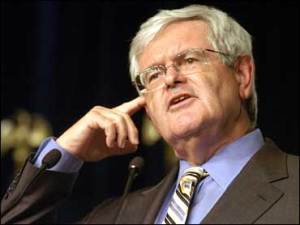 cruise of Greece. What kind of mishaps, mistakes and skeletons in the closet will come up as a result of the exodus?
Senior aides to Republican presidential contender Newt Gingrich have resigned en masse—including spokesman Rick Tyler and campaign manager Rob Johnson, as well as other top aides in early primary states according to Associated Press sources. Gingrich, the former speaker of the House, officially declared his candidacy in May, but his campaign has been troubled by a series of missteps and gaffes. Adding to the awkwardness of the surprise news, Gingrich is currently on a two-week Mediterranean cruise.
Newt’s campaign wasn’t going all that well to begin with.
His campaign got off to a halting start when he criticised a plan popular among Republicans to slash and privatise a healthcare programme for the elderly.
Staff were also reportedly concerned after he took a recent holiday cruise.
Mr Gingrich’s campaign manager Rob Johnson and his entire senior staff, including strategists in early primary election states, quit on Thursday.
I can’t imagine this guy was going to come through anyway given his ethics lapses. Oh, well. There’s additional rumors that Gingrich has lost his Iowa staff also. Officially, the bland reason of “differences in direction of campaign” was provided to the press.
Other officials said Gingrich was informed that his entire high command was quitting in a meeting earlier in the day. They cited differences over the direction of the campaign but were not more specific.
The officials declined to be identified by name, saying they were not authorized to discuss private conversations.
Gingrich told the group he intends to stay in the race, they added.
Monday Reads
Posted: May 16, 2011 Filed under: 2012 presidential campaign, Economy, Federal Budget and Budget deficit, fundamentalist Christians, Global Financial Crisis, income inequality, Medicare, religion, religious extremists, Republican politics, Republican presidential politics, Team Obama, The Bonus Class, The Great Recession, U.S. Economy, U.S. Politics | Tags: Debt Ceiling, End Times, evangelical Christians, Harold Campaign, Mark Thoma, Newt Gingrich, Rapture, the plutocracy, Timothy Giethner 52 Comments Good Morning!
Are you reading for the end of the world next Saturday? Nope, it’s not 2012 yet and we’re not talking about the Mayan Prophecy. Harold Campaign has convinced a group of evangelicals that the date is May 21, 2011. I wonder if any of them would like me to take care of their left behind pets for all their money? You can read more about the man and his end of days wishes at Salon.
The self-appointed harbingers are not tied to any particular church — they claim organized religion has been corrupted by the devil — but rather to Internet- and radio-based ministries. And their lone mission is to tell anyone and everyone that the end of days is May 21. That’s when, they insist, God’s true believers will be lifted into heaven and saved, during a biblical event widely referred to as the Rapture.
The finer points of Christian eschatology have long been the subject of dispute (not to mention the inspiration for movies and books, like the blockbuster “Left Behind” series). Though mainstream churches reject the the notion that doomsday can be predicted by any man, fringe scholars continue to work feverishly pinpointing the moment of the final, divine revelation. And one such man — 89-year-old radio host Harold Camping — has been at the game for decades.
In the early ’90s, Camping published a book titled “1994?,” which claimed judgment day would arrive in September of that year. When confronted with such a staggering anticlimax — the world, after all, kept on spinning — Camping chose not to be discouraged, but to learn from his mistakes. (He hadn’t considered the Book of Jeremiah, he says.) A civil engineer by trade, Camping went back to the drawing board and continued to crunch the numbers, before arriving at the adamant determination that Rapture would come on May 21, 2011. He began to spread the word through his broadcasting network, Family Radio, in 2009, and quickly built up a fervid following.
I guess it takes all kinds. That’s what my mother used to tell me when she was alive, anyway. Speaking of that, MoJo has a great list of Newtisms that will take you a trip back in time with Gingrich’s greatest tongue trips. Here’s some of his earliest hits.
1978 In an address to College Republicans before he was elected to the House, Gingrich says: “I think one of the great problems we have in the Republican party is that we don’t encourage you to be nasty. We encourage you to be neat, obedient, and loyal and faithful and all those Boy Scout words.” He added, “Richard Nixon…Gerald Ford…They have done a terrible job, a pathetic job. In my lifetime, in my lifetime—I was born in 1943—we have not had a competent national Republican leader. Not ever.”
1980 On the House floor, Gingrich states, “The reality is that this country is in greater danger than at any time since 1939.”
1980 Gingrich says: “We need a military four times the size of our present defense system.” (See 1984.)
1983 A major milestone: Gingrich cites former British Prime Minister Neville Chamberlain on the House floor: “If in fact we are to follow the Chamberlain liberal Democratic line of withdrawal from the planet,” he explains, “we would truly have tyranny everywhere, and we in America could experience the joys of Soviet-style brutality and murdering of women and children.”
What is it that Republicans put in their formula that turns out people like this? Newt was on Meet the Press yesterday where he mouthed off on a number of subject’s including Paul Ryan’s Medicare pogrome. This is the National Review’s take so read with caution.
Newt Gingrich’s appearance on “Meet the Press” today could leave some wondering which party’s nomination he is running for. The former speaker had some harsh words for Paul Ryan’s (and by extension, nearly every House Republican’s) plan to reform Medicare, calling it “radical.”
“I don’t think right-wing social engineering is any more desirable than left-wing social engineering,” he said when asked about Ryan’s plan to transition to a “premium support” model for Medicare. “I don’t think imposing radical change from the right or the left is a very good way for a free society to operate.”
As far as an alternative, Gingrich trotted out the same appeal employed by Obama/Reid/Pelosi — for a “national conversation” on how to “improve” Medicare, and promised to eliminate ‘waste, fraud and abuse,’ etc.
“I think what you want to have is a system where people voluntarily migrate to better outcomes, better solutions, better options,” Gingrich said. Ryan’s plan was simply “too big a jump.”
He even went so far as to compare it the Obama health-care plan.”I’m against Obamacare, which is imposing radical change, and I would be against a conservative imposing radical change.”
I have to say that having Trump, Gingrich, Santorum and Paul all debating each other on one stage would probably be highly entertaining. They could have a contest for who would make the craziest old uncle.
The White House is out on the road trying to head off problems with the national debt ceiling. Timothy Geithner says that the economy will double-dip if the Republicans don’t raise the ceiling.
In a heavily-anticipated response to Sen. Michael Bennet, D-Colo., who asked Geithner to document the economic and fiscal impacts of failing to lift the statutory debt limit, the Treasury secretary detailed a chain reaction that would cripple the economy, costing jobs and income.
“A default would inflict catastrophic far-reaching damage on our nation’s economy, significantly reducing growth and increasing unemployment,” said Geithner in the letter to Bennet which was dated May 13. “Even a short-term default could cause irrevocable damage to the economy.”
Geithner has imposed an August deadline for Congress to lift the $14.3 trillion debt ceiling, but lawmakers are still negotiating over Republican demands to tie the move to spending cuts. And a portion of the GOP still remains skeptical about the need to act by the deadline at all, arguing that the consequences have been overstates.
Economist Mark Thoma has a better explanation of how the refusal to increase the debt ceiling would impact the economy on CBS Money Watch. This explanation is much more precise.
If politicians fail to reach a deal to increase the debt ceiling, there would be a large fall in federal spending. The decline in federal purchases of private sector goods and services would reduce aggregate demand, and this could slow or even reverse the recovery (it could also threaten the delivery of critical services that some people depend upon). In addition, the failure to pay wages to federal workers would disrupt household finances and cause a further decline in demand, as would the failure of the government to pay its bills for the goods and services it has already purchased from the private sector (and it could even threaten some households and businesses with bankruptcy should the problem persist). There may be some room for the Treasury to use accounting tricks to avoid the worst problems, at least for a time, but it is not at all clear how well this would work to insulate the economy from problems and eventually this strategy will come to an end.
That’s potentially bad enough, but it’s far from the end of the problems that could occur. Failure to raise the debt ceiling could also undermine faith in the safety of US Treasury bills. If we default on bond payments, or appear willing to do so even if it doesn’t actually occur and investors lose faith in US Treasury Bills, they will begin demanding higher interest rates to cover the increased perception of risk. This could be very costly. We depend upon the rest of the world to finance our debt at extremely low interest rates. If the willingness of other countries to do this diminishes, then the cost of financing our debt would rise substantially. And that’s not all. In addition to increased debt servicing costs, an increase in interest rates would also choke off business investment potentially lowering economic growth, and the consumption of durable goods by households would fall as well. Rising interest rates would also be bad for the housing recovery (such as it is). Thus, failure to reach an agreement could be very costly.
The Economist‘s Blog on American Politics: Democracy in America has an interesting post right now on ‘The Road to 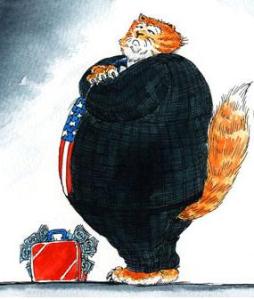 Plutocracy’. It’s an interesting read with a lot of quotes from other pundits.
THE word “plutocracy” is in the air these days. Some say the era of the de facto rule of the mighty top 10%, or top 1%, or whatever insidious sliver of the income distribution is thought to constitute the moneyed power elite, is upon us, or nearly so. I’m not so sure. I am sold on the proposition that there’s something deeply whacked about the American financial system, and that whatever that’s whacked about it is significantly responsible for the top 1% pulling so far away from the rest of the income distribution. This needs to be fixed, whatever its other consequences. It’s not clear to me, however, what exactly is whacked. I don’t know whether to sign up for Tyler Cowen’s “going short on volatility” story, Daron Acemoglu’s “financial-sector lobbying and campaign contributions ‘bought’ an enriching (and destabilising) regulatory structure” story, or some other story. No doubt the truth is in some subtle combination of stories. In any case, accounts such as Mr Acemoglu’s, according to which big players in certain sectors over time manage to rig the regulatory climate to their advantage, are quite compelling for reasons both theoretical and empirical
Newsweek has an interesting article up on why the megarich manage to have such a sweet tax deal. Even if we raise their income taxes, it really doesn’t hit them where it counts. Here’s why.
It drives economist Bruce Bartlett crazy every time he hears another bazillionaire announce he’s in favor of paying higher taxes. Most recently it was Mark Zuckerberg who got Bartlett’s blood boiling when the Facebook founder declared himself “cool” with paying more in federal taxes, joining such tycoons as Bill Gates, Warren Buffett, Ted Turner, and even a stray hedge-fund manager or two.
Bartlett, a former member of the Reagan White House, isn’t against the wealthy paying higher taxes. He’s that rare conservative who thinks higher taxes need to be part of the deficit debate. His beef? It’s a hollow gesture to say the federal government should raise the tax rate on the country’s top wage earners when the likes of Zuckerberg have most of their wealth tied up in stock. Many of the super-rich see virtually all their income as capital gains, and capital gains are taxed at a much lower rate—15 percent—than ordinary income. When Warren Buffett talks about paying a lower tax rate than his secretary, that’s because she sees most of her pay through a paycheck, while the bulk of his compensation comes in the form of capital gains and dividends. In 2006, for instance, Buffett paid 17.7 percent in taxes on the $46 million he booked that year, while his secretary lost 30 percent of her $60,000 salary to the government.
“It’s easy to say ‘Raise taxes’ when you know you’re not going to have to pay those taxes,” Bartlett says. “What I don’t hear is ‘Let’s raise the capital-gains tax.’” Instead the focus has been on the federal tax rate paid by those with an annual income of $250,000 or more—the top 3 percent of earners. Bartlett argues that while raising taxes on the country’s richest individuals would go a long way in easing the debt crisis, it makes no sense to treat the professional making a few hundred thousand dollars a year the same as the Richie Rich set. Maybe it’s hard to muster sympathy for an executive pulling down $1 million a year. But ours is a tax system where a person in the top tax bracket (those earning more than $374,000 in 2010) pays a tax rate of 35 percent on the upper portions of his or her income (37.9 percent if you include Medicare), whereas a hedge-fund manager or mogul earning 10 or 100 times that amount pays less than half that tax rate.
Well, now I’m thinking we’re all just so f’ked that I might as well stop while I’m ahead. What’s on your reading and blogging list today?

 peej
peej Carissa
 bostonboomer
 dakinikat
 ecocatwoman
 mablue2
 Mama Lopez
 peggysue22
 quixote
 skydancingguestblogger
 Mona (aka Wonk the Vote)



 Sky Dancing
Recent Comments