
Monday Reads: Vacation All You Ever Wanted … (Just don’t come here!!!)
Posted: July 20, 2015 Filed under: morning reads | Tags: Barcelona, Native American, New Orleans, Spanish Missions, Tourists 15 Comments Good Day!
I’m still drinking my coffee and looking towards another few days of horrible heat. Audubon Park tied a 100 year old record yesterday of 100 degrees Fahrenheit. We keep getting a few more days each year of more temps above 90. Today, it’s also pouring so there was a distinct steamy jungle feel to the outdoors. I’m just glad my electricity and A/C are holding up at the moment.
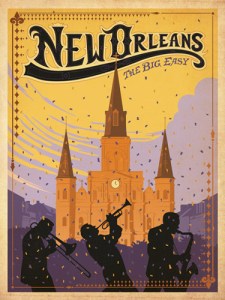
I’ve been finding some really interesting reads this week about the number of “tourist” cities that are fed up with tourists. I wanted to mention the horrid heat to you because some crazy young man staying at the illegal air BnB next door has been trolling about with a black and white “Where’s Waldo” thick knit cap. He and a bunch of other tourists now roam my streets at night like it was Bourbon. Needless to say, it’s odd to see so many folks acting like that in what used to be like any other neighborhood full of small, working class homes. It is rapidly turning into tourist trap.
The Danes have a good idea.They’ve designated “quiet” zones. I get tour buses and bike tours and segway tours roaring by the house all the time. I know it seems odd that a bike tour would be loud, but then you’ve never heard a guide trying to shout stuff at people.
Barcelona, a city of 1.6 million that receives over seven million people a year, represents the turn toward regulation. Taxis and tour buses have taken over entire neighborhoods, while souvenir shops and bars have displaced pharmacies and greengrocers.
The city’s mayor, Ada Colau, 41, who was elected in May, announced a one-year ban on new tourist accommodation citing the swarms of students who have all but taken over the Ciutat Vella, or Old City, of Barcelona. Last August, hundreds of residents erupted in spontaneous protest after images of three Italian tourists wandering naked in the neighborhood of La Barceloneta were circulated online. Her greatest worry, Ms. Colau says, is Barcelona’s turning into Venice.
In Asia, alarm has centered on Chinese tourists; there are more of them than from any other nation. China began loosening severe travel restrictions only about 25 years ago, and the rapid rise of the middle class has sent curious — but often naïve, rude or even destructive — visitors throughout Southeast Asia.
In Thailand a Chinese tourist was recently caught on video ringing and kicking sacred bells at a Buddhist temple as if he was in a game arcade.
There have been reports of Chinese tourists littering beaches and even defecating in public. One tourist even opened the door of an airplane, as it prepared for takeoff, reportedly to get fresh air. The Chinese government responded by promising to set up a tourist black list to ban notorious known offenders from traveling overseas for up to two years.
We even get a mention in this NYT article. I feel like my neighborhood has turned into a whore pimped by money hungry state and city officials.
Battles like these have even reached the tourism-friendly United States.
A decade after Hurricane Katrina ravaged New Orleans, city officials have eyed tourism as the best path for a revival. But homeowners in the French Quarter complain that the city fails to properly enforce zoning and noise regulations, inviting the party crowd into their streets. Last year, residents of Charleston unsuccessfully sued to block the South Carolina ports authority from opening up the port to more and larger cruise ships.
Tensions are bound to get worse. Notwithstanding worry about carbon emissions, more of the world’s peoples are crossing borders for leisure than ever before. Now tourism accounts for one in 11 jobs worldwide.
In 2012 the global tourism industry counted a record one billion trips abroad, and many more tourists travel within their home countries. Travel contributes $7.6 trillion to the global economy, nearly half the entire economic output of the United States.
One reason tourism is hard to regulate is its positive associations, not only with pastime and leisure but also with cultural prestige. People are proud of the vistas, landmarks and monuments that their homelands are best known for. So efforts to regulate tourism aren’t always popular.
I lived in the Quarter for five years across the street from Gallier House–a historic home–on Royal Street. The block is full of homes with iron-laced balconies and features prominently in postcard and ads for the beauty of French Quarter Architecture. My front door alcove was also frequently used as a urinal by young white college male students who should freaking know better during sporting events weekends and Mardi Gras. For some reason, many people who visit here act as though we have no rules. They mark up our grave yards, leave litter every where, and basically act boorish. I’m fine dealing with them when I’m down town which is a Tourist Mecca. But, I’ve had it with them overrunning my neighborhood like ants at a picnic. You can get away from them in the Quarter by retreating to your courtyard. I’ve got them walking around all sides of my house at all hours of the night and day. Many times they’re dragging bicycles and most times they talk very loudly. I’m just glad I no longer have small children in the house.
 Barcelona is evidently one city that’s really fed up. I feel their pain.
First there were mutterings, then there were street protests, but now Barcelona is showing signs of “tourist phobia”, the city’s guides are warning.
As many as nine million visitors are expected in Barcelona this year, crammed into a few small areas of a city of 1.6 million inhabitants, more than five times the number who visited 20 years ago. With the weak euro attracting ever more tourists, and as many as 2.5 million visitors disembarking from cruise ships a year, residents are feeling besieged.
“People push us, give us dirty looks and make nasty remarks when we’re showing tourists around,” said Mari Pau Alonso, president of Barcelona’s Association of Professional Tourist Guides.
Even Jordi Clos, head of the city’s hoteliers’ association, which wants to see visitor numbers rise to 10 million, says there is an “urgent need” to make citizens more sympathetic to tourists, given the “sense of being overwhelmed” that people have experienced in recent years.
“If we don’t want to end up like Venice, we will have to put some kind of limit in Barcelona,” said Ada Colau, the city’s new mayor, shortly after she was elected in May. She is proposing a moratorium on new hotels and licences for apartments rented to tourists.
A survey for the Exceltur tourist group revealed that there are now twice as many beds available in tourist apartments – some 138,000 – as there are in hotels.
Tourist flats offer a more attractive and economic deal to visitors, and their owners can expect rents at least 125% higher than they would receive from long-term tenants. While many are let through large online organisations, such as Airbnb, others are offered by homeowners trying to make ends meet during Spain’s prolonged recession.
Venice is evidently no exception either.
All over the world our global heritage is under assault by disrespectful tourist hordes. From Vietnam to Venice the goose that lays the golden egg of profit for the travel
industry is slowly being bled to death.
But in Venice the fight back has begun. The citizens of La Serenissima, possibly the world’s most iconic tourism destination, are finally revolting against tourists.
In August the city of Venice, says the Venice Times, “will receive a real mass tourism ‘assault’. Visitors will sit on the steps of the century-old buildings and bridges, eating, trashing and not showing the respect these buildings deserve.”
“Walking on the small narrow streets without left and right side order, like in other cities, making the traffic impossible to stand, offering a truly claustrophobic experience.”
There are those who are not afraid to say that something MUST be done. Ilaria Borletti Buitoni former president of the Fai, an Italian Environment Fund believes that there must be some type of tourist access control in Venice. “I know that I will draw negative comments by saying this, but Venice is an open-air museum and the city is dying. The mass of tourists in the city is expected to increase to unbearable amounts in the coming years. The idea of establishing an admission ticket to the city for its maintenance should be considered. It will protect the city and improve the quality of tourism.”
According to a recent survey by the local newspaper La Nuova, 66% of its readers agree that there must be some type of restriction to Venice and only 12% believe that there should be no restriction since the city belongs to the World.
If you’re interested in the state of marriage in the US, look no further than our nation’s capitol where cheating our your spouse appears to be a national past time. New Orleans made the top 10 cities for cheaters too!
The District once again lives up to its TV drama-concocted reputation.
The city topped a list ranking the country’s most adulterous cities for the third year in a row. The dubious title comes courtesy of Ashleymadison.com, a dating Web site for married people looking for extramarital affairs, which culled through its membership data to determine which cities have the most members per capita.
Ashley Madison claims to have more than 59,000 people registered on the site with a D.C. Zip code. (Note: This does include people who register for the site while visiting D.C. using a city Zip code.)
And the neighborhood with the most cheaters? Capitol Hill, the land of politicians, staffers and lobbyists.
The dating Web site says 10.4 percent of Capitol Hill residents are registered on the Web site. Tenleytown and Takoma Park finished second and third, respectively. With the exception of Capitol Hill, all of the top 10 D.C. neighborhoods are in the Northwest portion of the city, with the majority of the neighborhoods in affluent upper Northwest.
 More statues of Confederate Generals are coming down in parks around the American South. The notorious Nathan Bedford Forrest’s statue and the memorial housing his remains is on its way to the auction block if the city of Memphis has its way. Forrest is best known for being the founder of the KKK. He was a slave trader prior to secession.
What people see when they look up at the towering statue of Nathan Bedford Forrest in a park near downtown Memphis usually depends on their deepest beliefs, their memories, their loyalties and maybe even their DNA.
Many see a Memphis slave trader, the original grand wizard of the Ku Klux Klan and a war criminal who led a gruesome Confederate massacre of surrendered black and white Union troops at nearby Fort Pillow in 1864.
Others see a gallant but misunderstood Civil War general, a military genius and a hero who made a speech calling for racial reconciliation in 1875. And some passers-by have little or no idea who the guy on the horse is, and do not much care.
But this month, the Memphis City Council voted unanimously to begin an intricate process of removing the brass statue from the park — along with the remains of Forrest and his wife, encased since 1905 in its marble base. This effort joins a national wave of casting off Confederate icons since the massacre last month at a church in Charleston, S.C.
Efforts to take down public flags or monuments associated with the Confederacy are being renewed in communities like New Orleans; Tampa, Fla.; Austin, Tex.; and Stone Mountain, Ga. Yale and the University of California, Berkeley, are among educational institutions being pushed to rename campus buildings honoring people connected to slavery and the Confederacy.
But because of Forrest’s notoriety, Memphis’s harsh racial history and the fact that advocates want to disinter bodies, not just take down a flag or monument, the issue has particular resonance.
I continue to watch friends, neighbors and relatives go back and forth on this subject. I seem to be someplace in the middle. I don’t see any reason why lone statues can’t come down and be placed in museum.  However, I’m a preservationist and having seen some sites of some of the worst our history has to offer, I mostly look at the National Historic Landmark criteria for insight on if the site should be disturbed or not. The site of the Battle of Little Big Horn has a monument to Custer that was installed there when he was considered a hero. It still serves as a memorial to the 7th Calvary along with the Native Sioux and Cheyenne who fought there. When I visited the site some time in the late 60s or early 70s the statue still stands but the story and the role of Custer in history is quite different. The Trail of Tears Historic Trail tells the story of the genocide and displacement of indigenous peoples in the American South. Andrew Jackson does not come off as the hero of The Battle of New Orleans there.
Same with our travels during the same period to Spanish Missions in California. The Franciscan priests basically ran concentration camps for indigenous peoples where most died in some form of slavery. I dare any of you not to want to burn the entire sites to the ground after reading what sort’ve heinous acts went on there. But, these sites exist to remind us what happened and to hopefully ensure we don’t rewrite history.
BTW, one of the Fathers who set up the California Missions is about to be Canonized by this current Pope.
Anthony Morales, Chief Redblood of the Gabrielino Tongva Band of Mission Indians, said he was “stunned” and “angry” by the move, and is hoping the pontiff will reverse his decision.
“On all the 21 missions along the coast here our people were enslaved, they were beaten, they were tortured, our women were raped. It was forced labor and a forced religion,” Morales said. “There’s nothing saintly about the… atrocities on our culture, on our people.”
Father Serra himself justified the beating of Native Americans, writing in 1780: “That spiritual fathers should punish their sons, the Indians, with blows appears to be as old as the conquest of the Americas; so general in fact that the saints do not seem to be any exception to the rule.”

The formation of the Mission Indians began with the Spanish policy of congregación: the forced resettlement of Indian populations in nucleated settlements. The formation of large communities facilitated the conversion to Catholicism of the Indians. Many priests felt that it was a burden to have to visit the many small dispersed Indian communities. It was also easier for royal officials to collect tribute and organize labor drafts in the new larger communities.
The missionaries, with the help of well-armed soldiers, congregated Indians into fairly large communities which were organized along the lines of those in the core areas of Spanish America. Here Indian converts were to be indoctrinated in Catholicism and taught European-style agriculture, leatherworking, textile production, and other skills deemed useful by the Spaniards. By using Indian labor to produce surplus grain supplies for the Spanish military garrisons, the Franciscan missionaries were able to view Indians as both potential converts and labor.
The Franciscan missions were basically slave plantations which required the Indian people to work for the Spanish under cruel conditions. Indians did not come freely to the missions and once there, they were held against their will. Many attempted to escape, and the soldiers stationed at the mission would attempt to recapture them. Escape attempts are severely punished by the Franciscans.
The Franciscans, backed by a small number of soldiers stationed at the missions, imposed a rigid system of coerced and disciplined labor, enforced by the use of corporal punishment and other forms of control. This punishment including public flogging, and the use of the stocks and shackles. While the public use of corporal punishment humiliated and physically injured the individuals being punished, and it did not necessarily alter or control the behavior that the Franciscans found objectionable.
One early visitor to the missions remarked about the Indians that “I have never seen one laugh.” Most of the Indians died in the new mission environment.
The Spanish sought to Christianize the Indians by enslaving them. The Spanish intent was to expropriate not only Indian lands and resources, but Indian labor as well. Part of their goal was to obliterate all features of Native American culture and society and to create a replica of Spain in California in which land-owning Spanish would be served by an Indian peasant class.
From the viewpoint of the Spanish, Indians were a form of labor which could be exploited. The success of the Spanish colonies in the Americas were based on this exploitation. In order to maximize the profits of their colonial enterprise, the Spaniards created institutions that siphoned off surplus agriculture products and provided labor for major building projects. One of these Spanish institutions was repartimiento.
Repartimiento was the Spanish policy which gave the Spanish colonists the right to use native labor for religious education. Repartimiento functioned as a part of the Spanish mission system in all parts of the Americas, including California. Under this system, labor quotas and the conscription of people to serve on labor gangs were organized through the villages served by the missions (or, from an Indian viewpoint, the villages which served the missions).
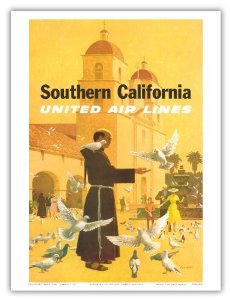 Does this Pope really think this work is the act of Saints? Anyway, our history is full of the actions of a lot of bad men. I think it doesn’t take much imagination to see most of them were of European descent and Christian and men.
One last link before I go. If any one you know tries to say the Civil War was about “state’s rights” please send them directly to this site. It’s the Civil War Trust and that link goes to the Writs of Secession where you get to read exactly what the war was about. This is from the introductory paragraph of the secession declaration of the state of Georgia. Read the ones from Mississippi and Texas if you think it’s an oddity.
The people of Georgia having dissolved their political connection with the Government of the United States of America, present to their confederates and the world the causes which have led to the separation. For the last ten years we have had numerous and serious causes of complaint against our non-slave-holding confederate States with reference to the subject of African slavery. They have endeavored to weaken our security, to disturb our domestic peace and tranquility, and persistently refused to comply with their express constitutional obligations to us in reference to that property, and by the use of their power in the Federal Government have striven to deprive us of an equal enjoyment of the common Territories of the Republic. This hostile policy of our confederates has been pursued with every circumstance of aggravation which could arouse the passions and excite the hatred of our people, and has placed the two sections of the Union for many years past in the condition of virtual civil war.
So, while we’re tearing down the statues of Confederate Generals who fought for slavery, we need to seriously look at folks like Andrew Jackson who fought for the US policy of genocide against Native Americans. Then, the Pope needs to hear the real story of the Spanish Missions.
So, I bet you never thought you’d see a post like this!! But, here’s some travel advice from my neighbor Dr. Bob!
What’s on your reading and blogging list today?

 peej
peej Carissa
 bostonboomer
 dakinikat
 ecocatwoman
 mablue2
 Mama Lopez
 peggysue22
 quixote
 skydancingguestblogger
 Mona (aka Wonk the Vote)



 Sky Dancing
Recent Comments