
Monday Reads: Fire Engulfs Notre Dame de Paris
Posted: April 15, 2019 Filed under: Afternoon Reads | Tags: afternoon reads, Fire at Notre Dame de Paris, Mueller report, Nancy Pelosi Interview, William Barr 42 Comments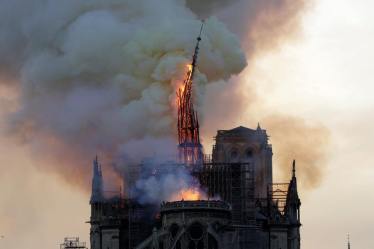 Well Sky Dancers, we made it to another week!
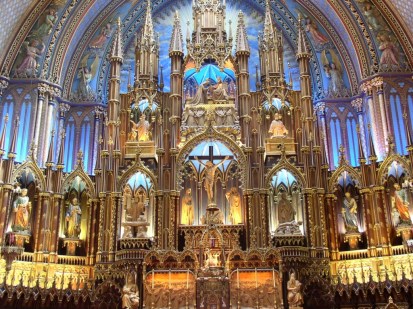
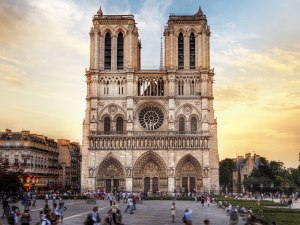
Right now, I’m watching CNN cover the catastrophic fire destroying Notre Dame de Paris. It’s been quite awhile since I visited this beautiful old Cathedral but I cannot imagine Paris without its spires. All I can think about is that incredible organ.
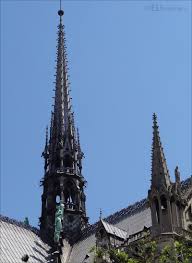
There is very little that appears to be going on to stop the fire. Its cause is unknown. Its spires look like bones eaten by the flames of bright red lava.
 It is unlikely that the release of the Mueller Report Thursday will create the flames required to purify the stench of the Trump family crime syndicate from our Republic. We know that the new Attorney General is well skilled in burying constitutional scandals undertaken by lawless Presidents. We need look no farther than what we have learned about the Iran Contra Debacle and Barr’s role in suppressing justice, evidence, and the law. Ryan Goodman–writing for tJust Security-– has this headline: “Barr’s Playbook: He Misled Congress When Omitting Parts of Justice Dep’t Memo in 1989”.
On Friday the thirteenth October 1989, by happenstance the same day as the “Black Friday” market crash, news leaked of a legal memo authored by William Barr. He was then serving as head of the Justice Department’s Office of Legal Counsel (OLC). It is highly uncommon for any OLC memo to make headlines. This one did because it was issued in “unusual secrecy” and concluded that the FBI could forcibly abduct people in other countries without the consent of the foreign state. The headline also noted the implication of the legal opinion at that moment in time. It appeared to pave the way for abducting Panama’s leader, Gen. Manuel Noriega.
Members of Congress asked to see the full legal opinion. Barr refused, but said he would provide an account that “summarizes the principal conclusions.” Sound familiar? In March 2019, when Attorney General Barr was handed Robert Mueller’s final report, he wrote that he would “summarize the principal conclusions” of the special counsel’s report for the public.
When Barr withheld the full OLC opinion in 1989 and said to trust his summary of the principal conclusions, Yale law school professor Harold Koh wrote that Barr’s position was “particularly egregious.” Congress also had no appetite for Barr’s stance, and eventually issued a subpoena to successfully wrench the full OLC opinion out of the Department.
What’s different from that struggle and the current struggle over the Mueller report is that we know how the one in 1989 eventually turned out.
When the OLC opinion was finally made public long after Barr left office, it was clear that Barr’s summary had failed to fully disclose the opinion’s principal conclusions. It is better to think of Barr’s summary as a redacted version of the full OLC opinion. That’s because the “summary” took the form of 13 pages of written testimony. The document was replete with quotations from court cases, legal citations, and the language of the OLC opinion itself. Despite its highly detailed analysis, this 13-page version omitted some of the most consequential and incendiary conclusions from the actual opinion. And there was evidently no justifiable reason for having withheld those parts from Congress or the public.
There was some scuttlebutt last night that the West Wing had seen at least some of the report and that KKKremlin Caligula was on a rampage. It’s really still unknown what will see what and it’s likely we’re in for some court time.
Since those findings were announced, congressional Democrats have been sharply critical of Barr’s handling of the Mueller report, accusing the attorney general of soft-pedaling the findings to protect the president.
The House Judiciary Committee is poised to issue a subpoena for the report’s redacted portions.
Barr has spent weeks redacting sensitive information from the report in preparation for its public release. Barr is shielding four specific categories of information: grand jury material, details whose public release could harm ongoing investigations, any information that would “potentially compromise sources and methods” in intelligence collection, and anything that would “unduly infringe on the personal privacy and reputational interests of peripheral third parties.”
That last category of redaction suggests Barr wants to keep secret any derogatory information gathered by investigators about figures who ended up not being central to Mueller’s investigation.
 This analysis is from Darren Samuelsohn of Politic: “The Insiders’ Guide To the Mueller Report. How experts and political operatives are gearing up to read the juiciest Washington info dump in two decades.”
The 400-page Mueller report, expected to land this week, is the most anticipated political read since Ken Starr, Monica Lewinsky and the stained blue dress—and potentially even juicier. But how do you wring that juice out of a behemoth of a legal document, full of redactions, at the speed of social media?
That’s what the tribes of American politics are gearing up to do this week.
From the moment it drops, the scramble will be on—to defend the president, to plan new lines of attack, or to put this whole big crazy story into the wider context of American history. So much material released all at once raises the question of how to dig in on something so dense, with so much buildup, where the feeding frenzy will be instant among the cable TV chattering classes and Twitter piranhas.
The capital has already evolved one model for processing a big tell-all book: “the Washington read,” where you scan the index (assuming there is one) to find everything it says about you, your boss and your enemies and then fake like you’ve read the rest. But this time that won’t be enough. The goods might not come easily. They might be buried in an obscure subsection. And there’s way more at stake than in the typical gossipy memoir.
The report by special counsel Robert Mueller could be the biggest oppo dump in history. It could be a fizzle. Although Mueller didn’t find enough evidence to charge President Donald Trump for conspiring with Russia to win the White House, and Attorney General William Barr has concluded that it doesn’t show Trump obstructed justice, the report itself is expected to be rich with details uncovered by the sweeping 22-month investigation.
We already know something about the way the report will look, courtesy of Barr. The attorney general last week told Congress that the document will be color-coded to explain why lawyers for Mueller and DOJ have redacted some of the most sensitive material. But he promised that, for all the gaps, the report won’t end up looking totally like Swiss cheese. “You will get more than the gist,” Barr told a Senate appropriations subcommittee.
 So, of course, Trump is staging side shows to disrupt the news we may get from the release. Here are some headlines for that effort.
From Greg Sargent at the Washington Post: Just say it: Trump’s attacks on Ilhan Omar are designed to incite hatred
One cannot conclusively establish one way or the other whether Trump actively wants to see physical harm befall Omar. But here’s what we can say right now: Trump’s attacks absolutely are designed to incite hatred of Muslims, and the fact that this could have horrifying consequences does not weigh on him in the slightest.
We know these things, because Trump’s monumentally dishonest treatment of Omar’s quote, as well as his own long history, leave no doubt about them. Trump has used 9/11 to stir up hatred of Muslims before — relying on massively deceptive agitprop to do so — and he has repeatedly continued trafficking in various tropes even after they have been confirmed to potentially play some kind of role in inciting hate and even murder.
 From Andrew Desiderio / Politico: Trump attorneys warn accounting firm not to hand over financial records.
President Donald Trump’s attorneys are warning of potential legal action if an accounting firm turns over a decade of the president’s financial records to the House Oversight and Reform Committee.
Trump attorneys William S. Consovoy and Stefan Passantino are urging Mazars USA not to comply with a subpoena that Oversight Chairman Elijah Cummings (D-Md.) plans to issue on Monday for Trump’s financial documents, calling it a politically motivated scheme to take down the president.
“It is no secret that the Democrat Party has decided to use its new House majority to launch a flood of investigations into the president’s personal affairs in hopes of using anything they can find to damage him politically,” Consovoy and Passantino wrote to Jerry D. Bernstein, Mazars’ outside counsel.
The attorneys said they were formally putting Mazars ”on notice” — an implicit threat of legal action. They also urged Bernstein to hold off on providing the documents to Cummings until the subpoena can be litigated in court, suggesting that a protracted legal battle is likely to ensue.
“The Democrats’ fervor has only intensified after the special counsel squelched their ‘Russia collusion’ narrative,” the attorneys continued, outlining a series of legal precedents that they argue prevents Mazars from complying with Cummings’ subpoena.
 Here are some headlines on the Democratic contenders for the nomination for candidate for President:
Benjy Sarlin / NBC News:Cory Booker unveils plan to cut taxes for half the country
Elizabeth Warren / Team Warren: My plan for public lands
Chris D’Angelo / HuffPost:
Elizabeth Warren Lays Out ‘Climate Solution’ Vision For Public Lands
Jonathan Easley / The Hill: Secret tapes linger over Buttigieg’s meteoric rise
Also, Speaker Pelosi was interviewed by Lesley Stahl on Sixty MInutes last night. If you’re interested in what she said, you may follow this link.
Speaker Nancy Pelosi: The Mueller report is about an attack on our elections by a foreign government. And we want to know about that. We wanna know about that in terms of being able to prevent it from happening again. So it’s bigger even than Donald Trump.
She says she doesn’t trust Attorney General William Barr.
Lesley Stahl: Do you think that the attorney general is covering anything up?
Speaker Nancy Pelosi: I have no idea. I have no idea. He may be whitewashing, but I don’t know if he’s covering anything up. There’s no use having that discussion. All we need to do is see the Mueller report.
Lesley Stahl: And asking for the president’s tax returns?
Speaker Nancy Pelosi: It should not have taken this long for the president– he said he was under audit. When I was in a– I was going to a Martin Luther King breakfast in San Francisco and one of the waiters there said to me, “Madame Speaker, when the president says the Mueller report’s going on too long just tell him not as long as your audit.” (LAUGHTER) Everybody has released their returns and we will have legislation to say that everyone should– must, but for the moment he’s been hi– so what’s he hiding?
She’s just hit her 100th day as speaker. She recently called the president to ask for a meeting on infrastructure, but there’s no sign that the gridlock that has plagued Congress for years is easing.
Lesley Stahl: One of the complaints we’ve heard is that you don’t reach across the aisle because it seems like right now nothing is getting done. You pass things– whatever it is dies in the Senate.
Speaker Nancy Pelosi: Nothing died. Nothing’s died. We already put together 100 days, the fact that we even passed them in the House is a victory. Let’s figure out the places– figure out where we can find common ground. There’s always been bipartisan support for Dreamers, bipartisan support for gun safety, bipartisan support for infrastructure.
Lesley Stahl: But why doesn’t anything get done–
Speaker Nancy Pelosi: We just started.
Lesley Stahl: –with the Dreamers?
Speaker Nancy Pelosi: We just started. We’re three months since we were in– in office.
Lesley Stahl: But you’re talking about 100 days. This president’s been in office for two years plus.
Speaker Nancy Pelosi: And we’ve been here three months. Hey, may I introduce you to the idea of the spout– power of the speaker is to set the agenda. We didn’t have a speaker who would bring a gun bill to the floor. We didn’t have a speaker who would bring a Dreamers issue to the floor. We do now. And that’s a very big difference. The power of the speaker is awesome. Awesome.
But her becoming speaker was in doubt last December when a group in her caucus agitated for a change to someone younger. It was the president, of all people, who rescued her, in that now famous Oval Office meeting.
President Trump in Oval Office meeting: You know, Nancy’s in a situation where it’s not easy for her to talk right now.
That did not sit well with her.Speaker Pelsoi in Oval Office meeting: Mr. President, please don’t characterize the strength I bring to this meeting as a leader of the House Democrats who just won a big victory…
Right after the meeting, she walked to the mics in her orange coat, with a whole new image, her ascendance to the speakership no longer in jeopardy.
Lesley Stahl: You seem to be one of the very, very few people who have stood up to him and won.
Speaker Nancy Pelosi: No, people do. People do. It– it is–
Lesley Stahl: Maybe not so much in public the way– this was televised.
Speaker Nancy Pelosi: Well, that was his problem. In other words I tried to say let’s not have this conversation in the public domain because you’re saying things that we have to contradict because they’re not true. And he said, “Oh, I want the public to see it.” Well, you want them to see that you don’t– don’t know what you’re talking about? Really?
Lesley Stahl: Here’s what you’ve said. You’ve said, “If someone’s ripping your face off. You rip their face off.” (LAUGH)
Speaker Nancy Pelosi: Oh yeah, I would do that.
 So, I’m off to enjoy the sunshine and my very brief spring break. Temple and I are going to walk down to the river and contemplate as much of nothing as possible. And, I will call wordpress about whatever these ads and problems are …
What’s on your reading and blogging list today?
Silent film version of Victor Hugo’s novel about a hunchbacked bellringer who is flogged for trying to kidnap a gypsy girl at the order of an archdeacon’s evil brother. He then saves her from being hung for a false murder charge. Stars whose parents were deaf, Lon Chaney Sr., Ernest Torrence, Patsy Ruth Miller, Brandon Hurst. Public domain film.
Lazy Caturday Reads: A Bit of News and Some Fascinating Long Reads
Posted: April 6, 2019 Filed under: Afternoon Reads, U.S. Politics, Women's Rights | Tags: Bill Barr, Casimir Pulaski, dinosaurs, DNA, Donald Trump, Hell Creek, Jones Day, mass extinction, Mueller report, North Dakota, paleontology, Paul Manafort, Redoshi, Robert De Palma, Roger Stone, Sexual harassment, slave ships, slavery, terrorism, White extremists 15 Comments
The cat’s lunch, Pierre Bonnard, circa 1906
Good Afternoon!!
I’m sick to death of politics right now, but I don’t want to completely ignore it either. So today I’ll begin with a few of today’s news stories and then I’m going to recommend some interesting long reads that I’ve enjoyed this week.
Harry Litman at The Washington Post: Release the Mueller team’s summaries. Now.
In the (so far) quiet war of words between the Barr and Mueller camps, we have learned that the special counsel’s report was prepared with summaries of each section that were designed purposely for quick delivery to Congress. These summaries have been scrubbed of all or nearly all controversial material and, therefore, consist of Mueller’s analyses and conclusions without disclosing the supporting, potentially confidential, evidentiary material.
‘Company’ by English painter & illustrator Ophelia Redpath (b.1965)
The summaries should be released to the Congress and the public. While some at the Justice Department assert that the materials are marked as containing grand jury material, we know from Mueller’s team that they were prepared for the purpose of quick release. It, therefore, stands to reason that any problematic material they contain could be removed in short order. They are core explanations of Mueller’s work, which the public has been hungry to learn about — and which Mueller intended the public to have.
Rep. Jerrold Nadler (D-N.Y.), the Judiciary Committee chairman, should set to the side for one day the maneuverings over grand jury material and other redactions. The Justice Department should similarly reserve its prerogative to fight over these materials in court. For today, all parties should agree immediately to produce the summaries of Mueller’s work that would greatly illuminate the currently obscured special counsel’s report.

Marcy Wheeler at The Washington Post: We already knew Barr’s summary was too easy on Trump. Public records prove it.
When Attorney General William P. Barr released a four-page memo two weeks ago opining that “the evidence developed during the Special Counsel’s investigation is not sufficient to establish that the President committed an obstruction-of-justice offense,” we already knew enough to be sure that Barr was spinning the contents of the report his memo claimed to summarize, as multiple reports now say he did.
Girl with Cat, by Lotte Laserstein, 1898-1993, was a German-Swedish painter and portraitist
That’s because there was already public evidence at the time that undermined Barr’s conclusions. Barr’s letter may have been accurate, technically speaking. But based on what it omitted about two key associates of President Trump — his longtime adviser Roger Stone and his former campaign chairman, Paul Manafort — it was obvious that the attorney general had left whole areas of special counsel Robert S. Mueller III’s findings out of the summary. That Mueller’s team thinks Barr made the investigation’s findings look less damaging to Trump should not come as a surprise.

For example, the indictment of Roger Stone, who isn’t mentioned in Barr’s “summary.”
When Attorney General William P. Barr released a four-page memo two weeks ago opining that “the evidence developed during the Special Counsel’s investigation is not sufficient to establish that the President committed an obstruction-of-justice offense,” we already knew enough to be sure that Barr was spinning the contents of the report his memo claimed to summarize, as multiple reports now say he did.
That’s because there was already public evidence at the time that undermined Barr’s conclusions. Barr’s letter may have been accurate, technically speaking. But based on what it omitted about two key associates of President Trump — his longtime adviser Roger Stone and his former campaign chairman, Paul Manafort — it was obvious that the attorney general had left whole areas of special counsel Robert S. Mueller III’s findings out of the summary. That Mueller’s team thinks Barr made the investigation’s findings look less damaging to Trump should not come as a surprise.
Read more examples at the WaPo.
Think Progress: Lawsuit alleges utterly flabbergasting sexism at law firm closely associated with Donald Trump.
By Suzanne Valadon (French, 1865-1938) Jeune Fille au Chat
A $200 million lawsuit filed against a law firm closely associated with President Donald Trump alleges that the firm fostered a “fraternity culture” featuring heavy drinking, an overbearing male leader, and sexism that was often so absurd it reads like something out of a gross-out comedy from the 1980s.
The suit against Jones Day, a 2,500 lawyer firm that played a significant role in placing Trump in the White House — the Trump campaign paid Jones Day $3.3 million in legal fees according to a 2017 report — alleges a culture where women attorneys were denied promotions despite exemplary work, excluded from mentoring opportunities afforded to male associates, asked to leave the firm after taking maternity leave, and subjected to cruel and sexist jokes by male colleagues.
Trump appointed numerous Jones Day lawyers to high-level positions within his administration, including Solicitor General Noel Francisco, former White House Counsel Don McGahn, and the two highest ranking attorneys in the Justice Department’s Civil Rights Division. Trump also appointed two former Jones Day partners to federal appellate judgeships.
At one event hosted by a Jones Day partner, the complaint alleges that a male summer associate (“summer associate” is the title typically given to highly paid law students who work at a firm during their summer vacation) pushed a female colleague into the partner’s swimming pool while the woman was wearing a white dress. According to the complaint, “the male summer associate who pushed her was applauded and high-fived by the Firm’s summer associate committee and leadership rather than reprimanded.”
In another incident, a partner allegedly “demanded that three female summer associates sing and dance to a Care Bears song (an event captured on video).” These three summer associates were allegedly told that they must humiliate themselves in this way “to receive verbal offers to join the Firm as associates.”
During a limo ride to a firm event, male Jones Day lawyers allegedly played a game called “Fuck, Marry, Kill,” in which they “named coworkers from the office and proposed to whom they would do each of these things.” At the event itself, a male associate allegedly “called several of his female colleagues ‘cunts,’” yet the lawsuit claims that he remains employed by the firm.

More disgusting allegations at the link.
Now for those longer reads:
This one is political. The New York Times, April 3: Attacks by White Extremists Are Growing. So Are Their Connections.
Léonard Tsugouharu Foujita (aka 藤田 嗣治, Fujita Tsuguharu) 1950s Self Portrait
In a manifesto posted online before his attack, the gunman who killed 50 last month in a rampage at two mosques in Christchurch, New Zealand, said he drew inspiration from white extremist terrorism attacks in Norway, the United States, Italy, Sweden and the United Kingdom.
His references to those attacks placed him in an informal global network of white extremists whose violent attacks are occurring with greater frequency in the West.
An analysis by The New York Times of recent terrorism attacks found that at least a third of white extremist killers since 2011 were inspired by others who perpetrated similar attacks, professed a reverence for them or showed an interest in their tactics.
The connections between the killers span continents and highlight how the internet and social media have facilitated the spread of white extremist ideology and violence.
In one instance, a school shooter in New Mexico corresponded with a gunman who attacked a mall in Munich. Altogether, they killed 11 people.

Please go read the whole thing. I think this is an important story. How are these white supremacist networks any different from the on-line “radicalization” of Islamic terrorists? The interest has made it much easier for crazy people to find and communicate with others like them.
The New Yorker: The Day the Dinosaurs Died, by Douglas Preston
I loved this article! I can’t possibly do it justice with a few excerpts. It’s about a paleontology grad student, Robert De Palma, and his discovery of a rich fossil bed in North Dakota that may shed light on the rapid extinction of dinosaurs. Here’s a taste:
By Zviad Gogolauri
On August 5, 2013, I received an e-mail from a graduate student named Robert DePalma. I had never met DePalma, but we had corresponded on paleontological matters for years, ever since he had read a novel I’d written that centered on the discovery of a fossilized Tyrannosaurus rex killed by the KT impact. “I have made an incredible and unprecedented discovery,” he wrote me, from a truck stop in Bowman, North Dakota. “It is extremely confidential and only three others know of it at the moment, all of them close colleagues.” He went on, “It is far more unique and far rarer than any simple dinosaur discovery. I would prefer not outlining the details via e-mail, if possible.” He gave me his cell-phone number and a time to call.
I called, and he told me that he had discovered a site like the one I’d imagined in my novel, which contained, among other things, direct victims of the catastrophe. At first, I was skeptical. DePalma was a scientific nobody, a Ph.D. candidate at the University of Kansas, and he said that he had found the site with no institutional backing and no collaborators. I thought that he was likely exaggerating, or that he might even be crazy. (Paleontology has more than its share of unusual people.) But I was intrigued enough to get on a plane to North Dakota to see for myself.
DePalma’s find was in the Hell Creek geological formation, which outcrops in parts of North Dakota, South Dakota, Montana, and Wyoming, and contains some of the most storied dinosaur beds in the world. At the time of the impact, the Hell Creek landscape consisted of steamy, subtropical lowlands and floodplains along the shores of an inland sea. The land teemed with life and the conditions were excellent for fossilization, with seasonal floods and meandering rivers that rapidly buried dead animals and plants.
Ludwig Kohrl (1858-1927)
The Hell Creek Formation spanned the Cretaceous and the Paleogene periods, and paleontologists had known for at least half a century that an extinction had occurred then, because dinosaurs were found below, but never above, the KT layer. This was true not only in Hell Creek but all over the world. For many years, scientists believed that the KT extinction was no great mystery: over millions of years, volcanism, climate change, and other events gradually killed off many forms of life. But, in the late nineteen-seventies, a young geologist named Walter Alvarez and his father, Luis Alvarez, a nuclear physicist, discovered that the KT layer was laced with unusually high amounts of the rare metal iridium, which, they hypothesized, was from the dusty remains of an asteroid impact. In an article in Science, published in 1980, they proposed that this impact was so large that it triggered the mass extinction, and that the KT layer was the debris from that event. Most paleontologists rejected the idea that a sudden, random encounter with space junk had drastically altered the evolution of life on Earth. But as the years passed the evidence mounted, until, in a 1991 paper, the smoking gun was announced: the discovery of an impact crater buried under thousands of feet of sediment in the Yucatán peninsula, of exactly the right age, and of the right size and geochemistry, to have caused a worldwide cataclysm. The crater and the asteroid were named Chicxulub, after a small Mayan town near the epicenter.


De Palma was fascinated by bones even as a child, and he has been finding fossils for his entire life. If you have any interest in prehistory and dinosaurs, please read this article. You won’t be sorry.
The Washington Post, April 3: The last survivor of a slave ship has been identified, and her story is remarkable.
by Suzan Visser
She was captured at about the age of 12 in West Africa and forced aboard the Clotilda, the last slave vessel to arrive in the United States in 1860.
Now researchers have identified Redoshi as the last known African-born survivor of the transatlantic slave trade when she died in 1937, according to a statement released Tuesday by Newcastle University in Great Britain. Renamed Sally Smith in Alabama, she may have been 110 years old at the time of her death.
Until now, researchers believed the last survivor of the transatlantic slave trade was Oluale Kossola, also known as Cudjo Lewis. But, according to research by Hannah Durkin, a lecturer at Newcastle University, Redoshi lived two years longer than Cudjo, who died in 1935.
Durkin said she first saw a reference to Redoshi in the writings of Zora Neale Hurston and began researching her life story from other writings.
In 2018, HarperCollins published Hurston’s manuscript, “Barracoon: The Story of the Last ‘Black Cargo,’” 90 years after she wrote it. “Barracoon” detailed the life of Kossola, or Cudjo Lewis, who was just a teenager when he was captured in what is now Benin. Kossola and more than 100 Africans were forced to board the Clotilda in 1860, even though the United States had banned the importation of enslaved people in 1808.

Read the rest at the link.
One more from NBC News: Revolutionary War hero Casimir Pulaski might have been a woman or intersex.
Casimir Pulaski, hero of the Revolutionary War and the pride of the Polish-American community, may need a new pronoun — he may have been a she, or even a they.
By Suzanne Valadon (1865-1938)
Researchers who used DNA to identify Pulaski’s bones are convinced the gallant Pole who died fighting for America’s freedom was either a biological woman who lived as a man, or potentially was intersex, meaning a person whose body doesn’t fit the standard definitions of male or female.
That’s the eye-opening takeaway from a new Smithsonian Channel documentary titled “The General Was Female?,” which premieres Monday and is part of the “America’s Hidden Stories” series.
“One of the ways that male and female skeletons are different is the pelvis,” Virginia Hutton Estabrook, an assistant professor of anthropology at Georgia Southern University, told NBC News. “In females, the pelvic cavity has a more oval shape. It’s less heart-shaped than in the male pelvis. Pulaski’s looked very female.”
While the Pulaski skeleton showed tell-tale signs of extensive horseback riding and a battle wound on the right hand that the general is known to have suffered, the facial structure and jaw angle were decidedly female, Estabrook said.

Read the rest at NBC News.
I hope you’ll find something here that appeals to you. Please share your thoughts and links in the comment thread, and have a great weekend!

 peej
peej Carissa
 bostonboomer
 dakinikat
 ecocatwoman
 mablue2
 Mama Lopez
 peggysue22
 quixote
 skydancingguestblogger
 Mona (aka Wonk the Vote)



 Sky Dancing
Recent Comments