
Follow-up: GM Alfalfa
Posted: February 2, 2011 Filed under: crops, Farming, Food, gardening | Tags: alfalfa, farming, food, monsanto 10 CommentsI wrote about GM Alfalfa several days ago, and wanted to post a short followup.
First, do we really need GM Alfalfa? Probably not. It’s not like Alfalfa is riddled with a weed problem in this country. Michael Pollan points out that 93% of the alfalfa in this country is raised without any herbicides at all. This makes sense, alfalfa as fodder can benefit from the addition of other plants (although not poisonous ones, obviously). My goats thrive on weedy alfalfa. Anyway, GM Alfalfa says Pollan, ‘is a bad solution to a problem that doesn’t exist’.
The Center for Food Safety is going to continue bringing Monsanto to court over GM Alfalfa. ‘by tackling a new angle, Page Tomaselli, staff attorney at the Center for Food Safety, explained Friday at the Eco-Farm Conference. Their strategy will hinge on the “gene flow” risk accepted by the Supreme Court last June as harmful and illegal under current environment protections.’ The Public Patent Foundation is also going to sue Monsanto (or continue suing Monsanto. The foundation has been fighting Monsanto’s patents for a while now). If the foundation succeeds (and it just won a court battle to declare patents concerning human genes invalid), most of Monsanto’s patents concerning living things will be rendered irrelevant. Yes!
The Center for Food Safety has issued a press release pointing out that Vilsack’s decision leaves many problems. Who’s liable if a farmer’s crop is destroyed by GM pollen? Who pays damages? WHo is going to monitor and control herbicide useage on a crop that doesn’t need it, unless it’s ‘Round-Up Ready’? Who is liable for the super-weeds that will result?
From the Department of ‘Of Course, We Should have Known!’ (via Kat) comes this news. Media reports suggest that the reason Vilsack disregarded the comments of 200,000+, the recommendations of Aphis and so on has to do with pressure from the White House. So I wonder, is Obama actually fake? I mean, is he, like, made by Monsanto and the others? Just a gas-bag filled with whatever, maybe Round-Up, and tuned to say certain things that get frat boys excited? I wonder what Michelle, organic gardening proponent that she is, thinks about this? I suppose it doesn’t really matter. Just more proof everyone up ‘high’ is bought and paid for by the time they are weaned.
Wikileaks and GMO/GM food, More cables, more fun!
Posted: December 28, 2010 Filed under: Economic Develpment, Farming, Food, Foreign Affairs, Wikileaks | Tags: Africa, cables, food, France, GM food, GMO, GMO food, monsanto, Spain, Wikileaks 24 CommentsRecently our own Grayslady posted an excellent article about Wikileaks, Monsanto and GMO Corn. She discussed a cable sent in late 2007 from our then Ambassador to France, Craig Stapleton, in which he discusses ways to force France and the EU to be more favorable towards the adoption of Monsanto’s GM BT enhanced, Roundup Ready corn. Other aspects of the information in that Wikileaks cable has been discussed in other places, for instance at Huffington Post by Jeffery Smith and at Truthout by Mike Ludwig.
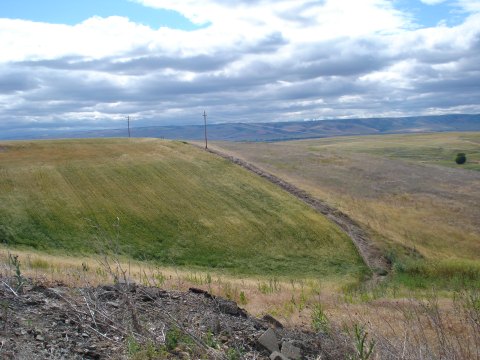
Wheat and Hay Fields near Pendleton, Oregon
What the cable suggested, in part, was publishing a ‘retaliation’ list of places, down to the actual fields, growing GMO foods in Europe in the hopes the fields and crops would be destroyed by activists, ’cause pain’ for officials and hopefully swing GMO acceptance in Europe around. The Ambassador went on to say that France was particularly culpable because scientists in France were attempting to change ‘knowledge’ by studying the effects of GMO products (even the ‘good’ GMO like BT enhanced products). These studies show that the effects of GMO food on those eating it may be more pronounced and drastic than the limited studies done by the FDA and USDA suggest (see for example the studies of Dr. Gilles-Eric Seralini, Professor Andrés Carrasco, and others). And for more, see this interview of Jeffery Smith on Democracy Now.
This is very interesting, because a cable sent in 26 October 2007 is the subject of French President Sarkozky’s first visit to the USA, and his meetings with American business leaders, including pushers of GM foods. The cable suggests that the President’s support of more restrictive rules on GM products in France might be politically based and therefore, changeable.
But Wait, There’s more! The cable to France, although receiving a lot of attention because it suggests undercutting the rightful government of our supposed allies and creating civil unrest and ‘pain’, is not the only released cable to mention GMOs and Monsanto’s needs across the world. Over at Eats, Shoots and Leaves there’s a good rundown by Richard Brenneman of some of the cables.
For example, in a cable from 9 April 2009 concerning, in part, African development, one of the points of intelligence to be gathered is the African governments’ and peoples’ reactions to growing and using GM crops. Brenneman rightly asks, why would this be a concern of our State Department, unless our government is actively pushing and supporting Monsanto and the company’s GM stable of crops?
I’m going to drop a final h/t to Rady Ananda at the Food Freedom blog. She wrote about GMO and Wikileaks several weeks ago, and has been right on top of things. She brings forth the case of the food crisis of 2007-08 which wraps up some of the things we at Sky Dancing discuss into a tidy bundle.
In a January 2008 meeting, US and Spain trade officials strategized how to increase acceptance of genetically modified foods in Europe, including inflating food prices on the commodities market, according to a leaked US diplomatic cable released by WikiLeaks.
Some of the participants thought raising food prices in Europe might lead to greater acceptance of biotech imports.
It seems Wall Street traders got the word. By June 2008, food prices had spiked so severely that ‘The Economist announced that the real price of food had reached its highest level since 1845, the year the magazine first calculated the number,’ reports Fred Kaufman in The Food Bubble: How Wall Street starved millions and got away with it.
The unprecedented high in food prices in 2008 caused an additional 250 million people to go hungry, pushing the global number to over a billion. 2008 is also the first year ‘since such statistics have been kept, that the proportion of the world’s population without enough to eat ratcheted upward,’ said Kaufman.
Remember back in 2007/08 when food prices, especially bread prices, suddenly shot up? I remember being astounded when the price of a bag of hot dogs went from 99 cents to 1.29$ overnight. I figured maybe it was the result of the rise in oil costs going on about then, and perhaps it was, in part. But after reading the article by Kaufman I’m not so sure. There was no crisis in food production at this time. It was simply a manufactured bubble. About that time there were terrible food riots in Mexico amongst 29 other countries, because the price of tortillas had gone up so much people couldn’t afford to buy them. I note that the Mexican government has recently taken steps to ensure this doesn’t happen again, by buying corn futures to guarantee a flat price.
So, I wonder, how are the big fat cats and the government diddling in our food today? Surely food, at least food, should be relatively safe from bubbles, like electricity, water, and sewage service? Oh wait, those are being commoditized too. Ahd I would like to point out, the price of the bag of hot dogs has not come back down, although the bubble burst… makes ya wonder, doesn’t it?
Note: I’m going to be in and out all today, so consider this something of an open thread. I’m really keen to know what everyone thinks of the Kaufman article. When I read it I was stunned by the lengths to which the greedy people of Wall Street will go to make money.
Small Family Farms: Definition and Some Challenges
Posted: November 14, 2010 Filed under: Farming, Food, legislation | Tags: cafo, farms, food, legislation, monsanto 51 CommentsSometimes it seems like the world I think I know is just a falsehood, a play put on by the Powers That Be to keep me pacified, dumbed down, and walking the way they want me to walk.
Take, for example, farming in the United States. This has always been, in my estimation, an honorable profession. The nation was founded by farmers wealthy and dirt-scrabble poor. Farming helped drive the expansion and eventual rise of the nation. Farming has fed us all.
But when I speak of farming, I have in my mind a certain kind of farm. It’s not too big; not more than a family can manage. Maybe it’s several hundred acres or more if it’s a ranch out west running cattle. If it’s dairy, it’s only got 200 or less cows. If it’s vegetables it’s growing a main crop and then lots of little crops for the farmers’ family. Or maybe it’s like my farm, with lots of different vegetables in small amounts, and some goats for milk, cheese and manure. The animals on the family farm are healthy, happy and living under the warmth of the sunshine in deep green pastures, or roaming semi-free over hot western plains. You know, the farm looks like all the commercials we see.
A farm is not a CAFO (‘Concentrated Animal Feeding Operation’). It is not 10,000 chickens or 2,000 pigs, or 5,000 cattle all under the same roof. These animals never see the light of day. They are given only square feet to live in. They are dealt with as though they were pieces of plastic running down an assembly line belt. That is not farming. And yet, CAFOs have become the source of much of the meat we eat, much to our shame.
A small farm does not have a ‘manure lagoon‘ which is full of liquid that can be so deadly it will kill you if you fall into it.
The farmer (read manager) of a huge agri-business farm uses satellite positioning and GPS to determine when and where to fertilize and harvest. The manager ‘drives’ a tractor which can be self-steering (pdf). Computer monitors sense the condition of the soil, the air, the plants. These give feedback that tells the manager when to plant, fertilize, harvest. Anyone can do it, as long as they can read a computer screen.
A farmer walks her acres, strand of grass in mouth, feeling the condition of her plants and soil.
Small farms, traditional farms, don’t grow patented seed. They don’t grow seed which has been bio-engineered with e. coli (yes, e. coli!) to carry resistance to herbicides.
A true farmer plants traditionally hybridized or open pollinated seed. She tries to find organic seed if possible. She uses seed catalogs which source from places other than huge seed houses which are trying to lock up all the genetic potential in plants through patents on common seed genomes.
Small farming is under attack from every side in our world. It is almost impossible to make a decent living from a family sized farm. For several generations now often one part of the family has to work off the farm to make it viable. In my own family, the men worked off the farm and the women farmed. We are so used to subsidized food, subsidies started in part by FDR to help even out the ups and downs of farming but quickly taken over by big business, that we don’t know what it really costs to grow it. Believe me, it costs more than 79 cents a pound cabbage.
Dairy farms are under attack. Recently official prices for milk were lowered to below break even point for farmers. Thousands left the business, closing up family farms (note that in this article, even 1000 cow dairies, BIG dairies are closing) . What is left? Big Agribusiness, of course.
The government, in a scramble to prove to voters that it really does care that food be safe, is legislating and regulating small farming out of existence. Dairy farms, cheese making operations with actual ties to farms (not Kraft, thank you), CSAs and even backyard vegetable patches are coming under increased regulatory scrutiny. The amount of food borne illness attributable to these operations is infinitesimal, and yet, that is what is regulated. Only 1% of food shipments into the country will be inspected, only written warnings, blown off by the egg factories which then recall 1/2 a billion eggs, will be issued. But you’ll be safe from your neighbors’ eggplant!
Below is the trailer for a new documentary: Farmageddon

 peej
peej Carissa
 bostonboomer
 dakinikat
 ecocatwoman
 mablue2
 Mama Lopez
 peggysue22
 quixote
 skydancingguestblogger
 Mona (aka Wonk the Vote)



 Sky Dancing
Recent Comments