
Monday Reads
Posted: November 14, 2016 Filed under: Afternoon Reads | Tags: Maya Angelou, Neil Postman, Steven Bannon, white fragility 68 Comments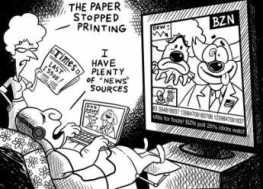 Well, I’m not sure what to say … still …
The first bad news is that Steven Bannon is the new Karl Rove. There will be a white nationalist who hates women in charge of policy strategy. This is from a petition at SPLC. Please consider signing it.
Bannon presided over a news empire where he, according to former staffers, ”aggressively pushed stories against immigrants, and supported linking minorities to terrorism and crime.”
“We’re the platform for the alt-right,” Bannon said in July, using a term that is really just a rebranding of traditional white nationalism.
Under Bannon, Breitbart published a call to “hoist [the Confederate flag] high and fly it with pride” only two weeks after the Charleston massacre when the country was still reeling from the horrors of the murders.
Under Bannon, Breitbart published an extremist anti-Muslim tract where the author wrote that “rape culture” is “integral” to Islam.
Worse perhaps, Bannon personally insinuated that African Americans are “naturally aggressive and violent.”
 The second bit is that Lamar White, Jr. is likely right that media theorist Neil Postman who wrote Amusing Ourselves to Death: Public Discourse in the Age of Show Business was astoundingly prescient. Has America “amused itself to death”? The media played right into proving Postman’s hypothesis imho.
From the moment he announced his candidacy on June 16, 2015, bizarrely gliding down the escalator of his eponymous tower, America was hooked.
It didn’t matter how absurd he behaved or who he insulted; that was part of the fun, and instead of marginalizing him, it became a justification for the media to focus on him even more. He became must-see TV, not because he said anything substantive or even remotely realistic about domestic or foreign policy. In fact, he made it repeatedly clear that he had very little idea what he was talking about. According to non-partisan fact-checking organizations, more than 70% of what he said on the campaign trail was either mostly false or completely false. He lied far more often than he told the truth.
No, he became must-see TV, because like any good salesman and showman, Donald Trump understood his audience. He spoke in vague platitudes and pitched a slogan- “Make America Great Again”- that could fill in for an answer on any question. He surrounded himself with media professionals. His son-in-law owns The New York Observer, a paper that was more than happy to publish thinly-sourced gossip about his opponent as if it was gospel truth. He counted Sean Hannity, the conservative talk show radio host and FOX News celebrity, as a top adviser, along with Roger Ailes, the Republican political operative who built FOX News into a media empire before being forced to resign amid allegations of sexual harassment. And he hired Steve Bannon, the anti-Semitic editor of the popular conservative news website Breitbart, as his campaign’s chief executive.
In the immediate aftermath of his stunning victory, which shocked even Trump himself and which practically no one had predicted, there was a tendency to believe that Trump’s message of “economic populism” was the critical key to his success. He flipped enough working-class white voters in the Rust Belt because his message resonated with them.
This, I’m afraid, gives far too much credit to what truly motivated those voters, because Trump, despite all of his bluster about renegotiating trade deals and being the only person on the planet that could solve America’s problems, never had a serious plan to help the working class. His message was not about “economic populism;” it was about nativist resentment. It was not about inspiring “the forgotten man and woman,” as he suggested shortly after winning the presidency; it was about stoking their anger: Mexicans are illegally depriving you of a job; the Chinese are ripping us off; Muslims are terrorizing us; African-Americans are disrespecting “law and order” by protesting against police brutality; a global cabal of financiers are secretly conspiring to plunder our wealth (you shouldn’t need a history degree to figure out what that was about).
These Rust Belt voters, who determined the election despite the fact that Hillary Clinton is expected to win nationwide by at least 2 million votes, weren’t parsing through detailed policy papers from both candidates; they weren’t reading the objective economic analysis about the ways in which Clinton’s plans would add 10 million jobs to the workforce while Trump’s would result in a loss of 3 million jobs.
Please read the entire essay. You’ll be glad did.
Amanda Marcotte–writing for Salon–says “Yes, the white male anger that fueled Trump’s victory was real — but it isn’t valid.”
The anger that Donald Trump voters feel is very real. You don’t fling a proto-fascist pussy-grabbing monstrosity into the White House unless you really want to convey that fuck-you sentiment.
Because this anger is so real and so palpable, there’s been an unfortunate tendency in much of the media to assume that this anger must also be valid. The entire election cycle was a clusterfuck of articles demanding empathy for Trump voters, insisting that their rage must have some rational roots — perhaps economic insecurity?
The persistence of the “economic insecurity” angle in the face of overwhelming evidence against it was a testament to the power of hope over reason. If economic insecurity drives this rage, then something can be done about it. But if the rage is driven by less savory factors — unrepentant sexism and racism — then there is no way to mollify it without throwing women and people of color under the bus. It is also not for nothing that most “economic insecurity” theorists were themselves white men, perhaps eager for a narrative that makes people who look like them seem a little more sympathetic.
But wishing doesn’t make something true, or we’d be chatting about a President-elect Hillary Clinton today.
No doubt Trump supporters are people who felt they’ve lost something. But what they’ve lost is something that wasn’t rightly theirs to begin with: Unearned privilege. The Trump revolution was driven by white men who are watching women and people of color making gains that put them closer to equality. They are rebelling at the erosion of the sense that white men are better and more important than everyone else, simply because they exist.
 Rebecca Solnit at The Guardian writes: “Don’t call Clinton a weak candidate: it took decades of scheming to beat her.”
Sometimes I think I have never seen anything as strong as Hillary Clinton. That doesn’t mean that I like and admire everything about her. I’m not here to argue about who she is, just to note what she did. I watched her plow through opposition and attacks the like of which no other candidate has ever faced and still win the popular vote. To defeat her it took an unholy cabal far beyond what Barack Obama faced when he was the campaign of change, swimming with the tide of disgust about the Bush administration. As the New York Times reported, “By the time all the ballots are counted, she seems likely to be ahead by more than 2m votes and more than 1.5 percentage points. She will have won by a wider percentage margin than not only Al Gore in 2000 but also Richard Nixon in 1968 and John F Kennedy in 1960.”
You can flip that and see that Trump was such a weak candidate it took decades of scheming and an extraordinary international roster of powerful players to lay the groundwork that made his election possible. Defeating Clinton in the electoral college took the 2013 gutting of the Voting Rights Act by Republican appointees to the supreme court. It took vast Republican voter suppression laws and tactics set in place over many years. It took voter intimidation at many polling places. It took the long Republican campaign to blow up the boring bureaucratic irregularity of Clinton’s use of a private email server into a scandal that the media obediently picked up and reheated.
Kurt Eichenwald continues to be a voice worthy hearing. His Newsweek headline reads: “THE MYTHS DEMOCRATS SWALLOWED THAT COST THEM THE PRESIDENTIAL 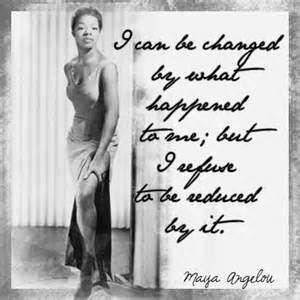 ELECTION.”
A certain kind of liberal makes me sick. These people traffic in false equivalencies, always pretending that both nominees are the same, justifying their apathy and not voting or preening about their narcissistic purity as they cast their ballot for a person they know cannot win. I have no problem with anyone who voted for Trump, because they wanted a Trump presidency. I have an enormous problem with anyone who voted for Trump or Stein or Johnson—or who didn’t vote at all—and who now expresses horror about the outcome of this election. If you don’t like the consequences of your own actions, shut the hell up.
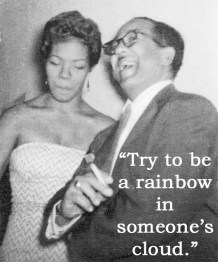
So, I could post dozens of links about stuff here but I think it’s best you share what resonates with you today. Meanwhile, just let a little bit of Maya’s wisdom wash all over you!!!
What’s on your reading and blogging list today?
Lazy Saturday Reads
Posted: July 5, 2014 Filed under: morning reads, U.S. Politics, Women's Rights | Tags: "white oppression", Bill Clinton, Boston bombing, Bourbon St. shootings. New Orleans, C-Span callers, Civil Rights act, Eden Foods, Hillary Clinton, Hobby Lobby decision, Hurricane Arthur, Indianapolis shootings, Maya Angelou, Michael Potter, Racism, Richard Mellon Scaife, Samuel Alito, SCOTUS, vanilla ice cream 34 Comments
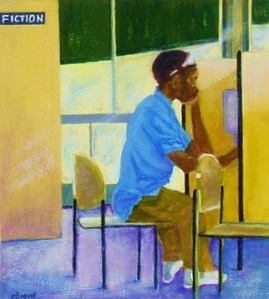
“Someone is Waiting,” by David Hettinger
Good Morning!!
I’m sure you won’t be surprised to learn that today is a very slow news day. Nevertheless, I’ve still managed to dig up a few interesting reads.
Long-time Clinton hater Richard Mellon Scaife has died at 82. The Associated Press reports via Politico:
Scaife died early Friday at his home, his newspaper, the Pittsburgh Tribune-Review, reported. Scaife’s death comes less than two months after he announced in a first-person, front-page story in his Pittsburgh Tribune-Review that he had an untreatable form of cancer.
“Some who dislike me may rejoice at the news,” wrote Scaife, who acknowledged making political and other enemies. “Naturally, I can’t share their enthusiasm.”
He was the grand-nephew of Andrew Mellon, a banker and secretary of the Treasury who was involved with some of the biggest industrial companies of the early 20th century. Forbes magazine estimated Scaife’s net worth in 2013 at $1.4 billion.
The intensely private Scaife became widely known in the 1990s when first lady Hillary Rodham Clinton said her husband was being attacked by a “vast right-wing conspiracy.” White House staffers and other supporters suggested Scaife was playing a central role in the attack.
Hillary was mocked for those remarks; but today, in the aftermath of the Hobby Lobby decision, it should be obvious to all but the most oblivious and ignorant among us that the vast right wing conspiracy exists and its tentacles have reached even the U.S. Supreme Court.
From Forbes, Clare O’Connor reports more Hobby Lobby Fallout: Catholic Soy Milk Mogul Won’t Cover Drugs That ‘Prevent Procreation’. Eden Foods founder Michael Potter has stated his determination to prevent his female employees from getting access to birth control, and the Supreme Court is helping him.
In April 2013, devout Catholic (and sole Eden Foods shareholder) Potter sued the Department of Health and Human Services, calling the Affordable Care Act’s contraceptive mandate “unconstitutional government overreach.”
In a letter he wrote in response to a shopper complaint that month, Potter described contraceptives as “lifestyle drugs” akin to “Viagra, smoking cessation, weight-loss” tools and other medications. (He also compared birth control to “Jack Daniels” in a contemporaneous interview with Salon.)
In October, the U.S. Court of Appeals decided against Potter, ruling that Eden Foods, as a for-profit corporation, couldn’t exercise religion.
Now, in the wake of this week’s controversial Supreme Court ruling recognizing craft chain Hobby Lobby’s religious rights, the court has changed its tune.The day after the Justices decided evangelical Hobby Lobby billionaire David Green doesn’t have to cover certain contraceptives for his employees, the Supreme Court vacated the judgment against Eden Foods and sent the case back to the U.S. Court of Appeals for the Sixth Circuit for further consideration.
“The court of appeals is ordered by the Supreme Court to follow its decision in Hobby Lobby,” said Erin Mersino, the attorney handling Potter’s case at the Christian, conservative Thomas More Law Center.
And the beat goes on . . .
At The Nation, Katha Pollit asks: Where Will the Slippery Slope of ‘Hobby Lobby’ End?
Facts are stubborn things, as John Adams famously said. Unless, that is, you’re talking about religion. Then facts don’t seem to matter at all: right you are if you think you are. The Hobby Lobby case was billed as a test of religious freedom versus the power of the state: Did the Religious Freedom Restoration Act (RFRA) mean that David Green, the evangelical Christian CEO of a chain of crafts stores, could be exempt from providing coverage for the full range of contraceptives for his employees under the Affordable Care Act? Green balked at including Plan B, Ella (another form of emergency contraception) and two kinds of IUD, because, he claimed, they caused “abortion” by preventing the implantation of a fertilized egg.
The Court’s 5-to-4 decision—which featured all three women justices ruling for the workers, and all five Catholic men ruling for the corporation—was wrong in many ways. But the thing I really don’t understand is why it didn’t matter that preventing implantation is not “abortion,” according to the accepted medical definition of the term. And even if it was, Plan B, Ella and the IUDs don’t work that way, with the possible exception of one form of IUD when inserted as emergency contraception. As an amicus brief from a long list of prestigious medical organizations and researchers laid out at length, studies show that emergency contraception and the IUD preventfertilization, not implantation. They are not “abortifacients,” even under the anti-choicers’ peculiar definition of abortion. (Green is actually more moderate than some anti-choicers, who include hormonal contraception, aka “baby pesticide,” as abortion.) Why doesn’t it matter that there is no scientific evidence for Green’s position? When did Jesus become an Ob/Gyn?
Good question. Today even facts are irrelevant to Supreme Court decisions. The fact is that Democrats helped Thomas, Roberts, and Alito make it onto the Court, and now we’re stuck with these religious and ideological fanatics.
At Salon, Digby writes that Alito could have been stopped: Why Dems should have filibustered the radical. And from Peter Montgomery at HuffPo, Samuel Alito: A Movement Man Makes Good on Right-Wing Investments. Read them and weep.
Dakinikat posted this Guardian piece in the comments last night; I thought it should be included in this morning’s links: Black people were denied vanilla ice cream in the Jim Crow south – except on Independence Day.
By custom rather than by law, black folks were best off if they weren’t caught eating vanilla ice cream in public in the Jim Crow South, except – the narrative always stipulates – on the Fourth of July. I heard it from my father growing up myself, and the memory of that all-but-unspoken rule seems to be unique to the generation born between World War I and World War II.
But if Maya Angelou hadn’t said it in her classic autobiography I Know Why the Caged Bird Sings, I doubt anybody would believe it today.
People in Stamps used to say that the whites in our town were so prejudiced that a Negro couldn’t buy vanilla ice cream. Except on July Fourth. Other days he had to be satisfied with chocolate.
Vanilla ice cream – flavored with a Nahuatl spice indigenous to Mexico, the cultivation of which was improved by an enslaved black man named Edmund Albius on the colonized Réunion island in the Indian Ocean, now predominately grown on the largest island of the African continent, Madagascar, and served wrapped in the conical invention of a Middle Eastern immigrant – was the symbol of the American dream. That its pure, white sweetness was then routinely denied to the grandchildren of the enslaved was a dream deferred indeed.
What makes the vanilla ice cream story less folk memory and more truth is that the terror and shame of living in the purgatory between the Civil War and civil rights movement was often communicated in ways that reinforced to children what the rules of that life were, and what was in store for them if they broke them.
Please go read the whole thing if you haven’t already.

From Politico: Why the Civil Rights Act couldn’t pass today.
It was a painful tableau: The bipartisan leaders of Congress linking hands in the Capitol Rotunda and swaying to the strains of “We Shall Overcome” as they commemorated the 50th anniversary of the passage of the Civil Rights Act of 1964. Harry Reid and Nancy Pelosi sang along with the crowd, but Mitch McConnell and John Boehner’s lips were frozen in silent, self-conscious smiles.
The climate in today’s Washington is so different from the one that produced what many scholars view as the most important law of the 20th century that celebrating the law’s legacy is awkward for Republicans and Democrats alike. Neither party bears much resemblance to its past counterpart, and the bipartisanship that carried the day then is now all but dead….
The current congressional leaders gathered last week not to honor Johnson — or any of the legislative leaders who actually passed the landmark law — but to award a posthumous Congressional Gold Medal to The Rev. Dr. Martin Luther King Jr. and his wife, Coretta Scott King, whose crusade helped create the climate that made the bill possible. In his life, racial tensions helped make King such a polarizing figure that both Johnson and John F. Kennedy worried about seeming too close to him, but in martyrdom and myth, he is the only politically safe ground on which present day leaders could unite.
They are all so pathetic. And this is beyond pathetic: Callers Use C-SPAN Civil Rights Discussion To Complain About White Oppression (VIDEO).
“Washington Journal” host Steve Scully listened as an “independent” caller named Thomas from Maryland told him that he is “much less liberal today” than he was in 1964 when the landmark law was signed by Lyndon B. Johnson.
“And I think the blacks have brought on most of their present-day problems themselves. They insult white people,” he told Scully. “I heard it right on your own show, I heard some black call Karl Rove a ‘white boy.’ And I don’t think that’s right. They’re attacking white people in the big cities and we’re supposed to put up with that kind of stuff and like them and say, ‘Well, come into our neighborhood.’ And how about the discussion of the black crime that goes on in this country?”
The caller went on to complain that the discrimination endured by Irish, Mormons and Italians is widely ignored.
“You people will never, never discuss that. You only discuss the discrimination against the black people,” he said.
Is that sick or what?
A few more news links:
Information Week on private tech companies treatment of their customers, Facebook Mood Manipulation: 10 Bigger Problems.
Fox News: Suspect arrested in Bourbon St. shootings.
USA Today: Seven hurt in Indianapolis shootings.
WSJ: A Weakened Hurricane Arthur Heads Toward Nova Scotia
ABC News: Before Boston Attack, Alleged Bomber Posed With Black Flag of Jihad at Local Mosque.
So . . . what stories are you reading and blogging about? Please share your links in the comment thread, and enjoy the rest of the long weekend!
Thursday Reads
Posted: May 29, 2014 Filed under: 2014 elections, morning reads | Tags: Maya Angelou 18 Comments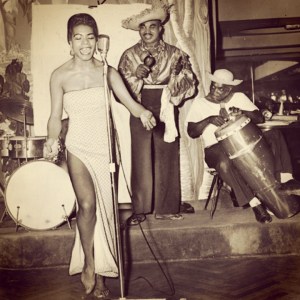
Good Morning!
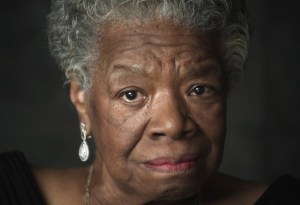
The world lost the great activist, poet, author, and educator Maya Angelou yesterday. She was an outstanding person who led a full and productive life.
Maya Angelou, whose landmark book of 1969, “I Know Why the Caged Bird Sings” — a lyrical, unsparing account of her childhood in the Jim Crow South — was among the first autobiographies by a 20th-century black woman to reach a wide general readership, died on Wednesday at her home in Winston-Salem, N.C. She was 86.
Her death was confirmed by her longtime literary agent, Helen Brann. The cause was not immediately known, but Ms. Brann said Ms. Angelou had been frail for some time and had heart problems.
In a statement, President Obama said, “Today, Michelle and I join millions around the world in remembering one of the brightest lights of our time — a brilliant writer, a fierce friend and a truly phenomenal woman,” adding, “She inspired my own mother to name my sister Maya.”
Though her memoirs, which eventually filled six volumes, garnered more critical praise than her poetry did, Ms. Angelou (pronounced AHN-zhe-low) very likely received her widest exposure on a chilly January day in 1993, when she delivered her inaugural poem, “On the Pulse of Morning,” at the swearing-in of Bill Clinton, the nation’s 42nd president. He, like Ms. Angelou, had grown up in Arkansas.
I had to fortune and pleasure to meet Dr. Angelou when I was barely pregnant with oldest daughter at a conference. I was lucky to hear her speak and to be able to spend some time speaking with her. I actually have that meeting on a VHS tape that I will have to transfer to DVD one day. It also has me with Kate Millet and Bette Friedan and is one of my most prized possessions. I spoke to her about my teaching experience in an alternative high school where they basically dumped teenage pregnant girls and uncontrollable boys. I used to give them copies of her book “I know why the Caged Bird Sings”. She was amazing. She was serene in a strong way. I have to say she had a deep and profound effect on me then and every time I had the pleasure to read something she wrote.
Growing up in St. Louis, Mo., and Stamps, Ark., she was Marguerite Johnson. It was her brother who first called her Maya, and the name stuck. Later she added the Angelou, a version of her first husband’s name.
Angelou left a troubled childhood and the segregated world of Arkansas behind and began a career as a dancer and singer. She toured Europe in the1950s with a production of Porgy and Bess, studied dance with Martha Graham and performed with Alvin Ailey on television. In 1957 she recorded an album called “Calypso Lady.”
“I was known as Miss Calypso, and when I’d forget the lyric, I would tell the audience, ‘I seem to have forgotten the lyric. Now I will dance.’ And I would move around a bit,” she recalled with a laugh during a 2008 interview with NPR.
“She really believed that life was a banquet,” says Patrik Henry Bass, an editor at Essence Magazine. When he read Angelou’s memoir I Know Why the Caged Bird Sings, he saw parallels in his own life in a small town in North Carolina. He says everyone in the African-American community looked up to her; she was a celebrity but she was one of them. He remembers seeing her on television and hearing her speak.
“When we think of her, we often think about her books, of course, and her poems,” he says. “But in the African-American community, certainly, we heard so much of her work recited, so I think about her voice. You would hear that voice, and that voice would capture a humanity, and that voice would calm you in so many ways through some of the most significant challenges.”
Film director John Singleton grew up in a very different part of the country. But he remembers the effect Angelou’s poem “Still I Rise” had on him as a kid. It begins:
You may write me down in history
With your bitter, twisted lies,
You may trod me in the very dirt
But still, like dust, I’ll rise.
“I come from South Central Los Angeles,” he says. It’s “a place where we learn to puff up our chests to make ourselves bigger than we are because we have so many forces knocking us down — including some of our own. And so that poem … it pumps me up, you know. … It makes me feel better about myself, or at least made me feel better about myself when I was young.”
Singleton used Angelou’s poems in his 1993 film Poetic Justice. Angelou also had a small part in the movie. Singleton says he thinks of Angelou as a griot — a traditional African storyteller.
Longtime Texas GOP observers have noticed the sea change, too. They say the grassroots now controls the GOP.
“Things certainly have changed. The conservative grassroots activists have come to dominate the party establishment, offsetting or pushing aside some of the more traditional business/donor community,” said Texas Republican strategist Ray Sullivan, a former top aide to both Gov. Rick Perry and former President George W. Bush.
Sullivan said grassroots groups are much more organized and unified than in the past. They can also depend on help from national groups like the Senate Conservatives Fund and the Club for Growth.
“The conservative factions largely within Tea Party brands have become very well organized and have a significant amount of influence in Republican primary elections,” he added.

Two-thirds of Americans in a new Washington Post-ABC News poll disapprove of the Republican strategist raising questions about Clinton’s age and health in advance of her potential presidential run. The lopsided negative reaction to Rove’s commentary — just 26 percent approve of his topic of criticism — includes majorities of every age group as well as Democrats and independents. Republicans split evenly on the issue, with 45 percent approving and 46 percent disapproving of Rove broaching the issue.
One of the most durable myths in recent history is that the religious right, the coalition of conservative evangelicals and fundamentalists, emerged as a political movement in response to the U.S. Supreme Court’s 1973 Roe v. Wade ruling legalizing abortion. The tale goes something like this: Evangelicals, who had been politically quiescent for decades, were so morally outraged by Roe that they resolved to organize in order to overturn it.
This myth of origins is oft repeated by the movement’s leaders. In his 2005 book, Jerry Falwell, the firebrand fundamentalist preacher, recounts his distress upon reading about the ruling in the Jan. 23, 1973, edition of the Lynchburg News: “I sat there staring at the Roe v. Wadestory,” Falwell writes, “growing more and more fearful of the consequences of the Supreme Court’s act and wondering why so few voices had been raised against it.” Evangelicals, he decided, needed to organize.
Some of these anti-Roe crusaders even went so far as to call themselves “new abolitionists,” invoking their antebellum predecessors who had fought to eradicate slavery.
But the abortion myth quickly collapses under historical scrutiny. In fact, it wasn’t until 1979—a full six years after Roe—that evangelical leaders, at the behest of conservative activist Paul Weyrich, seized on abortion not for moral reasons, but as a rallying-cry to deny President Jimmy Carter a second term. Why? Because the anti-abortion crusade was more palatable than the religious right’s real motive: protecting segregated schools. So much for the new abolitionism.
Tuesday Reads: Obama’s Deficit-Reduction Plan, Backsliding Obots, Rev. Wright, and Dr. Doom
Posted: September 20, 2011 Filed under: American Jobs Act, Barack Obama, Democratic Politics, Domestic Policy, Global Financial Crisis, income inequality, Medicaid, Medicare, morning reads, Social Security, U.S. Economy, U.S. Politics | Tags: Booman, Chris Hedges, class warfare, digby, Ezra Klein, Greg Sargent, Jon Walker, Jonathan Cohn, Martin Luther King, Maya Angelou, Nouriel Roubini, Rev. Jeremiah Wright 45 Comments
Good Morning!! Let’s see what’s happening in the news today.
Well, of course the Obama apologists are claiming that he has suddenly grown a backbone of steel and become the liberal messiah they all dreamed of in 2008. I already told you about Ezra Klein’s delusional column last night. The other usual suspects are also getting leg tingles, and former Obots are starting to backslide.
Greg Sargent has put on his rose-colored glasses and taken a few swigs of LSD-laced Koolaid:
This has to be the clearest sign yet that Obama has taken a very sharp populist turn as he seeks to frame the contrast between the parties heading into 2012. During his remarks this morning, Obama directly responded to Republicans accusing him of “class warfare,” but rather than simply deny the charge, he made the critical point that the act of protecting tax cuts for the rich is itself class warfare, in effect positioning himself as the defender of the middle class against GOP class warriors on behalf of the wealthy.
Wow! I’ll bet it never occurred to anyone that income inequality equals class warfare until Obama figured it out. Amaaaazzzzing!!
A senior administration official tells me that parts of Obama’s “class warfare” broadside were ad-libbed. Here’s the key chunk — and it’s a script that could have been written by just about any card-carrying member of the “professional left:”
Warren Buffett’s secretary shouldn’t pay a higher tax rate than Warren Buffett. There’s no justification for it. It is wrong that in the United States of America, a teacher or a nurse or a construction worker who earns $50,000 should pay higher tax rates than somebody pulling in $50 million…
We’re already hearing the usual defenders of these kinds of loopholes saying, “this is just class warfare.” I reject the idea that asking a hedge fund manager to pay the same tax rate as a plumber or a teacher is class warfare. I think it’s just the right thing to do. I believe the American middle class, who’ve been pressured relentlesly for decades, believe it’s time that they were fought for as hard as the lobbyists and some lawmakers have fought to protect special treatment for billionaires and big corporations.
Nobody wants to punish success in America … All I’m saying is, that those who have done well, including me, should pay our fair share in taxes to contribute to the nation that made our success possible.
Holy sh*t!! Obama ad libbed? Hope ‘n’ change! Change we can believe in! I guess it’s just me, but I thought that speech sounded kind of weak and defensive. But what do I know?
Booman has an even better rationalization for Obama’s behavior than Beltway Bob Ezra Klein. According to the ever-gullable Booman,
…the president has a lot more credibility now when he takes his ideas to the public and says the the Republicans aren’t interested in compromise. You have to try and fail to get a compromise before that argument has any resonance. It’s not so much 11-Dimensional chess as basic common sense. Everyone’s poll numbers suffered during the summer, but no one’s standing was weakened more the Republicans’. That’s not an accident.
So Obama must have planned this. The man is brilliant!!
Digby says Obama is in campaign mode and that’s why he’s trying to sound strong and determined.
My first thought is that it appears the administration has finally decided that there’s nothing to be gained with exclusively delivering post-partisan pablum. It certainly sounds as though he’s thrown down the gauntlet. Unfortunately, the President appears to want to have two fights going into this election, one over job creation and one over whose plan to cut the deficit is better, which I think is a confusing waste of time. (Focus like a laser beam on jobs and tell the Republicans they’ll have to go through you to get to the safety net and I think people would instinctively understand that he’s on their side.) But that isn’t this president’s style and perhaps it wouldn’t be believable if he did it. So, this is at least a change of tactics, more confrontational in tone, which is his best hope for reelection since it turns out people aren’t really all that impressed that he’s the most reasonable guy in the room if it appears that he gets punk’d every time.
Digby things the proposed Medicare cuts are a loser politically, though–especially for Congress members running for reelection.
Jon Walker at FDL was “pleasantly surprised” that Obama didn’t call for Social Security cuts or “any specific major cuts to Medicare benefits,” but he hasn’t gone back on the Koolaid.
This is a positive development. Having President Obama publicly call for major cuts in Medicare benefits or change in age eligibility would have been terrible for our senior citizens and a total political disaster for the Democratic party. But it is important to remember: simply because the president did not put such cuts on the table doesn’t mean he took these cuts off the table.
President Obama has already privately signaled that in theory he would be willing to support major cuts to Medicare. And he’s hinted he’d be willing to cut Social Security benefits. They were both earlier put the table for a theoretical deal and this speech didn’t take them off the table. There was no veto threat to protect Medicare and Social Security benefits.
Actually, there do seem to be specific proposed cuts to Medicare. Jonathan Cohn breaks down the detail of the President’s deficit reduction proposal in a very technical piece that you can read if you’re interested. According to Cohn,
President Obama’s new deficit reduction plan includes about $320 billion in cuts to government health care programs. Most of the cuts from Medicare and that is sure to get a lot of people’s attention, if not now then in the presidential campaign.
But these reductions are less severe, and less worrisome, than some of the proposals Obama indicated he was willing to support over the summer, while he was negotiating with House Speaker John Boehner. In particular, Obama did not call for increasing the Medicare eligibility age from 65 to 67, as folks like me feared he would.
In fact, the cuts Obama has in mind are more or less consistent with the kind of cuts that you find in the Affordable Care Act: They are reductions designed to change the way Medicare pays for treatment and services, ideally (although not always) in ways that will actually improve the efficiency or quality of care. To the extent they would force individual seniors to pay more, it’d be in the form of higher premiums from wealthy seniors or higher co-pays for treatments likely to be unnecessary or wasteful.
For a reminder of who Obama really is, I’ll turn to Glenn Ford at the Black Agenda Report. His post was written a few days ago–before today’s speech–but I still think he has Obama’s number.
The GOP can count on Obama to offer up Social Security on the alter of austerity, as he has done consistently since January, 2009, while still president-elect. Back in April, he proposed $4 trillion in cuts over 12 years – nearly as draconian as his hand-picked committee – with the focus on the safety net. “By 2025,” warned the apocalyptic and grossly misleading president, “the amount of taxes we currently pay will only be enough to finance our health care programs, Social Security, and the interest we owe on our debt.”
Obama promises that his grab-bag, mostly supply-side and wholly inadequate jobs scheme will largely be “paid for” by cuts that include “modest adjustments [hah!] to health care programs like Medicare and Medicaid.”
Social Security stands to be mortally wounded at Obama’s hand. His second round of cuts in the payroll tax further undermine, not just the program’s trust fund, but its status as a free-standing entity outside of the usual congressional process. Congress will, theoretically, make up the temporary shortfall in payroll taxes through appropriations. But that puts Social Security in the middle of the budget deficit debate, where it does not belong and from which it has been purposely shielded since its origins in President Franklin Roosevelt’s New Deal. Through rhetoric and calculated action, Obama has for the past two and a half years been in league with Republicans in falsely conflating Social Security and the federal debt. He is now positioned to knock the program from its protective pedestal.
The Social Security cuts are already taken care of as long as the GOP goes along with extending the payroll tax holiday. The more money Obama can suck out of the Social Security trust fund, the more likely he can “reform” the Social Security into a welfare program or Wall Street ATM.
If Obama succeeds, Social Security will become just another “entitlement” to be mangled in a grand bargain with the GOP, like Medicare and Medicaid. Obama wants to be remembered as the president who brought the Republicans and the right wing of the Democratic Party into harmonious consensus – over the dead carcass of the New Deal. That’s what he means by “Go big!”
Chris Hedges has another excellent article up at Truthdig. It’s an interview with Obama’s former pastor and spiritual adviser: “The Rev. Jeremiah Wright Recalls Obama’s Fall From Grace.” I know not everyone will agree with Hedges’ point of view, but I mostly do. As outlandish as Wright was made to seem in the media, I couldn’t fault much of what I heard him say about America and racism. It’s a lengthy article, but I hope you’ll take a look at it.
One of the things Wright discussed with Hedges was the Martin Luther King Memorial in Washington DC. Wright himself raised $200,000 for the project.
“I think it’s a wonderful thing that the country would recognize someone as important as Dr. King,” Wright said when I reached him by phone in Chicago, “and recognize him in a way that raises his likeness in the Mall along with the presidents. He’s not a president like Abraham Lincoln or George Washington. But to have him ranked among them in terms of this nation paying attention to the importance of his work, that’s a good thing.”
“I read Maya Angelou’s piece about the way the quote was put on the monument,” Wright said in referring to the editing of a quote by King on the north face of the 30-foot-tall granite statue. The inscription quote reads: “I was a drum major for justice, peace and righteousness.” But these are not King’s words. They are paraphrased from a sermon he gave in which he said: “If you want to say that I was a drum major, say that I was a drum major for justice. Say that I was a drum major for peace. I was a drum major for righteousness. And all of the other shallow things will not matter.” Angelou said the mangled inscription made King sound “arrogant.”
“I read the explanation as to why we couldn’t include the whole quote,” said Wright, who helped raise $200,000 for the monument. “Kids a hundred years from now, like our pastor who was born three years after King was killed, they’re going to see that and will not get the context. They will not hear the whole speech, and that will be their take-away, which is not a good thing. My bigger problems, however, have to do with all the emphasis on ’63 and ‘I Have a Dream.’ They have swept under the rug the radical justice message that King ended his career repeating over and over and over again, starting with the media coverage of the April 4, 1967, ‘A Time to Break Silence’ message at the Riverside Church [in New York City]. King had a huge emphasis on capitalism, militarism and racism, the three-headed giant. There is no mention of that, no mention of that King, and absolutely no mention of the importance of his work with the poor. After all, he’s at the garbage collectors strike in Memphis, Tenn., when he is assassinated. The whole emphasis on the poor sent him to Memphis. But that gets swept away. It bothers me that we think more about a monument than a movement. He had a movement trying to address poverty. It was for jobs, not I Have a Dream, not Black and White Together, but that gets lost.”
He’s right. The powers that be have worked for years to minimize King’s work to end the Vietnam war as well as his determination to wipe out poverty. It’s interesting that this is the second time King has been misquoted on Obama’s watch.
This post is already too long, so I’ll end with an article by Dr. Doom (Nouriel Roubini): Eight drastic policy measures necessary to prevent global economic collapse. None of them will be popular. The first recommendation is that
we must accept that austerity measures, necessary to avoid a fiscal train wreck, have recessionary effects on output. So, if countries in the Eurozone’s periphery such as Greece or Portugal are forced to undertake fiscal austerity, countries able to provide short-term stimulus should do so and postpone their own austerity efforts. These countries include the United States, the United Kingdom, Germany, the core of the Eurozone, and Japan. Infrastructure banks that finance needed public infrastructure should be created as well.
Read the rest and weep. Our current “leaders” aren’t likely to pay any attention.
So sorry if I depressed you with that one. What are you reading and blogging about today?

 peej
peej Carissa
 bostonboomer
 dakinikat
 ecocatwoman
 mablue2
 Mama Lopez
 peggysue22
 quixote
 skydancingguestblogger
 Mona (aka Wonk the Vote)



 Sky Dancing
Recent Comments