Posted: February 19, 2016 | Author: dakinikat | Filed under: Afternoon Reads | Tags: Bernie Sanders, Bobby Jindal, Crisis of Public Health care in Louisiana, Harper Lee, Louisiana financial wreck, Sports stealing from Higher Ed, Ted Cruz, unrealistic policy goals |
Good Afternoon!
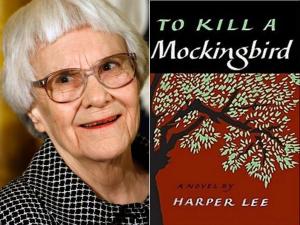 We heard this morning of the passing of the great writer Harper Lee.
Harper Lee, the author of the classic novel To Kill a Mockingbird, has died in her hometown of Monroeville, Ala. The Pulitzer Prize-winning writer was 89.
Monroeville city officials confirmed reports of Lee’s death to Alabama Public Radio. Her publisher, HarperCollins, also confirmed the news to NPR.
Her famous novel about a young girl’s experience of racial tensions in a small Southern town has sold tens of millions of copies and been translated into dozens of languages.
Lee’s family issued a statement Friday morning saying that Lee “passed away in her sleep early this morning. Her passing was unexpected. She remained in good basic health until her passing.”
Family spokesman Hank Conner, Lee’s nephew, said:
“This is a sad day for our family. America and the world knew Harper Lee as one of the last century’s most beloved authors. We knew her as Nelle Harper Lee, a loving member of our family, a devoted friend to the many good people who touched her life, and a generous soul in our community and our state. We will miss her dearly.”
The family says that as Lee had requested, a private funeral service will be held.
Lee’s novel is probably one of the greatest stories showing American Life ever written. It is studied by students and beloved by all that read about Scout and see the movie adaptation.
More than a half-century after its publication, the novel continues to be studied by high school and college students. It has sold more than 30 million copies—still selling nearly a million copies per year by the 50th anniversary of its publication in 2010, according to Publishers Weekly–and has been translated into more than 40 languages.
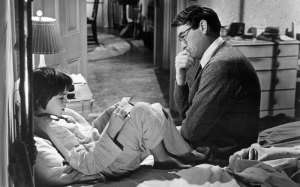
The film adaptation of the novel, with Gregory Peck as Atticus Finch and Mary Badham as Scout, opened on Christmas Day of 1962 and was an instant hit. It was nominated for eight Academy Awards and won four, including Best Actor for Peck and Best Screenplay for Horton Foote, who wrote the screenplay for the movie based on the book. Lee became close friends with both of them.
The novel also inspired a generation of lawyers with its portrayal of the gentle, wise Atticus Finch, who defends a black man, Tom Robinson, falsely accused of raping Mayella Ewell, a white woman. Meanwhile, the Finches’ strange neighbor, Boo Radley, who strikes fear in Scout’s and Jem’s hearts, turns out not to be the monster the children expect him to be.
Though Lee denied that the novel was autobiographical, many parallels exist between “To Kill a Mockingbird” and Lee’s own childhood. Her father was also a lawyer who owned the town newspaper. Comparisons have been made between Lee and Scout, the 9-year-old tomboy protagonist, especially in her friendship with Dill, a character widely considered to have been based on Lee’s own childhood friend, Truman Capote.
When he was a child, the author of “In Cold Blood” often stayed with his cousins, who lived next door to the Lees. Capote and Lee collaborated on the early stages of his novel and remained lifelong friends.
The interior of the Monroe County Courthouse was reconstructed on a movie set in Hollywood for the film’s pivotal courtroom scenes, and local actors bring the book to life each spring at the courthouse itself, where they stage “To Kill a Mockingbird” to sellout crowds.
BB wrote extensively about Lee’s publication last year of a novel that delves back into the lives of the Finch family .
A Chicago court is scheduled to hear a lawsuit asking for Cruz to be removed from the ballot in Illinois.
A judge will hear arguments on Friday from an Illinois voter alleging that Republican presidential hopeful Ted Cruz is not a “natural-born citizen” and should be disqualified for the party’s nomination.
Lawrence Joyce, an Illinois voter who has objected to Cruz’s placement on the Illinois primary ballot next month, will have his case heard in the Circuit Court of Cook County in Chicago. Joyce’s previous objection, made to the state’s Board of Elections, was dismissed on February 1. He appealed the decision and was granted a hearing for Friday before Judge Maureen Ward Kirby.
Joyce challenges Cruz’s right to be president in the wake of questions put forth by GOP rival Donald Trump about being born in Canada. Cruz maintains he is a natural-born citizen since his mother is American-born.
“What I fear is that Ted Cruz becomes the nominee, come September, Congressman Alan Grayson of Florida will go forward with his threats and probably several other Democrats will file suit to prevent Ted Cruz from being on the ballot,” Joyce, a pharmacist and attorney from Poplar Grove, Ill, told USA TODAY.
Grayson, a Democrat, has told reporters that he will file a lawsuit contesting Cruz’s citizenship if the senator from Texas wins the GOP nomination.
“What Democrats will do at that point is cherry pick which county courthouse they are going to show up in order to file these petitions,” Joyce said. “And at that point, I fear they’ll get a string of victories in the lower courts and the funding for Ted Cruz would dry up, his numbers would plummet in the polls, he may be forced to give up the nomination.”
 The primary and caucus tomorrow continues to be the top headline grabber. I liked this Charlie Pierce item describing the relationship between the Trump Candidacy and the late Lee Atwater. It’s an excellent essay into Atwater’s legacy and life.
What Atwater did was more than inject into Republican politics a modern form of strategic viciousness. With it, he injected an entirely new form of strategic unreality. From that has come the party’s inability to recognize or acknowledge the empirical. By creating an entirely new Dukakis in which his voters could believe, Atwater showed them how to build the bubble and to armor it against reality. The combination of strategic viciousness and strategic unreality has come full flower this year. We have Donald Trump, who is one ring of the circus all to himself, calling his opponents liars and Mexicans rapists, and threatening to sue Ted Cruz, who responds by telling Trump to bring it on, and that he, Cruz, would be happy to depose Trump in discovery personally. And Marco Rubio is telling people that the United States is at the edge of the abyss and that only he can restore it to its former glory. What seemed crude and nasty in 1980 has become sleek and edgeless and as common as milk now.
Both my daughters and I went to public universities where football is so central to the university’s life, fundraising, and culture that everything else seemed underfunded and small by comparison. As a professor and a student I have experienced things that still make me shake my head. Local investigative reporter Lee Zurik dug some things up in our state’s colleges--not the flagship LSU–that will make your toes curl. This is really disheartening given the drain of funds from university’s missions due to the Jindal-caused financial crisis.
Professors laid off. Classes cut. Campus buildings falling apart, and students left wondering why.
These are not simply the risks to higher education in the future. This has been happening, in slow and painful stages, for the last eight years across the state of Louisiana.
Mary Brocato can attest to it.
“I say that I’m the Angelina Jolie of dogs,” she jokes with us at her home in northwest Louisiana, surrounded by her six dogs. “They’re a lot of company for me.”
Brocato lived in New Orleans for 20 years before moving to Natchitoches, where she spent 12 years teaching journalism at Northwestern State University. In the past eight years, Brocato has lost both her job and her husband.
Cutbacks at Northwestern State eliminated the journalism program there; the university fired Brocato, a tenured professor, in the spring of 2011.
“The real sin or crime there was those students… who had started and who had been in the program and got caught in the middle,” Brocato tells us. “And they could not get a degree in journalism.”
The year before Northwestern State cut journalism, chemistry, economics, physics and other programs, the school sent $3,689,522 from its operating budget to athletics. By the time Brocato left, that athletics supplement had increased by almost $300,000.
That’s roughly the same amount as her journalism department’s annual budget; Northwestern State raised its monetary support to athletics while cutting a program that cost about as much money.
“It shows where the emphasis is,” Brocato says, “that there seems to be more emphasis and more accommodation for athletics than there is for academics. And I don’t like it. I think it’s very dishonest… because I don’t think people understand that.”
Brocato’s professorship paid her $77,600 a year. A year after they let her go, the athletics department paid Mississippi Valley State University nearly the same amount of money, $75,000, to come play them in football.
While the school cut professors and programs, administrators paid $75,000 for what’s called a “game guarantee” – essentially trying to guarantee the school a home win in football.
Such guarantees are a surprise to some of the NSU students we spoke with, on campus in Natchitoches.
“I would cry,” one tells us. “Is that like Information that everybody knows? That should be known by everyone.”
Also in 2012, Northwestern State paid another football opponent, Arkansas-Monticello, $37,500. That comes to roughly $112,000 in game guarantees – for a football team that finished that season with a 4-7 record.
“That’s literally throwing money away,” says the student.
“It blows my mind,” says another co-ed.
I taught at one of these regional universities where the football team is like another extension of the local highschool. Maintaining athletics programs at the expense of the education mission of the school is really a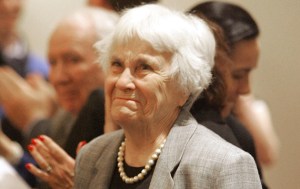 disservice to the community and the students. However, most administrators are convinced the school has to try to support the various programs. I’ve basically seen from the viewpoint of student and professor the major coddling these students get. It’s really time and resource intense and as a brainy little girl, I did not appreciate being frequently circled by athletes trying to “borrow” my work.
Schools aren’t the only thing still suffering from the Jindal Reign of Terror. We face the clear possibility that the poorest among us will no longer have access to health care all over the state. Doctor and nurse training are in jeopardy also.
Several of Louisiana’s privatized safety net hospitals, including University Medical Center in New Orleans and Our Lady of the Lake in Baton Rouge, are considering walking away from their contracts with the state under “best case” budget cut scenarios being debated in the Legislature.
The CEOs of seven hospitals told Senate Finance members Wednesday that the $137.8 million in proposed cuts would either cause steep dropoffs in their ability to deliver care to the poor, or cause them to halt operations altogether. All of the hospitals, which represent every major population center in the state, play a pivotal role in treating the poor and uninsured and are considered a centerpiece of Gov. John Bel Edwards’ Medicaid expansion policy. Many of the hospitals educate hundreds of new doctors annually and place them in jobs across the state.
The threat of canceling contracts with the nine safety net hospitals could mean a major setback for Legislators looking to close the state’s $940 million budget gap through a mix of tax increases and spending cuts. If the contracts are canceled, lawmakers risk leaving Baton Rouge after the special session in March to face constituents angry over health care worker layoffs and patients being told they are losing access to care.
“We’re going to have to hit the reset button,” said state Sen. Fred Mills, a Republican who represents Acadiana. “It would be devastating for my area.”
University Medical Center in New Orleans, which is facing a $44 million cut under the best-case scenario, could present the biggest crisis in the entire partnership system if it terminates its agreement. In addition to scattering indigent patients to surrounding emergency rooms that would be flooded with new people seeking care, the hospital is also leasing a brand new facility on Canal Street that represents a $1.1 billion investment for the state.
The hospital also makes millions of dollars in lease payments to the state.
Asked if UMC would be able to continue operating under the $44 million cut, UMC’s CEO, Greg Feirn, told the Senate Finance committee that the funding cut would be “devastating” to nearby university teaching programs. Losing funding would likely mean the system would cancel the contract.
“We can’t risk our balance sheet to fund what’s otherwise a state obligation,” Feirn said. “If we have significant capital investment by way of these payments, or capital expenditures in the future, why would we continue to make those with an uncertain revenue stream?”
We have Jindal, Grover Norquist, and the basic agenda of the Koch Brothers to thank for this. Here’s the one big reason we don’t bring in funds any more to run our most basic services. A close look at Kansas shows similar trends too. Our spineless leges still won’t face up to the damage they’ve done and work to correct it.
Louisiana’s taxes on business are supposed to help government provide its many services.
But the state has paid out $210 million more in tax credits and rebates to corporations so far this year than it has collected in corporate income and franchise taxes, reports the Department of Revenue. That shortfall is contributing to the massive budget gap that the 25-day special legislative session is supposed to address.
No one is claiming that large numbers of corporations are violating the law to avoid paying taxes. What has happened is that state lawmakers over the years — and especially during Gov. Bobby Jindal’s two terms – have been increasingly generous in creating the tax subsidies, at the behest of corporate interests and their lobbyists in Baton Rouge.
A tax break here and a tax break there, over time they have added up, as The Advocate reported in a 2014 series of articles: Tax breaks for six major programs alone cost the state $1.08 billion in 2014, up from $207 million in 2004.
You can read more indepth about how Jindal and his cronies gave our state away in this extremely good article from two years ago. It’s the one referenced above. I wrote about it at the time.
 I really meant to spent some time today on the incredible criticism of wonks and economists on the Sanders’ policy suggestions but I’m seriously to tired to do it. I’ll just throw this latest link and we can discuss it down thread. Those of us joining the criticism have been facing charges of being too close to industry to have any kind of integrity.
Bernie Sanders has a problem with the liberal wonkosphere — or, more precisely, the liberal wonkosphere has a problem with Bernie Sanders.
With every upward tick in Mr. Sanders’s poll numbers in the last few months, there has been a corresponding rise in a very specific type of commentary: Left-of-center policy experts and former staffers for Democratic officials have questioned his plans as unwise, unrealistic or both.
On Wednesday, it took the form of a joint letter from four people who led the White House Council of Economic Advisers during the Clinton and Obama administrations. They criticized projections by Gerald Friedman, an economist who has advised Mr. Sanders, of what the candidate’s policy proposals would achieve. Their comments were quickly echoed by the liberal economists Brad DeLong and Paul Krugman. The health care experts Kenneth Thorpe of Emory University and Henry Aaron of the Brookings Institution have also been tough on Mr. Sanders’s health care plan.
Behind the critiques: Mr. Sanders’s advisers have often worked off assumptions that their policies would sharply increase economic growth, reduce health care costs and create other salutary effects, making the policies in question look more affordable and desirable than they would with more cautious assumptions.
This is the analysis that really appealed to me as I watched Christie Romer get criticized last night on twitter for not having particularly good analysis about the financial crisis and need for stimulus. Actually, her number krunching was fine and she had suggested a much bigger stimulus. It was the politics that silenced her and nothing else.
The wonkosphere vs. Bernie clash is not just a story of center-left versus left-left. It is also a clash between those who have been in the trenches of trying to make public policy for the last seven years versus those who can exist in a kind of theoretical world of imagining what public policy ought to be.
Suppose, for a moment, that you worked as a staff member to a Democratic member of Congress, or perhaps in the Obama administration, or in the world of academics and think tank experts advising both.
Perhaps you worked countless all-nighters on the language of the Affordable Care Act or the Dodd-Frank Act — or maybe you were at an agency trying to write the thousands of pages of regulations to institute those laws, or even an advocacy group trying to nudge all of the above to the left.
You know the compromises that were made back in 2010 and why — uniting 55 or 60 senators with wildly different political temperaments and local politics was really hard. You had to come up with a bill that could get a “Yes” vote from both a centrist like Joe Lieberman or Joe Manchin and, well, a democratic socialist like Bernie Sanders.
You’re convinced that those laws — much hated by both conservatives and the industries they overhauled — made the United States a better place, helping millions more people afford health care and reining in the financial industry. You know the laws aren’t perfect — but also believe that future presidents and Congresses should build on them, much as Social Security and Medicare are now much expanded from their original charters.
Now comes a man who has had to answer only to voters in the most liberal state in the nation, who has never had the responsibility to actually pull together the disparate center-left coalition that is the Democratic Party to enact concrete legislation.
When Mr. Sanders argues for scrapping Obamacare’s intricately constructed mix of private health insurance with public subsidies for a single-payer government program, he’s essentially saying your efforts were useless, hopelessly corrupted by the health insurance industry. Same with Mr. Sanders’s call to break up the largest banks, as opposed to the current approach of just regulating them more intensively.
Then, if you criticize Mr. Sanders’s plans, or question their political feasibility, his supporters assail you as a member of a corrupt establishment.
Anyway, there’s a lot here for you to consider. What’s on your reading and blogging list today?
Did you like this post? Please share it with your friends:
Posted: July 10, 2015 | Author: bostonboomer | Filed under: morning reads, U.S. Politics | Tags: Bernie Sanders, Go Set A Watchman, Harper Lee, Hillary Clinton, Jeb Bush, Ted Cruz, To Kill A Mockingbird |

Good Morning!!
Go Set A Watchman, the “lost” book by Harper Lee will be published on Tuesday, July 14, and you can read the first chapter at The Wall Street Journal this morning. Here’s the introductory blurb from the WSJ:
In 1957, when she was 31 years old, Harper Lee submitted her first attempt at a novel to the publisher J.B. Lippincott.
Titled ‘Go Set a Watchman,’ it was set in the ’50s and opened with a woman named Jean Louise Finch returning home to Alabama. Ms. Lee’s editor found the story lacking but, seizing on flashback scenes, suggested that she write instead about her protagonist as a young girl. The result was a Pulitzer Prize-winning classic: ‘To Kill a Mockingbird.’
‘Go Set a Watchman’ will be published on Tuesday. It has undergone very little editing. “It was made clear to us that Harper Lee wanted it published as it was,” Jonathan Burnham, publisher of HarperCollins’s Harper imprint, said in a statement. “We gave the book a very light copy edit.”
The first chapter of ‘Go Set a Watchman’ introduces Ms. Lee’s beloved character, Scout, as a sexually liberated woman in her twenties, traveling from New York to Alabama to visit her ailing father and weigh a marriage proposal from a childhood friend. It also includes a bombshell about Scout’s brother.
–Jennifer Maloney
The Irish Times on the conflicting stories about how and when the novel was discovered: New Harper Lee book may have been found years ago.
On the eve of the most anticipated publishing event in years – the release of Harper Lee’s novel Go Set a Watchman – comes yet another strange twist to the tale of how the book made its way to publication, a development that further clouds the story of serendipitous discovery that generated both excitement and scepticism in February.
As HarperCollins, the publisher, and Lee’s lawyer, Tonja B Carter, have told it, Carter set out to review an old typescript of To Kill a Mockingbird in August and happened upon an entirely different novel – one with the same characters but set 20 years later – attached to it.
“I was so stunned,” Carter told The New York Times last winter. But another narrative has emerged that suggests the discovery may have happened years earlier, in October 2011, when Justin Caldwell, a rare books expert from Sotheby’s auction house, flew to Alabama to meet with Carter and Samuel Pinkus, then Lee’s literary agent, to appraise a Mockingbird manuscript for insurance and other purposes.
The discrepancy between the two accounts raises questions about whether the book was lost and accidently recovered and about why Lee would not have sought to publish it earlier.
Click the link to read the rest.

Another interesting story from the Aiken Standard: Looking for traces of ‘Mockingbird’ in Harper Lee’s hometown.
MONROEVILLE, Ala. (AP) — Harper Lee’s novel “To Kill a Mockingbird” is always nearby in the southwest Alabama town of Monroeville.
The quiet city is the birthplace and current home of the 89-year-old author, and it inspired the fictional town of Maycomb in her Pulitzer Prize-winning book about race and injustice in the Deep South of the 1930s.
There are other spots around town that actually helped make “Mockingbird,” released 55 years ago.
Start at Mel’s Dairy Dream on South Alabama Avenue, a busy main road in the town of 6,300 people, and walk north toward the square.
The small block restaurant, ringed by service windows and a counter where customers plop down money for ice cream cones, stands on the site of Lee’s childhood home, which was torn down decades ago. Mel’s is just a short walk from the school where Lee attended classes and, by extension, her alter-ego Scout and Jem began their “longest journey together” at the book’s climax.
Lee shared the old house with siblings, her mother and father A.C. Lee, an attorney and Alabama legislator who was the basis for Atticus Finch. Finch returns in “Watchman” as his daughter goes home to Maycomb 20 years later as an adult to the town that shaped her, according to the publisher.
Next door to Mel’s and across a weathered stone fence is a grassy lot with the remains of a house foundation and a historic marker that recalls the site as the one-time home of author Truman Capote, Lee’s childhood friend and the inspiration for the character “Dill” in Mockingbird. As adults, the two collaborated on Capote’s classic crime story “In Cold Blood,” published in 1966.
Read more at the link.
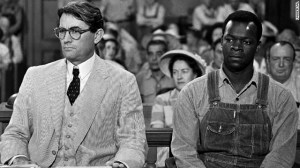 To Kill A Mockingbird was published in 1960; the film version came out in 1962. Links to some background on the movie:
Blu-Ray.com: The Making of To Kill A Mockingbird, by Robert Siegel (2012).
The Wall Street Journal: The Real Story Behind ‘To Kill a Mockingbird’ (2011).
The Daily Beast: ‘To Kill a Mockingbird’ Makes Its Mark, 50 Years After the Film’s Release, by Sandra McElwaine (2012).
Turner Classic Movies: Behind the Camera on To Kill A Mockingbird.
Political News
Republicans are really excited about Bernie Sanders, and they seem to be doing everything they can to convince Democrats to vote for him instead of Hillary Clinton–you know, the woman who can beat any of the GOP candidates handily.
 At The Daily Beast, Stuart Stevens, one of the masterminds of Mitt Romney’s failed 2012 presidential campaign explains how Hillary is going to lose the primary to Bernie Sanders.
Here’s what we know has happened so far in the Democratic primary for president. Since Hillary Clinton started spending money, hiring staff and campaigning, she has lost votes. In Iowa and New Hampshire, she was doing better in the polls in January than she is today. Heck, she had more votes last month than she has today.
Politics is about trends and the one thing we know is that trends escalate in speed as elections near. Even starting out with the huge lead that she did, Clinton can’t allow Sanders to keep gaining votes while she loses votes in the hope that the bleeding won’t be fatal in the long run.
So far Clinton’s approach has been to try to demonstrate to the element of the party that finds Sanders so appealing that she is really one of them. This seems like an extremely flawed strategy that plays directly to Sanders’s strengths. If the contest is going to come down to who can be the most pure liberal, the best bet is on the guy who actually is a socialist. Particularly when running against someone with Hillary Clinton’s long record of being everything that the current left of her party hates.
The truth is, Hillary Clinton has supported every U.S. war since Vietnam. She supported not only DOMA, which her husband signed, but a travel ban on those who were HIV positive. She supported welfare cuts (remember her husband’s efforts toward “ending welfare as we know it”?). She supports the death penalty and campaigned in her husband’s place during the 1992 New Hampshire primary when he left to oversee the execution of an African-American man whose suicide attempt left him brain damaged.
And so on . . . bla bla bla . . .

Truman Capote and Harper Lee in Holcome during the filming of To Kill A Mockingbird
Dylan Byers is very concerned about the New York Times choosing to leave Ted Cruz’s book of their best seller list.
Cruz’s “A Time For Truth,” published on June 30, sold 11,854 copies in its first week, according to Nielsen Bookscan’s hardcover sale numbers. That’s more than 18 of the 20 titles that will appear on the bestseller list for the week ending July 4. Aziz Ansari’s “Modern Romance,” which is #2 on the list, sold fewer than 10,000 copies. Ann Coulter’s “Adios America,” at #11, sold just over half as many copies.
“A Time For Truth” has also sold more copies in a single week than Rand Paul’s “Taking a Stand,” which has been out for more than a month, and more than Marco Rubio’s “American Dreams,” which has been out for six months. It is currently #4 on the Wall Street Journal hardcover list, #4 on the Publisher’s Weekly hardcover list, #4 on the Bookscan hardcover list, and #1 on the Conservative Book Club list.
This week, HarperCollins, the book’s publisher, sent a letter to The New York Times inquiring about Cruz’s omission from the list, sources with knowledge of the situation said. The Times responded by telling HarperCollins that the book did not meet their criteria for inclusion.
“We have uniform standards that we apply to our best seller list, which includes an analysis of book sales that goes beyond simply the number of books sold,” Times spokesperson Eileen Murphy explained when asked about the omission. “This book didn’t meet that standard this week.”
What was the problem with the sales of Cruz’s book?
“In the case of this book, the overwhelming preponderance of evidence was that sales were limited to strategic bulk purchases,” she wrote.
That figures.
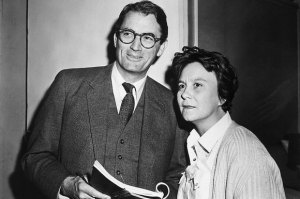
Gregory Peck with Harper Lee on the set of To Kill A Mockingbird
Following up on Jeb Bush’s “work e hours” gaffe:
Vox: Jeb Bush and longer working hours: gaffesplainer 2016.
Jeb Bush’s stated goal of 4 percent annual GDP growth, though unrealistic, in general sounds nice. But during a New Hampshire Union Leader interview live-streamed on Periscope, Bush got granular about his plan, revealing that part of the dream is for Americans to work longer hours. The Democratic National Committee and Hillary Clinton’s campaign have both smelled gaffe and responded with mocking counter press releases, depicting Jeb as smug and out of touch.
tl;dr
Jeb is not being quoted out of context; he really said this.
Jeb is not mistaken: Longer hours worked would push up the GDP growth rate.
Americans already work abnormally long hours for the developed world.
Jeb has no particular policy ideas to make this happen.
Read the rest at Vox.

Josh Marshall at TPM: We’ve Met the Doofus. And He is Jeb.
It goes without saying that it’s probably not good politics to say your plan to move the country forward is that everyone needs to work longer hours. It approaches 47% level toxicity. Even more damning is that it makes zero sense in policy terms. Indeed, Jeb’s ‘work harder’ prescription provides harrowing look at the level of derp that can be produced when you take a guy who isn’t all that bright and push him to the head of the national leadership line without ever having put in an honest day’s work or support himself in his life.
Let’s look at what Bush said. In order to get to 4% economic growth forever, people need to work longer hours.
As our piece here notes, American workers already log dramatically more hours a week than they did a generation ago. They also work more hours a week than workers in any other industrialized economy. It’s sort of a judgment call whether this is a good thing or a bad thing. But unless American workers are part of a different species than people everywhere else in the world there are obviously limits to how many hours people can work every week without severe adverse effects on health, basic perceptions of quality of life and the quality of the work they do….
There are arguments that more people need to be working (there are also good arguments to the contrary). And there is a real problem with underemployment – people who are involuntarily working less 40 hours a week. But Bush didn’t say that more people need to be working (questionable) or that more people need to be able to get full-time jobs (true). He said people need to work longer hours….
It’s unclear to me whether Bush doesn’t even fully understand the policies his advisors are trying to explain to him or whether this is just standard patrician work ethic morality. Whichever it is, the real structural problem in our economy is stagnant wages for more than a generation for most of the population.
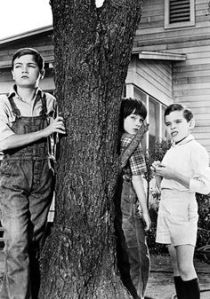 More news, links only
Politico: Want to Meet America’s Worst Racists? Come to the Northwest.
Detroit Free Press: Judge jails kids for refusing lunch with dad.
The Hill: Pelosi ambushes GOP with Confederate flag resolution.
TPM: Rep. Behind Confederate Flag Vote: GOP Leadership Asked Me To Do It.
Raw Story: Here are 11 things other countries do way better than America.
Politico: 21.5 million exposed in second hack of federal office.
Philip Rucker at the WaPo: Hillary Clinton’s push on gun control marks a shift in presidential politics.
What else is happening? Please share your thoughts and links in the comment thread, and have a great weekend!
Did you like this post? Please share it with your friends:


 peej
peej Carissa
 bostonboomer
 dakinikat
 ecocatwoman
 mablue2
 Mama Lopez
 peggysue22
 quixote
 skydancingguestblogger
 Mona (aka Wonk the Vote)



 Sky Dancing
Recent Comments