
McCainonomics: Red faces, voters who Whine, and Blue homeowners
Posted: July 11, 2008 Filed under: U.S. Economy | Tags: Economic policy, energy policy, global economics, Gramm, mccain, whining US Voters 9 CommentsWhile John McCain is calling the U.S. economy a shambles, Economic Adviser Phil Gram says buck up 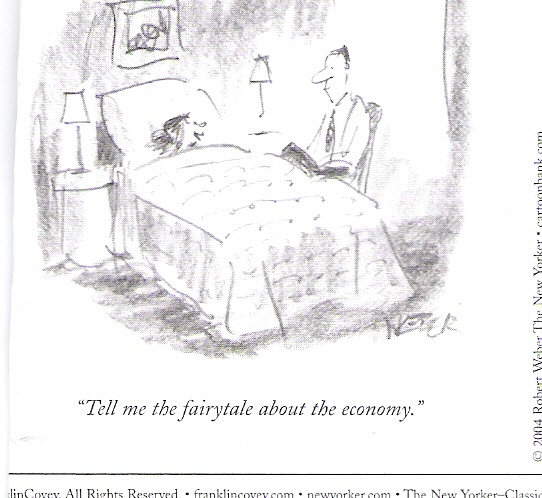 America and quit whining. He says it’s ALL in our head.
So which of these guys has the correct answer? Well, on the one hand there’s this guy trying to get elected president, so what else is he going to say? Then on the other hand, we’re really not technically in a recession yet so Phil has a point. They are both right and they are both wrong which is something only an economist could say and I couldn’t resist living up to the old joke. Okay, I’ll break it down into a few more stylized facts.
Our growth rates is somewhere between 0 and 1, our unemployment rate is pretty much where it should be, and most of the economic indicators are mixed, at best. We’re in a very slugglish growth period, but there still some major economic indicators that are showing neutral or positive. That doesn’t mean that all of us are living the same reality, however. The real answer to the question depends on WHO you are and WHERE you live. The economy is stagnant at the moment, and we’re in for a period of time where Americans are going to have to get use to making some tough choices and not seeing forward momentum. We’re basically all working and staying pretty much in the same place. Our clothing is costing us a lot less. We’ve got electronic gadgets galore and they are all really cheap. Have you priced computers, dvd players, or stereos recently? They’re all pretty cheap and just about any one can get to them. However, health care, driving, and eating are going from cheap to pricey.
The question of high energy prices and the segments of America that aren’t doing so well come mostly from globalization of the world economy that brings both good developments and bad. This is not going to reverse. As the economy adjusts, all buyers will win from global trade but those whose jobs go abroad will loose, and some will loose big time. We buy cheap stuff from the Chinese, they turn around and buy cars and they want gas. This increased demand for gas means higher gas prices. The Chinese also take jobs away from the manufacturing sector because Chinese labor comes extremely cheap and doesn’t require a pension or health plan. Those folks working for those companies that are outsourcing to other countries are miserable. While the USA has a relatively low unemployment rate of around 5%, places like Michigan and Pennsylvania have 10% unemployment rates. They are suffering. So, if you’re in the medical sector, you’re going to be happy as a clam. If you’re in manufacturing, prepare for a new career. Also, the government has grants out there to retrain folks loosing jobs from NAFTA. If you can prove it’s from NAFTA, go get it now!
438,000 jobs have been lost bringing unemployment to 5.5 percent. This is not a bad situation now, but if it continues, chances are we will be looking more like recession. Economists consider this rate to be close to the rate that represents what it should be if we are operating at capacity. The big question is: WILL IT GO UP?
So what about the financial crisis? How widespread is the mortgage problem? The housing crunch is wrecking the construction industry in places like Miami, Las Vegas, and Los Angeles. However, down here in New Orleans, the construction industry can’t find enough workers and is booming like never before. So Housing Foreclosures are a major problem in places like California, Nevada, and Florida. Many of these foreclosures are for house flippers. These folks are speculators and can whine all they want but that’s business and that’s what you get when the market moves against you. However, folks that were suckered into bad loans by mortgage brokers are a different matter. These folks are loosing their homes for banks that were looking for high fee income and basically put people into mortgages they couldn’t handle. Government regulation and help is required here. We’re not likely to get that as long as Dubya is in office. He’s threatening to veto the current bill. (All of the sudden our prez (the BIG spender) goes fiscally responsible on us!) I’m waiting for both McCain or Obama to come up with specific plans here. Hillary Clinton was the only one who spoke to this situation and her answer was a moratorium on rates. I think we’re going to need some federal bonds to fund some of these folks. It’s something similiar to what we did during the Great Depression to keep families in their homes and off the street.
So there are several markets that are a huge mess. The automobile industry and some sectors of manufacturing and the financial industry which has spilled into the housing industry, But again, most of the impact from these sectors is hitting some states hard and other states not so much at all.
Unfortunately, a lot of the higher prices are due to those high food and gas prices which are not a function of a bad U.S. economy, they are a function of problems in the global economy. There is also a continuing pattern since the 1980s that has left the rich getting richer and the poor and middle class getting poorer. The income inequality problem is worsening in this country and it looks as though it will continue. This is why it is essential that everyone has access to quality education at all levels. We should consider allowing more students attend university on the taxpayer’s dollar. Aid should definitely be mean income tested. It is much cheaper to send a teenager to school than it is to house him in a jail for the rest of his life.
These are some steps we can take to solve some of these things. First, as long as U.S. business has to pick up the tab for worker’s health insurance, the U.S. worker will not be competitive. We need universal health care paid for by individuals/taxpayers on an ability-to-pay basis. Second, all agriculture price supports, set aside programs, and subsidies, especially to ethanol, should be halted. Third, we all need to conserve energy and switch to other fuels sources (with the exception of ethanol made from things that are food). If we are making biofuels, then we need to use garbage or chicken fat or some byproduct, not food itself.
So, which of the candidates are up to the challenge? I don’t think either of them are, but I’m waiting.

 peej
peej Carissa
 bostonboomer
 dakinikat
 ecocatwoman
 mablue2
 Mama Lopez
 peggysue22
 quixote
 skydancingguestblogger
 Mona (aka Wonk the Vote)



 Sky Dancing
Recent Comments