
Late Night Drift: Women of Egypt
Posted: January 30, 2011 Filed under: Egypt, Foreign Affairs, Women's Rights | Tags: Esraa Abdel Fattah, Ghanda Shahbandar, Hatshepsut, mona eltahawy, Women in Egypt 32 Comments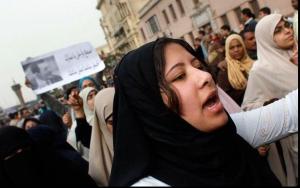
CAIRO, EGYPT - JANUARY 29: Egyptian woman shout out during a demonstration against President Hosni Mubarek in Tahrir Square January 29, 2011 in Cairo, Egypt. Unrest continued in the Egyptian captial as President Mubarek said he would form a new government but remain in power.
The Daughters of Hatshepsut take to the Street.
There seems to be a narrative in some fairly strange places that the women of Egypt are not behind a move to democracy and that they will suffer if Mubarak is removed. I thought I’d share some photos and stories on the role of Women in Egypt’s struggle for democracy.
From Slate:Women Are a Substantial Part of Egyptian Protests
An unprecedented number of Egyptian women participated in Tuesday’s anti-government protests. Ghada Shahbandar, an activist with the Egyptian Organization for Human Rights, estimated the crowd downtown to be 20 percent female. Other estimates were as high as 50 percent. In past protests, the female presence would rarely rise to 10 percent. Protests have a reputation for being dangerous for Egyptian women, whose common struggle as objects of sexual harassment is exacerbated in the congested, male-dominated crowd. Police hasten to fence in the demonstrators, and fleeing leads to violence. And women, whose needs are not reflected in the policies of official opposition groups who normally organize protests, have little reason to take the risk.
This photo is from a Fox news slide show found here http://www.foxnews.com/slideshow/world/2011/01/26/deadly-egyptian-protests/#slide=25
One of the protest organizers is a woman: Political activist Esraa Abdel Fattah, whose 15-day detention in 2008 for her activism made her a symbol of resistance. But Abdel Fattah’s position at the helm of the movement did not previously mean a large female presence. In 2008 Abdel Fattah tried to mobilize all of Egypt around labor conditions in El-Mahalla El-Kubra, north of Cairo. The male workers in the industrial town constituted the majority of the original protesters, and subsequent protests organized by the movement likewise failed to draw as large of a female crowd as seen on Tuesday.

Whoever is running this narrative can’t possibly be watching what’s going on unless they’re spending a huge amount of time on Faux News waiting for a pronouncement from Snowflake Snookie.
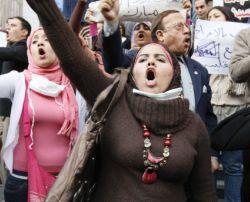
Women on the front lines in Egypt
Egyptian journalist Mona Eltahawy has emerged as one of the most prominent representatives of the movement on Western news media. Yesterday, she successfully got CNN to change their headline from “CHAOS IN EGYPT” to “UPRISING IN EGYPT.
Eltahawy, whose Twitter feed has been essential reading for those following the events in Egypt, has been circulating a link to a Facebook album filled with inspiring pictures of women on the front lines of the protests. (Le Monde has a similar gallery for the protests in Tunisia.)
Why is it important to draw attention to this phenomenon? Because we know it’s in the The West’s playbook to exploit concern for women’s rights to justify its imperial ambitions. That’s one of the many ways that the war in Afghanistan was sold to the public, from the CIA’s Wikileaked cable on manipulating public opinion in Europe to the propagandistic cover of Time magazine depicting a woman disfigured by the Taliban.
Culture warriors have cynically co-opted feminist rhetoric to push for bans on the Islamic veil throughout Europe, despite evidence that such prohibitions might actually make women more isolated and less safe. In 2009, Switzerland actually banned the construction of minarets, supposedly in response to feminist concerns.
I would not be at all surprised to hear US leaders, media pundits, and even some liberals defend the Mubarak regime by underscoring the potential threat of newly-empowered Islamists to impose restrictions on women’s rights in Egypt.This possibility certainly exists, but we should not pretend that the United States is sincere about these concerns, nor should we ignore the tens of thousands of Egyptian women taking to the streets to demand change.
“Bravest girl in Egypt”
Mona Eltahawy to CNN: Call Egypt an Uprising
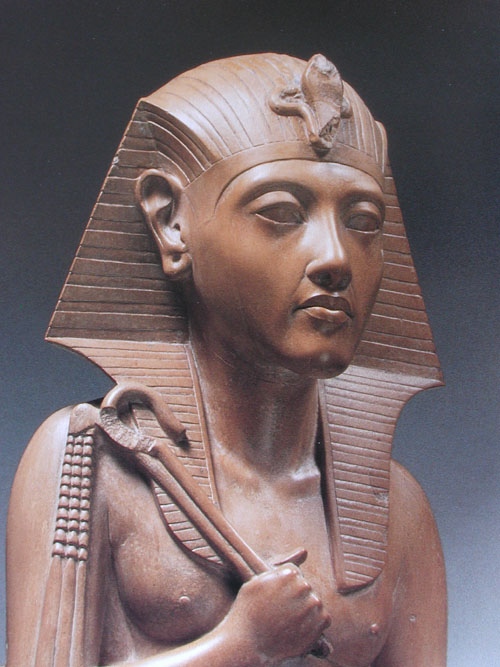 Do these sound like women that are going to be put behind some kind of iron veil? I’m not buying the narrative that a nation that produced Cleopatra and Hatshepsut is going to suddenly find itself promoting the Muslim Version of the Hand Maid’s Tale.
What is behind this sense of false chivalry?

 peej
peej Carissa
 bostonboomer
 dakinikat
 ecocatwoman
 mablue2
 Mama Lopez
 peggysue22
 quixote
 skydancingguestblogger
 Mona (aka Wonk the Vote)



 Sky Dancing
Recent Comments