
Global Gender Violence Porn
Posted: October 14, 2012 Filed under: Feminists, fetus fetishists, Foreign Affairs, War on Women, Women's Healthcare | Tags: gender violence porn, global gender activism, misogyny 24 CommentsSo, I read this: “Your Women Are Oppressed, But Ours Are Awesome”: How Nicholas Kristof And Half The Sky Use Women Against Each Other.
Now, it’s got me thinking about being part of the problem instead of supporting my goal to be part of the solution.
The idea is that these types of programs seem to be gender activism but are portrayed in a way that is supportive of western patriarchal imperialism. Okay, I just sounded like some kind’ve Marxist Feminist but it’s not all that cut and dried. Let me try to explain. These programs are akin to the idea of poverty porn. I understand this because of how I felt watching people in tour buses gawk at my hurricane ravaged ninth ward neighborhood with their voyeuristic tut-tutting over the state of the damage and the slow recovery. Big deal. Now, they’ve seen it. Does this change anything? I just felt like some kind of passive object that made them think,” wow, glad that’s not me”. It’s not a great feeling to be looked at like some kind of victim even when it’s the “oh, look, she’s doing something about it” vibe you get from them.
I’m one of the people that is highly concerned about the way the world treats women and girls. Please note “the world” includes “the United States”. This country is horrid to women and girls. It becomes worse with every elected Republican and DINO. I’ve also been extremely pissed at the way many so-called women and humanity friendly sites seem to shred other cultures’ treatment of women with sadistic, xenophobic, and high hatted-glee. Should there really be a ruler for misogyny and oppression that lets us pull the ruler out on others to make us feel better about the treatment of women and girls here? Do you really think we don’t have sex trafficking here in the US? Do you think we don’t support a rape culture or encourage mutilation of women through plastic surgery or extreme dieting?
I’ve never been able to clearly express it, but, I hate this concept of “Look at how horrible these (fill in the blank) foreigners treat women” given we’ve got the likes of a Paul Ryan and Mitt Romney running for our highest offices and the Republican party has pretty much been over run by misogynists and religious fanatics. Is there some kind of smug self-satisfaction people get by telling themselves that at least “We don’t (fill in the blank) to women here”? The recent spate of superiority hissy fits mostly applies to Arab/Muslim religions but it carries farther than that. Do we really need to measure which country treats it’s child brides worse or isn’t it enough to see the entire practice any where is abhorrent and should be ended? It happens to Catholic girls in Belize, Hindu girls in India, Protestant girls in Kentucky, and Muslim girls in Nigeria. Do we have to slice and dice their suffering by religion, country, or continent?
So, let me quote some of this essay. It deserves consideration.
There are plenty of critiques I could make of Kristof’s reporting (in this film and beyond, see this great round-up of critiques for more). Critiques about voyeurism and exotification: the way that global gender violence gets made pornographic, akin to what has been in other contexts called “poverty porn.”
For example, would Kristof, a middle-aged male reporter, so blithely ask a 14-year-old U.S. rape survivor to describe her experiences in front of cameras, her family, and other onlookers? Would he sit smilingly in a European woman’s house asking her to describe the state of her genitals to him? Yet, somehow, the fact that the rape survivor is from Sierra Leone and that the woman being asked about her genital cutting is from Somaliland, seems to make this behavior acceptable in Kristof’s book. And more importantly, the goal of such exhibition is unclear. What is the viewer supposed to receive–other than titillation and a sense of “oh, we’re so lucky, those women’s lives are so bad”?
Makes you think doesn’t it? The article is written by Sayantani DasGupta who teaches at Columbia University.
The issue of agency is also paramount. In the graduate seminar I teach on Narrative, Health, and Social Justice in the Master’s Program in Narrative Medicine at Columbia University, I often ask my students to evaluate a text’s ethical stance by asking themselves–“whose story is it?” For example, are people of color acting or being acted upon? Although the film does highlight fantastic on-the-ground activists such as maternal-health activist Edna Adan of Somaliland, the point of entry–the people with whom we, the (presumably) Western watchers, are supposed to identify–are Kristof and his actress sidekick-du-jour.
In fact, many have critiqued Kristof for his repeated focus on himself as “liberator” of oppressed women.
This theme then carries over to the idea of imperialism so omnipresent in western, white male cultures. It creates a rescue theme and it justifies the idea that superior white men can go rescue 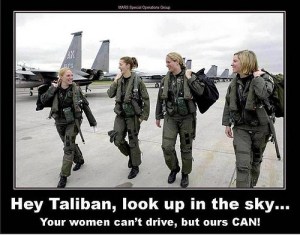 oppressed women by any means including drones that murder them and their children and define them as collateral damage.
Although a few passing comments are made about rape, coerced sex work, and other gender-based violence existing everywhere in the world–including in the U.S., hello?!–the point that is consistently reiterated in the film is that gender oppression is “worse” in “these countries”–that it is a part of “their culture.” In fact, at one point, on the issue of female genital cutting, Kristof tells actress Diane Lane, “That may be [their] culture, but it’s also a pretty lousy aspect of culture.”
There’s nothing that smacks more of “us and them” talk than these sorts of statements about “their culture.” Postcultural critic Gayatri Chakrovorty Spivak, in fact, coined the term “white men saving brown women from brown men” to describe the imperialist use of women’s oppression as justification for political aggression.
Spivak was writing about British bans of widow burning and child marriage in India to make her point, we can see the reflections of this dynamic is the way that the US has justified wars in Afghanistan and Iraq as missions to “free Islamic women from the Veil.” (For a fantastic critique of this rationale, see Lila Abu-Lughod’s “Do Muslim Women Really Need Saving?“) According to Spivak, this trope of “white men rescuing brown women from brown men” becomes used to justify the imperialist project of “white man” over “brown man.”
And this formulation is consistent, pretty much across the board, with the film. White/Western dwelling men and women highlight the suffering, as well as local activism, of brown and black women. Brown and black men are portrayed consistently as violent, incompetent, uncaring or, in fact, invisible. And it’s only a small leap to realize that such formulations–of countries incapable of or unwilling to care for “their” women–only reinforce rather than undermine global patriarchy, while justifying paternalization, intervention–and even invasion of these “lesser” places–by the countries of the Global North.
So, the argument here is not that speaking out against violence and oppression is bad. It’s the argument of what are you doing when you try to speak for others. That isn’t empowerment of women. It also frequently is used to support the goals of patriarchies as they vie with each other for power.
As feminist philosopher Linda Martín Alcoff argues in her essay “The Problem Of Speaking For Others,” that part of the problem of speaking for others is that none of us can transcend our social and cultural location: “The practice of privileged persons speaking for or on behalf of less privileged persons has actually resulted (in many cases) in increasing or reinforcing the oppression of the group spoken for,” she writes.
So, take a look at the photo above. It was part of the narrative of the essay. Does it make you feel oh, so, good about the way we treat our women compared to the Taliban? I saw this photo elseblogs and on Facebook. It actually creeped me out. I found it less empowering of women pilots for many reasons. Why didn’t my gut tell me to feel all so superior?
First, look at the implication of the words “OURS” and “YOURS”. These words indicate possessions right? OUR women? YOUR women?
Second, let’s think about the actual life experience of women in the U.S. military where rape isn’t just something you think about on your way to your parked care in the night. These women are subjected to some pretty high powered sexism and risk rape by their fellow soldiers in a high powered rape culture. Then, let’s also think about how these women can’t control their reproductive decisions because the congress refuses to let them make their own decisions about abortion. Get raped, sweetie? Remember, Paul Ryan says that’s just another form of conception for those lovely little beans that prove his gonads work!
From the first link and The Guardian we learn:
A new documentary by director Kirby Dick, The Invisible War, about systemic rape of women in the military and the retaliations and coverups victims face, has won awards in many film festivals, and recently even triggered congressional response. The examples of what happens to women soldiers who are raped in the military are stunning, both in the violence that these often young women face, and in the viciousness they encounter after attacks.
Yes, “our” women can fly planes in the military but they are also subjected to sexual assault, cover-ups, and poor treatment. This is from the second link above at Jezebel. Yes, “our” women can fly planes in the military but we’re not going to give them coverage of abortion services because “our” men in congress want them to goosestep to “their” beliefs.
The military reported 471 rapes of servicemembers in 2011, but the real number is probably higher, since the Pentagon’s Sexual Assault Prevention and Response Office estimates that only about 13.5 percent of all rapes and sexual assaults in the military are actually reported. Several hundred women in the military become pregnant as a result of rape each year. Despite these statistics, the 200,000+ women serving on active duty are often prohibited from getting abortions in military health centers — even if they’re willing to use their own money — because it makes some conservative politicians at home feel all icky.
Yes, current Pentagon policy is even more restrictive than the 1976 Hyde Amendment, which prohibited federal funds from being used to provide abortion services except in cases of rape, incest, and endangerment of women’s life. The Department of Defense only provides abortion coverage if the life of the mother is at stake; if she’s raped but can survive giving birth, her right to choose essentially goes out the window. If she still wants an abortion, the military might generously allow her to pay for the service with her own money, but only if she can prove she was raped — which is extremely difficult to do, especially within a few months. Without a stamp of rape-approval from the higher-ups, servicewomen (including military spouses and dependents) have to venture off-base for services or fly all of the way back to the United States, all to assuage the fears of politicians — the majority of whom, it’s safe to say, are not overseas fighting for their country — that the government would be “endorsing” abortion if military facilities granted women the same rights they have back home.
Feel all warm and smug about not living among the Taliban now? I’m ignoring all the coverage we’ve given all year to the likes of Todd Akin who probably would use more biblical punishments for women, gays, and lesbians if he thought he could get away with it. Who doesn’t think that ol’ Todd secretly hopes some one blows up the local planned parenthood and takes out some doctors and nurses in the process? Does lusting in his heart for right to life violence count? Surely, we can honestly attest to the fact that we have some extremely sick religious extremists of our own. I wonder if the Swedes would like to come do a documentary on how women in the US are so far down the ranks of gender equality that we maybe deserve rescue too?
So, anyway, this made me think. What does it make you think?

 peej
peej Carissa
 bostonboomer
 dakinikat
 ecocatwoman
 mablue2
 Mama Lopez
 peggysue22
 quixote
 skydancingguestblogger
 Mona (aka Wonk the Vote)



 Sky Dancing
Recent Comments