
Gearing up for the Fight
Posted: November 16, 2012 Filed under: Medicare, Social Security | Tags: "grand bargain", cat food commission, Federal Deficit, fiscal cliff 30 CommentsI don’t think there’s a person in the country that doesn’t know that many folks are gearing up to remove our earned benefits.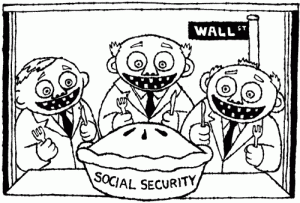 We should gear up to fight them.
I think we need to adopt “earned benefits” as description for Social Security and Medicare. For some reason, entitlements has become one of those words that’s been co-opted to mean hand-outs instead of the true meaning which is that we are entitled to these benefits because we paid for them all of our working days. Yesterday, Bernie Sanders gave a speech that made it clear what our priorities should be when it comes to any bargain to decrease our debt and deficit.
Sanders said:
Deficit reduction is a serious issue, but it must be done in a way that is fair. We must not balance the budget on the backs of the elderly, the sick, the children or the poor.
We need to make it clear to people that Social Security has nothing to do with the deficit. Social Security is not going bankrupt either.
Right now, Social Security does face a long-term funding gap, mostly due to the happy fact that we will be living longer, healthier lives in the future. The gap is quite small, does not appear for 36 years, and if the economy does even a little bit better than expected, will not appear at all. But it may appear. If so, we will have to tweak the system a bit, just as we have in the past. We could take longer life expectancies into account by raising the retirement age. Or, we could levy Social Security taxes on a person’s entire salary, not just the first $84,900 as we do currently. Or, as a last resort, we could very slightly raise Social Security taxes, by a percentage point or so. In any case, these fixes impose a much smaller cost on the typical American worker than exploding health care costs or the continued stagnation of wages — two real, and most importantly, current problems that ought to loom much larger on our national radar screen.
I think the Paul Krugman column today made clear that a lot of myths and memes that we’ll hear in the next few months about our fiscal problems are just myths and memes. Krugman argues against raising age eligibility for either Medicare or Social Security. The people that need the benefits the most and the retirement age have likely done very physical work.
And right now the most dangerous zombie is probably the claim that rising life expectancy justifies a rise in both the Social Security retirement age and the age of eligibility for Medicare. Even some Democrats — including, according to reports, the president — have seemed susceptible to this argument. But it’s a cruel, foolish idea — cruel in the case of Social Security, foolish in the case of Medicare — and we shouldn’t let it eat our brains.
First of all, you need to understand that while life expectancy at birth has gone up a lot, that’s not relevant to this issue; what matters is life expectancy for those at or near retirement age. When, to take one example, Alan Simpson — the co-chairman of President Obama’s deficit commission — declared that Social Security was “never intended as a retirement program” because life expectancy when it was founded was only 63, he was displaying his ignorance. Even in 1940, Americans who made it to age 65 generally had many years left.
Now, life expectancy at age 65 has risen, too. But the rise has been very uneven since the 1970s, with only the relatively affluent and well-educated seeing large gains. Bear in mind, too, that the full retirement age has already gone up to 66 and is scheduled to rise to 67 under current law.
This means that any further rise in the retirement age would be a harsh blow to Americans in the bottom half of the income distribution, who aren’t living much longer, and who, in many cases, have jobs requiring physical effort that’s difficult even for healthy seniors. And these are precisely the people who depend most on Social Security.
So any rise in the Social Security retirement age would, as I said, be cruel, hurting the most vulnerable Americans. And this cruelty would be gratuitous: While the United States does have a long-run budget problem, Social Security is not a major factor in that problem.
Medicare, on the other hand, is a big budget problem. But raising the eligibility age, which means forcing seniors to seek private insurance, is no way to deal with that problem.
It’s true that thanks to Obamacare, seniors should actually be able to get insurance even without Medicare. (Although, what happens if a number of states block the expansion of Medicaid that’s a crucial piece of the program?) But let’s be clear: Government insurance via Medicare is better and more cost-effective than private insurance.
There are many more things that need to be done to ensure our fiscal health. Messing with Social Security is not one of them. Medicare has issues but most of them could be dealt with by simply allowing the plan to bargain for drug prices. The Bush deal with big Pharma while providing the part B benefits is the major source of Medicare problems. Our federal deficit is primarily the result of our two decade long wars, reckless tax cuts, subsidies to folks that don’t need them, and reduced tax receipts/increased expenditures from our deep recession.
Here’s an example of something that could help with the long term health of social security. Lift the cap. At the very least, the cap should be subjected to an increase that’s adjusted for inflation just like the benefits.
Social Security is not in danger of becoming insolvent any time soon. According to the program’s actuaries, without any changes, Social Security will be able to pay out full benefits until 2033. And there’s reason to doubt that problems will arise even 21 years from now. As Jared Bernstein noted when the latest projections came out, the expected date when the Social Security trust fund will be exhausted has varied wildly over the past few decades.
Yet despite its medium-run sustainability, many deficit reduction plans target the program for cuts. For example, Bowles-Simpson introduces means-testing and raises payroll taxes for high earners, but also cuts benefits across the board by adopting a less generous inflation measure, known as “chained CPI,” and raises both the minimum age where retirees can claim benefits and the age when they can claim full benefits.
As Nobel laureate Peter Diamond has explained, the latter change is hugely regressive, primarily targeting poor workers in physically demanding occupations. Domenici-Rivlin includes the inflation measure cut, means-testing and payroll tax increase, but leaves out the regressive retirement age increase.
But if one wants to make the program solvent indefinitely without endangering vulnerable seniors, there are options. A new bill from Sen. Mark Begich (D-Alaska), the Protecting and Preserving Social Security Act, provides one method.
The Begich bill would lift the current payroll tax cap, which exempts wages in excess of a certain amount ($110,100 this year) from the tax. In turn, it would give high earners, who would pay more, additional benefits upon retirement, just as benefits increase as wages do for workers below the cap.
According to the Congressional Research Service, a change like that would almost entirely wipe out the program’s long-run actuarial imbalance. Specifically, it would eliminate 95 percent of the shortfall, meaning that a mild increase in the payroll tax rate from 12.4 percent to 12.5 percent would be enough to cover the tiny remaining gap. And without any changes at all, the program would be able to pay out full benefits until after 2085. Indeed, the exhaustion date for the trust fund following such a change is so far in the future that CRS didn’t even calculate it.
I’ve always thought that letting folks pay for the privilege of opting into Medicare sooner would help with the Medicare plan. Also, separating the survivor benefits and disabled benefits and charging separately for this coverage would also help secure social security as it was intended to be. Anyway, there are many things to do without hacking away at all the benefits that people have paid for a program that shouldn’t be changed due to myths and memes. Plus, there’s the entire republican agenda of transferring every program–no matter how cost ineffective–to their cronies in the name of their all might gawd Privatization.
We should probably gear up for a fight. It may be necessary to ensure that our Congress critterz understand the importance of these social contracts and that they realize these are earned benefits and not just hand-outs.
Obama Outlines Budget 2013
Posted: November 14, 2012 Filed under: Accommodation and Compromise, Congress | Tags: budget, fiscal cliff, sequestration 15 Comments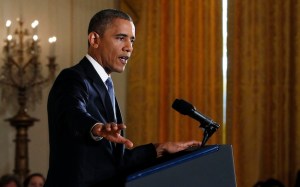 WAPO has gotten a copy of the what the Obama administration is offering for its 2013 budget. There are several points that I think you’ll find interesting. There’s a peace dividend, there’s no planned cuts to social security or medicare, and there’s plans for higher taxes. It appears Obama will not repeat the conciliatory tone of his first 4 years which we characterized as a series of cave-ins.
Democrats said Obama is likely to maintain a tough stance Friday, when Boehner and other congressional leaders are due to gather at the White House for their first face-to-face discussions about how to avoid the fiscal cliff. Fresh off a resounding electoral victory in which they kept the White House and picked up seats in the House and Senate, Democrats said there is no reason to compromise now on a central plank of the president’s platform.
“It was an intrinsic part of his campaign, and the public supports it. So what more do you want?” said Rep. Sander M. Levin (D-Mich.), the senior Democrat on the tax-writing House Ways and Means Committee.
Obama’s stance on not extending the Bush tax cuts was stated in meetings with liberals yesterday and in a presser today. This is consistent with the WAPO budget outline.
Obama’s 2013 budget sought to reduce borrowing over the next 10 years by about $4 trillion, counting $1.1 trillion in agency cuts already in force. In addition to raising taxes, Obama proposed to slice $340 billion from health-care programs and to count about $1 trillion in savings from ending the wars in Iraq and Afghanistan.
His budget request did not include reductions to health and retirement benefits, but Obama did consider such changes in his 2011 talks with Boehner, including raising the Medicare eligibility age from 65 to 67 and applying a stingier measure of inflation to Social Security.
Senior Democrats, meanwhile, threw cold water on a competing proposal to scale back deductions that disproportionately benefit upper-income taxpayers while keeping the top tax rates at their present level.
On Tuesday, former Clinton administration Treasury secretary Robert Rubin wrote in the New York Times that closing loopholes and deductions would not be an acceptable solution to the nation’s fiscal challenges. And Sen. Patty Murray (D-Wash.), who is set to become chairman of the Senate Budget Committee, said she “has not seen how the math works to let you come up with the additional revenue.”
In a meeting Tuesday, Obama offered no specific assurances to liberal leaders about what a final deal might look like and what entitlement programs might face cuts. But Dennis Van Roekel, president of the National Education Association and a participant in the session, said Obama did not have to make such assurances.
“He hasn’t wavered through the whole campaign,” Van Roekel said. “He’s been consistent on [his] message, and I don’t think he’ll change it now.”
Obama’s presser was focused mostly on the Bush Tax Cuts.
But despite his softer rhetoric, Obama made no concessions on his demand for higher taxes on the top 2 percent. He argued that the majority of the American voters supported his position on taxes, which he campaigned strongly on. “I’m concerned about not finding us in a situation where the wealthy aren’t paying more or aren’t paying as much as they should,” he said.
He added, moreover, it would be “very difficult to see how we make up that trillion dollars” of revenue that would be lost if the Bush tax cuts on the wealthy were extended. Outside economists have confirmed as much: It’s not easy to use deductions and exemptions for the wealthy to generate much tax revenue without hitting the middle class or going after tax breaks like the employer deduction for health care that many lawmakers believe are off-limits.
1:55 pm: Obama said that dealing with the Bush tax cuts by making sure that middle-class taxes don’t rise would make major headway in dealing with the threat of the fiscal cliff. “Half of the danger to our economy is removed by that single step,” he said.
Obama met on Tuesday with allies from labor and liberal groups, and invited a group of CEOs to the White House for a mid-afternoon session, also to focus on the threat posed to the economic recovery by the combination of tax increases and spending cuts.
At the news conference, he laid out a two-step process for an overall compromise — immediate extension of all the expiring tax cuts except the top rate, followed by a comprehensive agreement in 2013 to overhaul the tax code and the government’s big benefits programs, which include Medicare, Medicaid and Social Security.
Obama signed legislation two years ago extending the Bush tax cuts in their entirety after saying he wouldn’t.
Asked why this time will be different, he said, “what I said at the time was what I meant, which is that this was a one-time proposition.”
Now, he said, legislation that keeps most of the cuts in place but not those for the upper-income earners would be “actually removing half the fiscal cliff.”
Asked if he viewed it as a deal-breaker if Republicans refused to allow the top tax rate to revert to 39.6 percent from the current 35 percent, he said, “I just want to emphasize I am open to new ideas if the Republican counterparts or some Democrats have a great idea for us to raise revenue, maintain progressivity, make sure the middle class isn’t getting hit, reduces our deficit.'”
White House press secretary Jay Carney said the president would bring to the table a proposal for $1.6 trillion in new taxes on business and the wealthy when he begins discussions with congressional Republicans, a figure that Obama outlined in his most recent budget plan. The targeted revenue is twice the amount Obama discussed with Republican leaders during debt talks during the summer of 2011.
All of these articles indicate that Obama has walked away from his 2011 offers as leaked earlier this week. The obvious fight will come as the so-called fiscal cliff issues begin to appear at the beginning of the year. Most of these issues come into play if the sequestration deal kicks in. This time the President has not lead with a compromise deal. We’ll see what happens as the lame duck congress winds down and the beginning of the year approaches.
The Republicans Just won’t Trade in their Fairy Tales
Posted: November 11, 2012 Filed under: Economy, just because | Tags: fiscal cliff, joseph stiglitz, Mark Thoma, Paul Krugman, Trickle Down Economics, voodoo economics 23 CommentsThere’s a notable absence of economists on panels in the mainstream media that discuss the fiscal “ramp”. I’m refusing to call it a fiscal cliff because that’s a misnomer. I’m not sure why they won’t put research economists on these panels. Perhaps they think we’re not  photogenic or–despite the fact that a lot of us teach–we can’t explain ourselves. There’s an extremely strong consensus in the economics community on the s0-called budget crisis. Dragging out mainstream economists like Paul Krugman and Joseph Stiglitz and labeling them lefties because of their political leanings is rather disingenuous. It stops them from getting on panels where they could actually explain to people what’s what.
The corporate press would rather haul out a few journalists with real background in the field. There’s a difference between asking a journalist, a lawyer, or some self-anointed policy expert a question on economic theory. First, asking an economist to answer a question as an economist means they’ll stick to the theory and the empirical findings. Second, you can actually pull in almost any economist either trained after about 1980 or who has kept up with the dynamic business cycle models, the empirical findings, and theories and you won’t get much disagreement. You wouldn’t know that if you listen to the press, which seems to be made up a few folks with MBAs who have very little understanding of theory, models, or findings.
Deficit hawks tend be either Wall Street types, lawyers, or partisan right wing politicians. The folks that are screaming worst about dropping the tax cuts for the uber rich tend to have the most to lose personally and the least to lose professionally. Study-after-study-after-study shows that tax cuts to the middle, working, and lower classes and to young people tend to create completely different circumstances than they do for older people and the rich. First, there’s more folks in the first group. Second, they tend to spend a lot more of their current income. Third, their savings and investment opportunities are limited, so the assets they use stay in the country. None of this applies to the uber rich who tend to create jobs and wealth overseas these days and work hard to avoid taxes anyway. We’d do well to just simply let go of the idea that increasing the tax rates on the rich will either lead to unemployment, won’t pay down the deficit, or will suppress growth. These are tales of sound and fury signifying nothing but personal greed.
It is true that we are not on a sustainable spending path. This is because of the direct actions of the Bush administration. They lowered tax rates. Ran two huge wars with no tax increases. They oversaw and created two recessions. They created an asset bubble and then popped it. Growth, employment, and the value of taxable assets all decreased because of their actions. We simply have to reverse their trajectory. We have to do some work on Medicare and we need to walk away from the decaying, rotting corpse of Zombie Economics. The Republicans still won’t let that rotting corpse go.
Krugman talks about some of this on his blog in a post called “Squirming Hawks”. Paul Krugman may be a liberal but he’s certainly not going to risk his reputation in the economics community to spout crackpot hypothesis. Look at what happened to Arthur Laffer whose basically been expunged from any serious text, publishing deal, or institution. When you push crackpot hypotheses that do not stand up to empirical testing and you do not give them up and move on, the community of those who base their research on the scientific method will write you off. Those that follow Hayek and Von Mises have been similarly written off. Their ideological hypotheses do not stand up to any empirical testing.
Now, there’s a straightforward argument for why the fiscal cliff is bad but long-term deficit reduction is good — namely, that you really don’t want to cut deficits when the economy is depressed and you’re in a liquidity trap, so that monetary expansion can’t offset fiscal contraction. As Keynes said, the boom, not the slump, is the time for austerity. But the deficit hawks can’t make that argument, because they have in fact been arguing for austerity now now now.
So they’re left making a mostly incoherent case: it’s too abrupt (why?), it’s the wrong kind of deficit reduction (???), and then this:
a better approach would be to focus spending cuts on low-priority spending and on changes which can help to encourage growth and generate new revenue through comprehensive tax reform which broadens the base – ideally by enough to also lower tax rates.
Low-priority spending? I think that means spending on poor people and the middle class. And isn’t it amazing how people who claim to be horrified, horrified about deficits can’t stop talking about cutting tax rates?
Meanwhile, the CRFB features on its home page an op-ed by Jim Jones declaring that
We are perilously close to trillion-dollar yearly interest payments, 7 percent yields on 10-year U.S. Treasury bonds, 10 percent home mortgage rates and 13 percent rates on car loans. For the good of the country, the parties must come together and not let this happen.
How does he know that we are “perilously close” to this outcome? Not from the markets; not from any kind of economic model. My guess is that Peggy Noonan told him.
Scaring people with large numbers that are not grounded to other large numbers is a mean and terrible thing to do. We have a huge tax base. We have more than enough ability to continue to borrow at low interest rates. We have the ability to print money. We have all kinds of options. We have a huge economy that is showing signs of coming out of a lot of trauma. We should get a double peace dividend shortly. These things point to a very good reason not to be crazy-go-nuts like the Europeans and fall on the austerity sword.
I think that Mark Thoma has some interesting things to add to this conversation. He asks rhetorically and then answers: Hasn’t Paul Krugman Heard about the Magic of Tax Cuts and Supply-Side Economics? No, and for Good Reason…
I guess Paul Krugman hasn’t heard about the magic of tax cuts and supply-side economics. Well, Cato-at-Liberty has, and it’s ticked at the CBO because “it assumes higher tax rates generate more money” when making budget projections. That’s right, despite all the evidence against the claim that tax cuts actually increased revenue — it’s a myth that won’t die because people who know better, or ought to, still promote it — we should discredit the CBO for making the claim that higher tax rates would help with the budget problem.
And that’s not all. The CBO should be further discredited because it says the stimulus package helped to ease the recession:
The CBO repeatedly claimed that Obama’s faux stimulus would boost growth. Heck, CBO even claimed Obama’s spending binge was successful after the fact, even though it was followed by record levels of unemployment.
I’ll pass over the “record levels of unemployment’ claim (but note that unemployment peaked at 10.0% in October 2009, but was 10.8% at the end of 1982, at best this is playing games with the word “levels” and ignoring population growth — and if duration is the argument, as Reinhart and Rogoff recently noted, conditional on the type of recession this recovery is actually a bit better than most).
On the main claim about fiscal policy, there’s plenty of emerging evidence supporting the contention that fiscal policy helped to ease the recession (and remember how much of the stimulus package was tax cuts — it’s amusing to listen to conservatives tell us how useless the tax cuts they fought for as part of the stimulus package turned out to be, especially when in the next breath they argue for more tax cuts). The CBO is dealing in actual evidence, the claims made by Cato-at-Liberty are backed by nothing more than the Republican noise machine that is so good at misleading followers.
Republicans just can’t help themselves from attacking anyone and anything that is inconvenient to their goals, and actual evidence has little to do with it. Apparently, they learned nothing from the election. This is part of a larger effort to discredit the CBO because it doesn’t agree with Republican views on the magic of tax cuts, and for other results the non-partisan agency has come up with that Republicans don’t want to hear (so they basically cover their ears and ignore them).
The Republicans aren’t the only ones doing this. I watch about 5 minutes of an Ali Velshi panel that really horrified me. No one there directly took on Stephen Moore of the WSJ on that same damn fairy tale about job creators and tax rates on the rich. Why doesn’t any one mention that his assertions have no basis in reality, theory, or empirical evidence and have been thoroughly trounced? Better yet, why is some one who spouts propaganda even on a news program that supposedly informs people about economics, finance, and policy? There was one truly knowledgeable person on the panel. The rest of them should have asked questions then listened to Mohamed A. El-Erian. Again, Stephen Moore should only be placed on panels where fairy tales are involved. His degrees in economics are obviously stale. Plus, he works with Laffer whose been laughed out of any organization that contains serious economists. He’s basically a tool of the plutocracy.
Fortunately, it looks like the Senate Democrats are having none of this.
Sen. Patty Murray (D-Wash.) on Sunday said Democrats were prepared to allow the expiration of all George W. Bush-era tax rates if Republican lawmakers objected to raising taxes on the wealthiest.
“We can’t accept an unfair deal that piles on the middle class and tell them they have to support it. We have to make sure that the wealthiest Americans pay their fair share,” said Murray on ABC”s “This Week.”
Murray said one option would be to let the lower rates expire across-the-board and then return to the table next year with new talks on a tax-cut package.
“So if the Republicans will not agree with that, we will reach a point at the end of this year where all the tax cuts expire and we’ll start over next year. And whatever we do will be a tax cut for whatever package we put together. That may be the way to get past this,” said Murray.
The Washington senator is likely to become chairwoman of the Senate Budget Committee and previously served on the congressional “supercommitee,” which failed to finalize a deficit-reduction plan, which may trigger sequestration cuts in January 2013.
The evidence points to the recessionary impact of tax cuts on the middle class. There is nothing that shows allowing the Bush Tax cuts to expire will do the same. Republicans keep suppressing the evidence.
In particular, the CBO gave its most detailed look at how the expiration of the Bush-era tax cuts would affect the economy. Apparently, it would do little harm, the numbers show.
Just like the damn things did little good for the economy and most of us, letting them die would do little harm. I hope the Dems just hold to the facts and that the election has given them some resolve to do the people’s business.
Faustian Bargains and other deals
Posted: November 9, 2012 Filed under: Economy | Tags: Faustian bargains, fiscal cliff 14 Comments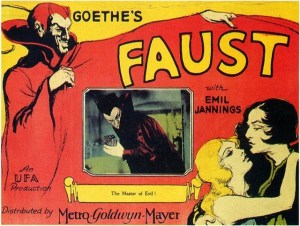
There’s been a series of signals today–in the form of pressers–on what will be the grand bargaining and scheming of partisan politics for the souls and future of American citizens. The Grand Bargain is obviously foremost on the minds of any one looking social security and medicare in the face. But, another set of bargains appears to be characterizing the Republicans desire to be relevant to Hispanic voters. The lame duck congress just might turn into the immigration reform congress. Republicans just signaled they’re ready for immigration reform. Wow, that was fast. There’s already some blowback on from the extraordinary bloviating right which basically wants to police state its way to white supremacy. But, they’ve all looked at the demographics now. Whither thou goest Speaker Boehner?
Fresh off an election in which Hispanic voters largely sided with Democrats, Speaker John A. Boehner said Thursday that he was “confident” Congress and the White House could come up with a comprehensive immigration solution.
Immigration reform is “an important issue that I think ought to be dealt with,” Mr. Boehner, an Ohio Republican, said in an interview with Diane Sawyer on “ABC World News.”
“This issue has been around far too long,” he said, “and while I believe it’s important for us to secure our borders and to enforce our laws, I think a comprehensive approach is long overdue, and I’m confident that the president, myself, others, can find the common ground to take care of this issue once and for all.”
The words conveyed a new sense of urgency from Mr. Boehner, who said earlier this year that he thought it would be politically impossible to tackle a Republican proposal on the Dream Act, which sought to open a path to citizenship for some students in the United States illegally.
According to exit polls by Edison Research, President Obama won 71 percent of the Hispanic vote compared with Mitt Romney’s 27 percent, a gap greater than Mr. Obama’s 36-point advantage with those voters over John McCain in 2008.
Republicans were also on the losing on the issues of marijuana decriminalization, gay marriage, and women’s reproductive health. Obviously, they’re going to try to shore up the Hispanics before they give any ground to any one else. There’s an entire list of right wing blogs–including The Daily Caller–on memorandum where you can just go drown yourself in seething xenophobia, if you so desire. Frankly, I’ve had enough racism for awhile so I’m just going to drop that discussion.
Back to the fiscal cliff and the Grand Bargain where the MSM has been laying bets all day. Boehner just offered up more Republican trickle down crap and the Romney/Ryan/Norquist budget plan this morning. Never say die!!
Boehner expressed hope that “2013 is finally the year” the government can agree on a grand bargain on spending and debt. “When the President and I have been able to come to an agreement,” he said, “there’s been no problem getting it passed in House.”
Regarding a tax deal specifically, the Speaker argued that “raising tax rates will slow down our ability to create the jobs that everyone says they want.” Reinforcing an often-cited Republican argument, Boehner said the problem with raising taxes on the wealthiest “is that more than half are small business owners.”
What part of raise the damn taxes didn’t Boehner get from the election results on Tuesday? The President appears to have gotten the message. He retorted “Americans agree with my approach”.
President Barack Obama, laying down his marker for grueling “fiscal cliff” negotiations, said Friday he won’t accept any approach to federal deficit reduction that doesn’t ask the wealthy to pay more in taxes.
“This was a central question during the election,” Obama said in his first postelection comments on the economy. “The majority of Americans agree with my approach.”
During the question-and-answer portion, Boehner was also asked about immigration. Noting he was “not going to get any details,” he said, “on an issue this big, the president has to lead.”
Speaking more broadly about the Republican party itself, Boehner said the principles of the party are sound, but: “It’s clear that as a political party we have some work to do.”
Following up, Obama’s spokesman said later that the president would veto any legislation extending tax cuts for families making $250,000 or more.
The president, speaking in the White House East Room, said he wasn’t wedded to every detail of the plans he outlined during the election, adding, “I’m open to compromise.” But he offered no indication that he was willing to back down.
Republicans stood their ground. At the Capitol, Republican House Speaker John Boehner said he remains unwilling to raise tax rates on upper-income earners. But he left open the possibility of balancing spending cuts with new revenue that could be achieved by revising the tax code to lower rates but also eliminate some tax breaks.
Again, Boehner went straight for the heart of Medicare and Social Security. He’s made it clear that he expects cuts to programs that the American people support. The key is not to panic about goes on down in January. There’s quite a few months after that for things to work themselves out. The only thing that is likely to happen is incredible variance in stock market returns which has been fairly typical of the market recently anyway.
Republicans say raising tax rates on the wealthiest Americans is a non-starter. Boehner said it would hurt small businesses while they are still struggling to recover from the recession.
“I’m proposing that we avert the fiscal cliff together in a manner that ensures that 2013 is finally the year that our government comes to grips with the major problems that are facing us,” Boehner said Friday. He said cuts to Medicare, Medicaid and food stamps, known as entitlement programs, have to be part of the equation.
Boehner also indicated that raising the debt limit, which the government will reach sometime in the spring, should be part of any negotiations. Pressed for details beyond that framework, he said he didn’t want to limit ideas to address the problem. He said the burden is on Obama.
“This is an opportunity for the president to lead,” Boehner said. He repeated a version of that phrase four times during the 11 minutes he spoke. “This is his moment to engage the Congress and work toward a solution that can pass both chambers.”
Some analysts believe that the “cliff” is more like a fiscal slope, that the economy could weather a short-term expiration of the Bush-era tax cuts and the government could manage a wave of automatic spending cuts for a few weeks. But at a minimum, failure to reach some resolution would mean delays in filing taxes and obtaining refunds and would rattle financial markets as the economy struggles to recover.
My guess is that all the tax cuts will be allowed to expire. Then, the president will return to the table to ask for cuts for the middle classes. This will allow the Republicans to say that they didn’t increase taxes although I’d say that Norquist and a lot of wealthy Republican donors will consider doing nothing akin to treason. That should be an interesting moment. Then, the return to the issue of the coming need to increase the debt ceiling and do a budget will go back on the table. This is the time to watch what spending cuts will be offered up by the President and what will be agreed to by the Democrats in congress. I just hope the President doesn’t start the negotiations by offering a centrist proposal straight off the bat. He hasn’t got much to lose at this point by holding firm.
The basic deal is this. The press and many pols are selling the fiscal cliff as a way to drive an austerity agenda. Economists are aware of the potential disaster that lays ahead should this occur. We have a worse chance of going the way of the UK with its flailing economy than going the way of Greece that really has no taxable assets to speak of.
In fact, the problem with the fiscal cliff is precisely the opposite: The tax hikes and automatic spending cuts that would kick in after Dec 31 would sharply curb our federal deficit through enacting major, sudden austerity measures that would save the U.S. government about $720 billion in 2013 alone, according to the Bank of America’s estimates, which would be about 5.1 percent of GDP.
“If we let all of those changes [happen], there would be a sharp reduction in the budget deficit—in decline in debt to GDP, falling deficits as a share of GDP,” says Chad Stone, chief economist at the Center for Budget and Policy Priorities. “It’s all a dream for people who want really sharp austerity.”
So the reason that the fiscal cliff could push us into another recession in 2013 is because it enacts too much deficit reduction upfront, not too little. By contrast, the reason that Europe became mired in a fiscal crisis in the first place is because profligate nations haven’t done enough to curb their spending and raise revenue to their more fiscally responsible neighbors’ satisfaction.
The folks who want to avoid the fiscal cliff for fear of its impact on a still-faltering economy are effectively arguing that now isn’t the time to enact austerity measures: Instead of taking money out of government programs and people’s paychecks, the government should be putting that money into the economy. And certain parts of the fiscal cliff bring more bang for the buck than others, CBBP’s Stone points out: Payroll tax cuts and unemployment benefits are more effective way to boost economic growth in the short-term than the Bush tax cuts for upper-income Americans, according to a new report from the Congressional Budget Office.
So if it’s immediate austerity that we want to avoid, and stimulus that should take its place, why is there so much talk about the need for major deficit reduction as a solution to the fiscal cliff? It’s because lawmakers decided months and years ago that they wanted this austerity crisis to happen as a way of creating leverage for more sensible, long-term deficit reduction measures.
I still think this means the president will go for the expiration of the tax cuts and then ask to return tax cuts to the middle class. We’ll see who will take that bargain. Then, the give-and-take on the longer term issues will start. The question to me is who will be Faust and who is the Devil?
The shrill one offers up some advice to Democrats: Let’s not Make a Deal.
In saying this, I don’t mean to minimize the very real economic dangers posed by the so-called fiscal cliff that is looming at the end of this year if the two parties can’t reach a deal. Both the Bush-era tax cuts and the Obama administration’s payroll tax cut are set to expire, even as automatic spending cuts in defense and elsewhere kick in thanks to the deal struck after the 2011 confrontation over the debt ceiling. And the looming combination of tax increases and spending cuts looks easily large enough to push America back into recession.
Nobody wants to see that happen. Yet it may happen all the same, and Obama has to be willing to let it happen if necessary.
Why? Because Republicans are trying, for the third time since he took office, to use economic blackmail to achieve a goal they lack the votes to achieve through the normal legislative process. In particular, they want to extend the Bush tax cuts for the wealthy, even though the nation can’t afford to make those tax cuts permanent and the public believes that taxes on the rich should go up — and they’re threatening to block any deal on anything else unless they get their way. So they are, in effect, threatening to tank the economy unless their demands are met.
Obama essentially surrendered in the face of similar tactics at the end of 2010, extending low taxes on the rich for two more years. He made significant concessions again in 2011, when Republicans threatened to create financial chaos by refusing to raise the debt ceiling. And the current potential crisis is the legacy of those past concessions.
Well, this has to stop — unless we want hostage-taking, the threat of making the nation ungovernable, to become a standard part of our political process.
So what should he do? Just say no and go over the cliff if necessary.
I’d say that’s what will happen.
Friday Reads
Posted: November 9, 2012 Filed under: Elections, Elizabeth Warren Campaign, Gun Control, morning reads | Tags: Elizabeth Warren, fiscal cliff, NRA, Planned Parenthood 88 Comments
Good Morning!
Much is being made of the election results that delivered a sound thumping to Republicans and their agenda to restrict the rights of women and minorities and to provide benefits to the wealthy and powerful. A record number of women will be serving in the US Senate. Five new women will be headed there. Of all the significant races, Senator-elect Elizabeth Warren appears to have garnered the most hope and angst. Simon Johnson considers her election “important”.
Senator Warren is well placed, not just to play a role in strengthening Congressional oversight but also in terms of helping her colleagues think through what we really need to make our financial system more stable.
We need a new approach to regulation more generally – and not just for banking. We should aim to simplify and to make matters more transparent, exactly along Senator Warren’s general lines.
We should confront excessive market power, irrespective of the form that it takes.
We need a new trust-busting moment. And this requires elected officials willing and able to stand up to concentrated and powerful corporate interests. Empower the consumer – and figure out how this can get you elected.
Agree with the people of Massachusetts, and give Elizabeth Warren every opportunity.
Laura Gottesdiener thinks Warren’s election may usher in the end of the Tea Party.
Warren, who beat out the incumbent Republican Scott Brown in a bitter election, ran a campaign centered on connecting the dots between economic policies and personal values. A Harvard bankruptcy-law professor, Warren trumpeted a platform that called for economic reform, financial regulation and the protection of Social Security, Medicare and other safety-net programs.
“We said this election is about whose side you’re on,” Warren told The Huffington Post . “I think of this as an election where we stuck to our values: Make sure Social Security and Medicare benefits are protected, and millionaires and billionaires pay their fair share. To me, that’s the heart of it. That’s really where the basic social contract is reaffirmed.”
This type of populist platform became increasingly risky after Citizens United allowed for the infusion of billions of dollars into state elections. Warren was already well disliked on Wall Street for her role in creating and heading the Consumer Financial Protection Bureau, a watchdog agency that seeks “to make markets for consumer financial products and services work for Americans — whether they are applying for a mortgage, choosing among credit cards, or using any number of other consumer financial products.”
Warren may be given a seat on the powerful senate banking committee which has to be worrying Wall Street.
Senior Senate Democratic aides, speaking on condition of anonymity, said the Massachusetts senator-elect is a logical fit for the committee, even though it is rare for a freshman senator to get such a plum assignment.
If she gets the slot, Warren’s bully pulpit would be replaced with real power.
The bipartisan panel can greatly influence policy decisions through its oversight of financial services, international trade, insurance, housing, securities and economic issues.
Warren, who has called for breaking up the big banks, could move to block legislative tweaks to the 2010 Dodd-Frank financial oversight law that would blunt the full impact of profit-pummeling reforms.
She would also be able to forcefully push for regulators to use all the powers available to them to write strict interpretations of rules.
That could mean stronger curbs on Wall Street trading, higher capital buffers and rules that would compel mega-banks to shrink.
Warren and other Senators will have to watch the President and Speaker of the House as they battle of the so-called fiscal cliff before getting their say in the budget.
While no can say for sure how the negotiations to avoid the so-called “fiscal cliff” — the expiration of the Bush tax cuts and impending across-the-board spending cuts — will unfold, the betting here is it will get ugly before it gets better.
First, virtually no one believes what happened last time will happen this time: President Obamawon’t cave on extending tax cuts for upper income earners.
So will House Republicans come to the table voluntarily, before the first of the year? Or will it require all hell breaking loose — an expiration of the income and payroll tax cuts, sequestration, the estate tax, and the AMT kicking in, cap gains and dividend rates rising — before they are forced to come kicking and screaming to an agreement?
The president holds a lot of leverage here — not just because he just won, Democrats expanded their majority in the Senate, and gained seats in the House. He holds leverage because, structurally, we’re talking about tax cuts that are expiring. His position is clear: The rate for the wealthiest will be allowed to go up. If he is willing to go to the wall and let the the lower rates expire, pressure shifts to House Speaker John Boehner to make a deal before his conference is isolated by the business community, which more than anything wants D.C. to just cut a deal, and Senate Republicans, who cut a deal and sold Boehner out last time. Add to that a tanking market and mounting economic hysteria, and that’s a lot of pressure on the House GOP true believers, Allen West or no Allen West.
The conventional wisdom is that Obama and Republicans will make a short term deal on taxes and sequestration — kicking that can down the road yet again — contingent on agreement on a “framework” for tax reform to be done in the first part of 2013.
There is incentive for Boehner to try and make an early deal, before the first of the year. The question, as always, is will he have the votes to allow tax rates on the wealthy to rise? Seems doubtful. He would have to be a pretty firm and big commitment from Obama on tax and entitlement reform to get them to go along.
Is it a matter of who will blink first? Here’s a conversation between Ramesh Ponnuru and Margaret Carlson. This is Ponnur’s take.
Does Boehner mean that tax reform should raise money by cutting tax breaks more than it cuts tax rates? Or does he mean that it should raise money just by encouraging economic growth?
If it’s the first, Boehner is going to have a problem with conservatives — especially Grover Norquist, the party’s anti- tax enforcer. If it’s the second, he’s not talking about much revenue.
That’s a bargain that sounds grand to me, but liberals who just won an election might disagree, don’t you think? My guess is he’s being ambiguous so he can gauge the reaction.
Another question: What leverage does Boehner have, and what leverage does he think he has? Obama doesn’t have to cut any deal to get a lot of extra revenue. He can let taxes go up as scheduled and challenge the Republicans to cut them only for the middle class. Republicans can either go along or decide not to and then blame him for the resulting middle-class tax hikes. Who likes their odds better in that fight?
Republicans have another bit of leverage, beyond the threat of blaming Democrats for tax increases: We’re getting close to hitting the debt ceiling again, and in the normal order of thingsHouse Republicans would have to agree to lift it.
Carlson has this to say.
In an election that was otherwise a debacle for Republicans, the House held its majority, and Boehner holds the gavel as long as he coddles his most extreme members. So he will.
Meanwhile, the president (unless you see something in him, Ramesh, that I don’t) still believes in this hope-y, change-y stuff Republicans consider a joke. He still sees himself as a historic figure that can bridge the partisan divide.
It is Boehner’s tiny, eensy-weensy bit of openness to dealing with Obama that is enraging conservatives. At the same time, it is playing to Obama’s view of himself. The president’s signature trait is an inability to negotiate from strength. He leads with his best offer. If Obama were buying a car, he’d probably pay full price and leave without radial tires.
In fairness to Obama, it’s foolish to call the bluff of an opposition that’s already shown it will allow the U.S. to default on its debt.
You’re right, Ramesh, that Obama doesn’t have to do anything at all to raise revenue. But he can’t risk raising taxes on the working and middle classes when the economy is still shaky. Republicans, by contrast, are willing to risk anything.
One of the quiet victories of the election is the failure of the NRA whose candidates didn’t do well this election.
The Sunlight Foundation, a campaign watchdog group, found that the NRA’s Political Victory Fund – the political arm of the nation’s largest gun lobbying organization – spent almost $11 million for or against individual candidates in the general elections, but got less than a 1 percent return on its investment.
The NRA, for instance, spent more than $7.4 million in opposition to President Obama and almost $1.9 million in support of Mitt Romney, according to Sunlight. But Obama was the victor on Tuesday, and the NRA had similar bad luck trying to influence Senate and House races.
For example, the group put almost $538,000 behind Indiana Senate contender Richard Mourdock (R), who lost, and spent more than $512,000 to oppose Sen. Sherrod Brown (D-Ohio), who won, according to Sunlight.
Conversely, Planned Parenthood did an outstanding job!
Planned Parenthood’s political wing trounced other groups with a near perfect return on its election spending, according to a new numbers review.
The Sunlight Foundation found that Planned Parenthood’s advocacy arm and super-PAC spent about $5 million and $7 million, respectively, to oppose Republicans and support Democrats in the general election.
In the end, the two groups saw returns on investment of about 98 and 99 percent, according to Sunlight.
The figures come as election-watchers pick apart the most expensive cycle in history. Republicans’ loss in the presidential race and failure to claim the Senate came as a surprise to outside donors, many of whom spent millions to ensure GOP victories.
Planned Parenthood’s political wing played an outsized role in the general election, compared to cycles past. The flood of political activity came as Republicans vowed to end Planned Parenthood’s federal funding as a healthcare provider for low-income women. Conservatives argue that while the law technically bans public funds from supporting abortions, taxpayer money need not flow to a group that performs the procedures.
The election covered a wide range of women’s health issues in addition to public funds for Planned Parenthood, giving the group ample chance to advocate in favor of abortion rights and access to free birth control.
The only outside groups that came close to beating Planned Parenthood’s return on investment were Majority PAC, which fought for Democratic Senate candidates, with a success rate of about 88 percent, and the Service Employees International Union PEA-Federal, with about an 85 percent success rate.
I’ll end with offering some beautiful finds in a Thracian burial site in Bulgaria.
The researchers found fragments of a wooden box, containing charred bones and ashes, along with a number of extremely well-preserved golden objects, dated from the end of the 4th and the beginning of the 3rd century B. C.. They include four spiral gold bracelets, and a number of intricate applications like one which shows the head of a female goddess adorned with beads, applications on horse riding gear and a forehead covering in the shape of a horse head with a base shaped like a lion head. The objects weigh 1.5 kg, but the excavations continue.The precious find also contains a ring, buttons and beads. Gergova explains that it seemed the treasure was wrapped in a gold-woven cloth because a number of gold threads were discovered nearby.
The Professor says these were, most likely, remnants from a ritual burial, adding the team expects to discover a huge burial ground, probably related to the funeral of the Gath ruler Kotela, one of the father-in-laws of Philip II of Macedon. She notes this is a unique find, never before discovered in Bulgaria.

What’s on your reading and blogging list today?

 peej
peej Carissa
 bostonboomer
 dakinikat
 ecocatwoman
 mablue2
 Mama Lopez
 peggysue22
 quixote
 skydancingguestblogger
 Mona (aka Wonk the Vote)



 Sky Dancing
Recent Comments