
Yesterday, Teabagging, Today Sandbagging
Posted: April 26, 2009 Filed under: Bailout Blues, Global Financial Crisis, Team Obama | Tags: bailout, COP, Elizabeth Warren, financial system meltdown, Nancy Pelosi, TALF, TARP, Yves Smith 3 Comments I can’t tell you how disappointed I am that America’s first woman Speaker of the House has turned into a player for all seasons. First, we find out exactly how much she knew about the torture methods of the Bush Administration and when she knew about it. Then she tells a big lie about it. Rumors still abound that she was wanted Obama as POTUS because she could be the Queen Bee of Capitol Hill. His lack of knowledge and experience was certain to put her in a position of power. Too bad she is more of a demagogue than a democrat because if there was ever a chance to be the Queen of the Hill, it would’ve been with reform of the financial system.
Instead, we’re seeing her go after yet another woman who has tried to champion the voters/taxpayers over big party money. A head line from Yves Smith at Naked Capitalism says it all for you: “On Pelosi’s Duplicity and Apparent Sandbagging of Elizabeth Warren, watch dog of the TARP”. It’s a typical Capitol Hill soap opera if there ever was  one. As appears customary with everything economic coming out of the democratic wing of our congressional whores, Pelosi is siding with the financial services industry over the voters/taxpayers. Yves first reminds us of the strange dance surrounding the birth of TARP. Remember, life was supposed to be different once the Democrats retook the Congress.
Recall how instrumental Pelosi was in getting the TARP passed. The widely mentioned gambit of Paulson getting on bended knee to plead for her support was a nice bit of theater to cover how readily she fell into line. The other justification for the Democratic leadership support was the claim that Treasury had given a closed door briefing to Senate and House leadership telling them the world would end if the TARP was not passed yesterday.
Some have suggested that Treasury provided data on the potentially disastrous money market fund withdrawals around the time of the Lehman failure (recall the death of Lehman led Reserve to break the buck). but that problem had already been addressed in September in part via the Fed providing non-recourse loans to purchase asset backed commercial paper, and more fully in October via yet another Fed facility. In other words, if the money market fund panic was indeed the scare tactic, the TARP was not the remedy.
But even if we give the devil its due, the performance of the Democratic leadership was pathetic. The most heinous aspect of the bill, putting the Treasury secretary outside the reach of law, was never cut back. The first draft, a doodle on a napkin, was offensive to democratic processes, the second draft added a lot more words but was still way too thin on basics, like objectives, criteria, procedures, and the final draft loaded tons of pork in to assure passage. And the ironies kept multiplying. The bill was wildly unpopular even with the media falling into line (and in the later stages, a clearly orchestrated campaign to have financial services industry employees contact legislators to counter the groundswell of opposition). And it was Senate Republicans who were the last holdouts.
Here’s the soap opera, errr, money line.
So why are we pointing a finger at Pelosi in particular? The next chapter is her appointment of one Richard Nieman to the Congressional Oversight Panel. Under the TARP rules, the House Majority leader selects one of the oversight panel members, so this choice was completely under her control.
W(h)ither Geithner and his TALF
Posted: April 23, 2009 Filed under: Bailout Blues, Equity Markets, Global Financial Crisis, U.S. Economy, Uncategorized | Tags: banks, Elizabeth Warren, TALF, TARP, Timothy Geithner Comments Off on W(h)ither Geithner and his TALF Neil Irwin of WAPO reported today that the TALF is not having the results trumpeted by the Obama administration. This is leading, again, to speculation about the relevancy of most of these plans and, of course, job security of Treasury Secretary Timothy Geithner.
In its first two months, the government’s signature initiative to support consumer lending has fallen well short of expectations, deploying only a fraction of the amount officials had hoped to extend to stimulate auto loans, student loans and credit card lending.
The slow rollout of the program has frustrated staff at government agencies working on the effort and diminished hopes that they could engineer a rapid return to healthy lending levels, according to interviews with government and industry sources. The initiative also serves as a window into the complexities of designing a giant rescue of the financial system.
The TALF is the private-public partnership that couples the funds of private investors, like hedge funds, and the FED. The hedge funds invest small amounts that are matched by much larger amounts that would presumably come from the Treasury and Tax Payers if they wind up being nonprofitable. The combined funds will supposedly purchase non-toxic, virgin, high rated rated securities to fund everything from student loans and car loans to inventory and capital loans for business. As of yet, they really have failed to do so.
Officials envisioned TALF supporting tens of billions of dollars a month in new lending, saying it could eventually total $1 trillion. But in March, when it was launched, it backed only $4.7 billion in auto loans and credit cards. For April, it logged only $1.7 billion.
Sources involved in the program said private investors have been reluctant to work with the government, which they view as an unreliable business partner. Separately, the brokerage houses that are crucial intermediaries are being exceptionally cautious in the contracts they draw up with participants in the program, in part out of wariness that any mistakes could draw the ire of Congress or the media.
In congressional testimony on Tuesday, Treasury Secretary Timothy F. Geithner said that overall progress is “pretty good” for a program in its early days. Still, he acknowledged that participation was “lower than expected” because of “concern about the conditions that come with the assistance in the program . . . and uncertainty about whether they may change in the future.”
Meanwhile, on the bank front, stupid accounting tricks abound! Which begs the question is any one stupid enough to believe the numbers? Every large financial institution appears to be jumping on the band wagon of conveniently forgetting the month of December. What does this say about the state of public accounting today and Wall Street’s gulliblity?
Inquiring Minds also Blog
Posted: April 5, 2009 Filed under: Equity Markets, Global Financial Crisis, Team Obama, U.S. Economy | Tags: audit failure, bank bailout, bank failure, Elizabeth Warren, PKMG, regulator failure, Tyler Cowen Comments Off on Inquiring Minds also Blog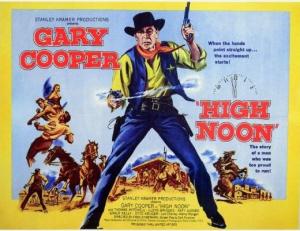
The two regulators who don’t appear captured by the regulated are both women. FDIC’s Sheila Bair has been quietly closely down the bankrupt quite efficiently and ensuring every one knows that the FDIC will stand by its insurance commitments. Elizabeth Warren who is the head of the group watching the TARP funds is calling this week for the ousting of derelict bank executives. This includes Citibank and AIG. Is this the beginning of High Noon on Wall Street?
Warren also believes there are “dangers inherent” in the approach taken by treasury secretary Tim Geithner, who she says has offered “open-ended subsidies” to some of the world’s biggest financial institutions without adequately weighing potential pitfalls. “We want to ensure that the treasury gives the public an alternative approach,” she said, adding that she was worried that banks would not recover while they were being fed subsidies. “When are they going to say, enough?” she said.
She said she did not want to be too hard on Geithner but that he must address the issues in the report. “The very notion that anyone would infuse money into a financially troubled entity without demanding changes in management is preposterous.”
Meanwhile, many finance and economics bloggers have looked into legal issues surrounding the Obama/Geithner bailout and believe laws are being broken. Both Boston Boomer and Sam point to this at George Washington’s Blog.
Geithner’s statements that he didn’t have the power to close down the big banks is false. Moreover, Geithner and Paulson actually broke the law which requires the government to close down insolvent banks, no matter how big.
The Prompt Corrective Action Law (PCA) – 12 U.S.C. § 1831o – not only authorizes the government to seize insolvent banks, it mandates it.
An earlier post here contains the interview with William K. Black, a senior regulator during the S&L crisis and Associate Professor of Economics and Law at the University of Missouri and Bill Moyers. Even more interesting news has appeared recently as it looks like regulators aren’t the only ones dropping the ball. Is this a repeat of the Aurthur Anderson/Enron failure of Public Accounting?
New Century, one of the country’s top subprime lenders, went bankrupt shortly after disclosing that its financial statements were misstated. Its creditors are now suing KPMG, New Century’s auditor, for at least $1 billion in damages. In the years leading up to the financial crisis, some of the nation’s largest accounting firms failed to properly examine the reserves that banks and other lenders set aside to cover losses, records from a federal oversight board show.

 peej
peej Carissa
 bostonboomer
 dakinikat
 ecocatwoman
 mablue2
 Mama Lopez
 peggysue22
 quixote
 skydancingguestblogger
 Mona (aka Wonk the Vote)



 Sky Dancing
Recent Comments