
Labor Day Reads
Posted: September 7, 2015 Filed under: Labor unions, morning reads | Tags: drought, income inequality. Wages, ISIS 12 Comments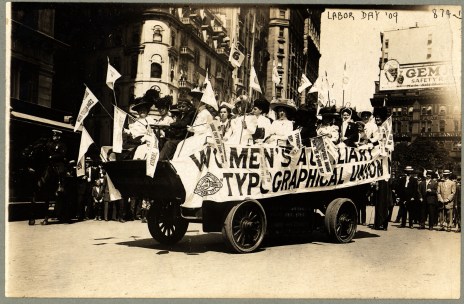 Happy Labor Day!
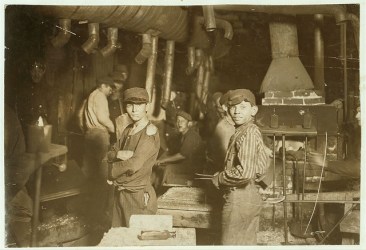
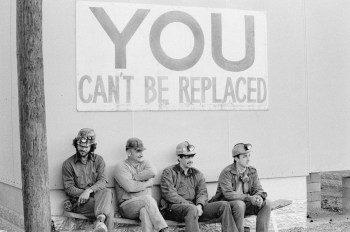
Today I thought I’d give you some long, interesting reads to fill what I hope is a nice quiet day for you! Some of these are related to the holiday we celebrate today. You’ll notice that I’ve put up some photos of what it meant to be worker back in the day including pictures of child labor which was made illegal with the help of Union activism. No Labor Day celebration would be complete without a generous selection of Pete Seeger tunes. Check the bottom and listen to this American Treasure!
My first offering is from TP and salutes Seven Union Heroes.
This Labor Day, while you’re enjoying the three-day-weekend, take a moment to celebrate the heroes of the union movement. These noteworthy people left behind a legacy that we enjoy today, from the end of child labor to the more humane treatment of farm workers.
My next selection is from the UK Guardian and explains why the US middle class started really losing ground during the Dubya years. This is especially true of wages.
Until recently, an examination of the labour market relied on the annual publication of average wages. That is how the story of flat wages for the many and super-returns for the few over such a long period has emerged. Each calculation of average wages is a snapshot of all the people in the workforce. Unfortunately, millions of people quit the labour market during the year and others join. It is not the same cohort, and not just at the outer margins.
Robert J Shapiro, a former economic adviser to Bill Clinton who now runs the Sonecon consultancy in Washington, grabbed the opportunity to look at the raw census data when the US statistical office published it a few years ago.
He tracked the median incomes of average households as they travelled through the decades, checking on the progress of men versus women, Hispanic people versus black and white people, college graduates and different age groups. The report presents us with a more nuanced picture of the workforce and how it has fared.
He found that the 1980s boom, which gained traction in the middle of the decade, boosted the wages of all but the oldest group of workers. So large, steady income gains characterised the average household whether they were headed by men or women, or by people with high school diplomas or college degrees, whatever their ethnicity.
As Shapiro said: “This evidence contradicts the narrative told by those who track the value of aggregate income from the 1970s to present the claim that most Americans have made little progress for decades.”
The momentum dissipated in the first Bush presidency between 1989 and 1993 and accelerated again in the Clinton years before running out of steam in the early 2000s
Then came the downturn. The second Bush era, under George W, was painful for almost all but twentysomething college graduates, who even survived the 2008 crash with barely a scratch, and was worst for those without a high school diploma. Shapiro says the least educated saw their incomes “devastated” after 2001.
“Across the three younger age-cohorts, the median income of households headed by people without high school diplomas fell an average of 1.9% per year as they aged through the 2002-2007 expansion; and over the entire period from 2002 to 2013, their median incomes fell by an average of 1.8% year as they aged,” the report says.
Between 2010 and 2013, households where the main earner had been aged 25 to 29 back in 1982 suffered even more if they quit education before going to high school. They lost 7.1% in income in each year as vast numbers either took a cut in pay, in hours or were made unemployed.
The rise and fall of the average workers’ wages documented in the report chimes with the business cycle and the trend in Europe, which followed a similar trajectory.
The average German worker made income gains through the same period before a deregulation of the labour market under the Social democrat Gerhard Schroeder brought about an effective freeze in wages from 2003.
In the UK, the chancellor at the time, Gordon Brown, reacted to the downturn by switching on the government spending taps. He introduced tax credits as an income top-up to offset the trend for flat or falling real wages. It was a policy that insulated British workers from a trend that clobbered Americans and to a lesser extent German workers.
Retelling the economic story of the 1980s, Shapiro says the US benefited from a mix of Reagan’s expansionary policies in defence and infrastructure and the collapse of commodity prices after the inflationary oil shocks of the 1970s.
George Bush senior was forced to cope with the borrowing hangover from the Reagan years before Clinton assumed the presidency.
 Another Guardian article explains how US and British policy in Iraq and Syria actually grew and predicted and WISHED for the rise of ISIS.
A revealing light on how we got here has now been shone by a recently declassified secret US intelligence report, written in August 2012, which uncannily predicts – and effectively welcomes – the prospect of a “Salafist principality” in eastern Syria and an al-Qaida-controlled Islamic state in Syria and Iraq. In stark contrast to western claims at the time, the Defense Intelligence Agency document identifies al-Qaida in Iraq (which became Isis) and fellow Salafists as the “major forces driving the insurgency in Syria” – and states that “western countries, the Gulf states and Turkey” were supporting the opposition’s efforts to take control of eastern Syria.
Raising the “possibility of establishing a declared or undeclared Salafist principality”, the Pentagon report goes on, “this is exactly what the supporting powers to the opposition want, in order to isolate the Syrian regime, which is considered the strategic depth of the Shia expansion (Iraq and Iran)”.
Which is pretty well exactly what happened two years later. The report isn’t a policy document. It’s heavily redacted and there are ambiguities in the language. But the implications are clear enough. A year into the Syrian rebellion, the US and its allies weren’t only supporting and arming an opposition they knew to be dominated by extreme sectarian groups; they were prepared to countenance the creation of some sort of “Islamic state” – despite the “grave danger” to Iraq’s unity – as a Sunni buffer to weaken Syria.
That doesn’t mean the US created Isis, of course, though some of its Gulf allies certainly played a role in it – as the US vice-president, Joe Biden, acknowledged last year. But there was no al-Qaida in Iraq until the US and Britain invaded. And the US has certainly exploited the existence of Isis against other forces in the region as part of a wider drive to maintain western control.
The calculus changed when Isis started beheading westerners and posting atrocities online, and the Gulf states are now backing other groups in the Syrian war, such as the Nusra Front. But this US and western habit of playing with jihadi groups, which then come back to bite them, goes back at least to the 1980s war against the Soviet Union in Afghanistan, which fostered the original al-Qaida under CIA tutelage.
It was recalibrated during the occupation of Iraq, when US forces led by General Petraeus sponsored an El Salvador-style dirty war of sectarian death squads to weaken the Iraqi resistance. And it was reprised in 2011 in the Nato-orchestrated war in Libya, where Isis last week took control of Gaddafi’s home town of Sirte.
In reality, US and western policy in the conflagration that is now the Middle East is in the classic mould of imperial divide-and-rule. American forces bomb one set of rebels while backing another in Syria, and mount what are effectively joint military operations with Iran against Isis in Iraq while supporting Saudi Arabia’s military campaign against Iranian-backed Houthi forces in Yemen. However confused US policy may often be, a weak, partitioned Iraq and Syria fit such an approach perfectly.
Music sounds better when you’re under the influence of LSD. I think I learned this lesson as a sophomore at university but evidently there’s research so we don’t have to rely on my anectodotal evidence.
The right music can evoke powerful emotions seemingly out of the blue, but under the influence of LSD the musical experience is enhanced even further. This according to the Beckley/Imperial Psychedelic Research Programme whichtested this long held assumption under a modern placebo-controlled study for the very first time.
Ten healthy volunteers listened to five different tracks of instrumental music during each of two study days, a placebo day followed by an LSD day, separated by 5–7 days. After listening to each track, participants were asked to rate their experience on a visual analogue scale (VAS) and the nine-item Geneva Emotional Music Scale (GEMS-9). According to the participants’ subjective ratings, LSD enhanced the emotions they felt while listening to the instrumental tracks, particularly those described as “wonder”, “transcendence”, “power” and “tenderness”.
This article from The Atlantic on how universities are helping student protect themselves from ideas and philosophies they don’t want to hear was really quite astounding to me.
Among the most famous early examples was the so-called water-buffalo incident at the University of Pennsylvania. In 1993, the university charged an Israeli-born student with racial harassment after he yelled “Shut up, you water buffalo!” to a crowd of black sorority women that was making noise at night outside his dorm-room window. Many scholars and pundits at the time could not see how the termwater buffalo (a rough translation of a Hebrew insult for a thoughtless or rowdy person) was a racial slur against African Americans, and as a result, the case became international news.
Claims of a right not to be offended have continued to arise since then, and universities have continued to privilege them. In a particularly egregious 2008 case, for instance, Indiana University–Purdue University at Indianapolis found a white student guilty of racial harassment for reading a book titled Notre Dame vs. the Klan. The book honored student opposition to the Ku Klux Klan when it marched on Notre Dame in 1924. Nonetheless, the picture of a Klan rally on the book’s cover offended at least one of the student’s co-workers (he was a janitor as well as a student), and that was enough for a guilty finding by the university’s Affirmative Action Office.
These examples may seem extreme, but the reasoning behind them has become more commonplace on campus in recent years. Last year, at the University of St. Thomas, in Minnesota, an event called Hump Day, which would have allowed people to pet a camel, was abruptly canceled. Students had created a Facebook group where they protested the event for animal cruelty, for being a waste of money, and for being insensitive to people from the Middle East. The inspiration for the camel had almost certainly come from a popular TV commercial in which a camel saunters around an office on a Wednesday, celebrating “hump day”; it was devoid of any reference to Middle Eastern peoples. Nevertheless, the group organizing the event announced on its Facebook page that the event would be canceled because the “program [was] dividing people and would make for an uncomfortable and possibly unsafe environment.”
Because there is a broad ban in academic circles on “blaming the victim,” it is generally considered unacceptable to question the reasonableness (let alone the sincerity) of someone’s emotional state, particularly if those emotions are linked to one’s group identity. The thin argument “I’m offended” becomes an unbeatable trump card. This leads to what Jonathan Rauch, a contributing editor at this magazine, calls the “offendedness sweepstakes,” in which opposing parties use claims of offense as cudgels. In the process, the bar for what we consider unacceptable speech is lowered further and further.
Since 2013, new pressure from the federal government has reinforced this trend. Federal antidiscrimination statutes regulate on-campus harassment and unequal treatment based on sex, race, religion, and national origin. Until recently, the Department of Education’s Office for Civil Rights acknowledged that speech must be “objectively offensive” before it could be deemed actionable as sexual harassment—it would have to pass the “reasonable person” test. To be prohibited, the office wrote in 2003, allegedly harassing speech would have to go “beyond the mere expression of views, words, symbols or thoughts that some person finds offensive.”
But in 2013, the Departments of Justice and Education greatly broadened the definition of sexual harassment to include verbal conduct that is simply “unwelcome.” Out of fear of federal investigations, universities are now applying that standard—defining unwelcome speech as harassment—not just to sex, but to race, religion, and veteran status as well. Everyone is supposed to rely upon his or her own subjective feelings to decide whether a comment by a professor or a fellow student is unwelcome, and therefore grounds for a harassment claim. Emotional reasoning is now accepted as evidence.
If our universities are teaching students that their emotions can be used effectively as weapons—or at least as evidence in administrative proceedings—then they are teaching students to nurture a kind of hypersensitivity that will lead them into countless drawn-out conflicts in college and beyond. Schools may be training students in thinking styles that will damage their careers and friendships, along with their mental health.
 Also from The Atlantic is this great article by Economist Jared Bernstein on how the poorest among us are not getting the help they need. We’re beginning to find out how the Welfare Reform of the 1990s has been as big of a failure as the Drug Wars of the 1980s.
People who pay attention to poverty, including the poor themselves, know one thing all too well: Over the past few decades, anti-poverty policy in this country has evolved to be “pro-work.” This means that if you’re a low-income parent who’s well connected to the job market, the government will help you in a variety of ways. But, if you’re disconnected from the job market, public policy won’t help you much at all.
How do people in that second group survive?That’s a question that Kathryn Edin and H. Luke Shaefer, a sociologist and a social-work professor, answer in their new book, $2.00 a Day: Living on Almost Nothing in America. It is, as the title suggests, a devastating portrait of families struggling to get by on impossibly low incomes.
A few of their strategies: availing themselves of charities and public spaces (like libraries), selling food stamps for cash (illegal, and they typically get just 60 cents on the dollar on the street), relying on relatives (who can be as hurtful as helpful), selling scrap metal or aluminum cans, selling plasma (which involves considerable angst as to whether a person’s blood’s iron levels are sufficiently high, especially difficult around menstruation), receiving some public support (housing vouchers, nutritional support, disability payments), occasionally holding a job, and—the most common strategy of all—just going without.
Check out these astounding pictures of a small town in California that’s running out of water if you’d like to be stimulated both visually and mentally. This is from Mother Jones who is one of the Labor Leaders we should be celebrating today.
Glance at a lawn in East Porterville, California, and you’ll instantly know something about the people who live in the house attached to it.
If a lawn is green, the home has running water. If it’s brown, or if the yard contains plastic water tanks or crates of bottled water, then the well has gone dry.
Residents of these homes rely on deliveries of bottled water, or perhaps a hose connected to a working well of a friendly neighbor. They take “showers” with water from a bucket, use paper plates to avoid washing dishes, eat sandwiches instead of spaghetti so there’s no need to boil water, and collect water used for cooking and showers to pour in the toilet or on the trees outside.
East Porterville is in Tulare County, a region in the middle of California’s agriculture-heavy Central Valley that’s been especially hard hit by the state’s historic drought. More than 7,000 people in the the county lack running water; three quarters of them live in East Porterville. The community doesn’t have a public water system; instead, residents rely on private wells. But after years of drought, the nearby Tule River has diminished to a trickle and the underground water table has sunk as more and more farmers rely on groundwater. Last week, I spent a few days interviewing residents in the town, also known as “ground zero” of the drought.
Happy Labor Day!
What’s on your reading and blogging list today?
Monday Reads: Political Ink
Posted: August 12, 2013 Filed under: morning reads | Tags: Christie Paul rift, drought, Fed Chair, fracking, Hiroshima bomb, Larry Summers, Martin Luther King, Paul Tibbets, state funded crisis pregnancy center shams, Texas, water shortage 28 Comments
Good Morning!
Here’s a little bit of this and that to get your political juices flowing for the week.
The NYT profiles potential FED chair candidate La La Summers as some one that has many flaws but much power and personal wealth. He has the credentials and the connections but does he really have the gravitas for the job?
Mr. Summers’s wealth comes mainly from two periods of private sector work between government postings. After a lengthy tenure at the Treasury Department in the 1990s, he became the president of Harvard — a job that Robert E. Rubin, who preceded Mr. Summers as Treasury secretary, helped him obtain.
But in 2006, Mr. Summers was forced out of the university presidency for a variety of reasons, including remarks he made questioning why few women engage in advanced scientific and mathematical work. Soon after, a young Harvard alum brought him into the hedge fund world with a part-time posting at D. E. Shaw. That firm, one of the largest in the industry, paid Mr. Summers more than $5 million.
Mr. Summers’s wealth soared from around $400,000 in the mid-1990s to between $7 million and $31 million in 2009, when he joined the Obama administration, according to a financial disclosure he filed at the time. Before returning to government service, he earned $2.7 million from speeches in one year alone.
As for his current work, representatives for Citigroup, Nasdaq and D. E. Shaw declined to disclose his pay. His speaking rates today run into the six figures, according to an associate who spoke on the condition of anonymity, and Mr. Summers has spoken to Wall Street companies like Goldman Sachs, JPMorgan Chase and Citigroup.
The job that is likely to generate the most scrutiny for Mr. Summers is his work with Citigroup, which was rescued from the brink of bankruptcy by the federal government’s bailout. Though he does not have an office there, two people with direct knowledge of the matter said he was a regular consultant. In a statement, Citigroup said he provided “insight on a broad range of topics including the global and domestic economy” to prestigious clients, and attended internal meetings.
Citigroup hired Mr. Summers in part to advise Vikram S. Pandit, who resigned as chief executive last year. With his work there, Mr. Summers followed in the footsteps of his friend, Mr. Rubin, who joined Citigroup after he left the government and earned more than $100 million.
Another political analyst–this one writing for Bloomberg–thinks that the Republicans are inching towards civil war and that the next election may look like  1964. The focus has been on the Paul-Christie rift.
As Republicans continue to sort through their future, having lost the popular vote for president in five of the last six elections, they are having intramural battles with echoes of 1964, when Barry Goldwater won the nomination at a convention rife with division over the role of the U.S. in the world and civil rights at home. Derided as an extremist, he went on to lose to President Lyndon Johnson in a landslide.
Now, Republicans are squabbling over the National Security Agency surveillance program, immigration and gay marriage. The Christie-Paul rift last week highlighted the divide, with the governor calling the senator’s criticism of the NSA program “dangerous” and the Kentuckian responding that his critic must have forgotten the Bill of Rights.
“It’s always healthy to have discussions from different wings of the party as the party works on its identity going into the midterms,” said LaTourette, who chose not to seek re-election to Congress in 2012 citing the extreme positions among some of his Republican colleagues. “It wouldn’t be so healthy if this was next year or 2015 and the focus is on who the presidential nominee will be.
Martin Luther King III has a written a book on what it meant to grow up the footsteps of his father. Even better, you can get it to read with your child or grandchildren because it is written for children!! You can read about or listen to an NPR interview with King here.
Martin Luther King III recounts this and other stories from his childhood in his new children’s book, My Daddy, Dr. Martin Luther King, Jr. Martin Luther King III had been thinking about writing about his child’s-eye view of his father for almost a decade, but the 50th anniversary of the March on Washington became a personal deadline. The book, written for young children, has just been published, three weeks ahead of the anniversary.
Now Martin Luther King III and his wife, Andrea, have a 5-year-old daughter, Yolanda Renée. She was named for Martin Luther King III’s oldest sister, who died suddenly in 2006. In the book, young Martin Luther King III tells readers about the games he played with his father.
Martin Luther King III also retells stories of accompanying his father on marches from time to time. On one, they were confronted by a police officer “with a huge dog that growled at me. I was terrified.” That is, he was scared until his dad took his hand and told him they would be fine.
“I felt safe. My dad was not a tall man, but he always made me feel like he was a giant. I was never afraid when I was with him,” Martin Luther King III writes.
Long after his father’s death, Martin Luther King III has had to deal with others’ expectations that he would take up the cause. King is deeply grateful that decades ago, his mother relieved him of some of that pressure.
“You don’t have to be your father,” Coretta Scott King told him. “Just be your best self, whatever that is. We are going to support you.”

This has to be the worst use of tax dollars that I’ve seen in years. A report shows State-Funded Crisis Pregnancy Centers Talk Women Out Of Birth Control and Condoms. Is this really the way to prevent unwanted pregnancies and abortions?
When a woman walked into a state-funded “crisis pregnancy center” in Manassas, Va., this summer and told the counselor she might be pregnant, she was told that condoms don’t actually prevent STDs and that birth control frequently causes hair loss, memory loss, headaches, weight gain, fatal blood clots and breast cancer.
“The first three ingredients in the birth control pill are carcinogens,” the CPC counselor said, adding that she always tries to talk women out of taking it.
The counselor also told the woman that condoms are not effective at preventing pregnancy or sexually transmitted diseases because they are “naturally porous.”
“Safe sex is a joke,” she said. “There’s no such thing.”
NARAL Pro-Choice Virginia recorded the exchange, released Wednesday, as part of its undercover investigation into the 58 state-funded “crisis pregnancy centers” in Virginia. The organizations are part of a national network of about 2,500 Christian centers that advertise health and pregnancy services, but do not offer abortions, contraception or prenatal care. Instead, they are intended to talk women out of having abortions and to advocate abstinence until marriage.
These organizations receive state money through the sale of “Choose Life” license plates at the Virginia Department of Motor Vehicles. Ken Cuccinelli, Virginia’s Republican gubernatorial candidate, sponsored the legislation that established that fundraising system during his time in the state senate.
NARAL sent undercover women into several crisis pregnancy centers throughout Virginia and recorded their interactions. The investigation revealed that 71 percent of the CPCs in Virginia give out medically inaccurate information about the health consequences and effectiveness of birth control, condoms and abortion.
According to the report, in addition to criticizing the use of birth control and condoms, 40 of the CPCs told women that abortion causes long-term psychological damage and leads women to develop eating disorders and drug addictions. One counselor allegedly told NARAL’s undercover investigator that if she was a certain blood type, the abortion could cause her body to create antibodies that would attack her fetus the next time she tried to get pregnant.
Greg Mitchell recalls interviewing the man that dropped the A-Bomb on Hiroshima in this blog post.
Paul W. Tibbets, pilot of the plane, the “Enola Gay” (named for his mother), which dropped the atomic bomb over Hiroshima on August 6, 1945. died at 92 in 2007, defending the bombing to the end of his life. Some of the obits noted that he had requested no funeral or headstone for his grave, not wishing to create an opportunity for protestors to gather.
I had a chance to interview Tibbets nearly 30 years ago, and wrote about it for several newspapers and magazines and in the book I wrote with Robert Jay Lifton, Hiroshima in America.
The hook for the interview was this: While spending a month in Japan on a grant in 1984, I met a man named Akihiro Takahashi. He was one of the many child victims of the atomic attack, but unlike most of them, he survived (though with horrific burns and other injuries), and grew up to become a director of the memorial museum in Hiroshima. The August 6 bombing led to the deaths of at least 75,000 people in a flash and at least that many more in the days and years that followed. At least 90% of them were civilians, mainly women and children.
Takahashi showed me personal letters to and from Tibbets, which had led to a remarkable meeting between the two elderly men in Washington, D.C. At that recent meeting, Takahashi expressed forgiveness, admitted Japan?s aggression and cruelty in the war, and then pressed Tibbets to acknowledge that the indiscriminate bombing of civilians was always wrong.
But the pilot (who had not met one of the Japanese survivors previously) was non-committal in his response, while volunteering that wars were a very bad idea in the nuclear age. Takahashi swore he saw a tear in the corner of one of Tibbets’ eyes.
So, on May 6, 1985, I called Tibbets at his office at Executive Jet Aviation in Columbus, Ohio, and in surprisingly short order, he got on the horn. He confirmed the meeting with Takahashi (he agreed to do that only out of “courtesy”) and most of the details, but scoffed at the notion of shedding any tears over the bombing. That was, in fact, “bullshit.”
“I’ve got a standard answer on that,” he informed me, referring to guilt. “I felt nothing about i.” .I’m sorry for Takahashi and the others who got burned up down there, but I felt sorry for those who died at Pearl Harbor, too….People get mad when I say this but — it was as impersonal as could be. There wasn’t anything personal as far as I?m concerned, so I had no personal part in it.“It wasn’t my decision to make morally, one way or another. I did what I was told — I didn’t invent the bomb, I just dropped the damn thing. It was a success, and that’s where I?ve left it. I can assure you that I sleep just as peacefully as anybody can sleep.” When August 6 rolled around each year “sometimes people have to tell me. To me it’s just another day.”
So, we have a few Texas Sky Dancers here. This Guardian article on Texas being all Oil and no Water is kind’ve frightening.
Beverly McGuire saw the warning signs before the town well went dry: sand in the toilet bowl, the sputter of air in the tap, a pump working overtime to no effect. But it still did not prepare her for the night last month when she turned on the tap and discovered the tiny town where she had made her home for 35 years was out of water.
“The day that we ran out of water I turned on my faucet and nothing was there and at that moment I knew the whole of Barnhart was down the tubes,” she said, blinking back tears. “I went: ‘dear God help us. That was the first thought that came to mind.”
Across the south-west, residents of small communities like Barnhart are confronting the reality that something as basic as running water, as unthinking as turning on a tap, can no longer be taken for granted.
Three years of drought, decades of overuse and now the oil industry’s outsize demands on water for fracking are running down reservoirs and underground aquifers. And climate change is making things worse.
In Texas alone, about 30 communities could run out of water by the end of the year, according to the Texas Commission on Environmental Quality.
Nearly 15 million people are living under some form of water rationing, barred from freely sprinkling their lawns or refilling their swimming pools. In Barnhart’s case, the well appears to have run dry because the water was being extracted for shale gas fracking.
The town — a gas station, a community hall and a taco truck – sits in the midst of the great Texan oil rush, on the eastern edge of the Permian basin.
A few years ago, it seemed like a place on the way out. Now McGuire said she can see nine oil wells from her back porch, and there are dozens of RVs parked outside town, full of oil workers.
But soon after the first frack trucks pulled up two years ago, the well on McGuire’s property ran dry.
No-one in Barnhart paid much attention at the time, and McGuire hooked up to the town’s central water supply. “Everyone just said: ‘too bad’. Well now it’s all going dry,” McGuire said.
Ranchers dumped most of their herds. Cotton farmers lost up to half their crops. The extra draw down, coupled with drought, made it impossible for local ranchers to feed and water their herds, said Buck Owens. In a good year, Owens used to run 500 cattle and up to 8,000 goats on his 7,689 leased hectares (19,000 acres). Now he’s down to a few hundred goats.
The drought undoubtedly took its toll but Owens reserved his anger for the contractors who drilled 104 water wells on his leased land, to supply the oil companies.
So, what is on your reading and blogging list today?

 peej
peej Carissa
 bostonboomer
 dakinikat
 ecocatwoman
 mablue2
 Mama Lopez
 peggysue22
 quixote
 skydancingguestblogger
 Mona (aka Wonk the Vote)



 Sky Dancing
Recent Comments