
Monday Reads
Posted: September 8, 2014 Filed under: morning reads | Tags: DNA analysis, identity of Jack the Ripper 66 CommentsGood Morning!
So, I’m really tired of the political news right now. The global news is depressing. That goes without saying. So, here’s a little distraction for your morning coffee.
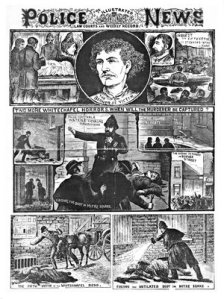 DNA tests appears may have identified Jack the Ripper.
It is the greatest murder mystery of all time, a puzzle that has perplexed criminologists for more than a century and spawned books, films and myriad theories ranging from the plausible to the utterly bizarre.
But now, thanks to modern forensic science, The Mail on Sunday can exclusively reveal the true identity of Jack the Ripper, the serial killer responsible for at least five grisly murders in Whitechapel in East London during the autumn of 1888.
DNA evidence has now shown beyond reasonable doubt which one of six key suspects commonly cited in connection with the Ripper’s reign of terror was the actual killer – and we reveal his identity.
A shawl found by the body of Catherine Eddowes, one of the Ripper’s victims, has been analysed and found to contain DNA from her blood as well as DNA from the killer.
The landmark discovery was made after businessman Russell Edwards, 48, bought the shawl at auction and enlisted the help of Dr Jari Louhelainen, a world-renowned expert in analysing genetic evidence from historical crime scenes.
Using cutting-edge techniques, Dr Louhelainen was able to extract 126-year-old DNA from the material and compare it to DNA from descendants of Eddowes and the suspect, with both proving a perfect match.
The revelation puts an end to the fevered speculation over the Ripper’s identity which has lasted since his murderous rampage in the most impoverished and dangerous streets of London.
A DNA sample has proven Polish immigrant Aaron Kosminski was Jack the Ripper. The owner of the shawl shares his story and the forensic and criminal research from the Ripper scenes.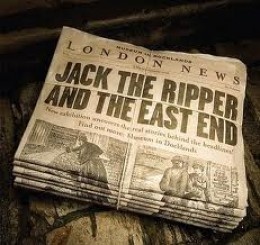
Before buying it, I spoke to Alan McCormack, the officer in charge of the Crime Museum, also known as the Black Museum. He told me the police had always believed they knew the identity of the Ripper. Chief Inspector Donald Swanson, the officer in charge of the investigation, had named him in his notes: Aaron Kosminski, a Polish Jew who had fled to London with his family, escaping the Russian pogroms, in the early 1880s.
Kosminski has always been one of the three most credible suspects. He is often described as having been a hairdresser in Whitechapel, the occupation written on his admission papers to the workhouse in 1890. What is certain is he was seriously mentally ill, probably a paranoid schizophrenic who suffered auditory hallucinations and described as a misogynist prone to ‘self-abuse’ – a euphemism for masturbation.
McCormack said police did not have enough evidence to convict Kosminski, despite identification by a witness, but kept him under 24-hour surveillance until he was committed to mental asylums for the rest of his life. I became convinced Kosminski was our man, and I was excited at the prospect of proving it. I felt sure that modern science would be able to produce real evidence from the stains on the shawl. After a few false starts, I found a scientist I hoped could help.
 A Pennsylvania mom is headed for prison for giving her daughter miscarriage-inducing pills. This is pretty much what you get when you make abortion difficult and expensive.
A Pennsylvania woman has been sentenced to up to 18 months in prison for obtaining so-called abortion pills online and providing them to her teenage daughter to end her pregnancy.
Jennifer Ann Whalen, 39, of Washingtonville, a single mother who works as a nursing home aide, pleaded guilty in August to obtaining the miscarriage-inducing pills from an online site in Europe for her daughter, 16, who did not want to have the child.
Whalen was sentenced on Friday by Montour County Court of Common Pleas Judge Gary Norton to serve 12 months to 18 months in prison for violating a state law that requires abortions to be performed by physicians.
She was also fined $1,000 and ordered to perform 40 hours of community service after her release. The felony offense called for up to seven years in prison and a $15,000 fine.
Matthew Bingham Banks, Whalen’s lawyer, previously told Reuters criminal prosecutions of this kind were not common.
Whalen told authorities there was no local clinic available to perform an abortion and her daughter did not have health insurance to cover a hospital abortion, the Press Enterprise newspaper of Bloomsburg reported.
Her daughter experienced severe cramping and bleeding after taking the pills and Whalen took her to a hospital near her home for treatment, the newspaper said.
The closest abortion clinic to Whalen’s home is about 74 miles away in Harrisburg.
The Pennsylvania case follows the prosecution of a Florida man who pleaded guilty to tricking his girlfriend into taking an abortion pill. He was sentenced in January to 13 years in prison and $28,500 restitution. In June, Florida toughened state law to allow for prosecutions in the death of non-viable fetuses.
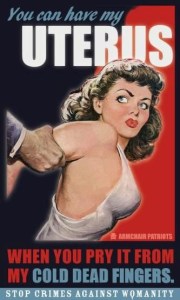 How can a chemically induced miscarriage be considered “performing” an abortion which sounds somewhat surgical to me? Suppose I will have to ask Doctor Daughter this question next time I talk to her.
Textbooks segregate twenty-five decades of enslavement into one chapter, painting a static picture. Millions of people each year visit plantation homes where guides blather on about furniture and silverware. As sites, such homes hide the real purpose of these places, which was to make African Americans toil under the hot sun for the profit of the rest of the world. All this is the “symbolic annihilation” of enslaved people, as two scholars of those weird places put it.2 Meanwhile, at other points we tell slavery’s story by heaping praise on those who escaped it through flight or death in rebellion, leaving the listener to wonder if those who didn’t flee or die somehow “accepted” slavery. And everyone who teaches about slavery knows a little dirty secret that reveals historians’ collective failure: many African-American students struggle with a sense of shame that most of their ancestors could not escape the suffering they experienced.
The truth can set us free, if we can find the right questions. But back in the little house in Danville, Anderson was reading from a list of leading ones, designed by white officials—some well- meaning, some not so well-meaning. He surely felt how the gravity of the questions pulled him toward the planet of plantation nostalgia. “Did slaves mind being called ‘nigger’?” “What did slaves call master or mistress?” “Have you been happier in slavery or free?” “Was the mansion house pretty?” Escaping from chains is very difficult, however, so Anderson dutifully asked the prescribed questions and poised his pencil to take notes.
Ivy listened politely. He sat still. Then he began to speak: “My mother’s master was named William Tunstall. He was a mean man. There was only one good thing he did, and I don’t reckon he intended to do that. He sold our family to my father’s master George H. Gilman.”
Perhaps the wind blowing through the window changed as a cloud moved across the spring sun: “Old Tunstall caught the ‘cotton fever.’ There was a fever going round, leastways it was like a fever. Everyone was dying to get down south and grow cotton to sell. So old Tunstall separated families right and left. He took two of my aunts and left their husbands up here, and he separated altogether seven husbands and wives. One woman had twelve children. Yessir. Took ‘em all down south with him to Georgia and Alabama.”
Pervasive separations. Tears carving lines on faces. Lorenzo remembered his relief at dodging the worst, but he also remembered knowing that it was just a lucky break. Next time it could’ve been his mother. No white person was reliable, because money drove their decisions. No, this wasn’t the story the books told.
So Anderson moved to the next question. Did Ivy know if any slaves had been sold here? Now, perhaps, the room grew darker.
For more than a century, white people in the United States had been singling out slave traders as an exception: unscrupulous lower-class outsiders who pried apart paternalist bonds. Scapegoaters had a noble precedent. In his first draft of the Declaration of Independence, Thomas Jefferson tried to blame King George III for using the Atlantic slave trade to impose slavery on the colonies. In historians’ tellings, the 1808 abolition of the Atlantic trade brought stability to slavery, ringing in the “Old South,” as it has been called since before the Civil War. Of course, one might wonder how something that was brand new, created after a revolution, and growing more rapidly than any other commodity-producing economy in history before then could be considered “old.” But never mind. Historians depicted slave trading after 1808 as irrelevant to what slavery was in the “Old South,” and to how America as a whole was shaped. America’s modernization was about entrepreneurs, creativity, invention, markets, movement, and change. Slavery was not about any of these things—not about slave trading, or moving people away from everyone they knew in order to make them make cotton. Therefore, modern America and slavery had nothing to do with each
When Cornell University professor Ed Baptist read The Economist review of his book on slavery, he knew that it would be a big deal. The review dismissed his work as “advocacy” because “all the blacks in his book are victims, almost all the whites villains.”
That characterization of his work, which attracted the most backlash from journalists and academics, was not entirely a surprise to Baptist, he told TPM on Friday. It is something he has heard in history circles before the reaction to his new book, “The Half Has Never Been Told.”
“I thought that was silly,” he said. “But I’ve been talking about this kind of stuff for a while in academic circles and public history circles, and it’s not uncommon for people to protest that I’m not being sensitive enough to the inner lives of enslavers.”
“On one level, I want to respond, ‘No, actually, I think I’m being very sensitive to it and I’m just unfurling these other sides to the story that are often left under the sheets as it were,'” he continued. “The point that other people have made that I think is so effective is that for me to write a book about the exploitation of enslaved people, by definition, is going to show enslaved people as the objects of all kinds of victimizing processes and, on the other hand, enslavers as the agents of those processes.”
The Economist did apologize and withdraw the review, though Baptist said he believed the magazine had only apologized for the last line on “victims” and “villains.” Another bit of the review, which questioned the reliability of ex-slaves in relating experiences under slavery, struck him as “blatantly racist.”
“One thing that really did aggravate me about the review was this suggestion and this sort of implicit argument that ex-slaves had some sort of vested interest and are unreliable reporters on what actually happened,” he said. “That is such an old struggle when you’re talking about the history of slavery, the constant undermining of testimony from survivors.”
“That was not apologized for,” he said, “and that was I thought blatantly racist, blatantly something that you would have heard in the 1850s or something like that.”
It’s amazing to me that we still have such a profound level of racism in the world and in this country. Of course, the sexism overwhelms me too. I’m trying to be much more aware of the idea of swimming in privilege.
So, hopefully this little thread will get you to share what you’re reading and blogging today.

 peej
peej Carissa
 bostonboomer
 dakinikat
 ecocatwoman
 mablue2
 Mama Lopez
 peggysue22
 quixote
 skydancingguestblogger
 Mona (aka Wonk the Vote)



 Sky Dancing
Recent Comments