
Finally Friday Reads: Think and Vote Local and Global
Posted: July 7, 2023 Filed under: 2024 presidential Campaign | Tags: All Politics is Local!!!, defunding public education, Plan Your Vote!, State level line item veto, women's reproductive rights 16 Comments Good Day, Sky Dancer!
There’s always been a debate within the belief communities that embrace karma concerning its application to a group of people, a nation-state, or perhaps, even a global community. I’ve always been on the side that embraces something akin to the psychological concept of gestalt. That is the idea that “an organized whole that is perceived as more than the sum of its parts.”
Sometimes, you have to make the parts matter.
While mainstream America was complacent and asleep, a group of radical right Republicans began scheming a way to shape the courts and state government bodies into entities where they could capture American Laws. It took a manic form in the 90s. Now, just as the states began sending lawsuits up to courts packed with their minions, it appears other states are using means to put their states back on track to normalcy and constitutional law.
You can see the struggles clearly if you watch the headlines from state to state. It’s clearest in the so-called culture war issues. Blue state governors and citizens are finding legal ways to bypass the Supreme Court by changing their state laws or using the tools they’ve already been given. This is driving the right-wingers crazy, so they are now looking for more Federal intervention to save their crusades.
Here are two examples where Governors from the Democratic Party are using their line-item veto creatively. The first to do this was Governor Gretchen Whitmer of Michigan in 2019.
“The Republican budgets were a complete mess, and today I used my executive powers to clean them up to protect Michiganders,” said Governor Whitmer. “The state’s budget is a reflection of our values, and make no mistake that public health and safety, access to health care, and protecting classroom spending is more important than handouts to lobbyists and vendors.”
The governor of Wisconsin brilliantly got the Republicans in the state to go along without knowing the final intention. This is from VOX. “How Wisconsin’s governor bested the GOP and secured education funding for 400 years.” This is reported by Li Zhou.
This week, Wisconsin’s Democratic Gov. Tony Evers made key changes to the state budget passed by the Republican-controlled legislature, slashing GOP tax cuts and guaranteeing education funding increases for the next 402 years. It was a staggering maneuver that follows years of battles between Evers and GOP lawmakers. And it’s one that highlights how a Democratic state leader can use singular executive powers to combat a legislature dominated by Republicans.
Evers pulled these changes off by leveraging a tool known as the line-item veto, a power granted to governors in 44 states, which allows them to veto parts of a budget bill instead of the entire measure. Wisconsin, in particular, gives governors “uniquely powerful” line-item veto authorities for appropriations bills that allow them to target “sentences, words or in some cases even a single character or digit,” according to WisContext’s Will Cushman.
Evers made full use of this power when changing a phrase that increased funding for the “2023–24 school year and the 2024–25 school year” to the “2023–2425” school years by vetoing parts of that sentence. On Wednesday, Evers signed the new $99 billion budget, which will span the next two years, into law.
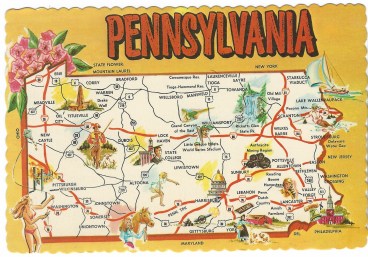 A similar move happened in Pennslyvania. This is from Spotlight Pennslyvania. “Pa. Gov. Shapiro says he will scrap school vouchers in end-run on Senate Republicans.” This time Democratic members of the state’s legislature tanked the deal. See what happens when we actually fight back?
Gov. Josh Shapiro says he plans to scrap his push for private school vouchers in Pennsylvania’s state budget in order to close a deal with the commonwealth’s divided legislature five days after the deadline.
The Democrat issued a statement Wednesday acknowledging that talks had deadlocked over a $100 million voucher program, which he had supported and which state Senate Republicans passed as part of their budget proposal last week. Pennsylvania House Democratic leaders oppose vouchers and had refused to act on the Senate’s bill.
Shapiro’s solution, he said, was to promise state House Democrats that if they pass the Senate’s budget, he will then line-item veto the vouchers from the $45.5 billion spending plan.
“Our Commonwealth should not be plunged into a painful, protracted budget impasse while our communities wait for the help and resources this commonsense budget will deliver,” Shapiro said in a statement.
See, elected officials from the Democratic Party can hold up a budget too.
 Catch this move by Arizona’s governor Katie Hobbs. This is from NPR via the AP. “Arizona governor approves over-the-counter contraceptive medications at pharmacies.” Aren’t you happy that Kari Lake got “a couple of bucks and a one-way ticket to Palookaville,” i.e., Maralardo?
Adults in Arizona can now obtain contraceptive medications over the counter at a pharmacy without a doctor’s prescription under a governor’s order announced Thursday.
Gov. Katie Hobbs said the rule will go into effect immediately. It applies to self-administered birth control such as hormonal and oral contraceptives, and patients 18 or older need only complete a screening and a blood pressure test.
“We are building an Arizona for everyone, which means ensuring people across the state have what they need to live a free and healthy life,” the Democratic governor said in a statement.
Over 20 states have statutes that let pharmacists dispense FDA-approved hormonal contraceptives without a prescription, according to a statement from the Arizona Department of Health Services.
Hobbs has used her executive powers in recent weeks to promote reproductive freedom. In June she issued a sweeping executive order effectively stripping prosecutors of their ability to pursue charges against anyone involved with a legally obtained abortion.
 Meanwhile, Ohio voters take matters into their own hands just like Kansas did last year. This is from the New York Times. “Ohio Moves Closer to Ballot Issue That Would Protect Abortion Rights. Supporters of protecting abortion in the state’s Constitution submitted enough signatures to get on the November ballot. But another vote in August could make it harder to win.” This is reported by Kate Zernike.
Ohio moved one step closer to becoming the next big test case in the nation’s fight over abortion, after supporters of a measure that would ask voters to establish a right to abortion in the state’s Constitution this week said they had filed more than enough signatures to put it on the ballot in November.
Ohioans United for Reproductive Rights said on Wednesday that it had collected roughly 710,000 signatures across all of the state’s 88 counties over the last 12 weeks. Under state law, the coalition needed 413,466 to qualify for the ballot. State election officials now have until July 25 to verify the signatures.
Supporters of abortion rights are turning to ballot measures in the aftermath of the ruling last year by the United States Supreme Court overturning Roe v. Wade, which for 50 years had guaranteed a right to abortion in the federal Constitution. They are betting on polls showing that public opinion increasingly supports some right to abortion, and opposes the bans and stricter laws that conservative state legislatures have enacted since the court’s decision.
Voters in six states, including conservative ones such as Kentucky and Kansas, voted to protect or establish a right to abortion in their constitutions in last year’s elections, and abortion rights advocates in about 10 other states are considering similar plans.
 Meanwhile, we have to remember that School Boards and the State Superintendent of Schools’ position is crucial. Checking down-ballot in your state is as important as voting for President. This is shameful. This is from Raw Story and was written by Mattew Chapman. “
Far-right Oklahoma State Superintendent Ryan Walters suggested at a public hearing in Norman that lessons about the infamous racial massacre that destroyed the most prosperous Black community in Oklahoma don’t have to mention race, reported Fox 25 News.
“The Cleveland County Republican Party invited him to speak at the Norman Central Library. The room was packed with many unhappy Oklahomans, making for an hour of chaos,” reported David Chasanov.
“It doesn’t matter how much the radical left attacks me,” Walters told the crowd. ‘It doesn’t matter how much the teachers union spends against me. I will never stop speaking truth.”
However, things got tricky for Walters when someone asked him if teaching about the infamous “Black Wall Street” massacre in the city of Tulsa would be banned under his restrictions on teaching “Critical Race Theory.”
“Let’s not tie it to the skin color and say that the skin color determined that,” Walters replied.
The Tulsa massacre was an act of racial mass terrorism in 1921 that destroyed the Greenwood District of Tulsa, a nationally-renowned prosperous community nicknamed “Black Wall Street.” After a 19-year-old Black shoeshiner named Dick Rowland was arrested on trumped-up charges for allegedly assaulting a white elevator operator named Sarah Page, white residents of Tulsa rioted, looting and burning down the Greenwood District. Roughly 300 people were killed, and when the National Guard was sent in, the Black residents were arrested by the thousands.
 Meanwhile, down here in Lousyana, our Democratic Governor John Bel Edwards put his personal religion above the health of women. My tax dollars will support pregnancy propaganda centers. This is from the Louisiana Illuminator and was reported by Julie O’Donohue. “Tax credit approved for donors to Louisiana anti-abortion centers.” I’d like to challenge this one as going against many of our religious views. Wonder if the ACLU is up to it?
“Gov. John Bel Edwards signed a new tax credit for donors to anti-abortion crisis pregnancy centers into law last week – about a year after Louisiana put a near-total ban on abortion in place.
Donors to the organizations, which have been renamed maternal wellness centers in the state law, will be able to benefit from $30 million worth of income tax breaks that will be issued from 2025 through 2030.
A donor will be able to claim an income tax credit equal to 50% of their contribution to a center or 50% of their total state income tax liability in the year the contribution was made, whichever is lower.
The total amount of tax credits that can be given out will be generally limited to $5 million per year, except that credits from years where the $5 million maximum is not reached can be rolled forward and made available in subsequent years.
If the $5 million is maxed out early in a given year, then donors who weren’t able to receive a credit that year are put to the front of the line for getting the tax break in the following year. No one center is allowed to benefit from more than 20% of the tax credits made available, according to the law.
Anti-abortion groups pushed for the law sponsored by Senate President Pro Tempore Beth Mizell, R-Franklinton.
“It is critical for the pro-life movement to find every avenue to support Louisiana mothers, whether that be through private or public resources,” said Ben Clapper, executive director of Louisiana Right to Life, one of the state’s large anti-abortion advocacy organizations.
“We believe this important law permitting Louisiana citizens to receive a tax credit when they donate to a maternal wellness center will strengthen resources for families,” he said.”
Mizell, in hearings during the legislative session, said she thought the centers could help improve women’s health in Louisiana.
Here’s the deception. This will undoubtedly include child trafficking (i.e., coerced letting babies go up for adoption).
Donors to the organizations, which have been renamed maternal wellness centers in the state law, will be able to benefit from $30 million worth of income tax breaks that will be issued from 2025 through 2030…
 Everyone is waiting to see if it is possible for the AG of Colorado to take on the Supreme Court in that Fake Wedding Planner Case. Neal Katyal suggested it was possible. Other Legal Scholars do not think it is possible. This is from Salon. “Legal scholars: SCOTUS can’t be forced to reconsider “made-up” case — but lawyers can be punished. Professors push back on ex-solicitor general’s claim that SCOTUS can be compelled to reexamine 303 Creative cases”
But legal scholars pushed back on Katyal’s argument.
“I think this is a nonstarter,” former U.S. Attorney Barb McQuade, a University of Michigan law professor, told Salon. “The Court glossed over standing in this case because a plaintiff is permitted to make a facial challenge to a law on the ground that yet violates the First Amendment.”
“If the allegations about fabrication are true, then the lawyers may have an ethics problem to address with their state bar, but it will not affect the outcome of the case,” McQuade added.
Leah Litman, a law professor at the University of Michigan, told Salon that parties are “free to file a motion for reconsideration or rehearing,” but ultimately, it will be up to the court to decide whether to do anything about it.
“Attorneys are subject to judicial discipline & discipline from bar organizations if they lie to the court,” Litman said.
Longtime Harvard Constitutional scholar Laurence Tribe told Salon that Katyal “certainly knows that no state attorney general has any such authority,” adding that he doesn’t take Katyal literally when he suggests that.
“But it would be a mistake to let that obscure the central fact that the entire case was based on entirely hypothetical ‘worries’ that the web designer claimed to have about how the state’s officers might come after her under the state anti-discrimination laws if a same-sex couple were to ask her to design a wedding site for them and if she were to refuse,” Tribe said. “In my view, the disgraceful fact, which in no way depends on the falsity of the allegations about the fellow who supposedly asked Lorie Smith to design a website for a same-sex wedding, is the very fact that the Supreme Court’s majority was willing to render what amounted to an advisory opinion that it would never have done but for its eagerness to denigrate same-sex marriage and LGBTQ rights generally and that, under Article III, it had no business doing.”
There are 486 days to the next President Election. Be sure to check your state’s primaries, and carefully choose all the candidates from POTUS to your dog catcher. It can make a difference.
What’s on your reading and blogging list today?
Friday Reads
Posted: May 8, 2015 Filed under: morning reads | Tags: Bobby Jindal, defunding public education, higher education, Louisiana, public universities, student debt 11 CommentsGood Morning!
I’m trying to get grades in so this will be super short. One of the most worrying trends to me is the disinvestment in public education. An important study was released that shows that a college education must be funded primarily by students or their families. I’ve believed for some time that getting rid of higher education was a goal of many conservative politicians because an educated person is a clear and present danger to despots. First, I’d like to share the study and a few articles written about it. Then, I’ll show you how that’s been brought to fruition here in Louisiana by Bobby Jindal and his slavish relationship to Grover Norquist whose goal in life is to shrink government so you can drown it in a bathtub.
I think this study and its findings are important because the incredible increase in standards of living that came about during the 1950s and 1960s was partially due to the GI Bill and the opportunity it provided to so many poor and working class men to attend college. Education is a path to better jobs and to smarter voting electorate. It’s necessary for a functioning democracy.
As a result of this sharp decrease in state funding, more than half of education and related expenses at public universities is now paid by students’ tuition.
“Public higher education in this country no longer exists,” said Hiltonsmith. “Because more than half of core educational expenses at ‘public’ 4-year universities are now funded through tuition, a private source of capital, they have effectively become subsidized private institutions. To eliminate the pile of debt that most students must now borrow just to finance their education, we need comprehensive policy reform that views higher education as a necessity.”
The study finds that decreases in state funding to their public universities represents the overwhelming reason why tuition is so high and why so many students have to take huge student loans to facilitate their education.
Commitment to public education has been an American social contract for quite some time. I can’t help but think that it’s actually part of a bigger plot to privatize as much as possible and to further close the path of upward mobility.
A new Demos report, Pulling Up the Higher Ed Ladder: Myth and Reality in the Crisis of College Affordability by Demos Senior Policy Analyst Robbie Hiltonsmith, finds that declining state support was responsible for nearly 80 percent of the rise in net tuition between 2001 and 2011. Examining public university revenue and spending data, he determines that rising costs for instruction and student services is responsible for much of the remainder, largely due to growing healthcare costs. Hiltonsmith also disproves the theory that colleges are spending beyond what is necessary to support their core academic functions, commonly known as administrative bloat. Increased spending on administration accounted for only six percent of tuition hikes.
“While administrative bloat is a popular theory, the data shows otherwise,” said Hiltonsmith. “This myth is not only blatantly untrue, but takes attention away from the real problem: states aren’t investing in their students. Instead, they’re saddling them with crippling, life-long debt.”
Research institutions employ just seven more staff per thousand students than they did since 1991, and 17 fewer than in 2001. The relative number of full-time faculty has remained constant and the number of executives and administrators has decreased relative to the size of the student body. New technology needs explain much of the increase in professional staff. However, universities have also shifted to employing more adjunct professors as a cost-cutting measure, a problematic trend whose effects have been well-documented.
I put this study downthread in yesterday’s post. NW Luna provided a link to the situation in Washington State–a liberal blue state–that has not bucked the trend.

The cost of educating a student at the University of Washington is about $400 less today, in inflation adjusted dollars, than it was 20 years ago. As executives and directors of large business and philanthropic organizations in Washington state, our board members can attest that this could not have happened without a strong commitment to efficiency and cost control.
The next time anyone questions why public university tuition is rising faster than inflation, remember this: Twenty years ago, the state government paid 80 percent of the cost of a student’s education and a student paid 20 percent. Today, the state pays 30 percent of the cost, and the student pays 70 percent. The state has systematically disinvested in our children’s future, and we view this trend with disappointment and alarm.
We truly appreciate the hard work of the governor, the Legislature and many others who work in the business, civic and education communities who this year helped put a halt to further cuts in public higher education and gave us the tools and flexibility needed to help us manage through the current crisis. However, losing half of our state funding over just a few years has radically and unduly shifted the burden of financing the higher-education system to students, who are taking on more and more family and personal debt. This debt load restrains the ability of many Washingtonians to fully pursue life’s opportunities.
Public higher education is an essential ingredient of a functioning democracy and a healthy economy, but the current financial model for its funding is broken and not sustainable. If Washington is to maintain affordable access to quality higher education for its citizens, something has to change.
 Louisiana is leading the pack in basically shutting down its universities. Governor Bobby Jindal’s fiscal mismanagement of the state has left all of its institutions of higher education in desperate straights. At this writing, nearly every university in the state is on its way to financial exigency which is basically bankruptcy for a public entity. Yet, this is a time when more educated workers are necessary.
F. King Alexander, the president of the Louisiana State University system, said Louisiana State (LSU) would consider declaring financial exigency—the equivalent of bankruptcy for academic institutions. And Alexander said as many as a dozen campuses throughout Louisiana could ultimately have to do the same.The cutbacks would mean an uncertain fate for all of the roughly three-dozen institutions within the state’s four university “systems,” including Louisiana state’s 10 campuses, the University of Louisiana’s nine, and 14 community and technical colleges. These institutions serve roughly 260,000 students total.
Declines in per-student legislative appropriations for public higher-ed institutions are almost ubiquitous across the U.S., a trend that traces back to the recession. Though levels have started to bounce back in recent years, the average state’s per-student allocation is still 23 percent less than it was before the economy took a hit. Generally, the federal government and taxpaying students end up shouldering that cost. Meanwhile, according to 2012 data, students are for the first time in years covering a larger chunk of their college tuition than their state governments are.
“States are getting out of the public higher-education business,” Alexander told me. Alexander, a vocal advocate for stronger state investment in higher ed, says he’s optimistic that the legislature will somehow cobble together a solution. (It has until June 11, when Louisiana’s legislative session ends.) But even if lawmakers pass measures that would offset most of the shortfall, including a number proposed by Jindal, state higher-ed funding would still be cut by 32 percent, Alexander said.
By 2025 six in 10 adults in the U.S., according to one report, will have to have a postsecondary credential if the country is to maintain its economic edge. But if current trends continue over the next few decades, most state university systems would soon lose all funding from their states. A new analysis by the Pell Institute predicts that, assuming trends persist, in 2025 Colorado would become the first state to allocate zero funding to higher ed; Iowa would follow in 2029, then Michigan (2030), then Arizona (2032). Louisiana (2027) would be No. 2 on the list—if the deficit is miraculously eliminated this year. Otherwise, according to King, even a 32 percent reduction would put Louisiana in front of Colorado. Most states wouldn’t appropriate any university funding by 2050.
Louisiana’s universities are the canaries in a bigger coal mine. It should serve as a warning to any one who cares about access to higher education for all.
So, I’m going back to grading and I leave this as an open thread for you.
What’s on your reading and blogging list today?

 peej
peej Carissa
 bostonboomer
 dakinikat
 ecocatwoman
 mablue2
 Mama Lopez
 peggysue22
 quixote
 skydancingguestblogger
 Mona (aka Wonk the Vote)



 Sky Dancing
Recent Comments