
Friday Reads: Cold Weather Distractions
Posted: December 27, 2013 Filed under: morning reads | Tags: Abe Visit, austerity, bizarre Victorian/Edwardian things, Charles Burchfield, Dickens' Christmas Carol, Yasukuni Shrine 32 Comments Good Morning!
I’ve been trying to find some distractions recently. I’m going through one of those periods where I’d rather hole up and not see what’s going on around me. I’ll snap out of it once we’re passed 12th night and the carnival season ramps up. It’s difficult to ignore random parades and continual parties. I love the season up until about the last two weeks when the tourists come and the celebration becomes less personal and a lot more fake.
So, here’s a few things to keep you distracted.
An equation familiar to anyone who’s sat through a few old episodes of Tom and Jerry. Women + Mice = localised uproar. It’s a sexist old TV trope, of course, but it played out for real in England in 1875, when a mouse dashed suddenly on to a work table in a south London factory.
Into the general commotion which followed, a gallant young man stepped forward and seized the rodent. For a glorious moment, he was the saviour of the women who’d scattered. It didn’t last. The mouse slipped out of his grasp, ran up his sleeve and scurried out again at the open neck of his shirt. In his surprise, his mouth was agape. In its surprise, the mouse dashed in. In his continued surprise, the man swallowed.
“That a mouse can exist for a considerable time without much air has long been a popular belief and was unfortunately proved to be a fact in the present instance,” noted the Manchester Evening News, “for the mouse began to tear and bite inside the man’s throat and chest, and the result was that the unfortunate fellow died after a little time in horrible agony.”
When basic staples like bread started to be produced cheaply and in large quantities for the new city dwellers, Victorian manufacturers seized on the opportunity to maximise profit by switching ingredients for cheaper substitutes that would add weight and bulk. Bread was adulterated with plaster of Paris, bean flour, chalk or alum. Alum is an aluminium-based compound, today used in detergent, but then it was used to make bread desirably whiter and heavier. Not only did such adulteration lead to problems of malnutrition, but alum produced bowel problems and constipation or chronic diarrhoea, which was often fatal for children.
Aren’t you a little more appreciative of government regulations and inspections now? Well, there’s a lot of defunding of basic public goods going on. Here’s one weird little story.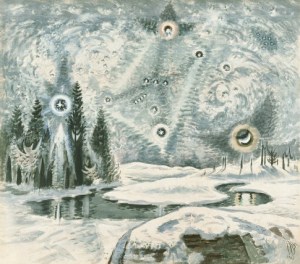
A small town in Oregon has become the victim of so much austerity that it’s police department has become completely dysfunctional. So, they’re relying on private posses now. That sounds like a town that some one like George Zimmerman would just love.
The North Valley Community Watch (NVCW,) a private volunteer public safety group in northern Josephine County, has announced plans to attempt to “fill the gaps” left in law enforcement, which have come about as a result of recent budget cuts related to the ongoing deficit reduction. The group, of which many of it’s members perform their self assumed law enforcement support roles armed, are expanding on the duties more typically performed by community watch organizations, by actively responding to calls as police might normally. Following the end to federal subsidies which sought to promote timber harvesting while balancing the costs derived from their own environmental regulations, the largely rural Josephine County found itself facing a revenue crisis similar to many going on throughout the nation. After a vote seeking to raise revenues failed, the Sheriff’s office released as statement announcing that it would only be able to respond to “life threatening situations” and went on to advise that those who feared they were in danger to consider relocating. In response, former Sheriff’s Deputy Ken Selig, who lost his position as a result of the cuts, formed the NVCW with friend Pete Scaglioni. In addition to the standard patrols and flier circulations that community watch groups are know for however, Selig and Scaglioni are looking now to take neighborhood watch duties to the next level by creating a “response team” of, sometimes armed, civilian first responders to respond to burglaries and other suspected crimes. While the effort of private citizens to assume public duties in the absence of sworn law enforcement personnel is admirable, many, including County Commissioner Keith Heck, are worried that the forming of private posses like these could lead to “aggressive” behavior and dangerous situations.
 The Cleveland Public Library has discovered a lost first edition of Dickens’ “A Christmas Carol”.
Cleveland librarian Kelly Brown had far more modest plans when she first began collecting items for a holiday traditions display at the Cleveland Public Library. But when she began poking around the stacks, she stumbled on a fairly unexpected Yuletide surprise: a first-edition copy of Charles Dickens’ A Christmas Carol.
The leather-bound book, donated at one point but soon forgotten about, is one of only 6,000 first-run copies printed on Dec. 17, 1843. At the time, it cost a modest 5 shillings. In the last few years, first editions have sold at auction for several thousand dollars.
The newly discovered first edition may have been too valuable to make it into the library’s final display, but curious visitors can go visit the rare book in the library’s special collections department. “The Cleveland Public Library is a library, not a museum, so you actually could come here and sit with it if you wanted to,” Brown told Cleveland’s Fox 8.
The relations between the Japanese and Chinese have not been good recently. Japanese PM Abe has visited a shrine to Japanese soldiers from World War 2 that has them really upset. It’s also upset the Koreans. So, what’s the deal?
Japanese Prime Minister Shinzo Abe’s visit to the Yasukuni Shrine has enraged the Chinese and South Korean governments and ignited – no surprise – a firestorm of protest across Asia. The shrine, which honors more than a thousand indicted war criminals who took part in Japan’s disastrous war in Asia, remains a place of fascination for Japanese rightists, who persist in claiming that Japan’s war in Asia was a war of liberation against Western imperialism.
This claim sounds particularly hollow in China and Korea, which suffered horrifically from Imperial Japan’s invasion and occupation of much of Asia. Yet there has always been a jarring element in official Chinese protests against the Yasukuni Shrine visits. Such visits are condemned as insensitive to the feelings of the Chinese people. But, just as Japanese conservatives are rightly taken to task for refusing to acknowledge the horrors of their country’s colonialist past, so China would do well to expand discussion of its own wartime history at home.
For many decades, under Mao Zedong, the only acceptable version of China’s wartime experience was that the Chinese Communist Party (CCP) spearheaded the resistance against the Japanese, honing its armies while preparing one of the world’s most significant social revolutions. Meanwhile, China’s Nationalist (Kuomintang) government under Chiang Kai-shek, weakened by incompetence and corruption, did little to oppose the Japanese.
Yet, in recent years, research from China itself has shown the enormous scale and cost of the war against Japan. Fourteen million or more Chinese were killed from 1937 to 1945, and 80-100 million became refugees. And the invasion destroyed China’s roads, railways, and factories.
But other significant changes also began to occur during that period. As the bombs fell on China’s wartime Nationalist capital, Chongqing, the social contract between state and society became more important. The state demanded more from its people, including conscription and ever-higher taxes; but the people also began to demand more from their government, including adequate food provision, hygiene, and medical care. To understand why the war changed China so profoundly, historians had to move away from treating the 1937-1945 period as a simple story of an inevitable Communist victory.
Thus, in the last two decades, China has started remembering its own war history anew.
That’s the background, here’s the current controversy.
Chinese newspapers rounded on the Japanese prime minister, Shinzo Abe, on Friday, describing his visit to the Yasukuni war
dead shrine as “paying homage to devils” and warning that China had the ability to crush “provocative militarism”.
On Thursday Abe visited Yasukuni, where Japanese leaders convicted as war criminals by an Allied tribunal after the second world war are honoured along with those who died in battle. The move has infuriated China and South Korea, both of which were occupied by Japanese forces until the end of the war, and prompted concern from the United States about deteriorating ties between the Asian neighbours.
In an editorial headlined “Abe’s paying homage to the devils makes people outraged”, the People’s Liberation Army Daily said Abe’s actions had “seriously undermined the stability of the region”.
“On one hand, Abe is paying homage to war criminals, and on the other hand he talks about improving relations with China, South Korea and other countries,” the newspaper said. “It is simply a sham, a mouthful of lies.
“Today, the Chinese people have the ability to defend peace and they have a greater ability to stop all provocative militarism.”
In a separate commentary published under the pen name Zhong Sheng, or “voice of China”, the Communist Party’s People’s Daily said: “History tells us that if people do not correctly understand the evils of the fascist war, cannot reflect on war crimes, a country can never [achieve] true rejuvenation.”
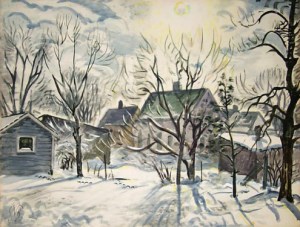
I decided to feature the artwork of Charles Burchfield. Some of his paintings of winter scenes are really fanciful. I’ve always been fascinated by his work. Many of his paintings of trees and nature look like images of natural cathedrals.
Charles Burchfield was one of the most inventive American artists of the twentieth century. Throughout most of his career, watercolor was his medium of choice, sometimes used in combination with gouache, graphite, charcoal, conté crayon, chalk, or pastel. During Burchfield’s lifetime three major periods in his work were generally acknowledged: an early period dating from roughly 1915 to 1921 when landscape was often treated in metaphysical, fantastic ways; a middle period dating from the early 1920s to the 1940s when realism reigned; and a late period which marked a return to a transcendental, mystical perspective. Some recent scholarship has challenged this view, emphasizing instead qualities evident throughout Burchfield’s entire career: his consistent aesthetic and cultural point of view, his desire to work from familiar surroundings, and the deep personal symbolism of his works, which probed the mysteries of nature in an attempt to reveal his inner emotions.
So, that’s a little bit of the bizarre news from me. What’s on your reading and blogging list today?
Oh, and here’s a little music for our Republican Friends: Fitz and the Tantrums doing “Money Grabber” in honor of them stealing food from children and unemployment insurance from the long term jobless during their sacred Christmas Season. I’m still looking for the part in the new testament where Jesus said starve the hungry and fuck little children. I must have a bad copy or something. Oh, and ending benefits will actually cost us more in economic activity than it will save us in deficit spending. You’re a bunch of mean one’s Republican Grinches!

 peej
peej Carissa
 bostonboomer
 dakinikat
 ecocatwoman
 mablue2
 Mama Lopez
 peggysue22
 quixote
 skydancingguestblogger
 Mona (aka Wonk the Vote)



 Sky Dancing
Recent Comments