
Monday Reads
Posted: January 21, 2013 Filed under: morning reads | Tags: Barrack Obama, Martin Luther King, Obama inauguration 68 Comments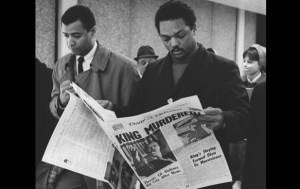 Good Morning!Today is the day we remember Martin Luther King and it’s the day for the formal inauguration ceremony for President Barack Obama.
John Nichols–writing at The Nation–believes that “This President Can—and Must—Claim a Mandate to Govern“.
With his second inauguration, Barack Obama will become the first president since Dwight Eisenhower to renew his tenure after having won more than 51 percent of the vote in two consecutive elections.
More importantly, in a political sense, he will be the first Democrat since Franklin Delano Roosevelt to have won mandates from the majority of the American people in two consecutive elections.
This is the perspective that Americans should bring to the inaugural festivities. We should expect a great deal from Barack Obama. Despite four years of battering by Fox and Limbaugh and the Tea Party and Mitch McConnell, he has been re-elected with a higher percentage of the popular vote than John Kennedy in 1960, Richard Nixon in 1968, Jimmy Carter in 1976, Ronald Reagan in 1980, Bill Clinton in 1992 or 1996 or George Bush in 2000 or 2004.
Obama’s mandate extends beyond himself. His party has increased its Senate majority and Democrats earned 1.4 million more votes in House races than Republicans. Gerrymandering and money kept Republican control of the House, but that opposition party is in such disarray that the president really does have an opening to make something of his mandate.
Obama must seize that opportunity as an essential part of making the case for bold executive orders and a bold legislative agenda that will bring not just the hope but the change he promised in what now seems like a very distant 2008 campaign. The president has in the transition period since the 2012 election displayed a willingness to push harder, to go bigger, and it has yielded significant progress not just on gun-safety issues but in the long struggle against the Republican austerity agenda that makes a diety of deregulating away consumer and environmental protections, tearing the social safety net and cutting taxes for wealthy campaign donors.
To consolidate that progress, and to assure that his second term will be as visionary and activist as his 2012 campaign promised, Obama must, like FDR, use every opportunity to give voice to the agenda- not just in his inaugural address but in his February 12 (Lincoln’s Birthday) State of the Union address.
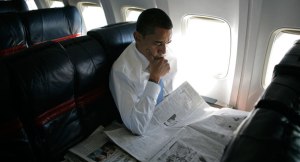
Many things have become political footballs these days. The bodies, abuse, and rape of women. The idea that taxpayer money should be used to support religious indoctrination or profiting from educating our children. Even Science, so much at the center of a lot things we were proud of in the 20th century,has become political. Are there any dangers in this? Dr. Puneet Opal presents his case at The Atlantic.
Over the past few years, and particularly in the past few months, there seems to be a growing gulf between U.S Republicans and science. Indeed, by some polls only 6 percent of scientists are Republican, and in the recent U.S. Presidential election, 68 science Nobel Prize winners endorsed the Democratic nominee Barack Obama over the Republican candidate Mitt Romney.
As a scientist myself, this provokes the question: What are the reasons for this apparent tilt?
Some of this unease might be because of the feeling that the Republicans might cut federal science spending. The notion is certainly not helped by news-making rhetoric of some Republicans against evolution in favor of creationism; unsubstantiated claims that immunization aimed at preventing future cervical cancer cause mental retardation in young girls; and unscientific views of how the female body can prevent pregnancies under conditions of rape.
These comments might represent heartfelt beliefs of the leaders in question; however, some might simply be statements designed to placate the anti-science sections of their base, as part of the political calculus.
A recent opinion in the leading science journal Nature, written by Daniel Sarewitz, a co-director of the Consortium for Science Policy and Outcomes at Arizona State University, suggests that this polarization of scientists away from the Republicans is bad news. Surprisingly — as he tells it — most of the bad news is the potential impact on scientists. Why? Because scientists, he believes — once perceived by Republicans to be a Democratic interest group — will lose bipartisan support for federal science funding. In other words, they will be threatened with funding cuts. Moreover, when they attempt to give their expert knowledge for policy decisions, conservatives will choose to ignore the evidence, claiming a liberal bias.
The comments of Sarewitz might be considered paranoid thinking on the part of a policy wonk, but he backs up his statement by suggesting a precedent: the social sciences, he feels, have already received this treatment at the hands of conservatives in government by making pointed fingers at their funding. Therefore he says that a sufficient number of scientists must be seen to also support Republicans for the sake of being bipartisan. To be fair to Republicans, no politician has actually targeted science funding in this vindictive manner. But this assessment only goes to show how science is quickly becoming a political football.
I would argue that this sort of thinking might well be bad for scientists, but is simply dangerous for the country. As professionals, scientists should not be put into a subservient place by politicians and ideologues. They should never be felt that their advice might well be attached to carrots or sticks.
Democratic Economists outnumber Republicans by 2.5 to 1. No wonder many Republicans home school their children and use specious textbooks.
The President was sworn in quietly on Sunday on the day mandated by the Constitution.
With only his family beside him, Barack Hussein Obama was sworn into office for a second term on Sunday in advance of Monday’s public pomp, facing a bitterly divided government at home and persistent threats abroad that inhibit his effort to redefine America’s use of power.
It was a brief and intimate moment in the White House, held because of a quirk of the calendar that placed the constitutionally mandated start of the new term on a Sunday.
But the low-key event seemed to capture tempered expectations after four years of economic troubles and near-constant partisan confrontation. And it presaged a formal inauguration on Monday that will be less of a spectacle than the first one, when the nation’s first black president embodied hope and change for many Americans at a time of financial struggle and war.
For Monday’s festivities, with the traditional parade, balls and not least the re-enacted swearing-in outside the Capitol, there will be fewer parties and fewer people swarming the National Mall; organizers expect less than half the 1.8 million people who flocked to the city last time.
Once the parties end, Mr. Obama’s second-term challenges are formidable, not least given his ambitious priorities of addressing the national debt, illegal immigration and gun violence.
The economy, while recovering steadily, remains fragile. The unemployment rate is as high as it was in January 2009, though it is down from the 10 percent peak reached late that year, and there is no consensus with Republicans about additional stimulus measures — or virtually anything else.
And as the terrorist attack in Algeria last week illustrated, Mr. Obama continues to confront threats around the globe, both from state actors like Iran and North Korea and from Qaeda-inspired extremists seeking to exploit power vacuums in the Mideast and across Africa and Asia.
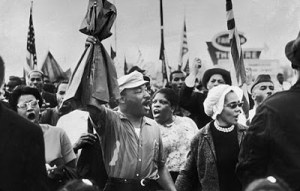
It’s been 50 years since Dr. Martin Luther King delivered his “I’ve Got a Dream” Speech.
The speech he delivered the next day — Aug. 28, 1963 — rocked the nation, as King challenged America to live up to the ideas of justice and equality it professed to cherish.
Fifty years later, the “I Have A Dream” speech is still widely regarded as the most powerful and significant speech of the 20th Century.
As the nation celebrates King’s birthday today, the speech itself is being remembered and celebrated in Detroit — which got the first glimpse of the speech — and across the nation.
King speechwriter Clarence B. Jones, who was one of those advisers on the speech, will be the featured speaker at a program today in Ann Arbor and two programs open to the public in Detroit on Tuesday.
Jones, scholar in residence at the Martin Luther King Jr. Research & Education Institute at Stanford University, helped draft parts of the speech and was on stage with King when he delivered it in Washington.
Jones believes the riveting crescendo of the speech was God-given.
He said he remembers gospel singer Mahalia Jackson, also on stage, telling King, “Tell them about the dream, Martin. Tell them about the dream,” said Jones during a recent telephone conversation. “He pushed the written text aside and started speaking from the heart. It was like he had become possessed, like someone had taken over his body. It was electrifying.”
It wasn’t just what he was saying, but the powerful delivery that stirred the nation’s moral conscience, Jones said.
“The speech tapped into the very core values of who we were supposed to be as a country,” Jones said. “He was speaking prophetically about what America could be if it lived out the principles of the Declaration of Independence. Everybody who heard it, black or white, segregationists or integrationists, everybody knew he was speaking the truth.”
It’s hard to think about what life was like for those black Americans living in the Jim Crow South before the work of people like Dr. King and Miss Rosa Parks. Here’s Dr King Speaking about the Bus Boycott in Selma in 1955. You can find a collection of historical videos on the struggle for racial equality here.
It’s good that we have a day to reflect on all of those things–both good and bad–that make up American History. Have a wonderful holiday!
Finally!!! Women SPEAK!! Live Blog and it’s women issues now!
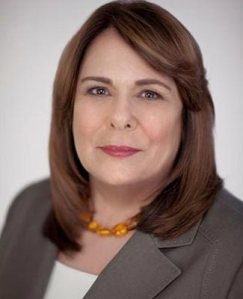
Posted: October 16, 2012 Filed under: 2012 elections, 2012 presidential campaign | Tags: Barrack Obama, contraception, live blog, Mitt Romney, second presidential election, Town hall Debates 126 CommentsCandy Crowley is making sure that women get to ask questions! Romney’s best answer is that women want to be home to make dinner! There are questions about contraception and pay equity!
It looks like Sully’s back in love!
9.44 pm. It’s fascinating how contraception is now an issue in this campaign and Obama is owning his Obamacare position; and he is doubling down on Planned Parenthood. This is going to hel win him back women’s votes. He’s on tonight. Nice touch on his daughters. And obviously sincere.
9.42 pm. Romney’s response on women’s pay is strongest when he mentions his old cabinet in Massachusetts. But his segueway to the economy seemed a little desperate.
9.38 pm. Obama has owned the first half hour. This campaign is turning again. Now we get a very Obama-friendly question about women’s pay. And a great answer on women’s pay. Hard to beat that answer.
Some sample Tweets:
ShelbyKnox @ShelbyKnox
“Governor Romeny feels comfortable having politicians control the health decisions women are making.” – President Obama #debate
The Fix @TheFix
My read: Obama much improved. Romney steady. #debates
Jodi Jacobson @jljacobson
RT @morgmeneshets: #Romney if U R such a crusader 4 women, what have U done 2 push #GOP 2 pass #VAWA, #equalpay,#familyleave…nothing.
Charles M. Blow @CharlesMBlow
Romney: In my economy there’ll be so many jobs that they’ll have to hire women, or something. Help me y’all. What is this man saying?
rachelsklar @rachelsklar
OMG FINALLY SOMEONE CARES ABOUT OUR LADYPARTS
Jim White @JimWhiteGNV
Contraception!
emptywheel @emptywheel
Ding ding ding!! This is a win.
Alan Beattie @alanbeattie
Collective nouns: flock of sheep, herd of cows, binder-full of women.
partners at Bain Capital during Romney’s tenure.
Next up: WHY aren’t you like President Bush, Mr Romney given that ALL of your advisers are BUSH advisers?
The Kenyan Muslim Socialist Usurper is just a Run of the Mill Moderate-to-Conservative Pol
Posted: February 7, 2012 Filed under: 2012 elections, 2012 presidential campaign, Barack Obama, Voter Ignorance, War on Women, We are so F'd | Tags: Barrack Obama, Moderate, Willard Romney Liar extraordinaire 30 Comments Yup, Obama is a run of the mill moderate. We’ve been saying this for years but Keith Poole’s Voteview has a better methodology for estimating presidential positions on a left-right scale since 1945. Every one in left blogistan is talking about that and not our joint intuitions and research. The VoteView site actually has an interesting way to look at Political Polarization of elected officials and shows that the Republican Party has been moving rapidly to an ultra right position recently. We’ve also said this. I can’t believe how many Birch Society positions are now “mainstream” in Republican circles. However, the Republican party asked for it when they courted Dixiecrats and the KKK away from the old style Dem party and were simultaneously usurped by religious radicals. State Republican parties make the Taliban look reasonable. Just come down here to the South or go to the middle of the country. You would think the good old days of slavery were back in vogue. The current crop of primary tap dancers only shows how extreme the party’s base has become. Mitt Romney and Newt Gingrich can’t lie about their past lives fast enough. They also seem to subscribe to the idea that when you repeat lies enough, they become truth.
Our findings here echo those discussed in a prior post that Republicans have moved further to the right than Democrats to the left in the contemporary period. Indeed, as seen below, President Obama is the most moderate Democratic president since the end of World War II, while President George W. Bush was the most conservative president in the post-war era.
So, this result is interesting on many levels. First, Dubya has to be the most hated president since Nixon if not for longer than that. His policies were and still are extremely unpopular. That’s why the right is running on Reagan’s supposed rhetoric but not Reagan’s more liberal policies. Remember, Reagan rescued social security. Dubya wanted to privatize it. Reagan engaged the Soviets. Dubya bombed the shit out of two countries he didn’t like. The other thing this shows is that moderate Obama is being labelled things that are outright lies. This probably indicates the power of Fox News, the Koch Brothers money, and the current Republican fascination with denial of reality and truth. Obama has basically stayed out of congressional politics. Ezra Klein paraphrases some of Poole’s findings. DW-Nominate is Poole’s methodology for sorting out votes via measuring political coalitions.
DW-Nominate rates presidents by processing Congressional Quarterly’s “Presidential Support” index, which tracks roll-call votes on which the president has expressed a clear position. The system then rates the president by looking at the coalitions that emerged in support of his legislation. In essence, it judges the president’s ideology by judging the ideology of the president’s congressional supporters. So how, in an age of incredible congressional polarization, could this system rank Obama as a moderate?
There are a few answers. One, says Poole, is that Obama is very careful about taking positions on congressional legislation. In the 111th Congress, he only took 78 such positions. Compare that with George W. Bush, who took 291 positions during the 110th Congress, or Bill Clinton, who took 314 positions during the 103rd Congress. So part of the answer might be that, with the exception of high-profile bills such as health-care reform, Obama is hanging back from most of the congressional squabbling.
I wanted to share others’ thoughts on the Poole analysis. Digby basically says the findings confirm “why liberals are frustrated”. In deed, the real left wing of the Green and Democratic Parties do not like Obama’s policies at all. This is something completely lost on Republicans in la la land.
Paul Krugman–ever the wonk–focuses on Poole’s methodology. This is something that bears reviewing. It shows how Nixon’s southern strategy and the politicization of christofascists has changed party dynamics.
I’ve long been a great admirer of the work done by Poole and his collaborators. What they do is use roll-call votes to map politicians’ positions into an abstract issue space. You can think of this as a sort of iterative process: start with a guess about how to rank bills from left to right, use that ranking to place politicians along the same spectrum, revise the ranking of bills based on the politicians, and repeat until convergence. What they actually do is more complicated and flexible, and allows for multiple dimensions; but that sort of gets at the general idea.
And it turns out that US politics really is one-dimensional, that once you know where politicians stand on a scale that clearly has to do with taxation and the size of the welfare state, you can predict their votes very well. There used to be a second dimension, clearly corresponding to race; but once the Dixiecrats became Republicans, that dimension collapsed into the first.
Exzra Klein does some longer analysis of the findings along with his usual Beltway Bob spin. Can’t he just quit the man crush thing for a bit?
Obama’s financial rescue effort was largely a continuation of the Bush administration’s policies. He resisted calls to nationalize or break up the big banks, modeled his health-care reform bill after legislation that Republicans had proposed in Congress and Mitt Romney had passed in Massachusetts, extended the Bush tax cuts once and intends to make most of them permanent, signed legislation cutting domestic discretionary spending to its lowest level in decades, and supported the same sort of cap-and-trade plan that John McCain once introduced in the Senate. Obama’s presidency has been ambitious and it’s been polarizing, but in terms of the policy it has produced, it’s been much closer to the market-based approach of Clinton than the forthright reliance on government of LBJ.
Republicans, however, can and should take partial credit for this. Obama is so moderate in part because the Republicans are so extreme. Politicians are ideological, of course, but they are also opportunistic. And the GOP, in closing ranks against almost every major initiative Obama has attempted, has taken away most of his opportunities to be truly liberal. The fight to get to 60 votes in the Senate has ensured, over and over, that Obama must aim his legislation at either the most conservative Democrats or the most moderate Republicans. In this, Obama has only been as liberal as Sens. Ben Nelson and Scott Brown have permitted him to be. And that’s not very liberal.
That’s left Obama a moderate president in an immoderate time. For progressives, that moderation has been a continued frustration. For conservatives, it’s been obscured by a caricature of the president as a free-enterprise-hating socialist. And for the White House, it’s been a calculated strategy. We’ll know in November whether it was the right one.
I’m probably an archetypical independent these days. I’m gravitating towards Obama not because I like anything he’s done, but because Mitt Romney can’t seem to speak with out lying and Gingrich, Paul, and Santorum represent what is undoubtedly the WORST thing about this country. All of their positions are straight from either the christofascist or Confederate states of America playbooks. I can’t for the life figure out what it is–other than personal promotion–that drives Mitt Romney. His do anything, say anything brand of politics frankly makes Obama look like a reasonable choice. Plus, the more I find out about Romney’s personal decisions–like baptizing his outspoken atheist father-in-law post mortem–is horrifying. The dog on the roof struck me as the most inhumane act I’d ever heard until I read about his Stake President lectures to women in Vanity Fair. The man seems capable of speaking out and out lies with no sign of remorse or self-realization at all.
So, here we are together between the Barack and the Willard Hard Place. We’ve got the shallow boyfriend who offers us promises he never intends to keep and the preppy boyfriend who’ll tell us anything if we just give him that blow job. What a freakin’ choice that is.
More progress expected for Women and Gay Rights from US Partners
Posted: December 6, 2011 Filed under: GLBT Rights | Tags: Barrack Obama, foreign aid, GLBT rights, Hilary Clinton 9 Comments President Obama and Secretary of State Clinton used Clinton’s visit to Belarus and an appearance in Geneva to emphasis the need for countries to respect the rights of women, gays, and human rights in general. President Obama instructed US officials to indicate that US support and aid depends on tolerance and recognition of the rights of GLBT citizens.
President Barack Obama has told US officials to consider how countries treat their gay and lesbian populations when making decisions about allocating foreign aid.
In the first ever US government strategy to deal with human rights abuses against lesbian, gay, bisexual and transgender (LGBT) citizens abroad, a presidential memo issued on Tuesday instructs agencies using foreign aid to promote such rights.
Gay and lesbian lobby groups have reported an increase in human rights abuses across Africa and parts of the Middle East.
President Obama is among international leaders who have condemned a bill proposed in Uganda which would make some homosexual acts a crime punishable by death. The Ugandan parliament has recently re-opened the debate on the bill, which had been abandoned after an international outcry.
In the memo, Obama said: “I am deeply concerned by the violence and discrimination targeting LGBT persons around the world, whether it is passing laws that criminalise LGBT status, beating citizens simply for joining peaceful LGBT pride celebrations, or killing men, women and children for their perceived sexual orientation.”
He said that the struggle to end discrimination against lesbian, gay, bisexual and transgender persons was central to America’s commitment to promoting human rights.
Clinton’s speech was characterized as containing “unusually strong language” to an audience of diplomats from nations where being gay is crime. These included nations in the African continent and in the Arab world.
In unusually strong language, Secretary of State Hillary Rodham Clinton compared the struggle for gay equality to difficult passages toward women’s rights and racial equality, and she said a country’s cultural or religious traditions are no excuse for discrimination.
“Gay rights are human rights, and human rights are gay rights,” she said.
Clinton’s audience included diplomats from Arab, African and other nations where homosexuality is criminalized or where brutality and discrimination against gay people is tolerated or encouraged.
She said nothing about consequences or penalties the U.S. might apply to nations it judges poor protectors of gay rights, but she spoke shortly after President Barack Obama directed the State Department and other agencies to make sure U.S. diplomacy and foreign assistance promote gay rights.
Clinton named no countries with specifically poor records on gay rights, although the U.S. has already pointed to abuses against gays by such friends as Saudi Arabia.
“It should never be a crime to be gay,” Clinton declared.
Clinton also introduced a Global Equality Fund that will partner with women’s and other groups trying to achieve human equality around the globe.
I am also pleased to announce that we are launching a new Global Equlity Fund that will support the work of civil society organizations working on these issues around the world. This fund will help them record facts so they can target their advocacy, learn how to use the law as a tool, manage their budgets, train their staffs, and forge partnerships with women’s organizations and other human rights groups. We have committed more than $3 million to start this fund, and we have hope that others will join us in supporting it.

 peej
peej Carissa
 bostonboomer
 dakinikat
 ecocatwoman
 mablue2
 Mama Lopez
 peggysue22
 quixote
 skydancingguestblogger
 Mona (aka Wonk the Vote)



 Sky Dancing
Recent Comments