
Thursday Reads: Kamala Harris Tours Africa and Other News
Posted: March 30, 2023 Filed under: Afternoon Reads, just because | Tags: Africa, Cape Coast Castle, Ghana, Kamala Harris, slavery, Tanzania 19 CommentsGood Afternoon!!
Last night, Dakinikat suggested that I write about what Kamala Harris has been up to lately. She has been travelling through Africa on a kind of good will tour. It isn’t always easy finding media coverage of Harris. Her activities as Vice President are often ignored, and she is often unfairly criticized–not surprising, since she is the first woman and the first person of color to serve as Vice President . But she has been getting some positive coverage during this trip. Here’s a sampling:
AP: Harris out to reframe US views on Africa, foster partnership.
ACCRA, Ghana (AP) — If U.S. Vice President Kamala Harris has a favorite number on her trip to Africa, it’s undoubtedly 19. That’s the median age in Africa, and she repeats the fact at every opportunity.
For Harris, it’s not a piece of trivia but the driving force behind the stepped-up U.S. outreach to African countries. Washington is racing to build partnerships on the oldest inhabited continent with the youngest population, a test that could reshape the economy in Africa and, by extension, the rest of the world.
In the near future, “1 in 4 people on this earth will be on this continent,” Harris said during a conversation with reporters. “Just on that alone — the demographics of it all alone — if you put aside the present and the past, if we are to be forward-looking in terms of national policies and priorities, we have to look at this continent.”
As part of that effort, Harris on Wednesday announced more than $1 billion in public and private money for women’s economic empowerment. The money is expected to come from a mix of nonprofit foundations, private companies and the U.S. government, and it’s intended to expand access to digital services, provide job training and support entrepreneurs.
Harris made the announcement during a meeting with six Ghanaian female entrepreneurs. It was her final event in Ghana before she left for Tanzania, where she arrived Wednesday evening, as part of a weeklong Africa tour that will also take her to Zambia.
She called the women at the table “a model for the potential of all people,” and said that “the well-being of women will be a reflection of the well-being of all of society.”
Harris made the announcement during a meeting with six Ghanaian female entrepreneurs. It was her final event in Ghana before she left for Tanzania, where she arrived Wednesday evening, as part of a weeklong Africa tour that will also take her to Zambia.
She called the women at the table “a model for the potential of all people,” and said that “the well-being of women will be a reflection of the well-being of all of society.”
Jobs are scarce for these young people, and one goal of Harris’ trip is to encourage U.S. businesses to invest in Africa.
“If we don’t find jobs — because that’s what it’s about — for this growing young population, it will be dangerous for the political stability on the continent,” said Rama Yade, senior director of the Atlantic Council’s Africa Center. “Because they will attack the institutions if they don’t have the means for living.”
Her vision, officials said, was a trip centered around youth, women and innovation, rather than the humanitarian assistance that often characterizes American perception of Africa.
It’s a vision that requires money, and the desire for investment was on full display during a state banquet Monday at Ghana’s presidential palace where Hollywood stars Spike Lee, Idris Elba and Rosario Dawson were among the attendees.
Read more at the AP link.
In Ghana on Tuesday, Harris faced the shameful history of black slavery at Cape Coast Castle.
ABC News: Kamala Harris grows emotional describing the ‘blood’ and ‘crimes’ at infamous slave post in Ghana.
Vice President Kamala Harris started her Tuesday in Ghana looking toward what the future could hold for Africa — but on Tuesday afternoon, she looked back at the dark history of slavery on the continent, visibly moved by what she had just seen at Cape Coast Castle, where Africans were held captive before being sent to the Americas and Caribbean.
“Being here was — was immensely powerful and moving,” Harris said after touring the grounds, her voice breaking with emotion. “When we think about human beings retrieved by the hundreds of thousands, in this very place that we now stand. The crimes that happened here. The blood that was shed here.”
Harris had a speech prepared for the tour, placed on a stand before she walked out, but afterward an official in the vice president’s office said the remarks she actually gave were mostly off the cuff.
“There are dungeons here where human beings were kept. Men, women and children. They were kidnapped from their homes. They were transported hundreds of miles from their homes, not really sure where they were headed. And they came to this place of horror,” Harris said. “Some to die, many to starve and be tortured, women to be raped — before they were then forcibly taken on a journey thousands of miles from their home to be sold by so-called merchants and taken to the Americas, to the Caribbean to be an enslaved people.”
During her tour, Harris and second gentleman Doug Emhoff entered the dungeons, first where the men were kept, and then looked out to the ocean where the ships would leave. Harris stood there for a moment, hands on her hips, at one point wiping her face.
As they walked down toward the dungeon for women and the “Door of No Return,” where slaves were forced onto ships, Harris was seen again overcome with emotion, wiping her face.
She emerged from the female dungeon with flowers, placing them in an adjacent room where others had also left them on the floor against a wall.
“We don’t know the numbers who died on their way to this place, the numbers who were killed during that passage on the Atlantic [Ocean],” she said after the tour.
But, she said, “The horror of what happened here must always be remembered. It cannot be denied. It must be taught. History must be learned. And we must then be guided by what we know also to be the history of those who survived in the Americas, in the Caribbean — those who proudly declare themselves to be the diaspora.”
Last night, Harris began a three-day visit to Tanzania.
Reuters: Kamala Harris announces Tanzania trade boost during Africa tour.
DAR ES SALAAM, March 30 (Reuters) – U.S. Vice President Kamala Harris announced plans to boost trade with and investment in Tanzania during a visit there on Thursday, part of an African tour aimed at strengthening ties with a continent where China and Russia increasingly hold sway….
Harris started her trip on Sunday in Ghana before flying late on Wednesday to Tanzania’s commercial capital Dar es Salaam, where she met President Samia Suluhu Hassan on Thursday.
The two women gave short statements to the media before going into a longer session of private talks.
“Working together, it is our shared goal to increase economic investment in Tanzania and strengthen our economic ties,” Harris said, listing a number of initiatives.
They included a new memorandum of understanding between the Export-Import Bank of the United States (EXIM) and the government of Tanzania.
That will facilitate up to $500 million in financing to help U.S. companies export goods and services to Tanzania in sectors including infrastructure, transportation, digital technology, climate and energy security and power generation.
Harris also mentioned a new partnership in 5G technology and cybersecurity, as well as a U.S.-supported plan by LifeZone Metals to open a new processing plant in Tanzania for minerals that go into electric vehicle batteries.
“This project is an important and pioneering model, using innovative and low-emission standards. Importantly, raw minerals will soon be processed in Tanzania, by Tanzanians,” she said, adding that the plant would deliver battery-grade nickel to the United States and the global market from 2026.
AP: Harris enters the fray over democracy with visit to Tanzania.
DAR ES SALAAM, Tanzania (AP) — Vice President Kamala Harris on Thursday encouraged Tanzania’s fragile progress toward a more inclusive government, stepping onto the front lines of America’s push to strengthen democracy in Africa as part of her weeklong trip to the continent.
Standing alongside Samia Suluhu Hassan, Tanzania’s first female president, Harris cited recent decisions from Tanzania such as lifting a ban on opposition rallies and encouraging more press freedom as “important and meaningful steps” toward democratic reforms. Hassan has undone some of Tanzania’s more oppressive policies even though she came to power as a member of the ruling party.
“You have been a champion in the sense of democratic reforms in this country, and in that way have expanded our partnership,” Harris said.
Hassan noted Tanzania’s participation in a virtual summit on democracy hosted by the White House this week, saying it “sends a clear message that the fathers of democracy recognize our efforts in building a democratic nation.”
The Tanzanian leader is finishing out the term of President John Magufuli, who earned a reputation for stamping out dissent, arresting critics and forcing them into exile, before he died in office. Hard-liners have been uncomfortable with some of Hassan’s changes, however, which could cost her in the next election two years from now.
The meeting between Hassan and Harris, the first woman to be America’s vice president, was a noteworthy show of support from the United States as it deepens its outreach to Africa. Harris announced $560 million in U.S. assistance for Tanzania, some of which will require congressional approval. The money is intended to expand the countries’ trade relationship, as well as encourage democratic governance.
Hassan also pushed for the U.S. to make long duration visas available for Tanzanian citizens, something she said would improve ties between the countries. Issues with U.S. visas, from availability to processing delays, have generated frustration around Africa.
That’s what’s happening with our Vice President. In the future, I’ll try to pay more attention to her public activities. If you’re interested in some of the criticism Harris is dealing with, you can check out these two articles:
Politico: The White House goes to bat for Harris.
More Stores to Check Out Today
The Washington Post: Wall Street Journal reporter arrested in Russia by security service.
Jose Pagliery at The Daily Beast: Why the Trump Org Suddenly Fired Its Jailed Money Man’s Lawyer.
Giselle Barreto Fetterman at Elle: The Tired Trope of the ‘Power Hungry’ Woman. In an exclusive op-ed, Gisele Fetterman recounts the “vicious attacks” she received after her husband, Sen. John Fetterman, checked into Walter Reed to seek treatment for clinical depression.
CNN: Wrong things can be changed’: Justice Sotomayor speaks on disillusionment.
Matt Pearce at The Los Angeles Times: Commentary: If Twitter finally dies, where do we find the smart people?
NBC News: Train carrying ethanol derails and catches fire in Minnesota, forcing residents to evacuate.
The Washington Post: The Vulcan Files: Secret trove offers rare look into Russian cyberwar ambitions.
That’s all I have for you today. What are you reading and thinking about?
Wikileaks and GMO/GM food, More cables, more fun!
Posted: December 28, 2010 Filed under: Economic Develpment, Farming, Food, Foreign Affairs, Wikileaks | Tags: Africa, cables, food, France, GM food, GMO, GMO food, monsanto, Spain, Wikileaks 24 CommentsRecently our own Grayslady posted an excellent article about Wikileaks, Monsanto and GMO Corn. She discussed a cable sent in late 2007 from our then Ambassador to France, Craig Stapleton, in which he discusses ways to force France and the EU to be more favorable towards the adoption of Monsanto’s GM BT enhanced, Roundup Ready corn. Other aspects of the information in that Wikileaks cable has been discussed in other places, for instance at Huffington Post by Jeffery Smith and at Truthout by Mike Ludwig.
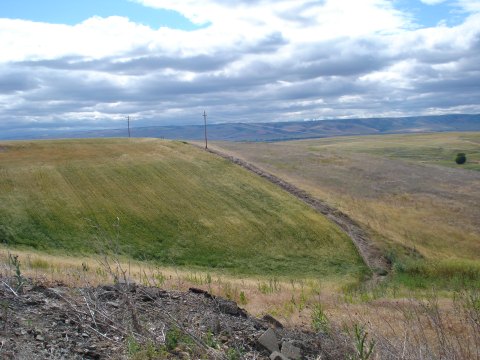
Wheat and Hay Fields near Pendleton, Oregon
What the cable suggested, in part, was publishing a ‘retaliation’ list of places, down to the actual fields, growing GMO foods in Europe in the hopes the fields and crops would be destroyed by activists, ’cause pain’ for officials and hopefully swing GMO acceptance in Europe around. The Ambassador went on to say that France was particularly culpable because scientists in France were attempting to change ‘knowledge’ by studying the effects of GMO products (even the ‘good’ GMO like BT enhanced products). These studies show that the effects of GMO food on those eating it may be more pronounced and drastic than the limited studies done by the FDA and USDA suggest (see for example the studies of Dr. Gilles-Eric Seralini, Professor Andrés Carrasco, and others). And for more, see this interview of Jeffery Smith on Democracy Now.
This is very interesting, because a cable sent in 26 October 2007 is the subject of French President Sarkozky’s first visit to the USA, and his meetings with American business leaders, including pushers of GM foods. The cable suggests that the President’s support of more restrictive rules on GM products in France might be politically based and therefore, changeable.
But Wait, There’s more! The cable to France, although receiving a lot of attention because it suggests undercutting the rightful government of our supposed allies and creating civil unrest and ‘pain’, is not the only released cable to mention GMOs and Monsanto’s needs across the world. Over at Eats, Shoots and Leaves there’s a good rundown by Richard Brenneman of some of the cables.
For example, in a cable from 9 April 2009 concerning, in part, African development, one of the points of intelligence to be gathered is the African governments’ and peoples’ reactions to growing and using GM crops. Brenneman rightly asks, why would this be a concern of our State Department, unless our government is actively pushing and supporting Monsanto and the company’s GM stable of crops?
I’m going to drop a final h/t to Rady Ananda at the Food Freedom blog. She wrote about GMO and Wikileaks several weeks ago, and has been right on top of things. She brings forth the case of the food crisis of 2007-08 which wraps up some of the things we at Sky Dancing discuss into a tidy bundle.
In a January 2008 meeting, US and Spain trade officials strategized how to increase acceptance of genetically modified foods in Europe, including inflating food prices on the commodities market, according to a leaked US diplomatic cable released by WikiLeaks.
Some of the participants thought raising food prices in Europe might lead to greater acceptance of biotech imports.
It seems Wall Street traders got the word. By June 2008, food prices had spiked so severely that ‘The Economist announced that the real price of food had reached its highest level since 1845, the year the magazine first calculated the number,’ reports Fred Kaufman in The Food Bubble: How Wall Street starved millions and got away with it.
The unprecedented high in food prices in 2008 caused an additional 250 million people to go hungry, pushing the global number to over a billion. 2008 is also the first year ‘since such statistics have been kept, that the proportion of the world’s population without enough to eat ratcheted upward,’ said Kaufman.
Remember back in 2007/08 when food prices, especially bread prices, suddenly shot up? I remember being astounded when the price of a bag of hot dogs went from 99 cents to 1.29$ overnight. I figured maybe it was the result of the rise in oil costs going on about then, and perhaps it was, in part. But after reading the article by Kaufman I’m not so sure. There was no crisis in food production at this time. It was simply a manufactured bubble. About that time there were terrible food riots in Mexico amongst 29 other countries, because the price of tortillas had gone up so much people couldn’t afford to buy them. I note that the Mexican government has recently taken steps to ensure this doesn’t happen again, by buying corn futures to guarantee a flat price.
So, I wonder, how are the big fat cats and the government diddling in our food today? Surely food, at least food, should be relatively safe from bubbles, like electricity, water, and sewage service? Oh wait, those are being commoditized too. Ahd I would like to point out, the price of the bag of hot dogs has not come back down, although the bubble burst… makes ya wonder, doesn’t it?
Note: I’m going to be in and out all today, so consider this something of an open thread. I’m really keen to know what everyone thinks of the Kaufman article. When I read it I was stunned by the lengths to which the greedy people of Wall Street will go to make money.

 peej
peej Carissa
 bostonboomer
 dakinikat
 ecocatwoman
 mablue2
 Mama Lopez
 peggysue22
 quixote
 skydancingguestblogger
 Mona (aka Wonk the Vote)



 Sky Dancing
Recent Comments