Winter Landscape on the Banks of the Seine, Henri Matisse
Happy Winter Solstice!!
When will there be good news? I feel as if I’m living in the apocalypse. In just a couple of weeks, the latest Covid-19 variant has become dominant in the U.S. Once again, new cases are rapidly rising even in fully vaccinated and boosted people. Hospitals are running out of beds and health care workers are overworked and exhausted. Democrats are in grave danger of losing the House and possibly the Senate to Republicans who have lost touch with reality. And, as we all know, Joe Manchin has dashed Democrats’ hope of passing a bill that would have made everything better for Americans who aren’t in the top 1 percent. Can you tell I’m discouraged? Here’s what’s happening:
Omicron has raced ahead of other variants and is now the dominant version of the coronavirus in the U.S., accounting for 73% of new infections last week, federal health officials said Monday.
The Centers for Disease Control and Prevention numbers showed nearly a six-fold increase in omicron’s share of infections in only one week.
In much of the country, it’s even higher. Omicron is responsible for an estimated 90% or more of new infections in the New York area, the Southeast, the industrial Midwest and the Pacific Northwest. The national rate suggests that more than 650,000 omicron infections occurred in the U.S. last week.
Since the end of June, the delta variant had been the main version causing U.S. infections. As recently as the end of November, more than 99.5% of coronaviruses were delta, according to CDC data.
CDC Director Dr. Rochelle Walensky said the new numbers reflect the kind of growth seen in other countries….
Paul Gaugin Winter Landscape,
Much about the omicron variant remains unknown, including whether it causes more or less severe illness. Early studies suggest the vaccinated will need a booster shot for the best chance at preventing omicron infection but even without the extra dose, vaccination still should offer strong protection against severe illness and death.
“All of us have a date with omicron,” said Dr. Amesh Adalja, a senior scholar at the Johns Hopkins Center for Health Security. “If you’re going to interact with society, if you’re going to have any type of life, omicron will be something you encounter, and the best way you can encounter this is to be fully vaccinated.”
Like most of my colleagues, I haven’t arrived at this moment unscathed. I weathered the brutal first wave of the pandemic, often witnessing more COVID deaths during my shifts in New York City than I saw working in an Ebola-treatment center in West Africa in 2014.
When I was vaccinated against COVID a year ago, I was already exhausted. But better times seemed close at hand. Perhaps soon we wouldn’t have to endure wearing full personal protective equipment for hours on end. I was wrong.
After two years of dealing with this virus—working extra shifts, watching families sob on grainy FaceTime calls while their loved ones slipped away—many health-care workers are already in a dark place. With a new wave of COVID upon us, we face this grim truth: You can’t surge a circuit that’s been burned out. For frontline providers, there’s simply no new fuse that can fix the fact that we’re fried.
Edvard Munch, Snow Falling in the Lane
Many people are holding out hope for the possibility that the Omicron variant may cause less severe disease. But this is little comfort for those worried about our hospitals and the people who work there: A large surge of even a more mild variant will still produce more patients than our already maxed-out system can handle. Moreover, doctors and nurses will themselves get sick.
The looming tidal wave of Omicron cases comes at an already challenging time for emergency departments across the U.S. The Delta wave never fully subsided, and a lot of ERs are already attending to too many COVID patients. Also making things worse: Emergency-room visits are up for non-COVID illness as well, in part because people have postponed some routine medical care throughout the pandemic. As a result, we head into winter with emergency rooms across the country overwhelmed and over capacity.
Here in Massachusetts, Governor Baker has issued a new mask advisory and activated 500 National Guard members to aid hospitals. He has also asked hospitals to cancel all elective surgeries. He said he won’t issue a mask mandate and says schools must stay open.
President Joe Biden will announce a plan on Tuesday to distribute 500 million free at-home rapid tests to Americans beginning in January as part of an attempt to double down on the spread of a transmissible variant that has hit the U.S. distressingly close to the holidays.
Biden’s new efforts come as the omicron variant became the most dominant COVID strain in the country Monday, accounting for nearly three-quarters of all cases, and just as travel kicks off at nearly pre-pandemic levels for the holiday season.
Sleigh Ride, Winslow Homer
The free at-home rapid tests will be delivered by mail to Americans who request them, a senior administration official told reporters on Monday night in a preview of the speech, marking a slightly different approach from European countries that chose to send tests to all residents.
Americans will have to request the tests through a website that will launch in January, the official said, and its not yet clear how many tests Americans will be able to request per household.
Danger Ahead from the Trumpist Party
Doug Sosnik at The Washington Post: Opinion: As the GOP sheds its moderates, a whirlwind approaches.
We don’t need to wait for the results of next year’s midterm elections to know that a political shock wave is headed toward Washington. The early tremors are already detectable.
Donald Trump’s takeover of the Republican Party will soon be complete, and what had previously been a fringe element within the GOP will emerge fully in control. The two big lies — that the 2020 election was stolen from Trump and that the Jan. 6 attack on the U.S. Capitol was not serious enough to merit an investigation — are no longer considered radical inside the GOP.
Republicans can be expected to take over the House of Representatives after the midterm elections — most likely by a considerable margin. Trump already dominates the GOP at the state and local levels, and with the notable exceptions of Reps. Liz Cheney (R-Wyo.) and Adam Kinzinger (R-Ill.), has a vice-like grip on Republican House members. Even if Trump does not run in 2024, his views and policies now represent mainstream Republican thinking.
And even if the Democrats maintain their narrow grip on the Senate, what is left of the reasonable wing of the Republican Senate is about to disappear. The Republican half of the Senate is on the brink of a new, and irresponsible, era. The 2022 election will cement the trend.
Richard von Drasche-Wartinberg, In Deep Winter
The Senate Republican Caucus has been the last remaining guardrail preventing Trump’s complete takeover of the Republican Party. That is about to change. There are five senators from what passes for the “governing wing” of the Republican Party who have announced their retirements: Richard C. Shelby (Alabama), Roy Blunt (Missouri), Richard Burr (North Carolina), Rob Portman (Ohio) and Patrick J. Toomey (Pennsylvania). Because Trump carried all but one of these states (Pennsylvania) in 2020, it is a safe bet all these men will be replaced by more Trump acolytes. In each of these states, the Republican primary has been a referendum on which candidate is most similar to Trump.
It is only because of some of the soon-departing establishment Republicans — and a small handful of others — that President Biden got a hard infrastructure bill on his desk and an increase in the debt ceiling while at the same time allowing the government to remain open.
Because they control the redistricting process in most states, Republicans have been busy redrawing maps and packing swing districts to provide them with more conservative voters. Since winning a Republican congressional primary is tantamount to winning the general election, the GOP will have spent 2021 creating the conditions that will push the party even further to the right.
If you can bear it, three examples of what GOP crazies are up to:
The active ingredients in Manchin’s political calculus have never been a great mystery: he is a Democrat aiming to get reëlected in an increasingly Republican state, and he is among the Senate’s largest recipients of campaign cash from the coal, oil, and gas industries, which have lobbied against the climate-change provisions in the bill he scuttled. But, to the West Virginians who begged him to support the anti-poverty programs in the Build Back Better bill, his rejection reflects a fundamental seclusion from the needs of people which he is no longer willing or able to perceive. To such critics in the state, Manchin has become an icon of Washington oligarchy and estrangement, a politician with a personal fortune, whose blockade against programs that have helped his constituents escape poverty represents a sneering disregard for the gap between their actual struggles and his televised bromides.
Peter Doig’s Cobourg 3 + 1 More (1994)
If Manchin’s opposition holds, his vote will be decisive in ending the expanded Child Tax Credit program, which, according to the Treasury Department, last week delivered payments benefitting three hundred and five thousand children in West Virginia. Statewide, ninety-three per cent of children are eligible for the credit, tied for the highest rate in the country. Analysts estimate that, if the program is allowed to expire, at the end of the month, fifty thousand children there will be in danger of falling into poverty. The average payment per family: four hundred and forty-six dollars a month.
Manchin is especially vulnerable to accusations of imperial remove. Photos that circulated online show him chatting over the rail of his houseboat in Washington with angry constituents, who had arrived by kayak. After he persuaded the Biden Administration to drop from the bill the Clean Electricity Performance Program, the centerpiece of efforts to slash greenhouse-gas emissions, climate protesters surrounded Manchin’s silver Maserati.
Jim McKay, the director of Prevent Child Abuse West Virginia, a nonprofit organization that lobbied Manchin to support the bill, told me that the senator was “conspicuously absent” from “personal meetings with West Virginia families.” McKay said, “Unfortunately, while his staff did have some meetings—which we are thankful to have had—personal contacts with Senator Manchin were extremely limited.” Dodging uncomfortable meetings is not unique in politics, but the accusation carries a special sting for Manchin, whose status as a Democrat in a red state makes him especially keen to project an image of a man who refuses to “go Washington.” McKay said, “I look forward to when Senator Manchin reconnects with average people.”
Sen. Joe Manchin III last week made the White House a concrete counteroffer for its spending bill, saying he would accept a $1.8 trillion package that included universal prekindergarten for 10 years, an expansion of Obamacare and hundreds of billions of dollars to combat climate change, three people familiar with the matter said.
But the West Virginia Democrat’s counteroffer excluded an extension of the expanded child tax credit the administration has seen as a cornerstone of President Biden’s economic legacy, the people said, an omission difficult for the White House to accept in the high-stakes negotiations. The people spoke on the condition of anonymity to discuss the closed-door deliberations.
Manchin’s private proposal to the White House — the details of which have not been previously reported — was made just days before a spectacular public collapse in negotiations between the White House and the senator, marked by bitter and personal recriminations that left the status of the talks unclear.
The White House was weighing how to respond to Manchin’s proposal last week when on Sunday he told Fox News that he would be unable to support the current version of Democrats’ Build Back Better agenda.
Why does Manchin hate children? More details at the link.
Their hopes of enacting an expansive domestic policy bill focused on health care, education and climate change have been dashed. They blame Sen. Joe Manchin III (D-W.Va.), arguing he failed to keep his word to negotiate in good faith with the White House before announcing his opposition to the package on “Fox News Sunday.”
And they are in no mood, at the moment, to think about scaling back their policy ambitions in hopes of getting some part of what they want into law following Manchin’s proclamation that he “can’t get there” on President Biden’s “Build Back Better” proposal.
“Why do we have to acquiesce to what members of another party think we should be doing, what so called moderates think we should be doing, what so called independents think we should be doing? All of that represents a status quo,” said Rep. Jamaal Bowman (D-N.Y.). “Our status quo is rooted in racism, sexism and classism, and us not passing Build Back Better or scaling it back dramatically, even more so than has already been done, is going to disproportionately harm people of color, women, the poor, children and seniors.”
The intense frustration emanating from the most liberal members of Congress adds an extra layer of complication for the White House and Democratic leaders who are scrambling to find a path forward to save some of the roughly $2 trillion domestic policy bill Manchin torpedoed over the weekend.
That’s all I have for you today. I’m sorry I can’t be more upbeat about what’s happening. I can’t give up hope, but I’m exhausted by it all. I don’t know what I would do without all of you Sky Dancers!
Did you like this post? Please share it with your friends:
I always felt out of place in the nation’s heartland. The food was boring. The people did inexplicably rude things a lot in terms of what I was taught. I was a bank teller for a while at university and was told that I should call elderly people by their first names. My mother constantly complained when younger people did that to her or Dad feeling it was highly disrespectful. I just couldn’t do it. That was just one of the things she would’ve whooped me over. I used y’all when I taught which confused my students like crazy, People from Minnesota thought I had a southern accent when it was just my mother’s Missouri twang. So, my upbringing made a lot of sense once I got down here.
There are a lot of old-timey niceties and characteristics down here that aren’t as important as other places and they seem dated these days. One of the most cherished characteristics is being a “man of your word”. There’s another saying that “your handshake is as good as your word”. Senator Joe Manchin has monumentally failed that test. He’s not only failed that one but the one where your Senator is supposed to represent his constituent’s interests and not his own. That American Value is broadly shared and understood. I actually believe Joe may jump ship to become republican if the wind blows that way for the next Federal Election. I saw a reporter trying to get him to talk after coming out of Mitch McConnell’s office. I really didn’t believe he was up to anything good so who knows? Mitch certainly is wooing him. Lexi Lonas writing for The Hill wrote this three days ago:” McConnell: ‘It would be a great idea’ for Manchin to switch parties.
Senate Minority Leader Mitch McConnell (R-Ky.) on Thursday told reporters that “it would be a great idea” for Sen. Joe Manchin (D-W.Va.) to switch to the Republican Party.
“As you know, he likes to talk,” McConnell said of Manchin. “It would not surprise you to know that I’ve suggested for years it would be a great idea, representing a deep-red state like West Virginia, for him to come over to our side.”
“I don’t think that’s going to happen,” McConnell added.
Manchin, a former governor and centrist Democrat from ruby-red West Virginia has quashed thoughts on switching parties often in his time in political office.
Ruby-red West Virginia is right there at the bottom of the list of everything this country has to offer along with a lot of other Southern States including mine. You may notice that I’ve put links on today’s pictures. That’s because each one goes to an article about the hardscrabble life of many West Virginians. Senator Manchin has just taken jobs from their adults, food from their children, and health and education for everyone with his statements on Fox News on Sunday.
After months of haggling with President Joe Biden and other Democrats, Sen. Joe Manchin (D-W.Va.) dashed his party’s hopes on Sunday by announcing he wouldn’t vote for the Build Back Better legislation.
Publicly, his biggest gripes are about the cost of the bill. But privately, Manchin has told his colleagues that he essentially doesn’t trust low-income people to spend government money wisely.
In recent months, Manchin has told several of his fellow Democrats that he thought parents would waste monthly child tax credit payments on drugs instead of providing for their children, according to two sources familiar with the senator’s comments.
Continuing the child tax credit for another year is a core part of the Build Back Better legislation that Democrats had hoped to pass by the end of the year. The policy has already cut child poverty by nearly 30%.
Manchin’s private comments shocked several senators, who saw it as an unfair assault on his own constituents and those struggling to raise children in poverty.
Manchin has also told colleagues he believes that Americans would fraudulently use the proposed paid sick leave policy, specifically saying people would feign being sick and go on hunting trips, a source familiar with his comments told HuffPost.
Manchin’s office declined to comment for this story.In a statement on Sunday, he said he opposed the Build Back Better agenda largely because of its cost.
Schumer’s gambit — and how, maybe, it gets Democrats & Manchin to a revised BBB that can pass. @ThePlumLineGS lays it out here https://t.co/rbFzLmaVwn
Early Monday morning, Senate Majority Leader Charles E. Schumer (D-N.Y.) announced that the Senate will vote early next year on a new version of Build Back Better, after Sen. Joe Manchin III (D-W.Va.) declared his intention to torpedo the proposal.
That’s a reference to Manchin’s decision to sink the centerpiece of President Biden’s domestic agenda on Fox News. Schumer says the Senate will debate a “revised version.”
There aren’t particularly strong grounds for optimism that a vote alone will pressure Manchin to shift. However, the fact that Schumer is telegraphing a vote on a new version is consistent with a scenario in which BBB is revised in keeping with Manchin’s concerns.
If there is any way to move Manchin to yes — and this is a very big “if” — it would be this one.
Which is why we should pay more attention to the news that Goldman Sachs has downgraded the U.S. growth forecast, in response to Manchin’s opposition to BBB. This is an indication of how isolated Manchin has become, and points to a new vulnerability in his position.
In its note, Goldman declared it had reduced its projection of gross domestic product growth to 2 percent from 3 percent for the first quarter of 2022, and reduced it by a bit less for the second and third quarters.
Note why Goldman did this. As it argued, this slowdown will be mainly because fiscal stimulus from the covid-19 rescue package earlier this year will wind down. Goldman projects that if BBB does not pass, that fiscal picture will be “more negative” than it might have been.
As one example, Goldman cites the expanded child tax credit, which was part of the covid relief package and now sends checks to most American families. If BBB fails, it will expire.
This blows up a key element of Manchin’s justification for opposing BBB. He says it will feed inflation and the debt, though as Jim Tankersley demonstrates, many economic experts think BBB won’t feed either.
President Joe Biden was at home in Delaware Sunday when Sen. Joe Manchin appeared on Fox News to abruptly declare he could not support his sweeping social and climate plan. “I’ve tried everything humanly possible,” the West Virginia Democrat said, appearing remotely. “I can’t get there. This is a no.”
Biden, who learned of Manchin’s plans only minutes before the TV appearance, tried quickly to get the senator on the phone. But his attempts were unsuccessful.
In an equally surprising step, the White House torched Manchin afterward in a statement bristling with resentment that shattered the amity Biden had sought to cultivate.Biden personally signed off on the blistering statement issued by press secretary Jen Psaki after Manchin’s announcement on Fox News, according to a source familiar with the matter. While staff drafted language addressing Manchin’s specific concerns — on inflation, climate provisions and how the plan was paid for — Biden specifically instructed them to add that if Manchin stood by his comments, he had violated his word to the President.
Manchin is the topic du jour. Axios argues that Manchin may go Independent.
NEW: Joe Manchin today blamed White House staff for the breakdown of Build Back Better negotiations:
"This is not the president, this is staff…I just got to the wit's end." https://t.co/Nx3qeFFEWH
What he’s saying: Manchin also said if Democrats want to try and tackle a smaller package, they would need to put new legislation through committees and hold hearings on the programs.
He also criticized leadership’s strategy, arguing they wrongly assumed “surely we can move one person, surely we can badger and beat one person up.”
“Well, guess what? I’m from West Virginia. I’m not from where they’re from, and they can just beat the living crap out of people and think they’ll be submissive, period,” Manchin said.
Manchin also said he made clear to Democratic leadership that he disagreed with their approach of treating legislation “as if you have 55 or 60 senators that are Democrats, and you can do whatever you want.”
“I said, I’m not a Washington Democrat,” Manchin told Kercheval.
Joe Manchin’s net worth, according to the money-in-politics website Open Secrets, was $7.6 million in 2018, when he last sought reelection. Median household income this year in the state of West Virginia, according to the St. Louis Fed, is $51,615. That’s nearly $30,000 below the national average.
And this, in a nutshell, is American politics generally and the United States Senate particularly: a multimillionaire old white guy telling poor people that they just need to get off their asses and work and the government shouldn’t be helping them.
Although there’s still a chance Manchin may support some version of the Build Back Better Act, his announcement Sunday morning—on Fox News, natch—that he couldn’t vote for the existing version of the bill is politically devastating for his party and the president he presumably supported and voted for. That will be the focus of most of the punditry. But it’s even more devastating for the people of West Virginia, who are falling further behind the rest of the country with each passing decade and who have been sold a fantasy about the source of their problems and how they will be fixed.
The only thing I can say is that most rural ruby-red states are mixed up in the Trump Cult and Manchin’s state is likely no different. This is from Newsweek written by David T Freedman: “Millions of Angry, Armed Americans Stand Ready to Seize Power If Trump Loses in 2024” This feels like reading about those Confederate Deadenders that still run around the backwoods but many are also up in the plains states and other blue states with backwoods of their own that cling to a white christianist identity.
Mike “Wompus” Nieznany is a 73-year-old Vietnam veteran who walks with a cane from the combat wounds he received during his service. That disability doesn’t keep Nieznany from making a living selling custom motorcycle luggage racks from his home in Gainesville, Georgia. Neither will it slow him down when it’s time to visit Washington, D.C.—heavily armed and ready to do his part in overthrowing the U.S. government.
Millions of fellow would-be insurrectionists will be there, too, Nieznany says, “a ticking time-bomb” targeting the Capitol. “There are lots of fully armed people wondering what’s happening to this country,” he says. “Are we going to let Biden keep destroying it? Or do we need to get rid of him? We’re only going to take so much before we fight back.” The 2024 election, he adds, may well be the trigger.
Nieznany is no loner. His political comments on the social-media site Quora received 44,000 views in the first two weeks of November and more than 4 million overall. He is one of many rank-and-file Republicans who own guns and in recent months have talked openly of the need to take down—by force if necessary—a federal government they see as illegitimate, overreaching and corrosive to American freedom.
The phenomenon goes well beyond the growth of militias, which have been a feature of American life at least since the Ku Klux Klan rose to power after the Civil War. Groups like the Proud Boys and the Oath Keepers, which took part in the January 6th riot at the Capitol and may have played organizational roles, have grown in membership. Law enforcement has long tracked and often infiltrated these groups. What Nieznany represents is something else entirely: a much larger and more diffuse movement of more-or-less ordinary people, stoked by misinformation, knitted together by social media and well-armed. In 2020, 17 million Americans bought 40 million guns and in 2021 were on track to add another 20 million. If historical trends hold, the buyers will be overwhelmingly white, Republican and southern or rural.
America’s massive and mostly Republican gun-rights movement dovetails with a growing belief among many Republicans that the federal government is an illegitimate tyranny that must be overthrown by any means necessary. That combustible formula raises the threat of armed, large-scale attacks around the 2024 presidential election—attacks that could make the January 6 insurrection look like a toothless stunt by comparison. “The idea that people would take up arms against an American election has gone from completely farfetched to something we have to start planning for and preparing for,” says University of California, Los Angeles law professor Adam Winkler, an expert on gun policy and constitutional law.
You may continue to read the long and depressing read. What’s to be done with thee deadenders?
Anyway, I’m hoping you have a great week and holiday for those who have one to celebrate! Happy Christmas to you! I really hope this week doesn’t sent us way backward in the progress we made this year in fighting the pandemic.
What’s on your reading and blogging list today?
Did you like this post? Please share it with your friends:
I’m beginning to accept that we are never going to return to “normal.” After 6 years of dealing with Trump and his domination of the Republican party, after 2 long years of Covid-19 and the loss of more than 800,000 lives, we now face the threat of losing our democracy as we deal with a new Covid variant that is already spreading rapidly and is likely to kill many more Americans. And I haven’t even touched on the dangers we face from climate change.
On the threats to U.S. democracy:
The Washington Post: Opinion: 3 retired generals: The military must prepare now for a 2024 insurrection, by Paul D. Eaton, Antonio M. Taguba, and Steven M. Anderson
As we approach the first anniversary of the deadly insurrection at the U.S. Capitol, we — all of us former senior military officials — are increasingly concerned about the aftermath of the 2024 presidential election and the potential for lethal chaos inside our military, which would put all Americans at severe risk.
In short: We are chilled to our bones at the thought of a coup succeeding next time.
One of our military’s strengths is that it draws from our diverse population. It is a collection of individuals, all with different beliefs and backgrounds. But without constant maintenance, the potential for a military breakdown mirroring societal or political breakdown is very real.
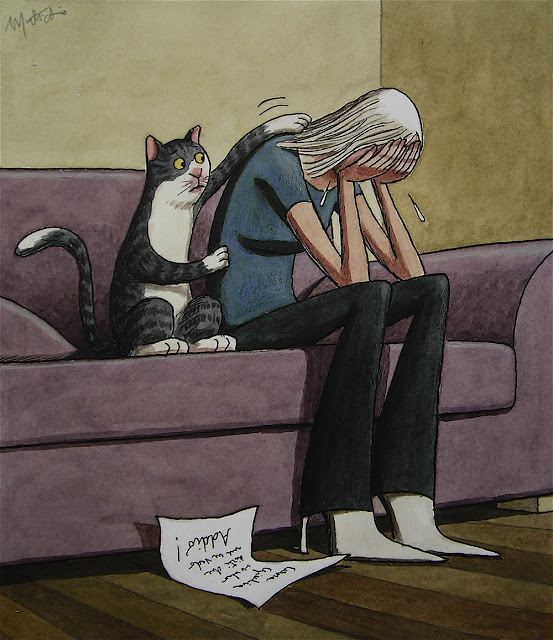
Le Chat Van Gogh by Toni Goffe
The signs of potential turmoil in our armed forces are there. On Jan. 6, a disturbing number of veterans and active-duty members of the military took part in the attack on the Capitol. More than 1 in 10 of those charged in the attacks had a service record. A group of 124 retired military officials, under the name “Flag Officers 4 America,” released a letter echoing Donald Trump’s false attacks on the legitimacy of our elections.
Recently, and perhaps more worrying, Brig. Gen. Thomas Mancino, the commanding general of the Oklahoma National Guard, refused an order from President Biden mandating that all National Guard members be vaccinated against the coronavirus. Mancino claimed that while the Oklahoma Guard is not federally mobilized, his commander in chief is the Republican governor of the state, not the president.
The potential for a total breakdown of the chain of command along partisan lines — from the top of the chain to squad level — is significant should another insurrection occur. The idea of rogue units organizing among themselves to support the “rightful” commander in chief cannot be dismissed.
Every time the January 6 committee holds a hearing, it seems clearer and clearer that Donald Trump was trying to keep control over the government after losing reelection. The past week alone produced the “how to coup” PowerPoint, widely circulated in Trumpworld, and a slew of text messages, including this sorry we weren’t able to pull off a coup note from an unidentified lawmaker to Mark Meadows: “Yesterday was a terrible day. We tried everything we could in our objection to the 6 states. I’m sorry nothing worked.” It’s pretty clear what Trump was up to: trying to reinstall himself as president and end American democracy as we know it.
Trump’s crew surely knew how bad the events of January 6 were even as they were unfolding. “The president needs to tell people in the Capitol to go home … he is destroying his legacy,” Fox News host Laura Ingraham wrote to Mark Meadows in a text message read by Republican Representative Liz Cheney during the opening statements of the Jan 6 committee meeting on Monday night. A range of journalists sent similar messages. Actual reporter Jake Sherman—who had been stuck in the Capitol during the riot, and who released his texts with Meadows “out of transparency”—wrote, “Do something for us. We are under siege in the [Capitol].” Another “journalist” exchanging texts with Meadows at the time: Fox propagandist Sean Hannity, who wrote, “Can he make a statement? Ask people to leave the Capitol.”
We are not alone, Greeting card by Alison Friend
It’s a long piece, but here’s the conclusion:
But how you safeguard democracy when only one party supports it is a riddle. How do Democrats permeate the Fox and Facebook anti-fact chamber, which paints Trump as the real victim of the insurrection he helped instigate?
I don’t know how you get Republicans to see past this election, to understand that losing democracy is about more than just a win for their guy. Some members of the mainstream media have been defensive, saying they aren’t covering the threat to democracy because lawmakers aren’t talking about it. But here’s the thing: It’s the media’s job to make people care, to highlight the stories that matter. We don’t look to elected officials to tell us what to write about. We journalists may be the bulwark that keeps America from resembling Hungary or Turkey in a few years. Keeping democracy shouldn’t be a partisan fight, but it is, and perhaps that’s the most damning thing of all.
Okay, then how do we get the most powerful newspaper–The New York Times–to care about democracy?
Members of the House Select Committee investigating the January 6 attack on the US Capitol believe that former Texas Governor and Trump Energy Secretary Rick Perry was the author of a text message sent to then-White House chief of staff Mark Meadows the day after the 2020 election pushing an “AGRESSIVE (sic) STRATEGY” for three state legislatures to ignore the will of their voters and deliver their states’ electors to Donald Trump, three sources familiar with the House Committee investigation tell CNN.
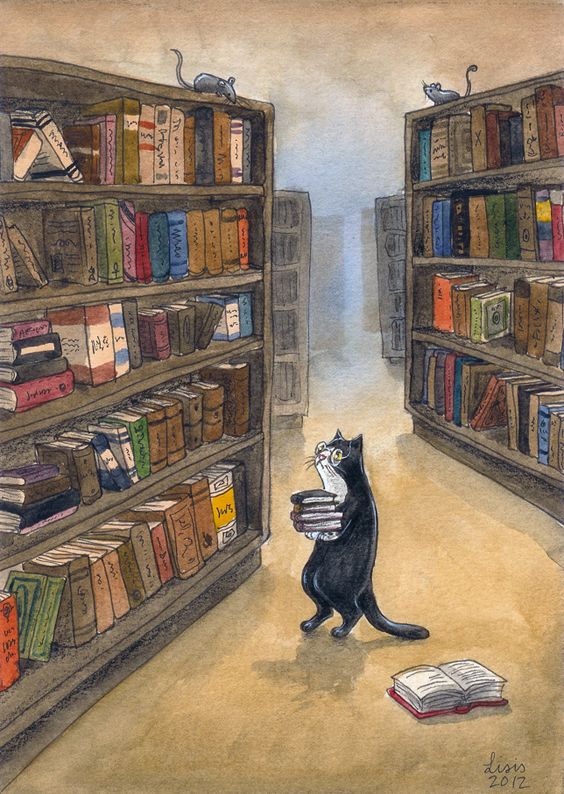
Kitty Librarian, by Liselotte-eriksson on DeviantArt
A spokesman for Perry told CNN that the former Energy Secretary denies being the author of the text. Multiple people who know Rick Perry confirmed to CNN that the phone number the committee has associated with that text message is Perry’s number.
The cell phone number the text was sent from, obtained from a source knowledgeable about the investigation, appears in databases as being registered to a James Richard Perry of Texas, the former governor’s full name.
The number is also associated in a second database as registered to a Department of Energy email address associated with Perry when he was secretary. When told of these facts, the spokesman had no explanation.
Ali Alexander, who founded the pro-Trump “Stop the Steal” movement and attended the rally that preceded the Capitol attack, told congressional investigators that he recalls “a few phone conversations” with Rep. Paul Gosar and a text exchange with Rep. Mo Brooks about his efforts in the run-up to Jan. 6, his lawyers confirmed in a late Friday court filing.
Alexander also told the Jan. 6 House select committee that he spoke to Rep. Andy Biggs (R-Ariz.) in person “and never by phone, to the best of his recollection,” his lawyers say.
The description of the testimony comes in a lawsuit Alexander filed to block the committee from obtaining his phone records from Verizon. Alexander says in the suit that the records include contacts with people protected by privileges: religious advisers, people he counsels spiritually and his lawyers. He also indicated that he already shared more than 1,500 text messages with investigators, in addition to sitting for an eight-hour deposition. The Brooks text, he indicated, is among the texts he turned over.
Cat in a box, by Ruskin Sphere
Alexander’s testimony underscores the degree to which the select committee continues to probe the roles of their Republican colleagues in efforts to promote former President Donald Trump’s baseless claims of election fraud — and their potential support for fringe figures who helped gather people in Washington on Jan. 6, the day Congress was required to certify the 2020 election results.
The panel hasn’t formally requested testimony from any of the GOP lawmakers yet but has continued to ask witnesses about Gosar, Biggs, Brooks and Rep. Scott Perry (R-Pa.), who helped push a strategy to use the Department of Justice to promote the fraud claims.
Per Alexander’s attorneys Jonathon Moseley and Paul Kamenar, members of Congress may have been on an organizing call with him in early January. Several were invited but he did not take attendance, the lawyers said.
When will these Congressional seditionists be brought to justice?
CAMBRIDGE, Mass. – The omicron variant of the coronavirus is moving faster than surveillance systems can track it and has so unnerved some medical experts that they’re starting to put the brakes on preparations for their holiday gatherings.
“Personally, I’m reevaluating plans for the holidays,” Bronwyn MacInnis, director of pathogen genomic surveillance at the Broad Institute of MIT and Harvard University, said on a call with reporters Tuesday. “It’s the responsible thing to do and what feels right given the risk.”
She and a handful of other Massachusetts-based researchers on the call said they’ve been stunned by the pace by which omicron has been crowding out other variants and taking over the pandemic.
By Tetsuo Takahara
The Centers for Disease Control and Prevention reports that about 3% of COVID-19 cases in the U.S. are omicron. But MacInnis said she believes that number was probably an underestimate on Dec. 11 – just three days ago – when the CDC first announced it, and now it’s likely much higher.
“At the rate that it seems to be spreading, there isn’t a surveillance system on the planet truly that could keep up with it,” MacInnis said.
In some parts of the country, there are hints omicron already accounts for about 15% of cases, said Jeremy Luban, a virus expert at the UMass Chan Medical School .
Omicron has been moving “faster even than the most pessimistic among us thought that it was going to move,” said Dr. Jacob Lemieux, an infectious disease expert at Massachusetts General Hospital. “There’s a high likelihood that it will come to your holiday gathering.”
It’s been about a month since scientists first detected the highly mutated coronavirus variant dubbed “omicron.”
Since then, scientists have come to learn that omicron spreads faster than the delta variant and is the quickest-spreading variant the world has yet faced. It also has a huge ability to bypass immune protection and cause breakthrough infections.
The big open-ended question right now centers on omicron’s severity: Does omicron cause milder disease, compared to previous variants? Does it thereby lower the risk of severe disease and hospitalization?
There’s no doubt everyone wants this to be the case. And some recent data out of South Africa sure makes it look like that might be the case. Researchers there have found that South Africans infected with omicron are, on average, less likely to end up in the hospital, and they also appear to recover more quickly from illness, compared to the other variants.
However, as many scientists have been pointing out, that evidence from South Africa could be misleading. The omicron variant may end up acting differently in the U.S.
COPENHAGEN — In a country that tracks the spread of coronavirus variants as closely as any in the world, the signals have never been more concerning. Omicron positives are doubling nearly every two days. The country is setting one daily case record after another. The lab analyzing positive tests recently added an overnight shift just to keep up.
Tea Cats, by Francesca Buchko
And scientists say the surge is just beginning.
As omicron drives a new phase of the pandemic, many are looking to Denmark — and particularly the government institute devoted to testing, surveillance and modeling — for warnings about what to expect.
The emerging answer — even in this highly vaccinated, wealthy northern European country — is dire. For all the defenses built over the last year, the virus is about to sprint out of control, and scientists here expect a similar pattern in much of the world.
“The next month will be the hardest period of the pandemic,” said Tyra Grove Krause, the chief epidemiologist at Denmark’s State Serum Institute, a campus of brick buildings along a canal.
Ever since the omicron variant emerged in November, the best hope has been that it might cause less severe sickness than the delta version it is competing with, which in turn might make this wave more manageable and help the transition of covid-19 into an endemic disease. But Denmark’s projections show the wave so fully inundating the country that even a lessened strain will deliver an unprecedented blow.
Marc Chagall – Saint-Paul de Vance at Sunset, 1977
Good Day Sky Dancers!
I hope your week went well and your weekend goes better! I think I’m fully moved into my new phone and zapped then returned the old one. I’m about to start switching over to the new computer tomorrow. I just have a few more adulting things to do and I, fortunately, don’t need the camera and mic until Sunday.
American Life is so abnormal that I am really glad that I don’t have to drag myself into a classroom until January. I’ve dealt with teaching far worse economies and financial markets so that’s not the challenge. Part of me is just bugged by the fact I can’t depend on any American to do the right thing in this latest surge of Pandemic. Indeed, I’m actually thinking I may be back on Zoom instead of behind a podium next year. I think our economy is looking resilient and the financial markets are functional. What I think is dysfunctional is the way America does business. That’s the model that doesn’t work. It’s especially not working now. The extreme nature of the American ideological take on Capitalism is causing all kinds of things just to not work.
Then, there’s the weather situation which was elucidated in an article in The Guardian that BB posted yesterday. We’re not just experiencing extreme weather. It’s extreme and unique. This week we had temperatures never reported before in December in places like St. Paul. We continue to have severe thunderstorms and tornadoes in the midwest in December. These records are not only record-setting. These instances are making records because their occurences are unknown to us in modern times. Between the weather and the global pandemic, we need to strengthen and address flaws in our institutions before it all kills nearly everything.
Marc Chagall, Bouquets de Lilas a Saint-Paul (Bouquets of Lilacs at Saint-Paul), 1978
It’s a good question to ask and it’s being asked by the workers at Kellogg’s including the one I spent my teen years viewing out school windows and those of my house on the hill. The plant in Omaha is way across on another hill where you can always see the big ol’ red Kellogg’s signature on the building. My thought was always the same. I’m never going to put myself in a place where I have to endlessly and mindlessly drop trinkets in cereal boxes for at least 8 hours a day. Yesterday, on MSNBC, I heard from Senator Sanders that some workers worked overtime for 100-120 consecutive days at Kellogg’s factories. We also learned that workers at the decimated candle factory in Kentucky were threatened with firing if they didn’t keep working. Are candles and dry cereal really worth this?
So, with that background, let’s read Anna North’s article.
For a moment in early 2020, it seemed like we might get a break from capitalism.
A novel coronavirus was sweeping the globe, and leaders and experts recommended that the US pay millions of people to stay home until the immediate crisis was over. These people wouldn’t work. They’d hunker down, take care of their families, and isolate themselves to keep everyone safe. With almost the whole economy on pause, the virus would stop spreading, and Americans could soon go back to normalcy with relatively little loss of life.
Obviously, that didn’t happen.
Instead, white-collar workers shifted over to Zoom (often with kids in the background), and everybody else was forced to keep showing up to their jobs in the face of a deadly virus. Hundreds of thousands died, countless numbers descended into depression and burnout, and a grim new standard was set: Americans keep working, even during the apocalypse.
Now it’s been nearly two years since the beginning of the pandemic — a time that has also encompassed an attempted coup, innumerable extreme weather events likely tied to climate change, and ongoing police violence against Black Americans — and we’ve been expected to show up to work through all of it. “I don’t think people are well,” says Riana Elyse Anderson, a clinical and community psychologist and professor at the University of Michigan’s School of Public Health. “We are moving along but we are certainly not well.”
For some Americans, working during the apocalypse is fatal — think of the transit workers who died from Covid-19 in 2020, or the Amazon warehouse workers killed by a tornado on December 10 in Illinois. “All disasters are workplace disasters for some people,” said Jacob Remes, a historian and the director of the Initiative for Critical Disaster Studies at New York University. For others, the effects are more of a slow burn; the chronic stress that comes with putting on a game face at work, day in and day out, as the world becomes ever more terrifying.
Of course, Americans haven’t all quietly accepted the demand that we work through the end times. Record numbers are quitting their jobs in search of higher pay and better conditions. After more than 20 months of being asked to keep showing up uncomplainingly while everything crumbles around them, people are demanding a more humane approach to work in the age of interlocking crises.
Marc Chagall: “Nocturne at Vence” 1963
Please read the full article.
So, the question is how do we get more humane treatment at work, access to educations, and childcare at a reasonable cost? Pharmaceuticals at a reasonable cost? Food at a reasonable cost? How about energy that doesn’t cost too much and kill us at the same time? Fewer wars? Actual customer service instead of automated checkouts and endless phone trees to get to someone that can actually help you? The business model these days is basically about where it was pre-union. Just jack up prices, lower service levels, overwork what employees you have, push a paperwork and surveillance atmosphere, then drive all the profits to the top where no one has to pay taxes on anything or can hide their money. This is not sustainable in this day and age. Where do we get some redress and control?
We should get it through our voter franchise and our democracy and representatives that deliver to voters and not just donors and radical bases. We’re losing all kinds of rights and none of them will return to us unless the majority of the democracy can vote easily and get fair elections, Can we get this done?
Not, when all roads lead to Joe Manchin and there’s a filibuster rule in the Senate for for basic civil, human, constitutional rights. These things should not be left to overturn by a radical minority.
From the AP: “Power of one: Manchin is singularly halting Biden’s agenda.” Let’s be real about this. It’s not just Biden’s Agenda it’s the people’s agenda as demonstrated by poll -after-poll. Joe Manchin is the perfect example of someone that pushes everything that’s not sustainable and mostly because his wealth depends on it and his power.
Sen. Joe Manchin settled in at President Joe Biden’s family home in Delaware on a Sunday morning in the fall as the Democrats worked furiously to gain his support on their far-reaching domestic package.
The two-hour-long session was the kind of special treatment being showered on the West Virginia senator — the president at one point even showing Manchin around his Wilmington home.
But months later, despite Democrats slashing Biden’s big bill in half and meeting the senator’s other demands, Manchin is no closer to voting yes.In an extraordinary display of political power in the evenly split 50-50 Senate, a single senator is about to seriously set back an entire presidential agenda.
Biden said in a statement Thursday night that he still believed “we will bridge our differences and advance the Build Back Better plan, even in the face of fierce Republican opposition.”
But with his domestic agenda stalled out in Congress, senators are coming to terms with the reality that passage of the president’s signature “Build Back Better Act,” as well as Democrats’ high-priority voting rights package, would most likely have to be delayed to next year.
Manchin’s actions throw Democrats into turmoil at time when families are struggling against the prolonged COVID-19 crisis and Biden’s party needs to convince voters heading toward the 2022 election that their unified party control of Washington can keep its campaign promises.
This has been pushed to the back burner and now they have decided to shift to voting rights. Look at who’s on the catbird seat again.
President Biden joined a Zoom call with Senate Democrats on Thursday to encourage them to pass voting rights legislation, as the chamber appears poised to leave for the year without a deal.
Sens. Tim Kaine (D-Va.) and Jon Tester (D-Mont.), who are both part of the group negotiating rules changes and voting rights, said that they had spoken with Biden about their efforts.
“Very positive. ‘Good work, guys. Keep at it,’” Kaine said about Biden’s message.
“‘Are you talking, are you taking it seriously, are you trying to get there?’ Yes. So he [was] encouraging us, thanking us and encouraging us,” the Virginia Democrat added.
Tester, asked about Biden’s general message, summed it up as the right to vote is “important for democracy.”
The White House didn’t immediately respond to a request for comment on the call.
Biden’s call come as Senate Democrats are poised to wrap their work for the year without a deal on how to move voting rights legislation.
“We don’t have the votes right now to change the rules,” Sen. Chris Murphy (D-Conn.) told reporters after a closed-door caucus lunch, acknowledging the political reality that the party currently faces.
Democrats have been holding a flurry of behind-the-scenes meetings to try to come to a deal that unites all 50 Democrats on changing the Senate rules.
A group of Senate Democrats — Kaine, Tester and King — have been tasked with coming up with a proposal on how to alter the 60-vote legislative filibuster in a way that would allow voting rights legislation to move forward.
Republicans have blocked several voting rights and election bills, fueling calls from within the Senate Democratic caucus to change the rules.
Protecting Americans' voting rights against a rising tide of authoritarianism is just as important as raising the debt ceiling.
I urge senators to extend the filibuster exception to majority votes on the Freedom to Vote Act and John Lewis Voting Rights Advancement Act.
"We know that the right to vote cannot be taken for granted. At every turn, it must be safeguarded and strengthened. Executive action alone is not enough. Our Congress must act." – @VPpic.twitter.com/jdHJgTAM96
Biden calls for Republicans to work alongside Democrats to pass widespread voting rights reform, including the Freedom to Vote Act and the John Lewis Voting Rights Act https://t.co/LlrpEoi676pic.twitter.com/curMRTmNCj
Long-simmering frustrations among prominent Black leaders appeared to be boiling over as they pressure President Joe Biden to do more to encourage the Senate to act. Progressive advocacy groups have revved up their pressure campaigns, fearing that time is running out to avert what they see as an existential threat to democracy. Leaders of the effort in the Senate, notably Sen. Raphael Warnock of Georgia, have held meetings with colleagues to find a path forward.
And moderates like Sens. Mark Warner of Virginia and John Hickenlooper of Colorado, said this week they’re ready to change the Senate rules to allow a vote on an election overhaul. But despite this movement, it may not be enough.
Manchin and Sinema are supportive of the Freedom to Vote Act, which would enshrine a series of voting-access guarantees across all states, and the John Lewis Voting Rights Advancement Act, which would impose additional limits on states with a history of discrimination. But neither supports a rule change to get around the 60-vote threshold that is blocking votes on those bills.
Manchin, who spoke to Warnock about the issue and left the Capitol shoulder-to-shoulder with him this week, told reporters he wants support from both parties before establishing new rules.
“All my discussions have been bipartisan, Republicans and Democrats. A rules change should be done to where we all have input in this rules change because we’re going to have to live with it,” he said.
That’s a problem: Republicans are extremely unlikely to sign off on any rule changes that would enable passage of voting rights legislation, which they staunchly oppose. A filibuster change through the regular process require a two-thirds vote, and even moderate Republicans say they’re not interested.
“I don’t see how. Unless Sen. (Chuck) Schumer tries to employ the nuclear option, rule changes require 67 votes,” Sen. Susan Collins, R-Maine, told NBC News, referring to the Senate majority leader. “I think the rules and traditions of the Senate have generally served us well, and I don’t see the need for rule changes.”
Sinema said through a spokesperson that she still opposes weakening the 60-vote rule to pass a voting bill.
And that Ladies and Gentlemen is how empires and democracies die!
Have a great weekend! I hope you enjoy the soothing colors of Marc Chagall!
What’s on your reading and blogging list today?
Did you like this post? Please share it with your friends:
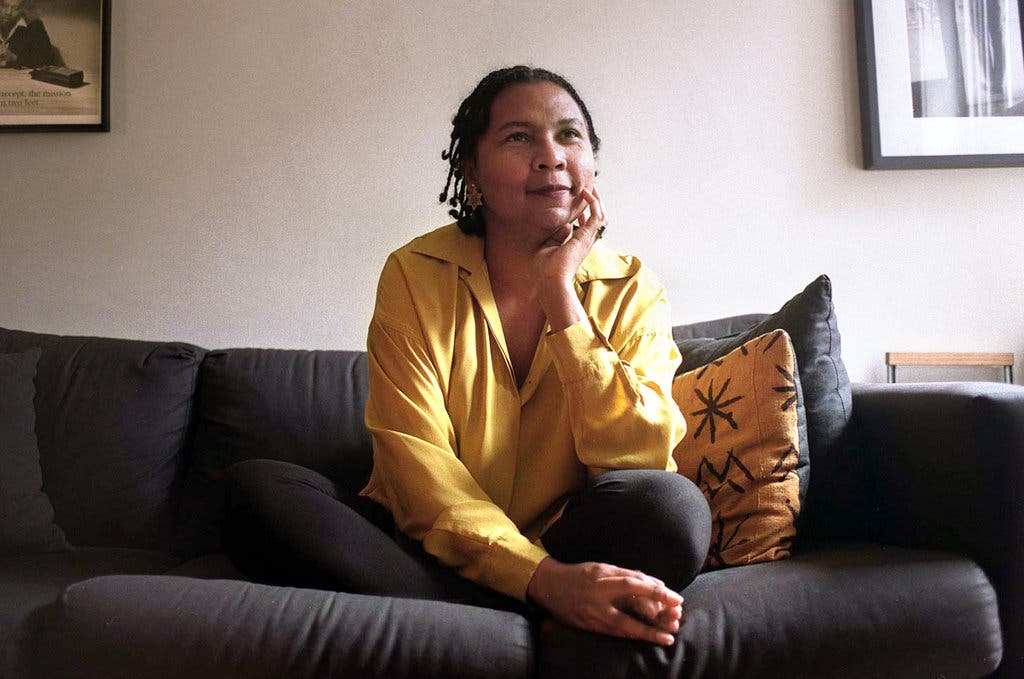
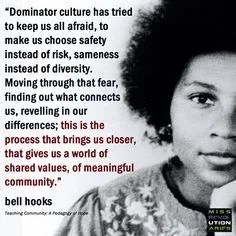
Yesterday we lost bell hooks (born Gloria Watkins), feminist theorist, poet, and activist.
I’m ashamed to admit that I’ve never read her work, but I was impressed by what I read about hooks this morning. Dakinikat was inspired by her, so perhaps she will share her thoughts today and/or tomorrow.
Our nation lost a prolific author, activist, and trailblazer. bell hooks’ profound and positive influence will be with us for generations to come. May she rest in power. pic.twitter.com/6yklT75Qqw
Gloria Jean Watkins, better known by her pen name bell hooks, has died aged 69.
Her niece Ebony Motley tweeted: “The family of @bellhooks is sad to announce the passing of our sister, aunt, great aunt and great great aunt.”
She also attached a statement, which said that “the family of Gloria Jean Watkins is deeply saddened at the passing of our beloved sister on December 15, 2021. The family honored her request to transition at home with family and friends by her side.”
The author, professor and activist was born in Hopkinsville, Kentucky in 1952, and published more than 30 books in her lifetime, covering topics including race, feminism, capitalism and intersectionality.
She adopted her maternal great-grandmother’s name as a pen name, since she so admired her, but used lowercase letters to distinguish herself from her family member. hooks’ first major work, Ain’t I a Woman?, was published in 1981, and became widely recognised as an important feminist text. It was named one of the 20 most influential women’s books in the last 20 years by Publishers Weekly in 1992.
She went on to write Feminist Theory: From Margin to Center in 1984, All About Love: New Visions in 2000 and We Real Cool: Black Men and Masculinity in 2004, continuing to draw on themes of feminism, race, love and gender.
Since 2004, she taught at Berea College in Kentucky, a liberal arts college that offers free tuition.
In 2016 hooks wrote in the Guardian that Beyoncé’s album Lemonade was “capitalist money-making at its best”, but criticised the notion of “freedom” depicted in the lyrics. “To truly be free,” wrote hooks, “we must choose beyond simply surviving adversity, we must dare to create lives of sustained optimal wellbeing and joy.”
“I want my work to be about healing,” she said in 2018 when she was inducted into the Kentucky Writers’ Hall of Fame. “I am a fortunate writer because every day of my life practically I get a letter, a phone call from someone who tells me how my work has transformed their life.”
From The Literary Hub:
hooks’s first published work of theory, Ain’t I A Woman: Black Women and Feminism, was published when she was 29 but written when she was an undergraduate, launching a four-decade-long career of writing and teaching, with a focus on classroom accessibility. hooks’s extensive body of scholarship and poetry—that remains and will continue to remain relevant—was consistent in its generosity, emphasizing the importance of loving communities to challenging systemic inequalities. Hooks believed a “militant commitment to feminism” was not at all at odds with joy and humor; in fact, that love “is the necessary foundation enabling us to survive the wars, the hardships, the sickness, and the dying with our spirits intact.” As she told The New York Times in 2015,
“We cannot have a meaningful revolution without humor. Every time we see the left or any group trying to move forward politically in a radical way, when they’re humorless, they fail. Humor is essential to the integrative balance that we need to deal with diversity and difference and the building of community. For example, I love to be in conversation with Cornel West. We always go high and we go low, and we always bring the joyful humor in. The last talk he and I gave together, many people were upset because we were silly together. But I consider it a high holy calling that we can be humorous together. How many times do we see an African-American man and an African-American woman talking together, critiquing one another, and yet having delicious, humorous delight? It’s a miracle.”
The late bell hooks, one of the great writers and cultural critics of the 20th century, “believed criticism came from a place of love, a desire for things worthy of losing ourselves to,” @huahsu writes.https://t.co/XpxFrJfy5o
I came to her work in the mid-nineties, during a fertile era of Black cultural studies, when it felt like your typical alternative weekly or independent magazine was as rigorous as an academic monograph. For hooks, writing in the public sphere was just an application of her mind to a more immediate concern, whether her subject was Madonna, Spike Lee, or, in one memorably withering piece, Larry Clark’s “Kids.” She was writing at a time when the serious study of culture—mining for subtexts, sifting for clues—was still a scrappy undertaking. As an Asian American reader, I was enamored with how critics like hooks drew on their own backgrounds and friendships, not to flatten their lives into something relatably universal but to remind us how we all index a vast, often contradictory array of tastes and experiences. Her criticism suggested a pulsing, tireless brain trying to make sense of how a work of art made her feel. She modelled an intellect: following the distant echoes of white supremacy and Black resistance over time and pinpointing their legacies in the works of Quentin Tarantino or Forest Whitaker’s “Waiting to Exhale.”
Yet her work—books such as “Reel to Real” or “Art on My Mind,” which have survived decades of rereadings and underlinings—also modelled how to simply live and breathe in the world. She was zealous in her praise—especially when it came to Julie Dash’s “Daughters of the Dust,” a film referenced countless times in her work—and she never lost grasp of how it feels to be awestruck while standing before a stirring work of art. She couldn’t deny the excitement as the lights dim and we prepare to surrender to the performance. But she made demands on the world. She believed criticism came from a place of love, a desire for things worthy of losing ourselves to….
This has been a particularly trying time for critics who came of age in the eighties and nineties, as giants like hooks, Greg Tate, and Dave Hickey have passed. hooks was a brilliant, tough critic—no doubt her death will inspire many revisitations of works like “Ain’t I a Woman,” “Black Looks,” or “Outlaw Culture.” Yet she was also a dazzling memoirist and poet. In 1982, she published a poem titled “in the matter of the egyptians” in Hambone, a journal she worked on with her then partner, Nathaniel Mackey. It reads:
ancestral bodies buried in sand sun treasured flowers press in a memory book they pass through loss and come to this still tenderness swept clean by scarce winds surfacing in the watery passage beyond death
I enjoyed reading this piece from 2019 by Min Jin Lee in The New York Times: In Praise of bell hooks.
In 1987, I was a sophomore at Yale. I’d been in the United States for 11 years, and although I was a history major, I wanted to read novels again. I signed up for “Introduction to African-American Literature,” which was taught by Gloria Watkins, an assistant professor in the English department, and she was such a wonderful teacher that I signed up for her other class, “Black Women and Their Fiction.”
Gloria — as we were allowed to address her in the classroom — had a slight figure with elegant wrists that peeked out of her tunic sweater sleeves. She was soft-spoken with a faint Southern accent, which I attributed to her birthplace, Hopkinsville, Ky. She was in her mid-30s then but looked much younger. Large, horn-rimmed glasses framed the open gaze of her genuinely curious mind. You knew her classes were special. The temperature in the room seemed to change in her presence because everything felt so intense and crackling like the way the air can feel heavy before a long-awaited rain. It wasn’t just school then. No, I think, we were falling in love with thinking and imagining again….
I was 19 when I took hooks’s classes, and I was just becoming a young feminist myself. I had begun my study of feminism with Mary Wollstonecraft, Charlotte Perkins Gilman, Susan B. Anthony, Elizabeth Cady Stanton, Virginia Woolf, Betty Friedan and Gloria Steinem, among other white women, and perhaps, because I was foreign-born — rightly or wrongly — I had not expected that people like me would be included in their vision of feminist liberation. Women and men of Asian ethnicities are so often neglected, excluded and marginalized in the Western academy, so as a college student I’d no doubt internalized my alleged insignificance. bell hooks changed my limited perception.
Her book of theory taught me to ask for more from art, literature, media, politics and history — and for me, a Korean girl who had been born in a divided nation once led by kings, colonizers, then a succession of presidents who were more or less dictators, and for millenniums, that had enforced rigid class systems with slaves and serfs until the early 20th century, and where women of all classes were deeply oppressed and brutalized, I needed to see that the movement had a space for me.
What else is in the news? January 6 and the never ending pandemic.
January 6: Could it be that the investigation is really heating up?
Ed Yong at The Atlantic: America Is Not Ready for Omicron. The new variant poses a far graver threat at the collective level than the individual one—the kind of test that the U.S. has repeatedly failed.
Have courage and enjoy the present moment. There’s no telling what will happen next.
Did you like this post? Please share it with your friends:
The Sky Dancing banner headline uses a snippet from a work by artist Tashi Mannox called 'Rainbow Study'. The work is described as a" study of typical Tibetan rainbow clouds, that feature in Thanka painting, temple decoration and silk brocades". dakinikat was immediately drawn to the image when trying to find stylized Tibetan Clouds to represent Sky Dancing. It is probably because Tashi's practice is similar to her own. His updated take on the clouds that fill the collection of traditional thankas is quite special.
You can find his work at his website by clicking on his logo below. He is also a calligraphy artist that uses important vajrayana syllables. We encourage you to visit his on line studio.







 Manchin’s private proposal to the White House — the details of which have not been previously reported — was made just days before a














 From The Literary Hub:
 Gloria — as we were allowed to address her in the classroom — had a slight figure with elegant wrists that peeked out of her tunic sweater sleeves. She was soft-spoken with a faint Southern accent, which I attributed to her birthplace, Hopkinsville, Ky. She was in her mid-30s then but looked much younger. Large, horn-rimmed glasses framed the open gaze of her genuinely curious mind. You knew her classes were special. The temperature in the room seemed to change in her presence because everything felt so intense and crackling like the way the air can feel heavy before a long-awaited rain. It wasn’t just school then. No, I think, we were falling in love with thinking and imagining again….
 peej
peej Carissa
 bostonboomer
 dakinikat
 ecocatwoman
 mablue2
 Mama Lopez
 peggysue22
 quixote
 skydancingguestblogger
 Mona (aka Wonk the Vote)



 Sky Dancing
Recent Comments