May That Nuclear War Be Cursed!, 1978, Maria Priymachenko
Good Morning!!
There was so much breaking news yesterday, and the flood of information continues this morning. I’ve been focused on the crisis in Ukraine lately, but yesterday the January 6 investigation came back into prominence.
Amid the intense battles that broke out approximately 50 miles northwest of Kyiv on February 25 during the Russian invasion of Ukraine, the Ivankiv Historical and Local History Museum was burned, according toThe Kyiv Independent. “Another one of the irreparable losses of the historical-cultural authority of Ukraine is the destruction of the Ivankiv Historical-Cultural Museum by the aggressor in these hellish days for our country,” wrote the museum’s director in a message on Facebook. As a result, the Ukrainian Minister of Culture, Olexandr Tkachenko, requested that Russia lose its UNESCO membership.
It is not yet confirmed how many pieces in the museum’s holdings survive, but the destroyed artifacts reportedly include roughly 25 works by the celebrated Ukrainian artist Maria Prymachenko, who died in 1997 at the age of 88. Beloved for her saturated gouaches and watercolors on paper, Prymachenko was known to transform cultural motifs (yellow suns and graphic, stencil-like flowers) into vivid and wildly imagined narratives, in which elephants longed to be sailors, horses traveled to outer space, and villagers hijacked giant serpents.Today, nearly 650 of her works, dating from 1936 to 1987, are also held by the National Museum of Ukrainian Folk Applied Art, in nearby Kyiv. Whether or not the Ivankiv museum was targeted intentionally, its loss is pointedly a blow to Ukraine’s cultural history, its collective spirit, its artistic soul.
Maria Prymachenko was born in 1908 close to Ivaniv, in the village of Bolotyna. Her father was a craftsman and carpenter; from her mother and grandmother, she learned Ukrainian arts of embroidery and hand-painting Easter eggs. From an early age, with no formal fine art training, Prymachenko began to create a way of working that stemmed from her encounters in forests and wildflower fields, surrounded by animals….
Our Army, Our Protectors, (1978), Maria Prymachenko
Around 1936, Tetiana Floru, an artist from Kyiv, saw Prymachenko’s embroideries for sale in the Ivankiv market and invited her to join the Central Experimental Workshop of the Kyiv Museum of Ukrainian Art, an assembly of folk artists from all over the country. It was life-changing for Prymachenko, who in Kyiv underwent surgeries for complications from childhood polio that finally allowed her to walk. In 1936, her works were included in the First Republican Folk Art Exhibition in Kyiv, which later traveled to Moscow and Leningrad, and the following year some of her drawings were presented in the International Exhibition in Paris, where she received a gold medal and the blurb of a lifetime from Pablo Picasso….
“I bow down before the artistic miracle of this brilliant Ukrainian,” Picasso reportedly said, visiting her exhibit in the same year he painted Guernica. Another admirer, Marc Chagall, also fell under the spell of her paintings: When he began to paint animals into his own magic realist scenes in his native Belarus, he called his creatures “the cousins of the strange beasts of Maria Prymachenko.” Other relatives in this imaginary zoo: the animal renderings of Henri Rousseau, Niki de Saint Phalle.
A top Russian military figure has been killed in the war in Ukraine according to local news outlets citing a social media post by his colleague.
Ukrainian news outlets were reporting that Andrei Sukhovetsky, deputy commander of the 41st Combined Arms Army of the Central Military District, had been killed on Wednesday.
Media outlets cited a post on VKontakte announcing the death, written by Sergei Chipilev, a deputy of the Russian veterans group, Combat Brotherhood.
Black Beast, 1936, Maria Prymachenko
“It is with great sorrow that we learned of the tragic news about the death of our friend, Major General Andrei Aleksandrovich Sukhovetsky, on the territory of Ukraine during a special operation,” his post said, without specifying the circumstances.
Christo Grozev, executive director of fact-checking website Bellingcat, tweeted news of the death, adding that if confirmed it would be a “major demotivator” for Russian forces….
News of the death was also reported by Russian media outlets. Lenta.ru carried the story, while Alexander Kots, a correspondent for the mass circulation tabloid Komsomolskaya Pravda, described the death in a post on social network Telegram.
A 40-mile column of Russian invaders has stalled on the way to Kyiv, opening itself to attack by Ukrainians, a senior defense official told reporters Wednesday.
“We believe that the convoy is stalled,” the official said. “They are not moving at any rate that would lead one to believe that they’ve solved their problems,” which still include a lack of food, fuel, and spare parts.
Some Ukrainian troops have also targeted the convoy, although in limited fashion, the official said.
The Threat of War, 1986, Maria Prymachenko
On Wednesday, Ukraine’s security service posted a video of a captured Russian soldier who says he and his unit were sent across the border with only three days’ food.
“Putin expected to capture Ukraine in three days,” Ukraine’s security service wrote above the video, which could not be independently verified. “By the order of the top Russian leadership, the phones and documents were taken from the fire brigades, removed food and water for three days and sent to war with Ukraine,” the agency said, according to the English translation of the post.
Insufficient food is among the missteps that have slowed the Russian advance, and perhaps edged Russia into more ferocious and indiscriminate use of missiles and airstrikes. As of Wednesday, Pentagon officials had counted roughly 450 such strikes on Ukrainian targets.
The senior defense official said Pentagon leaders expect the invasion to accelerate as Russia adjusts and gets provisions to its forces inside Ukraine.
A wartime chronicle: @ngumenyuk walks through Kyiv, taking pictures of buildings – the zoo, the opera house, her former office – in case tomorrow they aren't there. https://t.co/oFnJrCE2MK
As soon as the curfew was lifted in Kyiv, I drove around to understand what had happened to our capital overnight. For two full days residents had not been allowed to go out, even during the daytime. Russian saboteur groups were identified, and random street fights took place.
I did not recognise my city, with checkpoints in the old town, with people digging trenches, bridges being fortified and the subway turned into a bomb shelter.
“Do you enrol everybody who shows up?” we asked a young guy in charge. “Almost all, but I do not accept those under 18,” he said. “And there are a lot of them. I wouldn’t be able to look their mothers in the eyes. I fought in 2014-2015 in Donbas, so I know what the war is.”
It’s a predominantly male group but there are three women. The youngest is a lawyer. “What Russia has already done to the civilians has made us act,” she said. She had not told her family of her decision to fight. They live in a small town on the Ukrainian-Russian border, which has been partially destroyed. Another woman, in her 60s, said she was a nurse. Her husband had joined the defence units and she felt she needed to be with him. The last was a retired officer. She enrolled because her son had already joined the Ukrainian army. “When our grandparents, who remember the second world war, were wishing for peace, we didn’t understand why,” she said. “But now I know.”
Four Drunkards Riding a Bird,1976, Maria Prymachenko
The figures say one thing, experience another. The official toll of civilian deaths is 350, but after seven days’ fighting, there cannot be a single Ukrainian who doesn’t know somebody who has been touched by tragedy. There are more than 1,600 wounded….
“Those of you who have come to ‘rescue us’, just go away,” cries a woman holding a baby at Kyiv’s main station. “We were all right before you came. Just leave. All I have is some cash and a backpack.” Like thousands of people here, her mission is to go somewhere else, anywhere. The Ukrainian railway allows everybody to ride without tickets, including foreign citizens, and is running extra trains to the west.
We count the hours: seven, 20, 70, 100, 144: hours of the Ukrainian army on its own, its citizens holding off one of the mightiest armies in the world, which is now being bolstered by support from Belarus. The count becomes symbolic. For those under bombardment, each hour seems like a year.
KYIV, Ukraine (AP) — Russian forces captured a strategic Ukrainian port and besieged another Thursday in a bid to cut the country off from the sea, as the two sides met for another round of talks aimed at stopping the fighting that has set off an exodus of over 1 million refugees.
Moscow’s advance on Ukraine’s capital has apparently stalled over the past few days, with a huge armored column north of Kyiv at a standstill, but the military has made significant gains in the south as part of an effort to sever the country’s connection to the Black and Azov seas.
The Russian military said it had control of Kherson, and local Ukrainian officials confirmed that forces have taken over local government headquarters in the Black Sea port of 280,000, making it the first major city to fall since the invasion began a week ago.
Heavy fighting continued on the outskirts of another strategic port, Mariupol, on the Azov Sea, plunging it into darkness, isolation and fear. Electricity and phone service were largely down, and homes and shops faced food and water shortages.
Without phone connections, medics did not know where to take the wounded.
This is big: Joshua James, a member of the Oath Keepers militia group charged alongside founder Stewart Rhodes, has pleaded guilty to seditious conspiracy in connection with the Jan. 6 attack. He will "fully cooperate" with the feds.
A member of the Oath Keepers right-wing militia group charged in the Jan. 6 siege at the U.S. Capitol has pleaded guilty to seditious conspiracy and obstruction of an official proceeding of Congress. He vowed to “fully cooperate” with the federal investigation into the attack.
Joshua James, 34, is the first member of the militia group charged with seditious conspiracy to plead guilty to that charge. At a hearing Wednesday, he confirmed that under the plea agreement, he will “fully cooperate” with the government’s prosecution and testify before a grand jury and at trial.
The seditious conspiracy and obstruction charges, both felonies, carry potential jail sentences of 20 years each. The seditious conspiracy charge is the most serious charge yet in the federal government’s sprawling prosecution of those who participated in the Jan. 6 siege.
This Ukrainian Ram Did Not Gather His Crop, Maria Prymachenko, 1976
James was named in a 17-count indictment that also charged Oath Keepers founder Stewart Rhodes. According to prosecutors, James and the other Oath Keepers made plans to bring a variety of weapons to support the mob of Donald Trump supporters who violently overran police to swarm the Capitol building in an attempt to stop Congress from certifying Joe Biden‘s win in the 2020 presidential election.
At Wednesday’s hearing before U.S. District Judge Amit Mehta, James confirmed the Statement of Offense submitted in connection with his plea, which outlines the actions James took in support of the plan to overturn the election and keep Trump in office…
Here are a couple of things James admitted to:
In advance of and on January 6, 2021, James and others agreed to take part in the plan developed by Rhodes to use any means necessary, up to and including the use of force, to stop the lawful transfer of presidential power….
In the weeks leading up to January 6, 2021, Rhodes instructed James and other coconspirators to be prepared, if called upon, to report to the White House grounds to secure the perimeter and use lethal force if necessary against anyone who tried to remove President Trump from the White House, including the National Guard or other government actors who might be sent to remove President Trump as a result of the Presidential Election.
Read the rest at Law and Crime.
James is also close to Roger Stone and was communicating with him the morning of January 6, 2021.
Photograph of *Roger Stone* on *JANUARY 6th* with Joshua James, who just pled to SEDITIOUS CONSPIRACY and obstructing an official proceeding and is facing 7-9 years in prison as part of a full cooperation agreement.
In a court filing, the Jan. 6 committee said there was enough evidence to suggest that Trump might have engaged in a criminal conspiracy as he fought to remain in office. https://t.co/wPzISUJBjB
The House committee investigating the Jan. 6 attack on the Capitol said on Wednesday that there was enough evidence to conclude that former President Donald J. Trump and some of his allies might have conspired to commit fraud and obstruction by misleading Americans about the outcome of the 2020 election and attempting to overturn the result.
In a court filing in a civil case in California, the committee’s lawyers for the first time laid out their theory of a potential criminal case against the former president. They said they had accumulated evidence demonstrating that Mr. Trump, the conservative lawyer John Eastman and other allies could potentially be charged with criminal violations including obstructing an official proceeding of Congress and conspiracy to defraud the American people.
The filing also said there was evidence that Mr. Trump’s repeated lies that the election had been stolen amounted to common law fraud.
Corncob Horse in Outer Space, 1978, Maria Pryachenko
The filing disclosed only limited new evidence, and the committee asked the judge in the civil case to review the relevant material behind closed doors. In asserting the potential for criminality, the committee largely relied on the extensive and detailed accounts already made public of the actions Mr. Trump and his allies took to keep him in office after his defeat.
The committee added information from its more than 550 interviews with state officials, Justice Department officials and top aides to Mr. Trump, among others.
It said, for example, that Jason Miller, Mr. Trump’s senior campaign adviser, had told the committee in a deposition that Mr. Trump had been told soon after Election Day by a campaign data expert “in pretty blunt terms” that he was going to lose, suggesting that Mr. Trump was well aware that his months of assertions about a stolen election were false. (Mr. Trump subsequently said he disagreed with the data expert’s analysis, Mr. Miller said, because he thought he could win in court.)
The evidence gathered by the committee “provides, at minimum, a good-faith basis for concluding that President Trump has violated” the obstruction count, the filing, written by Douglas N. Letter, the general counsel of the House, said, adding: “The select committee also has a good-faith basis for concluding that the president and members of his campaign engaged in a criminal conspiracy to defraud the United States.”
The filing said that a “review of the materials may reveal that the president and members of his campaign engaged in common law fraud in connection with their efforts to overturn the 2020 election results.”
This post is way too long, but so much is happening! Have a great Thursday, Sky Dancers, and please share your thoughts a recommended reads with us.
Did you like this post? Please share it with your friends:
So much is happening in the Ukraine story right now. Whatever I post this morning is likely to change rapidly. But before I get to the Ukraine news and analysis, I want to call attention to the State of the Union Address tonight. We can probably use this post as a live thread, but if necessary we’ll put up a new thread for the speech.
.@Eugene_Robinson: "Biden has not solved all the problems of the nation or the world in his first year in the White House. But he has done a heck of a lot." https://t.co/aS1Hga4zE1
“My fellow Americans, the state of the union is … better. Much, much better.”
I doubt President Biden will use those exact words in his first State of the Union address on Tuesday night — not with inflation still in the headlines — but they encapsulate the truth. Biden has not solved all the problems of the nation or the world in his first year in the White House. But he has done a heck of a lot.
Recall where we were on the day Joe Biden took the oath of office.
The nation was gripped by the covid-19 pandemic, and there was no workable process or plan to get everyone vaccinated. The economy was in crisis; restaurants and hotels were shuttered, and airports were like ghost towns. Schools were closed. Two weeks earlier, a shocking and unprecedented violent assault on the U.S. Capitol was waged by insurrectionists bent on overturning the presidential election and keeping Biden’s predecessor in power. That defeated incumbent, bitter because the putsch had failed, lacked the respect for tradition and country to attend Biden’s inauguration.
Look where we are now.
Some 65 percent of the U.S. population is fully vaccinated, and nearly 44 percent has also had a booster shot. Covid-19 cases, hospitalizations and deaths are in free fall. During Biden’s first year, the economy added a record 6.6 million jobs and the unemployment rate fell to 4 percent. Schools are open and functioning normally. Mask mandates are being lifted. Our political discourse has returned to Democrats and Republicans shouting at each other across a yawning divide, but they are once again fighting with words, not cudgels and bear spray.
President Joe Biden will come before Congress on Tuesday seeking to sell his domestic and foreign policy agenda to an American public that has given him persistently low approval ratings as he faces the intensifying conflict in Ukraine.
A key focus of the prime-time address before Congress will be the U.S. response to Russia’s invasion of Ukraine, with Biden planning to highlight the united efforts by the U.S. allies and the impact sanctions have already had on Russia’s economy, administration officials said.
On domestic issues, Biden plans to talk extensively about efforts he has taken to improve the U.S. economy and control the pandemic, while pressing Congress to revive his stalled domestic policy agenda.
The speech comes at a pivotal moment for Biden, both at home and abroad. Among recent presidents, only his immediate predecessor, Donald Trump, came before Congress with a lower approval rating, with voters giving Biden low marks on everything from his leadership style to his handling of the economy.
The address may mark Biden’s last opportunity to make the case for his domestic policy agenda before a Congress controlled by his own party, with many Democrats facing a tough fight in the midterms.
The president’s team has been reworking his remarks in recent days to more heavily emphasize the response to Russia’s invasion of Ukraine. White House press secretary Jen Psaki, in an interview with MSNBC this week, compared the moment to the remarks before Congress by President Barack Obama during the financial crisis or the one President George W. Bush gave after the Sept. 11 attacks.
Read more at NBC News.
Here’s where things stand In Ukraine right now:
The Russians have unleashed an all-out attack on Ukraine’s second largest city Kharkiv.
A large explosion struck central Kharkiv, Ukraine’s second largest city, on Tuesday, directly in front of the city’s administrative building, creating a huge fireball that appeared in a video to engulf several cars driving through an area called Freedom Square.
The cause of the blast and number of casualties were not immediately clear, though the city’s mayor said there were dead and wounded. CCTV footage of the attack captured what appeared to be a rocket striking directly in front of the building. Video of the aftermath showed a large crater in the middle of the city’s cobble-stoned central square.
Residential areas in Kharkiv, Ukraine’s second-largest city, were being pounded by Russian shells while a massive 40-mile convoy of Russian tanks and vehicles rolled toward the capital of Kyiv on Tuesday as the war entered its sixth day.
At least 11 people were killed and 35 wounded in the rocket strikes on Kharkiv, Interior Ministry adviser Anton Herashchenko said. He said the rubble was still being cleared and the death toll was expected to rise.
Ukrainian President Volodymyr Zelenskyy called the attack on the city’s main square “frank, undisguised terror. Nobody will forgive. Nobody will forget. This attack on Kharkiv is a war crime.”
Kharkiv Mayor Ihor Terekhov said Tuesday that his government remained under control but said the city is surrounded by Russian troops.
Mayor of Kharkiv says a strike hit a local hospital in the city leading to multiple casualties
DNIPRO, Ukraine — Russian forces, frustrated by the tenacious defense of major cities by Ukrainian soldiers and ad hoc civilian militias, gathered menacing strength Tuesday, as a projectile appeared to strike near Kharkiv’s administration building and a convoy of tanks, troop carriers and artillery more than 40 miles long threatened Kyiv.
Kharkiv remains under Ukrainian control but is “surrounded” by Russian troops, Kharkiv Mayor Ihor Terekhov told The Washington Post. In Kyiv, residents are bracing for an all-out assault as the Russian force, under the command of a president whose country has quickly become an international political and economic pariah, is apparently preparing to encircle the capital. A senior U.S. defense official said the Kremlin seems ready to adopt the same siege tactics that are beginning to strangle Kharkiv.
There, thousands are without power and heat in freezing temperatures, local officials said, and residents braced for more shelling Tuesday. Suspected cluster munitions struck residential parts of Kharkiv on Monday, raising fears that Russia could use tactics similar to those employed in Chechnya and Syria, where it has been accused of war crimes. Ukrainian President Volodymyr Zelensky said the attack on Kharkiv was “terror against the city.”
Five hours of talks between Russian and Ukrainian delegations Monday near the Belarusian border failed to yield a breakthrough, with the two sides agreeing only to continue discussions in coming days. Top Russian officials hardened their rhetoric Tuesday, denying attacks on civilian areas, and Defense Minister Sergei Shoigu said the war would continue until Moscow’s goals are met.
MUKACHEVO, Ukraine — Ukrainian officials say at least 11 people were killed and more were wounded in the eastern city of Kharkiv on Monday morning after Russia launched rocket strikes, targeting Ukraine’s second-largest city with some of the heaviest shelling since the invasion began Thursday.
Suspected cluster munitions struck buildings in residential parts of the city, raising fears that as Russia escalates attacks in urban areas it could use tactics similar to those it used in Chechnya and Syria, where it has been accused of widespread wartime abuses.
The bombardments came as Russian and Ukrainian delegations held talks Monday for the first time. They met by Ukraine’s border with Belarus, a key Russian ally.
Oleh Synehubov, head of the Kharkiv Regional State Administration, said Monday that “dozens are dying” and that at least 11 people were confirmed dead. He called the attacks, in three areas of the predominantly Russian-speaking city that had been considered more friendly to Russia, “a war crime.”
“The Russian enemy is shelling entire residential areas of Kharkiv, where there is no critical infrastructure, where there are no positions of the Armed Forces of Ukraine that the Russians could aim at,” he said in a message on Telegram.
One of the new satellite images from Maxar showing the Russian military convoy that’s reached the outskirts of Kyiv, longer than previously measured & now believed to be 40+ miles long. Maxar says it’s made up of armored vehicles, tanks, towed artillery and other vehicles. pic.twitter.com/0iOg3IqPWA
A massive convoy of Russian ground forces is wending its way closer to Kyiv, drawing within 20 miles of the center of the Ukrainian capital Monday, satellite images showed.
The line of Russian military vehicles stretched along the road for roughly 40 miles, far longer than initial estimates, according to the U.S. firm Maxar Technologies, which captured the photos Monday morning local time. The convoy includes armored vehicles, tanks and towed artillery, Maxar said, and it appears to be making steady progress along the war-scarred roads leading to Kyiv.
On Sunday, Maxar released images that showed the same group of Russian forces roughly 40 miles from the capital. The company’s analysts estimated then that the convoy was about three miles long but revised their assessment dramatically upward one day later, noting that cloud cover interfered with initial projections.
The convoy cuts a menacing figure through the countryside near Kyiv, but Ukrainian troops remained defiant Monday after weathering the most intense shelling since the invasion began, in the eastern city of Kharkiv.
The images come amid questions over whether Russian forces will use siege tactics against Kyiv, encircling the city, cutting off supplies and escape routes, and then moving in.
Russia is attempting to surround Kyiv, a senior U.S. defense official told The Washington Post on Monday, adding that Moscow has used siege tactics elsewhere in Ukraine, including in the northern city of Chernihiv and Kharkiv in the northeast. The official spoke on the condition of anonymity to discuss sensitive intelligence.
The possibility of such an attack on the capital city of nearly 3 million people adds to concerns that the death toll could increase significantly in the coming days. House lawmakers briefed Monday by senior Biden administration officials were told Ukraine has suffered 1,500 civilian and military casualties, according to two people in the briefing. It was unclear whether the count referred only to fatalities or included injuries. “It’s likely going to be very significant loss of life,” said Rep. Victoria Spartz (R-Ind.), who was born and raised in Ukraine.
So that’s the latest on the war front.
Ukraine Analysis
Interviewer: ‘There are people who are saying we’re on the brink of a World War III.’
Hill: ‘We’re already in it. We have been for some time.’
Superb but terrifying piece by pre-eminent Russia expert, Fiona Hill
[Fiona] Hill spent many years studying history, and in our conversation, she repeatedly traced how long arcs and trends of European history are converging on Ukraine right now. We are already, she said, in the middle of a third World War, whether we’ve fully grasped it or not.
“Sadly, we are treading back through old historical patterns that we said that we would never permit to happen again,” Hill told me.
Those old historical patterns include Western businesses who fail to see how they help build a tyrant’s war chest, admirers enamored of an autocrat’s “strength” and politicians’ tendency to point fingers inward for political gain instead of working together for their nation’s security.
But at the same time, Hill says it’s not too late to turn Putin back, and it’s a job not just for the Ukrainians or for NATO — it’s a job that ordinary Westerners and companies can assist in important ways once they grasp what’s at stake.
“Ukraine has become the front line in a struggle, not just between democracies and autocracies but in a struggle for maintaining a rules-based system in which the things that countries want are not taken by force,” Hill said. “Every country in the world should be paying close attention to this.”
There’s lots of danger ahead, she warned. Putin is increasingly operating emotionally and likely to use all the weapons at his disposal, including nuclear ones. It’s important not to have any illusions — but equally important not to lose hope.
“Every time you think, ’No, he wouldn’t, would he?’ Well, yes, he would,” Hill said. “And he wants us to know that, of course. It’s not that we should be intimidated and scared…. We have to prepare for those contingencies and figure out what is it that we’re going to do to head them off.”
The US intelligence community has made evaluating Russian President Vladimir Putin’s state of mind a top priority in recent days as it seeks to establish how that is affecting his handling of the rapidly escalating Ukraine crisis, according to two sources familiar with the effort.
The efforts come as longtime Putin-watchers have publicly speculated that his behavior has become increasingly erratic and irrational. Since he launched Russia’s invasion of Ukraine last Wednesday, senior US officials have asked intelligence agencies to gather any new information they can on how the Russian leader is faring and how his mindset has been impacted by the unexpectedly unified and tough response from European neighbors and allies around the world.
The US intelligence community has spent decades decoding the former KGB officer, who has effectively ruled Russia since 1999. But while the United States has tremendous institutional knowledge of the man, it has a notoriously poor view into his day-to-day decision-making. The Kremlin remains what intelligence officials call a “hard target” — incredibly difficult to penetrate through traditional espionage.
There has not been any new comprehensive assessment that indicates a particular change to Putin’s overall health, said one US official. And officials have been on guard for the possibility that Putin’s strategy may well be to project instability, in an attempt to push the US and allies to give him what he wants for fear that he could do worse.
But the sudden burst of interest reflects a sense among some intelligence officials that Putin’s decision-making in Ukraine has been out of character — perhaps due to what some previous intelligence reports suggest has been protracted isolation during the Covid-19 pandemic.
“Everything US has [is] in [the] realm of conjecture because Putin’s decisions and statements don’t seem to be making sense,” said one source familiar with recent intelligence reporting on the topic. “For years, decades Putin has acted according to a pretty specific template.”
In a classified briefing for lawmakers on Monday evening, Avril Haines, the director of national intelligence, said the US intelligence community does not have good insight into Putin’s state of mind, according to a lawmaker who was present.
One bit of good news:
The European Parliament has approved Ukraine's application to join the European Union.
It’s hard not to be drawn into the war porn blasting endlessly on the normal cable news channels just like the last few wars that were broadcast live. This one feels different. It also looks different. There are aspects to this war that bring it home to white Europeans and Americans more than images from places like Somalia or Afghanistan. This is something we should deconstruct.
Most Ukrainians are middle class, urban, and as the Russians who are fighting them mention: “they look like us”. Maybe it’s tribal and racist, maybe it’s because most of us grew up seeing pictures and videos of both the World Wars in Europe and all the bombings of cities great and small, but this one is hitting home and it’s getting results, unlike many recent wars. My guess is that it’s a mix of all that and it damn-well could start World War 3 with possible use of Nukes at its worse. All these countries have or have had Nukes.
I did feel awful watching the result of Orange Caligula abandoning our Kurdish allies and also the results of him carelessly leaving a mess to Biden when troops left Afghanistan. But this one, this naked aggression in the birthplace of many wars is just on another level altogether. Then there’s the border and kids in cages. I really felt that I had numbed up to the absolute cruelty of men in power. The other thing that is different is that I have friends all over the region and I speak to them daily as we play games online. I can actually ask my friend in Hungary about the refugees pouring into the region or my friend in Ukraine who is in a small city with no fighting who is worried about his small daughter and elderly mother. The internet has brought me cyber neighbors in the region.
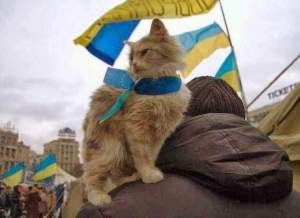
And, yes, we’re having a bonus show of Cats and Dogs at War because I can’t handle all the pictures of families scattering yet again and children of war clinging to their pets, their stuffed animals, and each other. I do have one thought though. Putin should have thought this over and looked back to history. Ukraine is the historical home of the Cossacks and when part of Russia brought the Russian army its fiercest fighters. Ukraine also has the highest number of women in its military of any country. ” Why Are Cossacks Key to Understanding the Ukrainian Nation?”
The Ukrainian Cossack has come to symbolize Ukraine’s ethnic image, much like the medieval knight of Western Europe or the Samurai of Japan. In fact, only a minority of Ukrainians belonged to this famed social group – but their influence on history, culture, and the psychology of the country was deeply profound. If you know the history of the Cossacks, you won’t be surprised to find that Ukrainians, who seem quiet and humble at first sight, can go to protest on Maidan and become courageous warriors.
You may read about this history at the link as well as watch a BBC documentary. It’s fascinating.
Videos posted on social media show whole columns of tanks and armored vehicles have been wiped out. Others have been stopped in their tracks by ordinary Ukrainians standing on the street to block their advance.
Lightly armed units propelled deep into the country without support have been surrounded and their soldiers captured or killed. Warplanes have been shot out of the skies and helicopters have been downed, according to Ukrainian and U.S. military officials.
Logistics supply chains have failed, leaving troops stranded on roadsides to be captured because their vehicles ran out of fuel.
Most critically, Russia has proved unable to secure air superiority over the tiny Ukrainian air force — despite having the second-largest air force in the world, Pentagon officials say. Its troops have yet to take control of any significant city or meaningful chunk of territory, a senior U.S. defense official said Sunday.
On Sunday, a Russian attempt to seize control of the city of Kharkiv, less than 30 miles from the Russian border, was repelled. A fresh push toward the capital, Kyiv, came to a smoking end in the suburb of Irpin, where videos posted on social media showed the charred remains of Russian tanks and armored vehicles strewn around the streets while Ukrainian soldiers removed weapons from the bodies of dead Russians.
British oil giant BP said Sunday that it is “exiting” its $14 billion stake in Russian oil giant Rosneft over Moscow’s invasion of Ukraine in one of the biggest signs yet that the Western business world is cutting ties over the Kremlin’s invasion of Ukraine.
BP, which reportedly came under pressure from the British government to sever the Rosneft relationship, also said its current and former chief executives — Bernard Looney and Bob Dudley — have resigned from the Russian company’s board “with immediate effect.”
The abrupt divorce is another sign of the uncertainty Russia’s invasion has created in the energy industry, which experienced wild swings in oil and gas prices last week as the attack began. BP’s 19.75 percent stake in Rosneft accounted for a third of the British company’s oil and gas production and more than half of its reserves.
“Russia’s attack on Ukraine is an act of aggression which is having tragic consequences across the region. BP has operated in Russia for over 30 years, working with brilliant Russian colleagues. However, this military action represents a fundamental change. It has led the BP board to conclude, after a thorough process, that our involvement with Rosneft, a state-owned enterprise, simply cannot continue,” BP chair Helge Lund said in a statement Sunday.
The announcement marks the end of one of the Western world’s largest investments in Russia, seen as so politically important that Russian President Vladimir Putin and then-British Prime Minister Tony Blair personally attended a signing ceremony for a key part of the deal in 2003. At that meeting, Putin called the BP-Russia deal “a reflection of the positive trends in Russia’s investment climate.”
Switzerland, a favorite destination for Russian oligarchs and their money, announced on Monday that it would freeze Russian financial assets in the country, setting aside a deeply rooted tradition of neutrality to join the European Union and a growing number of nations seeking to penalize Russia for the invasion of Ukraine.
After a meeting with the Swiss Federal Council, Switzerland’s president, Ignazio Cassis, said that the country would immediately freeze the assets of Russia’s president, Vladimir V. Putin, Prime Minister Mikhail V. Mishustin and Foreign Minister Sergey V. Lavrov, as well as all 367 individuals sanctioned last week by the European Union.
Switzerland said it was departing from its usual policy of neutrality because of “the unprecedented military attack by Russia on a sovereign European state,” but expressed a willingness to help mediate in the conflict. It also joined European neighbors in closing its airspace to Russian aircraft, except for humanitarian or diplomatic purposes. But said it would evaluate whether to join in subsequent E.U. sanctions on a case-by-case basis.
Mr. Lavrov, who was scheduled to be in Geneva on Tuesday to address the United Nations Human Rights Council, will no longer make the trip because of the flight ban, Russia’s mission to the United Nations in Geneva said on Twitter.
Details: The commitments agreed to by the U.S., EU, France, Germany, Italy, U.K. and Canada on Saturday fall into five main categories, according to a joint statement.
Disconnect select Russian banks from SWIFT, a move that a senior Biden administration official referred to as the “Iran model.”
Undermine the Russian Central Bank’s ability to defend the ruble.
Limit the sale of so-called “golden passports” that allow wealthy Russians to become citizens of Western countries and exploit their financial systems.
Launch a trans-Atlantic task force to hunt down the assets of sanctioned Russians in order to ensure the penalties are enforced.
Step up coordination of against Russian disinformation and other forms of hybrid warfare.
• The first round of peace talks concluded • Zelensky signed an application for Ukraine to join the EU • Ukrainian cities including Kharkiv face some of the heaviest shelling of the war thus far, with reports of significant civilian casualties.https://t.co/md7RLsqyoa
We’ll try to keep up with the headlines this week including Biden’s SOTU speech Tuesday Night. I think I can safely say we’re all pulling for the people, animals, and democracy of Ukraine.
What’s on your reading and blogging list today?
Did you like this post? Please share it with your friends:
NOTE: Today’s cat paintings are by Ukrainian artists.
Putin’s attack on Ukraine is not going as smoothly as he probably hoped. In fact he looks isolated by most of the world and is even getting negative feedback from the Russian people and from close neighbor and ally Kazakhstan.
Kazakhstan, one of Russia’s closest allies and a southern neighbor, is denying a request for its troops to join the offensive in Ukraine, officials said Friday.
Additionally, the former Soviet republic said it is not recognizing the Russia-created breakaway republics upheld by Russia’s president, Vladimir Putin, as a pretext for its aggression in Ukraine.
Despite ceasefire accords covering the disputed land, Putin on Monday declared Russia’s recognition of Luhansk People’s Republic (LNR) and the Donetsk People’s Republic (DNR) as independent states.
The surprising development from a traditional ally of Russia has the support of the United States.
“We welcome Kazakhstan’s announcement that they will not recognize the LPR and DPR,” the National Security Council said in a statement. “We also welcome Kazakhstan’s refusal to send its forces to join Putin’s war in Ukraine.”
At home in Russia, Putin is struggling to put down popular antiwar protests.
As the sun set over the Kremlin on the first day of Russia’s war against Ukraine, Moscow felt tense. Black cars with tinted windows, flashing lights and police escorts zipped around the city centre. Police vans pushed ordinary cars to the side of the road. It was as though Moscow itself was coming under attack.
Rimma and her cat, by Gubsky Igor
And the “attack” did come, a couple of hours later as several thousand people, mostly young, poured onto the streets holding signs condemning the war their president had unleashed against their brothers and sisters in Ukraine. They chanted, “Net voine” (“No to war”). The same words were splashed with paint on the glass doors of the Russian state Duma, the parliament that had almost unanimously supported the invasion.
The protesters’ faces were crestfallen, gripped by dismay and grief. And they were met with brutality. Helmeted riot police pushed them to the ground and bundled them into vans. Gregory Yudin, a sociologist and left-wing philosopher, was beaten and taken to a police cell before finally being transferred to hospital. On February 24th some 1,700 people were arrested, half of them in Moscow. But anti-war protests also rolled through the country from Siberia to St Petersburg, where more people were detained the following day….
Journalists, artists, celebrities, rockstars and bloggers have been speaking out. “Fear and pain,” wrote Ivan Urgant, a popular host on state-owned television, on his Instagram. Monetochka (“Little coin”), a pop star, published a photo of her own face, weeping, with a sign: “So ashamed!” So far there have been no resignations among senior officials, but neither has there been any enthusiasm for war. Sergei Utkin, a security expert who had previously peddled the Kremlin’s line on foreign policy, wrote on Twitter, “My country is committing a horrible crime in Ukraine that can have no justification…We all bear a part of responsibility. There is no good way out of that.”
A petition against the war has gathered 500,000 signatures in a single day, and is growing. Novaya Gazeta, Russia’s main pro-opposition newspaper, came out in two languages, Russian and Ukrainian. Its editor, Dmitry Muratov, the most recent winner of the Nobel Peace Prize, wrote that Mr Putin “is spinning a nuclear button around his finger like some expensive car key chain…But we can never recognise Ukraine as an enemy. And never will.”
In Kyiv, former comedian and now Ukraine’s president Volodymyr Zelensky is turning out to be an inspirational leader.
Ukrainian President Volodymyr Zelensky has turned down an offer from the United States of evacuation from the capital city Kyiv, the Ukraine embassy in Britain said Saturday on Twitter.
“The fight is here; I need ammunition, not a ride,” Zelensky told the US, according to the embassy.
“Ukrainians are proud of their President,” the tweet adds.
Cat in the Strawberry, dedicated to Mariia Pryimachenko, by Olesya Kaznokh
In a video posted on Saturday morning entitled “do not believe the fakes,” Zelensky revealed that he is still in Kyiv.
“I am here. We are not putting down arms. We will be defending our country, because our weapon is truth, and our truth is that this is our land, our country, our children, and we will defend all of this,” he said.
“That is it. That’s all I wanted to tell you. Glory to Ukraine,” he added….
“According to our information, the enemy marked me as target №1, my family – as target №2,” Zelensky said Thursday.
“They want to destroy Ukraine politically by destroying the head of state. We have information that enemy sabotage groups have entered Kyiv.”
An American businessman with close ties to Volodymyr Zelensky says the Ukrainian president was “calm and businesslike” when they talked yesterday, even as Russian troops pressed on toward Kyiv and the volume of rocket attacks on the capital soared.
“He seemed reluctant to leave the country,” said the businessman, who has extensive projects in the country and asked not to be identified because of the fraught security situation.
“U.S. officials were urging him to leave. He feared he’d never be able to come back.”
Zelensky’s position hardened Friday when he posted a defiant video in which he said he and his government were “defending our independence” from the Russian invasion.
“We are all here,” he said, surrounded by senior advisers and his prime minister.
“Our troops are here, citizens are here. All of us are here protecting the independence of our country.
“And it will continue to be this way.”
On Thursday evening he told European Union leaders “this might be the last time you see me alive,” according to Axios.
On the first day of President Vladimir V. Putin’s invasion of Ukraine, his generals and troops followed a textbook strategy for land invasions. They attacked the country’s military installations and air defense systems with missiles launched from the air, sea and land, seeking to take ownership of the skies, and sped forces to Kyiv, the capital, with the goal of decapitating the government of the democratically elected president, Volodymyr Zelensky.
But then, things slowed. It is one thing to cross the border of another country with tanks and artillery, protected by warplanes above, Pentagon officials and analysts say. It is another thing entirely to lay siege to cities and an army populated by people willing to put their lives on the line to protect what they view as their sovereign right to self-determination.
Within a day of entering Ukraine, Russian forces lost some momentum, senior American and British officials said, as Ukrainian fighters mounted a resistance. No population centers had been taken, a senior Defense Department official told reporters at the Pentagon on Friday. Nor had Russia yet managed to achieve air superiority over Ukraine, partly because the Ukrainians are using mobile systems and partly because Russian missiles have hit old air defense sites, which could show a flaw in Russia’s intelligence. The Ukrainian air defense and missile defense systems were degraded, he said, but the country’s air force was still flying planes and denying air access to Russia.
In addition, officials said, Russia was conducting most of its initial operations during the day, suggesting that its ability to fight at night — a hallmark of the American military — was less effective.
Ukrainian troops held the capital Kyiv for the third day on Saturday, despite Russia’s stronger military power, after a night of fierce fighting that punctuated the city with sounds of explosions and gunfire.
The country’s President Volodymyr Zelensky remained defiant. Despite being a prime target in the invasion, he turned down a US offer of evacuation, the Ukraine embassy in Britain said Saturday on Twitter….
But as Russia’s war of aggression moves to the streets of the Ukrainian capital, with the country’s outnumbered and outgunned military continuing to hold back the invading forces in multiple locations, more reports are emerging of civilian infrastructure being hit.
Ukrainian folk art, artist unknown
Early Saturday, a large residential apartment block in the west of Kyiv was struck by a missile or rocket, as residents across the city were forced to seek shelter after a terrifying night of fighting.
Images and video from the scene showed a large impact some ten floors up in the building, with the cause of the strike unclear and the extent of casualties unknown. Several apartment units were blown out entirely, their outer walls and windows missing, leaving a gaping hole visible in the building’s side, as residents were evacuated.
“Active fighting is taking place on the streets of our city. Please stay calm and be as careful as possible!” the Ukrainian Interior Ministry said on its Facebook page Saturday, calling on residents to “hide indoors” and take cover to prevent injury from bullet fragments.
The resistance to Russia’s invasion has seen civilians prepare to defend their capital in recent days, with officials arming reservists with 18,000 guns and ammunition in Kyiv alone and Ukrainian TV broadcasting instructions for making Molotov cocktails.
Ukrainian troops are fighting against a significantly more advanced military power. Russian defense spending is roughly ten times that of Kyiv’s and its armed forces stand at some 900,000 active personnel and 2 million in reserve, versus Ukraine’s 196,000 and 900,000 reservists.
Britain’s Ministry of Defense said Russia has yet to gain control of Ukrainian airspace “greatly reducing the effectiveness of the Russian Air Force.” Russia has also faced “staunch resistance” from Ukrainian Armed Forces, it said in a Saturday intelligence update shared on Twitter.
But it stressed that the bulk of Russian forces are now only 18.6 miles from the center of Kyiv, warning that casualties are “likely to be heavy and greater than anticipated or acknowledged by the Kremlin.”
First things first! We now have Biden’s first nomination to the Supreme Court! It’s the Honorable Judge Ketanji Brown Jackson who was always the clear favorite. It will be so exciting to see a Black woman bring her experience and knowledge to this bench. Let’s hope the Republicans on the Judiciary don’t continue to harass nominations that don’t represent their idea of proper demographics.
I’m proud to announce that I am nominating Judge Ketanji Brown Jackson to serve on the Supreme Court. Currently serving on the U.S. Court of Appeals for the D.C. Circuit, she is one of our nation’s brightest legal minds and will be an exceptional Justice.https://t.co/iePvhz1YaApic.twitter.com/Nzqv2AtN8h
This is from The Washington Post and includes live updates: “Biden calls Jackson ‘one of our nation’s brightest legal minds’ as he announces intent to nominate her to Supreme Court.”
Here’s what to know
The Washington Post will have live coverage of Biden’s announcement anchored by Libby Casey starting at 1:30 p.m.
Biden’s pick comes amid the unusual circumstances of an ongoing invasion of Ukraine by Russia that has dominated the news for several days.
Biden interviewed at least two other candidates for the job: J. Michelle Childs, a federal judge in South Carolina; and Leondra Kruger, a justice on the California Supreme Court, according to people familiar with the process.
Black activists and women’s groups that banded together to protect Vice President Harris from racist and sexist attacks before and after the 2020 election are remobilizing for the battle over Biden’s nominee.
President Biden has selected Judge Ketanji Brown Jackson as his nominee to the Supreme Court, the administration said Friday, choosing a well-regarded federal appeals court judge who if confirmed would make history by becoming the first Black woman to serve as a justice.
Mr. Biden’s decision, made after a monthlong search, fulfilled a campaign vow to nominate a Black woman to the bench, and set into motion a confirmation battle that will play out in an evenly divided Senate.
One of several statements sent by the Republican National Committee this morning seeks to paint Judge Jackson as an elitist. The group said her past as a director of the Harvard Alumni Association raised “questions about her judgment,” in part because of a trip the group had planned to make to North Korea that was canceled during her tenure on the group’s board. Prospective participants were advised to “show respect” to Kim Jong Il, the North Korean leader at the time, if they made the trip. It’s not clear whether Judge Jackson was involved in any way in planning the trip. Even so, it is a curious line of criticism, given the effusive public comments former President Donald J. Trump has frequently made about Kim Jong Un, the current North Korean leader and son of Kim Jong Il: “We fell in love,” Mr. Trump said of the younger Mr. Kim in 2018.
We are celebrating an historic moment as President Biden nominates Justice Ketanji Brown Jackson to the US Supreme Court. She has pursued justice her entire career and brings masterful command of law, outstanding credentials and broad legal experience to the Court. #SheWillRisepic.twitter.com/G93Z5pofFn
Kateryna Bilokur: Field on Collective Farm (1948-49).
The worst of the Republican trolling appears to come from Lady Lindsey who is pearl-clutching at her Harvard Credentials. He didn’t seem to mind her the last time she was up for her current position He also didn’t complain about Kavanaugh or Gorsuch’s Ivy League credentials when they were quickly shuffled to the High Court. But, here he is! This is from the New Civil Rights Movement:” ‘Absolute BS’: ‘Gaslighting’ Lindsey Graham Blasted for Denouncing Biden SCOTUS Pick as Proof ‘Radical Left Has Won’. It’s written by David Badash.
Judge Jackson has more experience on the bench than the combined experience of Chief Justice John Roberts, and Justices Amy Coney Barrett, Elena Kagan, and Clarence Thomas when they were confirmed, as University of Texas Law law professor Steve Vladeck noted.
Regardless of Judge Jackson’s excellent qualifications (the White House has already published a microsite on her background) Senator Graham was furious – and is being roundly condemned for that outrage.
“If media reports are accurate, and Judge Jackson has been chosen as the Supreme Court nominee to replace Justice Breyer, it means the radical Left has won President Biden over yet again,” Graham, who sits on the Judiciary Committee tweeted.
Many social media users noted Graham voted to confirm Judge Jackson twice, including as recently as June, so his outrage seems highly suspect.
Mariia Pryimachenko: The Autumn Riding on a Horse (1984).
Here are some of the latest headlines from the Russian Invasion of Ukraine.
Council of Europe suspends Russia’s rights of representation — In line with the Statute of the Council of Europe, the Committee of Ministers has today decided to suspend the Russian Federation from its rights of representation in the Committee of Ministers and in the Parliamentary Assembly
From Philip Pullella at Reuters:Departing from protocol, pope goes to Russian embassy over Ukraine … Pope Francis went to the Russian embassy to the Holy See on Friday to relay his concern over Russia’s invasion of Ukraine to Moscow’s ambassador, in an unprecedented departure from diplomatic protocol.
From Barak Ravid at Axios: Zelensky to EU leaders: “This might be the last time you see me alive” — Ukrainian President Volodymyr Zelensky told EU leaders “this might be the last time you see me alive” during a video conference on Thursday night, two European sources briefed on the call tell Axios.
Zelensky posts a video with top aides + his prime minister, apparently from above ground in Kyiv.
I’m in the north of #Kyiv where Russia is continuing to bomb the neighborhoods. This is the bridge that Ukraine blew up today to prevent the advance of Russian tanks. You can see ppl fleeing the city on foot scrambling over the ruins; I watched as a man dragged over his bicycle. pic.twitter.com/QVoxht2LDs
The Sky Dancing banner headline uses a snippet from a work by artist Tashi Mannox called 'Rainbow Study'. The work is described as a" study of typical Tibetan rainbow clouds, that feature in Thanka painting, temple decoration and silk brocades". dakinikat was immediately drawn to the image when trying to find stylized Tibetan Clouds to represent Sky Dancing. It is probably because Tashi's practice is similar to her own. His updated take on the clouds that fill the collection of traditional thankas is quite special.
You can find his work at his website by clicking on his logo below. He is also a calligraphy artist that uses important vajrayana syllables. We encourage you to visit his on line studio.








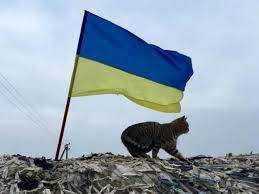
 And, yes, we’re having a bonus show of Cats and Dogs at War because I can’t handle all the pictures of families scattering yet again and children of war clinging to their pets, their stuffed animals, and each other. I do have one thought though. Putin should have thought this over and looked back to history.
 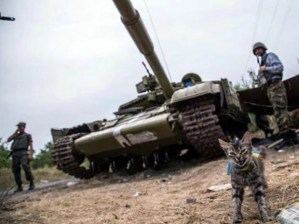 Whatever the reason, the majority of the world is behind the Ukrainian people are like siding with David over Goliath. Their young President has risen to the event and has managed to get countries to send all kinds of things to his peoples and armies. The Washington Post reports
 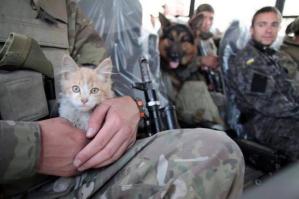 There are weapons and fighters on their way from the EU.
 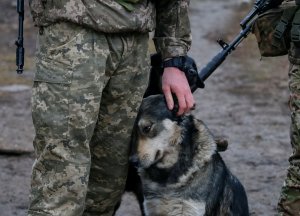 Obviously,










 peej
peej Carissa
 bostonboomer
 dakinikat
 ecocatwoman
 mablue2
 Mama Lopez
 peggysue22
 quixote
 skydancingguestblogger
 Mona (aka Wonk the Vote)



 Sky Dancing
Recent Comments