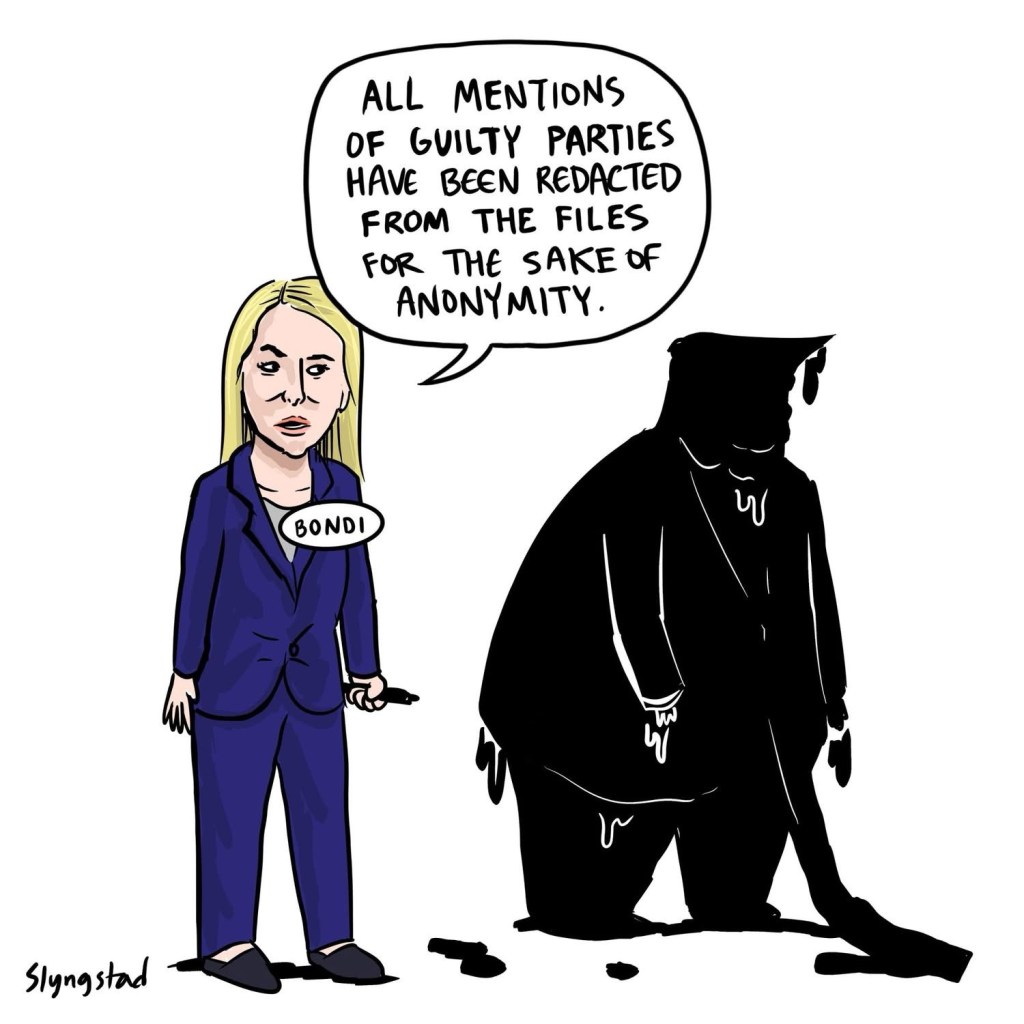
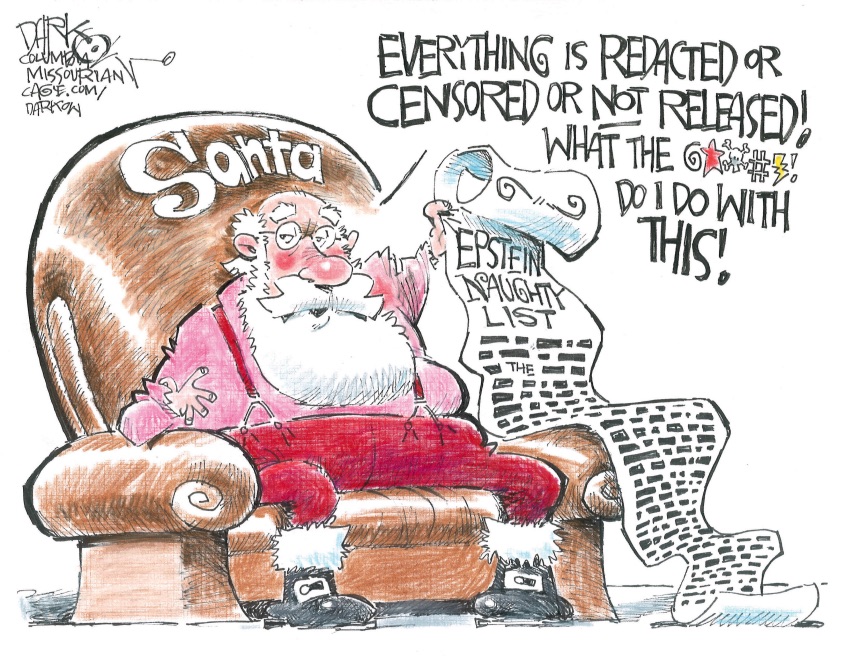
The DOJ released a small portion of the Epstein files yesterday, with massive redactions. They seem to have tried to focus on Bill Clinton and conceal anything about Donald Trump. Democrats are angry, noting that the DOJ has broken federal law by holding back and selectively redacting the files that they released.
In this post, I will focus mostly on the Epstein files and reactions to the release. I also include stories on the Brown shooter and Trump’s insanity.
The justice department’s partial release of the Epstein files on Friday signaled how the agency is using a variety of tactics to try to bury and obfuscate Donald Trump’s connection to Jeffrey Epstein.
As the department raced towards a legally mandated Friday deadline to release its files, little emerged about what it planned to release. There never really seemed to be a doubt that the department would release the files late on Friday afternoon, deploying the well-worn Washington trick of burying unflattering news before a weekend.
Then, on Friday morning, Todd Blanche, the deputy attorney general, went on Fox News to say that the department wouldn’t actually be releasing all of the files on Friday as required by the law. “I expect that we’re going to release more documents over the next couple of weeks, so today, several hundred thousand, and then over the next couple weeks, I expect several hundred thousand more,” Blanche said on Fox News. “There’s a lot of eyes looking at these and we want to make sure that when we do produce the materials we are producing, that we are protecting every single victim.”
By the time the department eventually did release thousands of pages of materials on Friday evening – not the hundreds of thousands Blanche promised – many of the documents had been heavily or completely redacted. Other than a few pictures, the materials made no mention of Trump, even though attorney general Pam Bondi reportedly told Trump earlier this year his name was in the files.
The release underscores how the Trump administration is trying to balance both the demand to release the files – something encouraged in large part by the Maga base – while also obfuscating with a slow trickle of document dumps to prevent any embarrassment to Trump, who was friends with Epstein for years before they had a falling out. Blanche has said the department will continue to produce documents on a rolling basis in the coming weeks – a holiday period – a bet that Americans will simply tune out the story as it drags on.
Thomas Massie, a Kentucky Republican who sponsored the law to release the files, was one of many members of Congress to express outrage. He said on Twitter that the release “grossly fails to comply” with the statute….
Trump is mostly missing from the release.
While Trump barely made an appearance in Friday’s release, Bill Clinton appears in several images. The Daily Wire, a Trump-friendly site, obtained a photo of Clinton and Epstein on Thursday, a day before the release. Photos of Clinton lounging in a pool and a hot tub were among those released on Friday. Justice department and White House spokespeople were quick to highlight the images on Twitter.
By Magdalena Lobao-Tello
“Beloved Democrat president. The black box is added to protect a victim,” Gates McGavick, a justice department spokesperson, posted alongside a photo of Clinton in what seems to be a hot tub with another person whose face is redacted. Steven Cheung, the White House communications director, posted another photo of Clinton with someone whose face is redacted and, quoting the song Jumpman by Drake and Future, wrote “them boys is up to something”.
Angel Ureña, a Clinton spokesperson, released a statement on Friday saying the Trump administration was using the former president to try to distract from Trump’s connection to Epstein.
“The White House hasn’t been hiding these files for months only to dump them late on a Friday to protect Bill Clinton. This is about what comes next, or from what they’ll try and hide forever,” he said. “So they can release as many 20-plus-year-old photos as they want, but this isn’t about Bill Clinton. Never has, never will be.”
Several other celebrities appeared in the images released on Friday, including Mick Jagger, Michael Jackson, Richard Branson, Chris Tucker, David Copperfield and Kevin Spacey. Like Clinton, none has been accused of any crime in connection to Epstein. But their immediate appearance in the files benefits Trump, creating the impression that it was not unusual for famous men to hang out with Epstein.
The Trump administration, initially wary over the Justice Department’s release of Jeffrey Epstein documents, pounced on go-to villain Bill Clinton’s appearance in Friday’s trove of pictures, emails and interviews.
“I wonder why the Biden DOJ refused to release the files…,” DOJ spokesperson Chad Gilmartin posted from his personal X account, alongside one partially-redacted photo of Clinton in a pool with an unidentified woman. Another swimming pool photo Gilmartin posted shows Clinton with Ghislaine Maxwell, Epstein’s longtime co-conspirator who was convicted of sex trafficking charges in 2021….
Clinton has long been linked with Epstein, contributing to his status as MAGA’s favored boogeyman. Some high-profile members of the movement cited him in pushing for the release of the files, and continued that message after the DOJ made public a trove of documents from the government’s investigation into Epstein.
“Slick Willy! @BillClinton just chillin, without a care in the world. Little did he know…” White House Communications Director Steven Cheung posted to X.
“Here is Bill Clinton in a hot tub next to someone whose identity has been redacted. Per the Epstein Files Transparency Act, DOJ was specifically instructed only to redact the faces of victims and/or minors. Time for the media to start asking real questions,” White House deputy press secretary Abigail Jackson posted to her personal X account….
Clinton appears in photos posing with Epstein in coordinating shirts, interacting with a dancer, sitting with a redacted woman on his lap on what looks like an airplane and with someone who appears to be the late pop icon Michael Jackson. The music legend faced his own child sex abuse allegations as early as 1993, though he was never convicted of any crimes.
A spokesperson for Bill Clinton accused the White House late on Friday of using him as a scapegoat after pictures of the former president with sex offender Jeffrey Epstein and Ghislaine Maxwell, as well as with a young woman in a pool, were included as part of congressionally ordered release of government files.
“This is about shielding themselves from what comes next, or from what they’ll try and hide forever. So they can release as many grainy 20-plus-year-old photos as they want, but this isn’t about Bill Clinton. Never has, never will be,” the statement added.
Lady sitting with Siamese, Sharyn Bursic
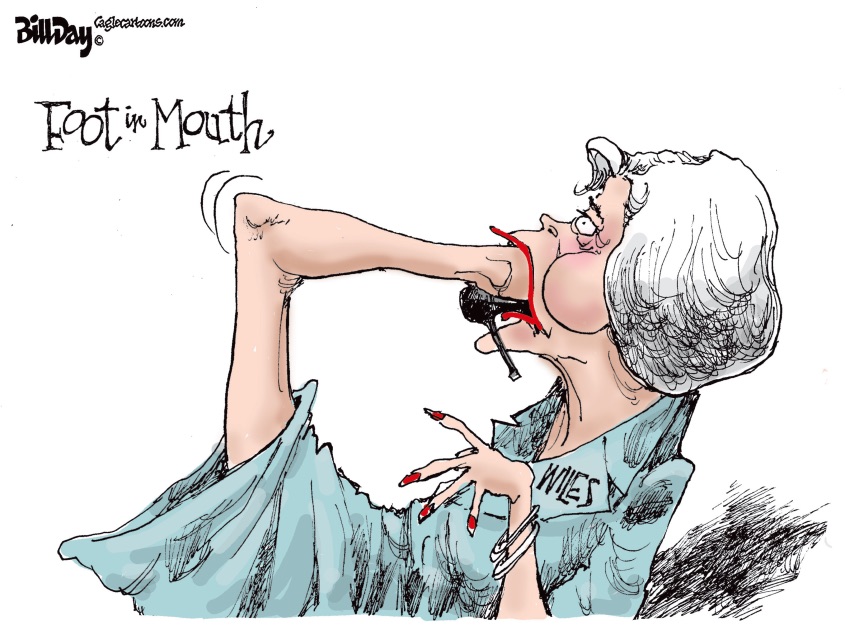
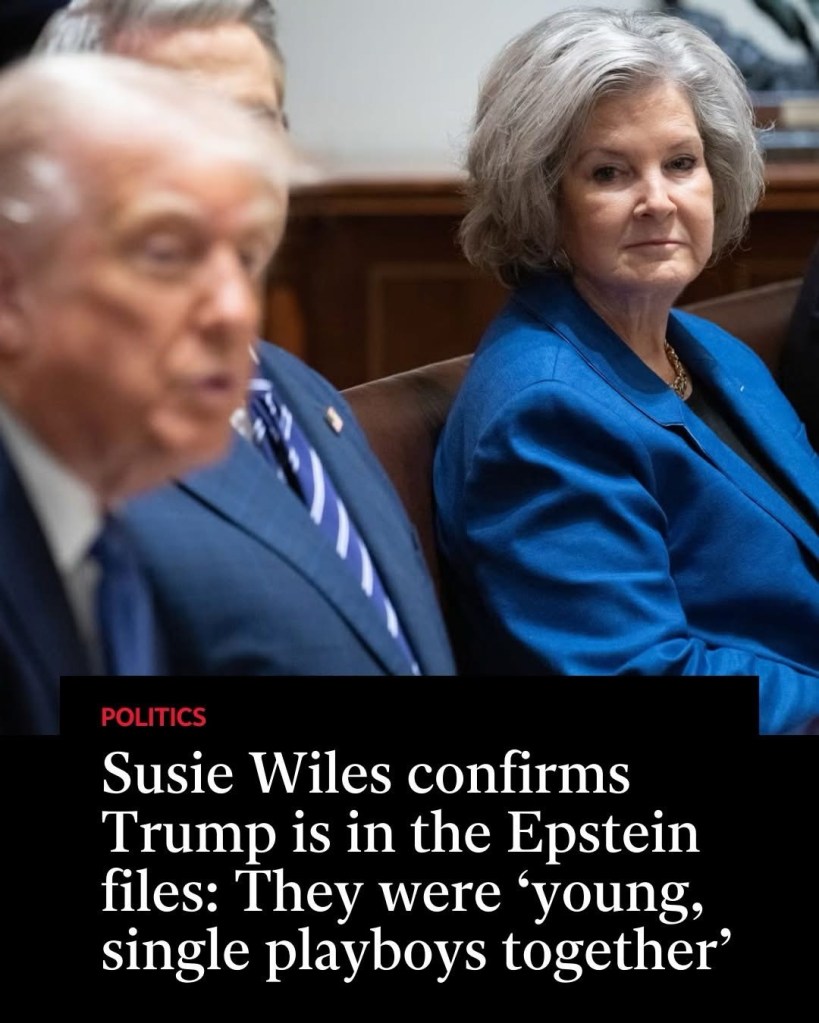
It continued: “Even Susie Wiles said Donald Trump was wrong about Bill Clinton,” it said, referring to comments made by White House chief of staff to Vanity Fair in which Wiles acknowledged that Clinton had not been on Epstein’s Caribbean island despite repeated claims by Trump to the contrary.
Clinton has long maintained that he cut ties with Epstein around 2005, before the disgraced financier plead guilty to solicitation of a minor in Florida.
In the statement, Clinton’s spokesperson Angel Ureña said: “There are two types of people here. The first group knew nothing and cut Epstein off before his crimes came to light. The second group continued relationships with him after. We’re in the first. No amount of stalling by people in the second group will change that. Everyone, especially MAGA, expects answers, not scapegoats.” [….]
Epstein visited the White House at least 17 times during the early years of Clinton’s presidency, according to White House visitor records cited in news reports. He later travelled with Epstein on the financier’s private jet in the years after he left office in 2001, including to Asia and Africa, on trips related the Clinton Global Initiative. Clinton has never been formally accused of any wrongdoing in connection with Epstein.
“A fraction of the whole body of evidence,” said Senate Minority Leader Chuck Schumer, D-New York. To demonstrate his point, he highlighted how 119 pages of one document were entirely redacted.
“Simply releasing a mountain of blacked out pages violates the spirit of transparency and the letter of the law,” Schumer said in a statement. “We need answers as to why.”
Schumer wasn’t alone in his criticism. Democratic Rep. Robert Garcia, the ranking member of House Oversight Committee, said on CNN that the Justice Department was “defying the Congress.”
The bipartisan authors of the Epstein Files Transparency Act – Reps. Ro Khanna, D-California, and Thomas Massie, R-Kentucky – also accused the Trump administration of failing to comply with their law, which nearly unanimously passed Congress in November.
“Unfortunately, today’s document release … grossly fails to comply with both the spirit and the letter of the law,” Massie added.
The law required the Justice Department by Dec. 19 to fully disclose all information in its possession related to its investigations of the well-connected financier who died by suicide in a jail cell in 2019. DOJ under the law is also required to make the files publicly searchable, but basic searches of what DOJ called the “Epstein Library” show that even basic queries – such as for “Trump” or “Clinton” – come up blank.
Read more at USA Today.
One more from Julie K. Brown, who researched and wrote the series on Epstein at the Miami Herald that forced new investigations into the sweetheart deal that Epstein got from the DOJ in September 2007.
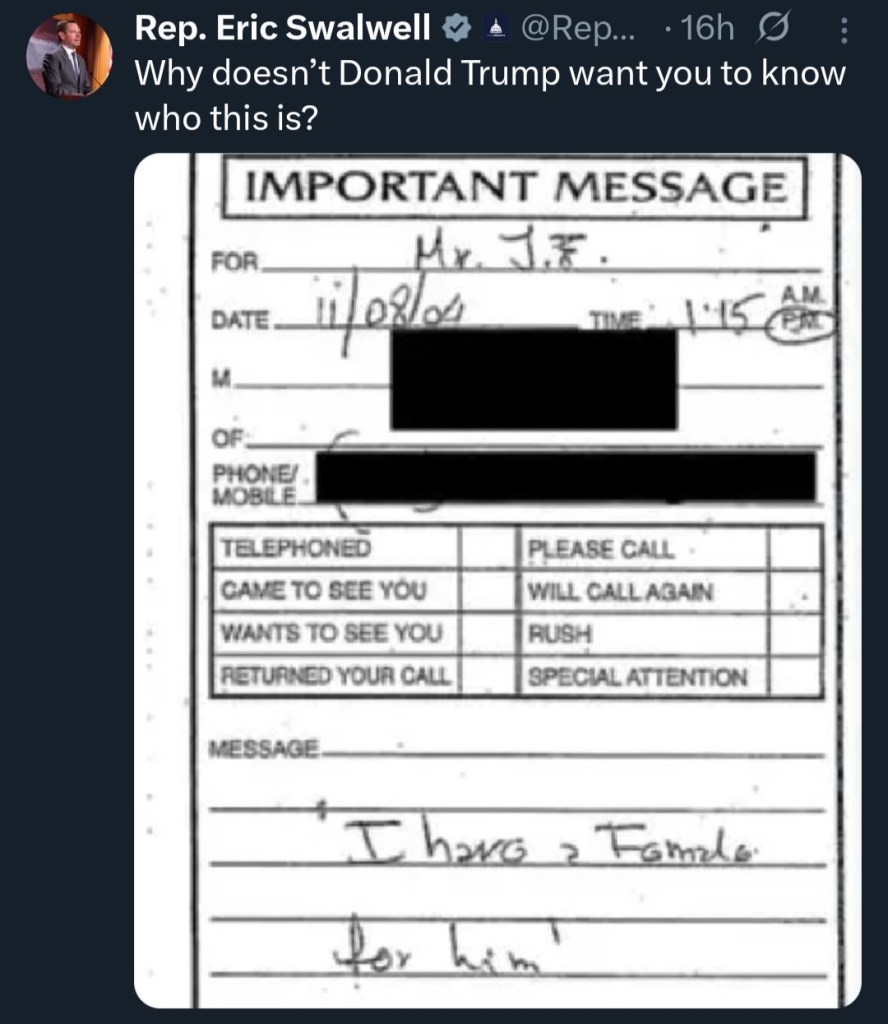
Pages and pages of blacked-out documents. Photographs of Epstein’s mop closet and HVAC systems in house. Message pads, notes and other material from the Florida case that has been on the Palm Beach County State Attorney’s website since at least 2018. They didn’t even release the victim interviews; just pictures of the tapes of the interviews. Think about that. A photograph of a tape cassette.
This would be funny if it wasn’t about a crime involving the rapes of 14-year-old girls.
It’s clear that the Department of Justice is not only thumbing its nose at the public’s demand for transparency and accountability, it is not taking the crimes committed against children seriously. It’s as if they think we are so hungry for any crumbs about Epstein that stale bread will do.
What’s worse is that the documents and photos they did release were tossed up like a salad and served in such a mixed-up way that few people will even understand the significance of the material that was released on Friday.
Miss Kitty, a lazy afternoon, by Jan Panico
Imagine being a survivor who was raped by Epstein, and having to click, one photo at a time, through hundreds of photographs, just searching for something, anything, to explain how Jeffrey Epstein did what he did, hoping for some shred of hope that the FBI actually investigated your complaint — the story you painfully found the courage to tell.
There were few stories in the thousands of pages released Friday. Even victim Maria Farmer, who found some validation in the fact that her 1996 FBI report about Epstein’ was tucked into the mess, would learn that the FBI did nothing about it. Had they taken some steps, they may have prevented the sexual assaults of countless other girls and young women.
And what about Epstein’s clients? Pam Bondi, the attorney general, said there was no list. But Rep. Tom Massie has said he knows of 20 men who have been implicated in Epstein’s crimes. And what about Ghislaine Maxwell? Well, she filed a habeas corpus petition a few days ago that claims that 25 men arranged civil settlements with Epstein victims who could have “equally been considered as co-conspirators.” She adds: “None of them have been prosecuted.” [….]
Here is a link to the Epstein Files on the Palm Beach State Attorney’s website. You will learn more about the case here than what was released by the DOJ Friday: https://sa15.org/public-records/
Growing up in Portugal, Claudio Manuel Neves Valente stood out for his intellectual potential. In high school, he traveled to national and international physics competitions. He later graduated from Portugal’s top university for science and engineering.
But when he moved to the United States in 2000 to pursue a doctorate in physics at Brown University, his colleagues experienced an ill-tempered young man who felt that even an American Ivy League college was no match for his own intellect. Neves Valente complained the classes were too easy and left the school months after enrolling, apparently with hard feelings.
“He could be kind and gentle, though he often became frustrated — sometimes angry — about courses, professors, and living conditions,” said Scott Watson, a Syracuse University physics professor who befriended Neves Valente at Brown.
After authorities linked him to the mass shooting on Brown’s campus and the killing of an MIT professor earlier this week, Neves Valente, 48, was found dead by suicide Thursday night. In the immediate aftermath, a fuller picture of the suspect emerged: of a brilliant student whose academic promise seemed to dissipate abruptly, an angry genius with long-simmering resentment, a loner who painstakingly planned and executed extraordinary violence.
His death ended a frantic manhunt that began following the Brown shooting Saturday afternoon, according to police. He entered a storage unit in southern New Hampshire about an hour after shooting the MIT professor Monday night, officials said; based on an autopsy, authorities believe he died on Tuesday from a self-inflicted gunshot wound….
Investigators are still trying to determine what motivated his homicidal rampage after he seemingly abandoned the ambitions of his youth, what pushed him to finally act upon old grudges.
She and her cats, by Madison Moore
What’s clear is that he took careful steps to hide his identity and evade detection both before and after the shootings. Authorities believe he acted alone. They said he had been canvassing Brown’s campus for weeks, targeting a building where he spent significant time as a student in the early 2000s….
Both natives of Portugal, Neves Valente and Loureiro attended university together in Lisbon, authorities said. They graduated from Instituto Superior Técnico, a premier science institution that’s part of the University of Lisbon. Loureiro went on to pursue a lauded career as a professor and fusion researcher, with stops at Princeton University and in Europe; he joined MIT in 2016. Colleagues from across the world overwhelmingly praised his accomplishments and character, but none reported knowing Neves Valente.
More from Scott Watson, Valente’s friend:
Watson, his former classmate, said the two became friends despite Neves Valente’s standoffish nature.
“During orientation he was sitting alone, and I walked up and said hello. He was terse at first, but we eventually broke the ice and became close,” Watson told the Globe in an e-mail Friday, describing himself as essentially Neves Valente’s only friend at the university.
Neves Valente was a brilliant student, but he could be frustrated by the curriculum at Brown, which he found underwhelming, Watson said.
“He was by far the best graduate student in our class. Through our conversations, he was already ready to graduate when he arrived,” Watson said. “I don’t like the word genius, but he was.”
Information from a tipster who had a strange encounter with another man on a sidewalk outside Brown University was key to police identifying the suspect they believe killed two students at the school and then two days later gunned down a Massachusetts Institute of Technology professor.
Known only as “John” in a Providence police affidavit, the source is being hailed by investigators as the key figure who gave law enforcement the details needed to determine who was behind the Brown shooting, as well as the killing of a Massachusetts Institute of Technology professor who was shot in his Brookline home Monday.
Ever since a shooter unloaded more than 40 rounds inside a Brown engineering building, anxiety and frustration has plagued the Providence, Rhode Island, community as police appeared no closer to identifying the person.
Yet on the sixth day of the investigation, the case gathered steam, ending with police announcing late Thursday they had found the suspected gunman dead from a self-inflicted gunshot wound….
“John” gave them the information they needed.
According to police, John had several encounters with 48-year-old Claudio Neves Valente before Saturday’s attack. As police posted images of a person of interest — now identified as Neves Valente — John began posting on the social media forum Reddit that he recognized the person and theorized that police should look into “possibly a rental” grey Nissan. Reddit users urged him to tell the FBI, and John said he did. The police affidavit said they learned about the tip on Dec. 16, three days after the shooting and a day after the tip line was created….
Up until that point, the police affidavit says officials had not connected a vehicle to the possible shooter.
That detail led them to get more video of a Nissan Sentra sedan with Florida plates and enabled Providence police officers to tap into a network of more than 70 street cameras operated around the city by surveillance company Flock Safety.
Bedtime Story, by Jeanette Lassen
The affidavit says John gave investigators additional critical details: he encountered Neves Valente in the bathroom of the engineering building just hours before the attack, where John noted the suspect’s clothing was “inappropriate and inadequate for the weather.”
John also bumped into Neves Valente outside, mere blocks from the building, where John watched Neves Valente “suddenly” turn around from the Nissan when he saw John. What ensued was then a “game of cat and mouse,” according to John’s testimony — where the two would encounter each other and Neves Valente would run away.
At one point, John says he yelled out “Your car is back there, why are you circling the block?”
“The Suspect responded, ‘I don’t know you from nobody,’ then Suspect repeatedly asked, ’Why are you harassing me?’” according to the affidavit.
John told police he eventually saw Neves Valente approach the Nissan sedan once more and decided to walk away.
I’ve quote a lot, because The Boston Globe doesn’t allow gift links or readers without subscriptions.
President Donald Trump raged at the FBI for making a “mess” of his wife Melania’s “panties” during a raid on their Mar-a-Lago estate.
In a rambling speech delivered at a rally in Rocky Mount, North Carolina, on Friday night, Trump went off on a wild tangent about federal law enforcement agents, revealing how they had disturbed the First Lady’s underwear drawer during their 2022 search of the Palm Beach, Florida, property.
Her Quiet Companion, by David Arstamyan
“They went into my wife’s closet. I’ll say this. Number one, it’s very bad, but it sounds a little strange. They looked at her drawers,” Trump told the crowd while both himself and the crowd laughed.
“You have drawers, and then you have drawers. They looked at both,” he continued, miming the difference between the storage item and the undergarment.
The unprompted revelation of intimate details did not stop there, however, with Trump going full disclosure on the way his third wife likes to store her underwear.
“She’s a very meticulous person… Everything is perfect. Her undergarments, sometimes referred to as panties, are folded perfect, wrapped, they’re like so perfect. I say, ‘That’s beautiful,’” Trump continued.
“You know, that’s the part of the world she came from. Everything was perfect, no problem. Fold, fold, fold. I think she steams them just to make sure.”
No doubt Melania was thrilled with these revelations, which are likely just Trump fantasies.That’s it for me today. What’s on your mind?
Did you like this post? Please share it with your friends:
“Rob Reiner was right about everything.” John Buss. @repeat1968
Good Day, Sky Dancers!
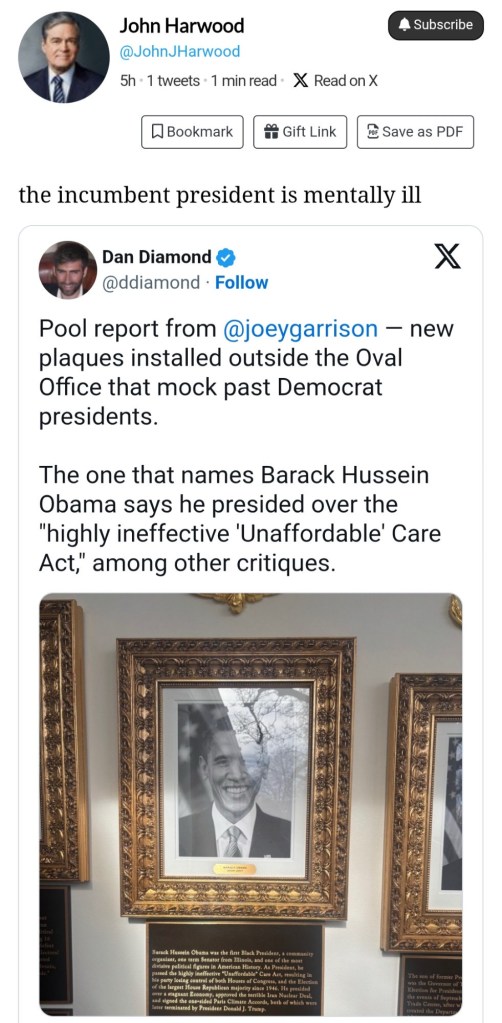
I’m really late today! I started the first day of Winter Break. Additionally, I’ve been watching movies mostly over the last few days because the news has been too stressful to handle lately. So, let’s catch up on the week so we can all have a peaceful weekend. The latest revolting development from the rotter in the White House and his appointed stooges is the renaming of the Kennedy Center, which is actually against the law.
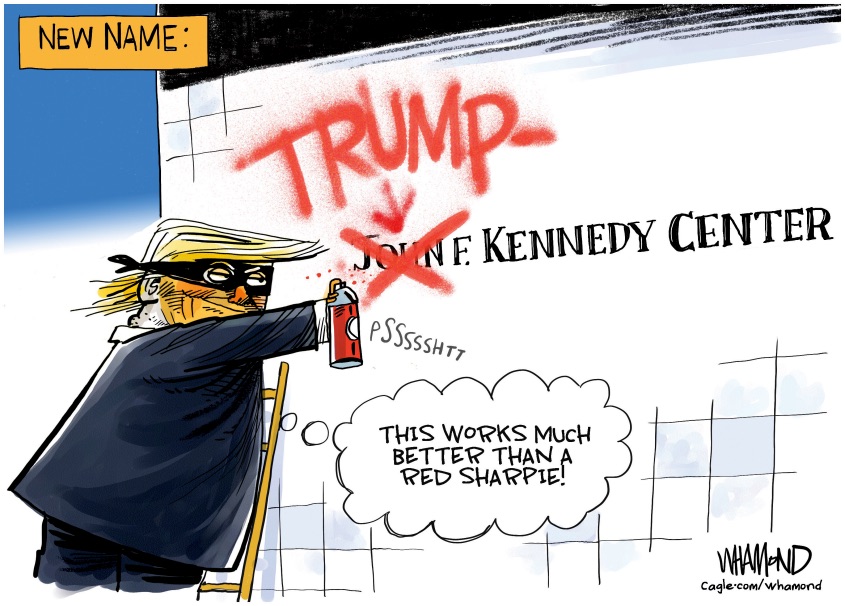
This is from the New York Times. “As Trump Puts His Brand on Washington, the Kennedy Center Gets a New Name. The board for the John F. Kennedy Center for the Performing Arts announced that it would now be named the Trump-Kennedy Center, although a formal change may have to be approved by Congress.” The story is reported by White House Correspondent Shawn McCreesh.
President Trump’s takeover of the John F. Kennedy Center for the Performing Arts reached its inevitable apogee on Thursday afternoon when it was announced that the center’s board of trustees had voted to rename it the Trump-Kennedy Center.
Even though Mr. Trump had already been calling it that for months in trollish posts online, he acted shocked that his handpicked board had thought to do this for him.
“I was honored by it,” he told reporters at the White House. “The board is a very distinguished board, most distinguished people in the country, and I was surprised by it. I was honored by it.”
Earlier that day, he had called into a meeting of the board, which is now made up almost entirely of people who are loyal to him. (By law, there are a handful of members of Congress from both parties who sit on the board, as well.)
Unusually, the meeting was taking place not at the Kennedy Center but at the Palm Beach home of the casino magnate Steve Wynn, whose wife, Andrea, sits on the board.
Richard Grenell, the center’s Trump-appointed president, was there, and so was Lee Greenwood, who performed “God Bless the USA” at the meeting.
Another member who was in Palm Beach for it was Sergio Gor, a longtime aide to the president who was recently nominated to be the ambassador to India. It was Mr. Gor who proposed the name change.
But there was at least one person who was not down with the idea: Representative Joyce Beatty, Democrat of Ohio, who had called in to the meeting.
“It was such a surprise to me when they said we’re going to rename it,” she recounted in a phone interview. “I said, ‘Oh my gosh,’ and pushed my button. But then I was muted.”
She added: “Everything was cut off, and then they immediately said, ‘Well, it’s unanimous. Everybody is for it.’”
Ms. Wynn claimed in a phone interview that she was not aware that Ms. Beatty had been muted, and that she did not know who was responsible for it. As for how the president reacted to the name change?
“I think he was very happy,” she said.
Ms. Beatty described the meeting this way: “Everything was regurgitated about how awful anything with the center was, how run down it was, how everything was humiliating, and now they had come in as the great saviors of it.”
She added that the other members took turns praising Mr. Trump, who then pretended to be surprised when they voted to rename the joint after him. “He said, ‘Oh, I didn’t know you all were going to name it after me!’” she said.
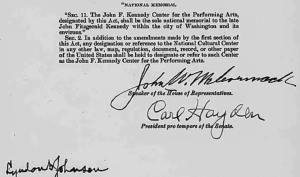
There is a law that actually has very strict rules about things like renaming the center. It was signed by LBJ. The Center opened in 1971 featuring Leonard Bernstein’s composition Mass. My cousin Mary Bracken Phillips was one of the soloists. I remember all this very well. We were all musicians at the time. It was a very exciting time and performance. I’ve linked to her solo, and you can hear more of the original performances at the link.
This is from the AP. “Trump’s handpicked board votes to rename Washington performing arts center the Trump Kennedy Center.
Congress named the center after President John F. Kennedy in 1964, after his assassination. Donald A. Ritchie, who served as Senate historian from 2009-2015, said that because Congress had first named the center it would be up to Congress to “amend the law.”
Ritchie said that while Trump and others can “informally” refer to the center by a different name, they couldn’t do it in a way “that would (legally) stick.”
But the board did not wait for that debate to play out, immediately changing the branding on its website to reflect the new name.
Since returning to office in January, Trump has made the center a touchstone in a broader attack against what he has lambasted as “woke” anti-American culture.
House Democratic leader Hakeem Jeffries told reporters that a name change requires legislative action.
“Only Congress can rename the Kennedy Center,” said the New York Democrat, who serves on the board as an ex officio member because of his position in Congress.
This is the headline from the Washington Post. “Kennedy Center adds Trump’s name to building. The new signage follows a vote by the board of trustees to rename the arts complex the “Trump Kennedy Center,” a dramatic change for the presidential memorial.
The Kennedy Center installed President Donald Trump’s name on its exterior Friday morning, a dramatic change to a building
On Thursday, the center’s board, made up of loyalists with Trump as chair,voted to rename the institution “The Donald J. Trump and The John F. Kennedy Memorial Center for the Performing Arts.”
A blue tarp was stretched across a portion of the building the next morningas a small team on scaffolding started the work. Loud drilling could be heard nearby. Inside the building, large letters spelling “Trump” could be seen on the floor of the entry hall, according to a photograph obtained by The Washington Post. Signage elsewhere around the exterior of the institution remained unchanged.
This is an affront on so many levels that it’s hard for me to put it into words. First and foremost, it disrespects the legacy of the late President Kennedy, whose name is relegated to an afterthought behind Trump’s. It disrespects all those involved in making the Kennedy Center a reality, including the artists who performed there and those honored there. It disrespects the goals of the Center and those who have worked to keep it as a shining beacon of American creative excellence. We have already seen the crap that happens there now that Trump has his vulgar fingers in it. It disrespects the best of our culture. The vulgar should not get these honors.
During his legendary tenure at the New York Philharmonic from 1958 to 1969, Leonard Bernstein composed only two works, Symphony No. 3: Kaddish (1963) and Chichester Psalms (1965). He had dedicated Kaddish to the memory of John F. Kennedy shortly after his assassination, and when Jacqueline Kennedy Onassis asked Bernstein to compose a piece for the 1971 inauguration of the Kennedy Center for the Performing Arts in Washington, D.C., he was eager to honor the occasion with a new, large-scale work because he knew he had always wanted “to compose a service of one sort or another.” The son of Russian-Jewish parents, a social liberal, and lifelong activist, Bernstein made a surprising choice: the Roman Catholic Mass. But instead of a straightforward, purely musical setting of the Latin liturgy, he created a broadly eclectic theatrical event by placing the 400-year-old religious rite into a tense, dramatic dialog with music and lyrics of the 20th century vernacular, using this dialectic to explore the crisis in faith and cultural breakdown of the post-Kennedy era.
There’s some good news coming from the Justice System today. Let’s shift to the latest on that. First, we have this headline from The Hill. “Trump’s win streak on Supreme Court emergency docket breaks.” This is reported by Zach Schonfeld. It’s a significant headline, given the current composition of the Supreme Court.
The Supreme Court refused to intervene Friday in a battle concerning immigration judges’ speech restrictions, for now, snapping the Trump administration’s months-long winning streak on the court’s emergency docket.
It marks the first time since the spring that the court has rejected one of the administration’s emergency appeals. No justice publicly dissented, but the order left the door open for the government to try again once the case progresses further.
“At this stage, the Government has not demonstrated that it will suffer irreparable harm without a stay,” the one-paragraph order reads.
The case stems from restrictions on what immigration judges can say publicly. The restrictions require the judges, who are part of the executive branch, to obtain prior approval for speeches when the subject directly relates to their official duties.
The National Association of Immigration Judges (NAIJ) claims the policy violates the First Amendment.
Those free speech issues weren’t yet before the justices, however.
The Trump administration went to the Supreme Court to try to halt an order allowing the lawsuit to proceed before a federal district judge. The administration argues it must go before the Merit Systems Protection Board (MSPB), a specialty body that oversees certain federal employee disputes.
That question poses wider implications for other federal workers’ cases, too. Solicitor General D. John Sauer told the justices the lower ruling would “indefinitely thwart the MSPB.”
“The answer to such prolific contravention of the Court’s precedents should not be to wait and see just how much instability will ensue,” Sauer wrote in court filings.
The lower court had acknowledged the MSPB’s purview. But in allowing the lawsuit to proceed, it pointed to President Trump’s firing at the board that left it for some time without a quorum, saying it raises “serious questions” about whether the MSPB “continues to function as intended.”
This also happened. “Federal judge temporarily blocks HUD permanent housing cuts for homeless. The U.S. district judge questioned whether “chaos” is the point in homelessness funding overhaul.” This article is from Politico. It is reported by Cassandra Dumay.
HUD had withdrawn the new, transitional housing-focused notice before a court hearing last week, but the department said at the time it was “fully committed” to making reforms to the program and would reissue another version with “technical corrections.”
A HUD spokesperson said in a statement after the hearing that the department “remains committed to program reforms intended to assist our nation’s most vulnerable citizens and will continue to do so in accordance with the law.”
McElroy’s decision requires HUD to maintain the status quo in its funding for the Continuum of Care program, which partners with local organizations to connect people experiencing homelessness to housing and resources, until a new notice is released following a process that fits congressional statutes. The judge found that the plaintiffs, a coalition of 20 states as well as 11 local governments and nonprofits that sued HUD, had demonstrated they’re likely to succeed in challenging the department’s procedure for the policy change.
McElroy said HUD’s November decision to revoke the previous notice of funding and issue a new one that dramatically cut permanent housing grants likely conflicted with requirements under the McKinney-Vento Homeless Assistance Act. She said the law reflected Congress’ “prioritization of permanent housing and renewal stability and the formula based allocation scheme.” She also said HUD’s action last month likely conflicted with the statutory deadline for the issuance of a notice of funding.
One last thing. We have yet another reason to think Bernie Sanders is a punk. This is from The Bulwark. It’s written by Sam Stein. “A Milestone Pediatric Cancer Bill Fails at the Hands of Bernie. The Vermont senator is holding out for a bigger health care package. Advocates are asking: Is the price worth it?” Why on earth would any one punk kids with Cancer whose name isn’t Trump?
FOR YEARS, THE PEDIATRIC CANCER COMMUNITY has tried to pass a single piece of legislation that would allow for more comprehensive drug treatments to be given to young patients.
The process has involved agonizing setbacks, intense private negotiations, and a sudden, unexpected change in fortune thanks to the advocacy of a dying child.
On Wednesday night, this long, laborious journey appeared close to ending with what advocates anticipated would be a triumph. The Mikaela Naylon Give Kids a Chance Act (named after that dying child) was heading to the Senate floor, where it was expected to be passed by unanimous consent. Having already passed the House, it would then head to Donald Trump’s desk. And there was no doubt in anyone’s mind that the president would sign the measure and—as is his wont—take personal credit for it.
Pediatric cancer advocates scrambled to get to the Senate to watch the moment. Reporters who had covered the issue, including this one, were given the heads-up about its imminent passage. At least three kids who are bereaved siblings of cancer victims and one pediatric cancer survivor sat in the Senate gallery.
And then, it failed. A single senator stood in the way. It was Bernie Sanders.
In a dramatic, heated exchange on the Senate floor—caught by the C-SPAN cameras but largely missed by the news-consuming public—Sanders announced his opposition to quick passage for the bill. He did so not because he disagreed with its objective—which is to give the FDA the authority to push pharmaceutical companies to study combination drug therapies—but because he worried that extraneous provisions attached to it would make it harder to achieve other priorities. He argued that the Senate ought to be passing similarly important, bipartisan-supported health care measures along with it. His staff insisted to me that they would revisit the bill soon, and they seemed confident it would all get done in the new year.
But that’s not at all clear to the pediatric cancer community, which was left stunned by the vote.
“Everyone was just so exhausted and deflated and sad when we exited the gallery,” one member of the community told me. “It was a feeling of abandonment and confusion.”
The entire episode has raised a larger question about the motivations of lawmakers: What are their political and moral obligations in moments like these? Put another way: When is incremental legislative progress worth more than the continued pursuit of a bigger goal?
Read more at the Link about that last question.
So, I’m going to try to spend my Winter Break getting my house in order. I hope you have a peaceful, warm, and gentle weekend.
What’s on your Reading, Action, and Blogging list today?
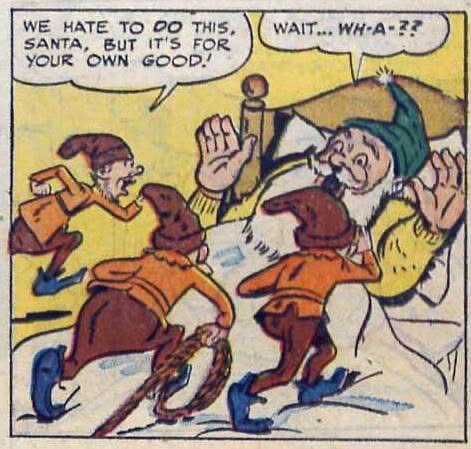
Suprise he did do the Trump part in tacky gold lettering or neon. Still makes me want to throw up, though.
Did you like this post? Please share it with your friends:
A couple of days ago Trump posted this on his shit app:
Last night he spoke to the American people:
Now, I wrote this post earlier in the evening. I am afraid of what that shitwad has to say…especially when the Epstein files are supposed to be released on Friday.
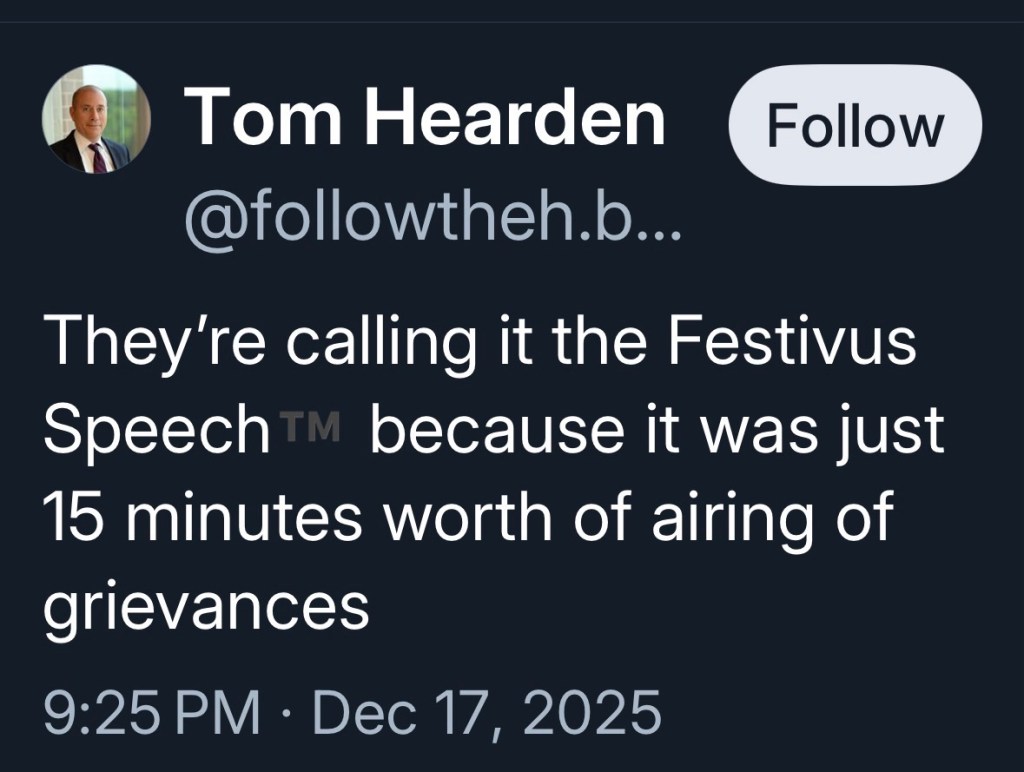
Now…I can’t bare to listen to this asshole. So I will drop a few BlueSky post on the speech here:
This breathless delivery has got to be the most ridiculous of his entire 10 years of making us miserable. He sounds absolutely desperate. And virtually everything he has said is a lie. Every single thing.
So Trump’s big primetime “address to the nation” is just him struggling to read a psychotic script full of lies written by Stephen Miller about how great he is.
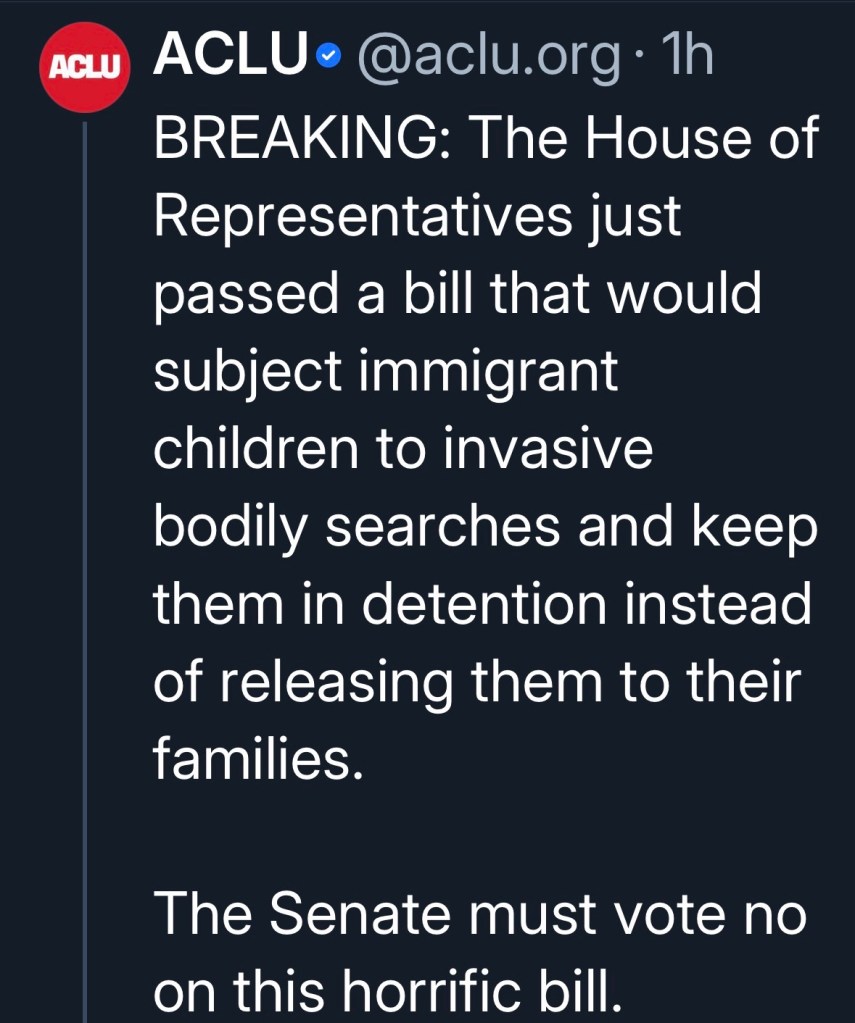
The House passed legislation today that would charge doctors with a felony punishable by up to 10 years in prison for providing transition-related care to minors. Rep. Sarah McBride strongly condemned the legislation in rare personal remarks ahead of the vote. http://www.nbcnews.com/politics/tru…
Republicans voting against the felony national trans youth healthcare ban were Brian Fitzpatrick (PA), Gabe Evans (CO), Michael Lawler (NY), Mike Kennedy (UT).Dems voting FOR the felony ban were Henry Cueller (TX), Vincente Gonzalez (TX), Don Davis (NC).3 NVs on both sides.
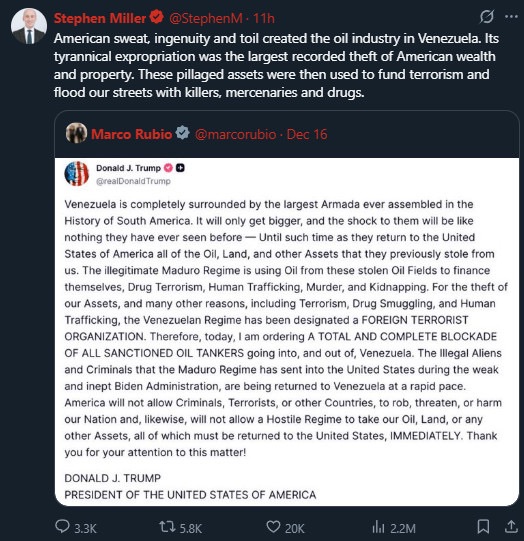
When you have Stephen Miller posting shit like this:
Pinochet-admirer Jose Antonio Kast won Chile’s presidential election. Today's cartoon by @amorimcartoons.bsky.social. More cartoons: http://www.cartoonmovement.com#Chile #Kast #Pinochet
I haven’t been feeling well for the past several days, and I’ve only been following the news superficially. There is so much going on, but I’ll do my best. Here’s the latest.
Trump is scheduled to give a speech from the White House tonight at 9PM.
President Donald Trump intends to preview his agenda for next year and beyond in a live speech from the White House on Wednesday night. His remarks are coming at a crucial time as he tries to rebuild his steadily eroding popularity.
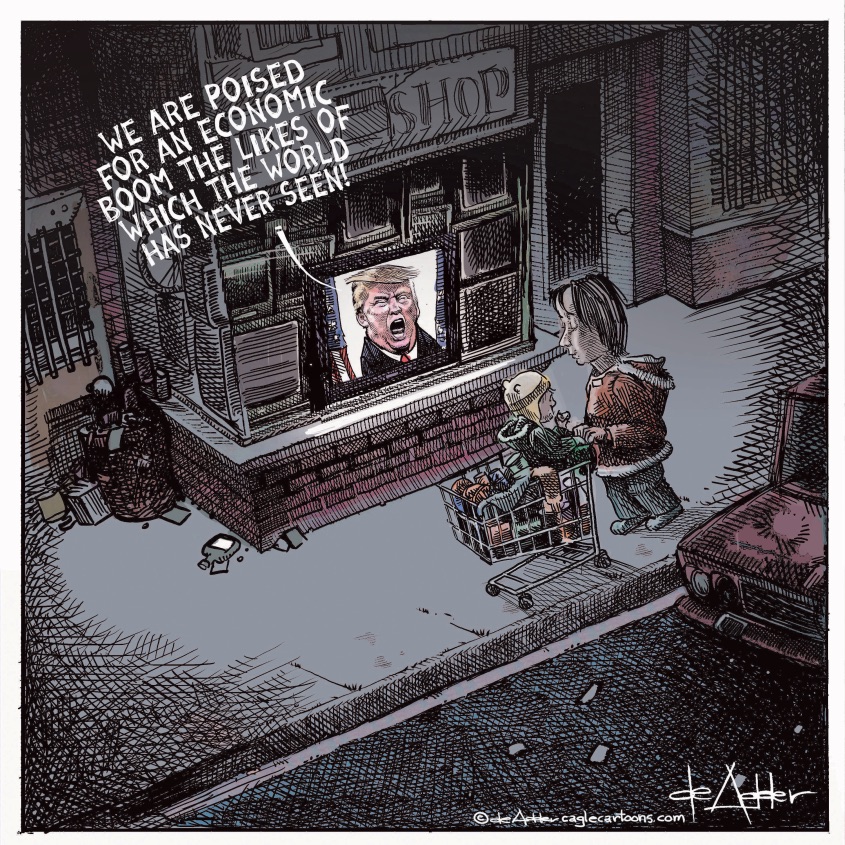
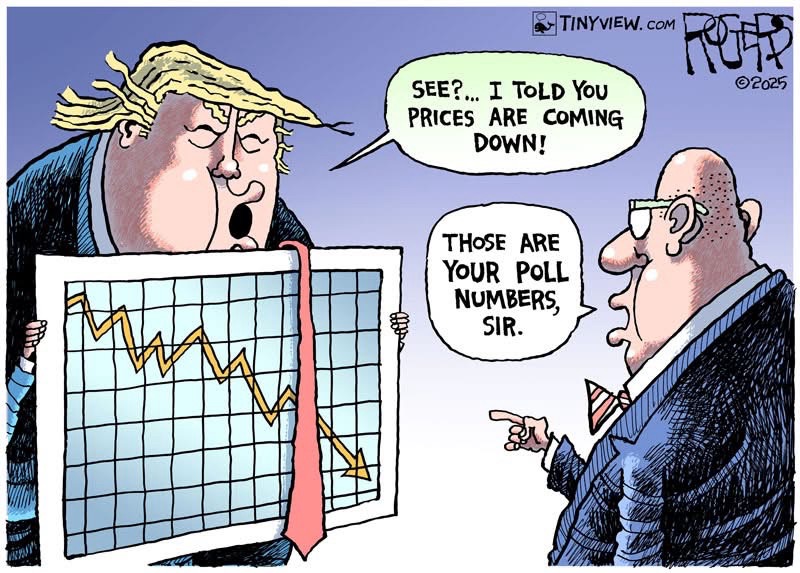
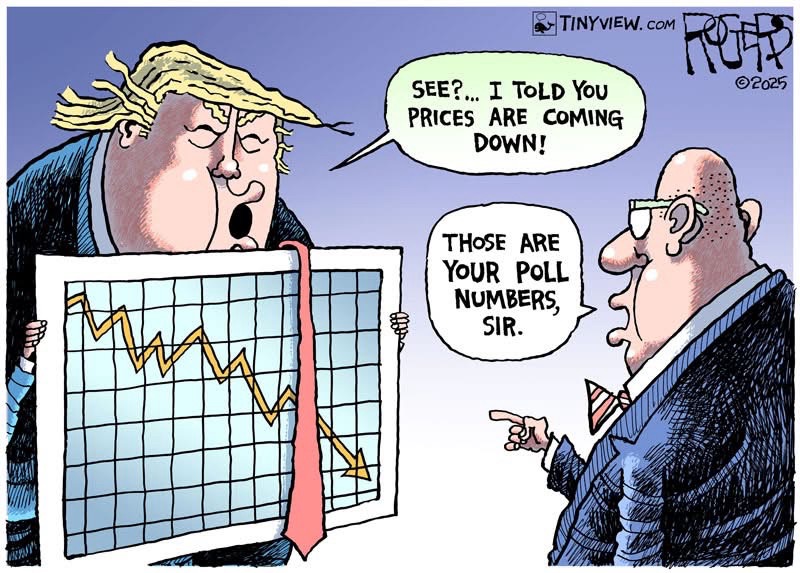
The White House offered few details about what the Republican president intends to emphasize in the 9 p.m. EST speech. Public polling shows most U.S. adults are frustrated with his handling of the economy as inflation picked up after his tariffs raised prices and hiring slowed.
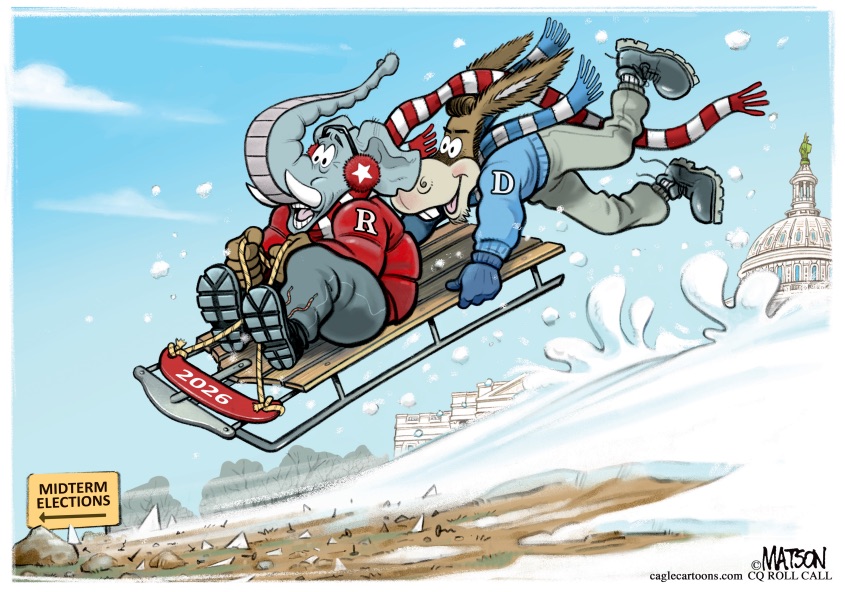
In 2026, Trump and his party face a referendum on their leadership as the nation heads into the midterm elections that will decide control of the House and the Senate.
Trump has said that he thinks more Americans would back him if they simply heard him describe his track record. Administration officials say investment commitments for new factories will reverse the recent decline in manufacturing jobs and that consumer activity will improve dramatically as people receive increased tax refunds next year.
“It has been a great year for our Country, and THE BEST IS YET TO COME!” Trump said in a Tuesday social media post announcing the speech.
Sorry, Grandpa. Your economy sucks because of your idiotic tariffs, your cruel mass deportations, and your general incompetence.
Tariffs are unpopular, prices remain stubbornly high and Americans are souring on President Trump’s handling of the economy.
So Mr. Trump has reprised a familiar political strategy: promise people cash.
The president has repeatedly floated the idea of sending one-time $2,000 rebate checks to many families.Credit…Eric Lee for The New York Times
The White House is trying to tamp down Americans’ economic anxieties by dangling the prospect of checks and other paydays next year, hoping that the money might assuage voters who blame the president for their rising cost of living.
Mr. Trump, who is set to address the nation on Wednesday night, has repeatedly teased the idea of sending one-time $2,000 rebate checks to many families, funded using money collected from his sweeping global tariffs. But he has not devised a detailed plan for providing the rebates, an expensive policy that Republicans in Congress must approve and one that they have not yet considered.
The president has also begun hyping up the tax refunds that Americans are slated to receive in 2026. For many people, these cash payments are expected to be larger than they were last year, after Republicans adopted a sprawling set of tax cuts in July.
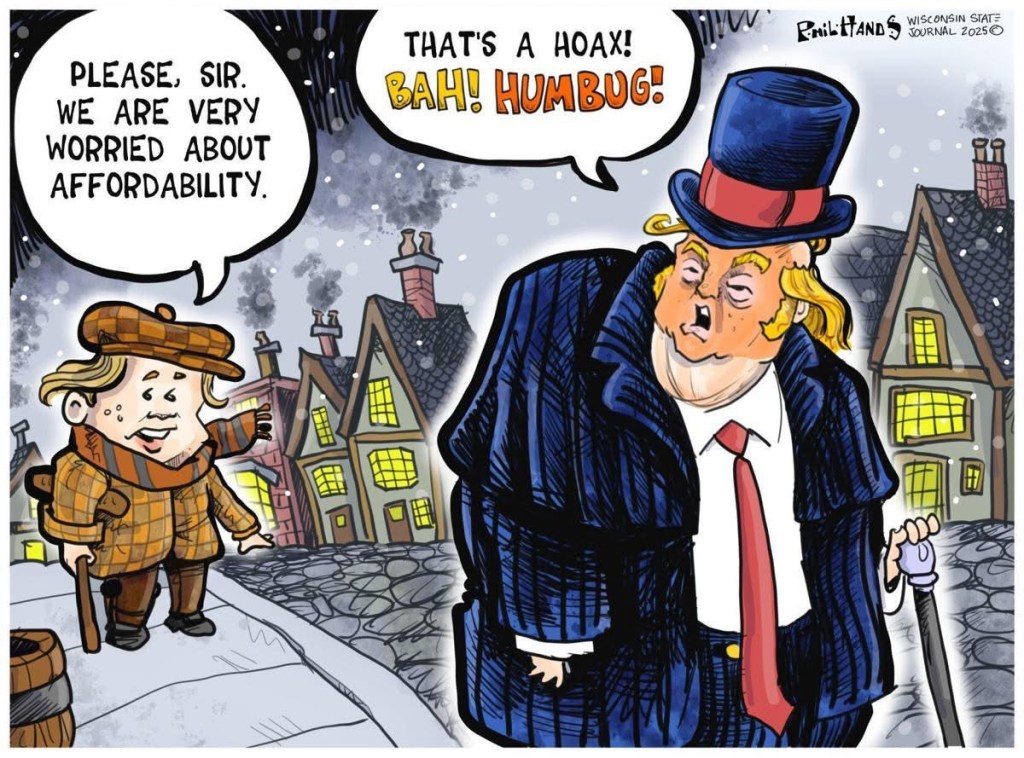
Both Mr. Trump and members of his administration have periodically drawn an equivalence between the supposed tariff rebates and the enacted tax law. They have claimed the money could bolster the economy and alleviate some of the financial strains on families, even at a time when Mr. Trump maintains that much of the talk about affordability is a “hoax.”
“Next year is projected to be the largest tax refund season ever, and we’re going to be giving back refunds out of the tariffs, because we’ve taken in literally trillions of dollars,” Mr. Trump said at a cabinet meeting last week. “And we’re going to be giving a nice dividend to the people, in addition to reducing debt.”
But economists take a dimmer view. Even if Americans were to delight in a series of new government-issued checks, the payments would hardly address the reasons that prices remain so high — including a shortage in housing that has driven up rents and mortgages and the global tariffs that have made imports more expensive. And the money that may soon be sloshing around the economy could end up worsening inflation, undermining Mr. Trump’s own economic goals.
Alex Durante, a senior economist at the Tax Foundation, said that simply “pumping money” into the economy — without any other underlying changes — threatened to “just generate a cycle where you continue to get higher prices.”
When Politico recently asked Donald Trump to grade the current U.S. economy, he replied “A-plus-plus-plus-plus-plus.” He made this boast at a time when actual economic data were still scarce, a consequence of the government shutdown that stopped or delayed key information about the state of the job market.
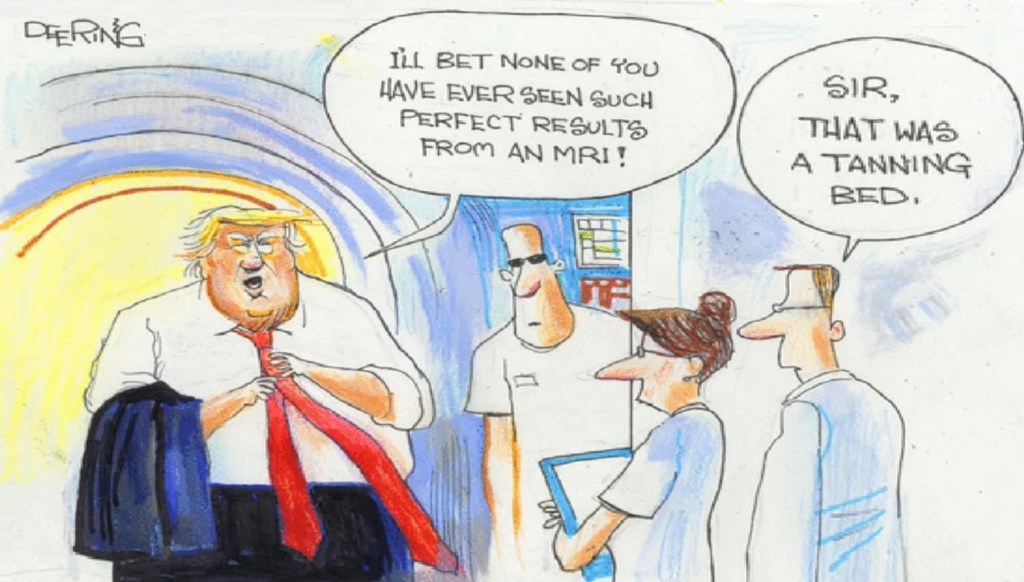
Yesterday the report on employment during the month of November finally arrived. And the message of the report on the state of the US economy was clear: A+++++ my A++. While it’s too soon to declare that we’re in a recession, the data are at least pre-recessionary: that is, the numbers are weak enough that we should be seriously worried that a recession is coming. And that’s a state of affairs completely at odds with Trump’s rose-colored — spray-tanned? — picture.
I’ll talk about the reasons the gap between Trump’s big boasts and the glum reality matters in a minute. First, however, let’s talk about what we learned from yesterday’s report.
Most importantly, the data show a weak labor market. Employment isn’t falling off a cliff, but job growth has been weak and hasn’t kept pace with the number of people seeking work. The headline unemployment rate in November was 4.6 percent, up from an average of 4 percent in 2024. That number is close to triggering the Sahm Rule, an economic rule of thumb devised by Claudia Sahm, a former economist at the Board of Governors of the Federal Reserve, that has historically been highly successful at identifying the early stages of a recession.
We can’t do a strict application of the Sahm Rule yet because Sahm’s method is based on the average unemployment rate over the past three months. Unfortunately, the shutdown prevented the Bureau of Labor Statistics from collecting key data in October. But if we do an interpolation of October’s unemployment rate by averaging over September’s rate of 4.4% and November’s rate of 4.6%, we can estimate that October’s unemployment rate was 4.5%. And those 3 months of unemployment numbers bring us within a whisker of the unemployment rise that, according to the Sahm Rule, signals that a recession is on the horizon.
The state of the economy looks even worse if we take a wider view of the labor market. The BLS calculates 6 different measures of unemployment. The most commonly cited number is U-3 — the number of workers who are actively seeking jobs but haven’t found them. But the broadest measure is U-6, which includes underemployed workers stuck in part-time employment and discouraged workers who have temporarily given up job search. And U-6 has risen sharply since January, when Trump took office:
Source: BLS
Further evidence consistent with a poor and deteriorating job market is data showing that the number of job-seekers who are long-term unemployed – that is, have been unemployed for 27 weeks or more – has risen by almost a third (from 1.45 million to 1.91 million) since 2024. This means that the unemployed are finding it harder to find jobs.
Read more details at the Substack link.
Most Americans aren’t stupid. They can see how much prices have gone up on necessities like food and electricity. Trump is losing popularity even with his MAGA base.
Marjorie Taylor Greene: "I think the midterms are gonna be very hard for Republicans. I'm one of the people that's willing to admit the truth and say I don't see Republicans winning the midterms right now, so that doesn't bode well for Mike Johnson."
Rep. Marjorie Taylor Greene (R-Georgia) on Tuesday said President Donald Trump has “real problems” within the Republican Party, adding in an interview with CNN that the president is out of touch with voters on key issues such as affordability.
Greene told Kaitlan Collins on “The Source” that the “dam is breaking” in terms of Trump’s hold onsupport within the party and that she expects Republicans to struggle in next year’s midterm elections.
“I think the midterms are going to be very hard for Republicans,” Greene said. “I’m one of the people that’s willing to admit the truth and say I don’t see Republicans winning the midterms right now.” [….]
Greene had carved out a high-profile role as one of Trump’s most vocal allies, first in the “Make America Great Again” movement and then with her support for the “America First” agenda. But after weeks of speaking out against the president on several issues, Greene and Trump had an acrimonious public split last month after she joined with Democrats on a discharge position to compel a House vote calling on the Justice Department to release files related to convicted sex offender Jeffrey Epstein….
Speaking to The Washington Post this week, Greene described herself as a “bellwether” who is closely attuned to Trump’s base. “I say it, and then within four to six months, everybody’s saying the same thing,” she said….
“He’s got real problems with Republicans within the House and the Senate that will be breaking with him on more things to come,” she added.
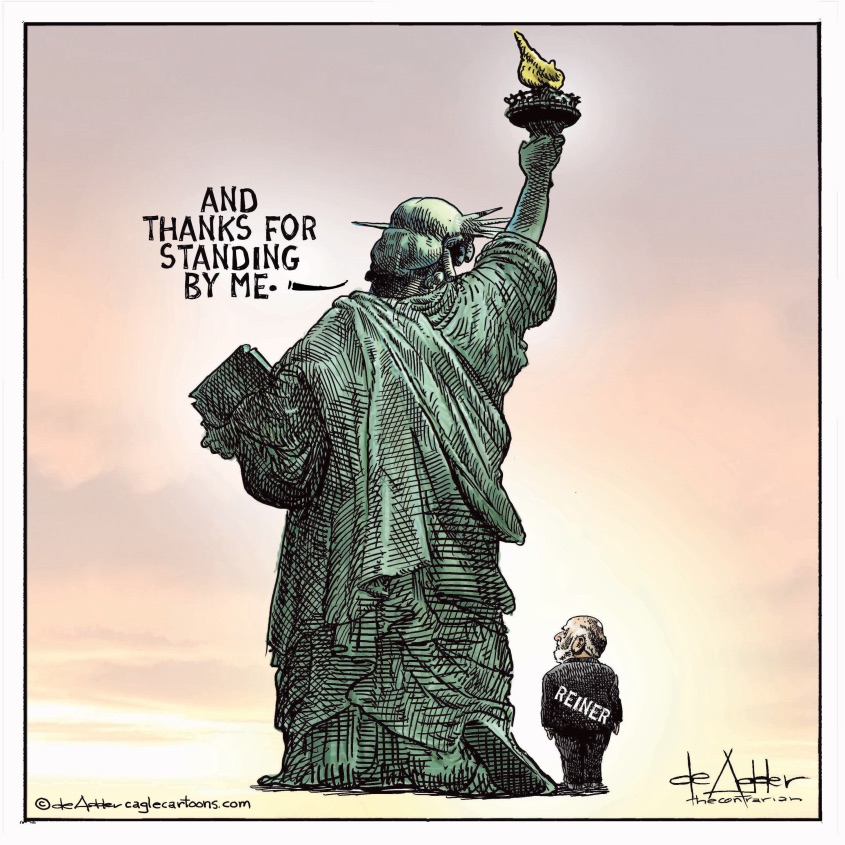
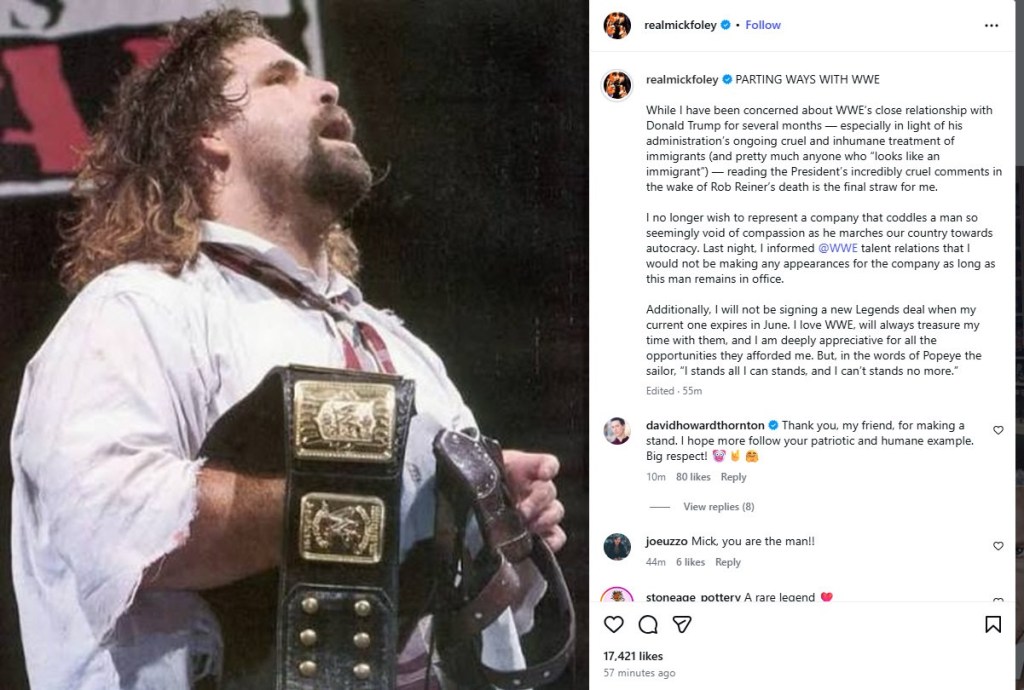
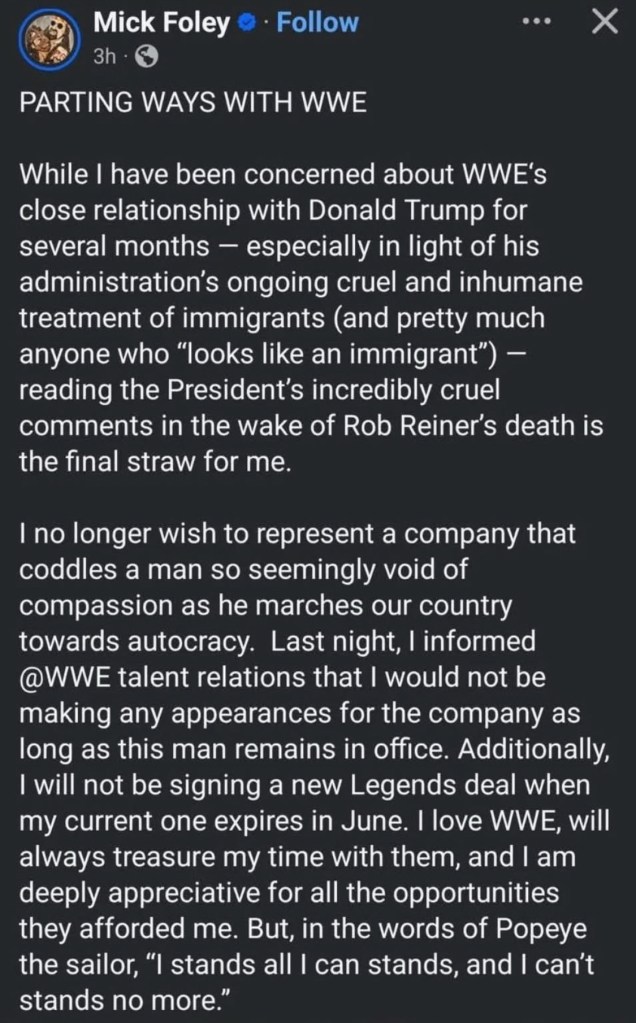
Greene also said Trump’s supporters “didn’t appreciate” the president’s reaction to the death of Rob Reiner, who was found stabbed to death alongside his wife, photographer Michele Singer Reiner, in their Los Angeles home Sunday. The couple’s son Nick Reiner faces two counts of first-degree murder, among other charges, in their deaths.
Marjorie Taylor Greene: "What I'd like to see from the president is empathy for Americans. Donald Trump is a billionaire and he's the president. When he looks into a camera and says 'affordability is a hoax,' he's talking to Americans that are suffering and have been for many years now."
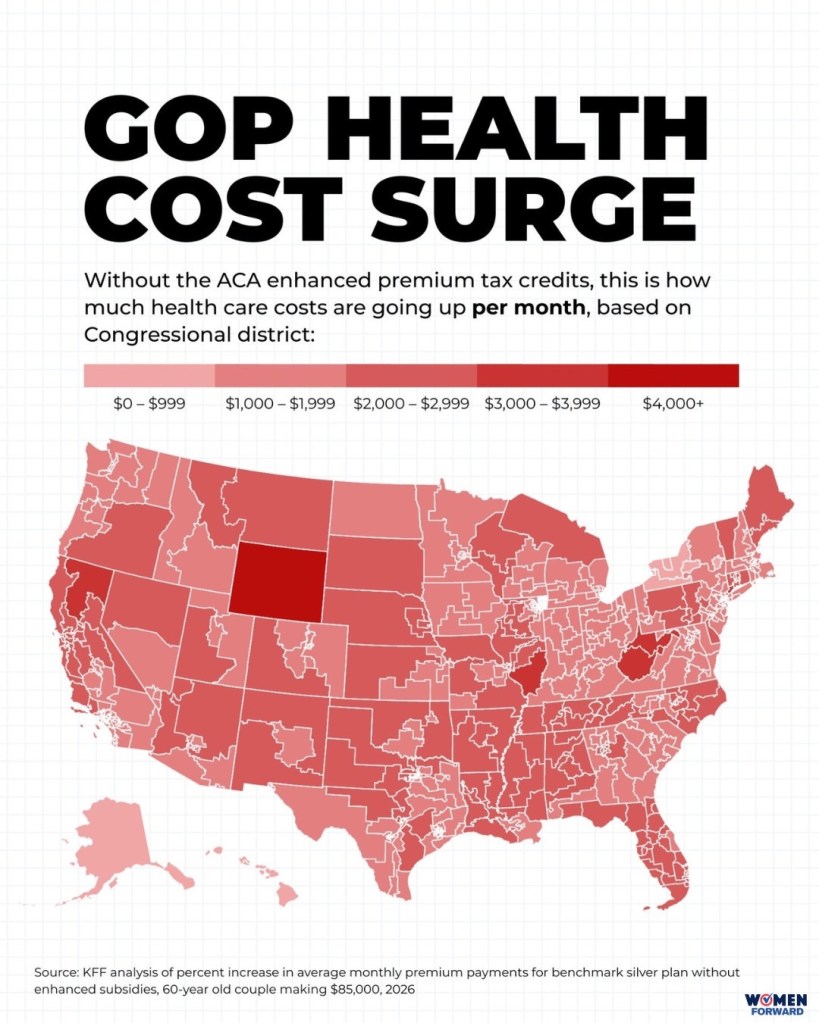
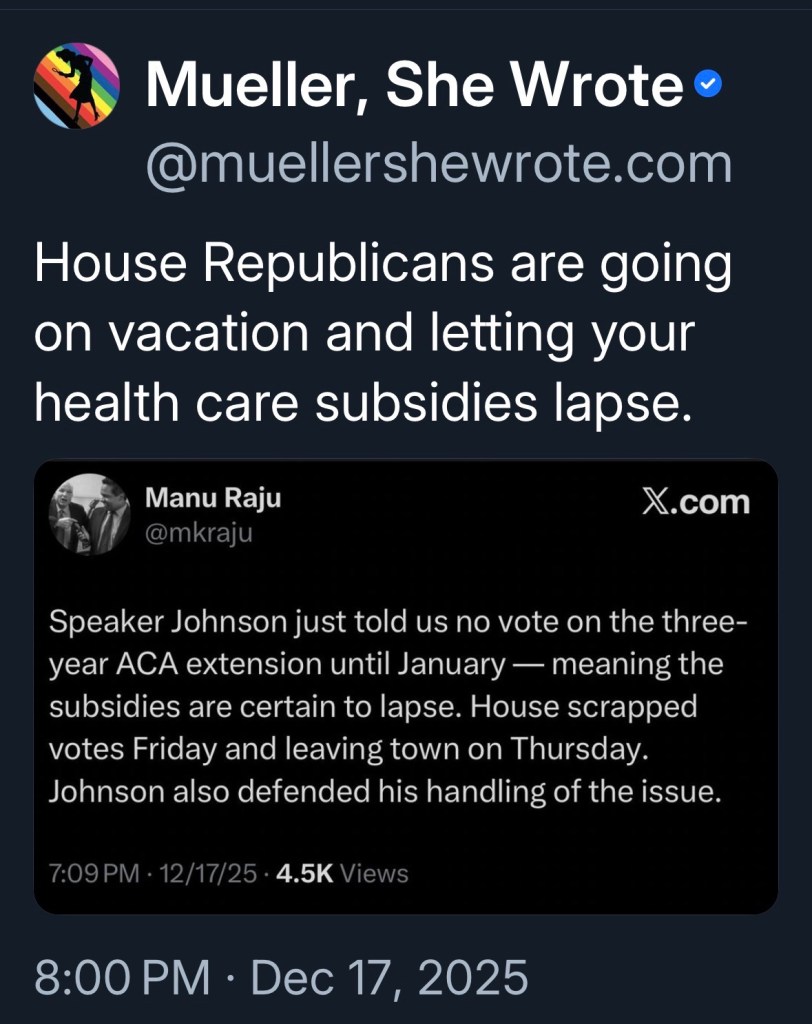
Four House Republicans joined Democrats Wednesday to force a House vote on a straight three-year extension of the enhanced Obamacare tax credits that will expire Dec. 31, delivering a sharp rebuke to Speaker Mike Johnson and other GOP leaders.
Reps. Brian Fitzpatrick of Pennsylvania, Mike Lawler of New York, Rob Bresnahan of Pennsylvania and Ryan Mackenzie of Pennsylvania signed the discharge petition filed by House Minority Leader Hakeem Jeffries — hours after House GOP leaders rejected attempts by Fitzpatrick and other Republican moderates to seek a floor vote on extending the subsidies used by more than 20 million Americans.
Fitzpatrick said in a late-night House Rules Committee meeting Tuesday that “the only thing worse than a clean extension … would be expiration, and I would make that decision.” Lawler added that “the only feasible path forward is a discharge petition” if GOP leader reject a floor vote.
Under House rules, a completed discharge petition is subject to a waiting period, meaning no vote could happen until next month — though Johnson could choose to move sooner.
“We have worked for months to craft a two-party solution to address these expiring healthcare credits,” Fitzpatrick said in a statement Wednesday. “Our only request was a Floor vote on this compromise, so that the American People’s voice could be heard on this issue. That request was rejected. … Unfortunately, it is House leadership themselves that have forced this outcome.”
Jeffries told reporters Wednesday his discharge petition is “the most straightforward path to ensuring that tens of millions of Americans don’t have their health care ripped away from them because of the expiration of the Affordable Care Act tax credits.”
"It's idiotic, it's political malpractice," Rep. Mike Lawler (R-N.Y.) told reporters Tuesday of Johnson refusing to give them an ACA extension vote.Lawler, and other moderate Republicans didn't rule out joining Democrats to force a vote on a three-year extension of the subsidies, Axios reported.
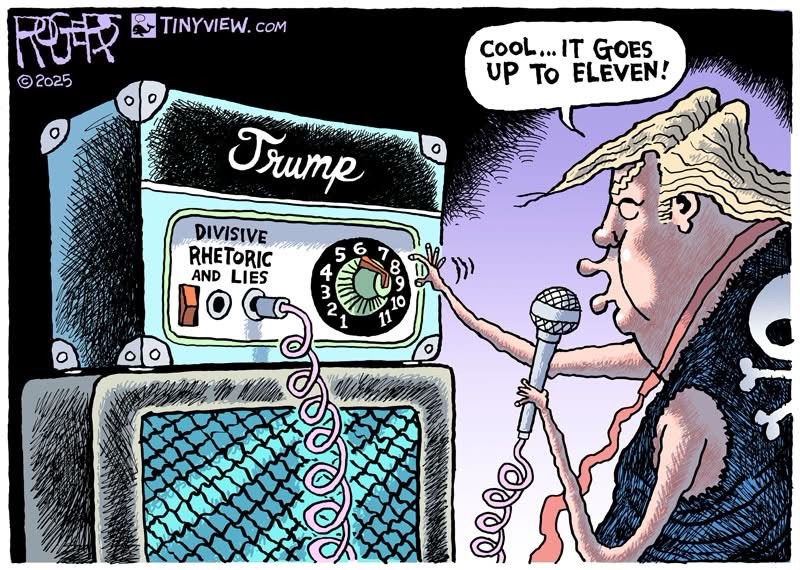
Donald Trump is worried that Republicans aren’t as afraid of him as they used to be. Despite his self-billing as a dealmaker, the president has only ever had one tool to control his party: fear. GOP politicians have been afraid of career damage and literal physical harm if they crossed him. Trump is not above reminding elected officials that he has unhinged followers who are known to be violent. But as his approval ratings fall and the 2026 midterm elections inch closer, it seems Republicans are slightly less worried about the president’s wrath.
The first indicator was the House vote on Nov. 18 to release the Epstein files against Trump’s expressed wishes. But the biggest sign that the president’s grip on power is weakening came last week, when a majority of Republicans in the Indiana statehouse struck down a gerrymandering bill Trump had demanded.
As I argued in the latest Standing Room Only newsletter, this context helps explain why Trump responded to the death of beloved director Rob Reiner and his wife Michele with an ugliness that’s shocking — even for this president. Although the Los Angeles Police Department had arrested the couple’s son for the apparent homicide, Trump insinuated on Truth Social that it was one of his own followers who killed the Reiners out of revenge for their anti-Trump activism. He doubled down when asked about it by reporters in the Oval Office on Monday. The message was hard to miss: If you oppose Trump, he wishes you dead.
These are promising signs, but it’s not worth holding your breath waiting for GOP politicians to openly turn on a president who demands absolute loyalty. Instead of public rebellion, most Republicans seem to be engaged in a form of quiet quitting. They won’t go out of their way to resist Trump, but they are losing enthusiasm for defending him. They’re struggling to hide their frustration or their scheming for a post-Trump world. Overall, the posture is one of lying low, waiting for the old man to be gone so they can begin the project of rebuilding the GOP and their own careers in a post-Trump era.
Read the rest at Salon.
Trump is also becoming noticeably less involved in actually running the government (gift link): The White House Is a Lost Cause.
There is a presidency at work in Washington, but it is not clear that there is a president at work in the Oval Office.
Ask Donald Trump about the goings on of his administration, and there is a good chance he’ll defer to a deputy rather than answer the question. “I don’t know her,” he said when asked about his nominee for surgeon general, Casey Means, earlier this year. “I listened to the recommendation of Bobby,” he said, pointing to Robert F. Kennedy Jr., the secretary of health and human services.
Ask Trump for insight into why his administration made a choice or to explain a particular decision, and he’ll be at a loss for words. Ask him to comment on a scandal? He’ll plead ignorance. “I know nothing about it,” Trump said last week, when asked about the latest tranche of photographs released from the estate of Jeffrey Epstein.
None of this on its own means the president isn’t working or paying attention to the duties of his office. But consider the rest of the evidence. He is by most accounts isolated from the outside world. He does not travel the country and rarely meets with ordinary Americans outside the White House. He is shuttled from one Trump resort to another to play golf and hold court with donors, supporters and hangers-on.
Ronald Reagan took regular meetings with congressional leaders to discuss his legislative agenda; George H.W. Bush spearheaded negotiations with the nation’s allies and led the United States to war in Iraq; and George W. Bush was, for better or worse, “the decider” who performed leadership for the cameras as much as he tried to exercise it from the Oval Office. Trump is a ubiquitous cultural presence, but there is no outward sign that he is an active participant in running the national government. He was mostly absent during discussions of his signature legislation — the One Big, Beautiful Bill Act — and practically AWOL during the monthlong government shutdown.
It is difficult for any president to get a clear read on the state of the nation; it takes work and discipline to clear the distance between the office and the people. But Trump, in his second term, does not seem to care about the disconnect. Abraham Lincoln once remarked that it would “never do for a president to have guards with drawn sabers at his door, as if he fancied he were, or were trying to be, or were assuming to be, an emperor.” A president has to be engaged — attentive to both the government and the public he was elected to serve.
Trump is neither. He is uninterested in anyone except his most devoted fans, and would rather collect gifts from foreign businessmen than take the reins of his administration. “The president doesn’t know and never will,” Susie Wiles, the White House chief of staff, said in an interview with Vanity Fair, commenting on the work of Elon Musk in the first months of the year. “He doesn’t know the details of these smallish agencies.”
A bit more:
Russell Vought
Instead, the work of the White House has been delegated to a handful of high-level advisers. Russell Vought, the director of the Office of Management and Budget, is the de facto shadow president for domestic affairs. As one senior government official told ProPublica, “It feels like we work for Russ Vought. He has centralized decision-making power to an extent that he is the commander in chief.” It was Vought who orchestrated the administration’s assault on the federal bureaucracy, including the wholesale destruction of U.S.A.I.D. It was Vought who either froze or canceled hundreds of billions of dollars in funding for anti-poverty programs, H.I.V. reduction initiatives and research into science, medicine and technology. And it is Vought who has been pushing the boundaries of executive power as he attempts to turn the federal government into little more than an extension of the personal will of the president — as channeled through himself, of course.
If Vought is the nation’s shadow president for domestic policy, then Stephen Miller is its shadow president for internal security. Miller, Trump’s top domestic policy adviser, is using the president’s authority to try to transform the ethnic mix of the country — to make America white again, or at least whiter than it is now. He is the primary force behind the expansion of Immigration and Customs Enforcement and Customs and Border Protection into a roving deportation force. He has pushed both agencies to step up their enforcement operations, targeting schools, restaurants, farms and other work sites and detaining anyone agents can get their hands on, regardless of citizenship or legal status. It is Miller who is behind the militarization of ICE, the use of the National Guard to occupy Democrat-led cities and assist deportation efforts, and the plan to blanket the United States with a network of detention camps for unauthorized immigrants and anyone else caught in his dragnet.
In other words, the Nazis are running White House policy. Use the gift link to read more.
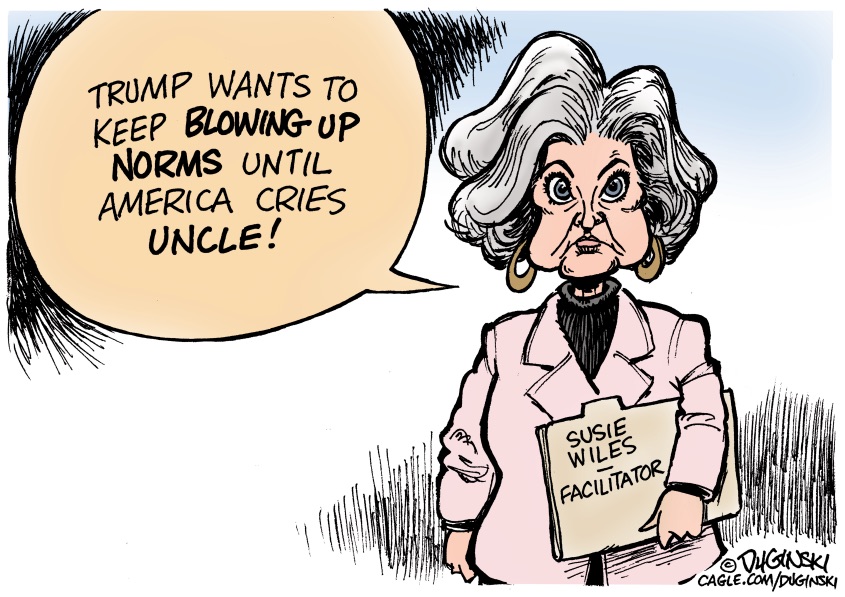
The latest White House mess is the Vanity Fair profile of Chief of Staff Susie Wiles.
Susie Wiles generally helps quietly shape headlines. She is rarely the focus of them.
That changed in dramatic fashion Tuesday after Vanity Fair published a deeply reported profile of the 68-year-old White House chief of staff, whose decades-long career in politics has been defined by a measured, steady-the-ship tone, never one that could be construed as undermining her boss.
In the two-part Vanity Fair piece — which included 11 interviews over nearly a year, with the White House’s cooperation — Wiles comes off as far more candid than her public persona. She not only speaks openly about both President Donald Trump and those who make up the core of his administration, but appears to acknowledge that at times she has been at odds with some of the policies that have been central to Trump’s second term. While not unusual for a chief of staff to disagree with the president they serve, those concerns generally remain part of private conversations.
Susie Wiles
Wiles revealed there had been “huge disagreements” over implementing tariffs, acknowledged that the administration must “look harder” at its process for mass deportation and said she had to “get on board” with Trump’s decision to give blanket pardons to Jan. 6 defendants. She said she initially believed only those who did not commit violent acts should be pardoned.
The profile prompted an all-hands-on-deck pushback from the White House and Trump’s political orbit. The central talking point became that the profile lacked context, and supporters blasted the outlet for being unfair rather than offering any direct refutation of the authenticity of quotes or what was reported.
Wiles herself also offered rare public condemnation.
“Significant context was disregarded and much of what I, and others, said about the team and the President was left out of the story,” she posted on social media. “I assume, after reading it, that this was done to paint an overwhelmingly chaotic and negative narrative about the President and our team.”
In an interview with the New York Post, Trump defended his top staffer.
“I think from what I hear, the facts were wrong, and it was a very misguided interviewer, purposely misguided,”he said.
Trump added “she’s fantastic” when asked if he continues to have full confidence in Wiles.
The Sky Dancing banner headline uses a snippet from a work by artist Tashi Mannox called 'Rainbow Study'. The work is described as a" study of typical Tibetan rainbow clouds, that feature in Thanka painting, temple decoration and silk brocades". dakinikat was immediately drawn to the image when trying to find stylized Tibetan Clouds to represent Sky Dancing. It is probably because Tashi's practice is similar to her own. His updated take on the clouds that fill the collection of traditional thankas is quite special.
You can find his work at his website by clicking on his logo below. He is also a calligraphy artist that uses important vajrayana syllables. We encourage you to visit his on line studio.










































































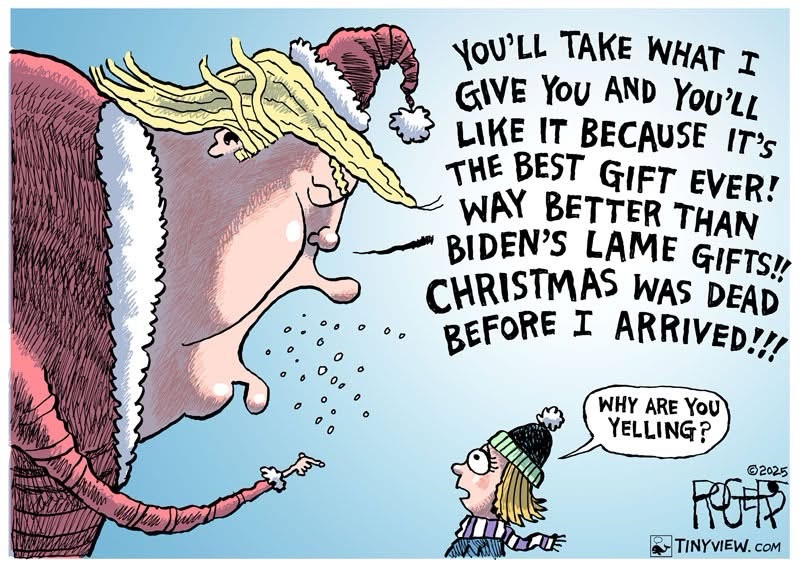






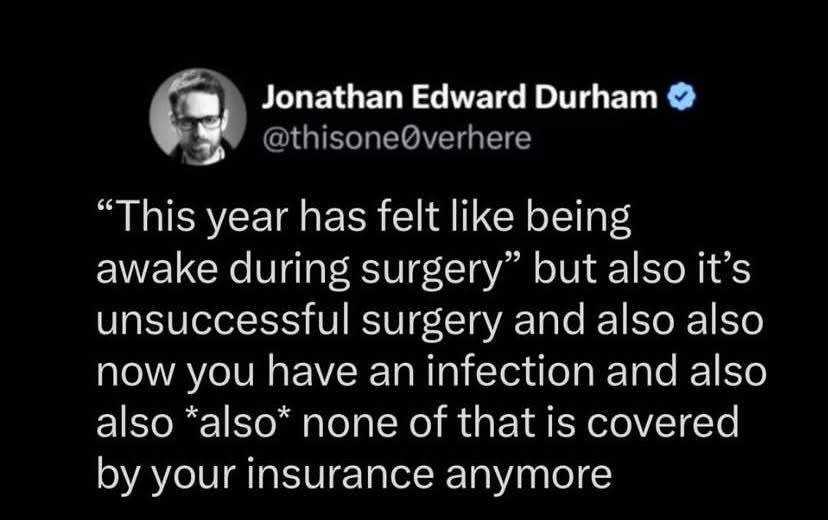





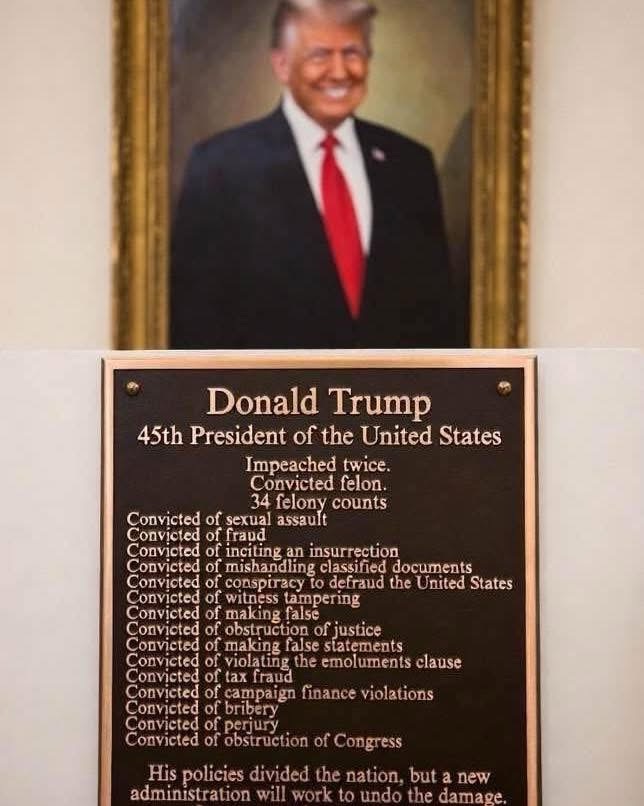


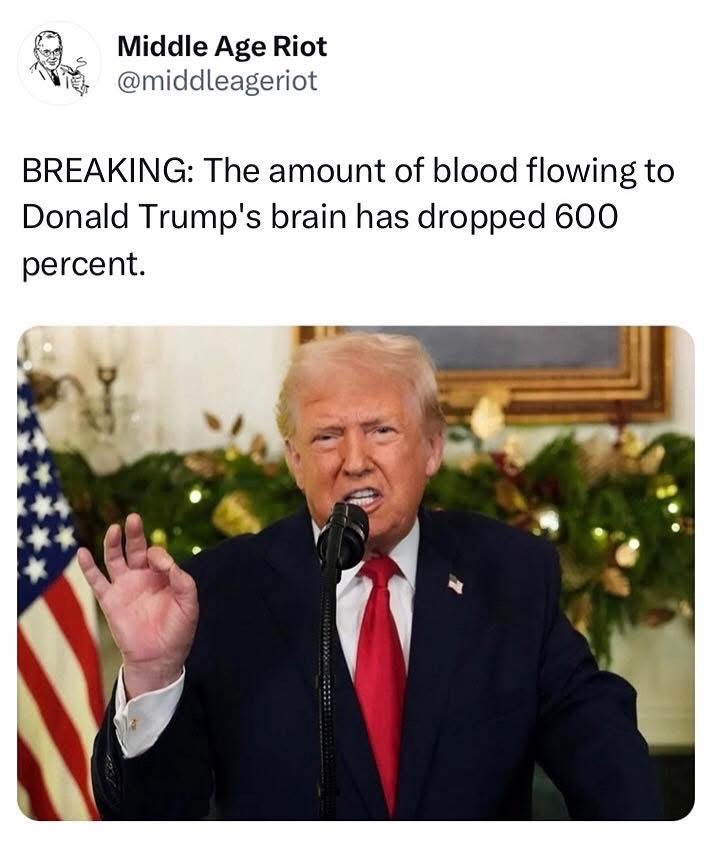














 This is the headline from the
  This is an affront on so many levels that it’s hard for me to put it into words. First and foremost, it disrespects the legacy of the late President Kennedy, whose name is relegated to an afterthought behind Trump’s. It disrespects all those involved in making the Kennedy Center a reality, including the artists who performed there and those honored there. It disrespects the goals of the Center and those who have worked to keep it as a shining beacon of American creative excellence. We have already seen the crap that happens there now that Trump has his vulgar fingers in it. It disrespects the best of our culture. The vulgar should not get these honors.
 There’s some good news coming from the Justice System today. Let’s shift to the latest on that. First, we have this headline from
  This also happened. “Federal judge temporarily blocks HUD permanent housing cuts for homeless. The U.S. district judge questioned whether “chaos” is the point in homelessness funding overhaul.” This article is from
  One last thing. We have yet another reason to think Bernie Sanders is a punk. This is from The Bulwark. It’s written by Sam Stein. “A Milestone Pediatric Cancer Bill Fails at the Hands of Bernie. The Vermont senator is holding out for a bigger health care package. Advocates are asking: Is the price worth it?” Why on earth would any one punk kids with Cancer whose name isn’t Trump?


























































 peej
peej Carissa
 bostonboomer
 dakinikat
 ecocatwoman
 mablue2
 Mama Lopez
 peggysue22
 quixote
 skydancingguestblogger
 Mona (aka Wonk the Vote)



 Sky Dancing
Recent Comments