At least we can celebrate cats and cat art, even though things in the real world are so f’d up. The top story today should be the upcoming midterm elections, and it is; but not in the way it normally would be. Right now we are dealing with a very strange situation in which a social media meltdown is likely to turn the process we’ve become accustomed to completely upside down. There’s really no way to know how it will all shake out, but it’s not looking good. It’s as if Trump himself took over Twitter in order to stoke chaos in the upcoming elections. In addition to the Twitter madness, the polls, which have been less accurate over the past several years, are seemingly more problematic than ever.
Here’s the latest on the Twitter mess. It’s a deep dive on the layoffs and how they could affect the user experience as well as the ability of experts, journalists, and regular people to follow the election results. Ben Collins, Bandy Zadrozny, and David Ingram at NBC News: Days before the midterms, Twitter lays off employees who fight misinformation.
Mass layoffs at Twitter on Friday battered the teams primarily responsible for keeping the platform free of misinformation, potentially hobbling the company’s capabilities four days before the end of voting in Tuesday’s midterm elections, one current and six former Twitter employees familiar with the cuts told NBC News,five of whom had been recently laid off.
Two former Twitter employees and one current employee warned the layoffs could bring chaos around the elections, as they hit especially hard on teams responsible for the curation of trending topics and for the engineering side of “user health,” which works on content moderation and site integrity. The seven people asked to withhold their names out of worry over professional retribution and because they weren’t authorized to speak for the company.
CEO Elon Musk, who’s facing sizable future debt payments and declining revenue at Twitter, said the cuts were needed to ensure the health of the company’s long-term finances a week after he bought it for $44 billion.
The cuts appeared to affect many people whose jobs were to keep Twitter from becoming overwhelmed by prohibited content, such as hateful conduct and targeted harassment, the seven sources said….
Gita Johar, a Columbia University business professor who has studied misinformation on Twitter, said the job cuts risk turning the site into a “free-for-all with rumors, conspiracy theories and falsehoods taking hold on the platform and in people’s imagination.”
Twitter had not released public figures about which teams had been cut the most, but the layoffs were widespread. In an exchange at an investor conference Friday, Musk appeared to confirm that his team had laid off half the company’s workforce, according to CNBC.
“Elon will own a company without employees,” a source inside Twitter told CNBC.
Painting by Françoise Collandre
Musk and his hand-picked spokespeople claim there won’t be any problems; but if you use Twitter regularly, you know that isn’t true.
Twitter’s curation team, which had a variety of roles across the platform, including coordinating the detection and publishing of moments meant to debunk misinformation, appears to be gone, one source said. The team had recently published an explainer about how it tried to keep information accurate and impartial.
Andrew Haigh, a London-based curation lead, said on Twitter that the team “is no more.”
“Unfortunately, the platform’s history of transparency and supporting research may be just that: history,” said Kate Starbird, a professor of design and engineering at the University of Washington who studies misinformation.
Starbird said it remained to be seen how potential misinformation around the midterms might be affected.
“We were already expecting a surge in rumors and disinformation around the election, even before Musk taking the reins,” she said.
“But the mass layoffs mean that we’ll get to see what an unmoderated major platform truly looks like in 2022, in an era of algorithmic manipulation and networked toxicity, during a massive online convergence event with huge political stakes.”
Read the rest at NBC News if you’re interested in the effects of misinformation and disinformation.
Elon Musk has now purged roughly half of Twitter’s 7,500 employee base, leaving whole teams totally or near completely gutted, including those tasked with defending against election misinformation ahead of the US midterms next week, The Verge has learned.
The areas of Twitter impacted the most by Musk’s cuts include its product trust and safety, policy, communications, tweet curation, ethical AI, data science, research, machine learning, social good, accessibility, and even certain core engineering teams, according to tweets by laid-off employees and people familiar with the matter. More company leaders, including Arnaud Weber, VP of consumer product engineering, and Tony Haile, a senior director of product overseeing Twitter’s work with news publishers, have also been laid off following Musk’s firings of Twitter’s senior leadership last week.
Given the sweeping nature of Musk’s layoffs and his mandate to cut costs in areas like cloud hosting, employees who remain at Twitter told The Verge that they expect the company to have a hard time maintaining critical infrastructure in the short term. “Shit is gonna start breaking,” said one current employee who requested anonymity to speak without the company’s permission, while another called management’s layoff process “an absolute shit show.”
The rest of the article discusses Musk’s disgusting treatment of employees and upcoming lawsuits by those who have been purged.
Devastating cuts to Twitter’s workforce on Friday, four days before the midterm elections, are fueling anxieties among political campaigns and election offices that have counted on the social network’s staff to help them combat violent threats and viral lies.
Slim woman with a cat, Geza Farago
The mass layoffs Friday gutted teams devoted to combating election misinformation, adding context to misleading tweets and communicating with journalists, public officials and campaign staff.
The layoffs included a number of people who were scheduled to be on call this weekend and early next week to monitor for signs of foreign disinformation, spam and other problematic content around the election, one former employee told The Washington Post. As of Friday morning, employee access to internal tools used for content moderation continued to be restricted, limiting staff’s ability to respond to misinformation.
Twitter had become one of America’s most influential platforms for spreading accurate voting information, and the days before elections have often been critical moments where company and campaign officials kept up a near-constant dialogue about potential risks.
But a representative from one of the national party committees said they are seeing hours-long delays in responses from their contacts at Twitter, raising fears of the toll workplace chaos and sudden terminations is taking on the platform’s ability to quickly react to developments. The representative spoke on the condition of anonymity because of the matter’s sensitivity.
It’s “only” a social media company, but Twitter has become a vital source of information for people in every walk of life. This is going to be a disaster.
Some researchers tracking online threats said they also feared that the cuts would interrupt lines of communication between the company and police that have been used to identify people threatening voter intimidation or offline violence.
“Law enforcement may lose precious minutes in identifying that person who we think is posing an actual threat,” said Katherine Keneally, a senior research manager at the Institute for Strategic Dialogue, a think tank that studies political extremism and polarization.
Keneally said she’d already seen an uptick in threatening content related to the election. She pointed to one post where a user wrote of the need to “pour in bleach or gasoline” at ballot drop boxes, a target of right-wing conspiracy theories about systematic voter fraud.
President Biden on Friday criticized Twitter’s role in spreading false information.
“Elon Musk goes out and buys an outfit that spews lies all across the world,” he said while attending a political fundraiser in Chicago. “There’s no editors anymore in America.”
The loss of Twitter as we knew it also has consequences for individuals. Here’s an example from a Washington Post writer:
What is happening to Twitter is profoundly sad.
I've been active on here for maybe 13 years and owe so much of my career to being able to find and develop my voice here. I've met so many wonderful people on this bluebird app.
Read the replies on Twitter. The sentiment is widespread.
Here’s another example:
In 2016, I was on a show and the host suggested I may be Jewish. He was Jewish, it was light hearted. I started receiving tweets with gas chambers from frog accounts. Disgusting anti-Semitism. That was what it was like here before moderation.
“The Jews” is trending on Twitter, and its algorithm has selected Ye as a “Top” person to follow while Elon Musk fires roughly half of the company’s staff, including many of its policy experts and content moderators.
Ye, formerly known as Kanye West, recently had his Twitter access limited after saying he would go “death con 3” on “JEWISH PEOPLE,” and has been dropped by the vast majority of his business partners after repeatedly making blatantly antisemitic comments over the last few weeks. The freeze on Ye’s account has since been lifted.
“#IStandWithKyrie” is also trending, a reference to Brooklyn Nets star Kyrie Irving, who recently recommended that people watch an antisemitic documentary and was suspended for five games after declining to apologize and evasively answering a question on whether he holds “anti-semitic beliefs.”
Twitter’s content moderation has always been something of a disaster, and harmful things end up trending all the time. Twitter’s content moderation has always relied more heavily on algorithms than competitors like Facebook do. In any case, Musk has promised to protect the values of “freedom of speech”—with the company now running with thousands fewer employees after mass layoffs. This may well be a window into what that looks like.
Girl with Kitten – Olesya Serzhantova Russian painter
The pullback of advertisers from Twitter gathered steam on Friday amid growing fear that misinformation and hate speech would be allowed to proliferate on the platform under Elon Musk’s leadership.
The Volkswagen Group joined several other companies in recommending that its automotive brands, which include Audi, Lamborghini, Bentley and Porsche, pause their spending on Twitter out of concerns that their ads could appear alongside problematic content. The Danish brewing company Carlsberg Group also said it had advised its marketing teams to do the same. The outdoor equipment and apparel retailer REI said it would pause posts in addition to advertising spending “given the uncertain future of Twitter’s ability to moderate harmful content and guarantee brand safety for advertisers.” And a spokeswoman for United Airlines, Leslie Scott, confirmed that the carrier had suspended advertising on Twitter earlier this week.
Civil rights groups including GLAAD and the Anti-Defamation League held a conference call on Friday urging other companies to abandon Twitter, saying that mass layoffs there were gutting what they described as an already anemic content moderation staff.
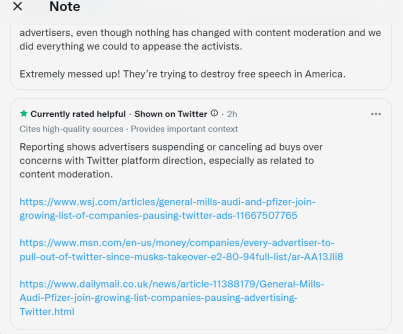
Even Mr. Musk acknowledged the advertising slump, tweeting on Friday morning that Twitter “has had a massive drop in revenue,” which he blamed on activist groups pressuring advertisers.
The first chaotic week of Mr. Musk’s ownership of Twitter has given Madison Avenue whiplash, as advertisers struggle to reconcile the billionaire’s promises to make the platform safe for brands with concerns about a surge of extremism and false narratives, including one promoted by Mr. Musk himself.
In his tweet about Twitter’s faltering revenue, Mr. Musk said that “nothing has changed with content moderation and we did everything we could to appease the activists” — a claim that civil rights groups denied.
A minute before he posted his comment, the ad-tracking platform MediaRadar released statistics showing that the number of advertisers on Twitter had dropped from May, soon after Mr. Musk’s bid for the platform was announced, through September, when he was still fighting to get out of the deal he struck to buy Twitter in April.
MediaRadar, which tracks ad campaigns for millions of companies, said data for October, when Mr. Musk took over Twitter, would not be available until later this month.
The polls show Republicans gaining heading into the final stretch. They’ve pulled ahead on the generic ballot in the race for the House, and they’ve fought into a closely contested race for Senate control….
On average, Republicans lead by two points on the generic ballot — which asks voters whether they’ll vote for the Democrat or Republican for Congress — and have pulled into very tight Senate races in Pennsylvania, Georgia and Nevada, where Democrats were once thought to have the advantage.
This simple poll average is like many others you might have seen over the years. It weights the most recent polls more heavily. It gives more weight to pollsters that belong to a professional polling organization (they tend to be far less biased over the longer term). It doesn’t contain some of the fancier bells and whistles, like an adjustment for whether a poll tends to lean toward Republicans or Democrats.
But in one important respect, this average is very different from polling averages you’ve seen in prior years: The pollsters making up the average are very different.
Many stalwarts of political polling over the last decade — Monmouth University, Quinnipiac University, ABC/Washington Post, CNN/SSRS, Fox News, New York Times/Siena College, Marist College — have conducted far fewer surveys, especially in the battleground states, than they have in recent years. In some cases, these pollsters have conducted no recent polls at all.
And on the flip side, there has been a wave of polls by firms like the Trafalgar Group, Rasmussen Reports, Insider Advantage and others that have tended to produce much more Republican-friendly results than the traditional pollsters. None adhere to industry standards for transparency or data collection. In some states, nearly all of the recent polls were conducted by Republican-leaning firms.
This creates a big challenge for a simple polling average like this one. From state to state, Democrats or Republicans might seem to be doing much better or much worse, simply depending on which kind of pollster has conducted a survey most recently. The race may seem to swing back and forth, from week to week.
This is a subscriber only article, but I sent a gift link to Twitter and I’m posting it here for anyone who wants to read the rest and see charts.
Check out this article from @nytimes. Because I'm a subscriber, you can read it through this gift link without a subscription. https://t.co/zwHac8h51B
I’m going to end there. As for how things are going in the many important races around the country, I have decided to kind of ignore the news about those. I can’t trust the polls, and I will only end up anxious and depressed if I read too much about what’s happening in the various states. I’m worried, but I figure all I can do is wait and see what happens and then deal with the results.
Please post your thoughts and share links on any topic in the comment thread, and I wish you a nice, peaceful weekend.
Did you like this post? Please share it with your friends:
This weekend, I’ll be waking up to one of my favorite days of the year: a government-sanctioned 25-hour Sunday. Forget birthdays, forget my anniversary; heck, forget the magic of Christmas. On Sunday, I’ll get to do a bit of time traveling as most of the United States transitions out of daylight saving time back into glorious, glorious standard time.
I may be a standard-time stan, but I’m no monster. I feel for the die-hard fans of DST. With the push of a button, or the turn of a dial, most Americans will be cleaving an hour of brightness out of their afternoons, at a time of year when days are already fast-dimming. Leaving work to a dusky sky is a bummer; a pre-dinner stroll cut short by darkness can really be the pits.
But if we all put aside our differences for just a moment, we can celebrate the fact that this weekend, nearly all Americans—regardless of where they sit on the DST love-hate spectrum—will be blessed with a 25-hour day, and that freaking rocks. If we must live in a dumb world where the dumb clocks shift twice a dumb year, let’s at least come together on the objective greatness of falling back.
I don’t want to minimize the nuisance of the time shift. Toggling back and forth twice a year is an absolute pain, and many Americans cheered when the Senate unanimously passed a proposal earlier this year to move the entire U.S. to permanent daylight saving time. But Katy Milkman, a behavioral scientist at the University of Pennsylvania and the host of the podcast Choiceology—who, by the way, loathes the end of DST—told me we can all reframe the autumn clock change “as a windfall.” Sunday will contain a freebie hour to do whatever we like. Rafael Pelayo, a sleep specialist at Stanford, will be spending his at the farmers’ market; Ken Carter, a psychologist and self-described morning person at Emory University, told me he might chill with an extra cup of coffee and his cats. I’m planning to split my minutes between a nap and Paper Girls (the graphic novel, not the show).
I will probably walk Temple a little longer that morning and then enjoy some tea and breadmaking.
I got a pretty good laugh as some friendly remaining Twitter employer or algorithm has fact-checked the Chief Twit.
Twitter has had a massive drop in revenue, due to activist groups pressuring advertisers, even though nothing has changed with content moderation and we did everything we could to appease the activists.
Extremely messed up! They’re trying to destroy free speech in America.
This is from Newsweek. “Every Advertiser to Pull Out of Twitter Since Musk’s Takeover—Full List”. Many businesses don’t want to be associated with a site that lets NAZIs, Racists, and nasty-talking idiots run amok, according to those asking those businesses. For some reason, everyone but Musk gets it.
Since Elon Musk‘s takeover of Twitter last week, at least six major companies have stopped advertising on the platform over concerns about how the billionaire will affect content moderation policies on the app.
During the rocky process of acquiring the platform, marked by U-turns, controversies, and lawsuits, Musk pledged to make Twitter a champion of free speech. This promise led many right-wingers to see Musk’s takeover as a victory for conservatives over political correctness, though the Tesla CEO is yet to implement any changes to the way the platform moderates content.
But where right-wingers saw potential, many companies appear to have spotted a risk of damage to their business, especially after a sudden surge of slurs and hateful comments were reported on the platform immediately following Musk’s takeover.
This could be a problem for Musk’s Twitter: before his takeover, the company reported making 90 percent of its revenue from advertisers. Now that Twitter is set to charge its blue-tick users $8 per month to keep their verified badge, it’s unclear whether this could make up for lost revenues from advertising.
Marsh Landscape with Farmhouses at Utenwarf, Emile Nolde,
General Mills, Audi and Pfizer join growing list of companies pausing advertising on Twitter amid fears the platform won’t be a ‘safe place for brands’ after Musk’s $44B takeover
Audi and Cheerios-maker General Mills confirmed an ad pause on Thursday
Pfizer and Oreos-maker Mondelez also reportedly halted Twitter spending
Brands are watching nervously to see how Twitter evolves under Elon Musk
Musk insists that it will be safe for brands and not a ‘free-for-all hellscape’
General Motors previously announced a pause in its Twitter ad spending
Carmakers are especially worried about fair treatment from Tesla CEO Musk
Elon Musk is beginning mass layoffs at Twitter, sharply reducing the company’s workforce of 7,500 and kicking off his wholesale overhaul of the company.
An email went out to the company’s employees late Thursday notifying employees of plans to cut jobs, informing them that by 9 a.m. Pacific time Friday, workers would receive an email with the subject line: “Your Role at Twitter.”
Those keeping their jobs would be notified on their company email. Those losing them would be told via their personal email.
Former President Trump’s inner circle is discussing announcing the launch of a 2024 presidential campaign on Nov. 14 — with the official announcement possibly followed by a multi-day series of political events, according to three sources familiar with the sensitive discussions.
Why it matters: Trump and his top advisers have been signaling for weeks that a 2024 announcement is imminent. But those discussions have reached the point that allies are blocking off days in their calendars for the week after the midterms — and preparing to travel.
What we’re hearing: With polls pointing toward a good night for Republicans on Tuesday, Trump plans to surf the GOP’s expected post-midterm euphoria to build momentum for his own effort to retake the White House.
Look for Trump to take credit for Republican victories across the board —including those he propelled with his endorsements, and even those he had nothing to do with.
Between the lines: Trump has long planned to announce shortly after midterms — and even toyed with announcing before Nov. 8 — in an effort to get ahead of potential rivals for the GOP’s 2024 nomination, including Florida Gov. Ron DeSantis.
In recent weeks, Trump has been inching closer and closer to saying he is running, relishing the applause as he hints to his rally crowds that he’s doing it.
At his Thursday rally in Sioux City, Iowa, Trump said: “In order to make our country successful and safe and glorious, I will very, very, very probably do it again … Get ready that’s all I’m telling you — very soon. Get ready.”
A Trump spokesman declined to comment. The discussions are still fluid and could change depending on Tuesday’s results, especially if the Senate still hangs in the balance and the Georgia race between Herschel Walker and Raphael Warnock goes to a run-off.
Reality check: It’s Trump. So anything could happen — or not. He’s conflicted on the timing and nothing is ever certain. But people who have been close to him for many years are lacing up for the next race.
Emil Nolde, Meer mit zwei qualmenden Dampfern [Sea With Two Smoldering Steamboats], 1930,
Now federal investigators are planning for a burst of post-election activity in Trump-related investigations. That includes the prospect of indictments of Trump’s associates – moves that could be made more complicated if Trump declares a run for the presidency.
“They can crank up charges on almost anybody if they wanted to,” said one defense attorney working on January 6-related matters, who added defense lawyers have “have no idea” who ultimately will be charged.
“This is the scary thing,” the attorney said.
Trump and his associates also face legal exposure in Georgia, where Fulton County District Attorney Fani Willis is investigating Trump’s efforts to overturn the 2020 election in the Peach State and expects to wrap her probe by the end of the year.
Indicting an active candidate for the White House would surely spark a political firestorm. And while no decision has been made about whether a special counsel might be needed in the future, DOJ officials have debated whether doing so could insulate the Justice Department from accusations that Joe Biden’s administration is targeting his chief political rival, people familiar with the matter tell CNN.
Special counsels, of course, are hardly immune from political attacks. Both former special counsel Robert Mueller’s Russia investigation and special counsel John Durham’s investigation into the origins of the FBI’s Russia probe came under withering criticism from their opponents.
It was not clear whether he was in custody, but officials said the threat had been “mitigated.”
“He no longer poses a threat to the community at this time,” James E. Dennehy, the special agent in charge of the F.B.I.’s Newark office, said during a morning conference call with state and federal law enforcement officials and more than 500 Jewish leaders.
Mr. Dennehy said investigators believed that the man, who is from New Jersey, was acting alone, but they are continuing to pursue leads about people he might have been in contact with. The man was not publicly identified, and officials offered no additional information about whether he had been charged with a crime.
He was located Thursday night, officials said, and questioned for a “few hours.”
“He expressed radical, extremist views and ideology, as well as an extreme amount of hate against the Jewish community,” Mr. Dennehy said.
Hakeem Jeffries may follow Nancy Pelosi as Speaker. This is from Politico: “How a secret meeting put Hakeem Jeffries on track to replace Pelosi. Behind the scenes, House Democrats battle to anoint their next generation of leaders.”
The race to succeed Speaker Nancy Pelosi as the leader of House Democrats may have been clinched at a meeting in the Capitol on Sept. 1.
That’s when House Majority Whip Jim Clyburn of South Carolina and Rep. Hakeem Jeffries of New York slipped back to Washington to connect in Clyburn’s office during the summer congressional recess at Jeffries’ request.
Jeffries, the fifth-ranking House Democrat who aspires to be the first-ranking House Democrat in the next Congress, was picking up heightened chatter from colleagues about California Rep. Adam Schiff’s outreach expressing his own interest in the top caucus job.
The 52-year-old Jeffries was concerned enough that he offered to fly to South Carolina to seek the counsel of the 82-year-old Clyburn. The younger lawmaker wanted to gently make sure his elder in the Congressional Black Caucus knew of Schiff’s quiet campaign — and to even more gently warn Clyburn about the risk of splitting votes between them and opening a path for the ambitious Californian.
Jeffries need not have been alarmed.
“There’s nothing I would ever do to impede the progress of our up-and-coming young Democrats and I see him as an up-and-coming young Democrat,” Clyburn said in an interview about Jeffries. “He knows that, I didn’t have to tell him that — but I did.”
Asked if he would be willing to serve in an emeritus role in the leadership, Clyburn said he is “willing to do anything the caucus thinks is to their benefit,” noting that Jeffries has “referred to me as a mentor.”
Something extraordinary just happened: In the space of just this week, a president and an ex-president warned that the opposition poses an existential threat to our political way of life. Joe Biden declared that “MAGA Republicans” have placed democracy “under threat.” Barack Obama warned that if GOP election deniers win in Arizona, “democracy may not survive.”
Yet the ongoing MAGA threat to U.S. democracy, including from Donald Trump himself, isn’t harming Republicanchances of winning the House and very plausibly the Senate. Some think Democratic warnings are backfiring: Former Obama strategist David Axelrod suggested vulnerable Democrats don’t want the unpopular Biden to elevate himself in the election’s home stretch.
Why hasn’t the threat to democracy extracted a heavier price from Republicans? Is it true that vulnerable Democrats don’t want Biden to prominently address the topic? If so, should he have stood down, since Democrats themselves think protecting democracy above all requires keeping MAGA Republicans out of power? Could a more forceful case have made this a bigger voting issue?
I raised these questions with a number of senior Democratic strategists and pollsters working on tough House and Senate races. The answers that emerged are complicated, nuanced — and ultimately vexing.
First, it’s critical to note that messages about the threat to democracy mean different things to different voter groups, which means they help Democrats in some ways but not in others.
Democratic pollster Celinda Lake has found this mixed picture in extensive work withfocus groups. Elevating threats to democracy, political violence and the events of Jan. 6, 2021, Lake tells me, “helps mobilize the Democratic base,” and, importantly, this kicked in at a key moment, when anger over the demise of abortion rights was “receding” in late summer.
Thisis not a small matter. Threats-to-democracy talkalso galvanizes volunteers, who are critical amid soaring polarization and races decided on the margins, says Ezra Levin, co-founder of the progressive group Indivisible.
I think it’s because many Republicans see their ability to be public assholes and not be held to account for it as their idea of democracy. Correct me if I am wrong. Anyway, I’m going to have a nice quiet day, with the only goal being to relax and not let things get to me.
What’s on your reading and blogging list today?
Did you like this post? Please share it with your friends:
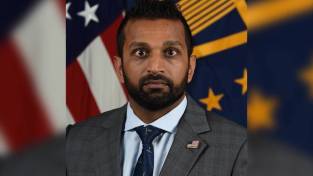
It’s really happening, folks. Last night we got another sign that Merrick Garland’s DOJ is likely to indict Donald Trump. The news broke around 9PM Wednesday in The Wall Street Journal that Trump insider Kash Patel has been given limited use immunity and will now have to testify to the grand jury in the stolen documents case. This means he won’t be prosecuted for anything he testifies to truthfully, but he can be prosecuted if he lies.
Lawrence Tribe predicted this last month when The New York Times published a story about the DOJ trying to get testimony from Patel and another Trump aide Walt Nauta, who was involved in moving boxes of documents out of the storage area at Mar-a-Lago.
Once DOJ grants Kash Patel immunity, his 5th Amendment rights against compelled self-incrimination will evaporate. He will then be forced to tell the truth about Trump’s role in the Mar-a-Lago crimes against America’s national security. The jig will be up.https://t.co/KnRPOCx5Lu
Kash Patel, a close associate of former President Donald Trump, is set to soon testify before a federal grand jury probing the handling of classified documents at Mar-a-Lago after receiving immunity for his information, people familiar with the matter said.
A federal judge recently decided the Justice Department couldn’t force Mr. Patel to testify without such protection against his statements being used against him in some future prosecution. That ruling, the people said, opens the door for Mr. Patel, who says Mr. Trump broadly declassified White House documents while still president, to answer questions.
Mr. Patel appeared before the grand jury last month and refused to provide information by repeatedly invoking his Fifth Amendment right against self-incrimination, The Wall Street Journal reported.
Kash Patel
In response, the Justice Department asked a federal judge to compel him to testify. Prosecutors argued Mr. Patel had no reasonable expectation that he would be prosecuted based on the kinds of questions they were asking, one of the people said, an argument the judge didn’t accept.
The immunity grant leaves the government only able to charge Mr. Patel, if at all, using information obtained independently of his immunized testimony.
That’s because Patel is just a small fish, and the DOJ is going after a much bigger fish–Trump himself.
Other Trump associates involved in the Mar-a-Lago documents matter also have been offered some form of immunity, people familiar with the matter said, including one of Mr. Trump’s lawyers, Christina Bobb, who declined, saying she didn’t need it.
Mr. Patel, a former White House and Pentagon aide whom Mr. Trump late in his term considered naming to top positions at the Central Intelligence Agency and the FBI, has asserted publicly since May that Mr. Trump broadly declassified documents when he left the White House in January 2021. His comments first came as the Justice Department’s efforts to retrieve the documents from Mar-a-Lago were intensifying and the same month prosecutors issued a grand jury subpoena for their return.
Prosecutors asked Mr. Patel about that claim and an array of other topics, including some that had nothing to do with Mr. Trump or the material discovered at Mar-a-Lago, one of the people said.
Investigators have spoken to a number of other people, including close aides to the former president, since the probe began.
I didn’t encounter a paywall when I opened this WSJ story from a link on Memeorandum.
The disclosure that Mr. Patel has received immunity for his testimony comes as prosecutors have increased their pressure on recalcitrant witnesses who have declined to answer investigators’ questions or have provided them with potentially misleading accounts about Mr. Trump’s handling of documents.
Prosecutors have indicated they are skeptical of the level of cooperation they have gotten from a little-known Trump aide named Walt Nauta, who has provided the authorities with different accounts about whether he moved documents stored at Mr. Trump’s Mar-a-Lago estate. The authorities are using the specter of charges against him for misleading investigators to persuade him to sit again for questioning.
The prosecutors want to question Mr. Patel about an array of matters related to the documents. Among them is an unsubstantiated claim Mr. Patel has publicly made in recent months that Mr. Trump had declassified national security documents he took when he left the White House….
Mr. Patel has long been a part of efforts to fight off the Justice Department investigations into Mr. Trump and his allies. Earlier this year, as officials were pushing Mr. Trump to return records he had taken to Mar-a-Lago when he left office, Mr. Trump made him one of his representatives to the National Archives and Records Administration to deal with his records.
Legal experts say prosecutors try to avoid giving witnesses immunity, especially in high-profile cases, because it makes it much more difficult to prosecute the individual who received it. But prosecutors often ask a judge to grant it when they are confronted with a witness who has information that they believe is essential to completing the investigation….
Mr. Patel has increased his influence with Mr. Trump since the end of the presidency, maintaining his criticisms of the investigation into whether the Trump campaign conspired with Russia in the 2016 campaign.
Earlier this year, Mr. Patel told associates that he was expected to take on an even more central role in Mr. Trump’s legal defenses, currently coordinated by another Trump adviser, Boris Epshteyn, according to a person familiar with his comments.
There’s also big news on the investigation of Trump’s involvement in the investigation of efforts to overturn the 2020 election. Yesterday Politico obtained the 8 emails that Trump attorney John Eastman has been fighting to keep from the January 6 Committee and they are damning.
EASTMAN: 1) Orchestrated significant aspects of Trump bid to subvert 2020 2) Sought a pardon (didn't get it) 3) Pleaded 5th to Jan. 6 committee / Fulton 4) Been accused of aiding a "coup" by a federal judge 5) Had his phone seized by the FBI in Junehttps://t.co/i1qHUEpRxs
Donald Trump’s attorneys saw a direct appeal to Supreme Court Justice Clarence Thomas as their best hope of derailing Joe Biden’s win in the 2020 presidential election, according to emails newly disclosed to congressional investigators.
“We want to frame things so that Thomas could be the one to issue some sort of stay or other circuit justice opinion saying Georgia is in legitimate doubt,” Trump attorney Kenneth Chesebro wrote in a Dec. 31, 2020, email to Trump’s legal team. Chesebro contended that Thomas would be “our only chance to get a favorable judicial opinion by Jan. 6, which might hold up the Georgia count in Congress.”
“I think I agree with this,” attorney John Eastman replied later that morning, suggesting that a favorable move by Thomas or other justices would “kick the Georgia legislature into gear” to help overturn the election results.
Trump lawyer Kenneth Chesebro
The messages were part of a batch of eight emails — obtained by POLITICO — that Eastman had sought to withhold from the Jan. 6 select committee but that a judge ordered turned over anyway, describing them as evidence of likely crimes committed by Eastman and Trump. They were transmitted to the select committee by Eastman’s attorneys last week, but remained largely under wraps until early Wednesday morning….
Thomas is the justice assigned to handle emergency matters arising out of Georgia and would have been the one to receive any urgent appeal of Trump’s lawsuit to the Supreme Court — a fact that seemed to be part of the Trump legal team’s calculus.
Rulings from so-called circuit justices are typically stopgap measures aimed at preserving the status quo until the full Supreme Court weighs in, but the Trump lawyers hoped a favorable order from Thomas would embolden state GOP-controlled legislatures, Congress — or then-Vice President Mike Pence — to block final certification of Joe Biden’s victory.
“[I]f we can just get this case pending before the Supreme Court by Jan. 5, ideally with something positive written by a judge or justice, hopefully Thomas, I think it’s our best shot at holding up the count of a state in Congress,” Chesebro said.
There’s even more crazy stuff from Chesebro:
In one scenario, Chesebro proposed encouraging Senate Republicans to filibuster long enough to delay the joint session of Congress on Jan. 6, ignoring limitations on the length of debate. He also described how Trump allies could use inaction by the courts to build political pressure against Biden’s inauguration.
“Hard to have enormous optimism about what will happen on Jan. 6, but a lot can happen in the 13 days left until then, and I think having as many states still under review (both judicially and in state legislatures) as possible is ideal,” Chesebro wrote Trump campaign attorney Justin Clark on Dec. 24, 2020. It’s unclear how or whether Clark responded to Chesebro’s message.
The New York-based lawyer has been scrutinized by the Jan. 6 select committee, as well as prosecutors in Fulton County, Ga., who are investigating Trump’s efforts to subvert the election there.
As the midterm campaigns draw to a close, so too may an informal détente between Donald Trump and federal prosecutors since the search of Mar-a-Lago in August. While both sides fight in court, the Justice Department has probably refrained from taking major steps in the key investigations into his possession of classified documents and the attack on the U.S. Capitol in order to avoid influencing the elections.
During this relative down period, however, the department has reportedly been fighting an opaque and largely secret legal battle in the January 6 investigation that could constitute its most significant development to date. It could open a floodgate of damaging information about Trump or provide the department with crucial clarity about his conduct with respect to the riot and the effort to overturn the election results beyond what the public has learned so far. Like the search at Mar-a-Lago, this reflects an apparent change in posture at the Justice Department in recent months under Attorney General Merrick Garland, who chose not to focus on Trump’s potential criminal misconduct when he took office last year despite ample reason to do so.
And thus far, the Justice Department appears to be winning.
In recent weeks, according to a variety of news reports, prosecutors successfully compelled grand-jury testimony in Washington, D.C., from two key witnesses over the objections of Trump — Greg Jacob, a onetime lawyer for former vice-president Mike Pence who blamed the shoddy legal arguments advanced by Trump lawyer John Eastman for the outrageous violence at the Capitol, and Marc Short, Pence’s former chief of staff. The proceedings are under seal for the moment, but they are being handled at the district-court level by Chief Judge Beryl Howell, who has so far rejected Trump’s legal challenges. In at least Short’s case, Trump’s lawyers reportedly sought an expedited appeal to the D.C. Circuit Court of Appeals, which rebuffed them. The Justice Department is now reportedly seeking a similar ruling from Howell that would force testimony — again over Trump’s objections — from former White House counsel Pat Cipollone and his deputy Patrick Philbin.
All of the court disputes appear to center on Trump’s effort to invoke executive privilege to block top officials in his White House from providing testimony that might incriminate him. As CNN noted, the recent testimony from Jacob was “the first identifiable time when the confidentiality Trump had tried to maintain around the West Wing after the 2020 election has been pierced in the criminal probe following a court battle.” The fight is not over: There is apparently still a pending appeal at the D.C. Circuit and likely more litigation before Howell as things continue to play out and additional witnesses are called in, and at some point, Trump could seek the involvement of the Supreme Court to try to bail him out.
At first blush, this may seem like a fight among lawyers with esoteric stakes concerning the scope of executive privilege, but there are significant consequences if the Justice Department successfully continues down this path. Prosecutors could obtain fulsome information about what Trump himself (as opposed to the people around him) was actually saying and doing in the run-up to and during the January 6 siege.
Read the rest at the link. The gist is that prosecutors are moving closer to actually holding Trump accountable.
More interesting stories to check out, links only:
Is it me or is the news today even more dispiriting than usual?
Paul Pelosi was brutally attacked in his home last week and is still in the ICU in at San Francisco General Hospital and Trauma Center, and around the country Republicans are minimizing and even joking about the horrific attack by a MAGA/Qanon crazy.
Donald Trump Jr., the former president’s son, continues to post jokes about it.
Dinesh D’Souza, the creator of a discredited film about the 2020 election called “2000 Mules,” accused the San Francisco Police Department on Monday of covering up the facts.
Representative Marjorie Taylor Greene, Republican of Georgia, wrote that the “same mainstream media democrat activists” who questioned former President Donald J. Trump’s ties to Russia were now silencing the new owner of Twitter, Elon Musk.
The reason: Mr. Musk deleted a post linking to a newspaper that once claimed Hillary Rodham Clinton was dead when she ran for president in 2016.
In the days since Paul Pelosi, the 82-year-old husband of House Speaker Nancy Pelosi, was attacked by an intruder asking, “Where is Nancy?”, a litany of Republicans and conservatives have spread baseless conspiracy theories about the assault and its motives.
Although the police have not yet detailed all the circumstances of the crime, these theories have already seeped into the Republican mainstream. While many Republican officials have denounced the violence, others have at the very least tolerated, and in some cases cheered, a violent assault on the spouse of a political rival.
The disinformation “isn’t just political,” said Angelo Carusone, the president and chief executive of Media Matters for America, a progressive nonprofit. “It’s much bigger than that; it’s deeper. They’re really rethinking and reshaping a lot of our norms.”
The attack on Mr. Pelosi in the couple’s home in San Francisco early on Friday morning has raised fears about the rise of political violence against elected officials — increasingly, it seems, inspired by a toxic brew of extremism, hate and paranoia that is easily found online.
The assailant, identified by the police as David DePape, 42, posted a series of notes in the days before the attack suggesting that he had fallen under the sway of right-wing conspiracy theories and antisemitism online. Some of the flurry of posts by others questioning the circumstances of the attack appeared intended to deflect attention from Mr. DePape’s views.
Vincent Van Gogh, The Courtyard of the Hospital in Arles, 1889
The Republican nominee for governor of Arizona, Kari Lake, made light of the attack on House Speaker Nancy Pelosi’s husband in remarks at a campaign event Monday, drawing laughter from the audience.
Asked about school security, Lake suggested the protection afforded to federal lawmakers should be available to students, as well.
“Nancy Pelosi, well, she’s got protection when she’s in D.C. — apparently her house doesn’t have a lot of protection,” Lake said at a campaign event in Scottsdale, Arizona, sparking laughter from many in attendance….
Lake wasn’t asked about the remark in an interview with Tucker Carlson on Fox News but said: “We can’t talk about all these issues, because the media has told us they’re prohibited. You can’t talk about vaccines, you can’t talk about elections, you can’t talk about Paul Pelosi, and now you can’t talk about Nancy Pelosi.
“I’m talking about all of those things,” she added.
Paul Pelosi was still in intensive care, surrounded by family members, a source with knowledge of the situation said Monday.
Chris Sununu, the governor of New Hampshire, is one of the saner people in today’s Republican party. He concedes that the 2020 election was free and fair. He acknowledges climate change. He has criticized Republican leaders for ostracizing Rep. Liz Cheney and other principled dissidents while protecting the party’s worst extremists.
That’s why Sununu’s decision in the final weeks of the 2022 campaign to embrace election deniers is a particularly bad sign. Like other Republican officials, he has decided that sabotage of public faith in democracy doesn’t matter, as long as the saboteurs are Republicans. And he’s defending their reckless behavior with pernicious excuses.
On Sep. 13, election deniers won the Republican primaries for two of New Hampshire’s three federal offices. Don Bolduc, who has insisted that “Trump won the election” in 2020, captured the GOP nomination to face off against incumbent Democratic Sen. Maggie Hassan. And Karoline Leavitt, who has said Trump “absolutely” won, got the nomination for one of the state’s two congressional seats.
Sununu could have said that he considered these nominees unfit for office. At a minimum, he could have kept his distance. Instead, he has endorsed Leavitt and praised Bolduc.
Last Tuesday, in a gubernatorial debate, Sununu was asked why he supported candidates who claimed “without evidence that elections were stolen.” He didn’t dispute that characterization of their views. Instead, he said endorsement decisions should be based on more than just “one issue,” as though election denial were no different from energy subsidies or water management.
Two days after Sununu’s comment, Bolduc—who had indicated after the primaries that he would tone down his allegations of fraud—again insinuated that elections were being stolen. In a Senate debate, he said the people of New Hampshire “don’t like the fact that they can’t trust the mail-in ballot system,” that there were “proven irregularities with voting machines,” and that “same-day voter-registration causes fraud.” He added: “We need to make sure that school buses loaded with people at the polls don’t come in and vote.”
SÃO PAULO—The biggest and busiest city in South America was forced into a stunning standstill Monday night after supporters of Brazilian President Jair Bolsonaro blocked roads across the city to protest the results of a fair and free election.
Hundreds of Bolsonaro supporters, embittered by the victory of former Brazilian president Luiz Inácio “Lula” da Silva on Sunday, blocked the highway to the main airport in São Paulo, setting up barricades, chanting phrases like “Lula the robber!,” and starting fires in the middle of the road.
Hundreds of roadblocks in every state in the country threaten to plunge Brazil into chaos.
The populist rightwinger has yet to concede the election since the unprecedentedly close result was announced Sunday, with leftist former president Lula winning by just 1.8 percentage points. With fears mounting that Bolsonaro could take a leaf from the playbook of his close ally, Donald Trump, and refuse to accept the result, truckers loyal to the incumbent have taken matters into their own hands.
Roadblocks and protests demanding a military coup to stop Lula being certified as president have erupted in all but two Brazilian states, according to reports. Brazil’s federal highway police said over 300 protests had partially or completely shut down roads around the country, while authorities in the capital Brasilia closed traffic access to the central government esplanade amid fears that Bolsonaro’s supporters were planning to stage a demonstration in front of the Supreme Court, which they perceive as having given Lula favorable treatment.
Videos shared on social media show blockages along the 1,000 mile-long BR-163 highway which links companies in the Amazon basin with ports in the north of the country. One clip shows a fire burning as vehicles block the road, with a remix of a Brazilian song using the lyrics “Bolsonaro 22” playing in the background.
Oral arguments in a pair of much-anticipated cases about the future of affirmative action sprawled over almost six hours on Monday, yet the outcome was obvious within the first 30 minutes: The Supreme Court’s conservative supermajority appears poised to overturn almost 50 years of precedent and outlaw race-conscious admissions at institutions of higher education. One case—arising from the University of North Carolina’s affirmative action program—was argued over two and a half hours. The second, a challenge to Harvard’s program, took up the better part of the afternoon. These arguments suggested that six justices will deem affirmative action to be unconstitutional chiefly because the effort to promote diversity in education has reached its sell-by date.
Konrad Vilhelm Mägi, Landscape of Vilsandi, 1913-14
What was perhaps most remarkable in these largely predictable arguments was how much time the conservative justices devoted to pure policy arguments. These justices dislike affirmative action for a whole lot of deep emotional reasons that, it turns out, have nothing to do with the Constitution. They barely even considered the meaning 14th Amendment until Justice Elena Kagan finally brought it to their attention two and a half hours into the UNC arguments. Kagan, along with Justices Ketanji Brown Jackson and Sonia Sotomayor, were vastly more interested in the history of the Constitution’s equal protection clause than their ostensibly originalist colleagues. If and when the supermajority does eradicate race-conscious admissions, everyone will be able to weigh the strength of their arguments. But no one should pretend the decision was remotely rooted in actual law.
The history of affirmative action at the Supreme Court is not particularly complicated. In 1978’s Bakkedecision, a majority found that universities could consider race to build a diverse student body, identifying educational benefits that flow from diversity. At the same time, a majority prohibited quotas and other rigid metrics that reduced applicants to their race, requiring universities to undertake a holistic review of each applicant. The Supreme Court affirmed this principle in 2003’s Grutter v. Bollinger and again 2016’s Fisher v. Texas.
Although these cases involve both public and private institutions, the Supreme Court has consistently held that federal law simply applies the equal protection clause to private universities that receive federal funds. So, in theory, the justices should’ve been debating the meaning of the Constitution. Instead, the conservative justices continually reverted to free-floating policy discussions about how affirmative action makes them feel. (Hint: they feel bad.)
Chief Justice John G. Roberts Jr. on Tuesday temporarily halted the release of former president Donald Trump’s tax records to a congressional committee, and called for more briefing in the case.
Without the Supreme Court’s intervention, the records could have been handed over to the House Ways and Means Committee as early as Thursday.
Last week, the full U.S. Court of Appeals for the D.C. Circuit declined to review earlier rulings finding that lawmakers are entitled to the documents in the long-running legal battle. The court also said it would not put the release of the papers on hold while Trump’s lawyers sought Supreme Court review.
Roberts, the justice designated to hear emergency orders from that court, put the release on hold and called for a response from the committee by noon on Nov. 10. A committee spokeswoman said in a statement, “The Ways and Means Committee maintains the law is on our side, and will file a timely response as requested. Chairman [Richard E.] Neal (D-Ma.) looks forward to the Supreme Court’s expeditious consideration.” [….]
The Supreme Court generally has not been receptive to Trump’s assertions that he should be allowed to keep records private and that he was immune to investigation while in office. The justices in 2020 upheld Congress’s right to subpoena that information with some limitations, and last year declined to block the release of Trump’s financial records for a New York state investigation.
A day after Elon Musk seemed to confirm critics’ worst fears about his ownership of Twitter by tweeting out right-wing misinformation from his personal account, political leaders and operatives wrestled with a loaded question: Would the most important social-media platform in the political world survive his ownership?
And if it did, should they stay on it?
“This is exactly what many of us were worried about,” said Mark Jablonowski, the managing partner of Democratic digital advertising firm DSPolitical.
Rep. Jan Schakowsky (D-Ill.), who chairs the House Energy and Commerce panel on consumer protection, said she was worried about Twitter becoming “a platform that is a sewer of hateful and harmful content” and planned to leave if Musk allowed it to become more of a Wild West.
The immediate anxiety comes from a false story about the brutal attack on Paul Pelosi, husband of House Speaker Nancy Pelosi, that Musk personally tweeted over the weekend. Musk has now deleted the tweet, but the story continues to ricochet around the conservative political world.
In the larger sense, political players are worried that Musk’s promises to bring Twitter’s policies closer in line with his own ideas about politics and society, as well as his firing of its top accountability executives, will permanently change a platform they’ve come to rely on, and trust to police misinformation and hate speech.
Musk has left no doubt who’s in charge of the company since he took Twitter private Thursday night. He renamed himself “Chief Twit” on his official bio, and told the Securities and Exchange Commission that he dissolved the board and named himself sole director.
Musk doesn’t understand that what makes Twitter so popular is the well known journalists, experts, and popular personalities who post content on the platform. Now he wants to charge these people for being verified with blue checks. The Hollywood Reporter: Elon Musk Defends Controversial $20 Blue Checkmark Twitter Plan to Stephen King.
Elon Musk has responded to Stephen King’s horrified reaction at his reported plan to charge for a blue checkmark — and in the process, confirmed that the surprising and controversial idea is in the works.
On Monday, King went viral with his reaction to a report that Musk wanted to charge verified users a whopping $20 per month to keep their blue checkmarks. “$20 a month to keep my blue check?” King tweeted to his 6.9 million followers. “Fuck that, they should pay me. If that gets instituted, I’m gone like Enron.” When a reader told King he could afford the fee, he replied, “It ain’t the money, it’s the principle of the thing.”
Trees, by Henri Manguin
Five Thirty Eight political guru Nate Silver similarly wrote to his 3.5 million followers: “I’m probably the perfect target for this, use Twitter a ton, can afford $20/mo, not particularly anti-Elon, but my reaction is that I’ve generated a ton of valuable free content for Twitter over the years and they can go fuck themselves.”
Early Tuesday, Musk responded to the uproar, replying to King: “We need to pay the bills somehow! Twitter cannot entirely rely on advertisers. How about $8?” Musk then added: “I will explain the rational in longer form before this is implemented. It is the only way to defeat bots & trolls.”
But critics have pointed out that verified accounts are not simply a free perk for a certain level of user, but rather a utility that makes the wild-west social media platform/hellscape more credible. Blue checks help everyday readers — as well as journalists — determine whether a comment being made by a public figure is actually from that person instead of their fans or impersonators. It is, in other words, a way of preventing fake news. TechCrunch dubbed Musk’s idea a potential “misinformation nightmare.”
“Musk and his buddies view this plan as a way to get people to actually give Twitter money,” TechCrunch noted. “But by monetizing a symbol that currently has value, they will ultimately remove all of that existing value.”
I’ll end there. Please share your thoughts on these and other current happenings. I hope you all have a great Tuesday!!
Did you like this post? Please share it with your friends:
Study after Velázquez’s Portrait of Pope Innocent – Francis Bacon, 1953
Happy Halloween, Sky Dancers!
The Horror Show continues at the Supreme Court as Justice Alito, once again, shows what a Supreme Asshole he can be. We’re also establishing that Roberts doesn’t care if something exists or not, and Clarence Thomas is still the dumbest Justice ever appointed to the High Court. The Supreme Court is revisiting affirmative action, and all the white excuses aren’t relegated to those representing the tropes and misunderstandings about the effort to achieve more diverse universities. This isn’t unbiased questioning at all.
You may remember the Harvard case that was decided in 1978 with the majority opinion written by Justice Lewis Powell. The precedent has been upheld, albeit narrowly, even with Republicans on the court. Powell likened the use of race to broaden the diversity of the student body was similar to using other traits–like talent or ability in sports or the arts–could also come under consideration. Folks covering the hearings are discovering just how biased the religious reactionaries on the court can be.
In a series of cases since then, the court has more or less stuck to that principle, adding that each applicant must be evaluated individually, in a holistic way.
But today Harvard’s admission system, cited as a model by Powell, is itself under the judicial microscope, along with the system at the University of North Carolina. UNC, which until the 1950s refused to accept any black applicants, is now widely rated as one of the top three state colleges in the South, though like many other top universities, it struggles to have a genuinely diverse student population. Just 8% of the undergraduate student population is African American in a state that is 21% Black.
The two cases overlap. Because UNC is a state school, the question is whether its affirmative-action program violates the 14th Amendment’s guarantee to equal protection of the law. And even though Harvard is a private institution, it still is covered by federal anti-discrimination laws because it accepts federal money for a wide variety of programs.
Ultimately, at the heart of both cases is the same principle: what constitutes racial discrimination?
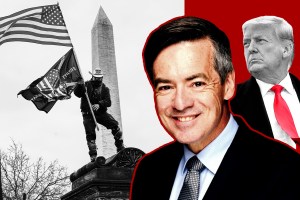
On one side is Students for Fair Admissions, an organization founded by legal activist Edward Blum, who for decades has fought what he sees as racial preferences in school admissions and in other spheres as well.
“What is happening on college campuses today is that applicants are treated differently because of their race and ethnicity,” he says. “Some are given a thumbs up. Some are given a thumbs down.”
On the other side, Harvard and UNC contend that in addition to academic excellence, they aim for a student body that is demographically diverse, and that in evaluating the strengths of each candidate, an admissions committee “need not ignore a candidate’s race any more than it does a candidate’s home state, national origin, family background, or special achievements.”
This holistic approach to college admissions is used by a huge variety of colleges, large and small, including the U.S. military academies. Among the many academic institutions that have filed briefs supporting affirmative action are 57 Catholic colleges and universities, including Notre Dame, Georgetown, and Holy Cross. And there are more briefs filed by 68 of the largest corporations in the country, and a brief filed by a long list of retired three- and four-star generals and admirals attesting to the need for racial diversity in the upper echelons of the military. They say that the lack of racial diversity in the officer corps during the Vietnam War led to enormous tensions, and even violence between the largely white officer corps and the largely black and Hispanic enlisted men, sometimes compromising the war effort.
Ellie Mystal is tweeting the hearings live and not pulling any punches.
Alito is making fun of Elizabeth Warren now. Not the Onion. He literally asked if "family lore" that you have a native american ancestor counts.
That’s typical of Alito, who runs with the crowd that invents abortion procedures that don’t exist either. Whatever his crazy ass patriarchal cult insists is, the reality is the only thing that matters. He should try to stick to that minimally. Ryan Lizza and Eugene Danials believe that the affirmative action precedent is dead on arrival to this court. This is from Politico Playbook: “POLITICO Playbook: The next big precedent SCOTUS is set to overturn.”
Their argument is based on Robert’s previous opinions when he could not get them through prior cases.
FIRST ROE, NOW BAKKE — Another landmark Supreme Court decision from the 1970s is likely to fall.
This morning, SCOTUS will hear oral arguments in two cases challenging the use of race in college admissions at Harvard and the University of North Carolina.
There is little mystery about the outcome.
Previous attempts to overturn the use of affirmative action by colleges have failed. In 2003, Justice SANDRA DAY O’CONNOR, nominated by RONALD REAGAN, provided the decisive vote in Grutter v. Bollinger. In 2016, Justice ANTHONY KENNEDY, another Reagan nominee, did the same in Fisher v. University of Texas. Those cases narrowed the use of race in admissions to one permissible goal: diversity.
But the court has changed radically since 2016, and the six conservative justices have a history of hostility to Regents of the University of California v. Bakke, the 1978 opinion that first blessed college affirmative action programs. As the court made clear in Dobbs, if five justices believe that an old case is “egregiously wrong,” 40-plus years of precedent don’t matter.
And Chief Justice JOHN ROBERTS is unlikely to play the role of bridge-builder as he did in the ACA-saving NFIB v. Sebelius, when he was successful, and in Dobbs, when he wasn’t. On rolling back affirmative action, Roberts is the chief hawk on the court.
His two most oft-quoted lines on the issue come from the earliest days of his SCOTUS tenure. “It is a sordid business, this divvying us up by race,” Roberts wrote in a 2006 gerrymandering case. “The way to stop discrimination on the basis of race is to stop discriminating on the basis of race,” he wrote in a 2007 school desegregration case.
It was in that latter opinion that Roberts best articulated the conservative view of Brown v. Board of Education, which is at the heart of the cases that will be heard today. Brown, he insisted, quoting one of the plaintiff’s lawyers at oral arguments in 1952, concluded that “no state has any authority under the equal protection clause of the 14th Amendment to use race as a factor in affording educational opportunities among its citizens.”
Since the start of the Supreme Court’s 2017 term, 374 lawyers have argued before the justices. Some have argued more than a dozen times, while others have done so only once.
To determine the demographics of this group, The Washington Post asked each of them to share their race or ethnicity, gender and other information about their backgrounds. More than 290 responded. The Post confirmed the race of seven more lawyers based on articles, speeches and interviews in which they described how they identify. The Post also confirmed lawyers’ gender identities based on their biographies on law firm and other professional websites and how the justices referred to them during oral arguments.
In total, The Post ascertained the gender identities of all 374 lawyers who have argued before the high court since the start of the 2017 term and the race of more than 80 percent of them.
Of those, nearly 81 percent are White, and 62 percent are White men. Nearly 9 percent are Asian American. While 19 percent of Americans and nearly 6 percent of lawyers in the United States are Hispanic, according to the American Bar Association, only 3.6 percent of the Supreme Court attorneys in the Post analysis were Hispanic. And while almost 14 percent of Americans and 4.5 percent of lawyers nationally are Black, only 2.3 percent of the lawyers in the Post analysis were Black.
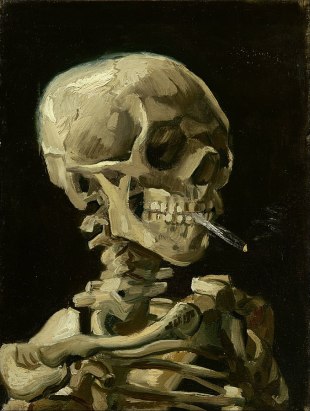
Vincent van Gogh, “Head of a skeleton with a burning cigarette,” 1886
I’m not sure I trust the protection of my Constitutional writes to this mix. I’m sure many can effectively argue for or against a case, provide evidence, and do so eloquently. However, no one makes an argument like someone whose ox is about to be gored. The next read is from Axios and written by Sam Baker for Axios. The lede is a good one for Halloween and the Supreme Court that’s hellbent on turning us back into medieval surfs. “Affirmative action is at death’s door at the Supreme Court.” Get along, little peasants! Nothing to see here!
Why it matters: Harvard and UNC — supported by a host of other schools, as well as business organizations — argue that diversity is essential to the educational experience and that the only effective way to ensure diversity is to make it an explicit part of the admissions process.
But they’ll be making that argument to a court that is extremely skeptical of any sort of racial preference.
“The way to stop discrimination on the basis of race is to stop discriminating on the basis of race,” Chief Justice John Roberts wrote in a 2007 opinion about the use of race when assigning kids to public schools.
From voting rights to K-12 education to employment law and probably now college admissions, the court over the past several years has consistently knocked down programs that tried to correct racial inequities by explicitly taking race into account.
This is all largely one man’s doing. Conservative activist Ed Blum has organized and funded a slew of high-profile lawsuits explicitly designed to get the court to strike down affirmative action.
He orchestrated a 2013 case in which a white student sued because she didn’t get into the University of Texas — and the sequel, in which the same student came back to the high court again in 2016.
This time around, the named plaintiffs are not only white students but also Asian Americans, who say they’ve been discriminated against because of the way Harvard and UNC give preference to applications from Black and Hispanic students.
This is not a particularly secretive endeavor. Blum is open about the fact that this is, effectively, a campaign, and that he is the campaign manager.
“I’m a one-trick pony,” Blum recently told Reuters. “I hope and care about ending these racial classifications and preferences in our public policy.”
Blum also had a hand in the landmark case that nullified a key section of the Voting Rights Act — another instance in which the conservative court said policies designed to offset a history of discrimination had outlived their usefulness.
Now Barrett joins the fray: and they're all doing the "affirmative action must have an endpoint" thingy. Park says North Carolina "enthusiastically embraces" a durational requirement.
Simple vote-counting offers no reason for hope. Roberts has long sought to eliminate or restrict race-conscious programs. In his second term on the court in 2007, Roberts declared in a case about primary school assignments that included race as a factor: “The way to stop discrimination on the basis of race is to stop discriminating on the basis of race.”
The other long-serving conservative justices are similarly strident. In 2003, Justice Clarence Thomas made his views clear: “I believe blacks can achieve in every avenue of American life without the meddling of university administrators.” Justice Samuel Alito joined Roberts’ opinion in the 2007 primary school case. They and Thomas all dissented in a 2016 case about the University of Texas’ race-conscious admissions policies. Alito, in an opinion joined by Roberts and Thomas, referred to UT’s plan as “systematic racial discrimination.”
Now, they also have the three Trump appointees — Kavanaugh, Barrett and Neil Gorsuch — on the court with them. All the earlier appointees will need is two of those three votes to end all race-conscious higher education admissions policies.
Watching Uncle Clarence Thomas close the door behind him will certainly be interesting.
The House select committee investigating the January 6, 2021, attack on the US Capitol has obtained eight emails from late 2020 that a judge determined show Donald Trump and his lawyers planning to defraud courts and obstruct the congressional vote on the presidency.
A new court filing from Trump’s then-attorney John Eastman disclosed that the House said it had accessed the emails on Friday.
The House probe has been fighting for the records for months, and a federal judge cleared the way for the committee to receive them in recent weeks, calling them possible evidence of the planning of crimes on Trump’s behalf.
Eastman had tried several last-ditch attempts to hold off the committee. The panel declined to comment to CNN.
The emails that the committee finally has accessed include four communications between Trump attorneys that appear to indicate they knew details they submitted to courts to challenge the election were false, and four emails that reveal them discussing filing lawsuits as a way to hold off congressional certification of Trump’s electoral loss, Judge David O. Carter previously revealed.
One of the emails describes concern the lawyers had about submitting a declaration signed by Trump himself in a lawsuit challenging the election, which said the election fraud allegations it presented to the court were true, the judge’s previous opinion revealed. The Trump-signed statement was sent to court, even though the lawyers knew the allegations within weren’t sound, according to the court record.
Eastman is now asking the Ninth Circuit Court of Appeals for an order telling the House to return or destroy the eight emails.
Aksel Waldemar Johannessen, “The night,” 1920
Whoa! That must be kinda scary for Eastman and Trump. Too bad no medieval dungeons await them if true.
The outcome of the Brazilian elections is at the top of international news today. This is from The New York Times: “Brazil Elects Lula, a Leftist Former Leader, in a Rebuke of Bolsonaro.”
Voters in Brazil on Sunday ousted President Jair Bolsonaro after just one term and elected the leftist former President Luiz Inácio Lula da Silva to replace him, election officials said, a rebuke to Mr. Bolsonaro’s far-right movement and his divisive four years in office.
It also ends Mr. Bolsonaro’s turbulent time as the region’s most powerful leader. For years, he attracted global attention for policies that accelerated the destruction of the Amazon rainforest and exacerbated the pandemic, which left nearly 700,000 dead in Brazil, while also becoming a major international figure of the far right for his brash attacks on the left, the media and Brazil’s democratic institutions.
More recently, his efforts to undermine Brazil’s election system drew particular concern at home and abroad, as well as worldwide attention to Sunday’s vote as an important test for one of the world’s largest democracies.
Without evidence, the president has criticized the nation’s electronic voting machines as rife with fraud and suggested he might not accept a loss, much like former President Donald J. Trump. Many of his supporters vowed to take to the streets at his command.
As of 11 p.m. local time on Sunday night, Mr. Bolsonaro had not publicly commented on the election’s outcome. The questions of whether he would concede and when remained unclear.
The results on Sunday showed that tens of millions of Brazilians had grown tired of his polarizing style and the frequent turmoil of his administration. It was the first time an incumbent president failed to win re-election in the 34 years of Brazil’s modern democracy.
Still, Mr. da Silva won with the narrowest margin of victory over that same period, signaling the deep divide that he will confront as president.
He won 50.90 percent of the votes, versus Mr. Bolsonaro’s 49.10 percent with 99.98 percent of the vote counted Sunday night.
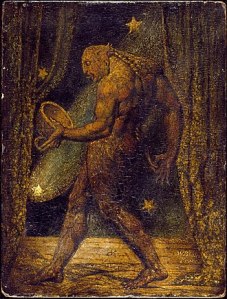
Katsushika Hokusai, 1830, “Ghost”
Let’s hope many nations get tired of right-wing, fascist thugs. Polls in the US show the races tightening, but the Democratic candidates appear to have the edge in some because their constituents like them. This is also from the New York Timeson crucial Senate races. “Senate Control Hinges on Neck-and-Neck Races, Times/Siena Poll Finds. The contests are close in Arizona, Georgia, Nevada and Pennsylvania.”
Control of the Senate rests on a knife’s edge, according to new polls by The New York Times and Siena College, with Republican challengers in Nevada and Georgia neck-and-neck with Democratic incumbents, and the Democratic candidate in Pennsylvania clinging to what appears to be a tenuous advantage.
The bright spot for Democrats in the four key states polled was in Arizona, where Senator Mark Kelly is holding a small but steady lead over his Republican challenger, Blake Masters.
The results indicate a deeply volatile and unpredictable Senate contest: More people across three of the states surveyed said they wanted Republicans to gain control of the Senate, but they preferred the individual Democratic candidates in their states — a sign that Republicans may be hampered by the shortcomings of their nominees.
This is another reminder that we need to get out there and vote. We also need to bring people with us.
So, that’s it for me. I have to teach tonight, so no trick-or-treating for me!
What’s on your reading and blogging list today?
Did you like this post? Please share it with your friends:
The Sky Dancing banner headline uses a snippet from a work by artist Tashi Mannox called 'Rainbow Study'. The work is described as a" study of typical Tibetan rainbow clouds, that feature in Thanka painting, temple decoration and silk brocades". dakinikat was immediately drawn to the image when trying to find stylized Tibetan Clouds to represent Sky Dancing. It is probably because Tashi's practice is similar to her own. His updated take on the clouds that fill the collection of traditional thankas is quite special.
You can find his work at his website by clicking on his logo below. He is also a calligraphy artist that uses important vajrayana syllables. We encourage you to visit his on line studio.





 And what about the polls? New York Times polling expert Nate Cohn discusses the situation:

















 peej
peej Carissa
 bostonboomer
 dakinikat
 ecocatwoman
 mablue2
 Mama Lopez
 peggysue22
 quixote
 skydancingguestblogger
 Mona (aka Wonk the Vote)



 Sky Dancing
Recent Comments