As usual, much of today’s news is awful. Trump is working hard to destroy the U.S. Government, but his actions here have had a positive effect on the leadership of two of our allies. First liberals took over in Canada and now they’ve done it in Australia.
SYDNEY — Australia’s center-left government convincingly won reelection Saturday in a remarkable turnaround driven partly by anger over President Donald Trump’s disruptive trade war and its impact on the close U.S. military ally.
Anthony Albanese became the first Australian prime minister to win a second term in more than two decades as his Labor Partydramatically increased its parliamentary majority. It marked a stunning comeback for the progressive leader, who trailed in the polls two months ago.
In a jubilant victory speech, the 62-year-old struck a tone of unity while also alluding to his opponent’s failed embrace of Trump-like policies.
“We do not need to beg or borrow or copy from anywhere else,” Albanese said to a raucous Sydney crowd. “We do not seek out our inspiration overseas. We find it right here in our values and in our people.”
Trump’s tariffs — first 25 percent on Australia’s aluminum and steel, then 10 percent across the board — had driven voters toward the even-keeled incumbent and away from his conservative opponent, Peter Dutton, whose plans and rhetoric had echoed the American president, said Sean Kelly, a political columnist for the Sydney Morning Herald.
“Trump has absolutely dominated the trajectory of this election,” Kelly said, adding that the global uncertainty unleashed by Trump had made “Albanese’s boringness quite an appealing commodity.”
Australia’s Prime Minister Anthony Albanese has secured a second term in office in a disastrous night for his conservative rivals, as voters chose stability over change against a backdrop of global turmoil inflicted by US President Donald Trump.
Australia’s return of a left-leaning government follows Canada’s similar sharp swing towards Mark Carney’s Liberal Party, another governing party whose fortunes were transformed by Trump. The loss of Liberal Party leader Peter Dutton’s seat mirrors that of Conservative Party leader Pierre Poilievre.
While Australia wasn’t facing the same threats to its sovereignty as Canada, Trump’s global tariffs and policy swings have undermined Australians’ trust in the US, according to recent surveys.
Albanese’s victory makes him the first Australian Prime Minister to win re-election for two decades and he will start his second term with at least 87 seats in the 150-seat lower house, according to the most recent estimates.
A clearly emotional Albanese took the stage to cheers just before 10 p.m. local time to thank Australians for choosing a majority Labor government, defying predictions both major parties would lose seats.
“In this time of global uncertainty, Australians have chosen optimism and determination,” Albanese said, at the Labor victory party in Sydney.
Dutton, who had hoped to end the night as prime minister, lost the outer-suburban Brisbane seat that he’s held for more than 20 years, ending a brutal night for the veteran politician who held senior seats in the last Coalition government.
Here in the USA, things aren’t so great. Trump’s tariffs are kicking in, the economy is struggling, he is trying to destroy education and the arts, RFK Jr. is working to make Americans sick, and Elon Musk and DOGE are wreaking havoc in government agencies. Here’s the latest.
Many Americans might not have felt major effects from President Donald Trump’s sweeping tariffs — until now.
That’s because a major shipping loophole expired at one minute past midnight on Friday. The de minimis exemption, as it’s known, allowed shipments of goods worth $800 or less to come into the United States duty-free, often more or less skipping time-consuming inspections and paperwork.
The loophole helped reshape the way countless Americans shop, allowing ultra-low-cost Chinese e-commerce sites like Shein, Temu and AliExpress to pour everything from yarn to patio furniture, clothes to photography equipment and more into US homes.
Its impending end has rung alarm bells across social media, with a baseline tariff as high as 145% depending on the carrier set to take effect on Chinese imports, potentially more than doubling the cost for all those cheap products deal-hungry Americans scooped up.
And the end of the de minimis exemption for Chinese goods will also distill abstract, complicated, messy, hard-to-follow trade policy into something much easier to understand: a receipt.
Major carriers like UPS, FedEx, DHL and the United States Postal Service say they’re prepared for the changes. The government says it, too, is set; a US Customs and Border Protection spokesperson told CNN that “We are prepared and equipped to carry out enhanced package screenings and enforce orders effectively.”
But whether regular American shoppers are ready for the changes is another matter.
Read more at CNN.
Caroline Petrow-Cohen and James Rainey at The Los Angeles Times:
Amid a wave of unprecedented tariffs, anxiety is running high for truck drivers like Helen, who makes her living delivering cargo containers from the Los Angeles and Long Beach harbors to warehouses and other customers around Southern California.
After a strong start to the year, the number of jobs has started to slip in recent days and truck drivers have heard reports predicting a sharp decline in incoming cargo for May and June….
“There’s real concern that we’re going to be struggling,” said Helen, a Downey resident who declined to give her last name for fear she might lose work if she is considered disgruntled. “If ships are not coming in and there are no loads, then there is no work. If there is no work there’s no money.”
As President Trump’s aggressive tariffs rattle business owners and shake the foundation of American importing, the men and women who work on the ground at the country’s busiest port are feeling the effects too.
Thousands of dockworkers, heavy equipment operators and truck drivers support a flurry of activity at the Port of Los Angeles, which covers 7,500 acres on San Pedro Bay and processed more than 10 million 20-foot-long cargo units in 2024. The neighboring Port of Long Beach moved 9.6 million 20-foot equivalent units, or TEUs, last year.
With a 145% tariff on China, a 25% tariff on Canada and Mexico, and 10% tariffs on dozens of other countries, the flow of goods into the U.S. is expected to slow drastically.
Fewer shipments into the ports of Los Angeles and Long Beach mean less work for the Californians who move cargo, said Raman Dhillon, chief executive of the North American Punjabi Trucking Assn.
“The truckers are scrambling right now,” he said. “They are at the verge of collapsing. The administration needs to move quickly, or it’s going to be chaos and price hikes and empty shelves.”
Trump isn’t worried about a recession and he doesn’t care how it will affect Americans. It’s just a transition period, he says.
President Donald Trump on Friday downplayed concerns about potential economic trouble, saying everything would be “OK” in the long term, even if the U.S economy experienced a recession in the short term.
Cat Astronaut, Michael Raiano
Asked twice by “Meet the Press” moderator Kristen Welker whether it would be OK in the long run if there were a recession in the short term, the president said, “Look, yeah, it’s — everything’s OK. What we are — I said, this is a transition period. I think we’re going to do fantastically.”
Following up, Welker asked Trump if he was worried about a recession, to which he responded, “No.” Asked whether he thinks one could happen, Trump replied, “Anything can happen, but I think we’re going to have the greatest economy in the history of our country.”
The remarks come as analysts on Wall Street are increasingly worried that the country could face a recession due to Trump’s changing tariff policy.
“Well, you know, you say, ‘Some people on Wall Street say’ — well, I tell you something else. Some people on Wall Street say that we’re going to have the greatest economy in history. Why don’t you talk about them?” Trump said during the interview at his Mar-a-Lago resort in Florida.
“There are many people on Wall Street say this is going to be the greatest windfall ever happen,” the president added.
Really? Who are those people? Name one.
Trump doesn’t want the government to support the arts.
President Trump proposed eliminating the National Endowment for the Arts and the National Endowment for the Humanities in the budget he released Friday, taking aim once again at two agencies that he had tried and failed to get rid of during his first term.
The endowments, along with the Institute of Museum and Library Services, were among the entities listed in a section titled “small agency eliminations” in his budget blueprint for the next fiscal year. The document said that the proposal was “consistent with the president’s efforts to decrease the size of the federal government to enhance accountability, reduce waste, and reduce unnecessary governmental entities” and noted that Mr. Trump’s past budget proposals had “also supported these eliminations.”
Since Mr. Trump returned to office this year, his administration has taken aim at the National Endowment for the Humanities and the Institute of Museum and Library Services, canceling most of their existing grants and laying off a large portion of their staffs. But the arts agency had yet to announce major cuts.
The proposal to eliminate the endowments drew a quick and furious reaction from Democrats. One, Senator Jack Reed of Rhode Island, vowed to fight the plan to eliminate the N.E.A. “tooth and nail.”
“We were able to restore the funding last time,” she said, “but as you know, based on the first 100 days of this administration, they’re in no mood to keep much of government alive anymore, and their attack is focused on everything, and the arts have already got a bull’s-eye on their back.
Outerspace laser cats (greeting card)
Of course Trump is also attacking our vital educational institutions. The latest is his threat to remove Harvard’s tax-exempt status. Here in Boston, Harvard and MIT are gearing up to fight back.
Harvard University signaled Friday that it would resist President Trump’s renewed threat to revoke the school’s tax-exempt status, a move for which it said there was “no legal basis” as the president escalated his bitter dispute with the nation’s oldest university.
Harvard stopped short of explicitly pledging a legal challenge to a revocation of its tax status, a change that would upend the university’s finances. But a spokesperson for the university said in a statement that there was “no legal basis to rescind Harvard’s tax-exempt status.”
“Such an unprecedented action would endanger our ability to carry out our educational mission,” the statement said. “It would result in diminished financial aid for students, abandonment of critical medical research programs and lost opportunities for innovation. The unlawful use of this instrument more broadly would have grave consequences for the future of higher education in America.”
Mr. Trump declared Friday morning on social media that the government would be “taking away Harvard’s Tax Exempt Status.” Mr. Trump added, “It’s what they deserve.”
Despite Mr. Trump’s assertion online and Harvard’s sharp response, it was not immediately clear Friday whether the I.R.S. was in fact moving forward with revoking Harvard’s tax-exempt status, a change that could typically occur only after a lengthy process. Federal law prohibits the president from directing the I.R.S. to conduct tax investigations, and I.R.S. employees who receive such a command are required to report it to an internal government watchdog.
The unrelenting high-velocity attacks from the Trump administration have forced leaders of the nation’s premier universities to navigate an extraordinary and bruising balancing act, choosing when to take a stand in the face of continued threats while trying to mitigate the loss of federal funding.
Among the schools where that intense drama is playing out is the Massachusetts Institute of Technology, where the sobering realities of the administration’s funding cuts were discussed at a meeting convened by senior leaders in April.
Under one scenario presented at that meeting by treasurer Glen Shor, MIT risks losing the equivalent of 23 percent of revenues for its central budget, according to a recording of the presentation to school staff obtained by the Globe.
“Unfortunately, we should expect a prolonged period of challenge,” MIT president Sally Kornbluth told staff, according to the recording. “We really have to balance things. And I have to say, I feel a grave responsibility to you all . . . to ensure the livelihoods of this community and to make sure that we can continue to function. I need to balance all of these goalsthat are, again, often in great tension with each other.”
Kornbluth also outlined how she is trying to preserve institutional independence while being pragmatic with so much money hanging in the balance. MIT needs to “adapt” where necessary to the priorities of the federal government, she said, but also resist by suing when it feels the administration had overreached. Senior leaders are also working to improve the university’s reputation in Washington, D.C., and among the broader public.
The recording offers a rare inside look into how institutions are trying to respond to a fast-moving and ever-changing dynamic, with new lines of pressure from the administration coming from unforeseen angles.
I’m terrified by what is happening to public health under RFK Jr. Here’s the latest on that.
A leading immunologist warned of a “post-herd-immunity world”, as measles outbreaks affect communities with low vaccination rates in the American south-west, Mexico and Canada.
The US is enduring the largest measles outbreak in a quarter-century. Centered in west Texas, the measles outbreak has killedtwo unvaccinated children and one adult and spread to neighboring states including New Mexico and Oklahoma.
“We’re living in a post-herd-immunity world. I think the measles outbreak proves that,” said Dr Paul Offit, an expert on infectious disease and immunology and director of the Vaccine Education Center at Children’s Hospital of Philadelphia.
“Measles – because it is the most contagious of the vaccine-preventable diseases, the most contagious human disease really – it is the first to come back.”
The US eliminated measles in 2000. Elimination status would be lost if the US had 12 months of sustained transmission of the virus. As of 1 May, the US Centers for Disease Control and Prevention (CDC) reported 935 confirmed measles cases across30 jurisdictions.Nearly one in three children under five years old involved in the outbreak, or 285 young children, have been hospitalized.
Three large outbreaks in Canada, Mexico and the US now account for the overwhelming majority of roughly 2,300 measles cases across the World Health Organization’s six-country Americas region, according to the health authority’s update this week. Risk of measles is considered high in the Americas, and has grown 11-fold compared with 2024.
Is RFK Jr. concerned about this situation? Not really.
With the United States facing its largest single measles outbreak in 25 years, Health and Human Services Secretary Robert F. Kennedy Jr. will direct federal health agencies to explore potential new treatments for the disease, including vitamins, according to an H.H.S. spokesman. The decision is the latest in a series of actions by the nation’s top health official that experts fear will undermine public confidence in vaccines as an essential public health tool.
The announcement comes as Mr. Kennedy faces intense backlash for his handling of the outbreak. It has swept through large areas of the Southwest where vaccination rates are low, infecting hundreds and killing two young girls. On Friday, the Centers for Disease Control and Prevention reported more than 930 cases nationwide, most of which are associated with the Southwest outbreak.
Critics have said Mr. Kennedy has focused too much on untested treatments — such as cod liver oil supplements — and offered only muted support for the measles vaccine, which studies show is 97 percent effective in preventing infection.
The decision to put more resources into potential treatments, rather than urging vaccination, could have grave consequences at the center of the outbreak….
Scientists have already thoroughly studied various vitamins and medications as potential treatments for measles, said Michael Osterholm an epidemiologist at the University of Minnesota.
Decades of research have turned up no miracle treatment for the measles virus, which can cause pneumonia, making it difficult for patients to get oxygen into their lungs, and brain swelling, which can cause blindness, deafness and intellectual disabilities.
Texas Attorney General Ken Paxton is investigating two leading toothpaste makers over their use of fluoride, suggesting that they are “illegally marketing” the teeth cleaners to parents and kids “in ways that are misleading, deceptive, and dangerous.”
Space cats from Mars, Damien Northmore
The toothpaste makers in the crosshairs are Colgate-Palmolive Company, maker of Colgate toothpastes, and Proctor & Gamble Manufacturing Co., which makes Crest toothpastes. In an announcement Thursday, Paxton said he has sent Civil Investigative Demands (CIDs) to the companies.
The move is an escalation in an ongoing battle over fluoride, which effectively prevents dental cavities and improves oral health. Community water fluoridation has been hailed by health and dental experts as one of the top 10 great public health interventions for advancing oral health across communities, regardless of age, education, or income. But, despite the success, fluoride has always had detractors—from conspiracy theorists in the past suggesting the naturally occurring mineral is a form of communist mind control, to more recent times, in which low-quality, controversial studies have suggested that high doses may lower IQ in children.
These people are insane.
Just a few Elon Musk stories before I wrap this post up.
The Trump administration asked the Supreme Court on Friday to clear the way for Elon Musk ’s Department of Government Efficiency to access Social Security systems containing personal data on millions of Americans.
The emergency appeal is the first in a string of applications to the high court involving DOGE’s swift-moving work across the federal government.
It comes after a judge in Maryland restricted the team’s access to Social Security under federal privacy laws. The agency holds personal records on nearly everyone in the country, including school records, bank details, salary information and medical and mental health records for disability recipients, according to court documents.
The government says the team needs access to target waste in the federal government. Musk, now preparing to step back from his work with DOGE, has been focused on Social Security as an alleged hotbed of fraud. The billionaire entrepreneur has described it as a “ Ponzi scheme ” and insisted that reducing waste in the program is an important way to cut government spending.
Solicitor General John Sauer argued Friday that the judge’s restrictions disrupt DOGE’s important work and inappropriately interfere with executive-branch decisions. “Left undisturbed, this preliminary injunction will only invite further judicial incursions into internal agency decision-making,” he wrote.
I shudder to think what the Supreme Court will do with this.
In the lead up to the April 1 election for the Wisconsin state Supreme Court, a little-known private equity executive by the name of Antonio Gracias joined Tesla billionaire Elon Musk on stage as the latter launched into a tirade clearly inspired by the white supremacist Great Replacement Theory — the discredited canard that the Biden administration was letting in millions of “illegals” to engage in mass voter fraud.
On the dais, Gracias described how his foray into Social Security had revealed something already widely known to immigration policymakers: that the Biden administration had substantially expanded the Temporary Protected Status program, allowing millions of immigrants to enter and work in the country legally. These noncitizens were given Social Security numbers, as is completely standard — in fact, the process was automated during Trump’s first term — but Gracias and Musk, the world’s richest man, treated it like a scandal.
“We started at the top of the system mapping the whole system of Social Security to understand where the fraud was — this is what jumped out at us,” Gracias said. “When we saw these numbers, we asked ‘What is this?’ In ‘21, you see 270,000 people, it goes all the way to 2.1 million in ‘24. These are noncitizens that are getting Social Security numbers. … This literally blew us away. We went there to find fraud, and we found this by accident.” Noting that his parents and siblings, like Musk, are immigrants, Gracias added, “I’m pro-legal immigration — this is about America and the future of America.”
The crowd of conservatives gasped as the billionaires made it sound as if they and their team at Trump’s so-called Department of Government Efficiency had finally found proof of the waste, fraud, and abuse in the Social Security Administration that Musk has repeatedly talked about — examples that might help justify the massive upheaval that DOGE has created within the agency that manages America’s core retirement program.
Check this out:
Despite all of Musk and Gracias’ rhetoric about rooting out waste, fraud, and abuse in Social Security, scant attention has been paid to how the pair has become phenomenally wealthy with support from Americans’ retirement funds.
It’s well-known that Musk’s space company, SpaceX, has long cashed in on federal contracts — a trend turbocharged by Trump’s administration. Gracias, for his part, has relied on significant investments from public retirement systems to fund his firm’s deals. In the past decade, Gracias’ private equity firm, Valor Equity Partners, has received at least $1.7 billion in investment commitments from state and local pension funds — which manage the retirement savings of unionized teachers, firefighters, social workers, bus drivers, and cops — according to a Rolling Stone review of public documents.
Much of this money has come from Democratic states and locales. For its most recent fund, Valor received $800 million in investment commitments from a range of state and local pension funds. Investors include the California Public Employees’ Retirement System; the California State Teachers’ Retirement System; the Illinois Municipal Retirement Fund; the New York State Teachers’ Retirement System; a range of New York City pension funds; the Philadelphia Board of Pensions and Retirement; and the Hartford Municipal Employees Retirement Fund in Connecticut.
There’s much more at the link. If you clear your cache, you should be able to read it.
That’s all I have for you today. What’s on your mind?
Did you like this post? Please share it with your friends:
“Those damn “entitlement” programs like Medicaid and Social Security must go.” John Buss, repeat1968
Good Day, Sky Dancers!
As the unfocused butchering of the federal workforce and agencies continues, we see more and more essential services and research getting turned into contracts for Elonia’s Empire and billionaire tax cuts. It’s only a matter of months now before the economy begins to collapse from the weight of higher prices and the return of high unemployment. Stagflation is inevitable. Economists, including me, see it as inevitable at this point. The financial markets are sending up red flares. The UK’s Economics Times has this banner headline. “Brace for impact: Stagflation fears could wipe 10% off stocks, says Wall Street’s Doom Prophet Barry Bannister.” I’ve been saying this all month.
Wall Street is worried about the possibility of a “worst-case scenario” in the US economy, one that would send stock prices plummeting by as much as 10%, as per a report.
Stifel managing director and chief equity strategist Barry Bannister has been among the few bears in an optimistic market. He is predicting the S&P 500 would end 2025 in the mid-5000s, reported Business Insider. His call for a potential stagflation scenario may serve as a wakeup call to investors.
According to Business Insider, while most investors expect another strong year of growth and inflation to continue cooling in 2025. According to Bannister, there are early signs that stagflation is beginning.
As per the report, inflation has already increased over the past few months, with consumer prices increasing by 3% from the year earlier in January and more than economists expected and above the 2.9% pace in the previous month. Bannister highlighted that the Trump-era tariffs might be driving up costs for consumers, reported Business Insider.
Bannister said, “I think it’s foolish that people assume that inflation’s going back down to 2%. It’s not going back down to 2%, not without a recession,” as quoted by Business Insider. He also claimed, “Tariffs undo a lot of the disinflation.”
Those of you my age will remember this from the 1970s. It is positively the worst economic scenario imaginable. I already am swamped by electric bills that are unimaginable for my little house. The unusual weather and snow basically doubled it last month. And just in time for Hurricane and Fire Seasons, we see the Triumvariate try to kill us all so billionaires and Multinational Mega Corporations can steal the coins from our eyes. Additionally, we are providing momentum to the spread of infectious diseases globally and locally. What a clusterfuck our country has become in such a short time! By mid-2026, we will officially be known as a shithole country. Let’s break this all down. You can see from the sources that I am becoming less trustful of the American Fourth Estate.
The Trump administration has fired hundreds of workers at the National Oceanic and Atmospheric Administration (Noaa), the US’s pre-eminent climate research agency housed within the Department of Commerce, the Guardian has learned.
On Thursday afternoon, the commerce department sent emails to employees saying their jobs would be cut off at the end of the day. Other government agencies have also seen huge staffing cuts in recent days.
The firings specifically affected probationary employees, a categorization that applies to new hires or those moved or promoted into new positions, and which makes up roughly 10% of the agency’s workforce.
“The majority of probationary employees in my office have been with the agency for 10+ years and just got new positions,” said one worker who still had their job, and who spoke to the Guardian under the condition of anonymity for fear of reprisal. “If we lose them, we’re losing not just the world-class work they do day to day but also decades of expertise and institutional knowledge.”
Another anonymous staffer called the laid-off workers “dedicated, hard-working civil servants who came to Noaa to help protect lives and keep our blue planet healthy”.
“These indiscriminate cuts are cruel and thoughtless,” the second worker said.
It is not only laid-off employees who will be harmed by the cuts, the second worker said. Ordinary Americans who rely on Noaa’s extreme weather forecasts, climate data and sustainably monitored fisheries will also suffer.
“Words can’t describe the impact this will have, both on us at Noaa and on the country,” the employee said. “It’s just wrong all around.”
Andrew Rosenberg, former deputy director of Noaa’s National Marine Fisheries Service, said Thursday was a “sad day”.
“There is no plan or thought into how to continue to deliver science or service on weather, severe storms and events, conservation and management of our coasts and ocean life and much more,” he said. “Let’s not pretend this is about efficiency, quality of work or cost savings because none of those false justifications are remotely true.”
Okay, this one is from the New York Times. I hope they can hold off the Techbro Overlords long enough to uncover some truth. “U.S. Terminates Funding for Polio, H.I.V., Malaria and Nutrition Programs Around the World Here are some of the 5,800 contracts the Trump administration formally canceled this week in a wave of terse emails.” This is reported by Stephanie Nolen.
Starting Wednesday afternoon, a wave of emails went out from the State Department in Washington around the world, landing in inboxes for refugee camps, tuberculosis clinics, polio vaccination projects and thousands of other organizations that received crucial funding from the United States for lifesaving work.
“This award is being terminated for convenience and the interest of the U.S. government,” they began.
The terse notes ended funding for some 5,800 projects that had been financed by the United States Agency for International Development, indicating that a tumultuous period when the Trump administration said it was freezing projects for ostensible review was over, and that any faint hope American assistance might continue had ended.
Many were projects that had received a waiver from the freeze because the State Department previously identified its work as essential and lifesaving.
“People will die,” said Dr. Catherine Kyobutungi, executive director of the African Population and Health Research Center, “but we will never know, because even the programs to count the dead are cut.”
The projects terminated include H.I.V. treatment programs that had served millions of people, the main malaria control programs in the worst-affected African countries and global efforts to wipe out polio.
What follows is an incredibly long list of programs that have saved all kinds of people from death and massive illness. A lot has to do with prenatal care. Certainly, we can be better human beings than this. I am ashamed of my country. Pamela Herd and Don Monyhan ask the big question on their substack: “Can we still govern?.” As a young adult, I used to joke that I would pay so much for so long–starting at 15–for Social Security that I doubt I’d ever see all of it. That was a bit of a joke back then, but it seems dead serious now. Sit down, swallow, then put the cup down. “Trump’s Assault on Social Security. The plan to cut America’s most successful safety net program in half.”
Social Security is our biggest and most successful safety net program. The annual $1.6 trillion in benefits constitutes 21% of federal spending and 40% of older adults’ income. It lifts more people out of poverty than any other government program. We all know some of the 69 million Americans depending on those benefits. If you are not currently a recipient, you will be at some point. We all have a stake in ensuring that Social Security works.
And so, we all have a reason to fear the Trump administration’s call to cut 50% of Social Security Administration employees. It’s current staff of about 57,000 employees would drop to 23,000. SSA, quite simply, will not be able to function if this happens.
President Trump promised that “Social Security will not be touched.” Then he claimed he would act only eliminate SSA fraud based on false claims by Elon Musk. Gutting agency capacity is not about fraud, and is very much going to affect people’s experience of Social Security. The benefits that so many Americans depend on will not administer themselves.
This long but useful read will tell you how effective and economical the plan is. I wrote a research paper for my doctoral class in Financial institutions right after Katrina and was amazed by its efficiency. An outline of studies and data follows the paragraphs above. I will cut to the chase and pass that for brevity.
While we don’t know precisely how the agency will implement the staffing cuts, it will almost certainly entail closing many of the 1,233 SSA field offices around the country. About 120,000 people visit those offices each day. Those that remain open will have fewer staff to serve more people.
We talked with Kathleen Romig, the Director of Social Security and Disability Policy at the Center for Budget and Policy Priorities. She has also previously worked with Social Security, as well as the Social Security Advisory Board. She said:
There’s no way SSA can sustain the thousands of staff losses that result from the massive reductions to come without hurting beneficiaries. Over two-thirds of the agency’s staff serve the public directly, and the rest support their work—hearing appeals, keeping SSA’s systems running and secure, maintaining a high level of transparency and accuracy, and more. It’s going to get a lot harder for people to get help and take a lot longer to get access to their earned Social Security benefits.
DOGE has already announced the closure of 45 field offices, though it’s unclear if the offices are actually closed. The process is so chaotic that members of Congress are not being told when field offices are being closed in their district.
If the proposed cuts in staff move forward the scale of field office closures will be much greater. Field offices serve many functions. Its where you get a new Social Security card if you lost yours or need it changed due to a name change. The card, of course, is critical for everything from getting a drivers’ license to opening a bank account. It is the closest thing the US has to a national identity system. Field office staff also help people decide when they should enroll in the program, as well as provide in-person assistance when the agency makes mistakes with payments or paperwork.
We already know the effects of field office closures on a smaller scale. A study in the American Economic Journal: Economic Policy found that field office closures led to a 16 percent decline in disability recipients in the surrounding communities due to excess demand in the remaining offices. The people hit hardest were those with moderately severe disabilities, lower education and lower income.
These actions are enough to make you want to take to Pennslyvania Avenue with pitchforks, torches, and guillotines. It’s a full-out assault on the least among us. He’s also going to puke out another Presidential order to establish English as the official language of the USA. We’ve been doing fine with pluralism for 250 years. Besides, if we’re going to be language NAZIs, let’s start with FARTUS and Elonia. Most of the time, they speak unintelligibly. This is from CNBC. “Trump to sign order making English the official U.S. language.” Why is this even necessary? What is this going to cost?
President Donald Trump plans to sign an executive order making English the official language of the United States, three White House officials told CNBC on Friday.
The order would establish a national language for the first time in U.S. history.
Trump’s order would also rescind former President Bill Clinton’s August 2000 directive requiring agencies and other recipients of federal funds to provide services for those with limited English proficiency, according to a fact sheet shared with CNBC.
Trump’s designation will allow federal agencies to maintain their current policies and continue to provide documents and services in other languages. But it “encourages new Americans to adopt a national language that opens doors to greater opportunities,” according to the fact sheet.
The Wall Street Journal first reported the order earlier Friday morning.
Trump’s schedule for Friday does not currently include any time for signing executive orders. A White House source did not immediately tell CNBC when Trump was expected to sign the order.
So, with this and the destruction of the Education Department, will we stop seeing ESL classes in schools? I can only see this as the ultimate golden ticket for bullying.
The Department of Ed has a form to snitch on DEI policies in schools.I’d be a shame if we broke it with thousands of responses… enddei.ed.gov
House Republicans notched a major legislative victory this week when they passed their budget resolution. Now comes the hard part: Crafting a fiscal package that doesn’t doom them in the 2026 election.
One Republican moderate, speaking on the condition of anonymity to give candid thoughts about political concerns surrounding their party’s marquee legislation, told Axios: “It could be trouble.”
“We saw what happened in 2018,” the lawmaker said, referring to the midterm year in which voter anger over the GOP’s legislative efforts helped Democrats flip more than 40 House seats.
Driving the news: The House voted Tuesday to adopt House Republicans’ budget resolution, with all but one House Republican voting in favor of the measure and every Democrat opposing it.
The resolution — a first step toward the hulking budget reconciliation bill Republicans hope to pass — allows $4.5 trillion in tax cuts, offset by $2 trillion in spending cuts.
The vote came after a tortured process in which House Speaker Mike Johnson (R-La.) strained to bring together right-wing hardliners who want greater spending cuts and centrists fearful of cuts to programs like Medicaid.
State of play: After the vote, some vulnerable Republicans were quick to distance themselves from the notion that the budget measure does anything more than provide a conceptual framework for the final bill.
“Last night’s vote was just a procedural step to start federal budget negotiations and does NOT change any current laws,” Rep. Rob Bresnahan (R-Pa.) said in a strident statement Wednesday morning.
Rep. Ryan Zinke (R-Mont.), in a CNN interview, insisted there is “zero mention of cutting Medicaid” in the budget resolution — even as it calls for the Energy and Commerce Committee to seek $880 billion in cuts, some of which will likely have to come from Medicaid.
Between the lines: Republicans have been barraged the last week and a half by angry constituents at town halls and protests outside their district offices complaining about DOGE’s layoffs and cuts to federal programs.
While DOGE has been the primary target of that voter blowback, House Republicans say they have also faced plenty of flack over the prospective benefit cuts in the GOP’s fiscal package.
“Most of the concern now is over … DOGE,” said a second House Republican who spoke anonymously, “but there’s also, maybe not too far behind that, the message that they are trying to get across on reconciliation.”
Zoom in: Despite voting for the budget measure, moderate and swing-district House Republicans told Axios they are drawing clear red lines on what they will support in a final package.
“If that doesn’t match with what our constituents and our district is looking for, then we won’t be voting for that product,” said a third House Republican.
A fourth told Axios: “I have told my leadership … there are scores of Republicans who don’t want to go further [on Medicaid] than requiring work for able-bodied adults, getting the illegals off and rooting out waste, fraud and abuse.”
“If it goes further than that,” they said, “the bill is probably dead.”
Yes, but: Conservatives are equally emphatic the bill must include substantial enough cuts to Medicaid to offset the increases in spending — creating a seemingly unworkable dilemma for Johnson.
Insufficiently deep Medicaid cuts are “probably a nonstarter,” said Rep. Eric Burlison (R-Mo.).
Burlison went as far as to say Republicans “should cut more” than the budget provides for, telling Axios: “I just had people in my office say, ‘You didn’t cut enough.'”
What to watch: Democrats are eager to exploit Republicans’ struggles as the process of crafting the final package begins.
“Health care’s gone for everyone … we just won back the House,” exulted Rep. Haley Stevens (D-Mich.) coming out of the budget vote on Tuesday.
Democrats’ House Majority PAC is circulating a memo on the vote, first shared with Axios, titled: “House Republicans Ignore Constituents, Vote For Trump-Musk Agenda.”
Well, I’m off to see if I can pay the electric and cable bill and get groceries today. It’s a big question.
Take care and be kind to yourselves!
What’s your reading and blogging list today?
Did you like this post? Please share it with your friends:
The Sky Dancing banner headline uses a snippet from a work by artist Tashi Mannox called 'Rainbow Study'. The work is described as a" study of typical Tibetan rainbow clouds, that feature in Thanka painting, temple decoration and silk brocades". dakinikat was immediately drawn to the image when trying to find stylized Tibetan Clouds to represent Sky Dancing. It is probably because Tashi's practice is similar to her own. His updated take on the clouds that fill the collection of traditional thankas is quite special.
You can find his work at his website by clicking on his logo below. He is also a calligraphy artist that uses important vajrayana syllables. We encourage you to visit his on line studio.









 Those of you my age will remember this from the 1970s. It is positively the worst economic scenario imaginable. I already am swamped by electric bills that are unimaginable for my little house. The unusual weather and snow basically doubled it last month. And just in time for Hurricane and Fire Seasons, we see the Triumvariate try to kill us all so billionaires and Multinational Mega Corporations can steal the coins from our eyes. Additionally, we are providing momentum to the spread of infectious diseases globally and locally. What a clusterfuck our country has become in such a short time! By mid-2026, we will officially be known as a shithole country. Let’s break this all down. You can see from the sources that I am becoming less trustful of the American Fourth Estate.
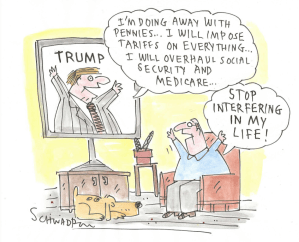 What follows is an incredibly long list of programs that have saved all kinds of people from death and massive illness. A lot has to do with prenatal care. Certainly, we can be better human beings than this. I am ashamed of my country. Pamela Herd and Don Monyhan ask the big question on their substack:
  This long but useful read will tell you how effective and economical the plan is. I wrote a research paper for my doctoral class in Financial institutions right after Katrina and was amazed by its efficiency. An outline of studies and data follows the paragraphs above. I will cut to the chase and pass that for brevity.
 These actions are enough to make you want to take to Pennslyvania Avenue with pitchforks, torches, and guillotines. It’s a full-out assault on the least among us. He’s also going to puke out another Presidential order to establish English as the official language of the USA. We’ve been doing fine with pluralism for 250 years. Besides, if we’re going to be language NAZIs, let’s start with FARTUS and Elonia. Most of the time, they speak unintelligibly.
 peej
peej Carissa
 bostonboomer
 dakinikat
 ecocatwoman
 mablue2
 Mama Lopez
 peggysue22
 quixote
 skydancingguestblogger
 Mona (aka Wonk the Vote)



 Sky Dancing
Recent Comments