
What ever Happened to “We” the People?
Posted: August 7, 2013 Filed under: U.S. Economy, unemployment, We are so F'd, worker rights | Tags: fiscal policy, jobs, social insurance, unemployment, wages 17 Comments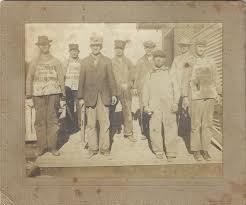 I am writing a post today as an outcropping of my professional pursuits, my status in life, and about the person I love who is mired deep in the kind of long term, blue-collar unemployment that didn’t used to exist in this country. I am underemployed at the moment because I don’t want to jump out of my sustainable life here to something that is risky and might not work out for me at my stage in life. I am trying to set up my end game and feel like I really can’t afford the risk of moving someplace for a job that may or may not pan out or some place where I basically suffer to exist. I am in a state of perpetual hunker down because of this. It is stressful and eating into my investments which I am fortunate to have but are not inexhaustible. I will not talk about my friend’s situation because, of course, it is personal. But, I will say watching some one so beautiful struggle with self worth issues because this economy only works for a few and because our government persistently sticks to such an untrue narrative about our economy just keeps me on the edge of tears. I am not an overly emotional person at all. Living in the USA should not mean living in a state of risk avoidance, depression, poor shaming and poverty creation.
There are many things that I grew up with and assumed would be there when I grew up that I despair frequently at their loss and threatened existence. My kids,as you know, are doing fine. My father got his degrees on the GI Bill and saw to it that my sister and I were educated. As a result, my girls and I never even considered not going to university. Doctor Daughter is now a full-fledged OB-GYN in the process of getting board certified in Washington State where she will undoubtedly become very rich very quickly with her soon-to-be radiologist husband. Youngest daughter just took her GMAT and is headed for her MBA in the fall. She and her boyfriend of three years have very good jobs and make great money. But the deal is, that was the path set before us because our families can now chose further upward mobility through higher education and jobs in the right sectors. We are all there. For my son-in-law, it is because his parents had access to immigration to the US and US public universities. For us, it was because my father who comes from a railroad worker and Oklahoma/Kansas dirt farmers could go to university. That happened because my granddad had a great blue collar job that began with digging ditches for the Atchison, Topeka, and the Santa Fe and my dad’s access to the GI bill. The real success stories of last century come from the many of us who got access to what we did because “we” the people invested in ourselves and each other. We also decided to jointly insure ourselves against personal and community disasters. All of these accomplishments are under direct assault today and we are failing ourselves and each other in many ways.
There used to be an alternative path through good, stable, well-paying jobs that took training, skill, hard work and experience. Original socioeconomic status wasn’t all that relevant. That path has dried up. The heart wrenching stories told in this NYT article about the crumbling city of Port Clinton, Ohio are typical of many midwestern, formally thriving industrial cities. The article contrasts the life of the author’s grandchildren and those of his blue collar classmates who went to school in the small town. This narrative is one played out all over the country. The conclusion is compelling.
The contrast with the egalitarian ethos and reality of the 1950s — the contrast between the upward mobility experienced by J and the bleak prospects of R — vividly captures Port Clinton’s transformation in the last half-century, much like that of the rest of the country. My research team has talked with dozens of R’s from Austin, Tex., to Duluth, Minn., and from Atlanta to Orange County, Calif.
The crumbling of the American dream is a purple problem, obscured by solely red or solely blue lenses. Its economic and cultural roots are entangled, a mixture of government, private sector, community and personal failings. But the deepest root is our radically shriveled sense of
“we.” Everyone in my parents’ generation thought of J as one of “our kids,” but surprisingly few adults in Port Clinton today are even aware of R’s existence, and even fewer would likely think of her as “our kid.” Until we treat the millions of R’s across America as our own kids, we will pay a major economic price, and talk of the American dream will increasingly seem cynical historical fiction.
Yes. We have a “radically shriveled sense of we” these days and it is killing the economy for all but a few of us. It is fueling racial resentment. It is even leading to a zero sum game for the folks reaping the benefits right now even though they adamantly refuse to see that future. Much of the problem is because The Pay is too Damn Low. More and more of productivity gains and corporate income gains are going to a small number of passive investors and not to the people involved in producing the gains. It is upending classical labor theory and actually invigorating the old ideas of Karl Marx as I have written before. Please remember, I am not a Marxist but I and others see the coming fruition of many of his philosophical points on how capitalism would eventually self-destruct. The New Deal did not bring about radical change. It brought about upward mobility and societal safety nets so we did not get radical change. Nothing fuels revolution like national despair.
The workers’ grievances are simple: low wages, few (if any) benefits, and little full-time work. In inflation-adjusted terms, the minimum wage, though higher than it was a decade ago, is still well below its 1968 peak (when it was worth about $10.70 an hour in today’s dollars), and it’s still poverty-level pay. To make matters worse, most fast-food and retail work is part time, and the weak job market has eroded what little bargaining power low-wage workers had: their earnings actually fell between 2009 and last year, according to the National Employment Law Project.
Still, the reason this has become a big political issue is not that the jobs have changed; it’s that the people doing the jobs have. Historically, low-wage work tended to be done either by the young or by women looking for part-time jobs to supplement family income. As the historian Bethany Moreton has shown, Walmart in its early days sought explicitly to hire underemployed married women. Fast-food workforces, meanwhile, were dominated by teen-agers. Now, though, plenty of family breadwinners are stuck in these jobs. That’s because, over the past three decades, the U.S. economy has done a poor job of creating good middle-class jobs; five of the six fastest-growing job categories today pay less than the median wage. That’s why, as a recent study by the economists John Schmitt and Janelle Jones has shown, low-wage workers are older and better educated than ever. More important, more of them are relying on their paychecks not for pin money or to pay for Friday-night dates but, rather, to support families. Forty years ago, there was no expectation that fast-food or discount-retail jobs would provide a living wage, because these were not jobs that, in the main, adult heads of household did. Today, low-wage workers provide forty-six per cent of their family’s income. It is that change which is driving the demand for higher pay.
The situation is the result of a tectonic shift in the American economy. In 1960, the country’s biggest employer, General Motors, was also its most profitable company and one of its best-paying. It had high profit margins and real pricing power, even as it was paying its workers union wages. And it was not alone: firms like Ford, Standard Oil, and Bethlehem Steel employed huge numbers of well-paid workers while earning big profits. Today, the country’s biggest employers are retailers and fast-food chains, almost all of which have built their businesses on low pay—they’ve striven to keep wages down and unions out—and low prices.
The deal is that big businesses are making record level profits and the record-setting levels of the DJ industrial average show that we are not failing the largest businesses and the richest people in the country. They do not need to be exempt from more taxation or responsibility from the moral hazard and the social costs they inflict on society. The benefits of their existence do not trickle down on us. What trickles down is their costs to society like those of the last financial crisis and that of oil spills, chemical company fires, and toxin produced illnesses. A strong economy comes from jobs and middle income prosperity and spending. Many private sector jobs are so bad they no longer do anything but sustain people in intense suffering.
One of the big reasons the U.S. economy is so lousy is the American companies are hoarding cash and “maximizing profits” instead of investing in their people and future projects.
This behavior is contributing to record income inequality in the country and starving the primary engine of U.S. economic growth–the vast American middle class–of purchasing power. (See charts below).
If average Americans don’t get paid living wages, they can’t spend much money buying products and services. And when average Americans can’t buy products and services, the companies that sell products and services to average Americans can’t grow. So the profit obsession of America’s big companies is, ironically, hurting their ability to accelerate revenue growth.
One obvious solution to this problem is to encourage companies to pay their people more — to share more of the vast wealth that they create with the people who create it.
The companies have record profit margins, so they can certainly afford to do this.
But, unfortunately, over the past three decades, what began as a healthy and necessary effort to make our companies more efficient after the malaise of the 1970s has evolved into a warped consensus that the only value that companies should create is financial value (cash) and that the only thing managers and owners should ever worry about it making more of it.
This view is an insult to anyone who has ever dreamed of having a job that is about more than money.
People take risks when they feel they have adequate safety nets to do so. We are ripping apart the nets that let people try new things and move to do things. We are losing opportunities to educate and advance our society and our people.
As Jared Bernstein, an economist at the Center for Budget and Policy Priorities, told me, “The best friend that low-wage workers have is a strong economy and a tight job market.” It isn’t enough to make bad jobs better. We need to create better jobs.
That simple statement and the politics of right now have led Robert Reich to suggest that some policy makers actually want high unemployment to suppress wages and keep the profits trickling up to big investors. All the while, these same politicians fuel racial resentment. They tell formerly well-off white blue collar workers that it is immigration and and reverse racism in civil rights legislation that has hurt their livelihoods. Meanwhile, the media keeps up the false narrative that it’s the defict, it’s social security, and it’s medicare that is hurting us. Putting money into the group of people most likely to spend it is the way to drive the American Economy. We economists have known that for years. Hoarding money at the top and refusing to use the governments power to tax and spend is bad economic policy. Our fiscal policy is killing the American Dream instead of driving it.
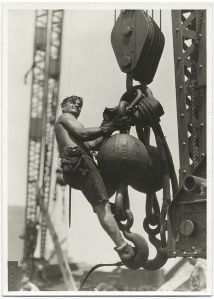 There are other examples besides our labor market. Health insurance is just one more market where “we” the people can do right by each other and can actually improve outcomes. I want to point you to the irascible Andrew Sullivan who uses Hayek–the economic god of the libertarian cult–to explain why social insurance –like Social Security and Medicare–actually stops freeloading off the economy rather than encouraging it. In this situation, he explains why Obamacare actually forces us to take personal responsibility. It is a argument from a different perspective on why “we” the people have to act on economic principals to preserve our society and way of life. In this essay, he criticizes the right wing radical group Freedomworks. The groupis trying to get 20somethings to burn their Obamacare cards which is in itself pretty crazy because the cards are nonexistent. Actually, what this does is wreck the risk pool for all of us. But, here is an argument for the leverage of government on a market that has failed so many people from another vantage point.
It is not being independent; it’s being potentially dependent on others while giving nothing in return. And insurance is an inherently collective endeavor. That’s how it works. It’s one area where going it alone makes very little sense. And, of course, the bigger the insurance pool, the lower the premiums. This is not socialism. It’s a simple insurance principle, used by free countries for centuries. It certainly passed muster with Friedrich Hayek, a man you would think would be an influence on the Tea Party’s political program. I’ve cited this before but it’s worth citing again:
Nor is there any reason why the state should not assist the individuals in providing for those common hazards of life against which, because of their uncertainty, few individuals can make adequate provision. Where, as in the case of sickness and accident, neither the desire to avoid such calamities nor the efforts to overcome their consequences are as a rule weakened by the provision of assistance – where, in short, we deal with genuinely insurable risks – the case for the state’s helping to organize a comprehensive system of social insurance is very strong … Wherever communal action can mitigate disasters against which the individual can neither attempt to guard himself nor make the provision for the consequences, such communal action should undoubtedly be taken.
That’s from The Road To Serfdom, one book of the libertarian and conservative Bible. And it’s common sense. It’s leveraging a simple principle – pooling risk – and extending it as far as possible to guard against the “common hazards of life.” There is nothing leftist or socialist about it. And it demands that each of us be personally responsible for the costs our own encounters with illness or accident impose upon our neighbors, rich and poor, young and old. If FreedomWorks were consistent, it would encourage twentysomethings to “burn their Obamacare card” while simultaneously pledging never to seek medical care under any circumstances. That would be coherent, if bonkers. What’s incoherent is claiming that refusing to contribute to a system you nonetheless intend to use is anything but a scam.
In fact, what FreedomWorks is encouraging is the real socialism. It’s using the 1986 law to force hard-working Americans to pay for free-loaders’ care.
The deal is that when labor markets or social insurance markets or health insurance markets fail a group of us, they fail and cost all of us one way or another. The cost us through increased crime, mental health issues, drug and alcohol abuse, family instability. People losing homes costs us. When houses go on the market at fire sale prices, it drags down the home prices of every one in the neighborhood. When wages are low, people don’t spend money at the the local businesses who cannot afford to hire more people or order inventory. Children raised with poor educational opportunities in crime ridden areas most likely become problems that cost us dearly in our incarceration nation. We fully know that there are places where the government can act and change the momentum. Yet, our government fails us. The government of “we” the people is not using the known and available tools to correct things. It is, in fact, actively undermining economic health. Economists known that deficit reduction is impeding the economy yet that is not the conventional wisdom floating around the beltway. Pundits and Policy makers are either being deliberately ignorant or lying.
Hardly a day goes by when either government analysts or the macroeconomists and financial forecasters who advise investors and businesses do not report on the latest signs of economic growth — in housing, consumer spending, business investment. And then they add that things would be better but for the fiscal policy out of Washington. Tax increases and especially spending cuts, these critics say, take money from an economy that still needs some stimulus now, and is getting it only through the expansionary monetary policy of the Federal Reserve.
“Fiscal tightening is hurting,” Ian Shepherdson, chief economist of Pantheon Macroeconomic Advisors, wrote to clients recently. The investment bank Jefferies wrote of “ongoing fiscal mismanagement” in its midyear report on Tuesday, and noted that while the recovery and expansion would be four years old next month, reduced government spending “has detracted from growth in five of past seven quarters.”
We know that insurance is by definition a collective effort because of its pooling of risk. Its goal is risk mitigation and therefore, cost reduction. Yet, here we go down the path of bringing down the government for an effort to reign in the dysfunctional health insurance industry. Not only are some policymakers willing to blow up our social insurance programs, they are doing so at the high risk of blowing up the entire economy when so many folks are still suffering from the last blowup and their inability to do something to stop the suffering. This kind’ve foolishness really needs to come to an end. There is nothing to be gained by any of us for this type of incessant nonsense. Many policymakers and their pundit enablers are putting themselves and their friends’ interests above that of the country’s and that of “we” the people. It is hurting many of us including a huge number of children whose lives look pretty bleak at the moment. Spend some time reading the narratives of folks in that top story that these guys poor-shame daily and then think of the possible programs that would actually put the cost of market failure back on the companies and people that caused it to start out with. It would also put people back to work. Then, start to wonder if our country can ever look like it did when it was truly the land of opportunity instead of the land of “we” the few, powerful, and rich. It is a very American ideal to think we could have a country where every one can find a well-paying job and join together to pay to insure against and provide for the risk of disasters.
Wednesday Night: Even Dakinis Get the Blues
Posted: July 24, 2013 Filed under: We are so F'd | Tags: Anthony Weiner, overturning obamacare again, sexting, The republicans won't let me fix the economy 13 Comments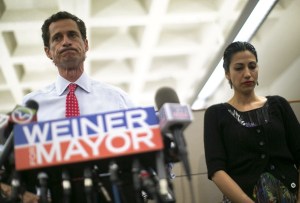 Okay, and I am going to try to get back in the loop here and write posts and be erudite and let’s see … is it too late to make some good New Year’s Resolutions? Probably. Anyway, I am sitting under the breeze of one of my two newly installed ceiling fans that are a blowing some cold air my way on these series of hot humid days and nights that I’ve been enduring and enduring and enduring. Did I mention that my bathroom faucet is new and it doesn’t leak? My screen door by the kitchen closes and locks. My front storm shutters close and lock again which could be very auspicious giving the look of TS Dorian. There are hardly any vines creeping any where in my backyard. Oh, and I’ve spent a week seeing my neighborhood and city with fresh eyes with my friend who did all these things for me. I was waking up and feeling and then, whoa … back to that desk of papers and the knowledge that you’re not going to wake up to the smell of coffee unless you make it or the feel of other things that I will not expound on here because, well, I’m going to spare you since this is a blog about politics …
I am in awe of people who can fix things with such facile. It makes me understand what people are thinking when I sit down to play a piano concerto and it looks like all am I doing is breathing. It’s really not since I’ve played since I was three and my mother was a task master both at technique and time put in practicing endlessly and doing scales endlessly. You do anything long enough, you make it look like it’s breathing. Then, there are those things you swear you are never going to repeat because you really do not want to become a master. There are these things that you do despite all those promises you make to yourself and you tell your self very convincingly and enthusiastically that you really really don’t want to do that again because how you eventually have to feel about it. It’s those niggling habits you just can’t break. Those traps you fall back into. It’s those little behaviors that sneak up on you once you have convinced yourself you have turned a new leaf. There are just those things that always trip you up just about the time you think you have yourself and life all figured out. There’s a hole some where from wearing out the same ground endlessly. There is the feeling good part and the rest of it …
This is I where I get to say that Anthony Wiener and the House Republicans seem to never change.
What makes so many of us so self-destructive? Why do we do things that are so obviously bad or disruptive for us and those around us? What makes us dive back into things when we’ve had such bad luck at it in the past? We’ve gotten through the season of renewal and we are firmly planted in the here and now of watching our karma and fruits ripen. There are bananas in the backyard hanging thick and aiming to take the tree down before they fully yellow. The lemons still look like little green balls but not for long with this heat and humidity. The green lemon balls and the bananas should start turning the side and back yard a green with some dashes and dots of yellow very quickly. The fruit ripens eventually. Now, where oh where am I going? That, at the moment, is my eternal question. Why create some havoc where there was none before?
So, now, I’ve got to tell myself to do the work to do list with a smile and figure out what is going on in the world outside my backdoor outside of the abrupt change to my safe little rut. I just popped out of my rut long enough to recognize one when I see it. This is I why see that the Anthony Wiener and the House Republicans seem to never change.For that matter, neither does our President. It’s a feedback loop of FAIL.
So, there’s this endless loop of behavior that lets us know that some things we just don’t seem to get beyond no matter how many times we shake our fists at the sky and say Never EVER again, will I go hungry. Even though it makes for great theatrics, we still find ourselves chasing down ourselves.
So, it would be really, really easy for me to say RUN HUMA RUN!! for my first bit of sage advice today. I would also like to say that I wish she would both run for mayor and away from Anthony Wiener but these things always look so easy when you’re not wearing those shoes. However, here’s the NYT with their version of sage advice from the vantage point of some one else’s shoes.
At some point, the full story of Anthony Weiner and his sexual relationships and texting habits will finally be told. In the meantime, the serially evasive Mr. Weiner should take his marital troubles and personal compulsions out of the public eye, away from cameras, off the Web and out of the race for mayor of New York City.
Mr. Weiner, who resigned from Congress two years ago after sending lewd messages and photos of his crotch to women he had not met, was forced to revisit the issue on Tuesday, and so were we all. A Web site called The Dirty had another woman’s story, another round of sex texts, and another picture of Mr. Weiner’s penis. The startling news was that this new episode apparently took place last summer, only a few months before Mr. Weiner was to begin another run at public office. The marital trauma that Mr. Weiner and his wife, Huma Abedin, had said was behind them was not as far behind as we thought.
So, I am now weirdly telling myself to wash a pillowcase so I don’t grab it and smell it endlessly. I am not one to give sage advice on oddly compulsive behaviors when it comes to people’s interpersonal relationships.
“With an endless parade of distraction, political posturing and phony scandals, Washington has taken its eye off the ball,” Obama told a crowd at Knox College in Illinois this afternoon. “And I am here to say this needs to stop.” Later in the speech, Obama vowed: “I will not allow gridlock, inaction or willful indifferences to get in our way.”
In one example of an unusual move, the advocacy arm of the Heritage Foundation — Heritage Action — announced Tuesday it will grade lawmakers on the basis of whether they sign on as cosponsors of — not merely vote for — a bill by Sen. Ted Cruz (R-TX) to prohibit any funding of Obamacare in the annual budgeting process.
That legislation has won over more than just the usual suspects. Its 27 cosponsors — all Republicans — include Senate Minority Leader Mitch McConnell (R-KY) and Minority Whip John Cornyn (R-TX), both of whom are running for reelection in 2014 and are facing primary challengers from the right.
“We have one last chance to stop this if the White House won’t cooperate, and that’s through our budgeting process,” said Sen. Marco Rubio (R-FL), another cosponsor, who is eager to make nice with the right after his major push for comprehensive immigration reform. “Some will say, ‘Well, that’s crazy. You are going to shut down the government over Obamacare?’ No, what’s crazy is moving forward with this thing.”
How many times do we have to label all of this MASSIVE FAIL and read about it?
Have the dog days of summer come early for me or is it the same for every one else too?
They sell wood putty and Spackle and calking for various holes and leaks. Maybe some one should invent something for hearts and personalities that just don’t seem to approach wholeness. You just have to remind yourself that some things get less sharp over time. It’s just not the minds of Republicans or the personal decisions of Anthony Wiener.
What I learned this Week from our Country’s Republicans
Posted: July 13, 2013 Filed under: religious extremists, Reproductive Health, Reproductive Rights, Republican Tax Fetishists, right wing hate grouups, Violence against women, Voter Ignorance, War on Women, We are so F'd, Women's Healthcare, Women's Rights 17 Comments There are several lessons I learned from the Right Wing this week.
But we all know where the mind goes when the word “profiled” is used, especially in a case like this. Besides, from Zimmerman’s continuous calls to the Sanford Police Department involving African American men to his nonemergency call that tragic night in February 2012, race was omnipresent in this case.
So, no wonder it struck more than a few people as a little odd when Florida Assistant State Attorney John Guy told the jury during his rebuttal closing argument that the Zimmerman case was not about race. But what he did was brilliant. He used race to take race off the table and he did it by pulling a reverse Matthew McConaughey.
The 1996 movie “A Time to Kill” is set in Mississippi and stars McConaughey as country lawyer Jake Tyler Brigance. He takes the case of Carl Lee Hailey, a black man who shot and killed the two white men who raped and tortured his daughter. Hailey doesn’t stand a chance with the all-white jury, but Brigance makes a dramatic closing statement that left me in tears when I saw it in the theater 17 years ago this month.
Brigance asks the jury to close their eyes as he tells them a story. “I want you to listen to me. I want you to listen to yourselves,” he says. “This is a story about a little girl walking home from the grocery store one sunny afternoon. I want you to picture this girl. Suddenly a truck races up. Two men grab her.” And then Brigance describes every abominable thing the men did to her. Choking back tears of his own, Brigance concludes his closing with a powerful request of the jury.
I want you to picture…
…that little girl….
Now, imagine she’s white.Guy asked the Zimmerman jury to do the same thing but with a twist. Rather than switch the race of the victim, he switched the race of the defendant.
“This case is not about race; this is about right and wrong,” he told the all-white jury of women. “What if it was Trayvon Martin who shot and killed George Zimmerman? What would your verdict be?,” Guy asked. “That’s how you know it’s not about race.”
Whether we want to admit it or not, we know the answer to Guy’s question. If the verdict would be guilty for Trayvon if he were the accused murderer then it must be the same for Zimmerman. Now, we wait to see if the jury agrees.
Second, women have less rights than the clumps of cells attached to their bodies because MotorCycle Safety, Masturbating Fetuses, and Men that want to believe all kinds of crazy things about biology based on religious tripe. Regulation is not for industries that can kill hundreds of workers or guns that can kill thousands. It’s for tampons and some one else’s uterus.
When North Dakota’s Republican Governor Jack Dalrymple signed the nation’s most restrictive abortion law in March, Bette Grande was thrilled. The Republican state legislator had spent months lining up support for a bill that makes it illegal for women to end a pregnancy because the fetus is shown to have Down syndrome or other chromosomal abnormalities. Set to take effect in August, the law also bans abortions once a heartbeat is detected, which can be as early as six weeks.
Anti-abortion activists praised Grande’s work. “It’s the right thing to do,” she says. “I don’t worry about the political fallout; I worry about the life of the unborn child.” Yet she concedes the campaign wasn’t quite homegrown. She didn’t come up with the legal justification for the legislation or all the arguments to persuade fellow lawmakers to sign on. A lot of that was provided to her by a group of activists 1,500 miles away in Washington. Americans United for Life gave Grande a cut-and-paste model bill it had drafted, along with statistics and talking points—“good, factual information regarding abnormalities and the discrimination that occurs inside the womb,” she says. “My colleagues didn’t need a whole lot of persuasion after that.”
Familiar in Washington for its 40-year effort to make abortions harder or impossible, Americans United for Life is now having more success outside the capital, offering itself as a backstage adviser to conservative politicians trying to limit state abortion rights. The group’s leaders say they hope Grande’s success will give encouragement to lawmakers in other places, including Texas and North Carolina, that are debating anti-abortion bills AUL is helping to promote. “Our organization has attempted to inject, if you will, a bit of competition between the states,” says Daniel McConchie, vice president for government affairs. The group ranks states by how much they’re doing to reduce abortions (Louisiana ranks first; Washington, 50th). “People come to us and say, ‘What else do we need to do to boost our ranking?’ ”
So far this year, 17 states have enacted a total of 45 new restrictions on abortion, many of them with AUL’s help. The group is explicit about its larger goal: to provoke a Supreme Court challenge to one or more of the state anti-abortion laws, giving the court’s conservative justices a chance to overturn the 1973 Roe v. Wade decision. “In order for the court to actually reconsider Roe, it has to have an active case before it,” says McConchie. “So we work with legislators to pass laws that will essentially spark the right kind of court challenge and give them the opportunity to reconsider the question.”
To increase the number of laws—and therefore potential test cases—the group publishes a 700-page anti-abortion field guide called Defending Life, which contains 48 pre-written bills politicians like Grande can copy. Among the most popular is a bill to limit or outlaw abortions after 20 weeks. That’s one of the restrictions Texas Democratic State Senator Wendy Davis temporarily derailed on June 25 with her pink-sneakered filibuster.
Republicans are acutely aware of the political risk in pressing for new abortion laws. The GOP is already struggling to make up lost ground with women voters, who increasingly favor Democrats and are more likely to regard abortion as a top voting issue. In Defending Life, AUL suggests one way around this problem is to emphasize women’s health when talking about abortion laws. “Legislative and educational efforts that only emphasize the impact of abortion on the unborn are insufficient,” the book says.
Third, if you happen to believe he existed and had some kind of extra special relationship with a universal creator, Jesus does not want us to feed the poor or house the poor or take care of our children. He wants us to subsidize the wealthy as they fit themselves into heaven via the eye of the camel. This is from the excellent mind and keyboard of Charles Pierce.
Witness yesterday’s callous and shameful fandango regarding the Farm Bill. Last week, a traditional Farm Bill failed to pass the House because the flying-monkey caucus thought it was insufficiently harsh on people who use food stamps. So, yesterday, as Democrats went fairly far up the wall, the flying-monkey caucus went one better. They simply took out the food stamp provisions entirely and passed a Farm Bill containing all those sweet, gooey subsidies and gifts to big agribusiness. They were very, very proud of how clever they had been, and they exhibited their shiny red rumps to all the world.
By splitting farm policy from food stamps, the House effectively ended the decades-old political marriage between urban interests concerned about nutrition and rural areas who depend on farm subsidies. “We wanted separation, and we got it,” said Representative Marlin Stutzman, Republican of Indiana, one of the bill’s chief authors. “You’ve got to take these wins when you can get them.”
Do we need to mention that Mr. Stutzman is a member of the Class of ’10, when the country decided with malice aforethought to elect the worst Congress in the history of the Republic? Do we need to mention that this bill has no chance of passing the Senate, or of being signed by the president, or of ever becoming law in this country? Of course, we don’t. That isn’t what this brutal act of maladministration was about. That isn’t what this House is about any more. We’ve made jokes about how Eric Cantor has Boehner’s balls buried in a Mason jar in his backyard. As far as governing the country goes, the rest of the House is more along the lines of Origen of Alexandria who, when he found himself tempted by the sins of the flesh, seized a knife and, as Flann O’Brien’s vision of St, Augustine puts it, deprived himself in one swipe of his personality. Whenever the House majority feels itself tempted by the sin of actually governing, out comes the blade and all of them sing soprano harmonies.
They do this to demonstrate that government cannot work. They do this so that they can go home and talk at all the town halls and bean suppers to audiences choking on the venom that pours out of their radios and off their television screens about how government doesn’t work, and how they stood tall against it, and against Those People who don’t want to work for a living. (When Stutzman says he’s a “fourth-generation farmer” who doesn’t want the Farm Bill to be a “welfare bill,” the folks back in LaGrange County don’t need an Enigma machine to decode what he’s saying.) They do this out of the bent notion, central to their party’s presidential campaign last fall, that anyone on any kind of government assistance is less entitled to the benefits of the political commonwealth. And they all believe that; the only difference between Paul Ryan and Marlin Stutzman is that Ryan has been a nuisance for a longer period of time. That the country rose up and rejected that notion in a thundering manner is irrelevant. What does the country matter in the Third Congressional District of Indiana? There, they believe government cannot work, and they elect Marlin Stutzman to the Congress to demonstrate to the world that it cannot.
Our Congress is now a cut-rate circus with nothing but eunuchs as performers. Some of these people, like Stutzman and his colleagues in the flying-monkey caucus, become eunuchs by choice. Some of them, like John Boehner, are drafted into the position. Their job is to be forcibly impotent so that the government itself becomes forcibly impotent. They are proud of what they do. They consider it a higher calling to public service that they decline to serve the public. They sing a soprano dirge for democracy in Jesus’s name, amen.
Whether we want to admit it our not, we are experiencing an overthrow of democracy in this country. A radical, religious-based, white minority that mostly dwells in the wonderland of the confederacy has completely taken over one of our major political parties. It has strategically planned and plotted do this since nasty Pat Robertson sold evangelical votes to corporate, libertarian-leaning assholes in the 1980s. They can’t pass things through the system and so they are now abusing the process of governance in every possible way they can. They have spent decades insisting that courts be stacked with ideologues and religious nuts. They have made money the central priority in elections. They are drowning our Republic in their gilded bathtubs. This cannot stand. This is the second civil war and again, we must take the side of Lincoln and the rights of people to overthrow the tyranny of an ignorant and ugly minority intent on enslaving us to plutocracy and bigotry. No Republican official should be left standing when this is all over. Vote them out of office with every pull of the lever regardless of what the other choice may be.
Friday Reads: the long and wonky road
Posted: May 24, 2013 Filed under: Austerity, morning reads, The Media SUCKS, U.S. Economy, Voter Ignorance, We are so F'd | Tags: austerity, Bruce Bartlett, Jim Grant, Mark Thoma, Micheal Kinsley, Paul Krugman, serious issues of fact avoidance 28 Comments Good Morning!
I am grading essays and papers on currency crises (circa 1999-2002) and financial crises (the last one) and basically all those kinds of crises the tend to come from out of control speculation and the government encouraging the wrong kinds of things. This mostly happens because rich people donate to the campaigns of politicians and own newspapers and media outlets. Politicians want to get reelected and get more powerful and more rich. Rich businesses and investors want to get more powerful and rich. It’s kind of the perfect alignment of shared interests based on lust and greed and all the baser instincts. Isn’t it terrible when the facts get in the way? So, they just ignore them or consider them an alternative liberal opinion. It drives me nuts.
So, BB asked to me write something about what I research and teach and usually regurgitate to you. You know that the austerity narrative has theoretically fallen apart. Well, it’s also falling apart via the numbers, data, facts and reality So, let’s start out with some very bad, awful, terrible horrible Dubya Bush Policy 10 years ago and why tax cuts for the rich still don’t do good things for the economy or now, even the investment markets. This is written by economist Bruce Bartlett who was an adviser to the Reagan administration.
Ten years ago this month, Congress enacted the third major tax cut of the George W. Bush administration. Its centerpiece was a huge cut in the tax rate on dividends. Historically, they had been taxed as ordinary income, but the Bush plan, enacted by a Republican Congress, cut that rate to 15 percent. The tax rate on ordinary income went as high as 35 percent.
This initiative originated with the economist R. Glenn Hubbard, who had been chairman of the Council of Economic Advisers when the proposal was sent to Congress. Mr. Hubbard was a strong believer that the double taxation of corporate profits – first at the corporate level and again when paid out as dividends – was a major economic problem.
During the George H.W. Bush administration, Mr. Hubbard had been deputy assistant secretary of the Treasury for tax policy and wrote a Treasury report advocating full integration of the corporate and individual income taxes.
Mr. Hubbard had also spearheaded enactment of big tax cuts in 2001 and 2002 that he said would jump-start the American economy. In an op-ed article in The Washington Post on Nov. 16, 2001, he predicted that the soon-to-be-enacted 2002 tax cut, which President Bush signed on March 9, 2002, would “quickly deliver a boost to move the economy back toward its long-run growth path.”
Mr. Hubbard predicted that it would create 300,000 additional jobs in 2002 and add half a percentage point to the real gross domestic product growth rate.
There is no evidence that the tax cut had any such effect. The unemployment rate remained above 5.7 percent all year, rising to 5.9 percent in November and 6 percent in December. The real G.D.P. growth rate fell each quarter of 2002, and by the fourth quarter growth was at a standstill. Hence the need for yet another big tax cut.
The idea of the 2003 legislation was to raise dividend payouts, thereby bolstering personal income, and raise the prices of common stock, which would improve household balance sheets. As President Bush explained in his signing statement, “This will encourage more companies to pay dividends, which in itself will not only be good for investors but will be a corporate reform measure.” He also said the dividend tax cut would “increase the wealth effect around America and help our markets.”
The Treasury Department issued a fact sheet on July 30 asserting that the decline in dividends had been a cause of the weak stock market and noting that dividend payouts had risen since enactment of the tax cut on May 28.
Subsequent research, however, found that the increase in dividends was a short-term phenomenon and mainly at companies where stock options were a major form of executive compensation. A 2005 Federal Reserve Board study found that the United States stock market did not outperform European stock markets after the dividend cut. Nor did stocks qualifying for lower dividend taxes outperform those, such as real estate investment trusts, that did not qualify for lower dividend taxes. Non-dividend paying stocks slightly outperformed dividend-paying stocks, and many corporations that did pay higher dividends scaled back stock repurchases by a similar amount.
So, this is yet another example where Republican economic policy is totally out of step with outcomes, data, and reality. Yet, they keep repeating that it works the way it doesn’t work just because, remember, the agenda is greed, power, and more wealth to the already greedy, powerful and wealthy. The deal is they get it wrong, got it wrong, and continue to get it wrong but that doesn’t stop them from trying to weasel their way into a narrative that says, hey, this really isn’t wrong. There’s still some validity there and all economists must be liberals like Paul Krugman who are just talking up their philosophical line. Take austerity economics, please. I mean it. Take it and those idiots who push it to hell and leave them there. Still, the very serious people want to take this very seriously even when it is just plain seriously wrong. Take Michael Kinsley, please. He can report from Hell.
I’ve spent a rather alarming portion of this week wading into intellectual pissing matches, so I’m loath to respond to Michael Kinsley’s response to last week’s brouhaha over austerity policies. But one paragraph does merit some pushback. After noting the backlash to his last column, Kinsley writes the following:
There are two possible explanations. First, it might be that I am not just wrong (in saying that the national debt remains a serious problem and we’d be well advised to worry about it) but just so spectacularly and obviously wrong that there is no point in further discussion. Or second, to bring up the national debt at all in such discussions has become politically incorrect. To disagree is not just wrong but offensive. Such views do exist. Racism for example. I just didn’t realize that the national debt was one of them.
Kinsley assumes that it must be the second explanation, and then goes on from there.
I can’t speak for anyone else who pushed back against Kinsley’s column from last week. Speaking for myself, however, I blogged about it because Kinsley was “spectacularly and obviously wrong.” I say this because almost everything I wrote in my response to Kinsley I knew at age 18 after taking Economics 101 in college.
To explain, let me focus on Kinsley’s motivation for thinking that the austerians have a point:
Austerians believe, sincerely, that their path is the quicker one to prosperity in the longer run. This doesn’t mean that they have forgotten the lessons of Keynes and the Great Depression. It means that they remember the lessons of Paul Volcker and the Great Stagflation of the late 1970s. “Stimulus” is strong medicine—an addictive drug—and you don’t give the patient more than you absolutely have to.
This is wrong for three reasons, one pedantic and two substantive. First, to be pedantic, the austerity debate is about the wisdom of using expansionary fiscal policy — i.e., running a significant federal budget deficit — to alleviate downturns. Paul Volcker was the chairman of the Federal Reserve and thereby responsible for setting monetary policy. He had nothing to do with fiscal policy. This is a distinction that I learned in my first few lectures on macroeconomics. So either Kinsley phrased this badly or he’s confused about what this debate is about.
It just keeps coming down to the fact that most journalists and politicians simply do not know what they are talking about when it comes to  economics. So, they assume an economist like Paul Krugman has a liberal bias on all things–including the color of the sky and the laws of gravity and demand–and they make the worse assumption that those arguing Republican policy these days must have a valid point when the only point is, yes, you know it … to deliver more wealth, power and influence to themselves and their friends that already have it. Some times a lie really is just a lie.
A wonderful example of the myopia of the deficit scolds…
The background is that Michael Kinsley wrote a particularly bad column last week about “austerity,” a key point of which was based on factually incorrect memories of what went wrong in the 1970s; as you can imagine, this earned him plenty of corrections and dismissals from people who used access to accurate economic and government policy statistics.
Kinsley was quite taken aback by this, apparently, and wrote a follow up to defend himself. Dan Drezner has already pointed out that Kinsley is still relying on the same inaccurate memories that got his first column into trouble, but I actually found a different part of Kinsley II more interesting, in which he thinks he’s caught Paul Krugman in a contradiction.
Kinsley writes:
Paul Krugman takes credit for good economic news whenever it happens. On Krugman’s blog site (“The Conscience of a Liberal”) last week were two bits of prose side-by-side. One was an ad for his latest book, End This Depression Now! “How bad have things gotten?” the ad asks rhetorically.” How did we get stuck in what now can only be called a depression?” Right next door is Krugman’s gloat about the recent pretty-good economic news. “So where are the celebrations,” he asks, “now that the debt issue looks, if not solved, at least greatly mitigated?” Greatly mitigated? By what? Certainly not by anyone taking Paul Krugman’s advice. He has been, in his own self-estimate, a lone, ignored voice for reason crying out in an unreasoning universe.What’s the problem? The linked post by Krugman isn’t a gloat about good economic news! It is, to be sure a gloat; it’s a gloat about deficits…Krugman goes so far as to call lower deficits “progress,” although as I read it he’s really just saying that lower deficits should be counted as progress from the point of view of the deficit scolds.
What’s happening here is that Kinsley is projecting onto Krugman a classic deficit scold mistake; Kinsley is conflating the federal budget deficit with the economy. Krugman isn’t doing that; it’s purely Kinsley’s invention.It gets, however, to exactly why Kinsley was buried under a large pile of abuse after his first column. Well, in part; the other part, as Krugman notes elsewhere, is “the existence now of a policy blogosphere…which makes bluffing harder.” Say something factually inaccurate these days, and you’re going to get slammed; it seems that some pundits who preceded that development find it hard to get used to it.
I still have no idea why journalists feel they just know everything about economics compared to say, knowing everything about Brownian motion or performing brain surgery. It’s the same with politicians. They just seem to confuse a really complex subject that most people really struggle with in college and never take beyond that with something like a political science class or a journalism class. You don’t even get real economic stuff until you way up there in school. The introductory stuff is like the ABCs and they don’t even seem to grasp that. Anyway, stop confusing getting facts wrong with just another opinion …
Let’s Build a Special Hell on Earth for these Republican Officials errrr… Psychopaths
Posted: May 21, 2013 Filed under: The Right Wing, We are so F'd | Tags: hurricane katrina, Hurricane Sandy, Moore Oklahoma, Super Tornadoes 23 CommentsI read this link in the morning thread from BB and thought it was about the worst thing I had read for some time. It’s called  the “Oklahoma Test” and it’s written by one of our blog favorites Charlie Pierce. It shows how absolutely vile some republican officials are these days. Monsters. Psychopaths. A$$holes. You choose the name. Today’s republicans are poster children for depravity.
Remember that Tom Coburn of Oklahoma is often cited as one of the Republicans with whom the president might be able to do business. He is a conservative, but not a crazy person, like his colleague, James Inhofe. He can be expected to listen respectfully to other points of view and to at least consider the virtues of the kind of compromises that take the Davids, Gregory and Gergen, to their respective happy places.
Then remember that, fundamentally, Tom Coburn is also a monster.
“That’s always been his position [to offset disaster aid],” Coburn spokesman John Hart said. “He supported offsets to the bill funding the OKC bombing recovery effort.”
This is a guy who, one day after a devastating natural disaster killed his own constituents, said he will not vote to alleviate their suffering unless he can inflict some pain on someone somewhere else in the country. And his spokesman defends this as a matter of principle, and uses the worst act of domestic terrorism in the history of the United States as a salutary example. (And the link demonstrates that Coburn’s aversion to tossing money down various ratholes is not universal.) Does Senator Coburn really believe you can budget for the unthinkable? That tornadoes are zero-sum events? That you can horse-trade on human suffering as though it were a line-item on a transportation rider? I no longer am willing to try to understand how people like this think. They are monsters and they operate on their own monstrous imperatives.
I frequently find myself in disbelief at the depths of ignorance, selfishness, and utter disregard for human life and our country that makes up the minds of today’s Republicans. That was Senator Coburn. Now try the pretzeled psychosis that is the mental and moral state of Senator Jim Inhofe.
Oklahoma Sen. Jim Inhofe (R) said on Tuesday that federal aid to tornado-ravaged parts of his home state will be “totally different” than a Hurricane Sandy aid bill he voted against late last year.
Speaking on MSNBC, the lawmaker said that in the case of Hurricane Sandy, “everybody was getting in and exploiting the tragedy that took place.” However, he said, “that won’t happen in Oklahoma.”
President Barack Obama on Tuesday said he has already signed a federal disaster declaration for parts of Oklahoma, where tornadoes have caused dozens of fatalities and flattened entire communities.
Inhofe said the Sandy Relief bill “was supposed to be in New Jersey,” but “they were getting things … in the Virgin Islands, fixing roads there, and putting roofs on houses in Washington, D.C.” Both Inhofe and Coburn voted to slash aid to victims of Hurricane Sandy, with Inhofe saying he considered the full proposed aid amount to be a “slush fund.”
While Northeastern states like New Jersey and New York suffered some of the worst damage from Hurricane Sandy, the storm affected 24 U.S. states in total during October of 2012. Sandy carved a destructive path from the Caribbean Sea to the Great Lakes, where it produced 25-foot waves in Lake Huron.
Hurricane Sandy is believed to have cost more than $50 billion, making it the second-costliest storm in U.S. history.
While it’s too early to estimate what the damage from the Oklahoma tornadoes might cost, in 1999 the state requested and received more than $67 million after a series of tornadoes.
I still live with the Hurricane Katrina aftermath. I will never forget that money and help was doled out faster to Mississippi than Louisiana for pure political reasons. They wanted to turn Louisiana red and bring down the governor a lot more than they wanted to help those of us that suffered from that huge horrible storm. I felt the long shit-stained hand of Karl Rove in the treatment of our diaspora and especially of our middle class black population who voted solidly democrat and kept the state purple.
FEMA Director Michael Brown, who resigned over his handling of the response, later told a group of students that the White House only wanted to federalize the response in Louisiana, where the governor was a Democrat, and not in Republican-led Mississippi in order to embarrass Louisiana officials. Brown said the White House believed they had a chance to “rub [Kathleen Blanco’s] nose in it.”
Even my asshole Senator David Vitter came up with money for Sandy victims. You can’t spend time in the wake of death and utter destruction and stay heartless. Or can you?
For these two and many more of their ilk, it seems you can.
It seems that disasters in republican states are more deserving than disasters in democratic states. It also seems that you can help your own by taking from the mouths of others. Time and time again, we see the absolutely unhinged policies put forth by the Republican party. We see them block the most reasonable national responses to national problems for unhinged, fanatical reasons usually based on myth, lies, and greed. Of course we won’t leave Oklahoma in the dust and destruction. But, it won’t be their elected officials that lend them real helping hands without taking from some of the rest of us. C’mon Oklahoma … my birth state … how can you justify reelecting psychopaths like these? How can you keep sending your country these monsters? Please, pen them up somewhere and build them a personal hell realm here on earth.

 peej
peej Carissa
 bostonboomer
 dakinikat
 ecocatwoman
 mablue2
 Mama Lopez
 peggysue22
 quixote
 skydancingguestblogger
 Mona (aka Wonk the Vote)



 Sky Dancing
Recent Comments