
Just Don’t Take Mine
Posted: January 15, 2011 Filed under: Federal Budget, U.S. Economy | Tags: Federal Budget, Federal Debt, Federal Deficit, Federal Spending 13 CommentsI wrote a little on the disturbing level of economic illiteracy I see throughout the country yesterday. A CBS Poll came 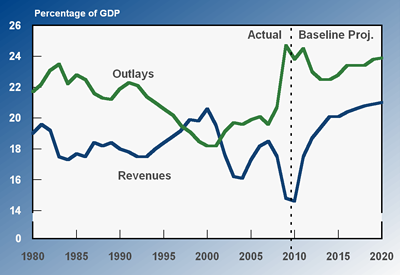 out on what Americans want done with Federal Spending and it just screams stupidity. The overwhelming majority of people want spending cuts in the Federal Budget, but they can’t name many things that they want cut. It seems like there’s this resounding chorus out there of give me my taxes back and do cuts on imaginary spending. Then, it’s just don’t cut anything I use or think is important. I’m going to cite this last paragraph in the article . It’s probably the most relevant. (There’s more discussion links on this at Memeorandum.)
Most Americans do not know exactly how the government spends its money. For example, when asked what percent of the budget goes to earmarks, 41 percent said they make up less than 20 percent of the budget, 13 percent said 20-50 percent, 4 percent said more than 50 percent and 42 percent didn’t know. Earmarks actually make up less than one percent of the budget.
I always hear students say they want to quit giving money away to other countries too. We give less than one half percent of our budget to other countries. The best place to look for budget information is the Congressional Budget Office website. That’s where I got the graph you see in the upper right hand corner. That’s a comparison of Federal Spending (green) and Federal Incomes (blue) since 1980. The gap between the two at any one point in time is the federal deficit for that year.You can distinctly see the period during the Clinton Budget Surpluses because that’s where the blue lines is above the green line. All other periods show more spending than revenues. The Reagan and Bush years were years of explosive spending growth. You can also see the huge gap that started around 2008 when the Great Recession took hold. Nearly each of the down turns recently has been due to huge tax breaks combined with bad economies.
A pie chart shown on a Examiner.com breaks down the expenditures by the funded Department. It also adds Social Security into the mix which is the number one federal outlay. (Ryan Witt’s chart analysis here. Read the comments and embrace the number of people that need to go back to school.) Social Security–however–is sustained at the moment by more revenues than outlays. The Department of Defense comes after that. It gets about 19% of the overall budget. Right now, because of the ‘cyclical’, mandatory spending that occurs due to our bad economy and our high unemployment, you can see that unemployment/welfare payments mandated by law come after that (16%), followed by Medicare which is also offset by payroll taxes at the moment (13%) then Medicaid/SCHIP funding (8%). The Department of Health and Human Services gets about 8%.
The next biggest expenditure is paying the interest on the National Debt. Thankfully, interest rates are low so that amounts to around 5% currently. You can compare this pie chart to the one below and see how lower interest rates combined with higher outlays really helped to push that percentage down.. The next most noticeable part is the Transportation department that gets about 2% of the budget. Most of the remaining major Departments like Homeland Security, Energy, Education, etc. get some where around 1-1 and 1/2%. Veteran’s Affairs gets a fairly noticeable slice too albeit not huge.
 I’ve also put a pie chart of Federal Outlays for 2009 to the left that is some what more general. Notice how huge the Treasury budget was because of TARP (now mostly paid back) and the other bailouts. There are several reasons that the budget deficit has been so bad the last few years. The primary reason is the bad economy because that forces revenues down and outlays up. The second reason is the Bush taxes cuts that were just extended and expanded for the next two years. We’re basically spending at relative levels right now that we’ve not seen since World War 2. We are of course funding two occupations/wars and a ‘war’ on Terror. Some people want to conveniently forget that. When the economy finally improves and we do actually shut down Iraq and Afghanistan, a lot of our budget headaches will go away.
The U.S. Government is NOT a household or a business
Posted: January 14, 2011 Filed under: U.S. Economy, U.S. Politics, Voter Ignorance, We are so F'd | Tags: economic illiteracy, Federal Debt, Federal Deficit, gold buggery, Paul Krugman, Rand Paul, Ron Paul 11 Comments
Gold bug in the garden of eden on a perfectly flat earth.
I’ve noticed the high level of economic illiteracy in the country since the day I started seriously studying economics. I’ve also noticed that faith-based economics rules the thought processes of many politicians. It always reminds me of those folks that believe in a literal garden of eden and a 7 day creation story over the facts that science hands us day-in and day-out. Molecular Biology has pretty much trumped their views but they persist in sticking their fingers in their ears and going la la la la la.
A variety of misguided notions have taken up residence in the brains of the same people, so I suppose it’s not surprising that the same groups that scream war on christmas also think the US will go bankrupt if we don’t up the debt ceiling or some such nonsense. The problem is that anti-intellectual flat earthers control a political party in this country. That problem extends to people who now sit as chairs of congressional committees that deal with the real world and real people. Then, there’s the fact that the other political party doesn’t really fight for the truth. It’s just all very distressing to me.
There are two stories today that I’d like to use as evidence to point to the incredible amount of lunacy floating around today’s Republican Party. The first comes from Paul Krugman. The second from The Economist. Krugman talks about the persistence of gold buggery. (Yes, I’m using a double entendre.) The Economist about the persistence of federal deficit and debt myths. They write on the number of people that don’t seem to understand what it takes for the US to ‘default’. Both myths need airing.
Paul Krugman writes political op-ed as well as information on economics. Economists are trained to separate the two. We even have two names for the circumstances. It’s called discussing positive and normative economics. You teach principles of economics students how to distinguish between the two on the very first day of class. Some times I think Dr. Krugman forgets that most people and politicians are economic illiterates. You see and hear constant confusion on his writings. People don’t seem to distinguish between his op-ed with the liberal bent (normative) and when he’s actually talking economic theory (positive). His op-ed today talks about the fact that there are many issues in politics today that are so polarizing that there is no third way or middle ground. I don’t want to point to that, but his blog post ‘Monetary Morality’ that takes this notion of no compromising with idiots which points to the absurdity of gold buggery or something he called paleomonetarism in an early post.
In those two posts, he points out that there is a narrative out there–mostly preached by the Pauls–that the Fed is evil and we need to be hung on a cross of gold (with apologies to William Jennings Bryan). If you read the two posts you’ll see that this issues isn’t a conversation or liberal issue at all. Economists have a shared understanding of theory that doesn’t include the Paul money narrative. The Paul monetary narrative is not about economics, it’s about some idea that the government and a central bank is some how confiscating something from you. It’s a philosophy of paranoia more than an economic statement.
You see, if you’re the kind of person who views being taxed to pay for social insurance programs as tyranny, you’re also going to be the kind of person who sees the printing of fiat money by a government-sponsored central bank as confiscation. You may try to produce evidence about the terrible things that happen under fiat currencies; you may insist that hyperinflation is just around the corner; but ultimately the facts don’t matter, it’s the immorality of activist monetary policy that you hate.
And this is also why politically conservative economists arguing for something like nominal GDP targeting, and pleading with their perceived political allies to stop talking nonsense, are going to be disappointed. If you’re in the intellectual universe where monetary policy is to be evaluated by results, you’re already out of the true believers’ moral universe. At a fundamental level, Milton Friedman and John Maynard Keynes are on one side; Ron Paul is on the other. And it’s not a debate in which evidence really matters.
The Pauls–and others–dwell in the land (Kentucky, I think) where you can create a theme park and put Neanderthals and all sorts of Dinosaurs that lived millions of years apart with modern animals in the Garden of Eden. All that’s needed in these narratives is the idea that the sun revolves around the earth or the earth is flat. It’s not science, it’s not data based, it’s just you wanting to believe your little view of the world is the correct one for no other reason than it appeals to your outlook on life.
Tuesday Reads: The Anniversary of FDR’s Second Bill of Rights
Posted: January 11, 2011 Filed under: Anti-War, Barack Obama, Civil Liberties, Civil Rights, Equity Markets, Federal Budget, financial institutions, Global Financial Crisis, John Birch Society in Charge, New Orleans, Regulation, Social Security, Stock Market, The Great Recession, U.S. Economy, U.S. Politics | Tags: David Stockman, druggie bath salts, extremist political rhetoric, FDR, financial regulation, gold standard, Governexoricist Jindal, military spending, naked short selling, occupation of Iraq and Iran, right wing currency tropes, Second Bill of Rights, short selling, violence related to cross hairs map 125 Comments Good Morning!!
History Reads
Ever so often, we need to be reminded of history. I read a tweet yesterday by one of our long time news anchors down here in New Orleans.
normanrobinson1 norman robinson
Wondering if we as Americans really value what we have and whether we really care about leaving a future for the generations to follow.
This started me thinking about what future was left to me by the generations directly before me. Of course, we’re living in a world mostly free of NAZIs and Fascists because of the greatest generation. We’re living in a world where the Jim Crow Laws of Separate-But-Equal were torn down by the generation after that with the sacrifice of the heroic leaders of the civil rights movement. I have the right to vote because of my grandmother’s generation and her mother’s generation and what they did for us. I’ve also had consistent access to family planning and birth control because the first women of the baby boom generation and several generations of women before them worked hard for it. Stonewall made a tremendous difference in the lives of GLBTs. Then, there are programs like Social Security and institutions like the United Nations that came from the vision and leadership of FDR and the people who served in his cabinets like Francis Perkins, Henry Wallace, Cordell Hull and many others. They cared enough to build us quite a legacy.
Today is the 67th anniversary of a speech that was to convey that vision of a post-war America. The Second Bill of Rights was part of a State of the Union speech. I’m bringing this up for two reasons. First, because it clearly provides a road map–even today–for “what Americans really value”. I say that because poll after poll shows that the majority of American’s agree with these values even though our government doesn’t seem to reflect that at the moment. For that reason, I share with you today, the words of a leader with a vision and a gift for elocution.
From the FDR American Heritage Center Museum’s Website:
On January 11, 1944, in the midst of World War II, President Roosevelt spoke forcefully and eloquently about the greater meaning and higher purpose of American security in a post-war America. The principles and ideas conveyed by FDR’s words matter as much now as they did over sixty years ago, and the Franklin D. Roosevelt American Heritage Center is proud to reprint a selection of FDR’s vision for the security and economic liberty of the American people in war and peace.
The second reason I want to share this is that we’re coming close to President Obama’s third State of the Union Address. It is scheduled for January 25th. My guess is that FDR’s Second Bill of Rights and the vision he elucidated will officially die on that day. I am not expecting any thing close to the utterance of ‘Necessitous men are not free men’ or “People who are hungry and out of a job are the stuff of which dictatorships are made”.
Despite the obvious parallels between right now and the Great Depression–the high unemployment rates, the incredible number of foreclosures, and the breadth of necessitous men and women and children–I’m expectting many of the vestiges of FDR’s vision that prevent future calamities to be assaulted during Obama’s third State of the Union Address. Look closely at the list I put up top because so much of what was handed us has been trickling away.
As Norman Robinson contemplated via tweet, do we really value what we have today? Will we witness the destruction of what was handed to us and hand our children and grandchildren broken infrastructure, no hope for upward mobility, and useless institutions drained of funds by the greedy? Will any shell of what was envisioned for us in both the first bill of rights and the second remain? Frankly, I am expecting an ‘austerity’ speech that endorses the findings of the cat food commission. I also expect we will hear nothing of overreaching intrusion by the Patriot Act into our internet and cell phones. We are expected to diligently watch Football and bail out billionaires while everything else trickles up and away.
Monday Reads
Posted: January 10, 2011 Filed under: Civil Liberties, Civil Rights, financial institutions, U.S. Economy, U.S. Politics | Tags: and Civil Liberties, Arizona shooting, buried cemetery, censorship, Civil Rights, Darrell Issa, Facebook, Goldman Sachs, House Oversight Committee. Jerry Nadler, House Subcommittee on the Constitution, Huckleberry Finn, LA Heritage Center, literature, Mark Twain, Morning reads, public employee unions, Racism, Republicans, Shakespeare, slurs, war on unions 42 Comments
Good Morning! It’s been a tough weekend. As usual when dreadful events happen, the cable channels are covering the shooting in Arizona 24/7. Things are still happening in the DC despite the horror of that story. I just don’t know how much more I can read about it. Thinking about senseless hatred and violence is starting to make me feel physically ill.
If you do want to read more about the Arizona tragedy, the Washington Post has special section on it: Special Report: The Tucson shooting rampage. The New York Times also has lots of stories and photos on the front page.
Now I’ll see if I can find any other important stories for you to check out this morning.
On Saturday, I wrote a long piece on Darrell Issa, the man who is going have subpoena power as Chairman of the House Oversight Committee. The man is a thug, and we’d better be paying attention to what he’s doing. I hope when the news about the shooting calms down that people will take a look at that piece. I don’t usually “pimp” my posts, but I feel that this one is important.
Now I see that the Republicans plan to make changes in another important House committee: Republicans banish ‘civil rights’ and ‘civil liberties’ from House subcommittee
Congressman Jerrold Nadler (D-NY) blasted Republicans for planning to change the name of the Subcommittee on the Constitution, Civil Rights, and Civil Liberties to the “Constitution Subcommittee.”
“Once again, the new Republican majority has shown that it isn’t quite as committed to the Constitution as its recent lofty rhetoric would indicate,” Rep. Nadler, who has served as the Chairman of the Subcommittee on the Constitution, Civil Rights, and Civil Liberties since 2007, said.
“It has yet again shown its contempt for key portions of the document – the areas of civil rights and civil liberties – by banishing those words from the title of the Constitution Subcommittee.”
The Subcommittee on the Constitution is one of five subcommittees of the US House Committee on the Judiciary. The subcommittee has jurisdiction over constitutional amendments, constitutional rights, federal civil rights, ethics in government, and related matters.
Nice, huh?
I’ve seen people talking about this in the comments, but can I just say that I’m sick and tired of people tampering with Huckleberry Finn? It’s one of my favorite books. I have read it multiple times, and I happen to think it’s a candidate for the Great American Novel.
Mark Twain wrote the book the way he did to deliver some serious messages, one of which was an argument against racism. He did that by demonstrating in his novel why racism is wrong. There is also a strong message in the book about child neglect and abuse and about alcoholism. It’s a brilliant book, and there is no need to censor it. If it is taught in school, then the context of the language Twain used can be discussed and debated. Huckleberry Finn is not a children’s book. High school students are perfectly capable of understanding the book and its importance.
Here’s a piece at Truthdig that offers 10 Reasons Why the Slurs Should Stay in ‘Huck Finn.’ It’s pretty good.
When I was a senior in high school I read Shakespeare’s plays in my English class. There were two teachers who taught the Shakespeare course. My teacher had us read the plays aloud as written. The other teacher, an elderly woman, had students read the “dirty” parts silently. I’m glad I wasn’t in her class. But at least she didn’t make the students skip over those parts entirely or try to censor the plays.
I say let’s read the greatest works of literature as written.
Here’s a interesting and ironic story at the LA Times: 1800s-era skeletons discovered as crews build L.A. heritage center
Under a half-acre lot of dirt and mud being transformed into a garden and public space for a cultural center celebrating the Mexican American heritage of Los Angeles, construction workers and scientists have found bodies buried in the first cemetery of Los Angeles — bodies believed to have been removed and reinterred elsewhere in the 1800s.
Since late October, the fragile bones of dozens of Los Angeles settlers have been discovered under what will be the outdoor space of La Plaza de Cultura y Artes downtown near Olvera Street. According to archaeologists and the chief executive of La Plaza, they appear to be remains from the Campo Santo, or cemetery, connected to the historic Catholic church Our Lady Queen of Angels, commonly called La Placita. The remains are just south of the church.
Pieces of decaying wood coffins as well as religious artifacts such as rosary beads and medals have also been unearthed.
The cemetery, which officially closed in 1844, was the final resting place of a melting pot of early Los Angeles — Native Americans; Spanish, Mexican, European settlers; and their intermarried offspring. But the repercussions of the discovery outside La Placita have been anything but peaceful.
So digging up the bones of early settlers in order to build a monument to early settlers. Ironic.
Dakinikat sent me this Bloomberg article about Goldman Sachs and their investment in Facebook.
News has leaked out that Goldman, supposedly the smartest Wall Street firm, will buy $450 million of stock in closely held Facebook, with Digital Sky Technologies, which invests in start- ups and is partly owned by Goldman, purchasing another $50 million.
The anonymous folks who put out these numbers said the deal sets a value for Facebook equal to that of Boeing Co. and approaching that of Home Depot Inc.
Goldman clearly is capitalizing on Wall Street’s latest diversion: a semi-public stock market for private companies.
Several firms now offer shares of closely held companies or offer estimates of their value, or both.
It seems that Goldman is hyping Facebook in order to increase the value of its own investment in advance of Facebook going public. Shouldn’t that be illegal?
Dak also sent me this link to the Economist about the war on government unions: It’s a long article and I haven’t been able to read the whole thing yet, but it looks worthwhile. Perhaps Dak will do a longer post on this issue.
[MABlue’s picks]
Bethany McLean from Vanity Fair has a great reportage about Goldman Sachs. These poor guys, they’re so misunderstood.
The Bank Job
One of the biggest disconnects on Wall Street today is between the way Goldman Sachs sees itself (they’re the smartest) and the way everyone else sees Goldman (they’re the smartest, greediest, and most dangerous). Questioning C.E.O. Lloyd Blankfein, C.O.O. Gary Cohn, and C.F.O. David Viniar, among others, the author explores how their firm navigated the collapse of September 2008, why it has already set aside $16.7 billion for compensation this year, and which lines it’s accused of crossing.
There’s more on the heinous crimes of the week-end, violent rhetoric from Right (spare me the “Both-Sides-Do-It”), and intimidation of political figures.
How the Tucson Massacre Rattled U.S. Judges
For a moment, U.S. District Judge John M. Roll seemed as likely the main target of the Tucson massacre as Congresswoman Gabrielle Giffords. In 2009, Roll had come under threats severe enough that he and his family were placed under 24-hour protection by the U.S. Marshals Service. After he ruled that a high-profile suit brought by a group of Mexican immigrants could proceed, his phone lines were deluged with angry callers — including at least four that threatened violence.
At the time, the U.S. Marshal for Arizona told the Arizona Republic that the threats had been egged on by radio talk-show hosts critical of Roll’s decision. Critics began sharing his personal information on Web sites as the rhetoric became more heated. The round-the-clock protection lasted a month, though Roll ultimately decided not to press charges against the callers.
[…]
For some members of the judiciary, the news that Roll was among the six who died during the shooting spree in Tucson was unsettling in ways that went beyond personal grief from those who knew and served with Roll, who had been placed on the bench by President George H. W. Bush in 1991 at the urging of Senator John McCain. Just minutes after learning of the slayings, U.S. District Judge Robert Gettleman of Chicago told TIME in an email that the news of the murder was “very disturbing… Just when we were beginning to feel more secure.”
Or I see. There’s a big difference between men’s tears and women’s tears. As “luck” would have it (or as always in these matters), men’s tears are a turn on for women, but women’s tears are a turnoff for men. Or is it? There’s an interesting study out but not all agree on the interpretation of the results.
Crying, Sex, and John Boehner: Not So Fast
The study is, predictably, getting a lot of media attention (WOMEN’S TEARS SAY, ‘NOT TONIGHT, DEAR’), but experts on tears and crying aren’t so sure the findings mean what the Weizmann scientists say they do. “I like their study very much, and I think their results are fascinating, but I have my doubts about their interpretation,” says Vingerhoets. “I suspect the sexual effect is just a side effect: testosterone, which was reduced when men sniffed the women’s tears, isn’t only about sex: it’s also about aggression. And that fits better with our current thinking about tears.”
Sooooo…. What are you reading this morning?
Late Night Wonk: Nifty Graphs and such (plus some “new” street photography!)
Posted: January 9, 2011 Filed under: U.S. Economy, We are so F'd | Tags: Geography of a Recession, Late Night, Latoya Egwuekwe, Photography, Vivian Maier 41 Comments
Original photography by Vivian Maier. Click on thumbnail to go to vivianmaier.blogspot.com and see a larger view.
I’m going to start with the Vivian Maier photography link from David Dunlap at the New York Times LENS real quickly because otherwise it will probably get missed! It’s linked to up on memorandum right now, but it’s way at the bottom. Check it out! Here’s a link to more of her discovered work. I’m including a brief thumbnail to encourage you to go look. These are brilliant and thought-provoking images, largely from the fifties and sixties.
Alright, now for the meat of this post. It is a somewhat weighty post for a Saturday night, but there hasn’t been much time to discuss a variety of topics today with all the tragic and distressing news out of AZ understandably dominating the coverage–just look at that archive link to memeorandum, from what the page looked like at 11:30 PM on Sat. It is stunning and devastating all at once.
Anyhow, I doubt most people had the time to click over on the nifty graph pick from my roundup this morning. So I decided to spotlight it.
From Economix — “Comparing Recoveries: Job Changes” (emphasis in bold is mine):
The chart above shows job changes in this recession compared with recent ones, with the black line representing the current downturn. The line has risen since last year, but still has a long way to go before the job market fully recovers to its pre-recession level. Since the downturn began in December 2007, the economy has shed, on net, about 5.2 percent of its nonfarm payroll jobs. And that doesn’t even account for the fact that the working-age population has continued to grow, meaning that if the economy were healthy we should have more jobs today than we had before the recession.
The unemployment rate (measured by a different government survey, and based on how many people are without jobs but are actively looking for work) fell to 9.4 percent in December, from 9.8 percent in November. That might sound like good news — it is, after all, the lowest rate since July 2009 — but part of the reason for the drop was that so many people simply gave up looking for jobs.

Keep reading after the jump, because there’s a youtube worth watching if you haven’t seen it already. Read the rest of this entry »

 peej
peej Carissa
 bostonboomer
 dakinikat
 ecocatwoman
 mablue2
 Mama Lopez
 peggysue22
 quixote
 skydancingguestblogger
 Mona (aka Wonk the Vote)



 Sky Dancing
Recent Comments