
The Big Ugly
Posted: January 23, 2012 Filed under: 2012 primaries, Injustice system, just because, Mitt Romney, Newt Gingrich, right wing hate grouups, The DNC, the GOP, U.S. Politics | Tags: 2012 presidential election, Barack Obama, Financial Crisis, Mitt Romney, Newt Gingrich, U.S. Economy 25 CommentsHard to say what’s been worse this past week—putting up with a stomach virus or watching the ongoing GOP train wreck. In years past, the  Gingrich factor would have been an instant tonic because the possibility that Newt Gingrich would pitch himself and his tainted legacy against a sitting Democratic President would be too, too delicious.
But that was then. This is now.
Though I’m no Mitt Romney fan, the very idea of Uncle Newt in the oval office makes me shudder. Though I’m no Barack Obama fan, Uncle Newt makes POTUS look immensely attractive. No small feat.
So where I might have jumped with joy in the past [oh please, let the Republicans nominate the ugliest, least electable candidate of the bunch], instead I’ve been thrown into a miserable funk.
The choices suck, the conversations continue to move to the extreme right and the American electorate flails in desperation.
If there’s any bright spot it is this: the longer Uncle Newt basks in glory, the more ugly he will reveal, namely the Republican penchant for the politics of petty grievances—the howl of the entitled patriarchy, still wounded by Paradise Lost; the claim of religious bigotry—the war on Christianity—while dismissing or denigrating any religion but their own; and the aggressive promise that if they can’t win, they’ll make damn sure no one else does. In addition, Newt’s recent success exposes the Tea Party for what it has truly become—a group of mindless obstructionists.
Sorry, you cannot make lemonade out of this one. Not when a voting group is willing to endorse and support a serial liar, a hypocrite without shame, a man willing to blow the dog whistle on all the old prejudices and wounds of race and gender, or conjure up the ghost of Andrew Jackson, a man Gingrich says knew how to deal with his enemies: he killed ‘em.
Native Americans, I suspect, have a different take.
Uncle Newt’s declarations might sound good in a John Wayne movie but not for the White House, not in the year 2012 when the country and the world is precariously perched on a knife edge.
But there’s more. The Newtster has taken on capitalism itself, exposing the underbelly of Republican economics—the mythical ‘free’ market, the unchained melody that without restraint will bring a Renaissance of prosperity and goodwill to hardworking Americans. Or so the tune goes.
Sing that to the unemployed, the homeless. Better yet, belt the lyrics out loud and clear to the nearly 50 million Americans now collecting food stamps, Uncle Newt’s favorite whipping boy. Or sing that discordant lullaby to the children [over 20%] now designated food insecure. Because unfettered capitalism has been the GOP’s clarion call for the last 40 years. Think about ‘trickle down’ economics, stagnating wages, the unfunded wars in Iraq and Afghanistan, the call for ever-lower taxes because the ‘job creators’ need that extra revenue to make things right. Now recall the financial meltdown of 2008, where Wall St. took the unregulated ball and ran right off the cliff. Screaming ‘liberty’ on the way down doesn’t quite cut it for most of us.
This is the plus side of a Newt Gingrich, who with a magician’s flourish has pulled back the curtain on the Big Ugly. The lie is massive and cruel. The lie has inflicted pain and suffering on millions, both here and abroad.
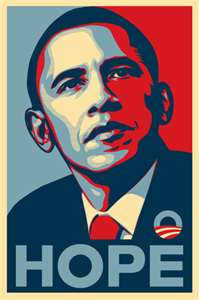
The Hopemeister
The counter to all this is convincing the public that Barack Obama is a socialist/Marxist in hiding. President Obama is many things but a socialist and/or Marxist he is not. Barack Obama is a brand, a man marketed to the American public as a national savior. He was and is not. He’s simply a marker for the status quo.
And that’s where my ongoing funk comes in. On one side, we have Newt Gingrich, Mitt Romney, Rick Santorum and Ron Paul all extolling the Big Lie as the disease that will cure us. And on the other side we have President Obama pretending he’s Teddy Roosevelt reborn, ready to slay the Dragons of Monopoly. Only his words do not match his actions. They never did.
And then there’s us, the American electorate, the Consumer Nation brought low by dwindling expectations, the super-power made suddenly and irrefutably mortal. Will the election of 2012 rouse us from the trance that brought us to this moment? Will we see the Big Ugly for what it is rather than what we dreamt it to be?
Or will we tumble back into a dark and endless sleep?
Not to be overly depressing, there are glimmers of light on the horizon. Citizens are standing up, questioning the lack of justice in the system, the ongoing extraction of wealth by the top 1%. Despite the lack of coverage, the Occupy Wall St. movement still survives in small towns and cities across the country. Grassroot efforts are pushing ahead to remove the influence of money in government—Superpacs writ large. Several Constitutional amendments are gaining signatures and support to upend the Supreme Court’s ‘corporations are people’ decision and more and more voices are rising up in books and magazines, on the blogs and in tweets to push back the Robber Baron mentality of our corporate, government and financial institutions.
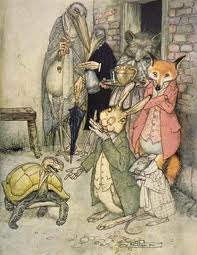
Will it be enough? I don’t know. The Big Ugly has a hell of a head start. But if Aesop is any guide, the Hare who dismisses the Tortoise should be well advised: We’re coming. Slow and steady, We the People, are coming nonetheless.
Elizabeth Warren for Senate? MA Dems Not On Board So Far
Posted: July 18, 2011 Filed under: Barack Obama, Democratic Politics, The DNC, U.S. Economy, U.S. Politics | Tags: 2012 elections, Barack Obama, Blogosphere, Democratic party, DSCC, Elizabeth Warren, John Kerry, Massachusetts Democratic Party, Scott Brown, Senate, Setti Warren 44 Comments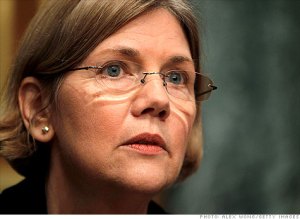
The blogosphere is all a-flutter over the possibility of Elizabeth Warren running for the Senate from Massachusetts.
The Progressive Change Campaign has begun a petition drive to draft Warren.
Taylor Marsh is reporting that Warren told Andrea Mitchell that she will think about the Senate after she gets back to Harvard.
Greg Sargent has posted a list of reasons why national Democrats want Warren to run.
So how do Massachusetts Democrats feel about all this? A few days ago, The Boston Globe’s Joan Vennochi wrote that President Obama was afraid to unlikely to appoint Elizabeth Warren as head of the new Consumer Protection Agency that she fought for and then built, so now her supporters are pushing a Senate run against Republican Scott Brown as a “consolation prize.” According to Vennochi, this initiative isn’t being received all that well here in Massachusetts.
On paper, her candidacy would attract women, liberals, and money from both constituencies, locally and nationally. “She’s tough as nails . . . She’s smart as hell and she could wrap Scott Brown around her little finger in a debate,’’ said Philip Johnston, [John] Walsh’s predecessor as state party chairman.
But Warren isn’t well-known, beyond a small circle of elite Democrats. She has never run for office or built a grassroots organization. And a handful of candidates already in the race won’t be happy about being big-footed, leaving current supporters in an awkward spot.
Massachusetts Democrats aren’t too pleased with the DSCC these days after they and Obama chose not to support Martha Coakley against Scott Brown. State party chairman Walsh told Vennochi that he probably wouldn’t support Warren’s candidacy, since he is backing John Kerry’s chosen candidate Setti Warren. Vennochi:
The idea of Washington Democrats imposing their will on Massachusetts Democrats is distasteful. The DSCC, especially, is not popular here after its tactics largely backfired in the special election that Brown stunningly won. A lack of initial support for Democrat Martha Coakley was followed up by a belated barrage of negative ads that hurt rather than helped Coakley.
The DSCC can also come off as bullies.
Last month, when Kerry was hosting a fundraiser for the DSCC at his Beacon Hill home, he wanted to invite Setti Warren to the event. But the DSCC said no to inviting only one candidate because the group didn’t want to look like it is taking sides – unless, of course, it’s Elizabeth Warren’s side.
Besides, would Obama pitch in to support Warren for Senate? Somehow I doubt it.
America’s Housing Problem
Posted: June 15, 2011 Filed under: The DNC, unemployment | Tags: Foreclosures, home prices, US housing market, US jobs market 11 CommentsThe global financial crisis that resulted from a housing bubble may be over for U.S. banks and financial institutions but the 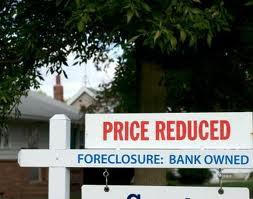 crisis is worsening for U.S. homeowners. Many mortgage holders still have underwater loans. Many home owners have absolutely no chance of selling their homes for any reasonable amount of money in a market that is now worse than the similar conditions present during The Great Depression. For many, the dream of home ownership has turned into a nightmare.
Prices have fallen some 33 percent since the market began its collapse, greater than the 31 percent fall that began in the late 1920s and culminated in the early 1930s, according to Case-Shiller data.
The news comes as the Federal Reserve considers whether the economy has regained enough strength to stand on its own and as unemployment remains at a still-elevated 9.1 percent, throwing into question whether the recovery is real.
“The sharp fall in house prices in the first quarter provided further confirmation that this housing crash has been larger and faster than the one during the Great Depression,” Paul Dales, senior economist at Capital Economics in Toronto, wrote in research for clients.
According to Case-Shiller, which provides the most closely followed housing industry data, prices dropped 1.9 percent in the first quarter, a move that the firm interpreted as a clear double dip in prices.
Moreover, Dales said prices likely have not completed their downturn.
“The only comfort is that the latest monthly data show that towards the end of the first quarter prices started to fall at a more modest rate,” he said. “Nonetheless, prices are likely to fall by a further 3 percent this year, resulting in a 5 percent drop over the year as a whole.”
Home equity has traditionally been a source of wealth and retirement savings for generations of Americans. Falling house prices not only have a negative impact on American wealth, they may be impacting the ability of American households to move where the jobs may be. The ability to move–called labor mobility by economists–is important in a recovery because it leads to stronger job markets.
Economists Colleen Donovan and Calvin Schnure have written an interesting new paper examining whether the fall in house prices since 2007 in the US — which has left many home-owners owing more on their house than it is worth — created a lock-in effect that depressed labor mobility.
This question has significance far beyond either the real estate market or the labor market, because there has been a persistent line of argument from some that the US’s current unemployment problem is not the result of insufficient demand, but is instead a “structural” problem resulting from the inability of the US economy to properly match people with available jobs. A frequent explanation for why it suddenly became difficult to match people with jobs in 2008 is that underwater mortgages have locked people in to their houses, reducing labor mobility and making job-matching more difficult.
The evidence presented in this paper indicates that the fall in house prices has indeed caused a “lock-in” effect, but has not significantly impacted labor market efficiency.
This may be an important factor in explaining persistent unemployment. There has been an argument out there that unemployment is due to ‘structural’ problems which would imply that government programs may not be effective as possible in solving job market issues. This study implies–along with recent data on falling household consumption–that the U.S. continues to have a demand problem. This means that traditional fiscal stimulus and programs could be an effective way to stop both the freefall in home prices and improve the employment outlook. Housing affordability is not an issue in this market. Home prices and mortgage interest rates are have made affordability metrics reach near-historic levels. Other factors are constraining the market.
More than four in every five mortgages now require a down payment of 20 percent, and credit history standards have tightened. At the same time, foreclosures continue at a brisk pace, pushing more supply onto the market and pressuring prices downward.
Then there is the issue of underwater homeowners—those who owe more than their house is worth—representing another 23 percent of homeowners who cannot leave or are in danger of mortgage default.
Indeed, the foreclosure problem is unlikely to get any better with 4.5 million households either three payments late or in foreclosure proceedings. The historical average is 1 million, according to Dales’ research.
We’re basically a situation where the Freddie and Fannie situation is unresolved. The historically low interest rates and high availability of cheap money means that huge institutions are making money from arbitrage and investing rather then lending and investing in non-financial projects. Small-to-medium sized businesses do not have the same funds availability of large corporations. Neither do consumers. Clearly, the Fed is going to start increasing interest rates as signs of price inflation appear on the horizon. This may wring the arbitration profit-seeking behavior of larger firms, but it will further squeeze consumers and small-to-medium businesses that have been hanging on waiting for increased demand.
This is a clear signal that the economy is experiencing demand-side problems which require fiscal policy solutions that stimulate demand. Meanwhile, Washington DC policy makers are focused on the long-term issue of fiscal sustainability. Republicans are still discussing debt default to the point that Fed Chairman Ben Bernanke made a point of mentioning the detrimental impact of that move in a recent speech. The strategy of playing chicken with the federal debt for personal political gain is a form of unpatriotic gamemanship.
Failing to raise the debt ceiling in a timely way would be self-defeating if the objective is to chart a course toward a better fiscal situation for our nation. The current level of the debt and near-term borrowing needs reflect spending and revenue choices that have already been approved by the current and previous Congresses and Administrations of both political parties. Failing to raise the debt limit would require the federal government to delay or renege on payments for obligations already entered into. In particular, even a short suspension of payments on principal or interest on the Treasury’s debt obligations could cause severe disruptions in financial markets and the payments system, induce ratings downgrades of U.S. government debt, create fundamental doubts about the creditworthiness of the United States, and damage the special role of the dollar and Treasury securities in global markets in the longer term. Interest rates would likely rise, slowing the recovery and, perversely, worsening the deficit problem by increasing required interest payments on the debt for what might well be a protracted period.
The focus of fiscal policy discussions should be to relieve downward price pressure in the housing market and provide job creation. Again, there are many ways to do this. The federal government can provide funds to states to keep up levels of public employment. They can fund law enforcement, public health, and education positions for states and municipalities to weather the prolong, slow recovery. These types of initiatives reduce the need for unemployment, medicaid, and other public services. They also maintain people in jobs that pay taxes and will feel safe enough to sustain household spending. This, in turn, creates customers for those small and medium-sized local businesses. It is clear that funding large corporations does not create local jobs. Funding small and medium-sized business through targeted loan programs in either community banks or the SBA could be used to direct monies to businesses that do hire locally rather than use their funds to expand global business.
Additionally, something must be done to help home owners in difficult positions. There appears to be no end to falling real estate prices. The government could help bottom out the market by providing more direct refinancing to under-water homeowners and those home owners who face foreclosure due to prolonged unemployment.
Clearly, the problem is political will. Nearly every administration–Republican or Democrat–facing similar poor economic conditions in the past has realized the gravity of these kinds of situation and have tailored fiscal programs to meet the challenges. This even includes the Reagan administration in the early to mid 1980s. No where in the beltway is there a discussion of policies that have been successfully used to solve these problems in the past. This isn’t even a case of dithering. This is a clear case of willful and deliberate ignorance.
Here’s a good example of the problem.
The dismal housing market news was compounded Wednesday by the National Association of Home Builders’ release of its monthly Housing Market Index. The index, which measures builder sentiment on the market, fell to a level of 13 on its 100-point scale. That’s three points below the previous month and the lowest level since September 2010. Any reading below 50 indicates negative sentiment about the market.
With fewer homes being built, fewer jobs are available and less revenue is generated for local, state and federal governments. Each new home built creates an average of three jobs for a year and generates about $90,000 in taxes, according to the group.
On the bright side, the NAHB noted that a poll it took of 2,000 2012 voters found that housing is still considered by the largest plurality of homeowners as their biggest investment.
Amid the troubling developments in housing, labor and elsewhere, the Obama administration has tried to push several new economic proposals, ranging from new training programs to tax relief.
President Obama is pleading for patience on the economy while at the same time urging the public to stay positive.
“The sky is not falling,” the president said during a stop in North Carolina two days ago.
Weiner Agrees to Seek Treatment
Posted: June 11, 2011 Filed under: Democratic Politics, Surreality, The DNC, U.S. Politics | Tags: Debbie Wasserman Schultz, Democrats, Facebook, internet, politics, rehab, Rep. Anthony Weiner, sex scandals, sexual addiction, Twitter 48 Comments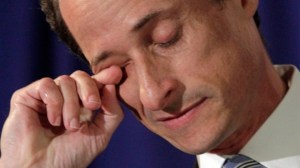
Rep. Anthony Weiner (D-NY)
The New York Times is reporting that Rep. Anthony Weiner is going to go into rehab for his alleged Twitter/Facebook/texting compulsion.
A spokeswoman for Mr. Weiner said he would request a leave of absence from the House and seek treatment, but provided no further details.
“Congressman Weiner departed this morning to seek professional treatment to focus on becoming a better husband and healthier person,” said the spokeswoman, Risa Heller. “In light of that, he will request a short leave of absence from the House of Representatives so that he can get evaluated and map out a course of treatment to make himself well.
“Congressman Weiner takes the views of his colleagues very seriously and has determined that he needs this time to get healthy and make the best decision possible for himself, his family and his constituents.”
I’m sure Weiner could use some therapy, but I still don’t get why he is being singled out for this kind of public outrage when David Vitter wasn’t. As far as we know Weiner didn’t act out any of his fantasies with these women. I would think that hiring prostitutes to spank you when you’re wearing diapers would elicit more calls for “treatment” than Twitter and Facebook flirtations. But what do I know? Maybe a lot of Congressman like to wear diapers and have sex with prostitutes.
Apparently, the final straw for Democrats was the revelation that Weiner tweeted a 17-year-old Delaware girl, even though the girl’s mother said Weiner had not said anything inappropriate in these Twitter messages.
Delaware police said Friday they were investigating the reported communications, had interviewed the teen, and that “she has made no disclosure of criminal activity nor inappropriate contact by the Congressman.”
Neverthless Weiner’s colleagues in Congress are horrified and outraged. Here is what DNC Chair Debbie Wasserman Schultz had to say:
“It is with great disappointment that I call on Representative Anthony Weiner to resign,” Wasserman Schultz said in a statement issued by the Democratic National Committee, which she has led since the beginning of May. She’s President Barack Obama’s representative as DNC chairwoman.
“The behavior he has exhibited is indefensible and Representative Weiner’s continued service in Congress is untenable.
“This sordid affair has become an unacceptable distraction for Representative Weiner, his family, his constituents and the House – and for the good of all, he should step aside and address those things that should be most important: his and his family’s well-being.”
According to Fox News, the police in Delaware are still investigating. The girls parents have turned her laptop over for inspection, but their attorney says there’s nothing to find.
“The Tweets in question between the student in question and the congressman were not salacious or in any manner inappropriate, said Daniel McElhatton, the attorney representing the girl’s family. “No photographs were ever sent to her or from her.”
Weiner spokeswoman Risa Heller also said that Weiner’s interactions with the girl “were neither explicit nor indecent.”
The police are trying to verify that, McElhatton said.
Fox News claims to have been told by “sources” that much of the interchange between the girl and Weiner had been deleted from her computer. Fox is obviously hoping the police can find something salacious on the girl’s hard drive. I sure hope Weiner didn’t send anything sexual or suggestive to her.
The girl’s high school posted on her now defunct Tumblr blog a quote that appears to be from her direct messages with Weiner.
“I came back strong. Large. In charge. Tights and cape s—… My favorite congressman,” she wrote, adding a heart emoticon after “congressman.”
Seven days earlier, she posted a YouTube video of Weiner giving a speech and wrote, “My true love.”
Poor kid. It’s a shame she had to get dragged into this.
As an antidote to having to watch politicians call for their smelling salts and fainting couches, I recommend this story from NPR’s Weekend Edition: Zombies Walk the Halls of Congress.
NPR can now confirm that there are zombies in the U.S. Capitol.
OK, not the kind that pop out of graves and eat brains, but a different kind of undead — the undead political career. This week New York Rep. Anthony Weiner said he is staying put, even though some top Democrats have publicly called for him to resign.
He’s not the first one to stay in politics after serious ethics violations, trying to revive a seemingly lifeless career.
In this contrived scenario, there are three categories of Congressional Zombies:
— those who survived a scandal to live again,
— those who are wounded by scandal but stay in Congress (the real zombies),
— and those who hung on for a while but eventually got buried.
According to NPR, both Charlie Rangel and David Vitter are real zombies.
Sen. David Vitter (R-LA), who was a client of a Washington prostitution ring. He was never charged because the news came out after the statute of limitations had expired. Two of Vitter’s calls to the madam were made during votes on the floor.
He apologized in 2007 — “I want to again offer my deep sincere apologies to all those who I’ve let down and disappointed with these actions from my past” — and neatly won a second term in the Senate.
Good grief! Vitter called the DC Madam from the Senate floor? Did he get a sudden urge for punishment? Please explain to me why he didn’t need to enter a treatment facility after his colleagues learned about his illegal behavior?
I’m pretty disgusted by Weiner’s behavior at this point, but I still wish I never had had to find out about it. I still don’t see any reason why it needed to be revealed either. Sure the guy acted like a silly adolescent, but how many of us would look dignified if our sexual fantasies were spread all over the internet and the media? I think this kind of scandal-mongering has gone way too far, and I’d like to see a lot more approbation about Andrew Breitbart’s repulsive behavior. I’d also like to see similar outrage against Congresspeople who take money from lobbyists and vote accordingly.
This scandal appears to be setting a whole new precedent for the kinds of activities that can get a politician in trouble. As far as we know, Weiner’s activities were all in cyberspace. Now if it turns out he behaved inappropriately with an underage girl, I’ll have to revise my opinion.
Obama’s Political Leanings (pssssttttt … he’s no liberal)
Posted: April 26, 2011 Filed under: 2012 presidential campaign, abortion rights, Barack Obama, Democratic Politics, Domestic Policy, Environment, Environmental Protection, Reproductive Rights, Republican politics, Republican presidential politics, right wing hate grouups, Surreality, Team Obama, The DNC, The Media SUCKS, the villagers, U.S. Economy, U.S. Politics, Voter Ignorance, We are so F'd, WE TOLD THEM SO, Women's Rights | Tags: Ezra Klein, Obama, Right Wing, Rockefeller Republicans 7 Comments
Time to trot out the Unity Pony
I’m having an interesting day reading all the links out there and discussions on several Ezra Klein blog posts. Some one should’ve noticed Obama’s hero-worship of Reagan during the primaries about three years ago. Some one should’ve read his books that were gleeful about past Republican policy initiatives. But no, we were too busy discussing other things to notice how far to the right Barrack Obama really is.
Here’s one of Klein’s posts that’s getting netplay now: The shocking truth about the birthplace of Obama’s policies. Some people just have not been paying attention at all.
President Obama, if you look closely at his positions, is a moderate Republican from the early 1990s. And the Republican Party he’s facing has abandoned many of its best ideas in its effort to oppose him.
If you put aside the emergency measures required by the financial crisis, three major policy ideas have dominated American politics in recent years: a health-care plan that uses an individual mandate and tax subsidies to achieve near-universal coverage; a cap-and-trade plan that attempts to raise the prices of environmental pollutants to better account for their costs; and bringing tax rates up from their Bush-era lows as part of a bid to reduce the deficit. In each case, the position that Obama and the Democrats have staked out is the very position that moderate Republicans staked out in the early ’90s — and often, well into the 2000s.
I’ve been saying for years–literally–that the Obama Health Care Plan was more conservative than Nixon’s and basically was grabbed from Lincoln Chaffe’s Heritage Plan in the 1990s which was later called Dolecare and then later morphed into Romneycare. That’s just Klein’s first example. He also provides evidence on cap and trade which was supported by George H.W. Bush and Newt Gingrich when it was applied to ‘acid rain’ instead of ‘global warming’. He then moves to tax policies. Obama’s obvious proclivities to voodoo economics even showed up in the first stimulus which was top heavy with tax cuts and not big enough on job creation measures. Klein doesn’t even touch the increasing military budgets and interventions, the GLBT and women’s rights issues that get bargained away, FISA, Gitmo, etc., etc., etc. …
Here’s Mark Thoma’s take on the Klein piece and a follow-up by Andrew Samick. Samick considers Obama to be a Rockefeller Republican of all things. I’d say Obama’s even more to the right than that because that’s pretty much the side of the Republican party that raised me. Rockefeller Republicans love Planned Parenthood among other things. Warren Buffet is a great example. Hell, Charlton Heston loved Planned Parenthood. I even heard him speak on population control issues in Omaha, Nebraska in the mid 1970s sponsored by–gasp!–Planned Parenthood. The most interesting part is Thoma’s ending question. Why are we moving so far to the right now?
What’s left unexplained is why movements to the right by both parties — and these aren’t marginal moves — haven’t alienated the middle of the road, swing voters that seem to make a difference in elections. I don’t think I have a good answer for why. In the present case, there is some voter remorse — Obama is far more conservative than many thought — but I don’t think that explains the larger trend.
The original Ezra Klein piece is here: ‘Obama revealed: A moderate Republican’. Believe me, the conversation has gone viral with folks like The National Review (Be forewarned if you go there, it’s a putrid thread.) on line taking the bait. Booman even twists himself into a world class logic pretzel trying to say this is good news because it means Obama’s policies are “mainstream”. Joseph Romm at The Grist discusses the climate policy even further.
In the climate bill debate of the past two years, Obama and the Democrats embraced Republican ideas in an effort to minimize or avoid the partisanship inherent in other approaches that had been explicitly rejected by Republicans, including a tax and a massive ramp up in clean energy funding, as I’ve argued.
But Klein makes an effective case that it simply didn’t matter how reasonable or centrist or business-friendly a strategy environmentalists and progressive politicians pursued (or might have pursued). The Republicans simply were committed to stopping Obama from appearing bipartisan.
The Dems keeps getting suckered by Republicans the way Charlie Brown keeps getting suckered by Lucy. But the difference is that the GOP’s strategy wasn’t even a secret.
Ah, here’s the deal. Romm ties back to Thoma’s question. Why all this goose stepping to the right? Easy. It was the Republican strategy of say not to everything. They had to go further right to say no. Now, we’re in policy measures that are from John Birch Society land. Finally, the Democratic Congress said no more compromises when Planned Parenthood went on the chopping block. They also decided to get what they could get done before Boehner took over the house. We saw a few last minute Democratic Policies get passed but it was only due to the folks in Congress. Obama just went along because, hell, a win is a win, right?
Senate minority leader Mitch McConnell told The New York Times in March 2010, “It was absolutely critical that everybody be together because if the proponents of the bill were able to say it was bipartisan, it tended to convey to the public that this is O.K., they must have figured it out.” Why? As McConnell blurted out right before the 2010 midterm elections, “The single most important thing we want to achieve is for President Obama to be a one-term president.”
Obama kept proposing “conservative” policy at the onset. The Republicans announced they would sabotage it from the get go. This is something we complained about and pointed out here and elseblog for years. Obama’s opening policy moves were always a compromise position for real Democrats. He never was worried about putting policy out there with a real Democratic stamp on it because issues aren’t important to him. This President desperately wanted to pass anything with his name on it that would be called success. I frequently argued he wanted to makes sure there was a Health Plan that went through just to show he could do it when the Clintons couldn’t do it. He threw the Democratic plans over board almost immediately including the wildly popular single payer option. Dumping women’s access to private insurance with access to abortion was his final compromise maneuver to pass the silly thing. He’s thrown policies to the wind that have been basic Democratic Platform staples every chance he’s been in office. The Republicans were never going to act satisfied and were going to keep goosestepping further right. It was their announced strategy. He was more than willing to go right along with them because his proclivities are rightish anyway and he just wants the win.
So, my big question is why didn’t these folks see this coming all along like we did? Then a follow-up, what good does all this discovery now do three years too late?
Of course, if you read the Republican blogs, they’re still screaming Obama’s a socialist and Klein’s a fool. If you hit the partisan Democrats, the pretzel logic maneuvers are as obvious as Booman’s trying to find the sunny side up.
I’ll I can say is we told them so. Follow that up by a we are so f’d.

 peej
peej Carissa
 bostonboomer
 dakinikat
 ecocatwoman
 mablue2
 Mama Lopez
 peggysue22
 quixote
 skydancingguestblogger
 Mona (aka Wonk the Vote)



 Sky Dancing
Recent Comments