
Tuesday Reads
Posted: December 28, 2010 Filed under: Global Financial Crisis, Gulf Oil Spill, investment banking, jobs, New Orleans, the blogosphere, The Bonus Class, The Great Recession, the villagers, U.S. Economy, U.S. Politics, We are so F'd, Wikileaks | Tags: AIG, Bradley Manning, cylical unemployment, Dispersant, Emeril, Gulf oil Gusher, Harry Shearer, Hoppin' John, Labor Unions, Levee failure during Hurricane Katrina, Levees.org, Nancy Pelosi, structural unemployment, The Big Uneasy, The New Orleans Saints, Those Crazy Pauls!!, Wikileaks, Wired won't release documents 29 CommentsGood Morning!
I had a productive day yesterday for a change and I hope you did too! Dare I go shop for plumbing stuff today? I was bemoaning a shortage of headlines on Sunday. I should be a bit more careful about wishing for things because today’s list of reads will be long.
The other good news for me is that we’re going from hard freeze warnings to weather in the 70s this weekend. It sounds like it’s going to be a fun New Year’s Eve here in New Orleans! That should explain the picture! I also wanted to give you a bit of New Orleans News before I moved on to other things.
First, if you haven’t had a chance to read Sandy Rosenthal’s piece at HuffPo on the failure of the Levees during Hurricane Katrina, please do so. There are still folks out there that think our devastation was from Hurricane Katrina and that just isn’t so. I was on the edge of the bowl. I know. My house experienced very little actual damage because my house was on high ground and above the waters. A failure of engineering devastated my city. It was not an act of nature. I signed the petition. Will you?
Last week, I wrote to the New York Times asking them to please resist using fast and easy “Katrina shorthand.” Forty-eight hours passed and we heard no response, so we decided to let our supporters step in. We urged our followers to sign our petition to the NY Times urging the paper to be more specific when referencing the flood disaster.
Over 1,000 people all across the nation signed our petition in under 48 hours. This immediate huge response – during the holiday no less – will hopefully show the New York Times that informed citizens understand that “Katrina” did not flood New Orleans. Civil engineering mistakes did.
Saying Katrina flooded the city protects the human beings responsible for the levee/floodwall failures. It is also dangerous since 55% of the American people lives in counties protected by levees.
If you haven’t yet, please sign our petition. We will keep it live until Jan 4, 2011.
In a similar vein, I would like to shout out HAPPY BIRTHDAY HARRY!!! to fellow New Orleans Blogger, neighbor, actor, musician, and polymath Harry Shearer (12/23/49) who made his film debut in the great epic ‘Abbott and Costello Go To Mars’ in 1953. There’s another New Orleans connection in that movie. The Abbot and Costello characters–Lester and Orville–accidentally launch a rocket that should’ve been Mars bound. They land in New Orleans for Mardi Gras instead. Harry plays an uncredited “Boy”.
I also want to offer up a plug for Shearer’s wonderful documentary on the Levee Failure called ‘The Big Uneasy’ that was released last August on our 5th Katrina Anniversary. It’s going to be re-released in 2011. I’m including an interview with him by local radio show host Kat (not me). You’ll learn that the Golden Globes are a simple piece of business and that Harry’s songstress wife is spoonable. Who knew? Also there seems that there’s a chance his documentary will be shown on PBS so you may get to see it there. I wonder if we can help encourage that situation.
I’d like to take another chance to remind you that we’re still living with the results of the BP Oil Gusher here on the Gulf Coast. There also appears to be covered-up as well as forgotten stories down here. You may want to take a look at this from Open Channel on MSNBC.com: ‘ Is dispersant still being used in the Gulf?” This story reports on pictures and samples take in early August that are being investigated now. I’d written about some of these reports earlier.
Kaltofen is among the scientists retained by New Orleans attorney Stuart Smith to conduct independent environmental testing data from the Gulf on behalf of clients who are seeking damages from BP. (Click here to read about their effort.)
An independent marine chemist who reviewed the data said that their conclusion stands up.
“The analytical techniques are correct and well accepted,” said Ted Van Vleet, a professor at the College of Marine Science at the University of South Florida. “Based on their data, it does appear that dispersant is present.”
Why responders would continue to use chemical dispersants after the government announced a halt is a mystery. If the oil was gone or already dispersed, as the federal government and BP have said, what would be the point? And, because dispersants don’t work very well on oil that has been “weathered” by the elements over long periods of times, there would be little point in spraying it that situation.
I wanted to share a New Orleans and indeed a Southern New Year’s eve tradition. We serve a concoction of black eyed peas, cabbage and sausage/ham called ‘Hoppin’ John’ to bring us luck and wealth in the New Year. I evidently didn’t make enough of it last year, so I’m planning to cook more this year. The pea’s black eyes represent coins, the cabbage represents cash, and the sausage or ham is meat that always symbolizes luxury to hungry, poor people.
Here’s Emeril’s ‘Hoppin’ John’ recipe provided courtesy the Food Network:
Hoppin’ John
Prep Time: 15 min Cook Time:50 min Serves: 10
Ingredients
1 tablespoon olive oil
1 large ham hock
1 cup onion, chopped
1/2 cup celery, chopped
1/2 cup green pepper, chopped
1 tablespoon chopped garlic
1 pound black-eyed peas, soaked overnight and rinsed
1 quart chicken stock
Bay leaf
1 teaspoon dry thyme leaves
Salt, black pepper, and cayenne
3 tablespoons finely chopped green onion
3 cups steamed white rice
Directions
Heat oil in a large soup pot, add the ham hock and sear on all sides for 4 minutes. Add the onion, celery, green pepper, and garlic, cook for 4 minutes. Add the black-eyed peas, stock, bay leaves, thyme, and seasonings. Bring to a boil, reduce the heat and simmer for 40 minutes, or until the peas are creamy and tender, stir occasionally. If the liquid evaporates, add more water or stock. Adjust seasonings, and garnish with green onions. Serve over rice.
Okay, so enough about my home town.
The AFL-CIO wants to talk unions this holiday season because there is so much misinformation about these days. It’s a nice list of myths and facts that you may want to arm yourself with when talking to those right wing nattering nabobs of negativism.
MYTH: Unions only care about their members.
FACT: Unions are fighting to improve the lives of all workers.
- It’s easy to forget that we have unions to thank for a lot of things we take for granted today in today’s workplaces: the minimum wage, the eight-hour work day, child labor laws, health and safety standards, and even the weekend.
- Today, unions across the country are on the frontlines advocating for basic workplace reforms like increases in the minimum wage, and pushing lawmakers to require paid sick leave.
- Studies show that a large union presence in an industry or region can raise wages even for non-union workers. That means more consumer spending, and a stronger economy for us all.
- So it’s no wonder that most Americans (61 percent) believe that “labor unions are necessary to protect the working person,” according to Pew’s most recent values survey.
Here’s a gift that keeps on giving er… taking from FT: “AIG secures $4.3bn in credit lines“.
AIG, took a step closer to independence from government as it said it had secured $4.3bn in credit facilities.
The US insurer bailed out by Washington during the financial crisis is is in the process of repaying the $95bn the US Treasury and the Federal Reserve Bank of New York lent following its disastrous decision to insure billions of dollars worth of securities backed by mortgages.Under the facilities arranged by 36 banks and administered by JPMorgan Chase, AIG can borrow $1.5bn over three years and an additional $1.5bn over 364 days, according to a regulatory filing. Separately, Chartis, an AIG division, obtained a $1.3bn credit line.
Let’s just hope they clean up their act this time. I’m not holding my breath or any stock offers that may come up. Notice one of the usual suspects is ‘facilitating’ the arrangements. Cue ‘The Godfather’ music, please.
There’s an item from Slate that you may want to check out. It’s “A selection of gaffes from the 2010 campaign we should forgive”. Here’s one from Pelosi that gave me a chuckle.
Nancy Pelosi: “We have to pass the bill so that you can find out what is in it.”
On March 9, the Speaker of the House spoke to the National Association of Counties about the health care bill that was days away from final passage. This was the phrase that launched a thousand campaign ads. Nine months later, this is remembered as Pelosi admitting what Tea Partiers had feared: that Democrats were ramming through bad bills without reading them.
BostonBoomer sent me to Glenn Greenwald’s latest which really is a must read: ‘ The worsening journalistic disgrace at Wired’. Greenwald’s work on behalf of massacre leaker Bradley Manning is Nobel Peace Prize worthy. I don’t mean aspirational prizes either.
For more than six months, Wired‘s Senior Editor Kevin Poulsen has possessed — but refuses to publish — the key evidence in one of the year’s most significant political stories: the arrest of U.S. Army PFC Bradley Manning for allegedly acting as WikiLeaks’ source. In late May, Adrian Lamo — at the same time he was working with the FBI as a government informant against Manning — gave Poulsen what he purported to be the full chat logs between Manning and Lamo in which the Army Private allegedly confessed to having been the source for the various cables, documents and video that WikiLeaks released throughout this year. In interviews with me in June, both Poulsen and Lamo confirmed that Lamo placed no substantive restrictions on Poulsen with regard to the chat logs: Wired was and remains free to publish the logs in their entirety.
We’re waiting for a response from Wired since vacation seem to preempt media responsibility these days. Will we find out that there’s been some active media suppression of the truth regard Manning’s accusations today? This morning, Greenwald continued his admonition to fellow journalists in the excellent article “The merger of journalists and government officials”.
From the start of the WikiLeaks controversy, the most striking aspect for me has been that the ones who are leading the crusade against the transparency brought about by WikiLeaks — the ones most enraged about the leaks and the subversion of government secrecy — have been . . . America’s intrepid Watchdog journalists. What illustrates how warped our political and media culture is as potently as that? It just never seems to dawn on them — even when you explain it — that the transparency and undermining of the secrecy regime against which they are angrily railing is supposed to be . . . what they do.
There’s another economics story covered on The New Yorker‘s The Financial Page headlined: ‘The Jobs Crisis’ by James Surowiecki. It’s a good explanation of a debate between economists and politicians right now. Guess which one knows best on this?
Why have new jobs been so hard to come by? One view blames cyclical economic factors: at times when everyone is cautious about spending, companies are slow to expand capacity and take on more workers. But another, more skeptical account has emerged, which argues that a big part of the problem is a mismatch between the jobs that are available and the skills that people have. According to this view, many of the jobs that existed before the recession (in home building, for example) are gone for good, and the people who held those jobs don’t have the skills needed to work in other fields. A big chunk of current unemployment, the argument goes, is therefore structural, not cyclical: resurgent demand won’t make it go away.
Though this may sound like an academic argument, its consequences are all too real. If the problem is a lack of demand, policies that boost demand—fiscal stimulus, aggressive monetary policy—will help. But if unemployment is mainly structural there’s little we can do about it: we just need to wait for the market to sort things out, which is going to take a while.
The structural argument sounds plausible: it fits our sense that there’s a price to be paid for the excesses of the past decade; that the U.S. economy was profoundly out of whack before the recession hit; and that we need major changes in the kind of work people do. But there’s surprisingly little evidence for it. If the problems with the job market really were structural, you’d expect job losses to be heavily concentrated in a few industries, the ones that are disappearing as a result of the bursting of the bubble. And if there were industries that were having trouble finding enough qualified workers, you’d expect them to have lots of job vacancies, and to be paying their existing workers more and working them longer hours.
Here’s a fun read at New York Magazine about living large in a libertarian world.
No one exemplifies that streak more than Ron Paul—unless you count his son Rand. When Rand Paul strolled onstage in May 2010, the newly declared Republican nominee for Kentucky’s U.S. Senate seat, he entered to the strains of Rush, the boomer rock band famous for its allegiance to libertarianism and Ayn Rand. It was a dog whistle—a wink to free-marketers and classic-rock fans savvy enough to get the reference, but likely to sail over the heads of most Republicans. Paul’s campaign was full of such goodies. He name-dropped Austrian economist Friedrich Hayek’s seminal The Road to Serfdom. He cut a YouTube video denying that he was named after Ayn Rand but professing to have read all of her novels. He spoke in the stark black-and-white terms of libertarian purism. “Do we believe in the individual, or do we believe in the state?” he asked the crowd in Bowling Green, Kentucky, on Election Night.
It’s clear why he played coy. For all the talk about casting off government shackles, libertarianism is still considered the crazy uncle of American politics: loud and cocky and occasionally profound but always a bit unhinged. And Rand Paul’s dad is the craziest uncle of all. Ron Paul wants to “end the Fed,” as the title of his book proclaims, and return the country to the gold standard—stances that have made him a tea-party icon. Now, as incoming chairman of the subcommittee that oversees the Fed, he’ll have an even bigger platform. Paul Sr. says there’s not much daylight between him and his son. “I can’t think of anything we grossly disagree on,” he says.
Well, they must have both been impacted by the same disease or environmental catastrophe to share so many views so out of the mainstream and be so far removed from experience, data, and science. I can’t help but believe the more the media shines a bright light on them, the more the warts and the brain damage will become noticeable.
So, one more suggested read comes via Lambert and Corrente. It’s really interesting piece from The Atlantic on ‘The Hazards of Nerd Supremacy: The Case of WikiLeaks’. It talks about Hackers, Assange, and the Hacker code of conduct. Any one who as read Assange’s manifest can see the connect and disconnect that simultaneously occur in the ideas. BB and had discussed that Assange might have a form of Aspergers disease about a month ago and I was also interested to see that Lambert, Valhalla, and some others had similar thoughts. It frequently runs in brilliant people who can decode a lot of things with the exception of other people. Anyway, here’s a taste of Jaron Lanier.
The strategy of Wikileaks, as explained in an essay by Julian Assange, is to make the world transparent, so that closed organizations are disabled, and open ones aren’t hurt. But he’s wrong. Actually, a free flow of digital information enables two diametrically opposed patterns: low-commitment anarchy on the one hand and absolute secrecy married to total ambition on the other.
While many individuals in Wikileaks would probably protest that they don’t personally advocate radical ideas about transparency for everybody but hackers, architecture can force all our hands. This is exactly what happens in current online culture. Either everything is utterly out in the open, like a music file copied a thousand times or a light weight hagiography on Facebook, or it is perfectly protected, like the commercially valuable dossiers on each of us held by Facebook or the files saved for blackmail by Wikileaks.
The Wikileaks method punishes a nation — or any human undertaking — that falls short of absolute, total transparency, which is all human undertakings, but perversely rewards an absolute lack of transparency. Thus an iron-shut government doesn’t have leaks to the site, but a mostly-open government does.
I’m still fascinated by the sideshow that is driving ad hominem attacks on Assange and the women involved with the charges. Still, that does not cloud my appreciation of what’s being released by Wikileaks. We’ll definitely have more coming. I’m personally waiting for the BOA stuff as that’s the stuff that I can personally decode. I’m glad we’re extending the Front Page Team to include more and more people that can tackle some of the other technical stuff from their vantage points. Stay tuned for more on all of this.
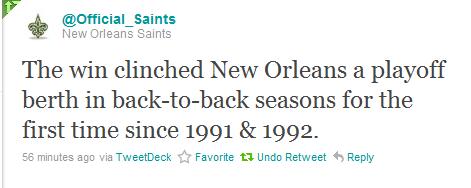
Just ONE MORE NAWLINS THANG: New Orleans Saints 17 – Atlanta Falcons 14. My home town continues to be the Great American Comeback Story.
So, what’s on your reading and blogging list today?
Obama Studying Reagan’s Presidency During Hawaii Vacation
Posted: December 24, 2010 Filed under: Barack Obama, Democratic Politics, income inequality, the blogosphere | Tags: hero worship, Lou Cannon, Ronald Reagan, welfare queens 20 Comments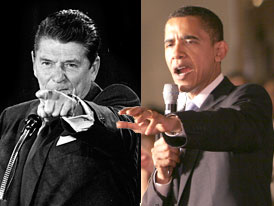
The Christian Science Monitor reports that President Obama is reading Lou Cannon’s latest book, President Reagan: The Role of a Lifetime during his Christmas vacation.
From the CSM:
This just in: President Obama on his Hawaii vacation may be engaging in activities hinting that he’ll take a more bipartisan approach to governance in the new year.
OK, we’re reaching a little bit here, but reading is a big thing for Mr. Obama when he relaxes, and his book list apparently has on it at least one very interesting title: “President Reagan: The Role of a Lifetime,” by Lou Cannon.
This is not just a book about a president beloved by just about every member of the modern GOP – it’s probably the best Reagan book yet written.
The CSM thinks this is a terrific idea.
If Obama actually reads this book, instead of a George Pelecanos mystery or old “OK!” magazines that are lying around his rented mansion, he’ll learn a lot about Reagan’s mastery of the style of the presidency – and how that mastery of style becomes substance.
The CSM thinks Obama needs to learn about bipartisanship from Reagan? WTF?!
If Obama wants to be bipartisan, he should focus less on pleasing Republicans and more on pushing some Democratic policies for a change. But I doubt that’s what the CSM meant.
Obama won’t learn much about “reaching across the aisle” from reading about Reagan, who deliberately used racial politics to divide and conquer, and who loved to tell nutty anecdotes about “welfare queens.” The guy was far from bipartisan, unless you consider conning people into doing your bidding “bipartisan.”
Remember this lovely Reagan anecdote? From Wikipedia, Reagan’s famous story about a woman from Chicago’s South Side who supposedly represented all welfare recipients:
“She has eighty names, thirty addresses, twelve Social Security cards and is collecting veteran’s benefits on four non-existing deceased husbands. And she is collecting Social Security on her cards. She’s got Medicaid, getting food stamps, and she is collecting welfare under each of her names. Her tax-free cash income is over $150,000.”
This is President Barack Obama’s role model. Remember this interview with the Reno Gazette-Journal during the 2008 primaries?
Here are some relevant portions of the interview:
“I don’t want to present myself as some sort of singular figure. I think part of what is different is the times. I do think that, for example, the 1980 election was different. I think Ronald Reagan changed the trajectory of America in a way that Richard Nixon did not and in a way that Bill Clinton did not. He put us on a fundamentally different path because the country was ready for it. They felt like with all the excesses of the 60s and the 70s and government had grown and grown but there wasn’t much sense of accountability in terms of how it was operating. I think he tapped into what people were already feeling. Which is we want clarity, we want optimism, we want a return to that sense of dynamism and entrepreneurship that had been missing.”
“I think Kennedy, 20 years earlier, moved the country in a fundamentally different direction. So I think a lot of it has to do with the times. I think we are in one of those fundamentally different times right now were people think that things, the way they are going, just aren’t working.”
He also said:
“I think it’s fair to say that the Republicans were the party of ideas for a pretty long chunk of time there over the last 10 to 15 years in the sense that they were challenging conventional wisdom,”
At the time, there was quite a bit of shock over this interview in the “progressive” blogosphere, before the progbloggers drank the koolaid and sold their souls. John Edwards and Hillary Clinton were also alarmed by Obama’s comments. Here is what Edwards said at the time: (Sorry about the right wing source)
“Ronald Reagan, the man who busted unions, the man who did everything in his power to destroy the organized labor movement, the man who created a tax structure that favored the richest Americans against middle class and working families, … we know that Ronald Reagan is not an example of change for a presidential candidate running in the Democratic Party,” Edwards said.
Reagan also “was destructive to the environment by removing a lot of the regulation that existed,” Edwards added in a later telephone interview with The Associated Press. “I would never use Ronald Reagan as an example of change.”
And here is what Hillary Clinton had to say about Obama’s claim that Republicans were “the party of ideas over the last 10 to 15 years.”
“That’s not the way I remember the last ten to fifteen years.” She said she didn’t consider it a better idea to privatize Social Security, eliminate the minimum wage, undercut health benefits, shut down the government or drive the country into debt. “I think we know what needs to be done in America.
But Obama went on to win the nomination and the general election. After two years, it’s pretty clear that Obama is playing “the role of a lifetime,” just as his hero Ronald Reagan did–Obama is pretending to be a Democrat.
Look, Lou Cannon is a terrific writer. I actually read Cannon’s first book about Reagan back in the ’80s, and it was quite good. But frankly, I was horrified by the man I read about in the book. Since I already know that Obama idolizes Reagan, I doubt he’ll be horrified by Reagan’s hatred of social programs.
I’d feel a whole lot better if Obama were reading a book about FDR during his luxurious vacation in Hawaii.
Liveblog II: Okay, so it’s not really a filibuster…
Posted: December 10, 2010 Filed under: Populism, the blogosphere | Tags: Bernie Sanders, Filibuster, live blog, Obama-McConnell tax breaks extention 63 Comments
Bernie Sanders isn’t really preventing the Obama-McConnell tax cuts from being voted on. That is supposed to happen on Monday. But who cares? Just killjoys and whiners. The man is still standing after 7+ hours on the Senate floor. His voice sounded a little hoarse for awhile, but right now he’s going strong again.
Why can’t we get Sanders to run for President? He’s a lot more charming than Ralph Nader and he actually cares about the middle class and the poor, unlike the arrogant, cynical, corrupt egomaniac who occupies the White House right now. The fact that only two other Democratic Senators have joined Sanders in his “filibuster” demonstrates to the American people how disgustingly corrupt and immoral our political class is today.
Sanders is talking about real issues that don’t get covered by our corporate media. He has discussed the growth of income equality in America, the lack of attention that has been paid to our infrastructure, the causes of the recent economic emergency, and why Obama’s tax cut bill is wrong and will harm ordinary Americans.
Sanders is talking about usury and how credit card companies are robbing people blind. He says they are “no different that the gangsters who used to beat up people on street corners” for not paying off the loan sharks.
I wonder what Obama and his pals in the White House are thinking about all of this?
Here are some reactions to the “filibuster” that I have found around the blogosphere.
At FDL, David Dayen wrote that
Sanders is calling attention to the massive inequality in America, which will only be stratified further by a tax cut bill that raises taxes from current law for 25 million low-income workers and gives millionaires a tax cut of about $139,000 a person. He’s explaining America’s insane trade policies, which have cut out the American manufacturing base and hollowed out the middle class. He’s taking on corporate CEO pay, and the two-income trap, and basically making the progressive critique of an economy bought and paid for by the very rich….
…you’re seeing issues discussed on the Senate floor that almost never come up in any other context. Political theater is sadly one of the few ways to cut through the clutter in America, and that’s what Sanders is up to, I suspect.
At his Guardian blog, Michael Tomasky wrote:
I can’t count the number of times I’ve heard liberals say, “Reid should just make them filibuster! Make them hold the floor for 24 straight hours, as Strom Thurmond once did. They will look ridiculous to the American people, especially as said people figure out they’re trying to block a relatively inexpensive unemployment benefits extension, and the opposition will crash down like a house of cards.”
In a session with a record number of filibusters threatened and cloture motions filed, it never happened. Almost, once or twice; but it didn’t. So, it’s kind of sad that the only actual filibuster of the whole dysfunctional session is the one happening right now, but it doesn’t involve Republicans at all.
Tomasky likes the tax cut deal, but still…
I admire Sanders, and although I think the deal is pretty good, under the circumstances, and should pass, I do take my hat off to the guy. It’s just nice to see someone taking a stand for the view that upper-income households don’t need a tax cut, and the view that we’re going to have an estate tax that will impact – get this – just 3,500 families in the entire country (see that chart, and look at “taxable returns” for 2011 under the Lincoln-Kyl proposal).
Sanders is not expected to pull a Thurmond. The Senate put together a package last night and this morning that added a few meagre sweeteners for the Democrats (extending subsidies for alternative energy and ethanol that were slated to expire). It will almost surely pass, with most Republicans and enough Democrats. Then, the action moves to the House, where things are a bit iffier but, most suspect, only a bit.
There goes another cynical killjoy. Sanders is doing something truly admirable and he deserves support, if not from other politicians, from us ordinary Americans. Just seeing him do this gives me hope–and not the kind of fake “hope” that Obama sold to the progs. It’s the kind of hope that makes you want to get up and fight for what is right.
At The Nation, John Nichols writes:
After Sanders took the rostrum at 10:24 a.m. Friday, the Vermont Independent posted a message on his his twitter account that read: “You can call what I am doing today whatever you want, you [can] call it a filibuster, you can call it a very long speech…”
Six hours later, Sanders was still speaking. His bold gesture grabbed the attention of the nation, as Senate video servers were overwhelmed when more than 12,000 people tried to watch the speech online.
For all the excitement, Sanders was not actually blocking a vote on the tax deal. The Senate will not take the issue up until Monday, at the earliest.
Sanders was, however, sending a powerful signal about the fight to come.
Nichols also calls attention to
…a letter circulated by Oregon Senator Jeff Merkley and Louisiana Senator Mary Landrieu, the senators said: “We have grave misgivings about the recent tax agreement. We hope that the Senate can improve on it. We look forward to working with you to ensure a vote on our amendment to strengthen Social Security in lieu of bonus tax cuts for people who are doing quite well.”
The following Senators have signed the letter:
Merkley, Landrieu. Alaska’s Mark Begich, Hawaii’s Daniel Akaka, Ohio’s Sherrod Brown, Minnesota’s Al Franken, Colorado’s Mark Udall and California’s Barbara Boxer
Nichols suggests that several other Senators might support the sentiments in the letter. The text of the letter is included at the end of the article.
Politifact investigated Sanders’ claims about income inequality and learned that he has been telling the truth. Are you listening corporate media?
Right now, Bernie Sanders is reading from heartrending letters from his constituents. Someone needs to force President Obama to sit down in front of his TV and watch this. He might learn what a real Democrat should look and sound like. Yes, I know Bernie is an independent, but back in the ’40s, ’50s, and ’60s, Democrats he would have fit in in the Democratic Party.
Today, corrupt corporate tools like Barack Obama have the gall to call themselves Democrats. It’s a crying shame what has happened to my former party and my country. Thank you Bernie Sanders for what you are doing today.
Watch Bernie Sanders long, long speech at C-Span 2.
Blog Authority? Huhn?
Posted: December 7, 2010 Filed under: the blogosphere, The Little Blog that could | Tags: alexa, blog authority index, memeorandum, techorati 32 Comments About a year or so ago, I decided to look into what made a blog successful or not successful. Of course, a lot of this depends on the purpose of your blog. If it’s only to share your photos and family news, then just getting your relatives and friends on line and with the program is enough. If you’re selling something it’s another thing. I watched a neighbor build a blog for a B&B, one for a small theater, and another for a Wine and Cheese delicatessen. They were looking to reach and service new and existing customers. Political and opinion blogs have a different goal and a somewhat different metric. Since we’re in that category, I’m going to share the methodology and metrics with you. I also want to let you know why this interests me.
There are several places you can look to see how ‘seriously’ a blog is taken by the blogosphere. Just recently, an academic study–yup, you know me– was done to create a Blogosphere Authority Index and you can find the results for political blogs here. You may recognize several of the blogs rated there including Corrente. Lambert does a fine job at doing the things which create the atmosphere for a high rating for a political blog. First, he makes sure his posts are relevant to the subject. Second, he does a good job at getting links and ping backs from other blogs; especially those with higher ratings like, say Crooks and Liars. He makes comments and networks with other bloggers. That particular referenced study looks at both left and right wing blogs. I focused on the left wing or ‘progressive’ blogs.
There are several rating places that examine blogs. They don’t really look at the ‘truthiness’ of the blog, but at how effective it is at attracting readers and links. Technorati.com is probably the major one. There’s also Alexa. Alexa’s rating is the measure that I mentioned a few weeks ago when I said we started out some where in the ranking world with a number approaching 12 million. Our three month ranking stands today at 956,644 which includes only about 6 weeks of active blogging and interaction . The rest of the three month period basically relates to my using this site as a file cabinet for my economic/finance items. If you just look at our last month’s traffic, then, you’ll see our 1 month rating is 383,450. That’s a huge change and you’re part of it!! Alexa goes on traffic or page views so it ranks how many people go to a blog.
Technorati has a different set up. It rates a blog not only by overall standing, but by how well that blog attracts other blogs’ attention. It also ranks you by different subject categories. We’re really moving up in the U.S. political blog category. We now rank 257. Just today, we went up 367 places. Here’s that data.
257. Sky Dancing
https://dakiniland.wordpress.com
Recent: Julian Assange Arrested by Scotland …
U.S. Politics
Auth: 543Moved positive places Change +367 Read more: http://technorati.com/blogs/directory/politics/uspolitics/page-11/#ixzz17U8pgsZU

Wonkette was on the same page, so I took a snapshot of their numbers for comparison. Wonkette has traditionally been a highly-rated progressive blog with an active community.
236. Wonkette
Recent: So This Is What Compromise Looks …
U.S. Politics
Auth: 554Moved negative places Change -2
Since we’re relatively new at this, we’re changing quite rapidly and may not settle into our true average for another month or two. I’m going to refer back to a few links above to give you an idea of how blogs are evaluated so you know what the numbers I just gave you actually mean. Here’s an explanation for Techonorati from bulletproof blog.
Launched several years ago as a blog search engine designed to simply aggregate and organize the global online conversation, Technorati.com has ultimately evolved into a full-fledged online indexing and rating service, providing data on authority and influence. Simply plugging in the name or address of a blog into the Technorati.com search bar will provide the blog’s authority score and ranking. The authority score, which identifies a blog’s level of influence in its specific genre, is based on traffic statistics, linking behavior, and its relevance to popular topics. A blog’s Technorati.com ranking indicates where a given blog ranks among the authority scores of all blogs. The ease and expediency of Technorati.com make it one of the first places that you should stop when evaluating the influence of a blog.
The BAI study–the academic one–that created a “Blogosphere Authority Index” has different methodology and you can find the explanation in a section of the paper published here. The index attempts to blend a variety of different measures including influence.
This example is an illustration of four distinct areas of influence: network centrality, link density, site traffic, and community activity. To create a comprehensive ranking system, this paper identifies the best-available proxy for each of these types of influence, converts them to ordinal rankings, and then combines them into a single index of authority.
There is a score for site traffic (the number of people who visit a blog), the activity of the community (that would be the number of people that return to the blog and comment), and then there’s the interaction with other blogs through listings and pingbacks. This isn’t just listing some one on your blog roll. You have to actively quote the blog with an active link to it and your community needs to be interested enough in that link to go there. The other blog also needs to reciprocate. People that are really interested in bumping up their influence numbers have to go from blog to blog and actively get links and ping backs.
Other than academic curiosity–of which I have plenty–what does this mean? Well, one of the things it means is that your community and your blog is recognized as part of a bigger and important discussion on things. In this case, that would be the U.S. political area. It also means that when politicians are looking for focus groups or looking at how people feel about things, you’re included because your community and blog has numbers, authority, and peer-acknowledged information.
So, our little blog that could has made some important steps in the last 4 -6 weeks. First, we’ve been linked to by Memorandum which is a site that lists political issues and blogs that discuss them. They don’t do that for all blogs. It’s a list that is followed by bloggers, the media, and politicians. Being linked there ups the exposure of the opinions here for both front pagers and down pagers. It also means that we’re more likely to be read by others and linked to by others which, as I’ve stated, means we go up in authority and down in ranking. (You want a high Technorati authority rating but a low ranking. You want to be 1000 on authority and less than 100 or ranking. The 100 ranking or less says you’re in the top 100 blogs in that category.)
So, does this mean that all of us front pagers want to be the Big Orange Cheeto? Well, speaking for me and just me, HELL no!! I don’t want a blog that has thousands of comments no one reads or can respond to and cares about. So, that’s not my intent with following these things. Oh, and you can follow these things too with the links I’ve given here and several buttons I stuck way down in the left hand corner of the leftmost column. The deal is that in politics you want to be part of the conversation. That happens only when you reach a certain point in these rating and ranking services. They pay attention to who we all are. This is especially true during election years. If you were out and about in 2008 or before–as most of us were–you could tell who was important by how many folks would come and dump the meme du jour of whatever candidate on your message thread. It was also pretty obvious that some politicians were interested in certain demographics and if they found it at any particular blog, they would actually read or follow that blog.
So, this is why I follow these metrics and mention them ever so often. First, it assures me that we are doing a good job here, because it shows us where our readers come from, who they are, and how many of them there are reading us and returning to read us. It’s a metric that can be used to measure if we’re meeting our goals of having a conversation that matters. Second, it’s a metric that that measures if our conversations not only matter to us but, if they can make a difference in the bigger scheme of conversations. I would like us to be a vehicle that some senator or congressman or governor could trip across. Our numbers assure us a seat at some tables.
Any way, I hope I haven’t bored you with too many details, but this is why I’d like to celebrate that our three month Alexa traffic rating is good and our 1 month rating is outstanding. More people are joining our conversation and our conversations are more likely to be read by people that could matter.
Bravo and brava! Sky Dance on!!

 peej
peej Carissa
 bostonboomer
 dakinikat
 ecocatwoman
 mablue2
 Mama Lopez
 peggysue22
 quixote
 skydancingguestblogger
 Mona (aka Wonk the Vote)



 Sky Dancing
Recent Comments