
Ginsberg Puts the Brakes on the Chrysler Deal
Posted: June 9, 2009 Filed under: Bailout Blues, Equity Markets, Global Financial Crisis, SCOTUS, Team Obama, U.S. Economy | Tags: Bankruptcy Law, Chrysler bankruptcy, GM Bankruptcy, Primacy of Corporate Bonds, Ruth Bader Ginsberg, SCOTUS, TARP funds used for Chrysler Comments Off on Ginsberg Puts the Brakes on the Chrysler Deal I’ve talked about the issues involving primacy of commercial bond debt and the issues in the Obama administration attempt to wheel-and-deal GM and Chrysler around the standard bankruptcy process. It seems Supreme Court Justice Ruth Ginsberg may have similar concerns. She put a stay on the sale of Chrysler to Fiat. The action puts into question the future of Chrylser in that there will be no other bidders for Chrysler if this deal does not go through by June 15. It also would cause bond holders to re-visit the GM restructure.
This from Scotus Blog.
The action had almost no legal significance, however. The deal remains in legal limbo until Ginsburg, as the Circuit Justice, or the full Court takes some definitive action. There is now no timetable for further action at the Supreme Court, although the terms of the deal allow Chrysler’s new business spouse — Fiat, the Italian automaker — to back out as of next Monday if the deal has not closed. Moreover, the papers filed in the Supreme Court have suggested that Chrysler is losing money at the rate of $100 million a day, pending the sale. That gives the Justices some incentive not to let much time pass before acting.
Among the likely explanations for Ginsburg’s action:
* Ginsburg may have decided to share the decision on what to do with her eight colleagues, and they needed more time to think or talk about it.
* Members of the Court may have decided that they wanted to give some explanation, or perhaps some may have decided to dissent and wanted a chance to prepare a statement saying so. In the meantime, it was her task, as the Circuit Justice, to impose a limited stay.
* Ginsburg or the Court may be waiting to see how the Second Circuit explains its decision to uphold the terms of the sale. The Circuit Court issued no opinion on Friday, indicating that such an explanation would come “in due course,” although the expectation was that one or more opinions would emerge from those judges on Monday.
The wording of Ginsburg’s order — “stayed pending further order” — is the conventional way by which a Justice or the Court carries out an action that is expected to be short in duration, and not controlling — or even hinting at — the ultimate outcome. Any speculation that her order meant the Court was leaning toward a further postponement would be unfounded.
Use by the Obama administration of TARP funds may be at the heart of the issue, although there is no way to determine that from the stay. This from Yahoo news.
Chrysler claims the agreement with Fiat is the best deal it can get for its assets and is critical to the company’s plan to emerge from Chapter 11 bankruptcy protection.
But a trio of Indiana state pension and construction funds, which hold a small part of Chrysler’s debt, have been fighting the sale, claiming that it unfairly favors Chrysler’s unsecured stakeholders ahead of secured debtholders like themselves.
As part of Chrysler’s restructuring plan, the automaker’s secured debtholders will receive $2 billion, or about 29 cents on the dollar, for their combined $6.9 billion in debt. The Indiana funds bought their $42.5 million in debt in July 2008 for 43 cents on the dollar.
The funds also are challenging the constitutionality of the Treasury Department’s use of money from the Troubled Asset Relief Program to supply Chrysler’s bankruptcy protection financing. They say the government did so without congressional authority.
Consumer groups and individuals with product-related lawsuits also are contesting a condition of the Chrysler sale that would release the company from product liability claims related to vehicles it sold before the “New Chrysler” partnered with Fiat is created.
Individuals with claims against “Old Chrysler” would have to seek compensation from the parts of the company not being sold to Fiat. But those assets have limited value and it’s doubtful that there will be anything available to pay consumer claims.
The appeals come as Congress intensifies its scrutiny of the Obama administration’s government-led restructuring of Chrysler and General Motors Corp. The Senate Banking Committee said it planned to call Ron Bloom, a senior adviser to the auto task force, and Edward Montgomery, who serves as the Obama administration’s director of recovery for auto communities and workers, to a hearing Wednesday.
Sen. Christopher Dodd, D-Conn., the committee’s chairman, planned to review the use of TARP funds to help the auto companies and look at whether taxpayers will receive a return on their investment.
GM and Chrysler executives faced questions last week from Congress over the elimination of hundreds of dealerships as part of the companies’ reorganizations.
Smoking Green Shoots Won’t Change the Numbers
Posted: June 8, 2009 Filed under: Equity Markets, Global Financial Crisis, president teleprompter jesus, Team Obama, U.S. Economy | Tags: Bankruptcies, Council of Economic Advisors, Geithner, Goolsbee, Romer, Summers, Unemployment figures 4 Comments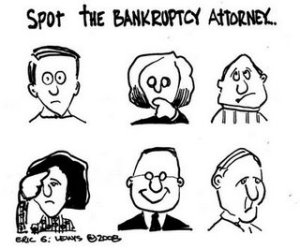
H/T Calculuated Risk who reports that Bankruptcies in May UP. http://www.calculatedriskblog.com/2009/06/consumer-bankruptcy-filings-up-sharply.html
I’ve been hesitant to dissect the recent bad news on the unemployment front too much because it’s going to get a lot worse and I’ll probably have more to say on that later. Remember, we’re just beginning to unwind the automobile industry and the affiliated small businesses and industries that it sustains. As that occurs, there will be a multiplying effect in small towns every where. Most of these small cities are sustained by car dealers and maybe one or two factories, as these businesses disappear, so will the small businesses providing services to employees. It’s going to get much worse folks. Since we’ve had stories from some of our own friends, we know that that impact strikes our near and dear.
That’s why I’ve been really confused as to why the administration seems to think by just talking up a few possible changes, which could yet be classified as random variation given there has not been enough time to actually establish a statistically significant pattern, they expect wishful change. Perhaps it’s just a continuation of the election season. If it’s repeatedly read from a teleprompter, it will happen. Just clap REALLY loud if you believe in green shoots!!! It will revive the economy!
The first crack in the plaster happened when Goolsbee let slip this little GEM on Fox News on Sunday. Michael Bowman writes:
The White House says America’s employment picture is worse than the Obama administration had anticipated just a few months ago. The somber admission follows the latest jobless report showing the highest unemployment rate the United States has seen in more than 25 years.
U.S. unemployment jumped a half percent in May, to 9.4 percent prompting this comment by Austan Goolsbee, a member of President Barack Obama’s Council of Economic Advisors:
“The economy clearly has gotten substantially worse from the initial predictions that were being made, not just by the White House, but by all of the private sector,” said Austan Goolsbee.
Economists point out that the current jobless rate is already higher than the hypothetical rate that was used to calculate the health of banks and other financial institutions in so-called “stress tests” earlier this year. And, the upward unemployment trajectory is expected to continue in coming months, even if the overall economy begins to recover.
Austan Goolsbee spoke on Fox News Sunday:
“It is going to be a rough patch [difficult period], not just in the immediate term, but for a little bit of time [in the future],” he said. “You have to turn the economy around, and jobs and job growth tends to come after you turn the economy around.”
Charge! (Or Not)
Posted: June 4, 2009 Filed under: Equity Markets, Global Financial Crisis, Team Obama, U.S. Economy | Tags: Bernanke Testimony, Budget Deficit, Deficit Spending, fiscal policy, inflation Comments Off on Charge! (Or Not)Fed Chairman Ben Bernanke testified before congress this week and highlighted one of the big future worries facing the economy. What will be the impact of all this government borrowing on the near and long term economic look and the financial markets? Brad Setser put the deficit explosion into perspective in his blog at the Council of Foreign Relations on June 2.
The story is clear. Government borrowing has increased dramatically. It topped 15% of GDP in the last two quarters of 2008. In 2007 and early 2008 it was more like 3% of GDP. But private borrowing has fallen equally sharply. Total borrowing by households and firms fell from over 15% of GDP in late 2007 to a negative 1% of GDP in q4 2008.
…
Both charts highlight the risk that worries me the most. In both the early 1980s and the first part of this decade, both the private sector and the government were large borrowers. And in both cases, borrowing rose faster than domestic savings, so the gap was filled by borrowing from the rest of the world. The trade and current account deficit rose. In the early 1980s, the US attracted inflows by offering high yields on its bonds. More recently, it did so by borrowing heavily from Asian central banks, together with the governments of the oil-exporting countries. But now yields are low (even after the recent rise in the yield on the ten year Treasury bond), and need to be low to support a still weak US economy. And China (and others) are visibly uncomfortable with their dollar exposure; banking on their continued willingness to finance a large external deficit seems like a stretch.
The challenge this time around consequently will be to bring down the government’s borrowing as private borrowing resumes.
What’s that, Lassie? Little Timmy fell down the well?
Posted: June 2, 2009 Filed under: A My Pet Goat Moment, Diplomacy Nightmares, Equity Markets, Global Financial Crisis, Team Obama, The Media SUCKS, U.S. Economy Comments Off on What’s that, Lassie? Little Timmy fell down the well? I’m not sure what Secretary Tim Geithner is smoking these days, but I’m sure there’s a huge market for it. Maybe we could tax it then pay off the national debt. The news of the Treasury Secretary’s trip to China is just developing enough of a surreal feel that I felt like Photoshopping a Buddhist begging bowl on to Beavis and entitling it Timmy Does China. However, I’m not that skilled at photo shop and I’m still trying to finish this paper on currency regimes so I don’t have the time to be that creatively unpaid. Let’s just label this a big enough reality disconnect to either be drug induced or a product of Hollywood. Well, not exactly Hollywood, but CNBC, is that close? This blurb is from a thread today at Market Watch.
U.S. Treasury Secretary Timothy Geithner said Tuesday that China has confidence in the U.S. economy, even as official Chinese editorials and news reports berated Washington for selling a “devalued dollar.”
Geithner, who was wrapping up a two-day visit to China, said officials there shared his positive economic outlook for the U.S. and understood the Obama administration’s need to run higher deficits for a temporary period.
“They’ve got a pretty good feel for what we are trying to do and are very supportive,” he said in an interview with CNBC.
I’m still wondering if the folks in charge of protocal and explaining how other cultures work are understaffed at the White House. Not since POTUS gave HRH an ipod with his speeches on it has there been such a misread of cultural differences. Somebody needs to explain to the Treasury Secretary that criticizing your future hosts (who are well known to be hyperconcerned for their national image) for currency manipulation in front of a world wide audience isn’t going to really get them to open up to you. Giethner’s confirmation hearing was labelled by the WSJ to be a China Bash.
Geithner’s visit to Beijing, his first since assuming the helm of the U.S. Treasury, included scheduled meetings with Chinese President Hu Jintao, Premier Wen Jiabao, and the nation’s top commerce, finance and banking officials.
In the CNBC interview, Geithner downplayed his earlier criticism of Beijing, in which he accused the Chinese government of keeping the yuan at an unreasonably low level against the U.S. dollar in order to boost China’s exports.
He did say, however, that China recognizes the need for a more flexible exchange-rate system, saying such a move “will help them … to use monetary policy to address future growth and inflation challenges.”
Geithner’s comments contrasted with the downbeat look at the U.S. economy reported in China’s state-run media.
I’m actually beginning to wonder if Geithner knows exactly what ‘state-run media’ implies here. Maybe a refresher from the State Department would have helped him on that too.
Banking on the Backroom Deal
Posted: June 1, 2009 Filed under: Bailout Blues, Equity Markets, Global Financial Crisis, Team Obama, U.S. Economy | Tags: bad banks, banking regulation, Capital requriements, Credit Default swaps, Hart, Too big to Fail, Zingales Comments Off on Banking on the Backroom DealWhile, GM’s bankruptcy and Chrysler’s emergence from bankruptcy grab front page headlines, yesterday’s banks with issues are positioning themselves at the table to discuss future financial regulation. This comes as some of the premier researchers in financial economics look for systemic solutions. As you know, I’m a huge advocate for finding new regulations that promote transparency of process and recognize the importance of fiduciary responsibility when the financial industry takes on risk. Harvard’s Oliver Hart and University of Chicago’s Luigi Zingales, both NBER researchers, have just produced A New Capital Regulation For Large Financial Institutions. I want to review some of their findings and suggestions in conjunction with two more mundane articles.
The first of these articles is an astounding piece on Alternet that finds information suggesting Larry Summers has been taking kickbacks from big troubled banks. Another article is in today’s NY Times that shows how the banks have been spending a good year–even as they took TARP funds and cheap money from them FED–girding for a fight on forthcoming regulations.
I would think that the big lesson from the last few years is this is not time to go back to business as usual. However, the mindset of those making major decisions in the White House (Treasury Secretary Geithner and CEA head Summers) is this is just a glitch and there’s no chance anything like this could happen again. In other words, we don’t need to look for systemic problems, we just need to send the patients home with some aspirin and they can call back in the morning. This aspirin prescription has been particularly expensive. It is either utterly naive or completely disingenuous to think that pouring money into financial institutions and waiting this out is going to prevent any future occurrence of financial meltdowns. We need to be prepared to offset what may be an elaborate hoax to convince that nothing really needs to change systematically and a major congressional influence- and administration influence- buying spree by the big banks. Even as we see Dow de-list Citibank, we see evidence that Citibank possibly manipulated its stress tests results through Summers.
If the Alternet article is correct, Summers should be in trouble and the trustworthiness of the large institutions should be questioned by a congressional committee. This sure looks like pay-to-play to me. (HT to Dr. BB for the link.) The post by Mark Ames is a must read.
Last month, a little-known company where Summers served on the board of directors received a $42 million investment from a group of investors, including three banks that Summers, Obama’s effective “economy czar,” has been doling out billions in bailout money to: Goldman Sachs, Citigroup, and Morgan Stanley. The banks invested into the small startup company, Revolution Money, right at the time when Summers was administering the “stress test” to these same banks.
A month after they invested in Summers’ former company, all three banks came out of the stress test much better than anyone expected — thanks to the fact that the banks themselves were allowed to help decide how bad their problems were (Citigroup “negotiated” down its financial hole from $35 billion to $5.5 billion.)
The fact that the banks invested in the company just a few months after Summers resigned suggests the appearance of corruption, because it suggests to other firms that if you hire Larry Summers onto your board, large banks will want to invest as a favor to a politically-connected director.
Last month, it was revealed that Summers, whom President Obama appointed to essentially run the economy from his perch in the National Economic Council, earned nearly $8 million in 2008 from Wall Street banks, some of which, like Goldman Sachs and Citigroup, were now receiving tens of billions of taxpayer funds from the same Larry Summers. It turns out now that those two banks have continued paying into Summers-related businesses.

 peej
peej Carissa
 bostonboomer
 dakinikat
 ecocatwoman
 mablue2
 Mama Lopez
 peggysue22
 quixote
 skydancingguestblogger
 Mona (aka Wonk the Vote)



 Sky Dancing
Recent Comments