
Monday Morning Reads
Posted: October 10, 2011 Filed under: Global Financial Crisis, Marriage Equality, morning reads, Surreality, U.S. Military, U.S. Politics, unemployment, Women's Rights | Tags: Anita Hill, Crackerbox Palace, DOMA, George Harrison, Indigenous People's Day, National Coming Out Day, Native American Day, Occupy, Paul Krugman, plutocracy, Subprime mortgage crisis and the CRA, Taxes and poor people, technology, the Great Depression 25 Comments Good Morning!
and Happy Native Americans’ Day!
The second Monday of October annually marks Columbus Day in many parts the United States but not all states or region follow this observance. Instead, they celebrate other events on the day. For example, South Dakota’s official holiday on this date is Native Americans’ Day (also known as Native American Day), while people in Berkeley, California, celebrate Indigenous People’s Day.
 I think it’s a great idea to switch the current federal holiday out to a celebration of indigenous cultures or maybe find a better thing to celebrate!
BTW, National Coming Out Day is Tomorrow. That’s something to remember as you read that Speaker Boehner is threatening to withold funds from the Justice Department if that don’t vigorously enforce DOMA. There he goes again!!! The Republican Jobs Agenda is just always topmost on the priority list.
“We’re going to take the money away from the Justice Department, who’s supposed to enforce it, and we’ll use it to enforce the law,” Boehner told the conservative Value Voters Summit.
Boehner is engaged in an ongoing dispute with Attorney General Eric Holder over his refusal to defend in court the Defense of Marriage Act. President Obama has taken the stance that the law is unconstitutional. While the Justice Department usually defends laws passed by Congress against legal challenges, the Obama administration has stopped defending DOMA while Democrats work to repeal the law.
In March, Boehner announced that if Obama wouldn’t defend DOMA, he would, hiring a private law firm to defend it on behalf of the House.
“As the Speaker of the House, I have a constitutional responsibility. I’ve raised my hand to uphold and defend the Constitution of the United States and the laws of our country,” Boehner said Friday.
You know, he’s all about saving those taxpayer dollars too. True Story.
Here’s a movement I want to join if this California Republican Nutter would only give me the location where they’re taking on volunteers. And yes, it’s a REAL tweet.
@RepJackKimble After Value Voters I am more convinced than ever about the radical atheist agenda to secularize Columbus Day
Okay, I’d like to use the next bit of space to clear up a few right wing memes with actual research. I know, you’re shocked, it’s so unlike me to do so. First, while Fannie and Freddie exacerbated the meltdown and behaved as irresponsibly as any Wall Streeter, there is absolutely no connection between the meltdown and the Community Reinvestment Act. I have never been able to figure out how folks jumped the shark to make this connection, but it happened. I’ll give you the bottom line from the abstract but if you want to chase after the econometrics, feel free to follow the link.
In this paper we examine more directly whether these programs were associated with worse outcomes in the mortgage market, including delinquency rates and measures of loan quality.
We rely on two empirical approaches. In the first approach, which focuses on the CRA, we conjecture that historical legacies create significant variations in the lenders that serve otherwise comparable neighborhoods. Because not all lenders are subject to the CRA, this creates a quasi-natural experiment of the CRA’s effect. We test this conjecture by examining whether neighborhoods that have been disproportionally served by CRA-covered institutions historically experienced worse outcomes. The second approach takes advantage of the fact that both the CRA and GSE goals rely on clearly defined geographic areas to determine which loans are favored by the regulations. Using a regression discontinuity approach, our tests compare the marginal areas just above and below the thresholds that define eligibility, where any effect of the CRA or GSE goals should be clearest.
We find little evidence that either the CRA or the GSE goals played a significant role in the subprime crisis. Our lender tests indicate that areas disproportionately served by lenders covered by the CRA experienced lower delinquency rates and less risky lending. Similarly, the threshold tests show no evidence that either program had a significantly negative effect on outcomes.
Okay, one more meme to shoot down. You know how all those Republican presidential wannabes are trotting around saying about half of Americans don’t pay taxes and the rich are still burdened? I’ve shot down some of that argument before, but here’s some further details. I’m quoting from the executive summary and not the study itself. Again, you can go into the methodology if you want here.
A recent finding by Congress’ Joint Committee on Taxation that 51 percent of households owed no federal income tax in 2009 [1] is being used to advance the argument that low- and moderate-income families do not pay sufficient taxes. Apart from the fact that most of those who make this argument also call for maintaining or increasing all of the tax cuts of recent years for people at the top of the income scale, the 51 percent figure, its significance, and its policy implications are widely misunderstood.
- The 51 percent figure is an anomaly that reflects the unique circumstances of 2009, when the recession greatly swelled the number of Americans with low incomes and when temporary tax cuts created by the 2009 Recovery Act — including the “Making Work Pay” tax credit and an exclusion from tax of the first $2,400 in unemployment benefits — were in effect. Together, these developments removed millions of Americans from the federal income tax rolls. Both of these temporary tax measures have since expired.
In a more typical year, 35 percent to 40 percent of households owe no federal income tax. In 2007, the figure was 37.9 percent. [2]- The 51 percent figure covers only the federal income tax and ignores the substantial amounts of other federal taxes — especially the payroll tax — that many of these households pay . As a result, it greatly overstates the share of households that do not pay any federal taxes. Data from the Urban Institute-Brookings Tax Policy Center show only about 14 percent of households paid neither federal income tax nor payroll tax in 2009, despite the high unemployment and temporary tax cuts that marked that year.[3]
- This percentage would be even lower if federal excise taxes on gasoline and other items were taken into account.
- Most of the people who pay neither federal income tax nor payroll taxes are low-income people who are elderly, unable to work due to a serious disability, or students, most of whom subsequently become taxpayers. (In a year like 2009, this group also includes a significant number of people who have been unemployed the entire year and cannot find work.)
- Moreover, low-income households as a whole do, in fact, pay federal taxes. Congressional Budget Office data show that the poorest fifth of households as a group paid an average of 4 percent of their incomes in federal taxes in 2007 (the latest year for which these data are available), not an insignificant amount given how modest these households’ incomes are — the poorest fifth of households had average income of $18,400 in 2007. [4] The next-to-the bottom fifth — those with incomes between $20,500 and $34,300 in 2007 — paid an average of 10 percent of their incomes in federal taxes.
- Even these figures understate low-income households’ total tax burden, because these households also pay substantial state and local taxes. Data from the Institute on Taxation and Economic Policy show that the poorest fifth of households paid a stunning 12.3 percent of their incomes in state and local taxes in 2010.[5]
- When all federal, state, and local taxes are taken into account,the bottom fifth of households paid 16.3 percent of their incomes in taxes, on average, in 2010. The second-poorest fifth paid 20.7 percent. [6]
I know it’s statistics heavy, but some times that’s the best way to see what is actually going on. Right wing memes seem to thrive on taking things completely out of context and this one about tax dodging poor people is a doozy. See exactly how many taxes that get paid that weren’t counted in that famous figure which is an anomaly as it is.
Here’s an interesting article at NYT by David Leonhardt on how today’s economy makes the Great Depression look like the halcyon days.
Still, the reasons for concern today are serious. Even before the financial crisis began, the American economy was not healthy. Job growth was so weak during the economic expansion from 2001 to 2007 that employment failed to keep pace with the growing population, and the share of working adults declined. For the average person with a job, income growth barely exceeded inflation.
The closest thing to a unified explanation for these problems is a mirror image of what made the 1930s so important. Then, the United States was vastly increasing its productive capacity, as Mr. Field argued in his recent book, “A Great Leap Forward.” Partly because the Depression was eliminating inefficiencies but mostly because of the emergence of new technologies, the economy was adding muscle and shedding fat. Those changes, combined with the vast industrialization for World War II, made possible the postwar boom.
In recent years, on the other hand, the economy has not done an especially good job of building its productive capacity. Yes, innovations like the iPad and Twitter have altered daily life. And, yes, companies have figured out how to produce just as many goods and services with fewer workers. But the country has not developed any major new industries that employ large and growing numbers of workers.
There is no contemporary version of the 1870s railroads, the 1920s auto industry or even the 1990s Internet sector. Total economic output over the last decade, as measured by the gross domestic product, has grown more slowly than in any 10-year period during the 1950s, ’60s, ’70s, ’80s or ’90s.
Perhaps the most important reason, beyond the financial crisis, is the overall skill level of the work force. The United States is the only rich country in the world that has not substantially increased the share of young adults with the equivalent of a bachelor’s degree over the past three decades. Some less technical measures of human capital, like the percentage of children living with two parents, have deteriorated. The country has also chosen not to welcome many scientists and entrepreneurs who would like to move here.
I’m still of the opinion that we should hand out citizenship to any of our highly skill foreign students and do everything we can to keep them here. I have a feeling I’m in the minority on that opinion, however.
If you want to do some time tripping to a really upsetting period of history for women, here’s The Nation on The Legacy of Anita Hill. We’re now stuck with this total jerk on SCOTUS because of people like Joe Biden. I’ll never forget one of those senators that let Clarence Thomas get away with it. They hid the women that could verify her stories and put her squarely in the worst position possible. She handled it with dignity and we all lost.
Anita Hill remains an icon to whom subsequent generations are rightfully indebted. At the same time, she has not remained trapped by her own symbolism or frozen in time. It is sometimes forgotten that she is a respected scholar of contract jurisprudence, commercial law and education policy. She is a prolific author, publishing numerous law review articles, essays, editorials and books. Today, Hill is a professor of social policy, law and women’s studies at Brandeis University. Much of her most recent research has been on the housing market, and her most recent book, published this month, is Reimagining Equality: Stories of Gender, Race, and Finding Home.
It is ironic that the full substance of Hill’s remarkable intellectual presence remains so overshadowed by those fleeting, if powerful, moments of her Senate testimony. If the larger accomplishments of her life aren’t quite as iconic as that confrontation with Clarence Thomas, they nonetheless merit attention by feminists and scholars alike. To begin with, Hill is a remarkably elegant and accessible writer. For those who wish to apprehend the gravitas of her intelligence and dignity, Reimagining Equality would be a good place to start.
Krugman gets the Occupy protestors and has some delightful comments up on the Panic of the Plutocrats. He eloquently lays out the hype coming from the Cantors and the Bloombergs as well as CNBC and Fox that paints every one upset with their behavior as Leninist. The descriptions are a hoot but here’s the meat.
The way to understand all of this is to realize that it’s part of a broader syndrome, in which wealthy Americans who benefit hugely from a system rigged in their favor react with hysteria to anyone who points out just how rigged the system is.
Last year, you may recall, a number of financial-industry barons went wild over very mild criticism from President Obama. They denounced Mr. Obama as being almost a socialist for endorsing the so-called Volcker rule, which would simply prohibit banks backed by federal guarantees from engaging in risky speculation. And as for their reaction to proposals to close a loophole that lets some of them pay remarkably low taxes — well, Stephen Schwarzman, chairman of the Blackstone Group, compared it to Hitler’s invasion of Poland.
And then there’s the campaign of character assassination against Elizabeth Warren, the financial reformer now running for the Senate in Massachusetts. Not long ago a YouTube video of Ms. Warren making an eloquent, down-to-earth case for taxes on the rich went viral. Nothing about what she said was radical — it was no more than a modern riff on Oliver Wendell Holmes’s famous dictum that “Taxes are what we pay for civilized society.”
I have one more offering that is just for pure delight. It’s a short bit from the daughter of George Harrison’s Business Manager on what it was like to run the halls of crackerbox palace as a child.
Harrison’s wife, Olivia, always took good care of us and, like her husband, had a gentle, calming disposition. I loved going up the great gothic staircase in the living room to the recording studio on the first floor. I was fascinated by the recording console and the selection of instruments. Sometimes, Harrison would play new music for us and ask for our feedback.
Adjacent to the recording studio was a room with gold records and awards and an Oscar statuette. I remember the exhilarating sensation I got picking up the Oscar earned for “Let It Be” and feeling it weigh down my hand.
When it got late, and Dad was still in meetings, we would go to bed in one of the guest rooms down the hall from the studio with sounds of Harrison’s sitar lulling us to sleep.
You can see I’m full throttle academic today. What’s on your reading and blogging list today?
The Politics of No Real Choice
Posted: September 27, 2011 Filed under: 2012 presidential campaign, abortion rights, Surreality, U.S. Politics | Tags: money in politics, single issue crusaders, special interest groups, the lesser of evils, voting 24 Comments
One of the moments where I'm outed as Gay Friendly and Pro Choice in Nebraska.
Each year, I go to vote and am struck by the number of votes I cast that basically represent the least of evils. What is it about our system that continually produces an entire line up of candidates that makes me want to choose none of the above? Well, that’s a some what rhetorical question because my answer is that we have two demons in the process right now. The more salient question is how do we exorcise the demons?
The first reason we get terrible candidates is purity pledges forced by special interest groups. I’ve got my personal example on hand again for you. You have no idea what it’s like to be a Republican trying to run for an office and be pro-choice or gay friendly. You find out really quickly that there are people living within blocks of your house that are worse than the Taliban. There’s a huge chance that they are sitting in the pews of churches near you and your children go to school with them. They just look normal and sane until they’ve determined you’re their enemy and apostate on some near and dear creed which they feel the need force on us all. Then, you start living through Invasion of the Body Snatchers and you see that Donald Sutherland look in their eyes, hear their screeches, and show up on the bad end of that accusatory finger.
This sort’ve goose step ideological mentality ensures only the worst of the worst come through or people that refuse to stand up for what they believe least they get on the receiving end of a bloody awful witch hunt. When I ran for office I was told over and over again that it would really make my life a bit easier if I’d give up my principles and not try to buck the crazy base on that one issue. Believe me, that base is crazy. They will say and do anything to stop you and I mean that literally to the most extreme degree. Now there are tax pledges, anti-GLBT civil rights pledges, pro “only my definition of marriage” pledges, “guns and no butter” pledges and all others sorts of pledges you have to sign to pass muster. Purity tests do not bring normal people into a process. Normal people have nuances and subtleties and recognize that life has them too.
The second reason is the money. It takes a lot to buy yourself a seat in a statehouse, a mansion, or any where near Capital Hill. This also puts you in the position of having to listen a little more closely to the people that fund you instead of the people that vote for you. This gives some advantages to incumbents. You almost have to wait for their inevitable sex scandal to get a foot in the door. Well, that or they piss off one of those wild eyed special interest groups who go on a holy crusade. Most incumbents have inoculated themselves against these things unless a new group of single minded crusaders–like the tea party–rises to the occasion. Look at the Tea Party. That is basically an insurgency funded by the Koch Brothers who specialize in unleashing demons that wreck our government so they can become more rich and powerful. They foist crazies and money on the process.
I guess I’m talking about this because there’s yet another poll that says a pox on both your houses. Regular voters sending poxes never seem to work as well as the poxes cast by multibillion dollar corporations and holy war crusaders, I guess. Polls continually say the majority of people in this country think that neither part is actually good for the country or its economy right now.
A CNN/ORC International Poll released Tuesday indicates that 56 percent of Americans say the congressional Republicans’ policies will move the country in the wrong direction, with 53 percent of the public saying the same about policies of the Democrats in Congress.
“Men and women agree that the GOP policies are a bust, but women are split on the Democratic policies while men continue to dislike them. There is a generation gap as well, with younger Americans tending to favor the Democrats’ policies and older Americans more in the GOP camp,” says CNN Polling Director Keating Holland.
The survey was conducted Friday through Sunday, during the congressional standoff between Democrats and Republicans over disaster relief funding threatened to possibly force a federal government shutdown. An agreement preventing a government shutdown was reached late Monday night.
According to the poll, a majority of Americans don’t like either the Republican Party or the Democratic Party and the favorable ratings for the tea party movement are even lower.
My father has adopted the standpoint of voting all incumbents out. My problem with that strategy is that it brings in the worst of the purity politicians who don’t comprise and still wind up with full coffers. The other thing is that when you prove you’re a good water bearer for the party, they’ll gerrymander a district for you that’s like kryptonite to even the most super of challengers. Again, some part of the system will protect you. Either a group like the values crusaders or the biggest industry in your state will let you do the worst job in the world as long as you go along with their strict and narrow agenda.
Here’s a good example on a potential presidential candidate I really can’t stand. The gray flannel suit crowd of the Republican party likes Chris Christie for some odd reason. They’re pleading him to jump into the race. Already, there’s a list out of why he won’t pass the purity tests even though he seems like a fairly conventional republican candidate to me. Evidently, he’s got the Perry problem on immigrants and worse than that, he’s shown a little laxity on the Guns and no Butter republican mantra.
HANNITY: Are there any issues where you are, quote, moderate to left as a Republican?
CHRISTIE: Listen, I favor some of the gun-control measures we have in New Jersey.
HANNITY: Bad idea.
CHRISTIE: Listen, we have a densely-populated state, and there’s a big hand gun problem in New Jersey. Now, I don’t support all the things that the governor supports by a long stretch. But I think on guns — certain gun control issues, looking at it from a law-enforcement perspective, seeing how many police officers were killed, we have an illegal gun problem in New Jersey.
So, Christie has a purity problem in key areas that may stop him from getting through a primary. His name may not make it onto one of those little polling cards of marching orders they hand out in churches and corporate offices. Now, I’m not fond of Tony Christie Soprano, but you have to give him credit for being a little out of the box on a few items in a party that demands purity. Notice how Hannity slams him for his pragmatic stance on guns in NJ.
When I finally noticed I was continually voting democrat out of the lesser of two evils strategy, I switched parties when I got down here to New Orleans. (Now, I’m an independent.) Democrats seem to be willing to vote for any one that says the right things and does the complete opposite when in office. I don’t find that particularly admirable either. There’s a certain amount of consistency in goosestepping ideologues that you just don’t see in people that are forced to continually vote for the lesser of evils. I am truly tired of voting for the candidate that I perceive will damage the country the least. That strategy explains like 98% of my votes since I turned 18.
This brings me back around to the question of how do we change this? How do we get the people that benefit from organizations that can megafund them to put down the crack pipes? How do we stop these single issue crusaders from continually sending us their zombies? What’s a voter to do? My voting strategy next year is looking to be stay home because no matter how I try, I’m still voting for evil. I shouldn’t have to vote for evil even when it’s a lesser evil.
Joblessness
Posted: September 17, 2011 Filed under: 2012 presidential campaign, Surreality, Team Obama, The Bonus Class, The Great Recession, the villagers, unemployment | Tags: American Jobs Act, Confidence men, joblessness, Suskind 9 Comments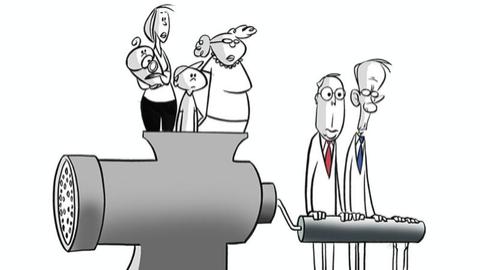 There’s been a lot of right wing attacks on the Obama Jobs Act. I continue my befuddlement. In this looking glass reality of ours, a Democratic President has put forth an unimaginative ‘job creation’ act representing fairly conventional republican thinking. However, there’s so much Obama Derangement Syndrome among the Republicans–especially the rabid right wing teabots–that a plan that would have been perfectly acceptable under either of the Bushes or Reagan to deal with jobless is being held up as an extravaganza of tax and spend. Eric Cantor has released a memo that basically guts this tepid response to the high level of unemployment and unacceptable level of long term unemployment plaguing this country. There is something seriously wrong with that man. He’s listed the areas of agreement and they are all the parts of the bill that really aren’t going to create jobs at all. These are items like passing the free trade agreements negotiated during the Dubya years or patent reform and regulations reform or programs that aren’t going to be very effective like the ‘bridge to work’ program which is likely to create a revolving door of unpaid internships.
David Dayen has an analysis up at FDL so I don’t need to recreate that. He’s basically calculated that the House Republicans have taken the $447 billion Act to about a $11 billion blip. It may have started out a tepid, conventional plan but Cantor’s basically turned it into a give away to a few select groups. The only remaining portion that’s not disagreeable is help for returning veterans. The rest won’t do a damned bit of good.
As you may know, the AJA is comprised of about 57% tax cuts and 43% spending initiatives. So in the main, House Republican leaders tossed out the spending and embraced a few of the tax cuts. They also rejected the tax hikes on corporations and the wealthy to pay for the bill.
Grok that? It’s 57% more worthless tax cuts that haven’t done a damned thing for the last 11 years but undermined the Federal Budget. I’ve heard a lot of Democrats think it’s wonderful just because Obama put it out there. Again, this is a conventional republican republican policy that probably would’ve come from some one like Bob Dole in the past. This is getting old. The republicans will say no to anything Obama puts out there and Obama is putting their kind of policy out there and the democrats won’t say no to it.
Meanwhile, there’s a number of really bad things that result from persistent jobless happening as we speak to millions of Americans. Here’s some examples from Sarah Murray at the WSJ who reviewed an academic paper on long term salaries of folks laid off during recessions. The bottom line is that their incomes will remained depressed for a huge period of time when they finally get jobs. That’s just the monetary impact.
When a worker was laid off, his earnings dropped steeply at the time of the layoff and eventually experienced a kind of recovery. But “The earnings losses do not completely fade even after 20 years,” the paper states. That’s true even when the economy is doing well. When the economy is performing poorly, the initial earnings loss is steeper.
Workers who were laid off in recessions experienced, on average, $112,095 in income losses — three years of pre-layoff earnings. Those laid off in expansionary times experienced a $65,424 loss.
The negative impacts of job losses extended beyond the financial hit, affecting workers’ health, mortality outcomes, child achievement levels and happiness.
“The negative consequences of job displacement, and fears of job displacement, are among the main reasons that recessions and high levels of unemployment create so much concern in the general population and among politicians,” the paper states.
So, I guess in order to play out political games we’re going to embrace all these negative consequences for the large number of people that have been experiencing unemployment over the last few years. It’s just really disgusting. The jobs bridge plan–or as we liked to call it here the federal version of the Georgia Slave Act–brought to mind this program in Hungary where you have to go to a Labor Camp in order to collect unemployment.
Wielding scythes and pitchforks, about 30 men and women hack through brambles on a hillside above the Hungarian village of Gyöngyöspata. With the nearest road more than a half mile away, workers have to hike in with food and water for the day. For bathroom and lunch breaks, they duck into a thicket that offers the only shade in the 98F heat. “It’s degrading to work in these conditions,” says Károly Lakatos, a 38-year-old father of three who was laid off earlier this year from his forklift-operator job in an auto parts factory. When his unemployment benefits ran out, the government assigned him to a brigade clearing land owned by the village.
If Prime Minister Viktor Orbán has his way, hundreds of thousands of Hungarians will soon join similar squads. Under a plan approved by Parliament in July, by 2012 some 300,000 people will be working in community service jobs—doing everything from picking up trash to building stadiums—instead of drawing welfare or unemployment benefits. Hungary will no longer “give benefits to those capable of work, when there is much work to be done,” Orbán said in June. The effort is part of the ruling Fidesz Party’s 2010 election pledge to create 1 million jobs over the next decade.
Is this what the jobs act will become? More tax cuts for the political donor class and labor camps for the folks that don’t work for them at depressed wages?
At the same time we get Obama’s second Republican style whack at our economy–in other words a big speech with a small stick–more news keeps coming out about how really, truly dysfunctional the Obama team of economists has been. Have you noticed how many have gotten out of the White House quickly as if they were really worried about their reputations or sanity? One more sneak peak was granted for the Suskind book “Confidence Men” in New York Magazine prior to its Tuesday release. It has me even less enthused about anything coming out of Obama policy advisers than before. Read some of this back and forth between Andrew Moss and Frank Rich who read the book and conclude that that Obama has stuck himself and the US in an economic quagmire. It just doesn’t give one confidence in the policy process, the advisers or the president. This one is from Frank Rich.
I guess I thought Geithner’s role was more shocking just because I have become inured to tales of Summers’s outrageousness, dating back to his ill-fated presidency of Harvard. Particularly damning in Suskind’s narrative is that when Summers says “there’s no adult in charge” in the White House, he’s actually right — and appoints himself as adult in charge, Alexander Haig–style. Summers was in charge, all right, but he behaved like a child and little got done except derailing the president’s initiatives — he even blocked Obama’s agenda of tough climate-change legislation.
But the buck stops with Obama. There’s a poignant moment of sorts in December 2008 when the North Dakota senator Byron Dorgan implores the president-elect not to go with his economic team. “I don’t understand how you could do this,” he tells him. “You’ve picked the wrong people!” As indeed Obama did, under the tutelage of Robert Rubin, who also tried to finagle a White House guru role for himself, not unlike the perch from which he helped wreak havoc at Citigroup during its subprime orgy. So Suskind’s book often reads like Halberstam’s “Best and the Brightest,” with Summers and Geithner as McNamara and Bundy. But the quagmire isn’t a neo-Vietnam like Afghanistan — it’s the economy, and the casualties are measured in lost jobs. After the stimulus bill passed in February 2009, Suskind writes, “little else happened on the jobs front for a year and a half,” with proposals being “talked to death without resolution.”
Take this response from Andrew Moss:
I kept flipping back and forth between fury at Obama and — I know I’m easy — sympathy. So much of the damage comes from the initial decision to hire these guys, a decision he had to make almost immediately after being elected. He was inexperienced, he needed help, they burned him, he let them — that’s the story in brief. The number of stupefyingly momentous decisions he had to make in those first few months put me in a vicarious panic. There was no obvious path, the way I read it — though in your view, I suspect, the choices were clearer. Though we’ll never know for sure what other solutions might have worked, the book is a litany of missed opportunities, particularly with respect to financial reform (one banker after another wonders incredulously — and anonymously — why Obama didn’t pin them when they were down). Would some other president have had more success?
One thing you’re struck with is how bizarre it is that Obama has this job in the first place. Obama feels that too — and it gives him a deluded sense of his own magical powers. “Look, I feel lucky,” he says. “Just look at me. My name is Barack Hussein Obama and I’m sitting here.” He’s cocky, but also kind of amazed. What an astonishing blend of good and bad luck the man has had — the unusual cocktail of circumstances that brought him to the White House, and the pretty much impossible situation he faced when he got there. Which is not to say it’s not agonizing to watch him, in the book, fail time after time to make the big, bold move — the book is a narrative after all, and passivity (or, to be fair, caution), does not become a protagonist.
Frankly, the ones who should have every one’s sympathy are the vast number of people whose lives will be forever upended by this vast, deep unemployment. They are the ones to whom the pranksters in the Republican party and the dumbstruck Democrats should think about but do not. Again, Republicans are rejecting conventional, mild mannered, ineffective republican policy simply because it’s coming from a Democrat and Democrats are supporting it simply because that’s all the President and his team seem to be able to come up with and he’s a democrat. They all may be democratically elected but they continue to prove that they represent no one but themselves and their corporate owners. We’ve got a great history of what does and does not work to get the economy out of horrible places and they’re ignoring it all to force us to play political musical chairs. It’s just not right.
Oh, and if you want to be flabbergasted at more villagers, Steve Chapman at the Chicago Trib has basically written an op-ed that suggests Obama step down and Hillary Clinton step in and clean the place up. Now, he’s not exactly on my list of enlightened op-ed writers since he writes at Reason and the National Review too, but sheesh, he’s using Democrats words to support the argument so it’s worth a read. I think every one feels we’re drowning in an economic quagmire now and we need the best person out there to guide us out. I’ve skipped the first part but the last part is worthy of mention here.
Besides avoiding this indignity, Obama might do his party a big favor. In hard times, voters have a powerful urge to punish incumbents. He could slake this thirst by stepping aside and taking the blame. Then someone less reviled could replace him at the top of the ticket.
The ideal candidate would be a figure of stature and ability who can’t be blamed for the economy. That person should not be a member of Congress, since it has an even lower approval rating than the president’s.
It would also help to be conspicuously associated with prosperity. Given Obama’s reputation for being too quick to compromise, a reputation for toughness would be an asset.
As it happens, there is someone at hand who fits this description: Hillary Clinton. Her husband presided over a boom, she’s been busy deposing dictators instead of destroying jobs, and she’s never been accused of being a pushover.
Not only that, Clinton is a savvy political veteran who already knows how to run for president. Oh, and a new Bloomberg poll finds her to be merely “the most popular national political figure in America today.”
If he runs for re-election, Obama may find that the only fate worse than losing is winning. But he might arrange things so it will be Clinton who has the unenviable job of reviving the economy, balancing the budget, getting out of Afghanistan and grappling with House Majority Leader Eric Cantor. Obama, meanwhile, will be on a Hawaiian beach, wrestling the cap off a Corona.
Meanwhile, I’m on the job market AND wrestling the cap off of an Abita. Frankly, the only people that deserve to be jobless in this country are all working in the beltway right now.
Real Job Creation Policy vs. Bizarro World
Posted: September 7, 2011 Filed under: 2012 presidential campaign, Surreality, Team Obama, U.S. Economy | Tags: bizarre economic policy, Job Creation, Robert Reich 15 Comments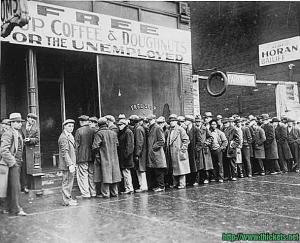 I just can’t step back from the crap being pushed by politicians as “jobs” policy these days. I can’t believe any one is actually falling for the line that basic corporate welfare programs and subsidies are actually going to create jobs because there’s never been any evidence of that being correlated in the past and there is certainly no evidence of that happening today. Lest we forget, we have about 11 years of experience with corporate tax largess, deregulation of financial markets, and low taxes on capital gains. Yet this century has seen nothing but miserable job creation. We’ve got nothing to show for it but the biggest recession since the Great Depression.
Here’s Robert Reich calling Romney’s job creation approach “bizarre”. However, it doesn’t really sound any different from that offered up by any of the other candidates either and that includes the President. This bothers me to no end and hence, I keep blogging on about it.
“Mitt Romney kind of has the odd idea, and it is a bizarre idea, that at a time when corporations are scoring record profits. At a time when you’ve got them sitting on $2 trillion of cash they don’t even know what to do with, that somehow if you give them more tax cuts and deregulate so you reduce their costs even further, they will then create jobs.
“They don’t create jobs now, he assumes, because their costs are too high or they’re not making enough money. Well, the reality of course is just the opposite,” former Secretary of Labor Robert Reich said on MSNBC’s “The Last Word.”
“They don’t need more money, companies are doing very well,” Reich said later on in the segment.
Corporations are flush with cash at the moment. They just aren’t doing anything with it because they won’t expand unless there’s demand for  their products and services. As I demonstrated yesterday, the bottom has fallen out of consumer demand and that’s stymied economic expansion. We do not need to appease some imaginary confidence fairy. Businesses need paying customers. One of the primary drivers of economic activity in this country since World War 2 has been construction. The housing market is still in big trouble and we have excess supply of both commercial and consumer real estate. What business person is going to hire more people and produce stuff that no one buys?
We’re going to be live blogging both the Republican debate tonight as well as the President’s job speech. Neither promise anything more than distinctly unproven economic policy. Even the President is thought to not believe what he’s going to be saying if you believe this. What kind of leader pushes policy he knows to be wrong?
The centerpiece of the job creation package that President Obama plans to announce on Thursday — payroll tax relief for workers and perhaps their employers — is neither his first policy choice nor that of many economists. But it is the one that they figure has the best chance of getting Republicans’ support.
Mr. Obama has signaled that he will propose to extend for another year a reduction of two percentage points in the 6.2 percent Social Security payroll tax that employees pay, which means about $1,000 more for the average household. And he is considering a proposal to expand the tax relief to employers’ share.
In his prime-time address to a joint session of Congress, Mr. Obama is expected to call for a package totaling several hundred billion dollars that would also extend other business tax cuts, put federal dollars into building and repairing roads, rails, airports, schools and other infrastructure projects, and provide aid to states to avert more layoffs of teachers.
But the single biggest stimulus measure he will propose is likely to be temporary payroll tax relief. If the current tax cut, due to expire at the end of the year, is expanded next year to employers as well as employees, it would pump roughly $200 billion into the economy, with the aim of stimulating much-needed demand for goods and services from consumers and businesses and, additionally, of giving companies an incentive to hire.
For the White House, its appeal is that it may be the only large stimulus measure that can pass Congress this year given Republicans’ preference for tax cuts.
And if Republicans oppose him, the White House figures Mr. Obama has the better of the political argument because he will be trying to block a tax increase that otherwise would apply to virtually all households on Jan. 1.
Republican leaders have said they might support the payroll tax cut’s extension if its cost is offset by equal spending cuts, a condition they did not apply for extending the Bush-era tax cuts on high incomes. Mr. Obama has said he will propose long-term deficit savings to offset the short-term costs of his stimulus proposals, though that is not likely to satisfy Republicans.
Look, what in his 2 1/2 years in office should leave him with the impression that he’s going to get anything past the Republicans in Congress? Half of them are indicating they probably won’t show up for the speech. Ever since the man’s taken office he’s offered one Republican plan after another. I still can’t believe after years of fighting Dolecare in the 1990s, the Democrats were forced to pass that stupid thing and it now wears the Obamacare label. What kind of leader pushes policy that his own party fought for decades?
I have no idea what trade agreements or patent reform or reducing regulations have to do with job creation either. None of that has ever been shown through research to be germane. But again, all you have to do is look at the amount of cheap money and the excess cash sitting on corporate balance sheets right now to know that businesses don’t need any more incentives to do something they aren’t doing any way.
The other thing that is most confusing is that the President’s plan will rob Peter to pay Paul because he’s going to make this ‘revenue neutral’ to appease Republicans. Again, with this appeasing pipsqueak Cantor and the rest of the whackos in the Republican caucus. Supposedly, some direct infrastructure spending and some direct aid to states to keep teachers in place is going to some how magically turn around a 9.1% unemployment rate. I don’t see how that’s going to do anything on the level that he’s talking about –$300 billion–is a token amount of money in a $15 trillion economy and the offsets will likely take away jobs from wherever they’re pulled. The other simply confusing proposal has to do with tax breaks for equipment which is really strange given that it’s likely to increase current worker productivity making hiring additional workers questionable.
In his speech on Thursday night to a joint session of Congress, Obama will also consider a tax benefit to those businesses that hire the unemployed, with a price tag of around $30 billion. Public works projects will be included, but the AP reports that this will be less than $50 billion of the package.
The president also will continue for one year a tax break for business that allows them to deduct the full value of equipment.
The local aid that Obama intends to propose it aimed at preventing teacher layoffs, officials said.
The New York Times said the cost of the package would be “several hundred billion,” while the Washington Post estimated it to be “at least $200 billion.”
This is clearly a set of tax giveaways that the government can’t afford that won’t achieve much of anything other than further the Republican agenda of starving the beast. What on earth does this president have in his head? I can’t figure out any logical, reasonable strategy for doing these things. Every time he furthers the Republican agenda it basically makes things worse for his reelection outlook. His actions are completely unpopular when measured by polls. He’s numbers are approaching those of Bush by basically repeating the Bush-Cheney policy on steroids. Unless he’s trying to become the President of the Chamber of Commerce, I’m not seeing any strategy here. It’s like he so desires bi-partisan approval that he’s willing to throw anything up against the wall to see what possibly sticks. Meanwhile, the Republicans are getting Republican policy without even putting any skin in the game. I just don’t get it.
Anyway, Minx and BB have promised to watch and liveblog the Republican debates tonight. I don’t think I can do that because it will just be a contest to see who can be the meanest in a contest to beat up modernity, science, and people that aren’t rich. I frankly see no purpose in continually watching people talk about issues that the civil war settled. I will watch the President’s speech because at this point, I’m looking for any sign of lucid economics and a strategy that doesn’t just infer faulty marketing. Who knows, maybe the sky will open up, a choir of celestial beings will start singing, ray of sunshine will start streaming out of gold-rimmed clouds, and all my questions will be answered. OR NOT.

 peej
peej Carissa
 bostonboomer
 dakinikat
 ecocatwoman
 mablue2
 Mama Lopez
 peggysue22
 quixote
 skydancingguestblogger
 Mona (aka Wonk the Vote)



 Sky Dancing
Recent Comments