
Tuesday Reads: The Anniversary of FDR’s Second Bill of Rights
Posted: January 11, 2011 Filed under: Anti-War, Barack Obama, Civil Liberties, Civil Rights, Equity Markets, Federal Budget, financial institutions, Global Financial Crisis, John Birch Society in Charge, New Orleans, Regulation, Social Security, Stock Market, The Great Recession, U.S. Economy, U.S. Politics | Tags: David Stockman, druggie bath salts, extremist political rhetoric, FDR, financial regulation, gold standard, Governexoricist Jindal, military spending, naked short selling, occupation of Iraq and Iran, right wing currency tropes, Second Bill of Rights, short selling, violence related to cross hairs map 125 Comments Good Morning!!

History Reads
Ever so often, we need to be reminded of history. I read a tweet yesterday by one of our long time news anchors down here in New Orleans.
normanrobinson1 norman robinson
Wondering if we as Americans really value what we have and whether we really care about leaving a future for the generations to follow.
This started me thinking about what future was left to me by the generations directly before me. Of course, we’re living in a world mostly free of NAZIs and Fascists because of the greatest generation. We’re living in a world where the Jim Crow Laws of Separate-But-Equal were torn down by the generation after that with the sacrifice of the heroic leaders of the civil rights movement. I have the right to vote because of my grandmother’s generation and her mother’s generation and what they did for us. I’ve also had consistent access to family planning and birth control because the first women of the baby boom generation and several generations of women before them worked hard for it. Stonewall made a tremendous difference in the lives of GLBTs. Then, there are programs like Social Security and institutions like the United Nations that came from the vision and leadership of FDR and the people who served in his cabinets like Francis Perkins, Henry Wallace, Cordell Hull and many others. They cared enough to build us quite a legacy.
Today is the 67th anniversary of a speech that was to convey that vision of a post-war America. The Second Bill of Rights was part of a State of the Union speech. I’m bringing this up for two reasons. First, because it clearly provides a road map–even today–for “what Americans really value”. I say that because poll after poll shows that the majority of American’s agree with these values even though our government doesn’t seem to reflect that at the moment. For that reason, I share with you today, the words of a leader with a vision and a gift for elocution.
From the FDR American Heritage Center Museum’s Website:
On January 11, 1944, in the midst of World War II, President Roosevelt spoke forcefully and eloquently about the greater meaning and higher purpose of American security in a post-war America. The principles and ideas conveyed by FDR’s words matter as much now as they did over sixty years ago, and the Franklin D. Roosevelt American Heritage Center is proud to reprint a selection of FDR’s vision for the security and economic liberty of the American people in war and peace.
The second reason I want to share this is that we’re coming close to President Obama’s third State of the Union Address. It is scheduled for January 25th. My guess is that FDR’s Second Bill of Rights and the vision he elucidated will officially die on that day. I am not expecting any thing close to the utterance of ‘Necessitous men are not free men’ or “People who are hungry and out of a job are the stuff of which dictatorships are made”.
Despite the obvious parallels between right now and the Great Depression–the high unemployment rates, the incredible number of foreclosures, and the breadth of necessitous men and women and children–I’m expectting many of the vestiges of FDR’s vision that prevent future calamities to be assaulted during Obama’s third State of the Union Address. Look closely at the list I put up top because so much of what was handed us has been trickling away.
As Norman Robinson contemplated via tweet, do we really value what we have today? Will we witness the destruction of what was handed to us and hand our children and grandchildren broken infrastructure, no hope for upward mobility, and useless institutions drained of funds by the greedy? Will any shell of what was envisioned for us in both the first bill of rights and the second remain? Frankly, I am expecting an ‘austerity’ speech that endorses the findings of the cat food commission. I also expect we will hear nothing of overreaching intrusion by the Patriot Act into our internet and cell phones. We are expected to diligently watch Football and bail out billionaires while everything else trickles up and away.
Economist Heidi Shierholz: “There’s never been a pool of missing workers this large”
Posted: January 7, 2011 Filed under: jobs, Stock Market, Team Obama, The Great Recession, the villagers, U.S. Economy, U.S. Politics | Tags: Heidi Shierholz, Huffington Post, jobs, Lila Shapiro, Stock Market, Team Obama, The Great Recession, the villagers, U.S. Economy, U.S. Politics, unemployment, Wall Street Journal 16 Comments
Economics isn’t my area of expertise, but I can read, and the top story at Huffpo right now is pretty disturbing. Author Lila Shapiro spoke to some economists, including Heidi Shierholz, about the December jobs report, which came out today.
Although the unemployment rate fell to 9.4 percent from 9.8 percent in December, bringing the total number of officially unemployed Americans to 14.5 million, only 103,000 jobs were added in December according to the Labor Department’s BLS report — a number significantly lower than expected. (The Wall Street Journal reported that many Wall Street analysts were predicting “at or above 200,000” new jobs.)
The news gets worse: less than half of the drop in unemployment rate can be attributed to new job creation — the other half came from 260,000 Americans who have dropped out of the labor force altogether.
This brings the percentage of Americans who are either employed or actively looking for work down to 64.3 percent, what economist Heidi Shierholz calls “a stunning new low for the recession.”
[….]
“We have now added jobs every single month for a year,” Schierholz said. “So you would think that there would be labor force growth, these missing workers starting to come back in. Not only is that not happening, it’s actually starting to go in the other direction. There’s never been a pool of missing workers this large. It’s not clear to me when they’ll come back.”
That can’t be good, no matter what the White House and CNN try to get us to swallow.
At the Wall Street Journal the reaction to the jobs report doesn’t make things sound much better. One headline reads: Markets Whipsawed After Jobs Report. Here’s the gist:
Investors hoped that the jobs report would confirm expectations that a robust recovery was finally filtering through to long-stagnated labor markets. But after traders positioned aggressively this week on lofty expectations of a strong payrolls figure, the disappointing data had a relatively muted impact.
[….]
The Labor Department reported that the U.S. economy created 103,000 new positions last month, far below market consensus expectations for a 150,000 gain. In November, the economy added 39,000 jobs. The unemployment rate fell sharply to 9.4% from 9.7%.
Sustainable job creation has been elusive in an economy that is still recovering from the 2008 financial crisis. As a result of the troubled job market, analysts think the Federal Reserve is likely to continue full steam ahead with its controversial $600 billion plan to reinflate the economy.
Dakinikat can give us her expert take on this, but as a layperson, I think it’s obvious that the country is on the wrong track and some one needs to light a fire under the President and his incompetent economic advisers.
HEY VILLAGERS! WE NEED JOBS!!!
Derivatives – The Dark Market
Posted: December 28, 2010 Filed under: Barack Obama, commercial banking, Corporate Crime, Equity Markets, financial institutions, Global Financial Crisis, investment banking, Stock Market, The Bonus Class, The Great Recession, U.S. Economy, U.S. Politics | Tags: AIG, Andrew Ross Sorkin, CFMA, CFTC, Commodity Futures Modernization Act, Credit Default swaps, derivatives, Dodd Frank, Gary Gensler, Glass Steagall, Graham Leach Bliley, Mary Schapiro, SEC, securitization 35 Comments[Dakinikat here: We at Sky Dancing would like welcome fiscalliberal to the Front page!!!]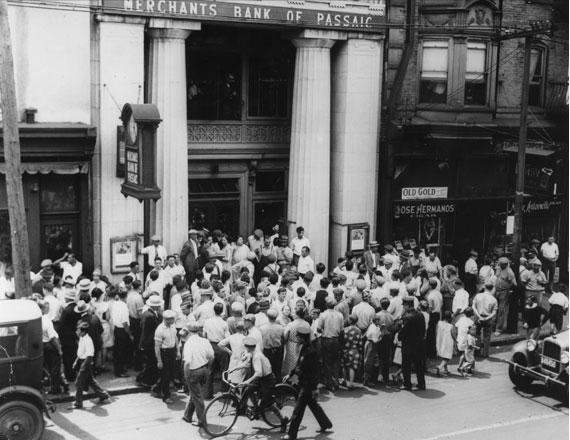
The major objective of this article is to begin the process of understanding the financial market to enable intelligent discussion on the blog.
One of the major pillars of financial collapse was Derivatives. They are very complex financial instruments with a wide diversity. They are described by a gaggle of terminology used by the high priests of finance. Because of complexity most of the books on the collapse skirt the detail of the Derivative Market. After we get through some basic definitions, we will focus on Credit Default Swaps (CDS); a subset of the Derivatives offerings. We will see how the government created a non regulated environment where fraud, compromised regulators and incompetent people ran the Investment Financial community in a very high risk mode.
Derivatives Defined
A Derivative is a financial instrument whose value is dependent on the value of another entity at a future time. Its primary function is to mitigate risk. A simple analogy would be your Home insurance. These policies guarantee that you will be remunerated if the value of your home falls due to fire, wind, or accident. A relatively small premium of money can mitigate a large potential financial catastrophe. State regulators are in charge of most regular Insurance products and solvency is less of an issue as adequate capital reserves are defined.
We need to think of Derivatives as a “risk tool” meant to stabilize the financial businesses (markets). The wide variety of Derivatives creates confusion, so we are going to restrict our discussion to Credit Default Swaps (CDS). Anticipating problems with Sub Prime mortgages, Securities were insured by investors. It was the Credit Default Swaps inability to perform that was a party to the financial collapse after the Lehman bankruptcy. They did not have the financial reserves to back up the policies they wrote How did that happen?
Deregulation
For our discussion today, three government deregulation actions are relevant.
- 1999 Graham Leach Bliley Act repealed the 1933 Glass Steagall act. The Glass-Steagall Act prohibited any one institution from acting as any combination of an investment bank, a commercial bank, and an insurance company.
- 2000 Commodity Futures Modernization Act deregulated Derivatives creating a Wild West environment for “Derivatives financial innovation”. See this link for a excellent Brooksley Born interview
- April 28, 2004 SEC drastically relaxed leverage standards for the Big Five Investment Banks: Goldman, Merrill, Bear, Lehman and Morgan Stanly. This created a very high risk environment. The session can be viewed here.
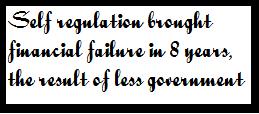
Financial self regulation brought the system down in 8 years. Bush de-funded Federal regulation. Greed, incompetence and corruption reigned supreme. Enron people went to jail. As of 2010, under Obama only bit players have been jailed. Civil fines are a joke.
Securitization Market
We need to understand the environment created by the above regulation changes to understand the role of CDS Derivative failure. We will concentrate on the Real Estate Industry
Traditionally, according to HBSwiss, the real estate industry was handled by local banks who retained the loans. Their exposure to losses resulted in more careful origination of loans. For a long time, Fannie, Freddie and FHA were packaging (securitizing) mortgages and selling them to Investors. They enjoyed a good reputation because they had good loan origination standards. These were categorized as Prime mortgages. Generally these securities obtained a AAA rating which rarely changed. Good consistent returns were recorded with these products.
Early in the 2000 decade the Investment banks adopted the securitization model called Private Label Securities. They purchased their mortgages from unregulated brokers (Country Wide, Ameriquest etc) who had little or no standards regarding underwriting of loans. The private label market latched on to the fact that high risk “Sub Prime” loans carried higher interest rates, hence higher profits. They had no exposure to the failure of the loan as risk was passed on to the Investors. They simply collected the lucrative fee’s.
Investment Banks packaged the loans (millions and billion level). They paid the rating agencies (S&P. Moody and Fitch) for ratings structuring the packages to get AAA ratings. It is clear the rating agencies did not do their job as traditionally solid AAA ratings were changed as the packages started to fail. These packages were sold to the domestic and world markets. Trillions of dollars were involved. The banks simply passed the risk on to the investors and collected the origination and servicing fee’s
CDS Market
Risk could be mitigated by purchasing a CDS against the failure of the security. So if the security failed the investor was held harmless. Remember that as of 2000 the CDS market was unregulated. AIG – London Financial Services is the poster child of the CDS industry. AIG wrote most of the CDS contracts cheaply as they held inadequate reserves (in the event of a default) and had a good company rating based on the parent insurance company whose operations were regulated. Office of Thrift Supervision was the responsible regulator, but their presence was effectively non existent, Goldman Sachs (Hank Paulson as CEO) was one of their major clients.
However, late 2006 / 2007 AIG FP realized they were over exposed and got out of the market retaining the previous contracts. Recall in the unregulated market anyone could write CDS and the big banks did. As the Mortgage Backed Securities began to fail, the banks started writing CDS between the banks to mitigate risk always falsely believing the market would recover. This was necessary because When Bear and Lehman started to fail the banks were joined at the hip, guaranteeing each others toxic securities. Based on the 2004 SEC relaxing reserve requirements, that banks were leveraged up and things were starting to fail. In a leveraged market things get serious to critical in a matter of hours.
The daily, weekly and monthly credit markets froze up because nobody trusted anybody. Even GE was having trouble borrowing for daily operations. Andrew Ross Sorkin’s book—‘Too Big to Fail’— gives a good account of the scenario in 2008. Fannie and Freddie were in conservator ship, near bankruptcy Bear was bought on a fire sale by JP Morgan, Lehman was bankrupt, Merrill near bankruptcy was bought by Bank Of America and AIG had to be rescued by the Federal Government. Morgan Stanly and Goldman were within days of bankruptcy, but got bailed out by Warren Buffet and a Korean financial entity.
The AIG story is discussed in this newspaper article ‘Behind Insurer’s Crisis, Blind Eye to a Web of Risk’.
It is interesting to know that just before the 2008 collapse, the rating agencies down graded AIG forcing them to hold more reserves. They were forced to raise cash in a collapsing market. In a high leverage industry, when it rains it pours.
Naked CDS
Investors can buy CDS on securities even though they do not own the security. This is equivalent to a neighbor buying insurance on your house. So if you know that a Mortgage Backed Security has a lot of high risk loans in it and is headed to failure, you buy a CDS anticipating the default. Michael Lewis’ book—‘The Big Short’–is all about the people who anticipated the failures and bought CDS products. A Bloomberg video interviews Lewis and it provides a lot of insight into the mess that evolved.
I look to Dakinkat, Gillian Tett, Yves Smith, and Janet Tavakoli on technical issues of Derivatives. Lewis’ forte is being able to write to the general public. His book gives a lot of insight to the CDS market nuances. It is interesting that Smith and Tavakoli consider Lewis to be a light weight. Yet, his book sales exceed theirs.
To get a notion of the size of the CDS market we need to look at these numbers. The size of our national economy this year is roughly $15 trillion. The whole world GDP is about $56 trillion. At the time of the 2008 failure, the size of the Credit Default Swaps (CDS) market was $64 trillion. The exposure at the time of the collapse was huge. The magnitude of the Naked CDS is not known, but is understood to be huge.
Given that the unregulated CDS underwriters were prone to not provide adequate capital reserves for defaults, there was a massive liquidity problem, hence the government had to step in and bail out the likes of AIG and banks who wrote these products.
The whole CDS market is described as being part of the Casino Gambling image in the financial markets
Current Status
The Dodd Frank Bill has a moderate approach for Derivatives Regulation. However it is up to the regulators for implementation and the banks are attempting to minimize the impact of regulation. This is documented by two recent NYT articles.
It’s Not Over Until It’s in the Rules
A Secretive Banking Elite Rules Trading in Derivatives
A short summary of the above articles is that the big banks are attempting to save their Oligopoly through the Risk Committees of the Clearing Houses. This is being done by imposing high capital reserve requirements for participants. This has the effect of limiting competition which limits price competition and transparency. The elephant in the room is the risk committee’s saying certain derivatives are to complex to be cleared. This gets us right back to where we were in the financial crisis. Over the Counter non clearing house products are the most profitable and open to risk.
In the spirit of Brooksly Born regulation, It has been proposed that Derivatives be run using a Clearing House or a Exchange Trading Requirement.
From The Economist:
Clearing House: A clearing requirement is a requirement that all eligible derivatives be cleared on a central clearinghouse (also known as a central counterparty, or CCP). A clearinghouse provides critical counterparty risk mitigation by mutualizing the losses from a clearing member’s failure, netting clearing members’ trades out every day, and requiring that parties post collateral every day. Clearinghouses also centralize trade reporting, and can provide any level of post-trade transparency to the OTC derivatives markets that your heart desires — same-day trade reporting, including prices, aggregate and counterparty-level position data, etc. Virtually all of the harmful opacity and murkiness of the current OTC derivatives markets can be ended with just a clearing requirement — that is, a clearing requirement is a prerequisite for getting rid of the harmful opacity in OTC derivatives
Exchange Trading: An exchange-trading requirement, on the other hand, is simply a requirement that all eligible derivatives use a particular type of trade execution venue: exchanges (also known as “boards of trade”)..The exchange is just the trade execution venue (think NYSE vs. Nasdaq). The only thing that an exchange-trading requirement adds to the clearing requirement is “pre-trade price transparency.”
The clearing house is obviously the better because it brings a degree of financial integrity and transparency. It certainly is the more expensive of the options, but its cost is minuscule when we think of the financial collapse.
However based on the articles above, it is clear that the big bankers are attempting to preserve their oligopoly in terms of the CDS market. They also want to preserve the option to take the market back to the opaque high risk environment because of profit opportunities. The Opaque Over the Counter market is the biggest threat to the stability of the market
In Dodd – Frank, the CFTC and SEC have co-jurisdiction The CFTC commission seems to be moving to the bankers view. SEC has been relatively quiet on this subject
We need to remember that Mary Schapiro (SEC) and Gary Gensler (CFTC) were part of the problem before the 2008 Financial Crisis. It remains to be seen how well they address the problem. Will they do the right thing or are they financial industry moles?

 peej
peej Carissa
 bostonboomer
 dakinikat
 ecocatwoman
 mablue2
 Mama Lopez
 peggysue22
 quixote
 skydancingguestblogger
 Mona (aka Wonk the Vote)



 Sky Dancing
Recent Comments