
Friday Morning Reads: Postcards from My Family On Earth Day
Posted: April 22, 2011 Filed under: Environment, Environmental Protection, morning reads | Tags: John Muir, National Parks, National Wetlands, National Wildlife Refuges, Teddy Roosevelt, The Koch Brothers, Yosemite 28 Comments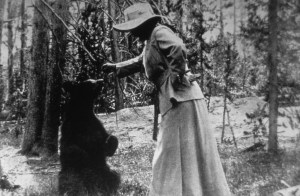 Good Morning!
I watched a wonderful episode of American Masters on PBS called ‘John Muir in the New World’ on Wednesday night. Actually, I’ve watched several escapist things the last few days including another PBS special on British Explorer Col. Percy Fawcett called Searching for Z . Earlier, I had watched the Presidents series from American Experience including the one dedicated to US President Teddy Roosevelt. What brings my attention to these three men is that they all were committed to wilderness, exploration, and conservation. They were huge figures in their life times. They fought a series of battles to keep the world’s geological marvels and wilderness away from men that wanted to exploit them down to the last tree and rock. We are seriously short of fighters like this these days.
This all got me thinking about how my grandparents set off with my mother, her sister and her brother in Studebakers to explore the nation’s new National Park System in the mid twenties. My mother saw to it that my dad took my sister and me back to every place she’d seen as a kid and then some in the 1960s and 1970s. I’ve seen nearly all of the National Parks now thanks to my mom and the family gypsy spirit. I also took my daughters right back there too. I was especially impressed by Dinosaur National Monument, Yellowstone National Park, and Mesa Verde as a kid. My oldest daughter got taken to a lot of them initially in baby backpacks. We’ve spent a lot of time in Rocky Mountain National Park too. Little Miss Doctor Daughter made her first trip to Washington DC at six months. Then later, when she was older, we walked the same paths that I had walked in the 1960s and 1970s out in Wyoming, Utah, Montana, Colorado, New Mexico, and Arizona. I seriously doubt the paths were there when my grandparents took my late mother, but I know she talked about dropping a hankie in the handkerchief pool and watching the mudpots. I loved the paint pots. Little Miss Doctor Daughter preferred morning glory pool and the Yellowstone Falls. We share a fascination with dinosaurs too.
The latest notch on my well worn National Park tourist belt is our Gulf Islands National Seashore along the Gulf Coast. I’ve seen them with and without the BP oil. One of the hardest hit areas is near Pass a Loutre, a 66,000 acre Wetlands and bird sanctuary in Plaquemines Parish. It’s a few hours drive from my home. There’s a bunch of National Refuges down here including Delta National Wildlife Refuge and Breton National Wildlife Refuge. Actually, the entire French Quarter is a National Park. I live in between it and the Chalmette Battlefield that was the site of the Battle of New Orleans. They are both about 1 mile on either side of me. Barataria is just to the south and is my favorite National Historical Park to hike these days. It’s where Jean LaFitte and his pirates hung out and has some of the best swamp habitat around. The swamp iris in bloom are a thing to behold. I always take my friends there who’ve never seen an alligator in the wild. Breton National Refuge is the second oldest National Refuge in the country. It was established by Theodore Roosevelt in 1904.
If you watch the special on John Muir, you’ll see how Roosevelt and Muir were responsible for saving the Giant Redwoods of Sequoia National Park , El Capitan, and the wonders that are Yosemite National Park and Yosemite Valley. One of their great failures was the inability to stop Woodrow Wilson and Congress from blocking human hysteria and greed–left over from San Francisco’s great fire–from building a dam in Hetch Hetchy Valley that was part of the National Park. That controversy led to the founding of the Sierra Club and a greater realization on the part of US citizens every where that there are things in this country left to us by nature, geology, history, or whatever you want to call it that are special beyond belief and should be beyond capitalization. My daughters are the third generation in my family to be completely awed by the power of the Great American landscape. I only wonder what will be left to their children and grandchildren.
I know this is a weird morning post for you to read and that you were expecting a lot of newsy links. Instead, I spent the evening scanning some postcards and photos that my grandmother and mother collected. That side of my family just kept traveling around the US back then and most of us still do the same today. I want to leave you with some links to think about, however before I leave you with some postcards from my late mother and her family.
Monument Valley National Park Meets the Brothers Koch
Once upon a time, my wife and I ventured in our Western travels to see Monument Valley, that place made legendary by a gazillion John Ford/John Wayne westerns as “THE ARCHETYPAL WEST,” so much so that you couldn’t film a car commercial for many years, and in some cases to this very day, without putting Monument Valley in the background.
And there was a line of cars and Winnebagos (or whatever you call five tons of steel dragging another couple tons of car, motorcycles, mountain bikes, or whatever other trailer gear makes for an enjoyable “roughing it” in the West, complete with satellite dishes and a portable generator for the bug-zapper). It was late spring, and the crowds weren’t what they were going to be, once school let out and the station wagons were unleashed on an unsuspecting West filled with price-gouging gas stations. Gas was still at winter “local” levels.
The run into Monument Valley is famously desolate, and you can see the spires of rock towering in the distance down a straight-line road that’s a favorite of cameramen of all ages and persuasions.
And when you get there, there’s the obligatory gatehouse for collecting tolls, and if you read the signs, you’ll notice that it’s “Monument Valley Tribal Park” which oughtn’t surprise you, since you’ve been on the Navajo Reservation — a chunk of land that embraces an area as large as West Virginia, and completely swallows the Hopi Reservation within it — for many miles now.
Koch brothers now at heart of GOP power
The billionaire brothers David and Charles Koch no longer sit outside Washington’s political establishment, isolated by their uncompromising conservatism. Instead, they are now at the center of Republican power, a change most evident in the new makeup of the House Energy and Commerce Committee.
Wichita-based Koch Industries and its employees formed the largest single oil and gas donor to members of the panel, ahead of giants like Exxon Mobil, contributing $279,500 to 22 of the committee’s 31 Republicans, and $32,000 to five Democrats.
The Koch Bros. and Corporate Welfare
For the past fifty years, through its Matador Cattle Company subsidiary, Koch Industries has been quietly milking a New Deal program that allows ranchers to use federal land basically for free. Matador, one of the ten biggest domestic cattle ranching operations, has something in the neighborhood of 300,000 acres of grazing land for its cows—two-thirds of which belong to American taxpayers, who will never see a penny of profit.
Back before there was Al Gore, there was John Muir. Only, John Muir not only talked the talk, he climbed the mountains and studied the rocks. He also wrote all about it so that people cooped up in big cities could know the marvels of the wide-open west. He wanted them to feel inspired and to come experience the power and overwhelming forces of nature and wilderness for themselves. There were some bad guys back then, but think about this. Koch Industries has spent $55 million dollars trying to fight the science of climate change and seeking to undermine environmental laws. They are out to destroy our national treasures and our heritage that so many people have fought for over a century to protect. What would John Muir and Teddy Roosevelt say about Koch Industries?

John Muir
This excerpt from a letter by John Muir was written on August 30, 1899 on the Alaskan Wilderness.
And what a glorious trip it was for you girls, flying like birds from wilderness to wilderness, the wildest and brightest of America, tasting almost every science under the sun, with fine breezy exercise, scrambles over mossy logs and rocks in the spruce forests, walks on the crystal prairies of the glaciers, on the flowery boggy tundras, in the luxuriant wild gardens of Kodiak and the islands of Bering Sea, and plashing boat rides in the piping bracing winds, all the while your eyes filled with magnificent scenery—the Alexander Archipelago with its thousand forested islands and calm mirror waters, Glacier Bay, Fairweather Mountains, Yakutat and Enchantment Bays, the St. Elias Alps and glaciers and the glorious Prince William Sound, Cook Inlet, and the Aleutian Peninsula with its flowery, ley, smoky volcanoes, the blooming banks and bracs and mountains of Unalaska, and Bering Sea with its seals and Innuits, whales and whalers, etc., etc., etc.
It is not easy to stop writing under the exhilaration of such an excursion, so much pure wildness with so much fine company. It is a pity so rare a company should have to be broken, never to be assembled again. But many, no doubt, will meet again. On your side of the continent perhaps half the number may be got together. Already I have had two trips with Merriam to the Sierra Sequoias and Coast Redwoods, during which you may be sure the H.A.E. was enjoyed over again. A few days after I got home, Captain Doran paid me a visit, most of which was spent in a hearty review of the trip. And last week Gannett came up and spent a couple of days, during which we went over all our enjoyments, science and fun, mountain ranges, glaciers, etc., discussing everything from earth sculpture to Cassiope and rhododendron gardens—from Welsh rarebit and jam and cracker feasts to Nunatak. I hope to have visits from Professor Gilbert and poet Charlie ere long, and Earlybird Ritter, and possibly I may see a whole lot more in the East this coming winter or next. Anyhow, remember me to all the Harrimans and Averells and every one of the party you chance to meet, Just to think of them!! Ridgway with wonderful bird eyes, all the birds of America in them; Funny Fisher ever flashing out wit; Perpendicular E., erect and majestic as a Thlinket totem pole Old-sea-beach G., hunting upheavals, downheavals, sideheavals, and hanging valleys, the Artists reveling in color beauty like bees in flower-beds; Ama-a-merst tripping along shore like a sprightly sandpiper, pecking kelp-bearded boulders for a meal of fossil molluscs; Genius Kincaid among his beetles and butterflies and “red tailed bumble-bees that sting awful hard”; Innuit Dall smoking and musing, flowery Trelease and Coville; and Seaweed Saunders our grand big-game Doctor, and how many more! Blessed Brewer of a thousand speeches and stories and merry ha-has, and Genial John Burroughs, who growled at and scowled at good Bering Sea and me, but never at thee. I feel pretty sure that he is now all right at his beloved Slabsides and I have a good mind to tell his whole Bering story in his own sort of good-natured, gnarly, snarly, jungle, jangle rhyme.
There! But how unconscionably long the thing is! I must stop short. Remember your penitential promises. Kill as few of your fellow beings as possible and pursue some branch of natural history at least far enough to see Nature’s harmony.
Monday Reads
Posted: April 18, 2011 Filed under: jobs, Labor unions, morning reads, Reproductive Rights, Women's Rights, worker rights | Tags: Attacks on Social Security, Bush tax cuts, Gang of Six, global job crisis, HBO, International Monetary Fund, New Orleans, Pete Seeger, Peter Yarrow, Planned Parenthood, Senator Mark Warner, songs of protest, taxes, Treme 43 Comments Good Morning!
I’ve almost gotten shy about going out to search for links these days. Most of the political and economic news is disheartening so I thought I’d try to mix it up today with some good stuff and disheartening stuff. Hopefully, you can find some things to share with us too.
You may want to start out your day arming yourself with “Five Myths about Planned Parenthood” in case any one in your sphere of influence starts spewing some of the ridiculous memes passed around by the right wing. This was in WAPO over the weekend and was written by Clare Coleman worked for America’s best known provider of family planning and health services. I liked number five.
Three million patients each year visit Planned Parenthood’s more than 800 health centers in every state, in big cities and small towns. In some areas, Planned Parenthood and the Title X-funded system are the only sexual health providers for hundreds of miles.
We screen people for high blood pressure, anemia and diabetes; we counsel them about smoking cessation and obesity; we connect them to other primary-care providers and social services. The huge response to the attack on family planning and on Planned Parenthood — hundreds of thousands of Americans signing petitions, showing up at rallies, calling Congress – is extraordinary. But it doesn’t surprise me. One in five American women has gone to Planned Parenthood at some point in her life, for respectful, compassionate, quality care. And now those Americans are going to have our back.
I feel like I’ve turned into an IMF groupie by putting up yet another link to them shortly after featuring one of their studies on the dominance of the finance sector, but here I go again. I do spend time gleaning data from their site so maybe it’s just that I keep bumping into things. The IMF says we have a Global Job Crisis.
At the end of his magnum opus, The General Theory, Keynes stated the following: “The outstanding faults of the economic society in which we live are its failure to provide for full employment and its arbitrary and inequitable distribution of wealth and incomes”.
Not everyone will agree with the entirety of this statement. But what we have learnt over time is that unemployment and inequality can undermine the very achievements of the market economy, by sowing the seeds of instability. In too many countries, the lack of economic opportunity can lead to unproductive activities, political instability, and even conflict. Just look at how the dangerous cocktail of unemployment and inequality—combined with political tension—is playing out in the Middle East and North Africa.
Because growth beset by social tensions is not conducive to economic and financial stability, the IMF cannot be indifferent to distribution issues. And when I look around today, I am concerned in this regard. For while recovery is here, growth—at least in the advanced economies—is not creating jobs and is not being shared broadly. Many people in many countries are facing a social crisis that is every bit as serious as the financial crisis.
Unemployment is at record levels. The crisis threw 30 million people out of work. And over 200 million people are looking for jobs all across the world today.
The jobs crisis is hitting the young especially hard. And what should have been a brief spell in unemployment is turning into a life sentence, possibly for a whole lost generation.
In too many countries, inequality is at record highs.
As we face these challenges, remember what we have accomplished. Under the umbrella of the G20, policymakers came together to avoid a financial freefall and probably a second Great Depression.
Today, we need a similar full force forward response in ensuring that we get the recovery we need. And that means not only a recovery that is sustainable and balanced among countries, but also one that brings employment and fair distribution.
This is part of a speech given by Dominique Strauss-Kahn, Managing Director, International Monetary Fund. He argues that financial sector reform is central to the problem of getting back on track. It’s worth reading the entire thing or you can watch the video here. Occasionally, I remember why I thought it was important to study economics. This is one of those times.
The so-called “Gang of Six” is still anxious to put social security on the bargaining table. I still can’t figure out why every time some politician wants to talk about the Federal Deficit--in this case Senator Mark Warner–they mistakenly include the stand-alone program.
Including Social Security in the Gang of Six package appears to be a concession by Democrats made in exchange for agreement to raise some revenue by Republicans. But liberals in the Senate and House have made clear they will not stand for any cuts to benefits.
The 2012 budget passed by the House on Friday does not include reforms for Social Security. House Budget Committee Chairman Paul Ryan (R-Wis.) instead called for a trigger in the budget whereby the president and Congress would have to propose solutions once the Board of Trustees certifies the program is in trouble. Presidet Obama in his 2012 budget and in a speech last week did not lay out plans to reform Social Security.
Warner said the Gang is “very close” to an agreement that includes spending cuts and tax increases such as be eliminating the home mortgage tax deduction.
“We are going to make everybody mad with our approach,” he said.
Warner made clear he is opposed to the House Republican 2012 budget’s reliance on cuts to Medicare—he called it a “massive transfer of responsibility onto our seniors”– but he did not say how the Gang of Six will approach the massive entitlement program.
Please join me as I scream. How stupid do they think we are?
Ninety-one year old Pete Seeger will be joined by David Amram, 80, and Peter Yarrow, 73 on the stage to inspire young people to be active in political and social justice movements. Yarrow had just returned from a series of rallies in Wisconsin.
The three artist-activists say they are fired up by recent protests — from Egypt to Wisconsin — and by the enthusiasm of their youthful kin, who will join them onstage.
“I do have the feeling that the kind of energy we felt in the ’60s is in the air now,” Mr. Yarrow said. “That energy seems to be reigniting itself.”
That concert should be a treat. It’s nice to see these guys seem to never tire of singing songs of justice. It’s important that a new generation hear these truly American songs. I was interested in reading that many kids and grandkids of these folk singers are now in the family business and may show up on stage with them now and then.
Okay, this is something that kinda surprised me from the WSJ: “Greenspan Steps Up Call to End Bush-Era Tax Cuts”. I still haven’t figure out why any one thinks he’s still relevant, but oh, well. At least, he’s on the right side of this one.
Former Fed Chairman Alan Greenspan is stepping up his call for Congress to let the Bush-era tax cuts lapse.
In an appearance Sunday on ABC’s “Meet the Press,” Mr. Greenspan used his strongest words yet to urge lawmakers to let them expire. The risk of a U.S. debt crisis, he said, is just too big. Mr. Greenspan, who retired from the Federal Reserve in 2006, had endorsed the cuts back in 2001 championed by then-President George W. Bush.“This crisis is so imminent and so difficult that I think we have to allow the so-called Bush tax cuts all to expire. That is a very big number,” he said, referring to how much the U.S. government could save from letting income taxes go back up to levels last seen under former President Bill Clinton.
Mr. Greenspan was talking about re-imposing the taxes for all Americans. The Treasury has estimated that a permanent extension of all the Bush tax cuts would cost $3.6 trillion over the next decade. Allowing taxes to increase on those in the top income brackets would take the cost to the government down to $2.9 trillion, according to White House estimates.
CBS news has done some data gathering on taxes as part of its Tax Day coverage: Wealthy Americans see drop in federal taxes; High-earning Americans pay less in taxes than in previous years; nearly half of U.S. households will pay no income taxes at all.
The Internal Revenue Service tracks the tax returns with the 400 highest adjusted gross incomes each year. The average income on those returns in 2007, the latest year for IRS data, was nearly $345 million. Their average federal income tax rate was 17 percent, down from 26 percent in 1992.
Over the same period, the average federal income tax rate for all taxpayers declined to 9.3 percent from 9.9 percent.
The top income tax rate is 35 percent, so how can people who make so much pay so little in taxes? The nation’s tax laws are packed with breaks for people at every income level. There are breaks for having children, paying a mortgage, going to college, and even for paying other taxes. Plus, the top rate on capital gains is only 15 percent.
There are so many breaks that 45 percent of U.S. households will pay no federal income tax for 2010, according to estimates by the Tax Policy Center, a Washington think tank.
The sheer volume of credits, deductions and exemptions has both Democrats and Republicans calling for tax laws to be overhauled. House Republicans want to eliminate breaks to pay for lower overall rates, reducing the top tax rate from 35 percent to 25 percent. Republicans oppose raising taxes, but they argue that a more efficient tax code would increase economic activity, generating additional tax revenue.

The row of shotguns featured on the first season DVD set of Treme are set to be demolished as blight.
New Orleans is abuzz with the second season of Treme about to start up on HBO. I have to admit that I have not watched it since I’m still working through my dose of PTS from Katrina and the aftermath. However, for those of you that are fans of the show, you can get it now on DVD and you can get a bit of a taste in what’s in store for you in season two from this story from the TP. The show evidently ended last season with the city’s evacuation. That’s something I will NEVER forget. The show has been great for the city, overall and it’s producers have taken on a lot of causes around here including a fight to save some historic properties featured in the series’ promotions. Just thought I’d add some insight into what the production brings to the city including its musicians. Here’s a little drama from Hollywood South.
… production money is being spent daily in New Orleans for locations, for equipment, material, labor and talent. In the first two seasons, for example, about $2 million in music licensing money was paid for the rights to songs by New Orleans artists, alone. Such expenditures — with or without any charity component — are the crux of the real economic relationship between a film company and the community in which it works. It is a straight-up transaction. We come here to shoot a movie. We pay a variety of local vendors, government fees and individuals to do it. And for virtually every other movie shot in Louisiana, that is it — end of story.
Thought I’d end with a treat from Pete Seeger to get you through your coffee:
What’s on your reading and blogging list today?
Saturday: The “smartest men” in DC vs. First Ladies
Posted: April 16, 2011 Filed under: morning reads 31 Comments
U.S. Secretary of State Hillary Rodham Clinton, right, is greeted by a South Korean government official Ahn Young-jip upon her arrival at Seoul military airport in Seongnam, South Korea, Saturday, April 16, 2011. (Photo: AP)
Morning, news junkies. As you probably know, the April 15th tax deadline is pushed back to April 18th this year because of Emancipation Day. My roundups are usually jampacked with headlines–it’s out of control, I know–but since it’s tax season and nobody needs any more homework, I’m going to cover a few headlines and then switch to some lighter stuff.
Newsy Reads
So I guess you’ve heard about the “Huntsman love letters“ that were leaked to the Daily Caller by now. Full text of Huntsman’s letters to Obama and Bill Clinton here. I haven’t checked out all the heads exploding on rightwinger blogs, and judging from the headlines piling up on memeorandum alone, I have no interest in doing so. As usual, the right wants to marginalize the one GOPer who I would consider voting for in 2012, which figures. What’s struck me more than anything else about these not-shocking-at-all letters is that Huntsman’s praise of Obama is exceedingly generic while his praise of Bill and Hillary Clinton is full of specifics and gives a sense of how completely engaged they both are in public service.
In other not-surprising news, Obama was caught on a mic at a fundraiser taking jabs at Paul Ryan and the GOP and now poor witto Republicans are complaining that their fee-fees have been hurt. Hard to feel sorry for them when they’re always so quick to criticize everyone else in the world for playing the victim. Anyhow, I caught a few seconds of Rove commenting on the Obama fundraiser comments as I was flipping through channels on Friday night–after he got done with his obligatory hagiography of Paul Ryan, Rove said Obama is probably just jealous of the attention Paul Ryan is getting. I had to laugh at that part.
What I want to know is after the Bittergate and Naftagate episodes from 2008, why is anyone surprised by anything Obama says to different audiences anyway? He’s a Nowhere Man trying to raise money from Democratic donors while chasing after right-leaning Independent voters. So publicly Obama hailed Ryan’s proposal as a serious one, and privately he told his donors that Ryan’s proposal is “not on the level.” All of it is just words to Obama.
In the midst of this, almost as if on cue, David Brooks bumbles away saying that “Obama and Ryan are the smartest, most admirable and most genial men in Washington” and laments over what a pity it is that Obama won’t ask Ryan over for lunch.
If Obama and Ryan are the best DC has to offer (I don’t think they are, but if they are…), then perhaps the great American experiment is already over.
On that note, I’m going to switch over to the fun stuff.
First Lady Reads
Lately I’ve been coming across items about “first ladies,” various and sundry. I’ve rounded them up to share with you. I hope you enjoy.
The (first) First Lady of Flight: Harriet Quimby… On this day in history (April 16) in 1912, America’s first licensed woman pilot, Harriet Quimby, became the first woman to fly across the English Channel. Click here to read the NYT article that ran on Quimby on April 17, 1912. To quote Ed. Y. Hall, aviation historian: “Harriet Quimby was flying 25 years before Amelia Earhart. She carried airmail as early as 1912.” Quimby’s achievement went largely unrecognized, but she continued to break ground in the few months she lived after, until July 1, 1912, when she became the first American woman to die in a plane crash in the US. (Julia Clark died two weeks earlier in a US crash, but she wasn’t American.) For more information, check out this fantastic post about Quimby: Pioneering Aviatrix Harriet Quimby flies into history from Michigan. There’s a nice youtube and neat pictures of Arcadia, Michigan, Quimby’s hometown.
First Lady of the World meets the First Lady of Television… See here. Eleanor and Lucy. My two favorites together. To quote from Carl Anthony’s post:
Within a decade of this meeting, both women would be accused of being Communists, the former for her social activism, the latter for once registering with the party to please her old grandpappy who did belong. In truth, neither of them was Red. Not one hair.
First Lady of the United States meets First Lady of American Cinema… Part 1 and Part 2. There are three pictures of Jackie O and Liz meeting (the only known photos), as well as a wonderful essay by Carl Anthony which reads like the True Hollywood Story of First Ladies, only better. Here’s an excerpt from Part 2:
The death of Onassis on March 15, 1975 and the divorce from Burton in June 26, 1974 (although Liz gave it a second try from October 10, 1975 to July and separated on February 23, 1976, finally divorcing five months later) began a process that helped the real Jackie and Liz to begin defining their lives on their own terms, regardless of the public narrative defined by what the former once called “the little cartoon that runs beneath one’s real life.” Treating them as proprietary commodities, the tabloids felt free to print the most outrageous claims to make their Liz-Jackie storylines sell, but strangely refrained from treading into sensitive areas of the real women’s lives which they themselves had used to craft the public images they wished to convey – and didn’t want contradicted.
First Lady Betty Ford turned 93 this month… One more link to Carl Anthony because he wrote a refreshing “Beyond Rehab” retrospective on Betty Ford’s legacy. Teaser:
The imagination correctly conjures 1974 with maternal pleasantness and welcoming comfort, tied up in a daisy yellow ribbon of straight talk as “The Year of Bettys.”
On February 18, 1974, spiffy Betty Furness began looking out for housewives as not just theToday Show’s consumer advocate but for NBC’s evening news as well, her smoky voice ratting out manufacturers of household goods for high costs and poor quality. On September 14, 1974, after five guest appearances a year before, veteran actress Betty White joined the television sitcom cast of The Mary Tyler Moore Show, appearing as the character Sue Ann Nivens, who hosted a show called “The Happy Homemaker,” dishing out frank-and-beans-on-a-budget as easily as sex advice.
And on August 9, 1974 Betty Ford became a White House wife, at ease before the press whether dispensing chicken hash recipes as evidence of her inflation-fighting meals, making the case for women’s reproductive rights, or pondering whether her kids might have tried pot or how they’d handle pre-marital sex like the nation’s Den Mother chatting over a backyard fence. On the face of it, she was traditional, her Episcopal faith a rock in times of difficulty, her love of husband unabashed and demonstrated in public. The first sign this was a First Lady like no other has been attributed to a reporter asking the startling question of how often she slept with the President and Mrs. Ford shrugging, “As often as possible.”
First Ladies of Rhythm and Jazz Appreciation Month (April)… The Smithsonian has an excellent theme for Jazz appreciation month this year– Women & Jazz: Transforming a Nation. Excerpt from the Smithsonian website:
Jazz Appreciation Month 2011 – the 10th Anniversary – examines the legacies of jazz women, and their advocates, who helped transform race, gender and social relations in the U.S. in the quest to build a more just and equitable nation. The International Sweethearts of Rhythm, founded in 1937 at the Piney Woods School in Mississippi, will be the focus of the JAM Launch, a museum display and special online and public programming offered by the National Museum of American History to highlight the unique legacy of the school that music built and their dynamic, women’s jazz band.
The International Sweethearts of Rhythm gained global recognition as the nation’s first, integrated, female big band. Founded in 1937 at the Piney Woods School, band members were students, 14-years old and older, who paid for their education by performing as a jazz band to help promote and sustain the financially struggling school. Traveling nationwide in a customized, tour bus named Big Bertha, the Sweethearts performed at churches, state fairs, dance and civic halls and later entertainment venues such as the Howard Theater and the Apollo, setting box office records.
The Sweethearts confronted dual biases of gender and race and excelled during a period in history when many Southern blacks lived in slavery without chains and women were second class citizens. The band performed in Battle of the Band competitions against bands led by Fletcher Henderson and Earl Fatha Hines, played the Jim Crow South with white band members who disguised themselves as minorities, and toured overseas for the USO during World War II, when integrated performances were taboo. Original band members had come from a school with a legacy of excellence and overcoming difficulties.
And, of course who can forget the First Lady of Song herself. Some fun Ella quotes from the end of this blog tribute:
“It isn’t where you came from, its where you’re going that counts.”- Ella Fitzgerald
“Ella’s amazing! My daughter says that every time she makes a mistake, it becomes a hit record.”
– Lucille Ball“The best way to start any musical evening is with this girl. It don’t get better than this.”
– Frank Sinatra
That’s it for me. What’s on your blogging list this Saturday?
[originally posted at Let Them Listen; crossposted at Taylor Marsh and Liberal Rapture]
Friday Reads
Posted: April 15, 2011 Filed under: morning reads | Tags: Bob Dylan, Don't Look Back, Labor marekts, Labor Unions, unemployment 44 Comments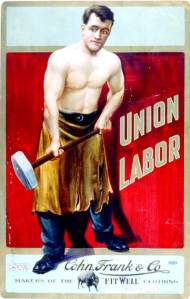 Good Morning!
It’s the end of the work week for those of you that still have jobs. Also, it’s the ides of April. Have you filed your taxes yet with the IRS? Better yet, do you actually have a job and can you report income this year? If so, you’re running against the wind these days. It’s not like most of our elected officials any where notice these days. Jobs, unemployment, and collective bargaining rights appear to the farthest things from their little minds. They’re still trying to figure out whose ass or fist is tightest. A few fighters remain. I’m going to start out with a 12 pack salute to those who still care for the working guy and gal.
Is a picture worth a 1000 words or can words make a picture too? NY Congressman Bob Crowley copied Bob Dylan’s famous “Don’t Look Back” short film to make a few points.
Politico reports on the purpose of Crowley’s show of words.
The video prompted MSNBC’s Luke Russert to tweet, “Rep. Joe Crowley channels his own Bob Dylan “Don’t Look Back” on the House floor.”
But Crowley Communications Director Courtney Gidner says that wasn’t the point of the exercise.
“While my boss is certainly a huge fan of Bob Dylan, the inspiration behind his ‘speechless’ speech was the GOP’s failure to produce a jobs-focused bill.”
I posted this in a down thread conversation but wanted to make sure you read this analysis from USA Today just in case you missed it. Huge numbers of Americans are leaving the work force. This is really worrisome.
The share of the population that is working fell to its lowest level last year since women started entering the workforce in large numbers three decades ago, a USA TODAY analysis finds.
Only 45.4% of Americans had jobs in 2010, the lowest rate since 1983 and down from a peak of 49.3% in 2000. Last year, just 66.8% of men had jobs, the lowest on record.
The bad economy, an aging population and a plateau in women working are contributing to changes that pose serious challenges for financing the nation’s social programs.
Over half of the the population is not working. Working-age men are dropping out like flies. This is not good for maintenance of programs like social security that rely on an increase in workers to fund current benefits. It’s also a game change from 30-40 years ago. I’ll be waiting to see what labor economists have to say about this.
Meanwhile, 1000s of workers protested the roll back of worker rights and budget cuts in Michigan. Working men and women in states all over the country have taken to the streets to protect their rights to participate in determining their work environment and compensation.
Thousands of people rallied at the Michigan State Capitol in Lansing on Wednesday to protest Republican proposals to roll back labor rights and cut government services. Organizers put attendance at more than 10,000. Herb Sanders of the American Federation of State, County and Municipal Employees urged the crowd to begin recall campaigns against Gov. Rick Snyder and other top Republicans.
Herb Sanders: “We will recall the scoundrels one by one. If their agenda is keeping money in the pocket of fat-cat corporate CEOs, as opposed to keeping working Americans employed in fair wages with decent healthcare and decent schools in our neighborhoods, they’ve got to go.”
It appears that many voters have remorse over sending Tea Party candidates to elected office. Florida is a stand out case.
Only three months removed from Governor Rick Scott’s (R) inauguration, a majority of Florida voters now say the state is headed in the wrong direction and that, if they could do it all over again, they wouldn’t have elected Scott in the first place, according to a new Suffolk University poll.
In the poll, 54% of voters said the state was headed in the wrong direction, compared to 30% who said it was going the right way. Further, just under half (49%) of all voters said they disapproved of Scott’s job performance, versus only 28% who said they approved.
Scott’s approval rating is so bad that the poll found him losing a hypothetical do-over election to Democrat Alex Sink by a ten-point margin, 41% to 31%.
Previous polls have also found Scott’s job approval deep underwater, including a Quinnipiac poll released earlier this month that pegged his approval to disapproval split at 35% to 48%. A March PPP poll showed Scott with an even worse 32%-55% split, and found him losing a do-over election — by a 20-point margin.
Scott was one of several freshman GOP governors swept into office last year amid the Republican wave nationwide. But since taking office, voters have rapidly soured on Scott as he’s pursued some drastic — and deeply unpopular — policies.
Labor leaders are none too happy with the President or Senate Majority Leader Harry Reid. Neither of the legacy parties have workers’ interests in mind these days.
“Now, not only are we getting screwed by the Republicans but the Democrats are doing it too,” said one union official, characterizing the mood at a summit of labor leaders who are worried that Democrats seem unlikely to go to the mat for them as an election year approaches.
Presidents of several unions and an AFL-CIO spokesman declined to repeat their private criticism to a reporter Tuesday, a sign that labor feels it must still try to maintain a relationship with the Democratic Party, even if it’s deeply troubled . With Republicans increasingly shifting from private antagonism toward open war with organized labor, unreliable Democratic allies are the only allies the movement has, and it remains unclear whether disappointments will dampen enthusiasm among union activists and voters in the 2012 elections.
I’ll tell you that I have no idea where to go any more. I’m torn between ‘throw the bums out’ and ‘none of the above’. I’m beginning to think my dog knows more about economics than any one in the District beltway these days.
A lot of folks are arguing that the retirement age in developed nations should be raised to 70. They want to work us until we drop dead, folks! Here’s some on that from The Economist.
Yet too many people see longer working lives as a worry rather than an opportunity—and not just because they are going to be chained to their desks. Some fret that there will not be enough jobs to go around. This misapprehension, known to economists as the “lump of labour fallacy”, was once used to argue that women should stay at home and leave all the jobs for breadwinning males. Now lump-of-labourites say that keeping the old at work would deprive the young of employment. The idea that society can become more prosperous by paying more of its citizens to be idle is clearly nonsensical. On that reasoning, if the retirement age came down to 25 we would all be as rich as Croesus.
Raising the official retirement age is only part of the solution, for many workers retire before the official age. Martin Baily and Jacob Kirkegaard of the Peterson Institute in Washington, DC, reckon that raising actual EU retirement ages to the official age would offset the impact of an ageing population over the next 20 years.
For that to happen, working practices and attitudes need to change. Western managers worry too much about the quality of older workers (see Schumpeter). In physically demanding occupations, it is true, some may be unable to work into their late 60s. The incapacitated will need disability benefits. Others will need to find a different job. But this should be less of a problem than it used to be now that economies are based on services not manufacturing. In knowledge-based jobs, age is less of a disadvantage. Although older people reason more slowly, they have more experience and, by and large, better personal skills. Even so, most people’s productivity does eventually decline with age; and pay needs to reflect this falling-off. Traditional seniority systems, under which people get promoted and paid more as they age, therefore need to change.
So, they’re going to work us until we drop and PAY us less for being old. What a deal!!! I frequently joke with my students that I will die at the podium and the administration will have to pry my cold, dead fingers off. I have to admit that this is a melodramatic image, however, to die standing at a podium is better than being chained to a desk in the private sector again. There’s only so many bad senior management decisions that one person should be forced to join in on in one life time. I’ve been party to opening too many of their eyes to their short roads to bankruptcy to do the private sector stupidity again. They all get away with those bad decisions too since they get to leave with good severance packages. I’d rather die poor than die inflicting pain and stupidity on people just because some guy went to seminar and got a wild hair.
Not that any of these old dudes ever pay for their bad mistakes or their lies. Here’s a good example via Naked Capitalism and Yves: Senator Levin Claims Goldman Execs Perjured Themselves Before Congress on Mortgage Testimony.
Senator Carl Levin, in releasing the report, took aim at Goldman’s truthiness in its testimony before Congress and called on Federal prosecutors to examine whether Goldman committed perjury. Two issues are at stake. First it the Goldman claim that it lost money on its housing bets and was not net short housing (or at least not for long). Second is the notion that the firm was acting merely as a market marker, which basically means caveat emptor, if clients made bad bets, Goldman was merely acting as a neutral middleman.
While Goldman made the usual pious denials, the evidence in the report supports the Levin charges. It notes:
Overall in 2007, its net short position produced record profits totaling $3.7
billion for Goldman’s Structured Products Group, which when combined with other mortgage
losses, produced record net revenues of $1.2 billion for the Mortgage Department as a whole.2007 was the critical year when the market turned decisively south and all dealers were dumping mortgage-related inventory. Goldman had been further ahead in the process and appears to be the only firm to put on very sizeable short positions. The magnitude of the profits on the short side lend credence to the charge that Goldman was substantially and successfully net short.
This would basically mean that Goldman Sachs was not acting as a ‘market-maker’. This was the claim made by GS executives during the hearing. I was some what appalled by the inability of the congress critters on the committee to fully comprehend what market makers do and ask intelligent questions. Now that we’ve got the details, it’s pretty clear GS was not acting as an intermediary for client orders. They were basically speculating and the report is evidently full of aggressive marketing and sales pushes to move CDOs and other highly risky financial instruments on which they had an offsetting corporate position. This should be investigated by the DOJ. However, given the cozy relationship between shadow banking and Timothy Geithner, I doubt Obama will move on it at all.
Meanwhile, “Food, Gas And Rent Push Consumer Prices Higher” so ordinary working people are feeling the pinch from both lower incomes and higher prices. I’m thinking we’re seeing those bubbles I’ve been warning about frankly. Rich people have a tremendous amount of money right now and they’re taxes are way down so they’re not investing in businesses but looking for quick arbitrage profits by trading paper back and forth. Unfortunately, the real world is under that paper some where.
Excluding the volatile food and gas categories, the so-called core index rose 0.1 percent and it is up only 1.2 percent in the past year.
But steep food and gas prices are hitting consumers hard.
Gasoline jumped 5.6 percent last month and has risen nearly 28 percent in the past year. Consumers paid an average price of $3.81 a gallon nationwide on Friday according to the travel group AAA.
Food prices rose 0.8 percent last month, the largest increase in almost three years. Prices for fruits and vegetables, dairy products, chicken and beef all increased. Coffee costs rose 3.5 percent.
So, anyway, I continue to be amazed at how much labor is getting screwed compared to how many breaks capital gets these days. I seriously think that the elected officials are trying to completely remove taxes from capital owners and load it solidly on to the backs of working men and women. The time to sharpen pitchforks nears. You don’t need a weatherman to know which way the wind blows …

 peej
peej Carissa
 bostonboomer
 dakinikat
 ecocatwoman
 mablue2
 Mama Lopez
 peggysue22
 quixote
 skydancingguestblogger
 Mona (aka Wonk the Vote)



 Sky Dancing
Recent Comments