Trump is gone from the national stage, but the misinformation he promoted is still with us. Thanks to the Trumpists, we may never achieve herd immunity in the U.S.
Even as we accelerate vaccinations, an immovable force stands in the way of achieving community immunity: Millions of Americans who are simply saying “No way.”
As of mid-April, both Florida and Michigan were hot spots for the more severe B.1.1.7 Covid-19 variant that originated in the U.K. and that is now the dominant strain nationwide. This variant is also sending younger, previously healthy people into our hospitals. With the coronavirus mutating to become more contagious and possibly more lethal, vaccination is more important than ever.
Yet, vaccine refusal — not reluctance, not “maybe later,” but flat-out rejection — could prevent us from reaching the threshold when epidemiologists say we can safely and responsibly fully reopen all aspects of society. Recent surveys like this one from CNN put that number at around one in four people. In rural, overwhelmingly white places like rural western Michigan, these are the folks who stagger into the Emergency Room, sick and struggling to breathe, yet still tell nurses and doctors that neither Covid-19, masks and vaccines are real.
Davidson and Ashby write that Black and Hispanic Americans have responded to efforts to educate people about vaccine safety and efficacy.
But though Black and Hispanic Americans are now increasingly rolling up their sleeves, one group continues to refuse vaccinations: White, evangelical and rural Americans.
We heard one rural Michigan patient call vaccines a form of government control. Another repeated the unfounded claim that Covid-19 was a Chinese bioweapons plot. One patient refused to get vaccinated despite getting Covid-19 twice, a rare reinfection. Rural white people scoffed at vaccines, citing microchips and infertility, or Fox News disinformation slandering health experts for lying about vaccine efficacy data and calling vaccines a tool for social control. We heard patients accuse hospital workers of being highly paid actors maintaining the pandemic charade.
Vaccines have struck conservative Republican leaders with a kind of stubborn anosognosia, an inability to line themselves up with reality.
Paul Wonner, Model Drinking Coffee, 1964
The answer, say the authors must come from community leaders.
In Michigan, GOP legislative leaders are undermining vaccinations in word and in deed, including holding millions of dollars in federal vaccination funds hostage. The conservative base, however, says it would rather listen to doctors than politicians anyway. If the only information — or misinformation — about the pandemic is from Fox News and OANN, then the antidote is information from a source who understands the science, the medicine and most importantly, the community.
In the case of rural conservative communities, that source would be rural conservative family physicians who go to the same churches, fish the same stretch of river and volunteer every Friday night at local high school football games. These are the doctors who care for every stage of a family’s life. Births, broken arms, deliveries, disease management and deaths. They aren’t just trusted, they’re family —minus the birthright of blood. Most importantly, they know how vaccines and medicine work.
For years, scientists and doctors have treated vaccine skepticism as a knowledge problem. If patients were hesitant to get vaccinated, the thinking went, they simply needed more information.
But as public health officials now work to convince Americans to get Covid-19 vaccines as quickly as possible, new social science research suggests that a set of deeply held beliefs is at the heart of many people’s resistance, complicating efforts to bring the coronavirus pandemic under control….
About a third of American adults are still resisting vaccines. Polling shows that Republicans make up a substantial part of that group. Given how deeply the country is divided by politics, it is perhaps not surprising that they have dug in, particularly with a Democrat in the White House. But political polarization is only part of the story.
In recent years, epidemiologists have teamed up with social psychologists to look more deeply into the “why” behind vaccine hesitancy. They wanted to find out whether there was anything that vaccine skeptics had in common, in order to better understand how to persuade them.
They borrowed a concept from social psychology — the idea that a small set of moral intuitions forms the foundations upon which complex moral worldviews are constructed — and applied it to their study of vaccine skepticism.
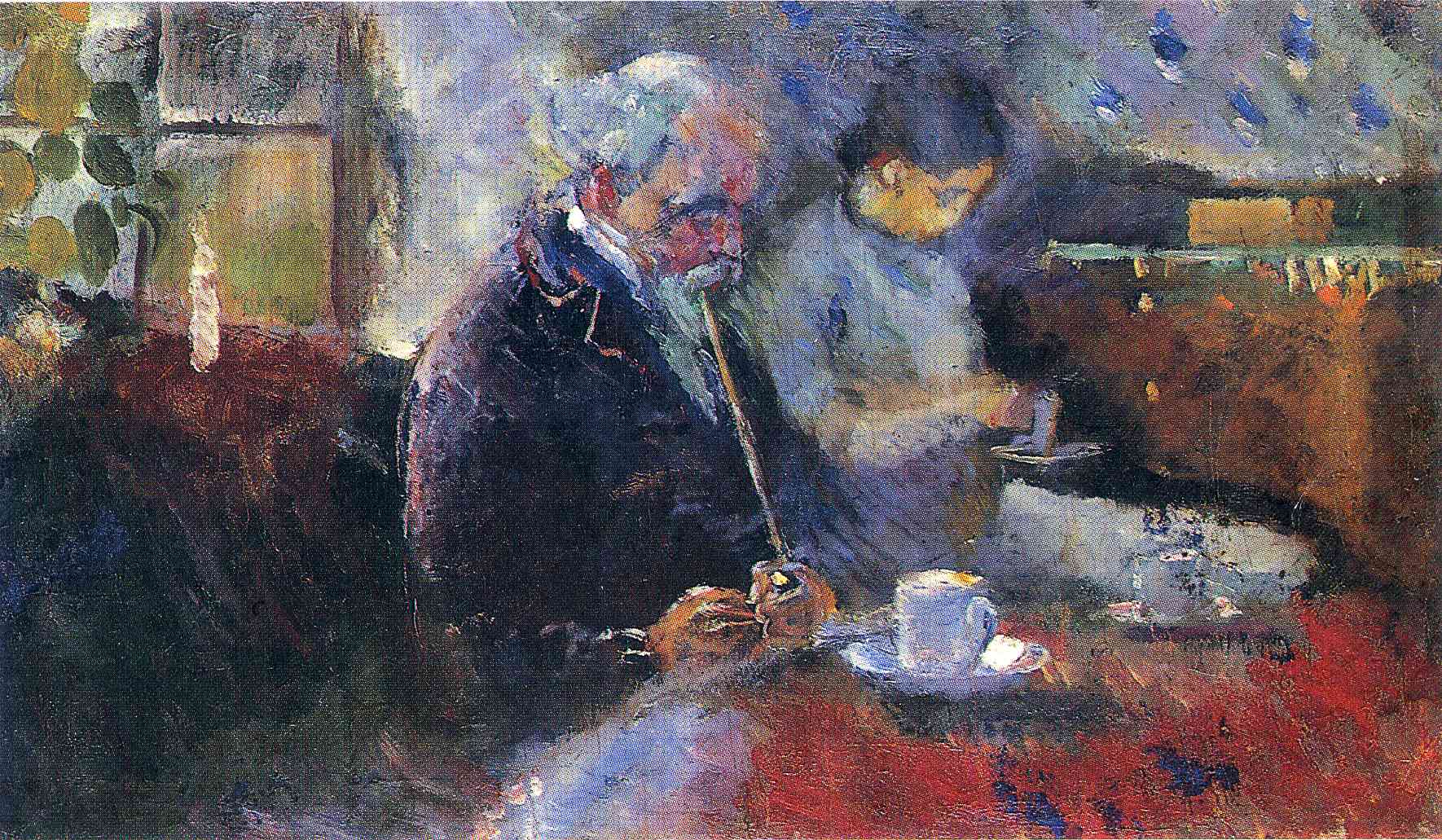
Edvard Munch, At The Coffee Table, 1883, Munch Museum, Oslo
What they discovered was a clear set of psychological traits offering a new lens through which to understand skepticism — and potentially new tools for public health officials scrambling to try to persuade people to get vaccinated.
Dr. Omer and a team of scientists found that skeptics were much more likely than nonskeptics to have a highly developed sensitivity for liberty — the rights of individuals — and to have less deference to those in positions of power.
Skeptics were also twice as likely to care a lot about the “purity” of their bodies and their minds. They disapprove of things they consider disgusting, and the mind-set defies neat categorization: It could be religious — halal or kosher — or entirely secular, like people who care deeply about toxins in foods or in the environment….
“At the root are these moral intuitions — these gut feelings — and they are very strong,” said Jeff Huntsinger, a social psychologist at Loyola University Chicago who studies emotion and decision-making and collaborated with Dr. Omer’s team. “It’s very hard to override them with facts and information. You can’t reason with them in that way.”
These qualities tend to predominate among conservatives but they are present among liberals too. They are also present among people with no politics at all.
What are they thinking, these vaccine-hesitant, vaccine-resistant, and COVID-apathetic? I wanted to know. So I posted an invitation on Twitter for anybody who wasn’t planning to get vaccinated to email me and explain why. In the past few days, I spoke or corresponded with more than a dozen such people. I told them that I was staunchly pro-vaccine, but this wouldn’t be a takedown piece. I wanted to produce an ethnography of a position I didn’t really understand.
The people I spoke with were all under 50. A few of them self-identified as Republican, and none of them claimed the modern Democratic Party as their political home. Most said they weren’t against all vaccines; they were just a “no” on thisvaccine. They were COVID-19 no-vaxxers, not overall anti-vaxxers.
Pierre Bonnard, Coffee, 1907
Many people I spoke with said they trusted their immune system to protect them. “Nobody ever looks at it from the perspective of a guy who’s like me,” Bradley Baca, a 39-year-old truck driver in Colorado, told me. “As an essential worker, my life was never going to change in the pandemic, and I knew I was going to get COVID no matter what. Now I think I’ve got the antibodies, so why would I take a risk on the vaccine?”
Some had already recovered from COVID-19 and considered the vaccine unnecessary. “In December 2020 I tested positive and experienced many symptoms,” said Derek Perrin, a 31-year-old service technician in Connecticut. “Since I have already survived one recorded bout with this virus, I see no reason to take a vaccine that has only been approved for emergency use. I trust my immune system more than this current experiment.”
Others were worried that the vaccines might have long-term side effects. “As a Black American descendant of slavery, I am bottom caste, in terms of finances,” Georgette Russell, a 40-year-old resident of New Jersey, told me. “The fact that there is no way to sue the government or the pharmaceutical company if I have any adverse reactions is highly problematic to me.”
Many people said they had read up on the risk of COVID-19 to people under 50 and felt that the pandemic didn’t pose a particularly grave threat. “The chances of me dying from a car accident are higher than my dying of COVID,” said Michael Searle, a 36-year-old who owns a consulting firm in Austin, Texas. “But it’s not like I don’t get in my car.”
And many others said that perceived liberal overreach had pushed them to the right. “Before March 2020, I was a solid progressive Democrat,” Jenin Younes, a 37-year-old attorney, said. “I am so disturbed by the Democrats’ failure to recognize the importance of civil liberties. I’ll vote for anyone who takes a strong stand for civil liberties and doesn’t permit the erosion of our fundamental rights that we are seeing now.” Baca, the Colorado truck driver, also told me he didn’t vote much before the pandemic, but the perception of liberal overreach had a strong politicizing effect. “When COVID hit, I saw rights being taken away. So in 2020, I voted for the first time in my life, and I voted all the way Republican down the ballot.”
Thompson’s interpretation of his findings:
My view of the vaccines begins with my view of the pandemic. I really don’t want to get COVID-19. Not only do I want to avoid an illness with uncertain long-term implications, but I also don’t want to pass it along to somebody in a high-risk category, such as my grandmother or an immunocompromised stranger. For more than a year, I radically changed my life to avoid infection. So I was thrilled to hear that the vaccines were effective at blocking severe illness and transmission. I eagerly signed up to take both my shots, even after reading all about the side effects.
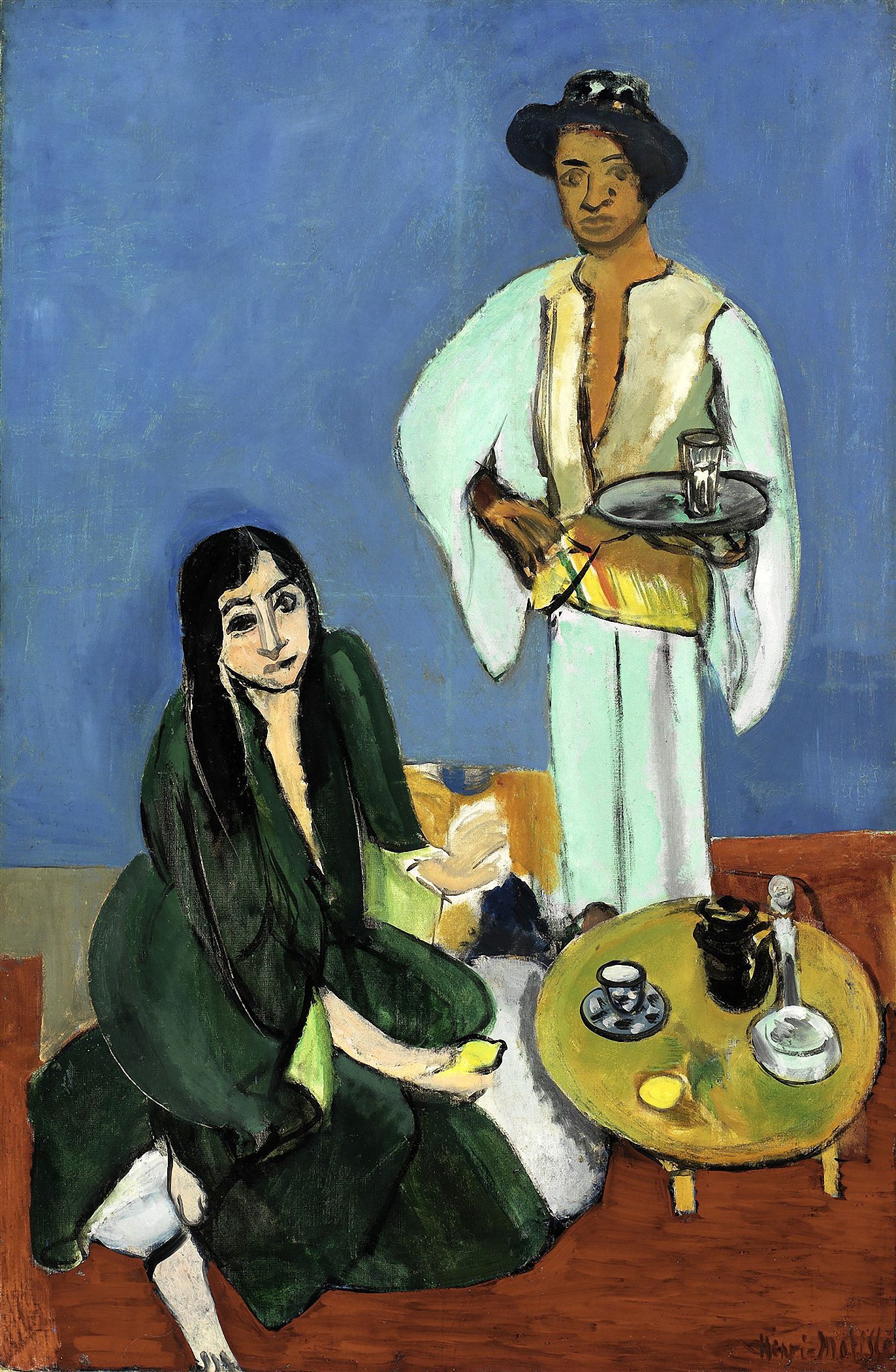
Henri Matisse, Coffee, 1916, Detroit Institute of Arts
The under-50 no-vaxxers’ deep story has a very different starting place. It begins like this:
“The coronavirus is a wildly overrated threat. Yes, it’s appropriate and good to protect old and vulnerable people. But I’m not old or vulnerable. If I get it, I’ll be fine. In fact, maybe I have gotten it, and I am fine. I don’t know why I should consider this disease more dangerous than driving a car, a risky thing I do every day without a moment’s worry. Liberals, Democrats, and public-health elites have been so wrong so often, we’d be better off doing the opposite of almost everything they say.”
Just as my COVID-19 story shapes my vaccine eagerness, this group’s COVID-19 story shapes their vaccine skepticism. Again and again, I heard variations on this theme:
“I don’t need some novel pharmaceutical product to give me permission to do the things I’m already doing. This isn’t even an FDA-approved vaccine; it’s authorized for an emergency. Well, I don’t consider COVID-19 a personal emergency. So why would I sign up to be an early guinea pig for a therapy that I don’t need, whose long-term effects we don’t understand? I’d rather bet on my immune system than on Big Pharma.”
For both yes-vaxxers like me and the no-vaxxers I spoke with, feelings about the vaccine are intertwined with feelings about the pandemic.
There’s much more at The Atlantic link.
So maybe my notion that vaccine refusal/hesitancy comes from Trump propaganda is wrong? I still think that’s a significant element of the problem. But clearly there are other psychological and sociological explanations. Is there a solution?
Ker-Xavier Roussel Reading the Newspaper, 1893, Private Collection Édouard Vuillard
Happy World Press Freedom Day Sky Dancers!
A Free Press is enshrined in our Constitution here in the United States. It’s always been a hallmark of open, democratic societies. So, how is the press doing in this day of increasing right-wing authoritarianism?
The world of journalism faces “drastic losses”, the UN has warned, as it highlights the importance of ‘information as a public good’ on World Press Freedom day.
The intergovernmental organisation says the current coronavirus crisis has forced closures and job cuts within the industry, while other media outlets are facing “political capture”.
The result is more “creeping news deserts” in countries where journalists are unable to get accurate information out to the public.
You may read country descriptions based on the Press Freedom Index on the challenges faced by journalists.
A grim reminder: Turkey is still one of the world's biggest jailers of journalists. Since 2016, at least 180 media outlets have been shut down in Turkey and scores of journalists have been imprisoned.#FreeTurkeyMedia#PostForThePresspic.twitter.com/BJ81Sy4gtb
We may be going back towards normalcy with the White House recognizing the role of a free press today. You may remember that we spent the last four years hearing how the press was the enemy of the people unless it presented stories that flattered and backed-up the delusional rantings of the previous guy. It is also high time the Saudis pay for killing one of our journalists. This is just one of the atrocities the previous guy ignored.
Will Biden stand up to the Saudis for the Prince’s murder of Jamal Khashoggi? This is from NBC.
The Biden administration earlier this year released a U.S. intelligence report implicating the crown prince in the 2018 murder of Saudi journalist Jamal Khashoggi but spared him any direct punishment. The prince denies any involvement.
On World Press Freedom Day – Remember those who've lost their lives, been jailed, been beaten and been threatened for trying to get the word out. #PostForThePress Justice for Jamal Khashoggi.#JamalKhashoggi@POTUS Free jailed reporters across the Globe.@RSF_enpic.twitter.com/bvC1zq8cPK
We have impeached judges before. Is this the decade of taking out the trash dumped in our justice system? Perhaps we could at least develop and enforce standards of ethical behavior for judges?
A lot of hand-wringing has accompanied Supreme Court Justice Amy Coney Barrett’s$2 million book deal (including from those of us who wish we had a $2 million book deal). While there’s always reason to worry when big piles of money land on the court, and Coney Barrett has wasted little time monetizing her new job, some larger points are getting lost in all of this.
After all, Coney Barrett isn’t the first justice to reel in a big book deal. Justice Sonia Sotomayor collected an advance of more than $3 million for her memoir, and Justice Clarence Thomas got $1.5 million for his. Justice Neil Gorsuch was paid $225,000 for a book about the Constitution. Here’s the rub: Federal ethics guidelines mandate that justices can’t accept more than about $30,000 annually in outside pay. However, book income — which can reliably bring in much larger sums than the relatively modest pay justices receive for teaching gigs — is exempt from the guidelines.
When these deals arise, concerns are often voiced about justices being compromised by pocketing money from publishers who might have free speech and other issues affecting them before the court. But books are only a small part of a bigger problem: The Supreme Court’s conflicts of interest and financial disclosure rules remain ragged and outdated.
Unlike every other member of state and federal judiciaries, the court’s nine justices aren’t subject to an ethical code of conduct. That mirrors the latitude given the presidency, which also isn’t beholden to most guidelines circumscribing financial and professional practices of people in lower-ranking government jobs. Former President Donald Trump’s tenure, marked by flagrant financial conflicts of interest, is a reminder of how ineffective self-regulating ethics are when someone isn’t really interested in self-regulation.
Woman with a newspaper, Richard Diebenkorn
The danger of right-wing propaganda to our Democracy has been an ongoing issue in the last several centuries. It has always skirted the First Amendment in terms of substance and motivation. We depend on an educated populace to search out the truth among many sources. The role it has played in putting public health issues into the realm of political cosplay is beyond the pale. Derek Thomas writes this for The Atlantic: “Millions Are Saying No to the Vaccines. What Are They Thinking? Feelings about the vaccine are intertwined with feelings about the pandemic.” It’s also intertwined with politics and right-wing news media falsehoods.
What are they thinking, these vaccine-hesitant, vaccine-resistant, and COVID-apathetic? I wanted to know. So I posted an invitation on Twitter for anybody who wasn’t planning to get vaccinated to email me and explain why. In the past few days, I spoke or corresponded with more than a dozen such people. I told them that I was staunchly pro-vaccine, but this wouldn’t be a takedown piece. I wanted to produce an ethnography of a position I didn’t really understand.
The people I spoke with were all under 50. A few of them self-identified as Republican, and none of them claimed the modern Democratic Party as their political home. Most said they weren’t against all vaccines; they were just a “no” on thisvaccine. They were COVID-19 no-vaxxers, not overall anti-vaxxers.
Many people I spoke with said they trusted their immune system to protect them. “Nobody ever looks at it from the perspective of a guy who’s like me,” Bradley Baca, a 39-year-old truck driver in Colorado, told me. “As an essential worker, my life was never going to change in the pandemic, and I knew I was going to get COVID no matter what. Now I think I’ve got the antibodies, so why would I take a risk on the vaccine?”
Some had already recovered from COVID-19 and considered the vaccine unnecessary. “In December 2020 I tested positive and experienced many symptoms,” said Derek Perrin, a 31-year-old service technician in Connecticut. “Since I have already survived one recorded bout with this virus, I see no reason to take a vaccine that has only been approved for emergency use. I trust my immune system more than this current experiment.”
Others were worried that the vaccines might have long-term side effects. “As a Black American descendant of slavery, I am bottom caste, in terms of finances,” Georgette Russell, a 40-year-old resident of New Jersey, told me. “The fact that there is no way to sue the government or the pharmaceutical company if I have any adverse reactions is highly problematic to me.”
Many people said they had read up on the risk of COVID-19 to people under 50 and felt that the pandemic didn’t pose a particularly grave threat. “The chances of me dying from a car accident are higher than my dying of COVID,” said Michael Searle, a 36-year-old who owns a consulting firm in Austin, Texas. “But it’s not like I don’t get in my car.”
And many others said that perceived liberal overreach had pushed them to the right. “Before March 2020, I was a solid progressive Democrat,” Jenin Younes, a 37-year-old attorney, said. “I am so disturbed by the Democrats’ failure to recognize the importance of civil liberties. I’ll vote for anyone who takes a strong stand for civil liberties and doesn’t permit the erosion of our fundamental rights that we are seeing now.” Baca, the Colorado truck driver, also told me he didn’t vote much before the pandemic, but the perception of liberal overreach had a strong politicizing effect. “When COVID hit, I saw rights being taken away. So in 2020, I voted for the first time in my life, and I voted all the way Republican down the ballot.”
In many ways, the 2020 election was basically like every recent Americanpresidentialelection: The Republican candidate won the white vote (54 percent to 44 percent, per CES), and the Democratic candidate won the overwhelming majority of the Black (90 percent to 8 percent), Asian American (66 percent to 31 percent) and Hispanic (64 percent to 33 percent) vote. Like in 2016, there was a huge difference among non-Hispanic white voters by education, as those with at least a four-year college degree favored Biden (55 percent to 42 percent), while those without degrees (63 to 35) favored Trump. (There wasn’t a huge education split among voters of color.)1
Othersurveystell the same general story: Trump won white voters overall by a margin in the double digits and won whites without four-year degrees by even more; Trump lost among whites with at least a four-year college degree, lost by a big margin with Asian American and Latino voters and lost by an enormous margin among African Americans.
So the main reason that Trump nearly won a second term was not his increased support among Latinos, who are only about 10 percent of American voters and are a group he lost by more than 20 points. Trump’s main strength was his huge advantage among non-Hispanic white voters without college degrees, who are about 45 percent of American voters. His second biggest bloc of support was among non-Hispanic white Americans with degrees, who are about 30 percent of all voters. According to the CES, over 80 percent of Trump’s voters were non-Hispanic white voters, with or without a college degree. In contrast, around 70 percent of nonwhite voters supported Biden, and they made up close to 40 percent of his supporters. So it is very much still the case that the Republicans are an overwhelmingly white party and that the Democratic coalition is much more racially diverse.
Speaker One: "Don't amplify!"
Speaker Two: "I hear you, but sometimes we have to!"
The story began when Chalmette State Representative Raymond Garofalo proposed a bill where-in he wanted to ban “critical race theory” from being taught, a complex subject that conservatives have been using as a talking point recently to score political points. He said that he, in fact, wanted to “teach the good, the bad, and the ugly” about slavery. To which Hilferty replied, “There’s nothing good about slavery” to laughter.
Garofalo corrected himself, saying that, “You’re right. I didn’t mean to imply that. I don’t believe that, and I know that’s the case. But I’m using the term, ‘the good, bad, and ugly as a generic way of saying that you can teach any facts, factually based on anything.”
Both Hilferty and Garofalo have spoken directly to the media about the incident. Garofalo has tried to clarify his words, explain the terminology “good, bad, and ugly” was meant “generically,” and Hilferty claimed he was, “…talking about the good in slavery.”
Whether Garofalo meant that there were good aspects to slavery or whether he was speaking “generically,” Huckaby repeatedly came to his defense, and to the defense of slavery itself. The above was not her only post related to slavery and Garofalo. She also wrote in another post, “Slavery goes all they [sic] way back to biblical times, and if you’ve read your Bible, you would know that many of the slaves loved their masters, and their masters loved them, and took very good care of them, and their families.”
In addition, she indicated that, “Stephanie (Hilferty) has been indoctrinated by leftis [sic] marxisum [sic] education.”
So, hmm, I’m a communist troll in her eyes. So bet it! At this point, I’ll take any moniker that doesn’t include what she’s all about.
Anyway, you’ll have a good week! What’s on your reading and blogging list today?
Did you like this post? Please share it with your friends:
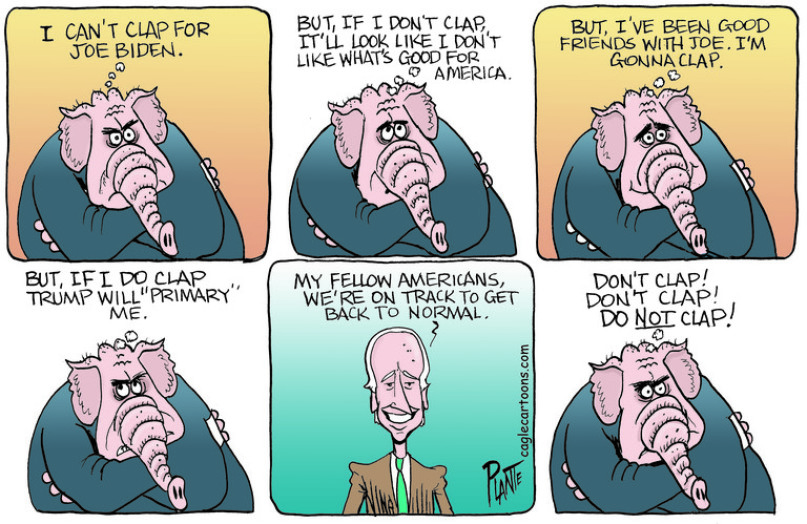
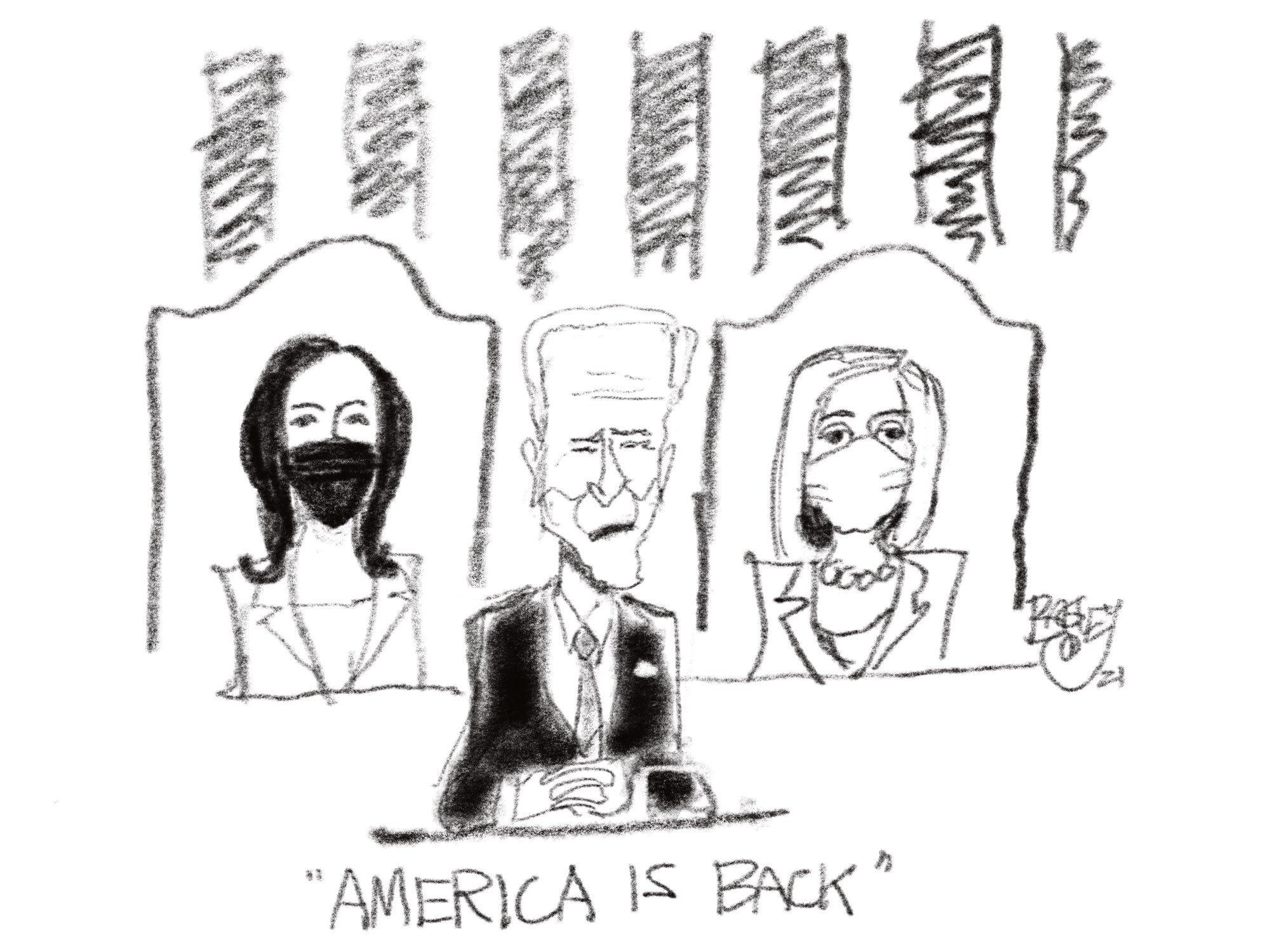
Last night President Biden gave his first speech to a joint session of Congress. For the first time, two women sat behind the president, Vice President Kamala Harris and Speaker of the House Nancy Pelosi. A couple of reactions to the speech:
There were two moments during President Biden’s address to the nation on Wednesday in which he obviously, if only indirectly, referred to the man who preceded him in his position.
The first came near the beginning.
“America is rising anew,” Biden said, “choosing hope over fear, truth over lies, and light over darkness.”
Only the second of those three pairings is immediately and obviously about Donald Trump; the former president’s indifference to accuracy is unparalleled. But by stringing the three together, Biden was similarly positioning Trump as the target of the other pejoratives. America under Trump, he’s saying, was a place of fear, dishonesty and darkness. That tracks with Biden’s past rhetoric and, frankly, Trump’s own: Biden warned the country last autumn that a dark winter was coming because of the pandemic (and Trump’s leadership failures), and Trump himself made fear a central part of his reelection bid.\But now, Biden argued on Wednesday night, all of that was swept aside.
“After 100 days of rescue and renewal, America is ready for takeoff, in my view,” he said. “We’re working again, dreaming again, discovering again and leading the world again. We have shown each other and the world that there’s no quit in America.”
From there, Biden turned his attention to an exhaustive list of policy priorities, one that, in its own way, differentiated his speech from any of Trump’s. Not only were his proposals robust and detailed in a way that was never Trump’s style, they were also progressive in a way that no Republican’s would be. It was an obvious difference and, of course, the most important one in terms of governance.
But it was also a reminder that Biden always ran on being a president who just sort of quietly went about presidenting, a promise that he has fulfilled in spades.
President Joe Biden’s address to a joint session Congress was the most ambitious ideological statement made by any Democratic president in decades—couched in language that made it sound as if he wasn’t making an ideological argument at all.
Make no mistake that he was. He called for trillions in new spending in a robust expansion of government’s role in multiple arenas of American life in ways that would have been impossible to contemplate in Barack Obama’s presidency. He plunged into subjects—racial and class inequities, immigration, gun violence—that were rubbed raw until bleeding in Donald Trump’s.
Usually these issues are framed with a question: Which side are you on? Though rarely described as gifted orator, Biden’s speech was a remarkable performance in part because it didn’t soar and largely didn’t even try to. In plain-spoken language, he depicted a breathtakingly large agenda as plain common sense. Instead of imploring partisans to take sides, he projected bewilderment that any practical-minded person of any persuasion could be opposed.
Under a pose of guilelessness, Biden’s speech was in fact infused with political guile. The agenda he promoted to expand both free pre-school and community college, to subsidize the shift to a low-carbon economy, to fund a massive way of new public works construction by taxing the very wealthy, represented years of pent-up demand by progressives. But much of the money would be spent in ways designed to break up the Trump coalition, which was powered heavily by middle- and lower-middle class whites who do not have college degrees with contempt for many parts of the progressive agenda.
Referring to his infrastructure proposal, Biden argued: “Nearly 90 percent of the infrastructure jobs created in the American Jobs Plan do not require a college degree. Seventy-five percent don’t require an associate’s degree. The American Jobs Plan is a blue-collar blueprint to build America.”
The bet is that material gains—i.e., a recovery that produces lots of working class jobs, and allows families to more easily educate their children—can trump the cultural grievances that sent many of these people into the conservative movement over the past two generations, beginning with George Wallace’s hardhat supporters and later becoming a flood of “Reagan Democrats.”
About half of Americans who watched President Joe Biden’s address to Congress had a very positive reaction to the speech, and 71% said they walked away feeling more optimistic about the country’s direction, according to a CNN Poll conducted by SSRS.
By a wide margin, speech-watchers said that Biden’s policy proposals would move the country in the right direction (73%) rather than the wrong direction (27%). In a survey conducted before the speech, the same people were a bit less bullish that Biden would lead in the right direction (67% right direction, 33% wrong direction), and that movement came from the independents and Republicans who watched the speech. Among Republicans, the share saying Biden’s policies would move the country in the right direction grew from 13% pre-speech to 27% post-speech, while among independents, that percentage rose from 61% to 73%.
That perception carries through to the major issues covered in the speech. More than 8 in 10 said Biden’s proposals on the coronavirus pandemic would move in the right direction (86%), and 74% said the same about racial injustice. Around 7 in 10 said the President’s policies on the economy (72%), gun laws (70%) and taxes (70%) were steps in the right direction. Slightly fewer said the same about immigration (65%).
And Biden’s focus on those issues appeared to hit the right mark for speech-watchers. Overall, 68% said Biden has had the right priorities so far as president, while 32% said he has not paid enough attention to the most important problems.
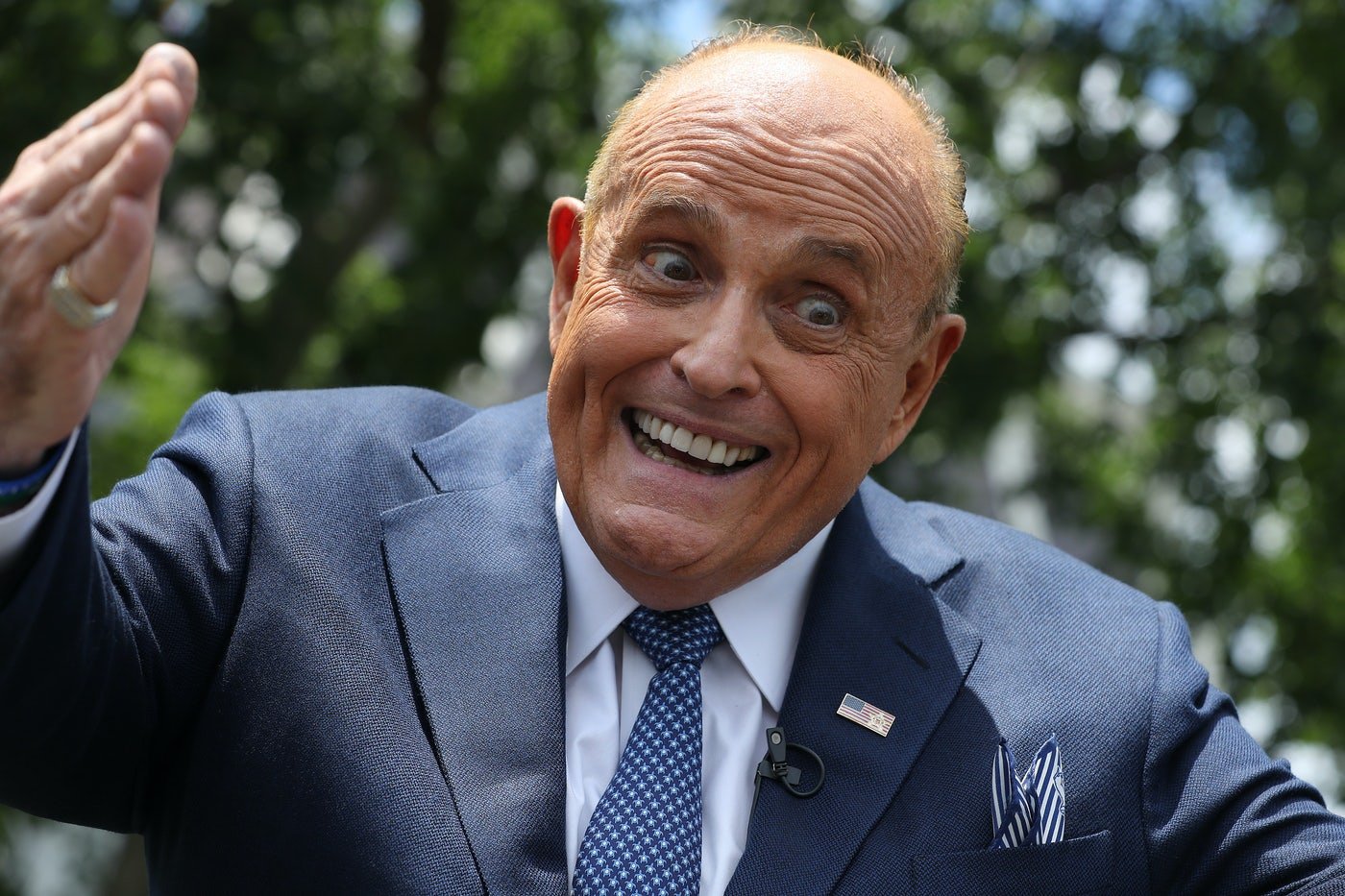
Federal investigators searched Rudy Giuliani’s home and office in Manhattan on Wednesday, executing search warrants as part of an investigation into his business dealings in Ukraine, reports The New York Times.
The former New York City mayor and personal lawyer to former President Donald Trump is being investigated over possible illegal lobbying on behalf of Ukrainian officials and his efforts to dig up dirt on Trump’s political rivals. “Executing a search warrant is an extraordinary move for prosecutors to take against a lawyer, let alone a lawyer for a former president,” writes the Times. “While the warrants are not an explicit accusation of wrongdoing against Mr. Giuliani, it shows that the investigation has entered an aggressive new phase.”
Experts agreed the search represented very serious stakes for Giuliani. Former U.S. attorney Harry Litman wrote that “this means that a magistrate judge has found probable cause to believe that [Giuliani’s actions in Ukraine] were criminal.” As the Times writes, “to obtain a search warrant, investigators need to persuade a judge they have sufficient reason to believe that a crime was committed and that the search would turn up evidence of the crime.”
Federal prosecutor and legal analyst Shanlon Wu called the search an “extraordinary step,” and wrote that “no amount of hot air and ranting is going to help Rudy Giuliani now.”
Litman continued: “I don’t know offhand the percentage of people whose [apartments] are searched by warrant who are then indicted … but it’s high, and given Giuliani’s profile, it has to be higher [because] they would be more careful and get lots of approvals.”
The search warrant was reportedly a long time coming, and politics may have slowed it down. The process was delayed for the presidential election so as not to sway voters, and Trump appointees at the DOJ reportedly managed to temporarily block the warrant while Trump was still in office.
I spoke with Preet Bharara, who served as the U.S. Attorney for the district from 2009 to 2017 — and whose podcast, Stay Tuned, was recently acquired by Vox Media — about Giuliani’s predicament and where the investigation might go next.
How significant is this move by the Feds from your perspective? How much legal danger does Giuliani face here? I think it’s extremely significant. I’m not one to say that when routine subpoenas are issued or interviews are conducted, but here you have a very prominent person — not just the former lawyer to the president of the United States but also the former U.S. Attorney of the office that’s involved in the investigation. The fact that you execute a warrant on someone’s residence does not necessarily mean there will be a charge, but given the circumstances, given the identity of Mr. Giuliani, given what you have to show to get a judge to authorize the warrant and the search — that’s a sign that he’s in deep trouble. We saw this play out with respect to Michael Cohen and to Paul Manafort. Very prominent targets, very sensitive cases. Both of those men were charged.
The two people you just cited also both went to prison. Is that where this could be going?
I used to head that office, and there are search warrants that get executed on people’s premises and their offices, and no charges follow. That happens, and Giuliani is presumed to be innocent. But what’s likely is that there has already been substantial investigation. The reporting was that they tried to execute these searches when Trump was in office, and they were stymied by higher-ups in the Justice Department. Bear in mind, they’re probably far along, given what showing they have to make of probable cause to do these searches in the first place. They likely already have a lot of Rudy Giuliani’s communications. You don’t need to have his devices in your possession to have email records; those are obtained from third parties, and they probably have all of that. It’s anyone’s guess what the charges will be and when they will come. But in my experience, when you do something like this, that you know will have a reputational effect on the subject, you’re usually thinking there’s a good likelihood of a charge.
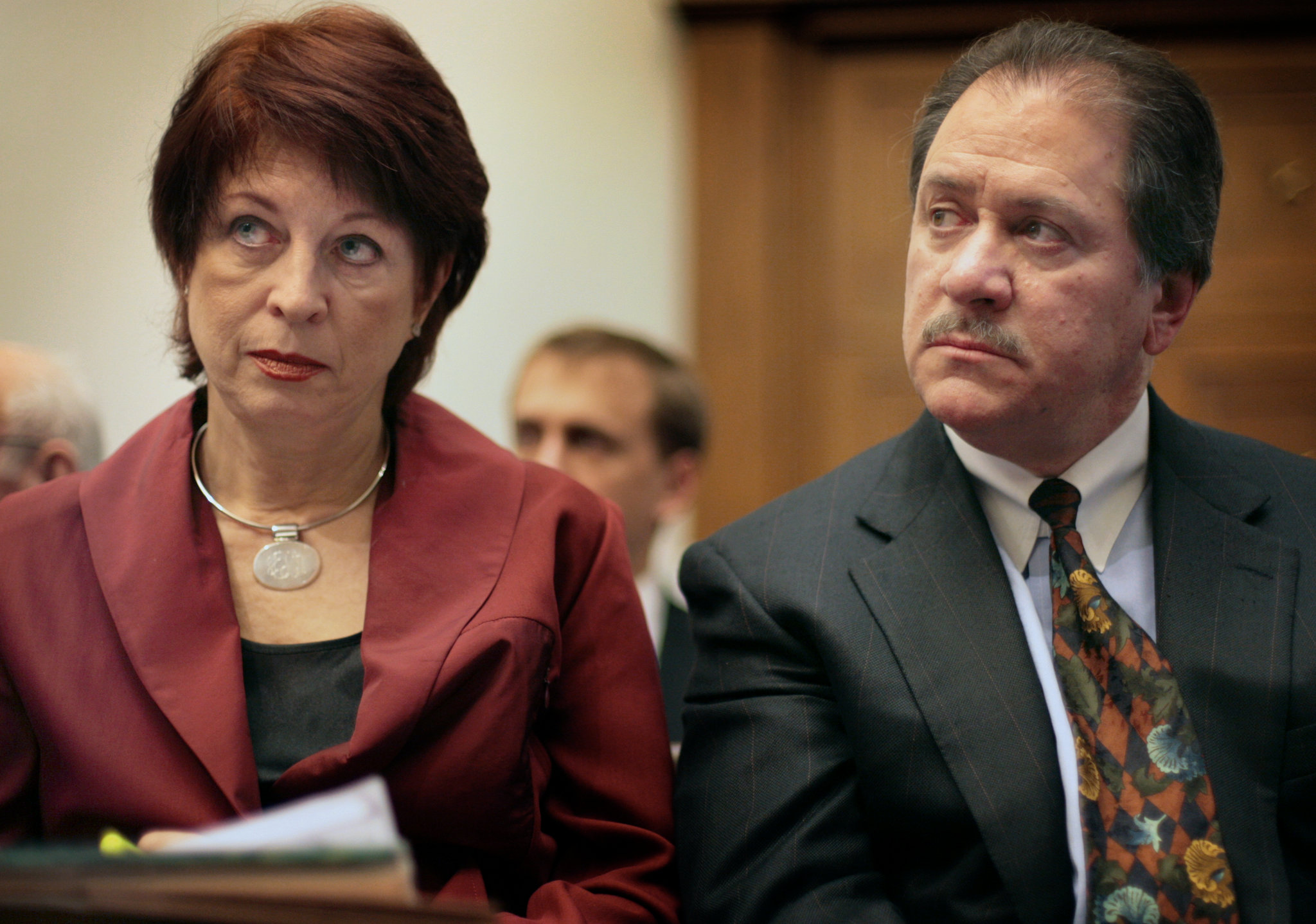
It hasn’t been as widely reported, but it’s also significant that the Feds searched the home of another Trump-associated attorney, Victoria Toensing. Nicholas Reimann at Forbes: Feds Search Giuliani’s, Toensing’s Properties As Part Of Ukraine Investigation.
Federal investigators searched Rudy Giuliani’s Manhattan apartment on Wednesday and later searched the home of attorney Victoria Toensing as part of a probe into whether Giuliani acted on behalf of Ukrainian oligarchs to illegally lobby the Trump Administration, according to multiplereports, with investigators said to have seized electronic devices.
Hold the phone — FBI now at Victoria Toensing's house. Lawyer, wife and partner of Joseph DiGenova, same circles as Rudy and Trump. This has the hallmarks of a bigger day at DOJ. And she's probably not expecting it, unlike Rudy
F.B.I. agents also executed a search warrant on Wednesday morning at the Washington-area home of Victoria Toensing, a lawyer close to Mr. Giuliani who had dealings with several Ukrainians involved in the hunt for information on the Bidens, according to people with knowledge of that warrant. The warrant was for her cellphone.
Ms. Toensing, a former Justice Department official, has also represented Dmitry Firtash, a Ukrainian oligarch under indictment in the United States whose help Mr. Giuliani sought.
In case you missed it, Louisiana Sen. John N. Kennedy made a fool of himself again yesterday when he made the mistake of trying to put one over on Stacey Abrams. He asked her to explain what is so racist about the Georgia voter suppression law.
Stacey Abrams continued her crusade against Georgia’s new voting law this week by supplying lawmakers with a laundry list of reasons why she finds the changes both restrictive and racist.
The Democratic voting rights activist has been an outspoken critic of the law, arguing it will have a disproportionate effect on voters of color. At a Senate Judiciary Committee hearing Tuesday, she came prepared to make her case.
When Sen. John Kennedy (R-La.) asked Abrams to clarify which provisions of Georgia’s new voting law she opposed, she didn’t hold back.
Another lesser blowhard, John Cornyn of Texas, also tried it.
At another point during the four-hour meeting, Abrams got into a tense exchange with Sen. John Cornyn (R-Texas), who suggested states controlled by Democrats with similar voting laws hadn’t been subjected to the same criticism as Georgia.
Cornyn pointed to New York and Connecticut, which require that voters provide an accepted excuse ― such as being away from home or having a disability ― to be able to vote by mail, whereas Georgia has no such provision. Noting that laws in many states “need to be improved,” Abrams stated that she believed it was how laws target certain communities that make them racist.“The intent always matters, sir, and that is the point of this conversation,” she said. “That is the point of the Jim Crow narrative. That Jim Crow did not simply look at the activities, it looked at the intent. It looked at the behaviors and it targeted behaviors that were disproportionately used by people of color.”
But getting back to fake good ol’ boy John N. Kennedy, I came across this great 2019 piece at NOLA.com: Who said it: Sen. John Kennedy or Foghorn Leghorn? It’s includes a quiz where you have to guess which blowhard uttered a colorful descriptive phrase.
John Neely Kennedy is the junior U.S. senator from Louisiana who was a key member of Gov. Buddy Roemer’s staff before being elected to five terms as the state treasurer.
Foghorn J. Leghorn is an animated chicken who appeared as a featured character in Looney Tunes and Merrie Melodies cartoons for Warner Bros. Pictures.
Kennedy graduated magna cum laude in political science, philosophy, and economics from Vanderbilt, where he was president of his senior class and elected to Phi Beta Kappa. He received his law degree from the University of Virginia and his Bachelor of Civil Law degree from Oxford University in England where he was a First Class Honors graduate.
Leghorn starred in 29 cartoons from 1946 to 1964 in what is considered the Golden Age of American Animation, usually tormenting a dog named Dawg while fending off attacks from a feisty young chicken hawk named Henery Hawk.
There is practically no way to get the two confused … unless you are just reading what they have said. Then, it gets a little tricky.
Some sample questions:
“He’s about as sharp as a bowling ball.”
“That’s as subtle as a hand grenade in a bowl of oatmeal.”
“She has a billygoat brain and a mocking bird mouth.”
I urge you to take the quiz and see how you do.
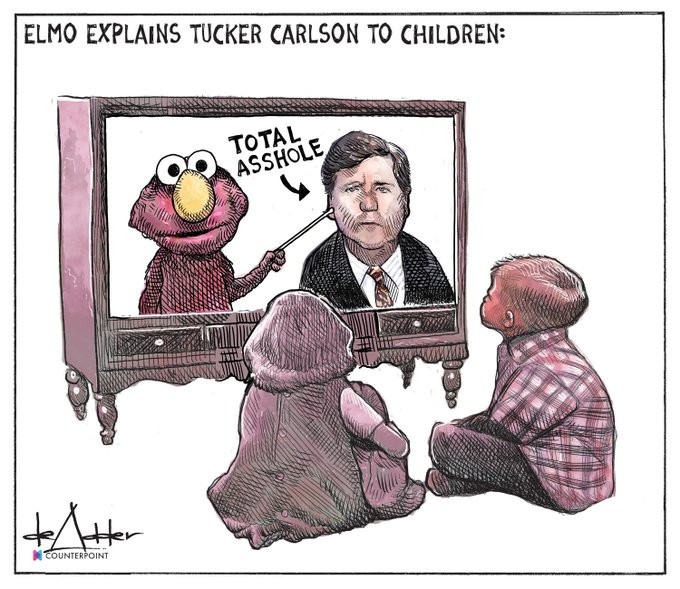
While we’re talking about blowhards making fools of themselves, have you seen any of the tweets about Tucker Carlson’s show lately? The guy seems to have gone off the deep end.
Tucker Carlson had a complete meltdown tonight in response to a former New York corrections officer who criticized Derek Chauvin for using excessive force on George Floyd. Here's how the interview (abruptly) ended. pic.twitter.com/mBOxrsbhaJ
Fox News host Tucker Carlson cackled at, then dismissed the opinions of a New York City law enforcement veteran who strayed from the far right-wing pundit’s narrative on Tuesday’s murder conviction of Minneapolis police officer Derek Chauvin.
Carlson’s interview with Former New York City Deputy Sheriff Ed Gavin began with the host leading Gavin with the question “Who’s going to become a cop going forward, do you think?”\Gavin didn’t appear to see police officers as the victims in the killing of George Floyd, where video showed Chauvin kneeling on the victim’s neck for nearly 9½ minutes.
“Well, I think people will still become police officers,” Gavin said. “This really is a learning experience for everyone. Let’s face it, what we saw in that video was pure savagery.”
Carlson crunched his eyebrows as Gavin said that based on his experiences, the “emotionally disturbed” Floyd had been successfully contained — and more — during the “excessive” May 2020 traffic stop that cost him his life. Gavin also said he’d like to see more training for police.
“I’ve used force on literally over 500 people in my 21-year career in the New York City Department of Corrections, and in the New York City Sheriff’s Department,” Gavin said. “I’ve never had anybody go unconscious. That was truly an excessive, unjustified use of force.”
After a bit more of this, Carlson flipped out and claimed that American cities are locked down and boarded up because of nonviolent Black Lives Matter protests.
“Well, yeah, but the guy that did it looks like he’s going to spend the rest of his life in prison so I’m kind of more worried about the rest of the country, which thanks to police inaction, in case you haven’t noticed, is, like, boarded up,” Carlson complained before letting loose a shrill, maniacal laugh.
“So that’s more my concern. But I appreciate it, Gavin, thank you,” Carlson quickly added.
The flummoxed officer tried to further illustrate his point, but Carlson ended the segment.
“Nope, done!” the host exclaimed before moving on to his next guest — an author who’d penned a book called “The War on Cops.”
Greg Sargent wrote about Carlson’s weird fantasy about America being shut down by the protests: Opinion: The disturbing link between Tucker Carlson and Marjorie Taylor Greene.
It was hard not to notice that Tucker Carlson and Rep. Marjorie Taylor Greene (R-Ga.) had an oddly similar reaction to the conviction of Derek Chauvin. Both responded with extraordinarily unhinged hyperbole about the violence they imagine is gripping urban America right now — or pretend to imagine, anyway.
What shared instinct would cause them both to gravitate to precisely this same imaginary place?
Carlson’s reaction came amid a spectacular meltdown in response to a former law enforcement official who argued that Chauvin’s use of force was excessive. Carlson dismissed the point, saying: “I’m kind of more worried about the rest of the country, which, thanks to police inaction, in case you hadn’t noticed, is, like, boarded up.”
The implication was that, because of protests against police brutality, police are too closely scrutinized to sufficiently keep order, tipping the country into civil collapse.
Of course, you probably haven’t noticed that the “rest of the country” is “boarded up,” because, well, it isn’t.
Carlson hammered away at the wildly exaggerated idea that police under scrutiny were allowing the country to succumb to chaos throughout the 2020 Black Lives Matter protests. His new innovation is that a jury holding a police officer accountable for the brutal murder of someone already in his captivity is what’s causing this.
DC is completely dead tonight. People stayed in and were scared to go out because of fear of riots.
Police are everywhere and have riot gear.#BLM is the strongest terrorist threat in our county.
Greene and Carlson agree that Armageddon is gripping U.S. cities and that protests against police brutality are causing it.
Yet Greene’s depiction, too, is false. As Philip Bump demonstrates, Tuesday in D.C. was generally normal despite people feeling tense over the coming verdict, and any police presence in D.C. is a holdover from the threat of right-wing violence after Jan. 6.
Appearing on Fox News’ The Ingraham Angle on Wednesday night, Dershowitz—who is currently advising pro-Trump pillow magnate Mike Lindell as he faces a billion-dollar defamation lawsuit from Dominion Voting Systems—first took issue with the White House saying that the “bar for convicting officers is far too high” and reform is still needed.
“We need to apply the same standard to police and ordinary citizens except we have to understand that ordinary citizens have no obligation to risk their lives to prevent an ongoing crime,” he said, adding: “So the rules have to defer and understand and recognize the risks that police take. When it comes to the elements of actual crimes, you can’t bury them. You can’t raise the bar for certain groups of people over other groups of people.”
Host Laura Ingraham then turned to Chauvin, expressing concern that it’s been reported that he’s currently in solitary confinement while also wondering aloud why he’s even in prison.
Acknowledging that “different states have different rules” when it comes to bail for convicted murderers, Dershowitz said that the judge provided “good appellate issues” to the defense.
“He should be released on bail,” Dershowitz declared. “There is no reason why he should be remanded. He’s not going to flee. He wants to have an appeal. He’s not going to endanger anybody. His face is well known.”
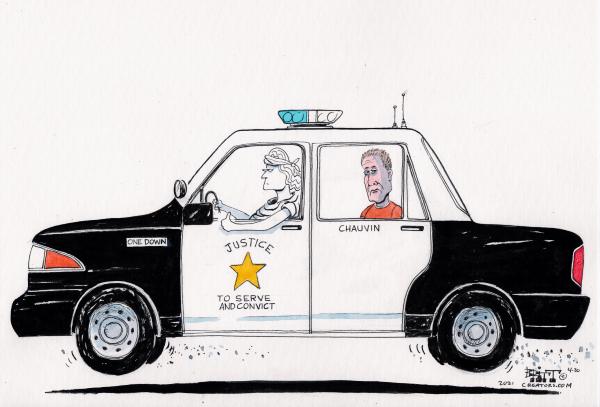
How many people who have been convicted of murder get out on bail pending appeals? Is that a regular practice?
People who actually had to deal with Chauvin in the past feel differently, according to this piece from Reuters, via Yahoo News: ‘No sympathy’ for Chauvin, say those who had run-ins before Floyd.
MINNEAPOLIS (Reuters) – For some of those who encountered Derek Chauvin’s policing or witnessed his use of force as an officer there is no sympathy for the man convicted of killing George Floyd.
Chauvin was the subject of at least 17 complaints during his career, according to police records, but only one led to discipline. Prosecutors sought permission to introduce eight prior use-of-force incidents, but the judge would only allow two. In the end the jury heard none.
Eric Nelson, Chauvin’s lawyer, has defended his client’s use of force as appropriate in potentially dangerous situations.
“I don’t have no sympathy for him. I think he got what he deserved,” Julian Hernandez, 38, a carpenter now working in Pennsylvania, told Reuters.
Hernandez said he never heard anything from the Minneapolis police after submitting a complaint about Chauvin, who he said “choked him out” during an encounter in a Minneapolis night club in 2015. A spokesman for the Minneapolis Police Department declined to comment.
According to Chauvin’s police report, Hernandez failed to follow orders and resisted arrest when Chauvin, who was working as an off-duty security guard, tried to escort him out of a night club. Chauvin’s report said this prompted him to apply “pressure toward his Lingual Artery” to subdue Hernandez.
Hernandez said Chauvin picked him out of the crowd for no reason and quickly escalated to violence. He said Chauvin should have been removed from the police force.
Read more examples at the link.
Sorry this is such an unserious post. That’s just the mood I’m in today, I guess. As always, this is an open thread.
Did you like this post? Please share it with your friends:
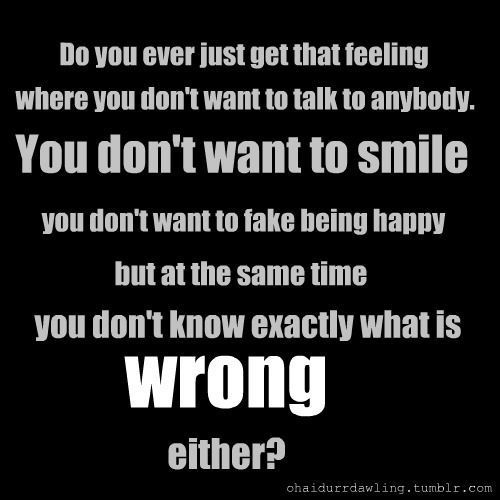
I’ve been really dragging lately–partly because of health problems, but very likely also because of the exhausting events of the past year. Am I “languishing”? Are you?
At first, I didn’t recognize the symptoms that we all had in common. Friends mentioned that they were having trouble concentrating. Colleagues reported that even with vaccines on the horizon, they weren’t excited about 2021. A family member was staying up late to watch “National Treasure” again even though she knows the movie by heart. And instead of bouncing out of bed at 6 a.m., I was lying there until 7, playing Words with Friends.
It wasn’t burnout — we still had energy. It wasn’t depression — we didn’t feel hopeless. We just felt somewhat joyless and aimless. It turns out there’s a name for that: languishing.
Languishing is a sense of stagnation and emptiness. It feels as if you’re muddling through your days, looking at your life through a foggy windshield. And it might be the dominant emotion of 2021.
As scientists and physicians work to treat and cure the physical symptoms of long-haul Covid, many people are struggling with the emotional long-haul of the pandemic. It hit some of us unprepared as the intense fear and grief of last year faded.
That sounds familiar. Of course I was already completely exhausted by the horror of 2016 and three years of Trump insanity when the pandemic hit. I’ve also been dealing with an autoimmune disorder called polymyalgia rheumatica. Despite seeing a Rheumatologist and taking multiple medications over the past year, I’m still struggling with chronic joint pain and stiffness. That has added to my sense of emotional exhaustion. I know I’m not alone in feeling overwhelmed by everything that’s been happening.
More from Adam Grant on “languishing:”
In the early, uncertain days of the pandemic, it’s likely that your brain’s threat detection system — called the amygdala — was on high alert for fight-or-flight. As you learned that masks helped protect us — but package-scrubbing didn’t — you probably developed routines that eased your sense of dread. But the pandemic has dragged on, and the acute state of anguish has given way to a chronic condition of languish.
In psychology, we think about mental health on a spectrum from depression to flourishing. Flourishing is the peak of well-being: You have a strong sense of meaning, mastery and mattering to others. Depression is the valley of ill-being: You feel despondent, drained and worthless.
Languishing is the neglected middle child of mental health. It’s the void between depression and flourishing — the absence of well-being. You don’t have symptoms of mental illness, but you’re not the picture of mental health either. You’re not functioning at full capacity. Languishing dulls your motivation, disrupts your ability to focus, and triples the odds that you’ll cut back on work. It appears to be more common than major depression — and in some ways it may be a bigger risk factor for mental illness.
The term was coined by a sociologist named Corey Keyes, who was struck that many people who weren’t depressed also weren’t thriving. His research suggests that the people most likely to experience major depression and anxiety disorders in the next decade aren’t the ones with those symptoms today. They’re the people who are languishing right now. And new evidence from pandemic health care workers in Italy shows that those who were languishing in the spring of 2020 were three times more likely than their peers to be diagnosed with post-traumatic stress disorder.
Part of the danger is that when you’re languishing, you might not notice the dulling of delight or the dwindling of drive. You don’t catch yourself slipping slowly into solitude; you’re indifferent to your indifference. When you can’t see your own suffering, you don’t seek help or even do much to help yourself.
Read the whole thing at the NYT and see what you think.
Walter F. Mondale, a preacher’s son from southern Minnesota who climbed to the pinnacle of U.S. politics as an influential senator, vice president and Democratic nominee for president, died on Monday. He was 93.
Known as “Fritz” to family, friends and voters alike, Mondale died in Minneapolis, according to a statement from his family.
“As proud as we were of him leading the presidential ticket for Democrats in 1984, we know that our father’s public policy legacy is so much more than that,” read the Mondale family statement.
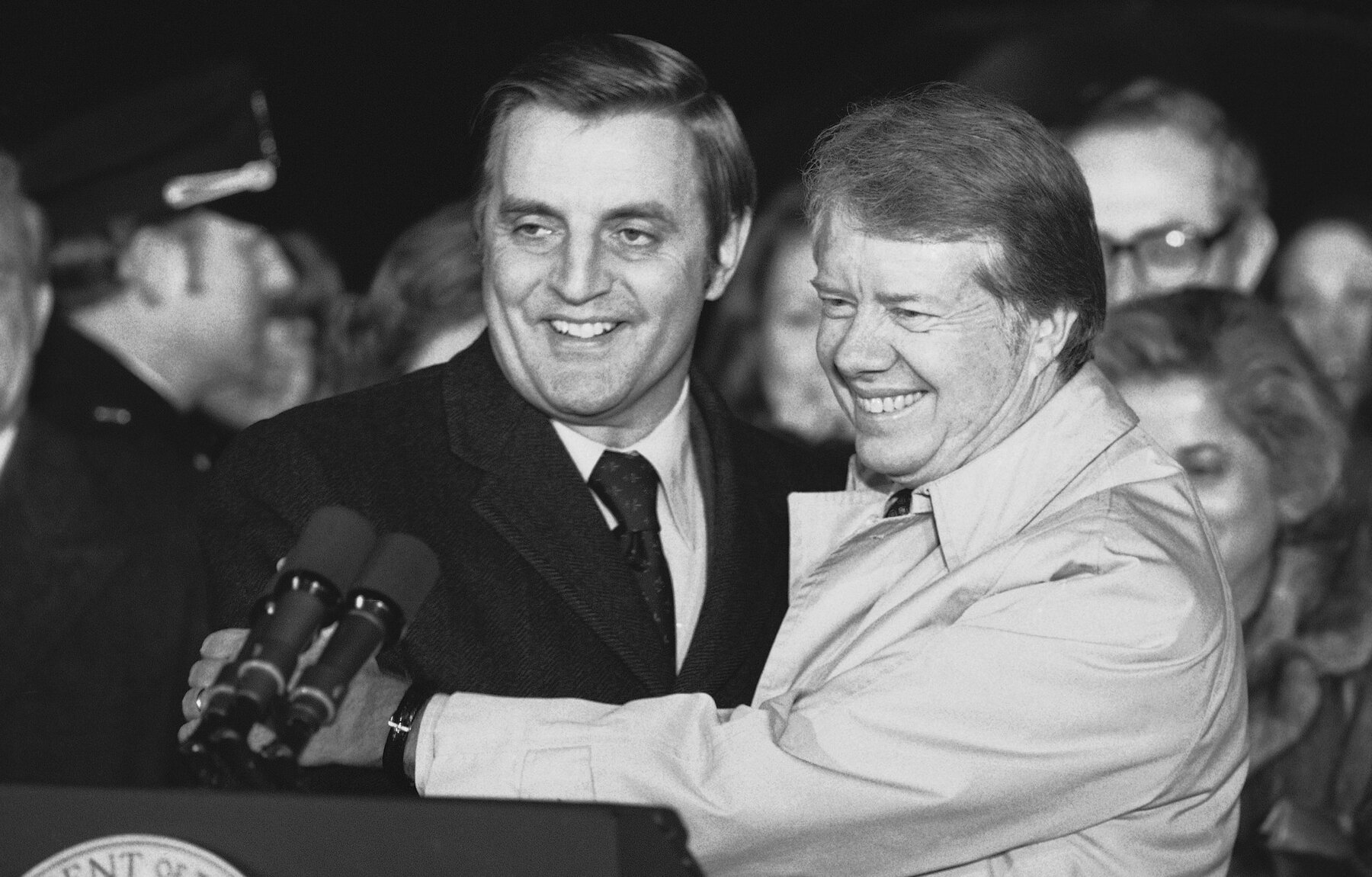
Former President Jimmy Carter, who chose Mondale as his running mate in 1976, called his friend “the best vice president in our country’s history.”
“He was an invaluable partner and an able servant of the people of Minnesota, the United States and the world,” Carter said in a statement. “Fritz Mondale provided us all with a model for public service and private behavior.”
After serving four years under Carter, Mondale was the Democratic nominee for president in 1984. He lost to the incumbent, President Ronald Reagan, in a historic landslide.
“A night like that is hard on you,” Mondale wrote in his 2010 memoir, “The Good Fight.”
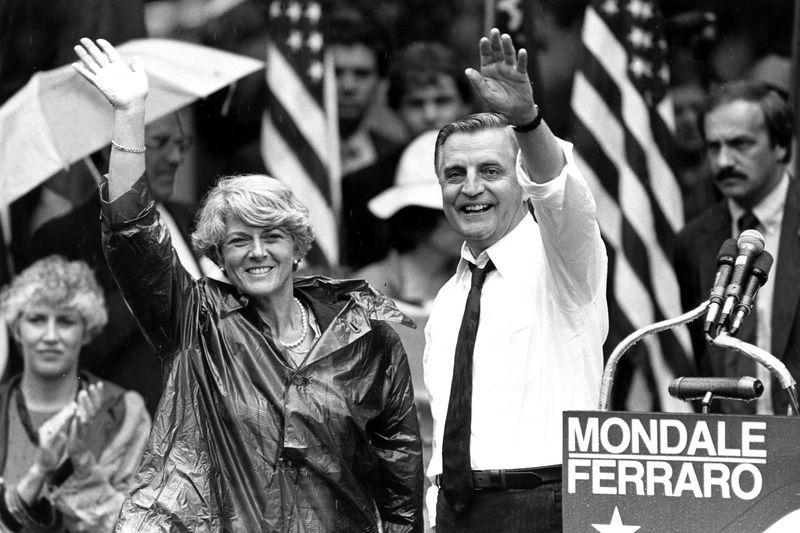
Even in defeat, Mondale made history by choosing as his running mate Geraldine Ferraro, the first woman to run for vice president on a major-party ticket. It followed a series of political landmarks in a public career that spanned seven decades.
A protégé of Hubert H. Humphrey, another Minnesota politician who rose to the vice presidency and lost a presidential election, Mondale served as a U.S. senator from Minnesota for a dozen years. He played a lead role in the passage of social programs, civil rights laws and environmental protections that defined President Lyndon B. Johnson’s “Great Society.”
As vice president from 1977 to 1981, Mondale transformed the office from what had historically been a punchline into what both he and Carter called a true governing partnership. Mondale’s role as chief adviser and troubleshooter, working from a West Wing office near the Oval Office, became a model for successors including George H.W. Bush, Al Gore, Dick Cheney and Joe Biden.
“The first person I called was Fritz,” Biden once said about the time President Barack Obama offered him the No. 2 position.
At The Washington Post, Karen Tumulty wrote about how Mondale changed the vice presidency: Opinion: Walter Mondale reinvented the vice presidency. Both Biden and Harris should thank him for it.
[Mondale’s] most enduring contribution may well have been the invention of the modern vice presidency, and his creation of a template that has been followed to some degree ever since. Mondale’s activist model as an all-purpose adviser and troubleshooter is one for which President Biden, a former vice president, and Kamala D. Harris, the current occupant of the office, should be grateful.
Before Mondale, the vice president was largely a figurehead….
But Jimmy Carter, coming to Washington in 1977 with a contingent of fellow Georgians and no real sense of how the place operated, had recognized that he needed a true governing partner with the experience Mondale had honed in 12 years as a well-regarded senator from Minnesota.
Mondale was the first vice president to have an office in the West Wing, steps from the president’s own, rather than being sidelined in the Old Executive Office Building, and a weekly lunch scheduled with the president. Carter also made it clear that their two staffs were to be considered one; Mondale’s chief of staff Richard Moe was given the additional title “assistant to the president.”
“We felt that Fritz’s long experience in Washington and the fact that for the first time he was being integrated into the Presidency itself was a compensating factor for the ignorance among the Georgia group concerning Washington,” Carter said, referring to Mondale, in a 1982 oral history moderated by the University of Virginia’s Miller Center.
Prosecutors treat closing arguments as an opportunity to make things simple for the jury and to keep them focused on the critical issues. Thus we heard state prosecutor Steve Schleicher’s mantra to the jury to “believe your eyes,” and his repeated references to the video evidence as well as his use of visual aids through which Schleicher listed and then checked off each legal element of each offense as he reminded the jury of the evidence proving them. This was a very effective technique, giving jurors who walked into the jury room inclined to vote to convict some ammunition to use in convincing more reluctant fellow jurors.
Defense Attorney Eric Nelson and Derek Chauvin
Defense lawyers have a different checklist, and Chauvin’s lawyer Eric Nelson hit all of his marks. Defense lawyers use closings to distract the jurors, to pull them away from the focus encouraged by prosecutors, and to provide as many reasons as they can muster as to why the prosecutors’ theory of the case fails.
Nelson embraced this tactic, spending almost an hour showing body camera footage of and arguing about the period before Chauvin restrained Floyd, a time when other officers were trying to cram a resisting Floyd into the squad car, while virtually ignoring most of the 9 minutes and 29 seconds that Chauvin knelt on Floyd’s neck. Nelson then tossed out all of the alternate causation theories he had cultivated throughout the trial — Floyd’s preexisting heart condition, his consumption of fentanyl and methamphetamine, the paraganglioma tumor, and possible carbon monoxide poisoning — claiming that with all of these possibilities out there, prosecutors couldn’t possibly prove causation beyond a reasonable doubt.
Jurors would be forgiven if their heads were spinning a bit from this rapid fire of legal theories — and that is exactly what the defense was aiming for.
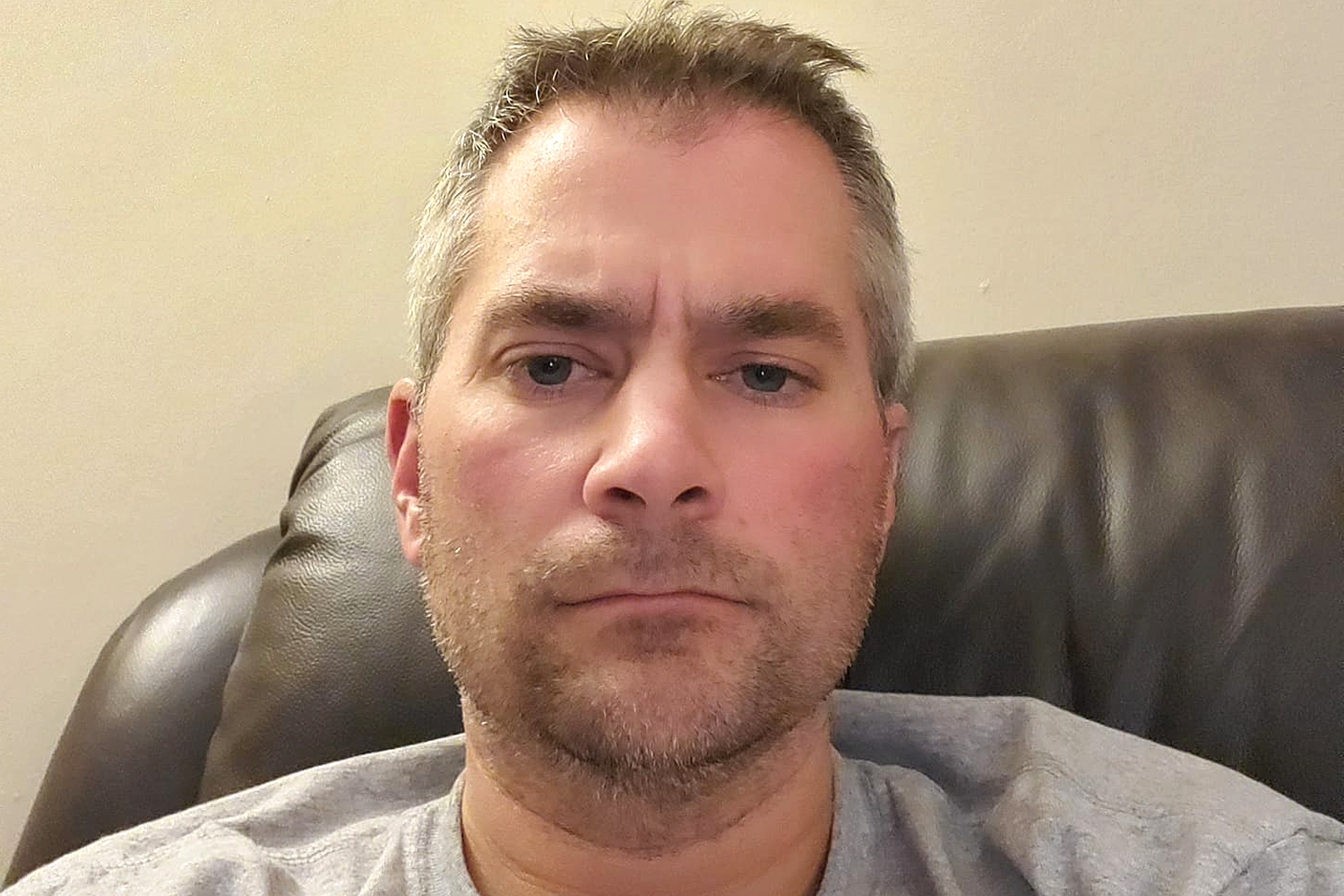
Capitol Police officer Brian D. Sicknick suffered two strokes and died of natural causes a day after he confronted rioters at the Jan. 6 insurrection, the District’s chief medical examiner has ruled.
The ruling, released Monday, will make it difficult for prosecutors to pursue homicide charges in the officer’s death. Two men are accused of assaulting Sicknick by spraying a powerful chemical irritant at him during the siege, but prosecutors have not tied that exposure to Sicknick’s death.
In an interview with The Washington Post, Francisco J. Diaz, the medical examiner, said the autopsy found no evidence the 42-year-old officer suffered an allergic reaction to chemical irritants, which Diaz said would have caused Sicknick’s throat to quickly seize. Diaz also said there was no evidence of internal or external injuries.
While there’s apparently no proof, it’s difficult to believe that a man in his early 40s who was involved in a violent insurrection and probably was hit with bear spray suddenly had two spontaneous strokes. But that’s where things stand.
Brian Sicknick
Christopher Macchiaroli, a former federal prosecutor who handled violent crime cases before grand juries in D.C. Superior Court and U.S. District Court, said a ruling of a death by natural causes “does make it more difficult to bring a homicide prosecution.”
Macchiaroli said additional evidence of some conduct by rioters could emerge independently, which prosecutors could argue contributed to the strokes. But he said that “any defense attorney . . . would use the medical examiner’s conclusions as clear-cut evidence of reasonable doubt.”
In explaining the decision, the medical examiner’s office provided an updated timeline leading up to Sicknick’s death. A statement says Sicknick collapsed 7 hours and 40 minutes after he was sprayed, and then died nearly 24 hours after that.
Sicknick was among hundreds of officers who confronted the violent mob that took over the Capitol, seeking to overturn the election Donald Trump had lost. Nearly 140 officers were assaulted, authorities said, facing some rioters armed with ax handles, bats, metal batons, wooden poles, hockey sticks and other weapons.
So . . . what’s on your mind today? As always, this is an open thread.
Did you like this post? Please share it with your friends:
The Sky Dancing banner headline uses a snippet from a work by artist Tashi Mannox called 'Rainbow Study'. The work is described as a" study of typical Tibetan rainbow clouds, that feature in Thanka painting, temple decoration and silk brocades". dakinikat was immediately drawn to the image when trying to find stylized Tibetan Clouds to represent Sky Dancing. It is probably because Tashi's practice is similar to her own. His updated take on the clouds that fill the collection of traditional thankas is quite special.
You can find his work at his website by clicking on his logo below. He is also a calligraphy artist that uses important vajrayana syllables. We encourage you to visit his on line studio.










 Make no mistake that he was. He called for trillions in new spending in a robust expansion of government’s role in multiple arenas of American life in ways that would have been impossible to contemplate in Barack Obama’s presidency. He plunged into subjects—racial and class inequities, immigration, gun violence—that were rubbed raw until bleeding in Donald Trump’s.
 By a wide margin, speech-watchers said that Biden’s policy proposals would move the country in the right direction (73%) rather than the wrong direction (27%). In a survey conducted before the speech, the same people were a bit less bullish that Biden would lead in the right direction (67% right direction, 33% wrong direction), and that movement came from the independents and Republicans who watched the speech. Among Republicans, the share saying Biden’s policies would move the country in the right direction grew from 13% pre-speech to 27% post-speech, while among independents, that percentage rose from 61% to 73%.
 Experts agreed the search represented very serious stakes for Giuliani. Former U.S. attorney Harry Litman
  How significant is this move by the Feds from your perspective? How much legal danger does Giuliani face here?
 F.B.I. agents also executed a search warrant on Wednesday morning at the Washington-area home of Victoria Toensing, a lawyer close to Mr. Giuliani who had dealings with several Ukrainians involved in the hunt for information on the Bidens, according to people with knowledge of that warrant. The warrant was for her cellphone.
 But getting back to fake good ol’ boy John N. Kennedy, I came across this great 2019 piece at NOLA.com:
  Greg Sargent wrote about Carlson’s weird fantasy about America being shut down by the protests:
  “We need to apply the same standard to police and ordinary citizens except we have to understand that ordinary citizens have no obligation to risk their lives to prevent an ongoing crime,” he said, adding: “So the rules have to defer and understand and recognize the risks that police take. When it comes to the elements of actual crimes, you can’t bury them. You can’t raise the bar for certain groups of people over other groups of people.”
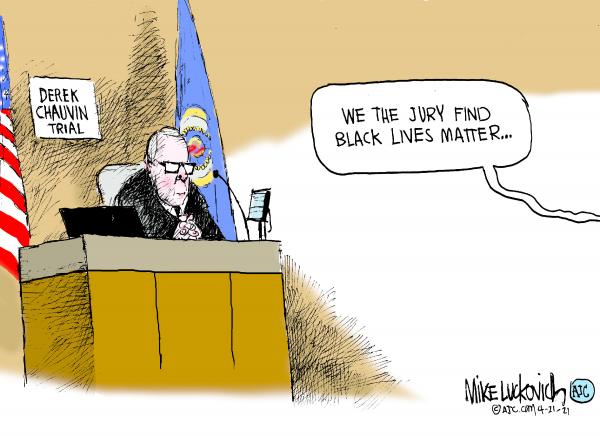 Eric Nelson, Chauvin’s lawyer, has defended his client’s use of force as appropriate in potentially dangerous situations.
  I’ve been really dragging lately–partly because of health problems, but very likely also because of the exhausting events of the past year. Am I “languishing”? Are you?
 In psychology, we think about mental health on a spectrum from depression to flourishing. Flourishing is the peak of well-being: You have a strong sense of meaning, mastery and mattering to others. Depression is the valley of ill-being: You feel despondent, drained and worthless.
 “He was an invaluable partner and an able servant of the people of Minnesota, the United States and the world,” Carter said in a statement. “Fritz Mondale provided us all with a model for public service and private behavior.”
 But Jimmy Carter, coming to Washington in 1977 with a contingent of fellow Georgians and no real sense of how the place operated, had recognized that he needed a true governing partner with the experience Mondale had honed in 12 years as a well-regarded senator from Minnesota.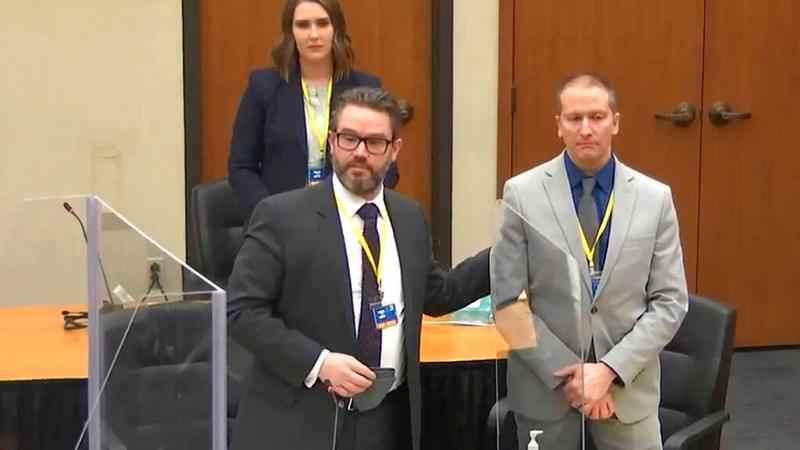

 peej
peej Carissa
 bostonboomer
 dakinikat
 ecocatwoman
 mablue2
 Mama Lopez
 peggysue22
 quixote
 skydancingguestblogger
 Mona (aka Wonk the Vote)



 Sky Dancing
Recent Comments