Posted: June 4, 2018 | Author: dakinikat | Filed under: Afternoon Reads, Marriage Equality, SCOTUS | Tags: SCOTUS decisions |
 Good Morning
I’m not a big fan of the institution of marriage. It’s one of those things purposefully set up to make men unnecessarily comfortable and women overtly miserable even though men swear they’re continually put out by it. Women are really sold a fish story on how the marriage thing is in their interests. Few marriages actually wind up being happy and equitable but still, every one hopes for it. I always hope that the institution evolves and think expanding it to the GLBT community helps that along although I wouldn’t be adverse to it going the way of the dinosaurs.
I’ve worked in a man’s field forever and my biggest shock was the level of upmanship expressed by men in groups–when no women are present–on whose wife is the worst. It’s almost always lists of reasonable requests like helping out with work, paying for something that kids or the house requires or doing some activity beyond living at work or on the couch. For some reason, I’ve always been a fly on the wall during these prick sessions. Women share stories about what theatrics men undertake to avoid work. We also know large numbers of wives beaten and/or emotionally abused by husbands. That’s central to women’s gatherings. That plus discussions of everything we gave up and continually give up. I’m going through the DV support with two friends now and it never gets easier. We trudge along with the drudge. Men make their wives monsters for it.
These are the reasons I always have problems with the traditional, patriarchal, religious frame hammered to marriage. This creates some of its worst tendencies as an institution. It always worries me to see laws and legal decisions that add more nails. Man act oppressed by it while taking advantage of its built-in safety net for them to oppress.
Domestic violence is central to enforcing dominance and marriages can be rife with it. You always think it won’t happen to you. You are amazed when they try to tell the family that you made them do it. Well#MeToo One day it went beyond eye rolling and heavy sighs and the “how dare you bitch!” look and I was headed with the youngest in diapers to my parents’ house totally in bruises but only after he tried to stop me from dialing 911 over and over. The instances of domestic violence alone make me happily single, alone in blissful solitude, and never in need of the experience of anything else.

I heard Bill Murray one night express my exact thoughts about marriage both gay and hetero. He failed miserably at it and I personally believe his exwife. After having been mired in marriage for 20 years, all I could think was if the GLBT community really wants it they should have it and I hope they can make less of a mess of it. He said about the same thing.
To be honest, even a large percentage of my long time married friends basically say what I say. If I had it to do over again, I’d have the kids and skip the husband. I’ve been divorced now since 1995. I do not want one of them around useless, in the way, constantly looking put out or angry, and just waiting for you to commit some imaginary sin so they can hit you, turn people against you, and go on doing whatever it is that meets their needs. I’d never enter into that fucked up bargain again. I discouraged my daughters from it. I remember my mom endlessly wailing “But what about my needs?” At one point, I understood fully what “until death us part” really meant. I’d gotten life in prison.
The funny thing is that I’ve gotten to the point now where I truly never fill lonely or understand what that means when folks express the feeling. I’ve grown so comfortable being in solitude that I can’t imagine wanting anything else.
But, I’m old, overly experienced, and I understand everything that’s bundled up and pressed on folks to be married and have a family. I also understand how it functions as an institution that establishes property rights and control. All the Abrahamic religions use it to establish male dominance and supremacy under the grift of it being some kind of sky fairy blessing. I can understand why they hate having all of that taken away and they don’t want to share it.

So, we’ve established that I really don’t do weddings unless truly forced into it. I just cannot contain my strong urge to tell the bride to run because she’s about to do irreparable damage to her entire life.
That being said marriage is between two people and it’s not up to any one else to interpret it or deny their access to what they want from it or the Merger Day. Religion should only define it for those who adhere to that religion. But, that’s not what all religions preach or do.
SCOTUS is comprised of a group of judges with a majority belonging to a cult within Catholicism. That would be Opus Dei. That’s something that even creeps Popes and the Jesuits out and they know a lot about oppression of women and children within religious institutions. It was started in 1928 and adores the concept of “Corporal Mortification”. That should tell you how sick they are. It’s basically a cult. But, a bunch of them sit on the bench because the Republicans love religious fanatics. They vote. Religious diversity left the building when it comes to SCOTUS and the christofascists love it! So, does every other bigoted throwback religion.
They love it because they gradually get to enshrine their sick, twisted, religious views into law. Now, today’s ruling was written by Kennedy and it’s leaving a door cracked open for future dissent, but what it basically does is create a weird notion of ‘religious liberty’. This is not just about the guy that just couldn’t bake a wedding cake for a gay couple and the laws and lawsuits that followed. This is also about situation that followed. It’s about 3 bakeries refusing to make 2 hateful, ‘christian’ themed sheet cakes condemning gay marriage.

Does this decision basically allow hatred and bigotry in the name of religious sects basically infamous for that?
The Supreme Court on Monday ruled for a Colorado baker who refused to create a wedding cake for a gay couple.
In an opinion by Justice Anthony M. Kennedy that leaves many questions unanswered, the court held that the Colorado Civil Rights Commission had not adequately taken into account the religious beliefs of baker Jack Phillips.
In fact, Kennedy said, the commission had been hostile to the baker’s faith, denying him the neutral consideration he deserved. While the justices split in their reasoning, only Justices Ruth Bader Ginsburg and Sonia Sotomayor dissented.
Kennedy wrote that the question of when religious beliefs must give way to anti-discrimination laws might be different in future cases. But in this case, he said, Phillips did not get the proper consideration.
“The Court’s precedents make clear that the baker, in his capacity as the owner of a business serving the public, might have his right to the free exercise of religion limited by generally applicable laws,” he wrote. “Still, the delicate question of when the free exercise of his religion must yield to an otherwise valid exercise of state power needed to be determined in an adjudication in which religious hostility on the part of the State itself would not be a factor in the balance the State sought to reach. That requirement, however, was not met here.”

So, tell me, wtf does this mean? Here’s SCOTUS blog.
Almost six months to the day after the oral argument, the justices today handed Phillips a victory, even if not necessarily the ruling that he and his supporters had hoped for. Kennedy, the author of some of the court’s most important gay-rights rulings, began by explaining that the case involved a conflict between two important principles: on the one hand, the state’s power “to protect the rights and dignity of gay persons who are, or wish to be, married but who face discrimination when they seek goods or services”; and, on the other, the First Amendment rights to freedom of speech and the free exercise of religion.
As a general rule, Kennedy explained, the Supreme Court’s cases make clear that Phillips’ right to freely exercise his religion is not absolute, and can be limited by neutral laws that apply to everyone. But the critical question of when Phillips’ right to exercise his religion can be limited had to be determined, Kennedy emphasized, in a proceeding that was not tainted by hostility to religion.
Here, Kennedy observed, the “neutral and respectful consideration to which Phillips was entitled was compromised” by comments by members of the Colorado Civil Rights Commission. One commissioner, Kennedy pointed out, “even went so far as to compare Phillips’ invocation of his sincerely held religious beliefs to defenses of slavery and the Holocaust.” Moreover, Kennedy added, the commission’s treatment of Phillips’ religious objections was at odds with its rulings in the cases of bakers who refused to create cakes “with images that conveyed disapproval of same-sex marriage.” Therefore, Kennedy concluded, the commission’s order – which, among other things, required Phillips to sell same-sex couples wedding cakes or anything else that he would sell to opposite-sex couples and mandated remedial training and compliance reports – “must be set aside.”
The majority left open, however, the possibility that a future case could come out differently, particularly if the decisionmaker in the case considered religious objections neutrally and fairly. “The outcome of cases like this in other circumstances,” the majority closed, “must await further elaboration in the courts, all in the context of recognizing that these disputes must be resolved with tolerance, without undue disrespect to sincere religious beliefs, and without subjecting gay persons to indignities when they seek goods and services in an open market.”
Justice Ruth Bader Ginsburg dissented from the court’s ruling, in an opinion joined only by Justice Sonia Sotomayor. Ginsburg stressed that there “is much in the Court’s opinion with which I agree,” but she “strongly” disagreed with the idea that the same-sex couple “should lose this case.” In particular, she argued, neither the commissioners’ statements about religion nor the commission’s disparate treatment of other bakers who refused to make cakes disapproving of same-sex marriage justified a ruling in favor of Phillips.

So, this is an odd narrow scope. Really odd. Really narrow. Really wtf?
The Supreme Court has ruled that the state of Colorado’s enforcement of its civil rights law was flawed, while reaffirming that LGBTQ Americans should not face discrimination in the provision of goods and services and state law may continue to prohibit such discrimination.
“In today’s narrow ruling against the Colorado Civil Rights Commission, the Supreme Court acknowledged that LGBTQ people are equal and have a right to live free from the indignity of discrimination,” said HRC President Chad Griffin. “Anti-LGBTQ extremists did not win the sweeping ‘license to discriminate’ they have been hoping for — and today’s ruling does not change our nation’s longstanding civil rights laws. Yet, the fact remains that LGBTQ people face alarming levels of discrimination all across the country and HRC’s efforts to advance equality are as urgent as ever. With LGBTQ people at risk of being fired, evicted or denied services in 31 states, HRC continues to build momentum for the Equality Act, to elect pro-equality candidates up and down the ballot, and to fight in every corner of our country to advance policies that protect LGBTQ people from being targeted for who they are or whom they love.”

This is basically an invitation to flood the court with wedding cake cases I guess. Does this create the inroads that religious bigots truly desire?
Like a good wedding cake, the Supreme Court’s 7–2 decision on Monday in Masterpiece Cakeshop v. Colorado Civil Rights Commissionhas a little something for everyone. Gay people, who were justifiably terrified that the case could undermine their right to equal service, get a reaffirmation of their “dignity and worth.” Religious-liberty advocates get a continued expansion of the Free Exercise Clause. Anti-gay activists get a victory—a midsize and possibly temporary but still very real win, in a case that few initially expected to even reach the Supreme Court.
Who loses? Everybody who hoped this decision would definitively settle the ostensible clash between LGBTQ rights and religious freedom. In the end, Masterpiece Cakeshop barely resolves anything and doesn’t even touch the free-speech claim at the center of the case. Instead, it punts that question, leaving lower courts (and American society) to continue fighting about how, exactly, Justice Anthony Kennedy should feel about it. A great wedding cake might leave you wanting more, but Masterpiece Cakeshop just leaves you craving something you can actually sink your teeth into.
Like I said, best wishes and good luck to all of you in or entering the marital merge thing! You have me hoping you prove me wrong!!!
Other SCOTUS Decisions
From WAPO: Supreme Court throws out lower-court decision that allowed immigrant teenager to obtain abortion
The Supreme Court on Monday dismissed a lower court’s decision that allowed an undocumented immigrant teenager to obtain an abortion over the protests of the Trump administration.
The action, which came in an unsigned opinion without noted dissents, throws out a precedent that might allow other teenagers in the same circumstance to obtain an abortion.
The five-page order directs the lower courts to dismiss as moot the teen’s individual claim seeking access to abortion services. The girl, known in court papers as Jane Doe, was able to terminate her pregnancy before the high court got involved. She has since turned 18 and is no longer in federal custody.
Her lawyer, Brigitte Amiri of the American Civil Liberties Union, described as narrow the Monday ruling that she said does not affect a broader challenge to the government’s policy for pregnant teens in federal immigration custody that is pending in District Court in Washington.
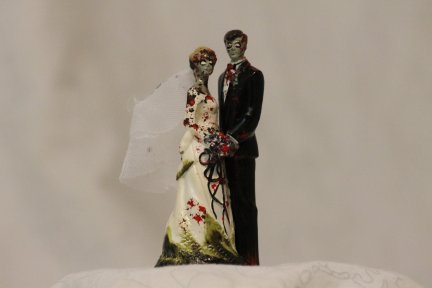 SCOTUS Bound Nonsense
Also from WAPO: “Trump says he has ‘absolute right’ to pardon himself of federal crimes but denies any wrongdoing”
President Trump on Monday asserted an “absolute right” to pardon himself of any federal crimes but said he has no reason to do so because he has not engaged in any wrongdoing.
“As has been stated by numerous legal scholars, I have the absolute right to PARDON myself, but why would I do that when I have done nothing wrong?” Trump wrote on Twitter.
In a subsequent tweet Monday, Trump also claimed that the appointment of special counsel Robert S. Mueller III to investigate Russian interference in the 2016 election had been “totally UNCONSTITUTIONAL!”
“Despite that, we play the game because I, unlike the Democrats, have done nothing wrong! Trump said.
Trump’s assessment of his pardon powers echoed that of his attorney, Rudolph W. Giuliani, who offered an expansive view of the president’s executive powers during interviews Sunday, arguing that Trump probably has the ability to pardon himself.
“He probably does,” Giuliani said Sunday, when asked on ABC News’s “This Week” whether Trump has the ability to pardon himself. “He has no intention of pardoning himself, but he probably — not to say he can’t.”
So, that’s it for me!
What’s on your reading and blogging list today?
https://vimeo.com/91749079
Did you like this post? Please share it with your friends:
Posted: June 26, 2015 | Author: dakinikat | Filed under: GLBT Rights, Marriage Equality, morning reads, SCOTUS | Tags: marriage equality, Obergefell v. Hodges |
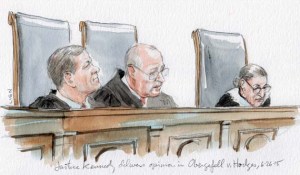
Justice Kennedy delivers opinion in same sex marriage
How very ironic that it is my day to post and it’s the very day that all my gay friends get access to the one institution that I tell every one I know and love to avoid like a plague. You can ask my daughters. My first response is that you really don’t have to do this because you’re educated, can make your own life, and you don’t have to continually have your assets, energy, will to live, and dreams drained away from you over time. Just hang out with him until the inevitable drift to hell becomes obvious. Please, don’t do it. It hasn’t worked so far. Just a few months ago, yet another long time, long married friend confessed to me that she–and others she knows–would have the kids and everything else but never do the husband thing again. That’s pretty much where I’m at with an institution designed to make you disappear into chattel v. meal ticket status.
No one can make you happy but you. That’s basically a head trip. Marriage, however, absolutely gives another person the right to make you miserable in ways that you’d never even dreamed about when you’re lost to bonding hormones. You can’t ever ever know how to properly enunciate “till death to us part” until you’ve been stuck at least a good 15 -20 years in the institution. Then you realize, it’s pretty much akin to a death row sentence where the things you really wanted to do with your life were left outside the doors.
Bill Murray showed up–seemingly drunk–on Lawrence O’Donnell’s show in May when the nice young gay couple looking to get married that were filmed in that Hillary Clinton commercial were interviewed. He pretty much expressed my views exactly. I really hope you all make a better situation out of it than straight people generally do. Knock yourselves out! I want nothing to do with any of it! I frankly think that there’s hope for some change given the rigid expectations that come with an institution that’s generally been defined by really awful stereotypical sex roles and where it may not treated as a purely breeder institution.
So, with you knowing that I am a conscientious objector to the entire institution for any one, I give you the day that marriage equality happened in the USA. To my knowledge, nobody’s church has crumbled to the ground and no one’s sanctified marriage has been taken away by any angry sky fairy. This gives legal access to huge numbers of subsidies, tax benefits, and rights that were never available to gay couples before. For that, I am very happy. All the spoils that government provides the institution should be available to any one that wants to try to go the distance; especially if they do so with children.
The Supreme Court has given gay couples the right to be married every where in the United States and its territories. Just think on that one given Scalia, Thomas, and the religious-politico harpies of the  Republican party. Teenagers, now is the time to go to law school and become a divorce lawyer. An entirely new and huge market segment has just opened up. Until then, welcome to the boom in wedding paraphernalia and hoopla.
“Under the Constitution, same-sex couples seek in marriage the same legal treatment as opposite-sex couples, and it would disparage their choices and diminish their personhood to deny them this right,” Justice Anthony Kennedy wrote in the majority opinion. He was joined in the ruling by the court’s liberal justices Ruth Bader Ginsburg, Stephen G. Breyer, Sonia Sotomayor and Elena Kagan.
All four of the court’s most conservative members — Chief Justice John G. Roberts Jr. and Justices Antonin Scalia, Clarence Thomas and Samuel A. Alito Jr. — dissented and each wrote a separate opinion, saying the court had usurped a power that belongs to the people.
That sums it up and it happened just about the way every one thought it would. Kennedy has always seemed open to the idea that civil marriage was a civil right. I’m not sure how access to a legal institution basically is a power that belongs to the people, but that appears to be the argument by the court’s hyper religious sour grapes.
Here’s the analysis from SCOTUSBlog.
Putting itself back in the forefront of the gay rights revolution, the Supreme Court ruled by the narrowest margin on Friday that same-sex couples across the nation have an equal right to marry. The five-to-four decision was based firmly on the Constitution, and thus could be undone only by a formal amendment to the basic document, or a change of mind by a future Supreme Court. Neither is predictable.
Explicitly refusing to hold off deciding the issue to see how other parts of society may deal with the rising demand for gay acceptance and legitimacy, the Court declared that two clauses in the Fourteenth Amendment mean that a “fundamental right to marry” can no longer be denied because the partners are of the same sex. It did not create a new right, but opened a long-existing one to those partners.
The ruling was the most important victory in a cultural revolution that began almost exactly forty-six years ago, when patrons of a gay bar — the Stonewall Inn in New York City’s Greenwich Village — fought back against a police raid. The events that began on the night of June 28, 1969, are widely known as the beginning of “gay pride” and an unapologetic campaign for equality.
The decision in Obergefell v. Hodges expressly overruled the Court’s only prior ruling directly on same-sex marriage — a one-line decision in the 1972 case of Baker v. Nelson, declaring that a claim to such marriage did not raise “a substantial question” for the Court to resolve.
Over the last two years, the right to marry has been extended rapidly and widely for gays and lesbians, ultimately expanding the places where they may marry legally to thirty-six states and Washington, D.C., through new laws, court rulings, or voters’ approval. From a 2003 ruling by the highest state court in Massachusetts allowing same-sex marriage, the movement to gain marital rights had spread from coast to coast, with lawsuits in every state where the right had not yet been recognized.
The decision on Friday will open marriage legally in the remaining fourteen states, and will give new legal protection for those who got married under court rulings that actually could not be considered truly final until the Supreme Court itself had decided the constitutional question. The decision nullified bans on same-sex marriage as well as bans on official recognition of such marriages performed outside a state. Both prohibitions, it said, violate the Fourteenth Amendment’s guarantees of due process and equal protection.
 The dissenting justices evidently strongly dissented. Quelle Suprise!
Chief Justice John Roberts not only dissented from the Court’s ruling but also read a summary of his dissent from the bench. It was the first time that he has done so in his ten Terms on the Court, and it signaled how strongly he disagreed with the Court’s ruling. Roberts forcefully criticized the majority for side-stepping the democratic process and declaring that same-sex couples have the right to marry when, in his view, such a right “has no basis in the Constitution.” The Court’s decision, he complained, “orders the transformation of a social institution that has formed the basis of human society for millennia, for the Kalahari Bushmen and the Han Chinese, the Carthaginians and the Aztecs.” “Just who,” Roberts laments, “do we think we are?” The other three Justices echoed Roberts’s sentiments, sometimes in even more strident terms: Justice Antonin Scalia characterized the decision as a “judicial Putsch” and suggested that, before he signed on to an opinion like the majority’s, “I would hide my head in a bag.”
I always love that historical and religious marriage is always defined by modern terms. They so overlook the traditional old man and harem mold. It’s always amazing to me when people that should be smart and well educated just get so hung up in the frames of their bias that they conveniently overlook a huge amount of history that contradicts their halcyon view. Marriage has had many forms over history. The rich and powerful basically treat it as a protocol for more property, power, and strategic alliances. Beyond the breeding requirements, historically, it’s more of an economic and political arrangement with the exceptions of the old common law marriages of the masses. Most of those were never even registered or recognized by the state. Here’s the typical ancient Greek marriage according to one scholar.
Closely endogamous marriages between uncles and nieces (and sometimes half-siblings), marriages in which women retained almost no property rights or independence and were regularly both physically segregated and violently abused, and a system in which marriage was designed explicitly to increase and safeguard the property of closely related men while encouraging the production of definitely legitimate male heirs to those men through tightly restricting access to their wives.
Scalia was unhinged, as usual.
“‘The nature of marriage is that, through its enduring bond, two persons together can find other freedoms, such as expression, intimacy, and spirituality,'” he quoted from the majority opinion before adding, “Really? Who ever thought that intimacy and spirituality [whatever that means] were freedoms? And if intimacy is, one would think Freedom of Intimacy is abridged rather than expanded by marriage. Ask the nearest hippie.”
So, while, I’m just a grumpy pessimist who thinks the entire institution and its subsidies/financial incentives should go away, the 2016 GOP candidates are on their barn burning fatwas. Which gas bag should I quote first? Hmmm…. let’s go with the Jebster of love.
“Guided by my faith, I believe in traditional marriage. I believe the Supreme Court should have allowed the states to make this decision. I also believe that we should love our neighbor and respect others, including those making lifetime commitments. In a country as diverse as ours, good people who have opposing views should be able to live side by side. It is now crucial that as a country we protect religious freedom and the right of conscience and also not discriminate.”
 Ah, yes, HIS faith should triumph, every one else’s can go to hell, and if we don’t agree with his faith than were oppressing him. His brain should explode from this basket of contradiction if it were functional enough to fire a synapse to set off the explosion.
Rubio actually tried the pragmatic dogmatic approach. I’ll be interested in seeing how that flies with the hate groups that now comprise the republican base.
I believe that marriage, as the key to strong family life, is the most important institution in our society and should be between one man and one woman. People who disagree with the traditional definition of marriage have the right to change their state laws. That is the right of our people, not the right of the unelected judges or justices of the Supreme Court. This decision short-circuits the political process that has been underway on the state level for years.
“While I disagree with this decision, we live in a republic and must abide by the law. As we look ahead, it must be a priority of the next president to nominate judges and justices committed to applying the Constitution as written and originally understood.
The most interesting thing about this bit of dogma dancing is that Kennedy rooted the finding in the Constitution which  makes what Rubio said flagrantly out to lunch. (Is it just me or does Rubio always say things that just are not grounded in the facts on the ground?) Kennedy carefully crafted the decision in light of a constitutional right.
The first line of the U.S. Supreme Court’s decision in Obergefell v. Hodges, on the legality of same-sex marriage in the United States, is as breathtaking as it is legalistic.
The Fourteenth Amendment requires a State to license a marriage between two people of the same sex and to recognize a marriage between two people of the same sex when their marriage was lawfully licensed and performed out-of-State.
There it is, the ruling that gay-marriage advocates and opponents have been waiting for since April when the Court took up the case—but really, for years long before that. There is now a constitutional right for people of the same sex to get married in the United States.
He even crafted the ruling’s logic to follow the precedent of similar constitutional rights.
Second, Kennedy writes, marriage is a distinctive institution: “It supports a two-person union unlike any other in its importance to the committed individuals.” Here, he points to the Court’s opinion in Griswold v. Connecticut, which affirmed the right of married couples to use birth control. “Same-sex couples have the same right as opposite-sex couples to enjoy intimate association.”
So, my gay friends and family, you have total access to the institution of marriage in these United States. Please make it a better arrangement for everyone!
Did you like this post? Please share it with your friends:
Posted: July 1, 2014 | Author: dakinikat | Filed under: Affordable Care Act (ACA), birth control, Discrimination against women, Feminists, fetus fetishists, fundamentalist Christians, GLBT Rights, Hillary Clinton, Marriage Equality, morning reads, religious extremists, Reproductive Health, Reproductive Rights |
Good Morning!
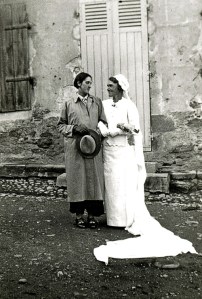
 Why is it that many religious people just cannot live without imposing their views on others? That’s one of the things I’ve been thinking about since the reliably patriarchal side of SCOTUS took one more step to force their favorite flavor of religion on the rest of us. Today’s photo montage is via “The Invisibles”. It is a montage of gay couples during the times when theirs was a “love that dare not speak its name”. There are so many folks that choose to live outside of the conventions of the society into which they were born. I was raised to think that this country was born of the dreams of folks wanting to establish a place where they could not be persecuted for not following the majority’s norms. Our country has not had perfect beginnings. But up until recently, I always felt that we were at least creeping towards a “more perfect union”.
While the plight of the GLBT community is improving and appears to have some forward momentum, there are others that are being shoved back into conformity with lives and values not of their choosing. This includes women, immigrants and many minorities. Why do others feel they have to justify their own lives by persecuting others? We’re headed towards our nation’s birthday. What has happened to the idea of creating our “more perfect union” with “liberty and justice for all”?
So, first I feel like I have to add more to the discussion on the SCOTUS decision that allows privately and tightly held corporations that are not engaged  in the business of religion to hold religious beliefs identical to the owners that are supposedly separate from the corporation enough to be indemnified by any illegal activities it undertakes. Hillary Clinton made her views clear on the subject as did Justice Ginsberg writing for the dissent. I will rely on their words here. Hillary Clinton calls the decision “deeply disturbing”.
Presumed 2016 presidential frontrunner Hillary Clinton said Monday that the Supreme Court’s ruling in favor of Hobby Lobby on Obamacare’s contraceptive mandate was “deeply disturbing” — both for its implications for women’s health care and the religious rights of corporations.
“It’s the first time that our court has said that a closely held corporation has the rights of a person when it comes to religious freedom,” she said during a Q&A at the Aspen Ideas Festival. “I find it deeply disturbing that we are going in that direction.”
“It’s very troubling that a sales clerk at Hobby Lobby who needs contraception, which is pretty expensive, is not going to get that service through her employer’s health care plan because her employer doesn’t believe she should use birth control,” she continued.
Justice Ginsberg wrote a masterful dissent.
On Monday, the Supreme Court sided with Hobby Lobby on the company’s challenge to the Affordable Care Act’s contraceptive mandate, ruling that the mandate, as applied to “closely held” businesses, violates the 1993 Religious Freedom Restoration Act. But the divided court’s 5-4 decision included a dramatic dissent from Justice Ruth Bader Ginsburg, who called the majority opinion “a decision of startling breadth.” Ginsburg read a portion of her decision from the bench on Monday.
Addressing the majority of her colleagues — including all but one of the six men sitting on the Supreme Court — Ginsburg wrote:
In the Court’s view, RFRA demands accommodation of a for-profit corporation’s religious beliefs no matter the impact that accommodation may have on third parties who do not share the corporation owners’ religious faith—in these cases, thousands of women employed by Hobby Lobby and Conestoga or dependents of persons those corporations employ. Persuaded that Congress enacted RFRA to serve a far less radical purpose, and mindful of the havoc the Court’s judgment can introduce, I dissent.
The justice goes on to criticize the opinion’s interpretation of the religious freedom law, writing that “until today, religious exemptions had never been extended to any entity operating in ‘the commercial, profit-making world.'”
The reason why is hardly obscure. Religious organizations exist to foster the interests of persons subscribing to the same religious faith. Not so of for-profit corporations. Workers who sustain the operations of those corporations commonly are not drawn from one religious community. Indeed, by law, no religion-based criterion can restrict the work force of for-profit corporations…The distinction between a community made up of believers in the same religion and one embracing persons of diverse beliefs, clear as it is, constantly escapes the Court’s attention. One can only wonder why the Court shuts this key difference from sight.
“In sum,” Ginsburg adds about the free exercise claims at the heart of this case,“‘[y]our right to swing your arms ends just where the other man’s nose begins.’”
Justice Alito got a little prickly in his majority opinion about Ginsburg’s strong criticism of their take on the case:
As this description of our reasoning shows, our holding is very specific. We do not hold, as the principal dissent alleges, that for-profit corporations and other commercial enterprises can “opt out of any law (saving only tax laws) they judge incompatible with their sincerely held religious beliefs.” Post, at 1 (opinion of GINSBURG, J.). Nor do we hold, as the dissent implies, that such corporations have free rein to take steps that impose “disadvantages . . . on others” or that require “the general public [to] pick up the tab.” Post, at 1–2. And we certainly do not hold or suggest that “RFRA demands accommodation of a for-profit corporation’s religious beliefs no matter the impact that accommodation may have on . . . thousands of women employed by Hobby Lobby.” Post, at 2.1 The effect of the HHS-created accommodation on the women employed by Hobby Lobby and the other companies involved in these cases would be precisely zero. Under that accommodation, these women would still be entitled to all FDA-approved contraceptives without cost sharing.
Ginsburg seems to reply to Alito by suggesting that what Alito sees as a narrow, limited decision is essentially an invitation for lots of future challenges on religious grounds: “Although the Court attempts to cabin its language to closely held corporations,” she writes, “its logic extends to corporations of any size, public or private. Little doubt that RFRA claims will proliferate.”
Further quotes from Ginsburg’s dissent can be read at MOJO.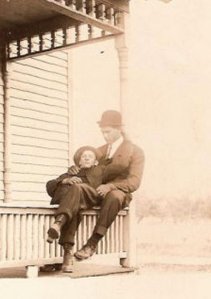
Here are seven more key quotes from Ginsburg’s dissent in Burwell v. Hobby Lobby:
- “The exemption sought by Hobby Lobby and Conestoga would…deny legions of women who do not hold their employers’ beliefs access to contraceptive coverage”
- “Religious organizations exist to foster the interests of persons subscribing to the same religious faith. Not so of for-profit corporations. Workers who sustain the operations of those corporations commonly are not drawn from one religious community.”
- “Any decision to use contraceptives made by a woman covered under Hobby Lobby’s or Conestoga’s plan will not be propelled by the Government, it will be the woman’s autonomous choice, informed by the physician she consults.”
- “It bears note in this regard that the cost of an IUD is nearly equivalent to a month’s full-time pay for workers earning the minimum wage.”
- “Would the exemption…extend to employers with religiously grounded objections to blood transfusions (Jehovah’s Witnesses); antidepressants (Scientologists); medications derived from pigs, including anesthesia, intravenous fluids, and pills coated with gelatin (certain Muslims, Jews, and Hindus); and vaccinations[?]…Not much help there for the lower courts bound by today’s decision.”
- “Approving some religious claims while deeming others unworthy of accommodation could be ‘perceived as favoring one religion over another,’ the very ‘risk the [Constitution’s] Establishment Clause was designed to preclude.”
- “The court, I fear, has ventured into a minefield.”
You can read the full dissent here. (It starts on page 60.)
 The court attempted a narrow decision but crept into an area of corporate law that could create an interesting situation. Usually, corporations are considered distinct from their owners. Hobby Lobby is a corporation tightly held by a family so the majority view basically carved out this type of corporation and said “it’s different”. However, how can you indemnify owners from corporate malfeasance AND say that this specific corporation that doesn’t have a religious mission reflects this set of owner’s pet superstitions? Could the justices have unintentionally left a back door open to challenge the very basis of incorporation which is to make any corporation its own entity?
The decision’s acknowledgment of corporations’ religious liberty rights was reminiscent of Citizens United v. Federal Election Commission, a 2010 ruling that affirmed the free speech rights of corporations. Justice Alito explained why corporations should sometimes be regarded as persons. “A corporation is simply a form of organization used by human beings to achieve desired ends,” he wrote. “When rights, whether constitutional or statutory, are extended to corporations, the purpose is to protect the rights of these people.”
Justice Ginsburg said the commercial nature of for-profit corporations made a difference.
“The court forgets that religious organizations exist to serve a community of believers,” she wrote. “For-profit corporations do not fit that bill.”
I wanted to point out the anniversary of a sad day in New Orleans history. I’m not sure how many of you know about the UpStairs Lounge fire of 1973. The arson mass murder of GLBT stands as the largest of its kind in modern history.
On June 24, 1973, an arsonist set fire to a gay bar in New Orleans called the Upstairs Lounge, killing 32 gay men and women in what has gone down in history as thelargest gay mass murder in U.S. history.
Today is the 41st anniversary of that tragedy, which has been documented by Robert L. Camina in the new film “Upstairs Inferno”. According to the first official teaser trailer below, the horrific event led to even more reprehensible acts in its wake – several bodies from within the club were never claimed by family members, those survivors featured in the news went on to lose their jobs and livelihoods, and the New Orleans police department lagged its feet and attempted to cover up the deadly crime.
To this day, no one has ever been charged with setting fire to the UpStairs Lounge.
Many folks believe this is an event that should not be forgotten.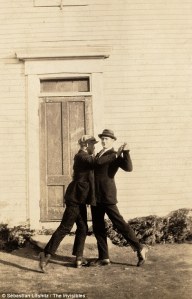
For a complex array of reasons, including homophobia, shame, and despair, the fire and its victims languished in obscurity for years, not taking its proper place in the broader sweep of LGBT history, but this is quickly changing.
“Upstairs”, my musical tragedy commemorating the fire and honoring its victims premiered last year in New Orleans to sold-out audiences, as part of the 40th anniversary memorials and Pride events. A portion of the musical is now playing at the West Village Musical Theatre Festival in New York.
A new book, “The UpStairs Lounge Arson: Thirty-Two Deaths in a Louisiana Gay Bar”, released just last month, is the most extensively-researched and carefully-told history of the subject.
And “Upstairs Inferno”, a documentary by acclaimed filmmaker Robert Camina is currently in post-production.
In addition, Delery, Camino, and I are advocating the inclusion of the UpStairs Lounge site on the National Register of Historic Places.
To commemorate the anniversary of the fire, I spoke with Camina about his documentary.
The lion’s share of published research about the fire comes from Johnny Townsend, author of “Let the Faggots Burn”, and Clay Delery. Did you interview them for the piece and what did you learn?
Well of course Townsend had a lot to contribute, because without his efforts many years ago to interview people, many of the stories would have been lost. So I think he brought a lot of insight to the tragedy that, since so many have passed on, we are not able to access.
Did you get to talk to anyone that Delery and Townsend did not get to talk to?
I don’t think they interviewed Francis Dufrene. We were able to interview him. He was a survivor of the fire. He slipped through the bars and jumped and landed on the pavement. He suffered third-degree burns. He gave us a distinctive perspective of what it was like in the middle of it when the fire started, so we definitely learned a little bit of what it was like the emotions just the mood and a frame of mind of what people going through in there.
As far as you can tell, what was the UpStairs lounge like as a bar?
It was a very comfortable place. Everyone we talked to said that the patrons were like a family. And the word that has come up that you’re very familiar with is “Sanctuary”.
Yes, that’s why I opened my musical with a song of that title. And of course, when a place that is considered a sanctuary is invaded and ruined, it has a profound impact on a community. And I’m not sure I had a whole sense of the impact that it had until I was there last year for the 40th Anniversary to see how the community responded to the memorial events and the play.
Just so you haven’t forgotten with the Republican pogram is these days, I give you a blast from the past from Fat Tony.
Supreme Court Justice Antonin Scalia made an appearance at the Lanier Theological Library in Houston, Texas on Friday, where he claimed that the success of capitalism was deeply tied to the nation’s religious values.
“While I would not argue that capitalism as an economic system is inherently more Christian than socialism … it does seem to me that capitalism is more dependent on Christianity than socialism is,” Scalia, a devout Catholic, said during his speech,according to the Houston Chronicle. “For in order for capitalism to work — in order for it to produce a good and a stable society — the traditional Christian virtues are essential.”
Unfortunately, I can’t seem to read the part in the new testament where the jesus dude said ANY of that. Evidently, we’re supposed to all follow his brand of religion even if we find it to be complete bunk.
Why can’t we just live and let live?
What’s on your reading and blogging list today?
Did you like this post? Please share it with your friends:
Posted: June 26, 2013 | Author: dakinikat | Filed under: Marriage Equality, SCOTUS, social justice | Tags: DOMA, marriage equality, SCOTUS |
 Even though SCOTUS did not rule on the broader issue of marriage equality, DOMA has fallen. The usual Klan of Religious Freaks dissented. Justice Anthony Kennedy was the swing vote.
The Supreme Court issued rulings on two highly-anticipated cases on gay marriage today. By 5-4, .
In a separate ruling, it declined to take on the broader issue of gay marriage. The court to bring the case to the court.
NPR’s Carrie Johnson explains the Prop. 8 ruling: “By a holding of 5-4 with Chief Justice John Roberts in the majority, the Supreme Court rules the petitioners lack standing so the court avoids the underlying issues, remands and wipes away the decision by 9th Circuit Court of appeals, which means for now the lower court ruling invalidating California’s Prop. 8 stands.”
That means same-sex marriages in California may resume, but the ruling does not have a broader implication across the country.
The Defense of Marriage Act case is simpler. As SCOTUSblog reports, the court struck down the federal law because it denies same-sex couples the “equal liberty” guaranteed by the Fifth Amendment.
The 1996 Defense of Marriage Act, or DOMA, was signed into law by President Bill Clinton, barring federal recognition of same-sex marriages for purposes such as Social Security survivors’ benefits, insurance benefits, immigration and tax filing.
Section 3 of the law defines marriage as “a legal union between one man and one woman as husband and wife” and a spouse as “a person of the opposite sex who is a husband or a wife.” That provision had been struck down by eight lower courts before the Supreme Court’s 5-4 ruling in United States v. Windsor settled the matter for good.
This decision means that legally married same-sex couples are now entitled to the same federal benefits as married opposite sex couples.
The majority opinion was written by Justice Anthony Kennedy and joined by Justices Ruth Bader Ginsburg, Stephen Breyer, Sonia Sotomayor and Elena Kagan. Chief Justice John Roberts and Justices Antonin Scalia, Clarence Thomas and Samuel Alito dissented.
SCOTUS Blog has some analysis here.
Cutting to the marquee issue – whether DOMA is constitutional – the Court acknowledged that Congress can pass laws that affect marriage in limited ways, but in its view DOMA goes much further than that: it applies to over a thousand federal laws and all federal regulations. (In this week’s version of “Supreme Court Justices: They’re Just Like Us,” the version of the opinion that was distributed to reporters misspells “statutes” as “statues,” suggesting that perhaps someone was up late last night finishing up the draft.) But states, rather than the federal government, have historically been responsible for regulating and defining “marriage” – establishing their own (and sometimes different) minimum ages for marriage, for example. In recent years, the Court explained, some states have decided to allow same-sex couples to marry, giving them the same protection and dignity that opposite-sex couples get from marriage. But despite the traditional role of the states in regulating marriage, the Court reasoned, DOMA discriminates against same-sex couples by preventing the federal government from recognizing their marriages, and it does so to express disapproval of state-sanctioned same-sex marriage.
As a result of today’s decision, same-sex couples who are legally married must now be treated the same under federal law as married opposite-sex couples. That conclusion (and the steps that the Court took to get there) drew the ire of the Court’s four more conservative Justices – Chief Justice John Roberts and Justices Scalia, Thomas, and Alito – who filed three separate dissenting opinions totaling nearly fifty pages.
Justice Antonin Scalia read from the bench to demonstrate his severe disagreement with the ruling. The opinion is an “instant classic” that uses Scalia-isms like “jaw-dropping” and “rootless and shifting” to describe the Court’s rationales; at one point, he indicates that “[t]he sum of all the Court’s nonspecific hand-waving is that this law is invalid (maybe on substantive-due-process grounds, and perhaps with some amorphous federalism component playing a role).” Although the four dissenters did not completely agree on everything, they were united in their belief that DOMA is constitutional.
I want to put this into a bit of perspective. We are TWO days short of the 40th anniversary of the Stonewall riots.
Here, in summary, is what the Court did — and did not do — on same-sex marriage on the final day of its 2012-13 Term:
** It ruled unconstitutional the Defense of Marriage Act’s Section 3, which defines marriage for purposes of one thousand federal laws and multitudes of official regulations as the union of one man and one woman only — a definition that excludes probably millions of already-married same-sex couples from any of those benefits or opportunities. “DOMA,” the Court majority said caustically, ”writes inequality into the entire U.S. Code.”
** It decided that sponsors of California’s “Proposition 8,” adopted by the state’s voters in an election almost five years ago, did not have a legal right to be in the Supreme Court or in a federal appeals court to try to defend that measure from constitutional attack. That is likely to have the early impact of putting into final effect a San Francisco federal judge’s 2010 decision striking down Proposition 8 under the U.S. Constitution. Some 18,000 California same-sex couples already had been married when they had a brief chance to do so as the issue developed in that state, but now millions are likely to gain the right to marry when the judge’s ruling is implemented by state officials. Happening perhaps in just a few weeks, that would make California the fourteenth — and largest — state to permit such marriages (along with Washington, D.C.).
** It declared, in quite explicit terms, that it was not deciding at this point whether the Constitution guarantees gays and lesbians a right to marry or whether the Constitution forbids states’ bans on such marriages. That will leave the promoters of marriage equality to continue with their efforts, in state legislatures and in lower courts, to try to win the right one more state at a time. The Court itself has a chance to take up that basic issue, as early as tomorrow, in a pair of new cases — from Arizona and Nevada — but it may not yet be ready to do so.
** And the Court did not spell out a new constitutional test for courts to use in judging new laws or other government actions that treat homosexuals less favorably than other people in similar settings and factual contexts. Although DOMA’s benefits ban was nullified under the Fifth Amendment’s guarantee of legal equality, the majority opinion did not sort out explicitly which level of judicial review — in escalating toughness — is supposed to be used in gay rights cases. In fact, the test that was applied this time appeared to be notably indistinct.
With the demise of the Defense of Marriage Act’s benefits ban in Section 3, for legally married gays and lesbians, the Court immediately — even if inadvertently — gave rise to a situation in which couples living in states that will not allow them to marry because they are homosexuals will still be able to qualify for federal benefits, many of which are handed out or managed by state governments.
But the ruling did not do anything explicitly about another section of DOMA — Section 2, which gives the states the right to refuse to recognize gay marriages performed in other states. That thus raised the prospect that a same-sex couple married in one of the states now allowing such unions could face obstacles to their marital rights when they moved into states that still do not recognize their unions. This might be a particular problem for already-married gay couples serving in the military, who often have to move from state to state.
Although Chief Justice John G. Roberts, Jr., dissented from the ruling in the DOMA case, he went to special lengths in his opinion in that case to apply the states’ rights language that Justice Anthony M. Kennedy’s majority opinion had employed in justifying the nullification of Section 3.
Roberts wrote, borrowing words from the Kennedy opinion: “While ‘the state’s power in defining the marital relation is of central relevance’ to the majority’s decision to strike down DOMA here, that power will come into play on the other side of the board in future cases about the constitutionality of state marriage definitions. So too will be concerns for state diversity and sovereignty that weighs against DOMA’s constitutionality in this case.”
The Court, the Chief Justice added, “may in the future have to resolve challenges to state marriage definitions affecting same-sex couples.” His remarks about the majority arguments on states’ rights in this field seemed to be telegraphing his views on the basic definition of marriage — and an implied suggestion that lower courts might be interested in following.
At least in one regard, we are closer to the reality of liberty and justice for all.
Did you like this post? Please share it with your friends:
Posted: March 27, 2013 | Author: dakinikat | Filed under: Marriage Equality | Tags: DOMA |
It appears that the arguments and questioning on DOMA during the SCOTUS hearing today have put the 17 year old law into question. As usual, SCOTUSBLOG has some great analysis of the arguments.
That was the overriding impression after just under two hours of argument Wednesday on the fate of the Defense of Marriage Act.
That would happen, it appeared, primarily because Justice Anthony M. Kennedy seemed persuaded that the federal law intruded too deeply into the power of the states to regulate marriage, and that the federal definition cannot prevail. The only barrier to such a ruling, it appeared, was the chance – an outside one, though — that the Court majority might conclude that there is no live case before it at this point.
After a sometimes bewilderingly complex first hour, discussing the Court’s power to decide the case of United States v. Windsor (12-307), the Court moved on to explore DOMA’s constitutionality. And one of the most talented lawyers appearing these days before the Court — Washington attorney Paul D. Clement — faced fervent opposition to his defense of DOMA from enough members of the Court to make the difference. He was there on behalf of the Republican leaders of the House (as majority members of the House’s Bipartisan Legal Advisory Group), defending the law because the Obama administration has stopped doing so.
Justice Kennedy told Clement that there was “a real risk” that DOMA would interfere with the traditional authority of states to regulate marriage. Kennedy also seemed troubled about the sweeping breadth of DOMA’s Section 3, noting that its ban on benefits to already married same-sex couples under 1,100 laws and programs would mean that the federal government was “intertwined with citizens’ daily lives.” He questioned Congress’s very authority to pass such a broad law.
Moreover, Kennedy questioned Clement’s most basic argument — that Congress was only reaching for uniformity, so that federal agencies would not have to sort out who was or was not married legally in deciding who could qualify for federal marital benefits, because some states were on the verge of recognizing same-sex marriage.
Along with sharply negative comments about DOMA by the Court’s four more liberal members, Kennedy’s stance could put the law on the edge of constitutional extinction. But, if the Court were to do that based on states’ rights premises, the final ruling might not say much at all about whether same-sex couples were any closer to gaining an equal right to marry under the Constitution.
There did not appear to be a majority of Justices willing to strike down the 1996 law based on the argument that the Obama administration and gay rights advocates have been pressing: that is, the law violates the Fifth Amendment guarantee of legal equality in general.
Elena Kagan had some interesting moments today.
In discussing the origins of the law, Paul Clement, who represents the Bipartisan Legal Advisory Group, said that Congress’s key interest in passing DOMA was preserving the uniform treatment of couples in various states at a time when there where indications that some states might allow same-sex marriages.
“All these federal statutes were passed with the traditional definition of marriage in mind,” Clement said. “What Congress says is, ‘Let’s take a time out. This is a redefinition of an age-old tradition.’”
But Kagan fired back in her questioning, telling Clement that Congress wasn’t preserving tradition, but departing from it when it jumped into the marriage issue. “The only uniformity that the federal government has pursued is that it’s uniformly recognized the marriages that are recognized by the state,” she said. Congress’ foray into the issue in 1996 was so unusual that it “sen[t] up a pretty good red flag,” she said.
A short time later, Kagan read aloud from the House Judiciary Committee report on DOMA. “Congress decided to reflect and honor of collective moral judgment and to express moral disapproval of homosexuality,” she said, quoting the report.
“Is that what happened in 1996?” she asked to gasps, “oohs” and some laughter from many in the gallery who seemed to think she’d managed a rare Supreme Court “gotcha” moment.
Clement said he was not claiming moral disapproval constituted a sufficient basis for the law. “The House report says those things,” he said. But, he added, “we’ve never invoked [the report] in trying to defend the statute.”
The crowd outside the SCOTUS building got rowdy and into some fights. Other interesting analysis can be found on Slate. I loved this line by Ginsberg.
Justice Ruth Bader Ginsburg had the laugh line of the day when she scolded DOMA for creating “two kinds of marriage, full marriage and the skim-milk marriage.” It was easy to see which one you’d want in your coffee.
Please post more things you’ve found on the arguments today!
Did you like this post? Please share it with your friends:


 peej
peej Carissa
 bostonboomer
 dakinikat
 ecocatwoman
 mablue2
 Mama Lopez
 peggysue22
 quixote
 skydancingguestblogger
 Mona (aka Wonk the Vote)



 Sky Dancing
Recent Comments