
Will the Banksters Finally Pay?
Posted: September 3, 2011 Filed under: commercial banking, financial institutions, just because | Tags: Banksters, mortgage fraud, toxic mortgages 7 Comments Federal regulators have finally decided to go after seventeen big banks for bad mortgage lending practices. In question are $200 billion in toxic mortgages sold to now bankrupt Fannie and Freddie. The Federal Housing Finance Agency (FHFA) is the regulator suing BOA, JP Morgan, Morgan Stanley, Goldman Sachs and others. You may recall I wrote on a FED investigation last month. This comes way too late to help many people who were put into loans they couldn’t possibly handle who were later evicted, but it may give these folks standing in future court suits to recoups some of their losses. Financial sector-related equities and bonds lost in what was a dismal Friday market already given the unemployment figures.
The litigation represents a more intense effort by the federal government to go after the financial services industry for its supposed mortgage failures.
Indeed, the cases were brought on the basis of 64 subpoenas issued a year ago, giving the government an edge in its investigation that private investors suing the banks lack.
The Obama administration as well as regulators like the Federal Reserve have been criticized for going too easy on the banks, which benefited from a $700 billion bailout package shortly after the collapse of Lehman Brothers in the autumn 2008.
Much of that money has been repaid by the banks — but the rescue of the mortgage giants Fannie and Freddie has already cost taxpayers $153 billion, and the federal government estimates the effort could cost $363 billion through 2013.
Even though the banks already face high legal bills from actions brought by other plaintiffs, including private investors, the suits filed Friday could cost the banks far more. In the case against Bank of America, for example, the suit claims that Fannie and Freddie bought more than $57 billion worth of risky mortgage securities from the bank and two companies it also acquired, Merrill Lynch and Countrywide Financial.
In addition to suing the companies, the complaints also identified individuals at many institutions responsible for the machinery of turning subprime mortgages into securities that somehow earned a AAA grade from the rating agencies.
The filing did not cite a figure for the total losses the government wanted to recover, but in a similar case brought in July against UBS, the F.H.F.A. is trying to recover $900 million in losses on $4.5 billion in securities. A similar 20 percent claim against Bank of America could equal a $10 billion hit.
In a suit that identifies 23 securities that Bank of America sold for $6 billion, the company “caused hundreds of millions of dollars in damages to Fannie Mae and Freddie Mac in an amount to be determined at trial.”
The most interesting thing about these new lawsuits is that it is obvious that some of the most egregious practices like backdating and robosigning are still being practiced even as these banks are making tons of fees from foreclosure. It’s hard to sympathize with an industry unable to correct it’s own bad practices. This is especially true since so much tax payer money has gone to stabilize the results of these practices already. This is from the American Banker and it’s damning.
The practice continues nearly a year after the companies were caught cutting corners in the robo-signing scandal and about six months after the industry began negotiating a settlement with state attorneys general investigating loan-servicing abuses.
Several dozen documents reviewed by American Banker show that as recently as August some of the largest U.S. banks, including Bank of America Corp., Wells Fargo & Co., Ally Financial Inc., and OneWest Financial Inc., were essentially backdating paperwork necessary to support their right to foreclose.
Some of documents reviewed by American Banker included signatures by current bank employees claiming to represent lenders that no longer exist.
Many banks are missing the original papers from when they securitized the mortgages, in some cases as long ago as 2005 and 2006, according to plaintiffs’ lawyers. They and some industry members say the related mortgage assignments, showing transfers from one lender to another, should have been completed and filed with document custodians at the time of transfer.
“It’s one thing to not have the documents you’re supposed to have even though you told investors and the SEC you had them,” says Lynn E. Szymoniak, a plaintiff’s lawyer in West Palm Beach, Fla. “But they’re making up new documents.”
The banks argue that creating such documents is a routine business practice that simply “memorializes” actions that should have occurred years before. Some courts have endorsed that view, but others, such as the Massachusetts Supreme Judicial Court, have found that this amounts to a lack of sufficient evidence and renders foreclosures invalid.
Yves Smith at Naked Capitalism has been following this issue closely and continues to have harsh words for banks and banker apologists.
It’s disturbing at this juncture that Felix Salmon more or less falls in with the bogus bank party line on “memorializing” (he finesses it by saying they need to do it “transparently”). I suggest he try talking to an attorney who is expert in securitizations and does not have opinion letter liability on this matter. The contracts that governed these deals were immutable and set forth in precise detail the steps various parties to the deal were required to perform. That included strict cutoff dates for getting the properly prepared notes and mortgages to the securitization trusts. Long-standing precedents for New York trusts (virtually all RMBS trusts are New York trust) call for delivery to the trust to be as perfect as possible. Since all securitization through at least the late 1990s did deliver all the notes and mortgages to the trusts as stipulated, there is no excuse for later changes in practice (as in if the parties wanted to simplify procedures for reasons of cost or convenience, they needed to change the governing agreements to reflect that).
Put it another way: what about the Statute of Frauds don’t you understand? And while some judges have sided with banks, the robosigning scandal and greater media coverage of mortgage abuses has led many jurists to be much less bank friendly than they were a mere year ago. The trend is moving decisively against, not for, the banks.
The American Banker article, disappointingly, fails to discuss what these continued abuses mean. As we have stressed in repeated past posts, the failure to get the notes to the securitization trusts by the cutoff date is not fixable by any legitimate means. Do you think banks and law firms would continue to fabricate documents, particularly in the wake of so much harsh media and Congressional scrutiny, if they had any other way out?
The failure to get the notes to the securitization trust correctly does NOT mean that no one has the right to foreclose. It does mean that the party that can foreclose is someone earlier in the securitization chain who was paid for the note but in effect, no one bothered to collect it from him. No one wants that party to foreclose because, first, it would prove that the securitization did not have the note and investors were misled, and second, there is no way to get the proceeds into the trust for the benefit of the investors.
The FHFA actions against the banks rush to originate loans to package and dump is based in lack of due diligence which is central to the role of any lending institution. I’ve written a lot about this having been straight out of grad school and part of the secondary mortgage process back in the 1980s when the S&L crisis exploded. My huge S&L was desperate to grab fee income any way it could to stay afloat. Practices this time were based on giving people bonuses just to give high numbers. That’s always a disaster policy from a quality stand point.
Buried in the filings themselves, however, is a damning portrait of the excesses of the housing bubble, when borrowers were able to obtain home loans without basic proof of income or creditworthiness, and banks appeared only too happy to mine profits taking the risky loans and assembling them into securities that could be sold to investors.
In the complaint against Goldman Sachs, for example, the suit says that “Goldman was not content to simply let poor loans pass into its securitizations.” In addition, the giant investment bank “took the fraud further, affirmatively seeking to profit from this knowledge.”
When an outside analytics firm, Clayton, identified potential problems in the underlying mortgages Goldman was turning into securities, the suit said, “Goldman simply ignored and did not disclose the red flags revealed by Clayton’s review.” Goldman Sachs declined to comment, as did JPMorgan Chase, Morgan Stanley, Credit Suisse and Citigroup.
Similar behavior in terms of warnings provided by Clayton transpired at Bank of America, Citigroup, Deutsche Bank, RBS and UBS, according to the complaints.
My hope is that this leads to some policy to compensate homeowners taken in by these schemes but I’m not holding my breath. Speculators and gamblers should not be rewarded for causing homeless and lost wealth for honest people looking to live the American Dream. My worry is that Timothy Geithner’s presence as Treasury Secretary will force policy that continues to prop up the wrong people. This entire spectacle is another example of the opposites reality we know seem to inhabit. In this version of “It’s a wonderful life”, the cautionary tale is the ending.
Late Night: Waiting For Irene
Posted: August 26, 2011 Filed under: just because 9 CommentsWhat are you doing to prepare for Hurricane Irene? Those of you in the path of the storm are probably rushing around trying to buy flashlights, bottled water, and other emergency items. The rest of us can get in the mood with movies. Here are my picks:
———————————————
———————————————
———————————————
———————————————
———————————————
Got any further suggestions?
Women’s Equality Day 2011
Posted: August 26, 2011 Filed under: just because | Tags: Women's Equality Day 10 Comments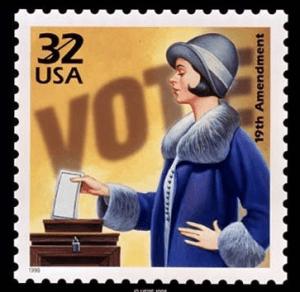
What is Women’s Equality Day?
At the behest of Rep. Bella Abzug (D-NY), in 1971 the U.S. Congress designated August 26 as “Women’s Equality Day.”
The date was selected to commemorate the 1920 passage of the 19th Amendment to the Constitution, granting women the right to vote. This was the culmination of a massive, peaceful civil rights movement by women that had its formal beginnings in 1848 at the world’s first women’s rights convention, in Seneca Falls, New York.
The observance of Women’s Equality Day not only commemorates the passage of the 19th Amendment, but also calls attention to women’s continuing efforts toward full equality. Workplaces, libraries, organizations, and public facilities now participate with Women’s Equality Day programs, displays, video showings, or other activities.
Joint Resolution of Congress, 1971
Designating August 26 of each year as Women’s Equality DayWHEREAS, the women of the United States have been treated as second-class citizens and have not been entitled the full rights and privileges, public or private, legal or institutional, which are available to male citizens of the United States; and
WHEREAS, the women of the United States have united to assure that these rights and privileges are available to all citizens equally regardless of sex; and
WHEREAS, the women of the United States have designated August 26, the anniversary date of the passage of the Nineteenth Amendment, as symbol of the continued fight for equal rights: and
WHEREAS, the women of United States are to be commended and supported in their organizations and activities,
NOW, THEREFORE, BE IT RESOLVED, the Senate and House of Representatives of the United States of America in Congress assembled, that August 26th of each year is designated as Women’s Equality Day, and the President is authorized and requested to issue a proclamation annually in commemoration of that day in 1920, on which the women of America were first given the right to vote, and that day in 1970, on which a nationwide demonstration for women’s rights took place.
and my personal choices:
Yanking the Chains of People who Wag the Dog
Posted: August 24, 2011 Filed under: just because | Tags: Paul Krugman identity theft 19 Comments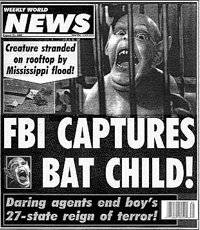
More of the latest headlines from Red State and the National Review
The Right Wing blogosphere and propaganda media are all in a tizzy about about something Paul Krugman didn’t say. You expect this kind of behavior from the likes of Hot Air or Red State. Now that Bill Buckley’s dead, the National Review appears to have gone the way of Fox News. Just check out this search on Fact Check. They’ve gotten it wrong so many times recently it’s not even funny. No wonder right wing Republicans can’t even get their American History straight. So, this is the crux of the story. Yesterday, a Google+ account from “Paul Krugman” posted this about the earthquake.
People on twitter might be joking, but in all seriousness, we would see a bigger boost in spending and hence economic growth if the earthquake had done more damage.
Problem is, the account didn’t belong to Dr. Paul Krugman. It belongs to some right winger who was trying to make a point. No one in the right wing village actually checked to see if the real Paul Krugman even had a Google+account. Why would he? He gets a lot of mileage from his blog at the NYT and other places.
Approximately a month ago, having been laid off and having too much time on my hands, I finally decided to create my own personal account on Google+. I found it to be extremely boring, mostly because no one I knew had an account and my needs for instant news had long been satisfied by twitter. To kill some time and fully delve into what Google+ had to offer, I decided to create a gimmick account of Paul Krugman and see what happened.
Last night, I made this post which caused quite a stir on twitter and blogosphere.
People on twitter might be joking, but in all seriousness, we would see a bigger boost in spending and hence economic growth if the earthquake had done more damage.
I do not regret writing it and I hope it will enlighten many on the perverse economic views held by a Nobel winning economist writing for the New York Times who also lectures at Princeton University. While Paul Krugman did not write the above statement, he has made similar statements within the year and I would not be surprised if Paul Krugman did not in fact hold this view.
On March 15, 2011 Paul Krugman wrote this on his blog.
And yes, this does mean that the nuclear catastrophe could end up being expansionary, if not for Japan then at least for the world as a whole. If this sounds crazy, well, liquidity-trap economics is like that — remember, World War II ended the Great Depression.
Three days after the 9/11 tragedy Paul Krugman had this to say.
Nonetheless, we must ask about the economic aftershocks from Tuesday’s horror.These aftershocks need not be major. Ghastly as it may seem to say this, the terror attack — like the original day of infamy, which brought an end to the Great Depression — could even do some economic good.
If you showed any disgust at my fake comment written on Google+, I expect you would show equal antipathy for the two quotes above. For too long now, Krugman along with other Keynesian economists such as Nouriel Roubini have supported Keynesian policies which advocate for more taxation of the job creating private sector to contribute to the job destroying public sector. While he public sector has “created” jobs, one must remember and take into account the opportunity cost of taxing the private sector.
Beyond identity theft, this guy has made the cardinal mistake you’re warned against in your first class on your first day in economics 101. That is assuming a positive statement has any moral judgement or advocacy attached to it. As an example, I could say legalizing marijuana and taxing it would provide enough revenues to pay off a substantial part of the public debt and still be against legalizing marijuana. The first statement is a positive statement and could be proved with data and analysis rather easily. Normative statements are based on personal norms. There is nothing in that first statement that actually advocates for doing that policy like adding, well, that’s the best policy at this point to pay off the debt. That’s a normative statement and it advocates the policy. When you’re trained as an economist, you’re taught to separate the two types of thinking because as a number cruncher and researcher, you are supposed to dispassionately crunch through possibilities and come out with results based on logic and data not wishful thinking. That is something right wingers never seem capable of doing. They always go with wishful thinking despite facts.
The perfect example of that was making the rounds last week. That example would be Rick Perry and his continual insistence that “abstinence works” despite overwhelming evidence to the contrary. His mind simply won’t wrap itself around something he doesn’t want to see. He just insists he’s right despite the evidence. Other examples include people that literally believe the world is less than 8000 years old, there’s a god that exactly looks like the god in the Sistine chapel ceiling, and the Garden of Eden was a literal place on earth about 8000 years ago in time. It’s how these same people claim–despite it not being true now–that there are ‘holes’ in the theory of evolution and that climate change is some kind of numbers hoax. Their lives are ruled by off the wall moral judgements rather than dispassionate assessment of data and facts via the scientific method where conclusions come from careful, rational thought instead of myth and moral judgement. It doesn’t occur to them that thought exercises are part of getting out of the box because they want to stay in the box.
Here’s what the real Paul Krugman had to say in a blog post called “Identity Theft” on the NYT.
Well, this is interesting. I hear that the not-so-good people at National Review are attacking me over something I said on my Google+ page. Except, I don’t have a Google+ page.
This is the third incident I’m aware of — there may well be more — in which people are claiming to be me. There was also my nonexistent connection with academia.edu, and at least one web opinion piece by someone claiming to be me (and sounding not at all like me).
This is really cute, not. Apparently some people can’t find enough things to attack in what I actually say, so they’re busy creating fake quotes. And I have enough on my plate without trying to chase all this stuff down.
So if you see me quoted as saying something really stupid or outrageous, and it didn’t come from the Times or some other verifiable site, you should probably assume it was a fake.
So here’s two off the wall idiot winger sources that perpetually refuse to fact check, because facts are so damned inconvenient: The American Thinker and The National Review. I put the link up top to Hot Air that at least updated and corrected the story. Of course, the right wing story is some take on what I printed from the person committing the identity theft is, well, it sounded like something he’d say!
It’s one thing to spoof the Bronx Zoo Python or the Satan Shit Sandwich. It’s completely another to steal a real person’s identity. I frankly hope the police go after him. The lesson it teaches me is that you can never trust true believers. They fall for anything. Villagers, take note! Yes, any natural disaster or man made disaster will create a situation where you have to rebuild or build-up which creates jobs and customers. Saying that it will happen is not the same as saying you’re all for creating disasters. Idiots!
Two Great Rock ‘n’ Roll Songwriters Left Us Yesterday
Posted: August 23, 2011 Filed under: just because | Tags: Carole King, Elvis Presley, Jerry Leiber, Mike Stoller, music, Nickolas Ashford, nostalgia, rock 'n' roll, The Drifters 15 Comments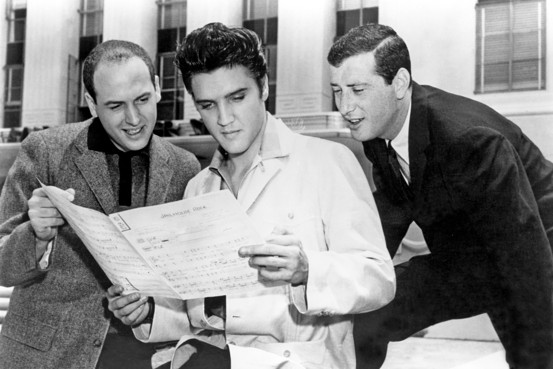
Mike Stoller, Elvis Presley, and Jerry Leiber
Lyricist Jerry Leiber and his songwriting partner Mike Stoller wrote much of the soundtrack of my childhood and teenage years. The rest of it was probably written by Carole King and Gerry Goffin, but that’s a story for another time.
When I was in junior high school, I started buying 45 RPM records, and I ended up with a huge stack of them over the years. On so many of them, the writing credit was “(Leiber and Stoller). I had no idea who those people were, but they sure made me and a lot of other kids happy back in the late ’50s and early ’60s.
Jerry Leiber died yesterday at 78. Here’s an incomplete list of artists who recorded Leiber and Stoller songs: Big Mama Thornton, Little Richard, Buddy Holly, Jerry Lee Lewis, Buddy Holly, the Beatles, the Rolling Stones, Fats Domino, Aretha Franklin, the Clovers, the Coasters, and of course Elvis and the Drifters. They even wrote a song for Peggy Lee, “Is That All There Is?”
The team of Leiber and Stoller was formed in 1950, when Mr. Leiber was still a student at Fairfax High in Los Angeles and Mr. Stoller, a fellow rhythm-and-blues fanatic, was a freshman at Los Angeles City College. With Mr. Leiber contributing catchy, street-savvy lyrics and Mr. Stoller, a pianist, composing infectious, bluesy tunes, they set about writing songs with black singers and groups in mind.
In 1952, they wrote “Hound Dog” for the blues singer Big Mama Thornton. The song became an enormous hit for Elvis Presley in 1956 and made Leiber and Stoller the hottest songwriting team in rock ’n’ roll. They later wrote “Jailhouse Rock,” “Loving You,” “Don’t,” “Treat Me Nice,” “King Creole” and other songs for Presley, despite their loathing for his interpretation of “Hound Dog.”
In the late 1950s, having relocated to New York and taken their place among the constellation of talents associated with the Brill Building, they emerged as perhaps the most potent songwriting team in the genre.
Here are some of my favorites:
Okay, so I love the Drifters….
Here’s one of my all-time favorite Leiber and Stoller compositions, Wilbert Harrison singing Kansas City.
This one was a huge hit when I was a kid.
Carole King, who also worked in the Brill Building back in the day “took to Twitter to pay her respects.”
“Farewell, Jerry Leiber: a legend, a friend, and a major influence on Goffin and King. Rest in peace.”
Motown songwriter Nick Ashford also died yesterday at age 70. Ashford and his writing partner (later wife) Valerie Simpson wrote songs that were recorded by Ray Charles, Diana Ross, Marvin Gaye, Aretha Franklin, and many more great artists.

Nick Ashford and Valerie Simpson
Nickolas Ashford was born in Fairfield, S.C., and raised in Willow Run, Mich., where his father, Calvin, was a construction worker. He got his musical start at Willow Run Baptist Church, singing and writing songs for the gospel choir. He briefly attended Eastern Michigan University, in Ypsilanti, before heading to New York, where he tried but failed to find success as a dancer.
In 1964, while homeless, Mr. Ashford went to White Rock Baptist Church in Harlem, where he met Ms. Simpson, a 17-year-old recent high school graduate who was studying music. They began writing songs together, selling the first bunch for $64. In 1966, after Ray Charles sang “Let’s Go Get Stoned,” a song Ashford & Simpson wrote with Joey Armstead, the duo signed on with Motown as staff writers and producers.
They wrote for virtually every major act on the label, including Gladys Knight and the Pips (“Didn’t You Know You’d Have to Cry Sometime”) and Smokey Robinson and the Miracles (“Who’s Gonna Take the Blame”).
The Guardian had a great article today on songwriting duos by Laura Barton: From Leiber and Stoller to Lennon and McCartney: the alchemy of the duo
Jerry Leiber and Nick Ashford: may they rest in peace. The best way to pay tribute to them is by remembering their music. Please post your favorites in the comments, if you’re so inclined.

 peej
peej Carissa
 bostonboomer
 dakinikat
 ecocatwoman
 mablue2
 Mama Lopez
 peggysue22
 quixote
 skydancingguestblogger
 Mona (aka Wonk the Vote)



 Sky Dancing
Recent Comments