
Mitt Meltdown Open Thread
Posted: July 12, 2012 Filed under: 2012 presidential campaign, just because, open thread, U.S. Politics | Tags: Bain Capital, Lawrence O'Donnell, Mitt Romney, Rachel Maddow 66 Comments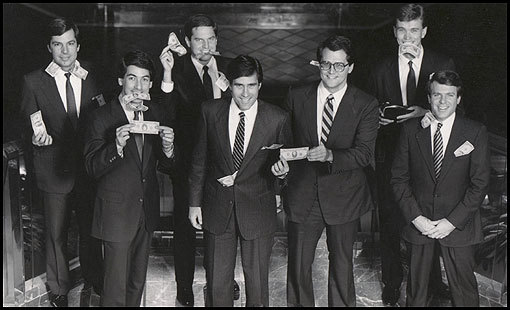
I thought I’d put up an open thread to discuss the ongoing Mitt Shady meltdown–or anything else on your mind. I’m gearing up to listen to Rachel Maddow and Lawrence O’Donnell and I’ll post anything interesting they have to say. If you’re watching or listening too, please join in.
I know you’re already aware that Romney demanded a retraction from The Boston Globe, and they informed him that their story is solid and they’re not backing down. Of course the Obama campaign laughed their asses off at Romney’s demand for an apology from them. Here are some of the latest headlines on the Mitt Shady meldown.
I really like this post by Brian Beutler: Cutting Through The Bain Bamboozlement
Technical questions are, for the moment, dominating the dispute over when Mitt Romney really left Bain Capital. But from my point of view, on the sidelines of this particular story, it all seems much, much simpler.
The reason this issue is in dispute at all is because Mitt Romney wants full political inoculation from anything Bain did between early 1999 and 2002, when he definitely truly left the company. He wasn’t in charge, except in a narrow, technical sense; he’d delegated his duties; Bain’s business practices from that period can’t be hung around his neck.
If you’re not already belly-laughing think about it this way.
For Romney to be truly off the hook politically for the stuff Bain was doing, he’d have to claim not lack of control, but lack of knowledge. And that’s just not going to wash with anyone. He could try going the “I didn’t have even the slightest idea what the company I technically still owned was doing” route, but he’d be marking himself as either dishonest or incompetent.
Here’s a story from The Boston Globe defending their original piece from this morning.
The Romney campaign did not dispute the contents of the documents reviewed by the Globe but insisted Romney had nothing to do with Bain Capital’s operations after he became chief executive of the Salt Lake Organizing Committee.
“The article is not accurate,” Romney spokeswoman Andrea Saul said. “As Bain Capital has said, as Governor Romney has said, and as has been confirmed by independent fact checkers multiple times, Governor Romney left Bain Capital in February of 1999 to run the Olympics and had no input on investments or management of companies after that point.” [….]
But a former SEC commissioner told the Globe that even if Romney did not have his hand in Bain Capital’s day-to-day operations, he was still responsible for them, as the firm’s boss.
“It doesn’t make a whole lot of sense to say he was technically in charge on paper but he had nothing to do with Bain’s operations,” said Roberta S. Karmel, now a professor at Brooklyn Law School. “Was he getting paid? He’s the sole stockholder. Are you telling me he owned the company but had no say in its investments?”
The Romney campaign claimed Karmel is biased, noting that she was appointed by Democratic President Jimmy Carter. Karmel did not donate to Obama in 2008 and has not given to the president’s campaign this year, either.
HuffPo: Mitt Romney’s Own Testimony Undermines Bain Departure Claim.
Romney has consistently insisted that he was too busy organizing the 2002 Winter Olympics to take part in Bain business between 1999 and that event. But in the testimony, which was provided to The Huffington Post, Romney noted that he regularly traveled back to Massachusetts. “[T]here were a number of social trips and business trips that brought me back to Massachusetts, board meetings, Thanksgiving and so forth,” he said.
Romney’s sworn testimony was given as part of a hearing to determine whether he had sufficient residency status in Massachusetts to run for governor.
Romney testified that he “remained on the board of the Staples Corporation and Marriott International, the Life Like Corporation” at the time.
Yet in the Aug. 12, 2011, federal disclosure form filed as part of his presidential bid, he said, “Mr. Romney retired from Bain Capital on February 11, 1999 to head the Salt Lake Organizing Committee. Since February 11, 1999, Mr. Romney has not had any active role with any Bain Capital entity and has not been involved in the operations of any Bain Capital entity in any way.”
Bain, a private equity firm, held a stake in the Lifelike Co. until the end of 2001, including during the period in which Romney claimed to have no business involvement with Bain entities. Bain had heavily invested in Lifelike, a company that Romney identified personally as an opportunity, in 1996 and sold its shares in late 2001. His involvement with Lifelike contradicts his assertion that he had no involvement with Bain business. His testimony is supported by his 2001 Massachusetts State Ethics Commission filing, in which he lists himself as a member of Lifelike’s board.
WaPo: Mitt Romney faces new round of calls to release tax returns.
For the Romney campaign, the calculation is complex, as his advisers are weighing the benefits of transparency against the potential problems he could face should the documents reveal — or even appear to reveal — that he has gamed the tax code.
For now, Romney’s advisers said that the candidate has been sufficiently transparent and that he has no plans to disclose additional tax filings. But with four months left until Election Day — and the near-certainty that Romney will face questions about his finances in any interviews and in the fall debates — his advisers might be forced to reevaluate their strategy if the issue damages his standing in the polls.
Even some Republicans are describing the Romney position as problematic. Former Mississippi governor Haley Barbour, a onetime party chairman, said this week that he would provide more than two years’ worth of documents if he were in Romney’s shoes.
Strategist Mark McKinnon said the candidate’s reluctance to release his taxes feeds into the Obama campaign’s argument that Romney is hiding something and taking advantage of the system to enrich himself.
The longer Romney stalls, the worse this is going to get. He’s starting to sound like Nixon claiming “I am not a crook.”
Check whether you have the DNSChanger issue
Posted: July 7, 2012 Filed under: just because 2 CommentsVia Uppity Woman, a couple of possibly useful links. A malware site was shut down months ago. The infected computers used the bad server to find their way around on the internet. To keep all those people from going dark, the FBI has been maintaining a server to replace the bad one. That way people could fix the problem when convenient. But over 300,000 people still haven’t fixed it, and the FBI is turning off the server on Monday. I hope that doesn’t include anyone on Skydancing, but just in case…
More info here: http://www.dcwg.org/
The site to check whether your computer might have the problem: http://www.dns-ok.us/
Caturday Heroines
Posted: June 30, 2012 Filed under: just because | Tags: Hillary Clinton, Jean Patchett, Nora Ephron, Ruth Ginsburg 30 Comments
1950’s Jean Patchett
Morning, news junkies! Okay so not a cat picture, but Jean Patchett qualifies as pretty darn feline in my books… heh. Also, I can’t get this pic to post because it’s copyrighted, but here’s a photo of Hemingway and Patchett in tow with kitties.
Well that’s it in the way of an intro for today. Let’s get right to the links.
First up… by now I’m sure you’ve all read quite a few of the “Hillary makes history” items in the headlines lately, so I won’t reinvent that news wheel. But, in case you missed it…here’s a neat profile on Hillary Rodham Clinton at makers.com, entitled “The Lesson of ‘Hillarycare'”. Includes several video interview clips of Hillary reflecting on her life. Snippet from the write-up:
Wellesley College seniors had never before chosen a commencement speaker from their own ranks when Hillary Rodham stepped to the podium on the last day of May in 1969. Education, she said, must grant “the courage to be whole” and permit people to live “in relation to one another in the full poetry of existence.” The speech received national attention and marked Rodham as a leading light for the young women of her generation.
By now, it’s safe to say that the early promise has been borne out; had Hillary Rodham Clinton “merely” attended Yale Law, served on the staff of the Senate Watergate Committee, become a respected children’s rights advocate, been the first female partner at her law firm, been a mother, and served as First Lady of Arkansas, we would think of her as a leader. And yet she has by now spent two additional decades at the very heart of the national consciousness—as a sometimes-embattled First Lady, as a distinguished senator from New York, as a groundbreaking 2008 Presidential candidate, and now as the 67th Secretary of State. Clinton has outlasted the smears to top Gallup’s “most admired woman in America” a record 16 times since 1993. “The courage to be whole,” indeed.
Next, from the New Yorker’s Amy Davidson… Ruth Bader Ginsburg, Hero:
I am glad that John Roberts, the Chief Justice, voted to uphold almost all of the Affordable Care Act. But the stance of humble gratitude toward Roberts that’s been assumed by many in the past day is beginning to be a bit much. This is especially true since the real hero of the day is Ruth Bader Ginsburg.
On the front page of the late edition of the Times Friday morning, there were four stories on the Supreme Court decision. One talked about Roberts’s “exquisite delicacy,” and how he “considers himself the custodian of the Supreme Court’s prestige, authority and legitimacy.” Ginsburg’s name didn’t appear before the jump in any of them; she only ever appeared in one, seventeen paragraphs in. Her picture and surname were in the infographic—all the Justices were there. There were four pull-quotes: two from Roberts, and two from the joint dissent from Antonin Scalia, Samuel Alito, Clarence Thomas, and Anthony Kennedy.
And yet Ginsburg wrote what would have been the dissent—and a strong one—if Roberts had voted with the four conservatives to throw out the entire health-care law.
Read the rest. It’s worth the click and it’s news you won’t find out from the Dewey Defeats Truman newsrooms of America!
Historiann on Nora Ephron…. I highly recommend clicking on the first link in her post, which I’ve linked here too for your convenience:
From the New York Times obit:
The producer Scott Rudin recalled that less than two weeks before her death, he had a long phone session with her from the hospital while she was undergoing treatment, going over notes for a pilot she was writing for a TV series about a bank compliance officer. Afterward she told him, “If I could just get a hairdresser in here, we could have a meeting.”
Ms. Ephron’s collection “I Remember Nothing” concludes with two lists, one of things she says she won’t miss and one of things she will. Among the “won’t miss” items are dry skin, Clarence Thomas, the sound of the vacuum cleaner, and panels on “Women in Film.” The other list, of the things she will miss, begins with “my kids” and “Nick” and ends this way:
“Taking a bath
Coming over the bridge to Manhattan
Pie.”
And, on that note. I’m gonna go draw a nice soothing bath and bake something yummy this Saturday. You know what to do in the comments, Sky Dancers… Have a lovely weekend!
Novelist, Screenwriter, and Humorist Nora Ephron has Died
Posted: June 26, 2012 Filed under: just because | Tags: Carl Bernstein, celebrity deaths, Dan Greenburg, Karen Silkwood, Meryl Streep, Nicholas Pileggi, Nora Ephron 13 Comments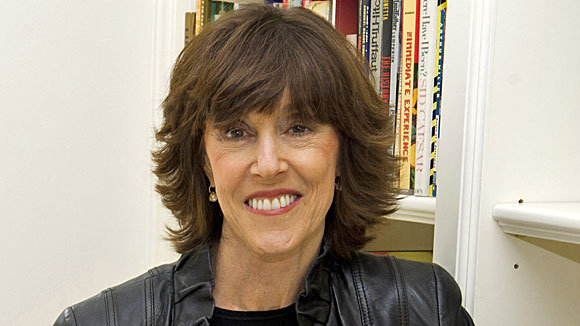
Nora Ephron, who gained a devoted following for her perceptive, deeply personal essays and parlayed that renown into a screenwriting career of wistful romantic comedies such as “When Harry Met Sally” and “You’ve Got Mail,” the marital exposé “Heartburn” and the whistleblower drama “Silkwood,” died June 26 at a hospital in New York. She was 71.
The death was confirmed by her friend Richard Cohen, a Washington Post columnist. She died of complications from the blood disorder myelodysplasia, with which she was diagnosed six years ago.
As a young woman, Ms. Ephron modeled her self-deprecating and deadpan writing style on Dorothy Parker, part of the Algonquin Round Table of sophisticated New York writers and humorists that also included Robert Benchley and S.J. Perelman. Of the philandering husband in her 1983 novel “Heartburn” — modeled on her marriage to former Washington Post journalist Carl Bernstein — Ms. Ephron wrote he was “capable of having sex with a Venetian blind.”
In time, Ms. Ephron became a social confederate of New York playwrights, filmmakers and wits, including Mike Nichols, Woody Allen and Calvin Trillin; Washington journalists including former Post executive editor Benjamin Bradlee and his journalist wife, Sally Quinn; and a Hollywood coterie that included Rob Reiner, Tom Hanks, Steve Martin and Steven Spielberg.
The New York Times calls her a “woman of letters.”
She was a journalist, a blogger, an essayist, a novelist, a playwright, an Oscar-nominated screenwriter and a movie director — a rarity in a film industry whose directorial ranks were and continue to be dominated by men. More box-office success arrived with “You’ve Got Mail” and “Julie & Julia.” By the end of her life, though remaining remarkably youthful looking, she had even become something of a philosopher about age and its indignities.
“Why do people write books that say it’s better to be older than to be younger?” she wrote in “I Feel Bad About My Neck,” her 2006 best-selling collection of essays. “It’s not better. Even if you have all your marbles, you’re constantly reaching for the name of the person you met the day before yesterday.”
Nora Ephron was born on May 19, 1941, on the Upper West Side of Manhattan, the eldest of four sisters, all of whom became writers. That was no surprise; writing was the family business. Her father, Henry, and her mother, the former Phoebe Wolkind, were Hollywood screenwriters who wrote, among other films, “Carousel,” “There’s No Business Like Show Business” and “Captain Newman, M.D.”
“Everything is copy,” her mother once said, and she and her husband proved it by turning the college-age Nora into a character in a play, later a movie, “Take Her, She’s Mine.” The lesson was not lost on Ms. Ephron, who seldom wrote about her children but could make sparkling copy out of almost anything else: the wrinkles on her neck, her apartment, cabbage strudel, Teflon pans and the tastelessness of egg-white omelets.
Ephron’s first marriage, to writer Dan Greenburg, ended after nine years. In 1976 she married Bernstein, who along with Bob Woodward had broken the Watergate scandal for the Washington Post a few years earlier. “Heartburn,” her 1996 novel, found humor in the ruins of her marriage to Bernstein, who, she said, had an affair while she was pregnant with their second son. The Bernstein-based character was played by Jack Nicholson, the Ephron-based character by Meryl Streep, in the 1986 film version.
Streep had also starred three years earlier in the Mike Nichols-directed “Silkwood,” a drama based on the real-life story of a labor organizer at a nuclear-processing plant whose whistle-blowing was abruptly ended when she died in a car accident.
Ephron’s third marriage was to journalist Nicholas Pileggi, who adapted his 1985 book “Wiseguy” into the movie “Goodfellas” (1990), directed by Martin Scorsese.
Pileggi survives her, as do her two sons from her marriage to Bernstein, Max and Jacob.
I loved Ephron’s humorous essays, and her novel Heartburn was absolutely hilarious. I had no idea she was the model for the Sandra Dee role in Take Her, She’s Mine–a romantic comedy starring Jimmy Stewart as the worried father of an attractive teenager. I wasn’t wild about some of Ephron’s sappy movies like You’ve Got Mail, but Silkwood is one of my all-time favorites. As an aside, I don’t think most people really believe Karen Silkwood’s “accident” was anything other than murder.
Rest in peace, Nora. You’ve left us far too soon.
Everything wrong summarized in one picture
Posted: June 23, 2012 Filed under: energy, Environment, just because, U.S. Economy | Tags: agribusiness, fossil fuel, sod farms 17 Comments
Vacuuming grass clippings at a sod farm
A sod farm grows lawns for people who can’t be bothered with the whole grass-seed-and-careful-watering effort. It takes tons of fossil fuel. It takes huge quantities of water. You see farmworkers carefully moving the irrigation pipes every few days so that none of the sod gets marred by having a pipe on it too long.
You also see farmworkers walking the fields in formation, plastic bags on their belts, gently using a screwdriver-like tool to remove any weed trying to invade the living astroturf.
And, of course, the new grass has to be cut regularly for the sod to form a nice even carpet. More fossil fuel. Also, grass clippings. The clippings can’t be allowed to matt down. So they are vacuumed up.
We’re living in a world where it’s worth building huge wells drilling thousands of meters down to bring up ancient decomposed bacteria that are refined in enormous factories and then trucked everywhere while releasing their carbon to cook the planet so that fuel can be put into tractors to vacuum grass clippings.
Insanity.

 peej
peej Carissa
 bostonboomer
 dakinikat
 ecocatwoman
 mablue2
 Mama Lopez
 peggysue22
 quixote
 skydancingguestblogger
 Mona (aka Wonk the Vote)



 Sky Dancing
Recent Comments