
Late Night: Guitarist Alvin Lee Has Gone Home
Posted: March 6, 2013 Filed under: just because | Tags: Alvin Lee, blues, British Invasion, Obituaries 4 Comments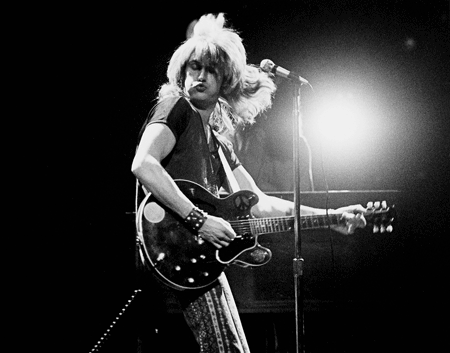
Sad news today…
Alvin Lee, lead guitarist and vocalist for the 1960s group Ten Years After, died this morning of complications from routine surgery, according to his website. He was 68.
Lee’s blues-rock group Ten Years After already was big in England before rocketing to international fame with its wild show at Woodstock in 1969. The band’s 10-minute rendition of Lee’s “I’m Going Home” became a cornerstone of Michael Wadleigh’s film about the festival and its soundtrack album, which would spend four weeks at No. 1 in the U.S. in 1970.
Having grown up on his family’s jazz and blues records but inspired by ’50s rock ’n’ roll, Lee, born Dec. 19, 1944, formed the Jaybirds in his midteens in his hometown of Nottingham, England. The group had some success after following The Beatles to Hamburg, Germany, but took hold after changing its name and relocating to London.
The newly christened Ten Years After played a residency at Marquee Club, where The Rolling Stones had debuted a half-decade earlier. A gig at the 1967 Windsor Jazz & Blues Festival led to a record deal with Denam. The band’s 1967 self-titled debut album — an innovative mix of rock, blues and swing jazz that featured “I’m Going Home” — failed to chart but received some airplay in San Francisco’s burgeoning FM radio scene.
That led legendary promoter Bill Graham to bring the band across the pond for a U.S. tour — the first of more than two dozen American jaunts during the next seven years.

Woodstock propelled Ten Years After into the forefront of the second-wave British Invasion, whose emphasis often was on flashy guitar playing with extensive solos.
Lee told the BBC in 2012 that he still had the 335 he played at Woodstock, but that he didn’t use it much any more, “because it’s too valuable.”Lee also later said he was ambivalent about the band becoming headlining stars, saying it took away some of the intimacy he enjoyed playing for smaller audiences in closer quarters….Lee, like his friend John Mayall, always said he wanted to stay true to the blues, country, jazz and rock roots he heard in his youth, and he spent much of his musical time going back there.
Back to The Hollywood Reporter:
Ten Years After ultimately released 10 albums before splitting in 1973. Lee soon teamed with American gospel singer Mylon LeFevre for a country rock album, On the Road to Freedom, which featured such guests as George Harrison, Steve Winwood, Jim Capaldi, Mick Fleetwood and Ron Wood. Lee would spend the rest of the ’70s touring and making solo records. During the decade’s waning years, he formed Ten Years Later, which released a pair of albums, and he continued to play gigs in the U.S. and Europe.
During the ’80s, he teamed with Rare Bird vocalist Steve Gould and toured with ex-Stone Mick Taylor in his band, and his ”90s albums include Zoom and 1994 (I Hear You Rocking).
In 2004, he released the rootsy Alvin Lee in Tennessee, teaming with Scotty Moore and D.J. Fontana from Elvis Presley’s band. His most recent record, 2007’s Saguitar, flowed from hard rock to slow blues to a take on rap. His 14th solo album, Still on the Road to Freedom, was released in August. A new compilation album, Best of Alvin Lee, was issued in May.
Rest In Peace, Alvin. You’ve left us too soon.

The processed-food-industrial complex: Weaponized Food
Posted: March 2, 2013 Filed under: just because | Tags: food addiction, obesity, processed food industry 29 Comments I watched Amy Goodman of Democracy Now interview an investigative reporter with The New York Times named Michael Moss. He penned “Salt Sugar Fat: How the Food Giants Hooked Us”. His recent article–“The Extraordinary Science of Addictive Junk Food” was published last –weekend in the Times Sunday magazine. Moss won 2010 Pulitzer Prize for investigating the dangers of contaminated meat. I’m going to excerpt some of Goodman’s interview and some of the article itself for you.
AMY GOODMAN: We spend the rest of the hour going deep inside the “processed-food-industrial complex,” beginning with the “The Extraordinary Science of Addictive Junk Food.” That was the cover story in the recent New York Times Magazine that examined how food companies have known for decades that salt, sugar and fat are not good for us in the quantities American’s consume them, and yet every year they convince most of us to ingest about twice the recommended amount of salt, 70 pounds of sugar—22 teaspoons a day. Then, there’s the fat. Well, New York Times reporter Michael Moss explains how one of the most prevalent fat delivery methods is cheese.
MICHAEL MOSS: Every year, the average American eats as much as 33 pounds of cheese. That’s up to 60,000 calories and 3,100 grams of saturated fat. So why do we eat so much cheese? Mainly it’s because the government is in cahoots with the processed food industry. And instead of responding in earnest to the health crisis, they’ve spent the past 30 years getting people to eat more. This is the story of how we ended up doing just that.
Okay, I’m officially off cheese now. I don’t eat chips, crackers, sodas, or cookes, but I do eat cheese a lot. Well, maybe that explains these hips. But seriously, I’ve noticed how hard it is to eat almost anything or find food that’s not loaded down with chemicals and additives. Moss’ work is eye-opening. The industry actually works to make bad food addictive.
The public and the food companies have known for decades now — or at the very least since this meeting — that sugary, salty, fatty foods are not good for us in the quantities that we consume them. So why are the diabetes and obesity and hypertension numbers still spiraling out of control? It’s not just a matter of poor willpower on the part of the consumer and a give-the-people-what-they-want attitude on the part of the food manufacturers. What I found, over four years of research and reporting, was a conscious effort — taking place in labs and marketing meetings and grocery-store aisles — to get people hooked on foods that are convenient and inexpensive. I talked to more than 300 people in or formerly employed by the processed-food industry, from scientists to marketers to C.E.O.’s. Some were willing whistle-blowers, while others spoke reluctantly when presented with some of the thousands of pages of secret memos that I obtained from inside the food industry’s operations. What follows is a series of small case studies of a handful of characters whose work then, and perspective now, sheds light on how the foods are created and sold to people who, while not powerless, are extremely vulnerable to the intensity of these companies’ industrial formulations and selling campaigns.
Goodman has also interviewed food reporter Melanie Warner who wrote “Pandora’s Lunchbox: How Processed Food Took Over the American Meal”.
MELANIE WARNER: Yeah, I’m not much of a scientist, but a number of years ago, when I started covering the food industry, I became curious about expiration dates that are printed on packages. Pretty much you to go into the supermarket, and every package in the store will have an expiration date on it. And I wondered: Well, what will happen? What do these expiration dates mean, and what will happen after this date has come and gone? Some of these dates are actually quite far out; they’ll be six to nine months or even more.
So I started collecting a number of food products, and I saved them in my office. And then I would open them after the expiration dates had passed, sometimes long after the expiration dates had passed because I had forgotten about them. And what I found out over time—I collected all kinds of products: cereal, cookies, Pop-Tarts, fast-food meals, frozen dinners, I mean, you name it. I have all kinds of gross stuff in my office at this point.
And what I found—there were a few exceptions—but what I found was that most of this food did not decompose or mold or go bad, even after long, long periods of time. I mean, I started this seven, eight years ago, and I still have slices of cheese that are perfectly orange, processed cheese.
AMY GOODMAN: From years and years and years ago?
MELANIE WARNER: Years and years and years ago, yeah. And they’re—
AMY GOODMAN: And what keeps their color? And what keeps them looking—
MELANIE WARNER: Yeah.
AMY GOODMAN: —completely preserved?
MELANIE WARNER: There are a variety of reasons for this, depending on the product. Sometimes it’s because of powerful chemical preservatives that are in it. Sometimes it’s because of additives that lower the acidity of products, so that no microorganisms can grow. And sometimes it’s because food manufacturers very intentionally remove all the water from products. That’s the case with cereal and cookies.
Well, there we are with the cheese again. I’ve now learned a new phrase. It’s “process optimization” and it’s not about producing things right the first time. It’s about making food taste wonderful even when it’s bad for your or its underlying taste is awful.
Moskowitz, who studied mathematics and holds a Ph.D. in experimental psychology from Harvard, runs a consulting firm in White Plains, where for more than three decades he has “optimized” a variety of products for Campbell Soup, General Foods, Kraft and PepsiCo. “I’ve optimized soups,” Moskowitz told me. “I’ve optimized pizzas. I’ve optimized salad dressings and pickles. In this field, I’m a game changer.”
In the process of product optimization, food engineers alter a litany of variables with the sole intent of finding the most perfect version (or versions) of a product. Ordinary consumers are paid to spend hours sitting in rooms where they touch, feel, sip, smell, swirl and taste whatever product is in question. Their opinions are dumped into a computer, and the data are sifted and sorted through a statistical method called conjoint analysis, which determines what features will be most attractive to consumers. Moskowitz likes to imagine that his computer is divided into silos, in which each of the attributes is stacked. But it’s not simply a matter of comparing Color 23 with Color 24. In the most complicated projects, Color 23 must be combined with Syrup 11 and Packaging 6, and on and on, in seemingly infinite combinations. Even for jobs in which the only concern is taste and the variables are limited to the ingredients, endless charts and graphs will come spewing out of Moskowitz’s computer. “The mathematical model maps out the ingredients to the sensory perceptions these ingredients create,” he told me, “so I can just dial a new product. This is the engineering approach.”
Moskowitz’s work on Prego spaghetti sauce was memorialized in a 2004 presentation by the author Malcolm Gladwell at the TED conference in Monterey, Calif.: “After . . . months and months, he had a mountain of data about how the American people feel about spaghetti sauce. . . . And sure enough, if you sit down and you analyze all this data on spaghetti sauce, you realize that all Americans fall into one of three groups. There are people who like their spaghetti sauce plain. There are people who like their spaghetti sauce spicy. And there are people who like it extra-chunky. And of those three facts, the third one was the most significant, because at the time, in the early 1980s, if you went to a supermarket, you would not find extra-chunky spaghetti sauce. And Prego turned to Howard, and they said, ‘Are you telling me that one-third of Americans crave extra-chunky spaghetti sauce, and yet no one is servicing their needs?’ And he said, ‘Yes.’ And Prego then went back and completely reformulated their spaghetti sauce and came out with a line of extra-chunky that immediately and completely took over the spaghetti-sauce business in this country. . . . That is Howard’s gift to the American people. . . . He fundamentally changed the way the food industry thinks about making you happy.”
I make my own spaghetti sauce, but I do put cheese on top of that too. Drat. I really must be cheese addicted.
Anyway, I just thought all of this was very interesting and thought I’d share it and this taste of food porn on the side.
Saturday Afternoon Reads: The Feminine Mystique
Posted: February 23, 2013 Filed under: just because, U.S. Politics, Women's Rights | Tags: afternoon reads, Betty Friedan, books, education, feminism, psychology, The Feminine Mystique 40 Comments
Betty Friedan
Good Afternoon!
I decided to focus this post on something other than the debt, deficit, sequester obsession that has taken over American politics, so I’m writing about a book I read in high school that changed my life forever. Feel free to use this as an open thread, and post your links freely in the comments.
This week marked the 50th anniversary of a book that truly changed my life, The Feminine Mystique, by Betty Friedan. It was first published on February 19, 1963. I read it in paperback when I was a junior in high school, probably in early 1964.
I already knew I didn’t want to be a housewife like my mom, but there weren’t many alternatives for girls in those days. Ideally, you were supposed to get married and have children and forget about having a career or focusing on your own unique interests. You were supposed to enjoy cleaning house and supporting your husband’s career and if you didn’t enjoy it, there was something wrong with you–you weren’t a real woman.
The main reason for girls to go to college was to find a husband. Oh sure, you could study and learn about things that interest you, but that would all go by the wayside once you found a man. After that, it was all about him. If you couldn’t find a husband, then you might have to work. You could be a teacher, a nurse, or a secretary–that was about it. Women who insisted on being college professors, doctors, lawyers were few and far between and they had a tough time of it.
Then Betty Friedan’s book came out, and it hit a nerve for millions of American women and girls, including me. Here’s the famous opening paragraph:
“The problem lay buried, unspoken, for many years in the minds of American women. It was a strange stirring, a sense of dissatisfaction, a yearning that women suffered in the middle of the 20th century in the United States. Each suburban wife struggled with it alone. As she made the beds, shopped for groceries, matched slipcover material, ate peanut butter sandwiches with her children, chauffeured Cub Scouts and Brownies, lay beside her husband at night—she was afraid to ask even of herself the silent question—‘Is this all?’”
Friedan called it “the problem with no name.”
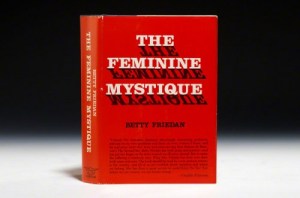
First edition of Friedan’s The Feminine Mystique (Bauman Rare Books)
As I read the book, I began to develop more sympathy for my mother’s plight. During World War II, women had been called upon to go to work to support the war effort and replace men who had been drafted or had enlisted in the military. But when the men came back, they needed the jobs and women were expected to go back to their homes and be satisfied with doing housework, child rearing, decorating, and entertaining for no pay. Friedan wrote about how “experts” had produced reams of propaganda in the effort to get women to find joy and fulfillment in being housewives and mothers. The “feminist mystique” for Friedan said “that the highest value and the only commitment for women is the fulfillment of their own femininity.”
I’ve told this story before, but when I was a senior in high school I wrote an essay for my English class called “Women Are People Too.” My male teacher was somewhat taken aback by my arguments, but he still asked me to read my paper aloud in class. I was jeered and mock for it, of course. Later my economics teacher–a true leftist–found out about the essay and read it in my economic class. Today it seems strange, but most of the other students in my school were horrified by the notion of women being equal to men.
My father, an English professor, had a woman colleague Lucille C.–a full professor who had never married. My mother said that most men would be intimidated by her brilliance and success. Anyway, when I told Lucille about how all the other kids were making fun of me for my essay, she told me to tell them I was a member of FOMA, which stood for “Future Old Maids of America.” I loved it!
Much has changed since 1963. Women now assume they have a right to an education and a career as a well as the right to choose (if they can afford it) whether to stay home with children or work outside the home. But as we have seen in the past four plus years, misogyny is alive and well in the good ol’ USA, and we still have a very long way to go to achieve anything like real gender equality.
Carlene Bauer spoke for me when she wrote at The New York Observer:
When Friedan writes that early feminists “had to prove that women were human,” it is hard not to feel a shock of recognition and indict our own moment as well, especially after the election that just passed. But American women still find themselves struggling against a strangely virulent, insidious misogyny. If our culture truly thought women were human, 19 states would not have enacted provisions to restrict abortion last year. There would be no question whether to renew the Violence Against Women Act. Women would not make 77 cents to every man’s dollar, and make less than our male counterparts even in fields where we dominate. We wouldn’t have terms like “legitimate rape” or “personhood.” Women who decided not to have children would not be called “selfish,” as if they were themselves children who had a problem with sharing. If our culture truly allowed them to have strong, complex, contradictory feelings and believed they were sexual creatures for whom pleasure was a biological right, perhaps adult women would not be escaping en masse into badly written fantasy novels about teenage girls being ravished by vampires.
Bauer also noted that some problems with the book, most notably Friedan’s homophobia.
This book…should seem thrillingly, relievedly quaint. It does not. But it is surprisingly boring in spots—there are many moments where you can see the women’s magazine writer in Friedan giving herself over to breathless exhortation—and astoundingly homophobic. At one point Friedan rails against “the homosexuality that is spreading like a murky smog over the American scene.” Friedan has been criticized for not being as careful a researcher, or as honest a storyteller, or as civil-rights-minded as she could have been. But perhaps these criticisms are somewhat beside the point. There are numerous passages that, if you did not know their provenance, could be mistaken for sentences written in judgment of the present day.
In looking over The Feminine Mystique recently, I realized that I had forgotten how much scholarship and psychological analysis and scholarship Friedan included in the book. She was a psychology major at Smith College, graduating summa cum laude in 1942. For example, The Feminine Mystique contained a brilliant analysis of Freudian theory and its consequences for women. Friedan argued that education at women’s colleges had been dumbed down between the 1940s and 1960s, with educators limiting courses to “subjects deemed suitable for women” and their future roles as housewives. She suggested that girls were prevented from experiencing the normative identity crisis that was the focus of Erik Erikson’s developmental theory. And she argued that women had been kept at the lower, subsistence levels of Maslow’s hierarchy of needs.
How many books truly change society in dramatic ways. Betty Friedan’s book did that. A few more links to articles on the 50th anniversary of The Feminine Mystique.
Michelle Bernard: Betty Friedan and black women: Is it time for a second look?
NYT: Criticisms of a Classic Abound
Mona Gable at BlogHer: How Far Have We Come?
ABC News: ‘Feminine Mystique’: 50 Years Later, Dated But Not Irrelevant
Caryl Rivers: ‘Feminine Mystique’ At 50: If Betty Friedan Could See Us Now
Janet Maslin: Looking Back at a Domestic Cri de Coeur
Alexandra Petri: The Feminist Mystique
Peter Dreier: The Feminine Mystique and Women’s Equality — 50 Years Later
Kathi Wolfe at The Washington Blade: Power of the ‘Feminine Mystique’
A discussion at NPR’s On Point: The Feminine Mystique at 50
This isn’t specifically about The Feminine Mystique, but I think it’s relevant. Allie Grasgreen at Inside Higher Ed: ‘The Rise of Women’ — a “new book explains why women outpace men in higher education.”
Please use this as an open thread, and post anything you like in the comments.
Saturday Morning Open Thread: Anti-Abortion Senator Endorses Roe v. Wade Reasoning
Posted: February 23, 2013 Filed under: just because, Republican politics, U.S. Politics, Women's Rights | Tags: abortion, Charles Grassley, Indiana State Senate, Mike "Two Times" Pence, right to privacy, Roe v. Wade, transvaginal ultrasound 23 Comments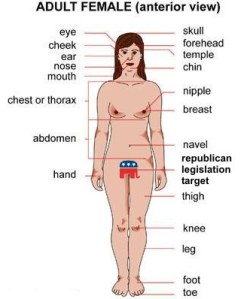
Good Morning!!
I’m getting a slow start this morning, so I thought I’d put up an open thread to get us started. This story is a couple of days old so you may have heard about it already, but I just had to take note of it anyway.
On Wednesday at a town hall meeting in Chariton Iowa, Senator Charles Grassley got a strange question about some wingnut conspiracy theory from one of his constituents: From the Atlantic Wire:
Constituent: They’re saying that they’re going to start, in 2013, putting microchips in government workers and then any kid that enrolls in school, starting in pre-school, will have a microchip implanted in them so that they can track them. Is that true?
Senator Grassley’s response was absolutely priceless:
Grassley: No. First of all, nothing can be done to your body without your permission….It’d be a violation of the constitutional right to privacy if that were to happen.
Here’s the video:
In case Grassley hasn’t thought about it that carefully, forcing a woman to have a baby certainly qualifies as doing something to her body without her permission. Actually, there is no right to privacy in the U.S. Constitution, but the Roe v. Wade decision created one; and Roe could certainly be used as precedent in any case relating to violations of body integrity.
In fact, the majority opinion of Roe v. Wade clearly states:
The Constitution does not explicitly mention any right of privacy. In a line of decisions, however, going back perhaps as far as Union Pacific R. Co. v. Botsford, 141 U.S. 250, 251 (1891), the Court has recognized that a right of personal privacy, or a guarantee of certain areas or zones of privacy, does exist under the Constitution…
Roe v. Wade, of course, established the right to privacy — the kind that might spare you from a government conspiracy to embed microchips that might reveal your entire health history. Or, you know, the kind of privacy that allows women to obtain a legal abortion in this country:
This right of privacy, whether it be founded in the Fourteenth Amendment’s concept of personal liberty and restrictions upon state action, as we feel it is, or, as the District Court determined, in the Ninth Amendment’s reservation of rights to the people, is broad enough to encompass a woman’s decision whether or not to terminate her pregnancy.
Grassley is a long-time opponent of abortion rights and advocate of overturning Roe v. Wade, and Naral gives him a zero rating on pro-choice issues. If Roe were overturned, where does Grassley think he’d find a constitutional “right to privacy”?
And let’s not forget the recent Republican obsession with forcing women to undergo vaginal probes before they can have an abortion.

Not to be outdone, the Indiana State Senate has passed a new law that requires a woman to have two (2) ultrasounds–before and after her “abortion”–even if she is just taking RU 487, or the morning after pill! The bill doesn’t specific intravaginal ultrasounds, but they would, in effect, be required, since most abortions are performed when the embryo or fetus is too small to be detected by a traditional ultrasound.
I’m not sure what Grassley’s position on these ultrasound laws is, but someone should definitely ask him. If forcing a woman to have two transvaginal probes in order to get a pill doesn’t qualify as the government doing something to “your body without your permission,” what does Grassley believe would qualify as a violation of a woman’s privacy? Maybe because the town hall questioner was a man, he was suggesting that only Americans with penises have privacy rights?
As the inimitable Charles Pierce once wrote about Senator Grassley in a different context:
This is also funny because, you see, if there’s one thing that Chuck Grassley is noted for, it is that he is the most spectacular box of rocks, the most bulging bag of hammers, in the history of the World’s Greatest Deliberative Body. If brains were atom bombs, he couldn’t blow his nose. If his IQ was one point lower, they’d have to water him. As the great Dan Jenkins once put it in another context, if the man had a brain, he’d be out in the yard playing with it.
I’ll have a Saturday Reads post up a little later on.
Jindal’s ALEC Fetish sends his Poll Numbers South
Posted: February 13, 2013 Filed under: just because | Tags: Banana Republicans, Bobby Jindal, Red State Governors, Regressive Tax Policies 27 CommentsI’ve been writing about my governor frequently because the experience of the state of Louisiana with Jindal and his ALEX cronies should be a  cautionary tale to the rest of the country. Bobby Jindal is currently working on a tax overhaul that will punish any one that has to buy stuff–and conversely sell stuff–in the state so he can reward his rich friends and corporate donor base. Similar tax plans are being bandied about in Kansas and other states with Republican governors who have no idea what it takes to get a state into the economically healthy column. Their plans are basically to turn their states into Mississippi if their not near there already. These plans will essentially un-develop the states. Banana Republicans–like my governor–appear to be more interested in their memes and donors than in actually governing their states to prosperity. It’s a race to the bottom.
The GOP has plans for a comeback. But it may cost you a lot. The idea is to capitalize on recent Republican state takeovers to conduct an austerity experiment known as the new “red-state model” and prove that faulty policies can be turned into gold.
There will be smoke. There will be mirrors. And there will be a lot of ordinary people suffering needlessly in the wake of this ideological train wreck.
We already have a red-state model, and it’s called Mississippi. Or Texas. Or any number of states characterized by low public investment, worker abuse, environmental degradation, educational backwardness, high rates of unwanted pregnancy, poor health, and so on.
Now the GOP is determined to bring that horrible model to the rest of America.
In Kansas, the Wall Street Journal reports that Governor Sam Brownback is aiming to up his profile “by turning Kansas into what he calls Exhibit A for how sharp cuts in taxes and government spending can generate jobs, wean residents off public aid and spur economic growth.” In remarks quoted in the same article, Brownback announced that “My focus is to create a red-state model that allows the Republican ticket to say, ‘See, we’ve got a different way, and it works.’ ”
Brownback’s economic inspiration is Reagan-era supply-side economist Arthur Laffer and the folks at Americans for Prosperity, the conservative outfit backed by the deep coffers of the Koch brothers.
This new austerity talk focused on “fiscal innovations” is emboldening Republicans in other states that have been gerrymandered into submission to the GOP, including Indiana, Louisiana, Nebraska, Ohio, Oklahoma, and alas, my home state of North Carolina.
Gov. Bobby Jindal‘s impending tax overhaul will hurt low and middle-income households in Louisiana, liberal think tank the Center for Budget and Policy Priorities said this week. The CBPP added a DC-based conservative group, the American Legislative Exchange Council, was seeking to “move to remake Louisiana,” starting by influencing state tax policy.
“There are some states that really stand out in terms of ALEC’s footprint,” Doug Clopp of the liberal non-profit advocacy group Common Cause said during a Wednesday conference call on ALEC’s economic agenda. He added there is currently “a raft” of ALEC bills in the Louisiana Legislature.
ALEC, a 501(c)(3) organization chaired by Indiana Republican Rep. David Frizzell, provides a forum where state lawmakers and corporate representatives collaborate to create an annual list of “model legislation” for which the organization then lobbies.
According to the CBPP, Gov. Jindal’s impending tax overhaul, for which few details are currently public, very clearly mirrors “ALEC agenda” items on tax policy. At its most basic, the plan would involve doing away with income and corporate taxes in favor of a higher sales tax.
Today, PPP has confirmed exactly how impopular Jindal and his remaking of Louisiana has become in Louisiana. Dig these nasty poll numbers! It appears his political career in Louisiana is well-over.
When PPP last polled Louisiana in 2010, Bobby Jindal was one of the most popular Governors in the country. 58% of voters approved of the job he was doing to just 34% who disapproved. Over the last two and a half years though there’s been a massive downward shift in Jindal’s popularity, and he is now one of the most unpopular Governors in the country. Just 37% of voters now think he’s doing a good job to 57% who are unhappy with him.
The decline in Jindal’s popularity cuts across party lines. Where he was at 81/13 with Republicans in August 2010, now it’s 59/35. Where he was at 67/22 with independents back then, now he’s at 41/54. And what was a higher than normal amount of crossover support from Democrats at 33/58 is now 15/78. There was a time when Jindal probably would have been seen as a slam dunk candidate for Republicans against Mary Landrieu in 2014. But now he actually trails Landrieu 49/41 in a hypothetical match up.
Jindal’s ambitions lie within the District Beltway. However, he’s not doing very well on that account either.
A 57 percent majority of Louisiana voters now disapprove of their Republican governor’s performance, compared to 37 percent who approve, according to PPP. In August 2010, those numbers were nearly reversed, with 58 percent approving and 34 percent disapproving.
Jindal lost favor both inside and outside his party, according to the survey. His approval rating fell by 22 points among Republicans, by 26 points among independents and by 18 points among Democrats.
The poll surveyed 603 Louisiana voters between Feb. 8 and 12, using automated phone calls.
Jindal, who is considered a possible contender for the next presidential election, easily won reelection as governor in 2011, taking 66 percent of the vote against a field of nine rivals. His term lasts until 2015, when state law will prevent him from seeking a third consecutive term.
PPP’s most recent national poll found Jindal running behind former Florida Gov. Jeb Bush, New Jersey Gov. Chris Christie, former Arkansas Gov. Mike Huckabee, Kentucky Sen. Rand Paul, Florida Sen. Marco Rubio and Wisconsin Rep. Paul Ryan in a hypothetical GOP primary.
Jindal has been trying for the last three years to grab a political podium on the national stage. He bombed his first opportunity by doing a miserable job of rebutting Obama’s 2009 SOTU.
The 2009 Republican response to the State of the Union was supposed to be Bobby Jindal’s coming out. The Republicans were in dire need of a fresh, young leader, and Jindal was a governor aspiring to Washington. Who better to redefine the party than a son of immigrants who was living proof of the American Dream? It was a match made in heaven.
There was just one problem: Jindal’s speech fell flat. It fell so flat that the only person who defended it, among both liberals and conservatives, was Rush Limbaugh. Instead of kick-starting his national career, Jindal’s speech prematurely ended it and confined him to the state sphere instead.
Jindal’s prime time Republican convention speech was cancelled due to Hurricane Issac. He was never really a contender for the Romney VP nod which would’ve probably been the ultimate kiss-of-death any way. He’s been playing the ultimate sour grape since Romney’s loss for both Romney and the party of stupid. (I prefer Hillary Clinton’s characterization of the current Republican party as the Party of Evidence-Denial.) Jindal also has a habit of backing real losers in elections.
Louisiana Gov. Bobby Jindal (R) issued one of the more pointed post-election public criticisms of Mitt Romney’s presidential campaign Tuesday, saying that the Republican nominee did too little to set out an inspiring vision for governance.
“Mitt Romney is an honorable man. He’s a good honest man. He deserves our respect, and our gratitude,” Jindal told The Huffington Post in a phone interview. “The reality of it, the campaign was too much about biography. It wasn’t enough about a vision of where they wanted to take our country, and how they would do it.”
“The reality is people are not being inspired by a biography,” Jindal said. “We have got to offer that vision.”
Jindal made the comments as he talked about the need for Republicans to detail their policy ideas. He said that the Romney campaign’s focus on marketing its candidate as a businessman who could fix a stalled economy, rather than running on a bold presentation of conservative principles, was, “one of the reasons this got obscured.”
Those of us that have lived under Jindal’s Banana Republican approach to governance know him best and, it seems, the more you know him, the more you can’t stand him.
Since his national debut, Jindal has made an overwhelming number of decisions in Louisiana that sparked heated response from concerned observers. Host Melissa Harris-Perry addressed these decisions in an open letter to Jindal in November, which coined the hashtag, “#FBJ”: Forget Bobby Jindal. As we fast-forward to 2013, the governor is still in the news for his questionable policy changes.
Harris-Perry discussed with her panel the motives behind Jindal’s actions.
On Jan. 29, Gov. Jindal sent a note to the president via the Washington Post requesting a meeting about Medicaid to “give states more flexibility” in deciding the future of the program. This op-ed was published just as Jindal’s new Medicaid cuts went into effect in his own state. “Over the last five years, governor Jindal has cut Medicaid every year,” said Louisiana senator Karen Carter Peterson to the panel. She described the low eligibility rates in the state–one of the lowest in the country–and how this, in addition to Jindal’s other political ideaologies, is ”to the detriment of our citizens.”
Being Different author Rajiv Malhotra believes that all of the governor’s actions are to propel him to the forefront of 2016 ballot, whether or not they benefit the residents of Louisiana. Thus far, Jindal has willingly transformed into whatever the GOP needed him to be. “[Bobby Jindal] became as white as he could except for his skin color,” said Malhotra. “He’s uncomfortable being an Indian-American; he’s rejected that…except when it comes to fundraising.” Malhotra noted that Jindal was easily able to reject his ethnicity, until recently when the Republican party realized they needed to be “less white” in order to win the masses.
“The Republican Party actually does have more minorities and governorships than the democratic party does,” clarified Patrick Millsaps, former chief of staff for Newt Gingrich in 2012. Although opposed to some of Jindal’s proposals, he explained the inaccuracy of attributing the governor’s faults to race relations and identity versus the real issue: budget decisions. However, Jindal’s polictical decisions are called into question when his authenticity is challenged.
Democratic strategist John Rowley expanded on Millsaps stance and mentioned the problems Jindal will face in this “era of authenticity.” He listed several instances in which Jindal put himself at a disadvantage. ” [He] changed his religion, he changed his name…he’s changed some of his policy positions–he’s even changed his campaign tactics,” said Rowley.
Jindal, a 41-year-old, second-term governor, was initially considered a possible vice presidential pick for Romney, despite the fact that Jindal endorsed Texas Gov. Rick Perry in the Republican primary. But Jindal and Romney lacked personal chemistry, according to multiple sources, and Jindal had a limited presence for Romney on the campaign trail.
I know that I have a handful of Louisiana Readers for this blog who really care about the nuts and bolts of Jindal’s miserable policies and even worse results. His educational policy blunders alone could fill an entire blog and then some. I guess I keep bringing this up because Jindal’s had the audacity and the ability–given the nature of the Louisiana Legislature–to turn our our state into an ALEC crockpot. He’s probably done more drastic things than the governors of Florida and Wisconsin. He’s also attacked our public unions–what little is left of them–and our schools and public welfare and health programs. His recent role in the Republican Governor’s association has brought them into the light. For this, I’m thankful. It’s probably way too late to help my state but maybe we can stop him from going national. I hope that I let you know what to expect if you’re in one of those states where ALEC is running amok with a Banana Republican enabler.
Again, Jindal’s vision for the future only contains paths to Jindal’s personal advancement. Hurricane Katrina’s impact on the Democratic Party allowed him to get much further in the state that he would have under more normal conditions. The majority of the state has been a little slow to realize this but they sure know it now. However, Jindal’s policies are not unique nor or they just custom-made for Louisiana. So, as Cassandra of the Swamp, I’d just like to tell you to watch out for anything associated with my governor. It will do no one any good but Jindal, his cronies, and and his donor base.

 peej
peej Carissa
 bostonboomer
 dakinikat
 ecocatwoman
 mablue2
 Mama Lopez
 peggysue22
 quixote
 skydancingguestblogger
 Mona (aka Wonk the Vote)



 Sky Dancing
Recent Comments