
Saturday: Gladiators and Safety Nets
Posted: September 28, 2013 Filed under: just because 38 Comments Good afternoon, newsjunkies. I can’t seem to find my laptop charger, which is probably hiding underneath something as usual. So I’m drafting
 most all of this post from my iPhone. If the formatting is off, please forgive. This will be an exercise in trial by error–if I can pull this off decently I may be able to start posting a little more often during the week. I keep meaning to try my hand at the WordPress app on my phone, and this forces me to do just that, so maybe losing my charger is a good thing. Although by the looks of it, I just ramble even more blogging by phone 😉
Also, thanks to Bostonboomer for putting up the morning reads last week and today. It’s been one thing after another…waking up sick, losing power during storms, losing my charger. I have a lot of links saved up myself from not being able to post, so settle in for a bit of a ride!
First up, an interesting infographic I came across this morning — perhaps you have already seen it: Everything Wrong with America in One Simple Image. I like how the blogger points out the link between sports coaches being the highest paid public employees and the Steubenville rape.
From the link:
Bread and Circuses brought Rome to its knees. Will our epitaph be “Football and Junk Food?”
A bit of a cheap shot but not that far off the mark. Everything we consume–be it our education or our news–has morphed into a junk food version for mass consumption. And, the gladiators at our football and basketball coliseums have women and children as the spoils of their wars and the sacrificial lambs of their spectator sports.
The more civilization develops, the more it seems to devolve right back to the same place.
Speaking of which…am I the only one who finds Chris “Birdman” Andersen’s supposed clearing of his name really convoluted and dubious? Maybe I’m too jaded, but it just doesn’t pass the smell test. Doesn’t this seem like some kind of Manti Te’o redux? I don’t want to waste time on the details of the Birdman situation because they make no sense IMHO, but overall the story seems further evidence to me of a society that gives credence to the bizarre rationalizations of the gladiators to do whatever the hell they well please and sell it as more entertainment for the spectators.
Anyhow, shifting gears a bit… From the National Women’s Law Center Analysis of 2012 Census Poverty Data: Women’s Poverty Rate Remains Historically High . Specifically, more than 1 in 7 American women–17.8 million–lived in poverty last year. Take a look at the summary of stats at the link. Women of color and women-run households suffer the most as usual.
While I’m on the issue of the increased pressures we face as women, here’s a list from Huffpo on 23 Things Women “Should” Stop Doing. I put ‘should’ in quotes because telling ourselves we should or should not do this or that is a symptom itself of the crazy expectations placed upon women in society. The list at the link is more a list of guidelines and checkpoints, and it’s actually a decent, solid set of self-care/nurture goals so click over, Sky Dancers, and give it some thought. If you find some of these in particular to be trouble spots for you, try to evaluate where these attitudes and expectations come from–from your inner self or what society dictates? And, maybe think of alternatives that better nurture you and your womanhood and the womanhood of your sisters around you.
Alright, I’m trying my best to narrow down the various links I have gathered over the last few weeks to the few that are the most relevant or interesting still, so bear with me as I wander all over the place. Oddly enough, I even have a link to a SciAm blog piece that talks about the potential merits of being a scatterbrain — Mind Wandering: A New Personal Intelligence Perspective. Lol!
Moving along to the top of my political girl junkie perspective– if you haven’t heard already, Wendy Davis has all but officially announced for Governor of Texas! An official announcement is due from Wendy on October 3rd. Eeeeee! I can’t wait.
In the meantime, chew on this press release from her Texas senate office: Davis Cites New Law as Key to Cracking Down on Sexual Predators (note: link opens as a short PDF):
DALLAS – A law passed by Senator Wendy Davis (SD10 – Fort Worth) will help assure that dangerous sexual predators are identified, caught and prosecuted. Senator Davis detailed the new statute earlier today while speaking to the Dallas-Fort Worth Hospital Council (DFWHC).
Key provisions of the bill require that nearly all hospitals with emergency room services have trained medical personnel on hand to properly collect DNA and other important evidence from sexual assault victims. Prior to the law, many local hospitals lacked trained staff, forcing victims to endure traveling to other facilities, sometimes hours away. This new law allows investigators to work with hospitals to help ensure that evidence from these sexual assaults are obtained during the critical period immediately after a crime is committed.
“This is about identifying, tracking down, prosecuting and imprisoning sexual predators through smart law enforcement work,” said Sen. Davis. “Assisting the effort to bring sexual predators to justice is just common sense.”
The measure is just one of the initiatives successfully passed by Davis during the session to make sure violent criminals are taken off the streets and that the survivors of sexual assault get help and see that justice is served. Davis also worked in a bipartisan effort to secure nearly $11 million in funding for the Department of Public Safety to help eliminate a backlog of more than 23,000 rape kits currently sitting on evidence room shelves across Texas.
“Each of these untested kits may represent a predator who has not yet been brought to justice for his crime and may still be targeting our neighborhoods,” said Davis. “I want this backlogged evidence off the shelves and in courtrooms.”
Another law enforcement measure passed by Senator Davis provides survivors the ability to be updated on the status of the investigation into their case so that they can help assure appropriate attention is provided to resolve their case.
Senator Davis spoke at DFWHC’s event, “Rape Kit Responsibility: The impact of Senate Bill 1191,” to inform clinical personnel about the new law, which became effective on September 1. For 43 years, DFWHC has brought together health care providers and industry leaders in North Texas in the interest of promoting patient safety and cost effective, quality healthcare.
I thought this was worth quoting in its entirety. Wendy’s work , from her epic filibuster to this legislation, is such a contrast to the appalling display put on by Ted Cruz and his 22 hour railing against Obamacare.
I do have some Hillary 2016 stuff saved up of course, but I think I’m going to do a separate roundup for them later this week.
Next up…via Upworthy…another infographic worth clicking over to view, on social security; this quote via Upworthy’s FB page sums it up:
“Entitlements,” aka “what we spend our lives paying into so we don’t have to eat cat food.” – Brandon Weber
I’m going to wrap this up for now, but here’s a handy guide from Jezebel before I go, since we’re coming up on the October 1st enrollment date for the Affordable Care Act: Answers to All Your Questions About Obamacare’s Birth Control Mandate.
Alright, Sky Dancers, you know what to do in the comments. Have a wonderful day and weekend!
Friday Reads
Posted: September 20, 2013 Filed under: just because | Tags: chemical weapons, hunger in the US, Neanderthal diets, Pope Francis, Republicans, SNAP, Syria 13 Comments Good Morning!
Well, House Republicans did in fact vote to cut SNAP by $40 Billion. They seem to think that it’s easy to find a job in country with a persistent unemployment rate about 7.5%.
Right now, there are roughly 47.7 million Americans on food stamps — a number that swelled during the recession and has only recently started to decline.
The House GOP bill would kick about 3.8 million people off the food-stamp rolls over the course of the upcoming fiscal year that begins in October. That includes 1.7 million unemployed, childless adults aged 18-50. It also includes another 2.1 million families and seniors who have incomes just slightly above the federal food-stamp limits. (In recent years, states have been able to extend food-stamp aid to these households.)
Thereafter, the House GOP bill would reduce the rolls by about 2.8 million people each year compared with current law.
Check the graphic at Wonk Blog for the details on how they intend to get folks out of SNAP eligibility keeping in mind that about 1/2 of the folks on SNAP are children and an additional good portion are elderly on limited incomes that were already impacted by cuts in meals on wheels.
I’m not Catholic so the actual things that Popes say has no impact on my personal faith. I also wasn’t raised Catholic so I have no nostalgia or lingering scars or good memories from the growing up Catholic experience that I hear about from so many friends. I really don’t have many kind things to say about Popes in general since most of them recently have made life very difficult for women and gays and have been shown to enable some pretty bad stuff in their priesthood. Will this new Pope usher in a new opinion from me and others? Will he be able to reach out to folks that feel an attachment to the church but a searing disappointment in some of its recent actions and policies?
Six months into his papacy, Pope Francis sent shock waves through the Roman Catholic church on Thursday with the publication of his remarks that the church had grown “obsessed” with abortion, gay marriage and contraception, and that he had chosen not to talk about those issues despite recriminations from critics.
His surprising comments came in a lengthy interview in which he criticized the church for putting dogma before love, and for prioritizing moral doctrines over serving the poor and marginalized. He articulated his vision of an inclusive church, a “home for all” — which is a striking contrast with his predecessor, Pope Benedict XVI, the doctrinal defender who envisioned a smaller, purer church.
Francis told the interviewer, a fellow Jesuit: “It is not necessary to talk about these issues all the time. The dogmatic and moral teachings of the church are not all equivalent. The church’s pastoral ministry cannot be obsessed with the transmission of a disjointed multitude of doctrines to be imposed insistently.
“We have to find a new balance,” the pope continued, “otherwise even the moral edifice of the church is likely to fall like a house of cards, losing the freshness and fragrance of the Gospel.”
The pope’s interview did not change church doctrine or policies, but it instantly changed its tone. His words evoked gratitude and hope from many liberal Catholics who had felt left out in the cold during the papacies of Benedict and his predecessor, John Paul II, which together lasted 35 years. Some lapsed Catholics suggested on social media a return to the church, and leaders of gay rights and gay Catholic groups called on bishops to abandon their fight against gay marriage.
But it left conservative and traditionalist Catholics, and those who have devoted themselves to the struggles against abortion, gay marriage and artificial contraception, on the defensive, though some cast it as nothing new.
That part of the Pope’s interview was the most newsworthy. However, the part about the Pope’s personal faith was perhaps the most interesting to me. It’s actually been a long time since I’ve heard a church leader actually sound like he’s gotten in touch with the Jesus I remember reading about in the Bible as a kid. This Pope appears to actually like women for a change. The analysis is by Andrew Sullivan of The Dish.
This is the core message of the Second Vatican Council that John Paul II and Benedict XVI did their utmost to turn back in favor of papal authority. The hierarchy is not the whole church, just a part of it, in community with all the faithful. And he uses the example of the Blessed Virgin to buttress his point:
This is how it is with Mary: If you want to know who she is, you ask theologians; if you want to know how to love her, you have to ask the people. In turn, Mary loved Jesus with the heart of the people, as we read in the Magnificat. We should not even think, therefore, that ‘thinking with the church’ means only thinking with the hierarchy of the church.
And how we live is the only true expression of what we believe. Here is the rebuke to the theocons and their project:
If the Christian is a restorationist, a legalist, if he wants everything clear and safe, then he will find nothing. Tradition and memory of the past must help us to have the courage to open up new areas to God. Those who today always look for disciplinarian solutions, those who long for an exaggerated doctrinal ‘security,’ those who stubbornly try to recover a past that no longer exists—they have a static and inward-directed view of things. In this way, faith becomes an ideology among other ideologies.
And where is real faith?
I see the holiness in the patience of the people of God: a woman who is raising children, a man who works to bring home the bread, the sick, the elderly priests who have so many wounds but have a smile on their faces because they served the Lord, the sisters who work hard and live a hidden sanctity. This is for me the common sanctity. I often associate sanctity with patience: not only patience as hypomoné [the New Testament Greek word], taking charge of the events and circumstances of life, but also as a constancy in going forward, day by day. This is the sanctity of the militant church also mentioned by St. Ignatius. This was the sanctity of my parents: my dad, my mom, my grandmother Rosa who loved me so much. In my breviary I have the last will of my grandmother Rosa, and I read it often. For me it is like a prayer. She is a saint who has suffered so much, also spiritually, and yet always went forward with courage.
 While many journalists appear to be disappointed by the lack of yet another US intervention in the Middle East, most Americans are relieved. What does this new diplomatic effort between the US and Russia on Syrian Chemical Weapons mean for similar efforts in the future?
It is important not so much for what it could mean on the ground – which remains to be seen as inspectors begin to flow into Syria and, we hope, chemical-weapons stockpiles begin to be destroyed. Rather, the agreement’s main significance consists in the fact that it was struck at all: US Secretary of State John Kerry met with his Russian counterpart, Sergei Lavrov, in Geneva, that most traditional of diplomatic venues, and cut a deal on an issue of intense mutual interest.
In the days, weeks, and months ahead, the arrangements to remove chemical weapons from Syria will, one hopes, begin a new era in which the US and Russia work together on other pressing global issues as well. A cooperative US-Russia relationship is essential if the international system, now almost dysfunctional, is to work properly in the future.
The agreement on Syria could accomplish something else: Americans might recognize that, lo and behold, there are other ways to solve problems than by dropping bombs. Russian President Vladimir Putin’s clumsy foray into the American debate infuriated many Americans (including me), but it was certainly a teachable moment. Many outside the US thought it was high time that someone offered America a taste of its own paternalism – and even better that that someone was Putin, a politician who has, to put it gently, his own set of foibles.
So Americans might want to tone down their anti-Putin rhetoric. As a practical matter, Putin certainly does not seem to be suffering any adverse domestic political consequences from his bashing in the US. More broadly, America’s supply of moralistic – and even churlish – advice to the rest of the world has greatly exceeded international demand for it. And its willingness to engage militarily as an early step, rather than as a last resort, has alienated many around the world. No amount of “Muslim outreach” and other public diplomacy alone will change that.
Support for insurgencies is a case in point. Many countries – Syria qualifies as a poster child in this regard – suffer under miserable, brutal governments. But backing an armed rebellion is a major step, especially when the rebels whom one is backing have, as in Syria, started something that they may not be able to finish.
This is not to say that the US should never support insurgencies against established governments; but doing so is almost always a lonely affair, without any realistic expectation of enlisting many partners in the process. Such policy choices should be made rarely, and with a clear understanding that support for the violent overthrow of a government is not very popular around the world.
We are learning more and more about Neanderthals and how they may have been a lot more sophisticated than previously thought. It was thought they may not have been smart enough to figure out how to fish. However, recent research shows they had fish in their diets.
It has been thought that the varied diet of modern humans may have contributed to an evolutionary advantage over Neanderthals, who were thought to have survived on eating large, herbivorous mammals. But an international team of scientists has been working together at a cave in the Caucasus Mountains, where they have foundevidence that suggests Neanderthals ate fish. To rule out the possibility that the large salmon in the cave had been eaten by the cave bears and cave lions that were also found there, the bones of the large predators were analyzed. The results show that the cave bears were vegetarian, and that the cave lions ate land-dwelling herbivores. “This study provides indirect support to the idea that Middle Palaeolithic Hominins, probably Neanderthals, were able to consume fish when it was available, and that therefore, the prey choice of Neanderthals and modern humans was not fundamentally different,” explained Hervé Bocherens of the University of Tübingen.
It seems that the more that Homo Sapiens try to make themselves exceptional, the more we find out that we are not.
What’s on your reading and blogging list today?
Saturday: Foreign Policy, Natural Disasters, and Hillary 2016
Posted: September 14, 2013 Filed under: just because 17 Comments
Hillary 2016: Chelsea’s selfie with her mom from June 2013
Good afternoon, newsjunkies. Sorry for the belated Saturday reads. I went to sleep with a pounding headache and woke up very late.
To the right: Still4Hill used this photo to highlight Hillary’s public appearances this week, which included mother-daughter time. Here’s the backstory on the photo, from when Chelsea first tweeted it over the summer. I thought it was the perfect image to open with this weekend.
Just going to dive right in with the reads, so as to get this post up ASAP.
The latest news on Syria of course is that the US and Russia have agreed on framework for Syria’s surrender of chemical weapons. Thoughts? Here’s Taylor Marsh’s take. Shorter TM:
So, as media outlets blast that there is “a deal,” caution should also be applied, because this is a framework that extends into 2014 and will likely meet many challenges and road blocks.
I think that’s the bottom line really. Hope for the best, understanding that we really just have to wait and see how this plays out.
Here’s an interesting FP read from yesterday — How Assad Could Twist a Chemical Weapons Treaty to Keep His Poison Gas:
“The Chemical Weapons Convention was created to deal with a very different type of set of circumstances,” said Daryl Kimball, the executive director of the Arms Control Association. “It was designed to deal with a country that was willing to renounce its chemical weapons voluntarily and not under coercion, a country where there was no real chance of them being used again, and a country that was stable enough that they could be destroyed safely. None of those conditions exist in Syria.”
Kimball is a fan of the treaty who believes it has proven effective over the years and is a far better option than trying to use force to degrade Assad’s chemical weapons facilities. Still, he said, Syria will be an “unprecedented test” of the treaty.
The piece goes on to outline specifics in terms of the obvious and not-so-obvious concerns that disarming Syria of its chemical ammo entails. Give it a read.
Another headline that caught my eye over at FP on quick glance this morning — The Price of Proxies — Don’t be fooled: The United States is already knee-deep in the Syrian quagmire, and the opportunity costs are disturbing (also bylined as “How Arming Syria’s Good Guys Helps the Region’s Bad Guys” on the webite’s frontpage, which says a mouthful in itself.)
Here’s a lighter read from FP before I move on to another set of links — 7 Things Putin Loves That America Really Is Exceptional At. I’ll give you the quick list so you don’t have to click over for the rundown:
Second-rate action stars, topless women, deep sea submarines, rhythm & blues (ok there’s a youtube on this one at the link that looks mildly amusing in typical Putin-form from the screencap), biker gangs, super bowl rings, and puppies.
Next up, a local story from our mayor here in Houston from April, that I saw linked to on FP for some reason — Annise Parker’s personal story about homelessness:
It’s a little over 20 minutes long. I recommend taking the time to watch it.
Speaking of homelessness, let me turn briefly to the latest update from CNN on a natural disaster displacing Americans right now…
Flood-weary Colorado awaits more rain; 172 people missing
My heart goes out to Colorado, including anyone here reading who is from the area or with loved ones affected.
Here’s my feminist link for you this week, via New York mag: 39 Things We’ll Miss About Patriarchy, Which Is Dead. Don’t let the title fool you. Go read now.
My two–who knew all we had to do was “just say no” to patriarchy and poof, all the misogynists would listen just like that.
I’d like to close with a couple of Hillary links via the ever-awesome Still4Hill of course:
Hillary Clinton’s Remarks at the White House on Syria and the Security Dangers of Wildlife Trafficking — Click over for pics of Hillary and Chelsea from Monday. Here’s my fav:

Hillary Clinton Graces 600th Anniversary of University of St. Andrews –Cool pics of Hillary in scholarly regalia from Friday. Teaser:

Alright, just going to go ahead and post this now so as to get the show on the road. Fill up the comments, Sky Dancers! And, have a great weekend.
Saturday: Of War, Fracking, and Fukushima
Posted: September 7, 2013 Filed under: just because 41 Comments Hello newsjunkies.
Have you read Rosa Brooks’ “Obama Can’t Win“ in Foreign Policy magazine yet? If not, go read it now. Teaser:
Oddly, many in the media seem convinced that Obama’s pledge to seek congressional authorization for a Syria intervention was a clever gamble. It wasn’t. It was, to paraphrase Obama, a dumb gamble. That’s because there is now no good outcome for Obama, only a range of painfully ironic outcomes.
It’s an excellent read. Please take a moment to look it over.
Something interesting… note the title of the latest from FoPo’s David Rothkopf, “How the Loneliest Job in the World Got Even Lonelier,” (bylined “With his missteps on Syria, Obama has alienated just about everyone — friends and frenemies alike.”) Sounds a lot like Glen Ford’s bottom line over at Black Agenda Report… “Obama: As Warlike as Bush, and Just as Lonely.”
Cue The Onion:
Nation Throws Giant Temper Tantrum Upon Learning Syria Is Complex, Nuanced Issue
I have to tell you that what’s not helping sort any of this complexity or nuance is Kerry and Obama suddenly embracing action that will have the side effect of empowering the rebels…I can only take wild guesses as to what changed in the Administration’s assessment of the situation, because Assad gassing his own people doesn’t mean the rebels are suddenly the lesser evil. As the Onion points out in the news skit above, the Syria situation doesn’t fit neatly into a narrative of “the good guys” and “the bad guys.”
Along those lines, here is the first installment of Reader Supported News’ three part series on Syria: Where Revolution Goes Wrong.
A couple excerpts…
Independent journalist Anna Therese Day has spent considerable time in Syria, and last year authored a Shorty Award-nominated report for VICE Magazine called Gunrunning with the Free Syrian Army. In the report, Day accompanied an FSA colonel who defected from Assad’s army when the mass killings began. The colonel had two main complaints: that Western governments had abandoned the Syrian people in spite of mass genocide and brutal killings of protesters, and that because of the absence of help from Western governments, the Syrian people have had to depend on the military might of jihadists like the group Jabhat Al-Nusra. The jihadists fighting alongside the Free Syrian Army have the much different objective of establishing a theocratic Islamist government, whereas the FSA’s objectives are more along the lines of establishing a democratic and accountable secular government.
“Academic studies show empirically that civil resistance is more effective than armed resistance,” Day told me in a Skype interview from Madrid. “But it’s difficult to expect people to adhere to these ivory tower principles, even if in the long-term it will be more effective, when they are being attacked and need to defend to their families.”
And, yet…
Erica Chenoweth, an International Studies professor at the University of Denver, is author of the book “Why Civil Resistance Works.” In a February 2012 presentation at Dartmouth College, she explained how she was originally skeptical that nonviolence could accomplish major political goals, and decided to place very strict limits on which nonviolent campaigns she would credit with achieving major political goals. Chenoweth focused only on campaigns where there were more than 1,000 active participants using a majority of nonviolent tactics like boycotts, strikes, and street demonstrations over a small period of time. She also studied only nonviolent campaigns that were focused on achieving extremely difficult goals like regime change, removing an occupying military force, or seceding territory.
Chenoweth found that between 1900 and 2006, nonviolent campaigns were twice as effective as violent campaigns, and that in that time period, nonviolence became an increasingly effective strategy for achieving major victories, whereas violence became increasingly ineffective. Chenoweth’s research on violent campaigns found that their strategy was limited to simply getting as many people with as many weapons as possible and challenging the state head-on through either direct warfare or guerrilla tactics like sabotage and assassinations. Chenoweth’s research found that for a violent campaign to be effective at either ousting a regime or removing an occupying military force, it had to wage a long-term struggle against the state with the aforementioned tactics to corrode the state’s ability to assert power over the people, and it had to sustain its efforts over a long period of time. Because the state has a monopoly on violence, with more resources at its disposal, those violent campaigns had a very small rate of success.
However, Chenoweth discovered that nonviolent campaigns, with the various tactics at their disposal, were much more successful. They could attact a vast multitude of diverse people, and so were able to sustain a long campaign aimed at accomplishing specific strategic goals. Nonviolence succeeded where violence didn’t: the OTPOR movement’s ousting of Slobodan Milosevic in Serbia; the Arab Spring’s ousting of Ben Ali in Tunisia. A nonviolent campaign can use leverage to remove all pillars of support for an oppressive regime or an occupying military force.
This first installment ends on a rather chilling note (well, I found it chilling at least) from the journalist mentioned above — Anna Therese Day:
Regardless of whether or not the US chooses to intervene with either humanitarian aid or airstrikes, Anna Day says that the Assad regime is likely to win out against the violent campaign to oust him. She says she’s troubled by the Obama administration’s unilateral plans for intervention, and other plans that have been discussed to arm rebels with more sophisticated weaponry.
“Assad controls most of the country and won back major key swaths in August, so this notion that he doesn’t have legitimacy anywhere simply isn’t true,” Day said. “It’s debatable if the rebels – not the cause of the Revolution, but the rag-tag leadership of the armed resistance – have any legitimacy at all, even among anti-Assad civilian elements.”
I don’t know how to pivot from that gracefully to a more uplifting story, so… how about we go even deeper in Debbie downer territory with some… ‘fracking confirmation.’
Confirmed: Fracking practices to blame for Ohio earthquakes. From the NBC News Science link:
Before January 2011, Youngstown, Ohio, which is located on the Marcellus Shale, had never experienced an earthquake, at least not since researchers began observations in 1776. However, in December 2010, the Northstar 1 injection well came online to pump wastewater from fracking projects in Pennsylvania into storage deep underground. In the year that followed, seismometers in and around Youngstown recorded 109 earthquakes, the strongest registering a magnitude-3.9 earthquake on Dec. 31, 2011. The well was shut down after the quake.
Scientists have known for decades that fracking and wastewater injection can trigger earthquakes. For instance, it appears linked with Oklahoma’s strongest recorded quake in 2011, as well as a rash of more than 180 minor tremors in Texas between Oct. 30, 2008, and May 31, 2009.
The new investigation of the Youngstown earthquakes, detailed in the July issue of the journal Geophysical Research Letters, reveals that their onset, end and even temporary dips in activity were apparently all tied to activity at the Northstar 1 well.
Well, gee, isn’t that swell. Say… Anyone care for the latest on Fukushima?
Via BBC: South Korea bans fisheries imports from Fukushima area…
South Korea has banned all fisheries imports from eight Japanese prefectures, amid concern over leaks of radioactive water from the crippled Fukushima nuclear plant.
A spokesman said the measure was due to “sharply increased” public concern about the flow of contaminated water into the sea.
The ban, an expansion of existing restrictions, takes effect on Monday.
Meanwhile via CNN, Fukushima: The long road home after 2011 disaster. From the link:
More than a year ago, the workers here wore full protection suits, today they simply wear gloves and the basic face masks you can see anywhere in Japan — a sign that the radiation level here has dropped.
Thousands of industrial-size black bags hold the contaminated soil. They are lined up in fields, waiting for their final resting place — wherever that may be. This is a reminder that the problem of what to do with radioactive water at the crippled Fukushima plant is not the only storage issue this country has to deal with.
During the day, the steady volume of traffic in this outer part of the exclusion zone belies the invisible threat that still exists. It’s a threat that two-and-a-half years later has residents wondering when, or even if, they will be able to move back home.
I’m sorry to have such a depressing roundup for you this Saturday. What can I say. It’s almost September 11th, and we’re on the precipice of another possible war. It wouldn’t be a relevant roundup if it weren’t depressing.
But, you know me. Still hoping against hope! So, here’s my feminist treat for you before I go. The latest ‘Blurred’ parody by some outstanding law students in Auckland, NZ… my favorite so far, by far:
Alright, Sky Dancers. Let’s hear it in the comments. And, have a great weekend!
In Celebration of Diana Nyad!! “Whatever your ‘Other Shore’ is … Get there!”
Posted: September 2, 2013 Filed under: just because | Tags: Diana Nyad, long distance swimming, record breaking 14 Comments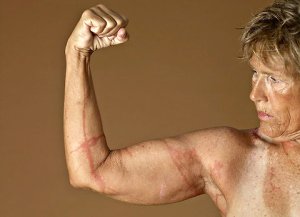 This is a woman with an iron will.
Looking dazed and sunburned, U.S. endurance swimmer Diana Nyad walked on to the shore Monday, becoming the first person to swim from Cuba to Florida without the help of a shark cage.
The 64-year-old Nyad swam up to the beach just before 2 p.m. EDT, about 53 hours after she began her journey in Havana on Saturday. As she approached, spectators waded into waist-high water and surrounded her, taking pictures and cheering her on.
“I have three messages. One is, we should never, ever give up. Two is, you’re never too old to chase your dream. Three is, it looks like a solitary sport, but it is a team,” she said on the beach.
“I have to say, I’m a little bit out of it right now,” Nyad said. She gestured toward her swollen lips, and simply said “seawater.”
Her team said she had been slurring her words while she was out in the water. She was on a stretcher on the beach and received an IV before she was taken by ambulance to a hospital.
“I just wanted to get out of the sun,” she said.
It was Nyad’s fifth try to complete the approximately 110-mile swim. She tried three times in 2011 and 2012. Her first attempt was in 1978.
Pictures and descriptions of the event are amazing. She has a webpage that documents her swim.

 peej
peej Carissa
 bostonboomer
 dakinikat
 ecocatwoman
 mablue2
 Mama Lopez
 peggysue22
 quixote
 skydancingguestblogger
 Mona (aka Wonk the Vote)



 Sky Dancing

Recent Comments