Tuesday Reads: Trump in Trouble

Good Afternoon!!

I have two causes for celebration this morning. 1) Today is the last day of the current heatwave here in Massachusetts, and 2) The FBI executed a search warrant at Mar-a-Lago yesterday and spent the entire day searching for documents that Trump stole when he left the White House.

A cold front is coming in this afternoon and Merrick Garland is coming for Trump.

What more could a person ask for? Well, some rain would be nice, since half of Massachusetts is now in a drought.

Here’s the latest:

David Epstein at Boston.com: The past three weeks have been the warmest ever recorded in Boston.

Monday marked the seventh day of a major heat wave, the second of the summer across southern New England. The unrelenting heat and humidity have taken their toll on our collective mood as this is not normal summer weather in our part of the country.

The past three weeks have seen the warmest 21 days ever recorded in 151 years of records in Boston, similar to temperatures in Missouri or North Carolina where this type of heat and humidity is expected. Coupled with growing drought, damage to plants has spread from wilting flower boxes to struggling trees and shrubs. Drought is actually not increasing in New England but in a warmer climate, the impact of even semi-regular droughts can be greater when accompanied by hotter air.

These types of hot and dry weather events are ripe for all sorts of hyperbole. On one end of the spectrum, you’ll find people saying we’ve had hot and dry weather before and this is more of the same. Other people will claim the past three weeks is yet more evidence of climate change in action….

When summer is over, we will have another opportunity to fully analyze the statistics, but already a few things are true. In addition to the extreme temperatures, we are experiencing the longest stretch of 80 degree or above weather on record —Tuesday will be the 26th day in a row of temperatures that are 80 degrees or higher….

The heat will abate later this week, but these past three weeks of unprecedented warmth should be a wakeup call to what lies ahead. The number of hot days will continue to go up, and everything that goes along with this type of heat will continue to be amplified.

Now for the Trump news.

https://twitter.com/emptywheel/status/1557021270511943681?s=20&t=fyDJbK24jRWxi0XQIossXg

The Washington Post: FBI searches Trump safe at Mar-a-Lago for possible classified documents.

Former president Donald Trump said Monday that the FBI had raided his Mar-a-Lago Club and searched his safe — activity related to an investigation into the potential mishandling of classified documents, according to two people familiar with the probe.

One of the people, who spoke on the condition of anonymity to discuss its details, said agents were conducting a court-authorized search as part of a long-running investigation of whether documents — some of them top-secret — were taken to the former president’s private golf club and residence instead of sent to the National Archives when Trump left office. That could be a violation of the Presidential Records Act, which requires the preservation of memos, letters, notes, emails, faxes and other written communications related to a president’s official duties.

Searching a former president’s property to look for possible evidence of a crime is highly unusual and would require approval at the top levels of the Justice Department. It represents a historic moment in Trump’s tortured relationship with the Justice Department, both in and out of the White House.

Much of the article is a discussion of Trump’s and his followers’ complaints and false claims about the search.

The authors then quote a defense from a person who actually knows about FBI searches.

The president of the FBI Agents Association, Brian O’Hare, issued a broad defense of the investigators who carry out court-approved searches, without commenting specifically on the Trump case.

O’Hare said search warrants are issued by federal judges, “must satisfy detailed and clear procedural rules, and are the product of collaboration and consultation with relevant Department of Justice attorneys.”

FBI agents, he added, “perform their investigative duties with integrity and professionalism, and remain focused on complying with the law and the Constitution.”

Trump nominated the current head of the FBI, Christopher A. Wray, to the position in 2017, after firing the previous FBI director, James B. Comey, amid a probe into whether any Trump campaign advisers had conspired with Russian operatives to influence the 2016 election.

Wray is a conservative Republican who belonged to the Federalist Society and worked in the GW Bush administration.

A number of people have pointed out that Trump has a copy of the search warrant and could release the contents if he wanted to. But then we would know what crimes he is suspected of committing.

Business Insider via Yahoo News: Feds likely obtained ‘pulverizing’ amount of evidence ahead of searching Trump’s Mar-a-Lago home, legal experts say.

Trump confirmed Monday that federal agents had executed a search warrant at his South Florida estate, Mar-a-Lago, in a search that several news outlets later reported was related to whether he mishandled classified government documents.

Regardless of the raid’s focus, legal experts quickly reached a consensus about it: A pile of evidence must have backed up the warrant authorizing the search.

“There’s every reason to think that there’s a plus factor in the quantum and quantity of evidence that the government already had to support probable cause in this case, knowing that they would be besieged with criticism in some quarters that this is politically motivated,” said David Laufman, a former top official in the Justice Department’s national security division who prosecuted cases involving allegations of mishandling classified documents.

“If I were a senior department official who reviewed this prior to pulling the trigger on presenting an affidavit to a magistrate judge, I would’ve wanted a sufficient quality and quantity of evidence that was so pulverizing in its effect to simply neutralize any arguments to the contrary,” said Laufman, now a partner at the law firm Wiggin and Dana LLP.

Indeed, for a deliberate Justice Department keen to turn the page from the politicization of the Trump era, the raid of Mar-a-Lago most likely required reviews at the highest levels and convincing evidence supporting a finding of probable cause, legal experts said.

“I cannot imagine the amount of probable cause set forth in a search warrant’s supporting FBI affidavit of Trump’s Florida home,” said Gene Rossi, a former federal prosecutor from Northern Virginia. He added in an email to Insider that the number of “review levels” for the search warrant “must have been enormous, including by Trump’s FBI appointee Christopher Wray.”

From Trump biographer Timothy O’Brien at Bloomberg: Trump Search Should Just Be Garland’s Opening Act.

It’s not entirely clear why the FBI targeted Mar-a-Lago. Trump, who was not there, predictably characterized the search as a Democratic hit job. But the feds were apparently searching for classified records Trump stashed in Palm Beach after leaving the White House. He has already returned some files that the National Archives said belonged to the government, but Bloomberg News and the New York Times reported that the search was focused on records he might have kept.

Theft of government records is the least of Trump’s legal worries, however. Attorney General Merrick Garland appears to be finally bringing the full weight of federal law enforcement to bear on the former president. Depending on how aggressively Garland pursues Trump for the attempted coup that he and his co-conspirators tried to engineer after he lost the 2020 presidential election, the list of criminal charges could include seditious conspiracy, conspiracy to defraud the US and obstruction of official proceedings.

Garland’s choices in the months ahead will have momentous consequences. His correct course of action would be to demonstrate that no president is above the law and indict Trump. As the Jan. 6 committee hearings have already demonstrated, Trump and his team were awash in crimes — including creating slates of false electors to be used in an attempt to overturn the 2020 presidential vote and pressuring former Vice President Mike Pence to withhold certification of the 2020 election. The Justice Department has convened a grand jury to investigate both of those efforts.

Trump also incited the violent insurrection that took place on Jan. 6, and he did nothing to stop a mob he knew to be armed until after it stormed the Capitol, endangering federal legislators and the police protecting them. He has shown little remorse for the damage he set in motion before, during and after Jan. 6, and his statement about the Mar-a-Lago search was littered with unhinged distractions his political base will lap up.

Historian Michael Bechloss is having fun with Trump’s whining.

A number of legal experts have suggested that if Trump mishandled classified documents, he could be blocked from ever running for political office again; but Michael Savage throws some cold water on that idea at The New York Times: If Trump broke a law on the removal of official records, would he be barred from future office?

Early reports that the F.B.I. search of former President Donald J. Trump’s residence in Florida related to an investigation into whether he had unlawfully taken government files when he left the White House focused attention on an obscure criminal law barring removal of official records. The penalties for breaking that law include disqualification from holding any federal office.

Because Mr. Trump is widely believed to be preparing to run for president again in 2024, that unusual penalty raised the prospect that he might be legally barred from returning to the White House.

Specifically, the law in question — Section 2071 of Title 18 of the United States Code — makes it a crime if someone who has custody of government documents or records “willfully and unlawfully conceals, removes, mutilates, obliterates, falsifies or destroys” them.

If convicted, defendants can be fined or sentenced to prison for up to three years. In addition, the statute says, if they are currently in a federal office, they “shall forfeit” that office, and they shall “be disqualified from holding any office under the United States.”

There’s a problem though.

The law briefly received a close look in 2015, after it came to light that Hillary Clinton, then widely anticipated to be the 2016 Democratic presidential nominee, had used a private email server to conduct government business while secretary of state.

But in considering that situation, several legal scholars — including Seth B. Tillman of Maynooth University in Ireland and Eugene Volokh of the University of California, Los Angeles — noted that the Constitution sets eligibility criteria for who can be president, and argued that Supreme Court rulings suggest Congress cannot alter them. The Constitution allows Congress to disqualify people from holding office in impeachment proceedings, but grants no such power for ordinary criminal law….

On Monday, one of the most prominent voices pointing to Section 2071, the Democratic lawyer Marc Elias — who served as general counsel for Mrs. Clinton’s campaign — initially cited the law’s disqualification provision in a Twitter post as “the really, really big reason why the raid today is a potential blockbuster in American politics.”

He followed up with another Twitter post acknowledging that any conviction under Section 2071 might not ultimately bar Mr. Trump from seeking the presidency again — but arguing that a legal fight over it would still be important.

I guess we’ll just have to wait and see. Meanwhile, MAGA crazies are threatening violence and civil war.

Alan Feuer at The New York Times: The F.B.I. search ignited the language of violence and civil war on the far right.

For the past six years, Donald J. Trump’s most loyal backers have, as though by reflex, attacked federal law-enforcement officials whenever they have sought to investigate the former president or his allies.

But the reaction to the F.B.I.’s court-approved search of Mar-a-Lago, Mr. Trump’s beachfront residence in Palm Beach, Fla., went far beyond the usual ire and indignation. Pro-Trump influencers and figures in the media employed the language of violence to rally opposition.

“Tomorrow is war,” Steven Crowder, a conservative commentator with nearly two million Twitter followers, wrote on the site within hours of the F.B.I.’s search. “Sleep well.”

This aggressive language was pervasive on the right as Monday night turned into Tuesday morning.

“This. Means. War,” The Gateway Pundit, a pro-Trump outlet, wrote in an online post that was quickly amplified by a Telegram account connected to Stephen K. Bannon, Mr. Trump’s onetime political adviser.

“Country on the verge of CIVIL WAR???” Nicholas J. Fuentes, a prominent white nationalist, asked in his own post advertising a livestream of the F.B.I. search.

Read more at the NYT.

David Gilbert at Vice: Trump Supporters Are Calling for Civil War After FBI Search of Mar-a-Lago.

After news broke that the FBI searched former President Donald Trump’s Mar-a-Lago home in Florida on Monday, his supporters openly called for an armed violent response, and ultimately, civil war.

“Civil War 2.0 just kicked off,” one user wrote on Twitter, with another adding, “One step closer to a kinetic civil war.” Others said they were ready to take part: “I already bought my ammo.”

MAGA, QAnon, and far-right message boards and Telegram channels lit up Monday night with calls for a violent response to what some extremists see as a political attack directed by the Biden administration.

“This is how you light the match to a civil war,” one user on Twitter wrote in response to the news.

Similar rhetoric was shared in far-right channels on Telegram. “Civil war coming to America, there won’t be any more elections,” one member said.

“A total war on dissidents is about to unfold. Not behind closed doors but blatantly, in public,” another member wrote in a different far-right channel. “Attacks on Alex Jones, Trump, and Patriot Day defendants are only setting the precedent for the future of us as the only opposition to the Deep State.”

I’ll end there. What are you hearing? Please share in the comment thread and have a great Tuesday!


Thursday Reads: The Fight For Women’s Autonomy

Pierre Bonnard, Still life with dog

Pierre Bonnard, Still life with dog

Good Afternoon!!

I’m still thrilled by the vote on abortion rights in Kansas. I actually wasn’t terribly surprised, because Kansas has been showing signs of turning purple recently. I also believe that the majority of women everywhere are enraged by the SCOTUS decision to take away a right that has transformed American women’s lives. But it’s so exhilarating to know that in Kansans voted in numbers approaching the turnouts in presidential elections. There are other signs that Republicans may regret trying to turn back the clock on women’s rights. Here are some reactions to the “earthquake” in Kansas.

The New York Times: Kansas Votes to Preserve Abortion Rights Protections in Its Constitution.

Kansas voters resoundingly decided against removing the right to abortion from the State Constitution, according to The Associated Press, a major victory for the abortion rights movement in one of America’s reliably conservative states.

The defeat of the ballot referendum was the most tangible demonstration yet of a political backlash against the U.S. Supreme Court’s decision to overturn Roe v. Wade, the landmark decision that had protected abortion rights throughout the country. The decisive margin — 59 to 41 percent, with about 95 percent of the votes counted — came as a surprise, and after frenzied campaigns with both sides pouring millions into advertising and knocking on doors throughout a sweltering final campaign stretch.

“The voters in Kansas have spoken loud and clear: We will not tolerate extreme bans on abortion,” said Rachel Sweet, the campaign manager for Kansans for Constitutional Freedom, which led the effort to defeat the amendment.

Ms. Sweet told supporters that a willingness to work across partisan lines and ideological differences helped their side win.

Registered Republicans far outnumber Democrats in Kansas — and abortion rights activists made explicit appeals to unaffiliated voters and center-right voters. In interviews last week in populous Johnson County, Kan., a number of voters said they were registered Republicans but opposed the amendment — a dynamic that almost certainly played out across the state, given the margin.

“We’re watching the votes come in, we’re seeing the changes of some of the counties where Donald Trump had a huge percentage of the vote, and we’re seeing that just decimated,” said Jo Dee Adelung, 63, a Democrat from Merriam, Kan., who knocked on doors and called voters in recent weeks.

Annie Gowan at The Washington Post: How abortion rights organizers won in Kansas: Horse parades and canvassing.

When abortion rights organizer Jae Gray sent canvassers out into the Kansas City suburbs for the state’s upcoming referendum, they armed them with talking points aimed at all voters — not just liberals.

John White Alexander, 1856-1915

Painting by John White Alexander, 1856-1915

“We definitely used messaging strategies that would work regardless of party affiliation,” said Gray, a field organizer for Kansans for Constitutional Freedom. “We believe every Kansan has a right to make personal health-care decisions without government overreach — that’s obviously a conservative-friendly talking point. We were not just talking to Democrats.”

The effort paid off. On Tuesday, Kansas voters decisively defeated a ballot measure that would have set aside abortion protections in the state’s constitution, paving the way for additional restrictions or even a total ban. That victory was fueled by an opposition coalition that mobilized a large swath of the state’s electorate — including Republican and independent voters — to turn out in historic numbers….

Nearly 60 percent of voters ultimately rejected the amendment, with more than 900,000 turning out to the polls — nearly twice as many as the 473,438 who turned out in the 2018 primary election.

“Kansas turned out in historic numbers … because we found common ground among diverse voting blocks and mobilized Kansans across the political spectrum to vote no,” Rachel Sweet, the campaign manager for Kansans for Constitutional Freedom, said at a news conference Wednesday.

There’s much more about how Kansas organizers did it at the WaPo link.

Dan Merica at CNN: ‘Kansas will not be our last fight’: Abortion rights victory gives Democrats new hope for midterms.

The political impact of what happened in Kansas will be most directly felt in the November midterm elections – particularly in races for governor and attorney general after the US Supreme Court overturned Roe v. Wade, throwing the issue of abortion to the states. The June ruling has led to bans on the procedure being enforced in several states while opening the door to more restrictions in others. At least four other states will be voting on abortion-related ballot measures this November, but Democratic strategists are looking to the Kansas result to extrapolate lessons for states where abortion won’t be on the ballot.

“As the first state to vote on abortion rights following the fall of Roe v. Wade, Kansas is a model for a path to restoring reproductive rights across the country through direct democracy,” said Alexis McGill Johnson, president of Planned Parenthood Action Fund. “We know that Kansas will not be our last fight, or our last victory.”

Democratic and Republican operatives acknowledged Wednesday that the result in Kansas, while limited to one state, could shift the way each party approaches the midterms. Democrats, buoyed by polling and the Kansas result, will likely attempt to make abortion a top issue in key races, hoping to link their Republican opponents to the support for stricter abortion laws….

“We already knew that the majority of Americans support abortion rights, but last night’s results in Kansas showed us that it’s also a motivating factor for voters,” said Xochitl Hinojosa, a Democratic operative and the managing director at progressive consulting firm Bully Pulpit Interactive. “We’ll likely see more Democratic candidates learn from Kansas and lean in on the threat and urgency of abortion bans across the country and start communicating that directly to voters.”

david-hockney--dog-days, 1996

David Hockney, Dog Days, 1996

Nate Cohn at The New York Times: Kansas Result Suggests 4 Out of 5 States Would Back Abortion Rights in Similar Vote.

There was every reason to expect a close election.

Instead, Tuesday’s resounding victory for abortion rights supporters in Kansas offered some of the most concrete evidence yet that the Supreme Court’s decision to overturn Roe v. Wade has shifted the political landscape. The victory, by a 59-41 margin in a Republican stronghold, suggests Democrats will be the energized party on an issue where Republicans have usually had an enthusiasm advantage.

The Kansas vote implies that around 65 percent of voters nationwide would reject a similar initiative to roll back abortion rights, including in more than 40 of the 50 states (a few states on each side are very close to 50-50). This is a rough estimate, based on how demographic characteristics predicted the results of recent abortion referendums. But it is an evidence-based way of arriving at a fairly obvious conclusion: If abortion rights wins 59 percent support in Kansas, it’s doing even better than that nationwide.

It’s a tally that’s in line with recent national surveys that showed greater support for legal abortion after the court’s decision. And the high turnout, especially among Democrats, confirms that abortion is not just some wedge issue of importance to political activists. The stakes of abortion policy have become high enough that it can drive a high midterm-like turnout on its own.

None of this proves that the issue will help Democrats in the midterm elections. And there are limits to what can be gleaned from the Kansas data. But the lopsided margin makes one thing clear: The political winds are now at the backs of abortion rights supporters.

Read detailed analysis at the NYT link.

Kathryn Joyce at Salon: After Kansas smackdown, anti-abortion right in denial: Either it didn’t happen or it doesn’t matter. Joyce, an investigative reporter and author of two books on evangelicals and their obsession with childbearing and adoption.

Nearly 60% of voters in Kansas, typically a deep-red state that Donald Trump easily carried two years ago, rejected a ballot referendum that would have amended the state constitution to remove the right to abortion.

The amendment, artfully entitled “Value Them Both,” represented the first ballot initiative on abortion since Roe v. Wade was overturned in June. Abortion opponents described it as a corrective to a 2019 state Supreme Court ruling which found that the Kansas constitution protects abortion rights, while pro-choice groups warned it would swiftly allow Republican lawmakers to enact a total abortion ban.

Afternoon Promenode, Arthur Wardle (1864-1949).

Afternoon Promenade, Arthur Wardle (1864-1949).

Republicans never exactly admitted that, repeatedly casting pro-choice warnings about a potential ban as lies and disinformation, even after the Kansas Reflector obtained audio recordings in mid-July of a Value Them Both Coalition staffer telling Republican officials they had abortion-ban legislation waiting in the wings once the amendment passed.

The ballot initiative seemed designed to disadvantage abortion rights supporters from the get-go. It was scheduled for a vote not in the general election in November but in the August primary, which in Kansas traditionally draws few Democrats (since many Democratic candidates run unopposed) or unaffiliated voters, who cannot vote in either party’s primaries. Pro-choice advocates also charged that the ballot initiative’s language was intentionally misleading, designed to confuse voters about what a “yes” or “no” vote meant and including irrelevant provisions, such as public funding for abortion, that don’t actually exist in the state….

On Monday, the eve of Election Day, Kansas voters received an anonymous mass text message that transparently seemed to double down on that tactic, falsely suggesting that a “yes” vote would protect “choice.” The message, which the Washington Post discovered was sent on behalf of a PAC led by former Rep. Tim Huelskamp, a Republican, read, “Women in KS are losing their choice on reproductive rights. Voting YES on the Amendment will give women a choice. Vote YES to protect women’s health.”

In the face of all those obstacles, an energized electorate turned out and soundly rejected the Republicans’ ballot initiative. And how are Republicans taking this loss?

Faced with these facts, conservatives and anti-abortion advocates rationalized the outcome in various ways, from claiming that they were the real victims of disinformation campaigns to downplaying the significance of the results to suggesting that the initiative failed because it didn’t go far enough.

In the first category, the Value Them Both Coalition led the way, writing in a statement, “Over the last six months, Kansans endured an onslaught of misinformation from radical left organizations that spent millions of out-of-state dollars to spread lies about the Value Them Both Amendment. Sadly, the mainstream media propelled the left’s false narrative, contributing to the confusion that misled Kansans about the amendment.” The coalition went on to warn that Kansas was about to become an “abortion destination,” and, channeling the Terminator, vowed that despite this “temporary setback,” “We will be back.”

Susan B. Anthony Pro-Life America, which sent student canvassers to knock on some 250,000 doors in the Sunflower State, made similar charges: “The abortion lobby’s message to voters was rife with lies that ultimately drowned out the truth.” And Kristan Hawkins, president of Students for Life Action, lamented, “We are disappointed Kansans couldn’t see past the big money that flooded the state, confusing voters about an abortion-neutral amendment that would give them the freedom to vote on abortion policy.”

Actually, both sides spent about the same amount, according to The New York Times. Read more Republican rationalizations at Salon.

John F. Harris at Politico: How Ruth Bader Ginsburg Will Have The Last Laugh on Samuel Alito.

Justice Samuel Alito, in drafting Dobbs v. Jackson Women’s Health Organization, said he and the other justices who joined him in ending a constitutional right to abortion had no ability to foresee what the political implications would be. Even if they could know, he added, justices have “no authority to let that knowledge influence our decision.”

Andrée Bonnard and her dog, 1890, Pierre Bonnard.

Andrée Bonnard and her dog, 1890, Pierre Bonnard.

Does Alito genuinely write his opinions with no concern at all of what the practical political consequences might be?

In overturning Roe v. Wade, a decision he said was “egregiously wrong,” Alito asserted that the place to decide the morality and legality of abortion is not the Supreme Court but the political process in 50 states.

So what does Alito think now, in the wake of Kansas voters resoundingly rejecting a proposal to remove protections for abortion rights from their state constitution?

These are not gotcha questions. Alito presumably would answer that what happened in Kansas on Tuesday is precisely the kind of democratic process that the Supreme Court “short-circuited,” as he wrote in Dobbs, when it established a national right to abortion by judicial edict even as the issue remained deeply unsettled in the society.

They are questions, however, that highlight how life is full of surprise and paradox, even for a Supreme Court justice who specializes in blustery self-assurance. Alito’s career as an advocate for social conservatism began long before he joined the court. His record is replete with deference to religious tradition and skepticism of loosening sexual mores on all fronts, including gay rights. His references to “abortionists” in the Dobbs opinion hardly conceal his personal disdain. There can be little doubt of how he would have cast his ballot if he were a Kansas voter.

Yet the Kansas result raises an arresting possibility: Alito’s long-term legacy may well be as the justice who facilitated a national consensus on behalf of abortion rights. Quite unintentionally, today’s hero of the “pro-life” movement could end up being a giant of the “pro-choice” movement.

Read the rest at Politico.

For the first time in a very long time, I’m feeling hopeful that Democrats can hold A the Senate and that we may still save democracy in the U.S. I know there’s a long way to go, but I really think the Kansas result is significant. President and Attorney General Garland are also taking action to preserve abortion rights. A couple more articles:

CNN: Biden signs new executive order on abortion rights: ‘Women’s health and lives are on the line.’

President Joe Biden on Wednesday signed an executive order to help ensure access to abortion in light of the Supreme Court’s decision earlier this summer to eliminate the constitutional right to the procedure.

The President said the order helps women travel out of state to receive abortions, ensures health care providers comply with federal law so women aren’t delayed in getting care and advances research and data collection “to evaluate the impact that this reproductive health crisis is having on maternal health and other health conditions and outcomes.”

Biden spoke of the “chaos and uncertainty” that has ensued in the wake of the Supreme Court’s decision and said, “Women’s health and lives are on the line.”

“Emergency medical care being denied to women experiencing miscarriages, doctors uncertain about what they can do to provide for their patients, pharmacists unsure whether they can fill prescriptions that they’ve always filled before, a tragic case of rape survivors, including a 10-year-old girl forced to travel to another state for care,” Biden said before signing the order.

Newsweek: Abortion Rights Counter-Attack to Roe Decision Has Begun.

The Biden administration sued Idaho over a strict state abortion law on Tuesday—as voters in Kansas resoundingly decided to protect abortion rights in the state.

The lawsuit, announced by Attorney General Merrick Garland, is the first major action by the Justice Department challenging a state trigger law since the U.S. Supreme Court overturned Roe v. Wade in late June….

Joan Brown, Noel in the Kitchen (circa 1964).

Joan Brown, Noel in the Kitchen (circa 1964).

The lawsuit seeks to invalidate Idaho’s “criminal prohibition on providing abortions, as applied to women who are suffering medical emergencies,” Garland said.

The lawsuit argues that it would force doctors to violate the Emergency Medical Treatment and Labor Act, a federal law that requires hospitals receiving federal funds to ensure anyone coming to a hospital for emergency treatment is stabilized and treated.

“If a patient comes into the emergency room with a medical emergency jeopardizing the patient’s life or health, the hospital must provide the treatment necessary to stabilize that patient,” Garland said. “This includes abortion when that is the necessary treatment.”

Idaho’s law—set to take effect on August 25—”would make it a criminal offense for doctors to provide the emergency medical treatment that federal law requires,” he said.

What are your thoughts on all this? What other stories are you following today?


Thursday Reads: A Mixed Bag of News

Good Morning!!

Georg Scholz

Georg Scholz, German artist

There’s quite a mixed bag of news this morning. I’ll begin with the January 6 investigation updates, because that’s my personal obsession. Here’s the latest.

ABC News: Jan. 6 committee deepens probe into Trump Cabinet: Sources.

The House select committee investigating the Jan. 6 attack on the U.S. Capitol is working to secure testimony from a growing number of officials in former President Donald Trump’s Cabinet, sources familiar with the matter tell ABC News.

Trump’s former Treasury Secretary Steven Mnuchin, who reportedly discussed the possibility of invoking the 25th Amendment with then-Secretary of State Mike Pompeo, recently sat with committee investigators for a transcribed interview, the sources said.

ABC News previously reported that Pompeo is expected to speak with the committee in the coming days, though his interview is not officially scheduled.

Among the officials actively negotiating with the committee are the former Director of National Intelligence John Ratcliffe and the former acting secretary for the Department of Homeland Security Chad Wolf, sources familiar with the negotiations said.

Wolf would also be able to speak to Trump’s desire to order the federal government to seize voting machines.

The engagement shows that even after the committee’s round of dramatic public hearings, it continues to pursue additional evidence about what the administration’s most senior officials knew about Trump’s actions surrounding Jan. 6.

CBS News: Mick Mulvaney will testify Thursday before House Jan. 6 committee.

Former Trump White House chief of staff Mick Mulvaney is scheduled to testify Thursday before the House committee investigating the Jan. 6 assault on the Capitol….

Mulvaney told CBS News that he believes Cassidy Hutchinson and other top former Trump officials who have testified about him before the panel….

After the Capitol attack, Mulvaney told CNBC he couldn’t “stay here, not after yesterday.”

“You can’t look at that yesterday and say I want to be a part of that in any way shape or form,” he told CNBC at the time.

Politico: Feds get new warrant to search contents of pro-Trump lawyer’s phone.

The Justice Department revealed on Wednesday that it had obtained a new search warrant to access the contents of attorney John Eastman’s phone, which it seized from the pro-Trump lawyer last month before transporting it to a lab in Virginia.

landscape-with-bog-canal_paula-modersohn-becker__61514

Landscape with bog canal, Paula Mondersohn Becker

The development, filed in court via Assistant U.S. Attorney Thomas Windom, came in response to a legal effort by Eastman to block investigators from “rummaging” through his files. The Justice Department had indicated that it would obtain a warrant that would limit investigators’ access to “evidence of specific federal crimes or specific types of material.”

Windom indicated in the filing that the new warrant — dated July 12 — included a “filter protocol” to prevent investigators from accessing privileged material, and that the details of that process had been communicated to Eastman’s attorneys.

Eastman is a central figure in the investigations of then-President Donald Trump’s effort to overturn the 2020 election. He helped lead a team of lawyers that developed a fringe strategy to pressure Republican-run state legislatures to adopt “alternate” slates of pro-Trump electors that could be used to overturn Trump’s defeat. A federal judge in March determined that Eastman and Trump likely entered into a criminal conspiracy to overturn the election, in part by using the false electors to try to reverse the outcome on Jan. 6, 2021, the day Congress was required to count electoral votes and certify the election results.

Windom’s filing is a milestone of sorts because, while his identity has been known in media reports for months, before Wednesday the Justice Department never confirmed his involvement in the Jan. 6-related investigation. The filing also indicates that Windom is now working as an assistant U.S. attorney as part of the U.S. Attorney’s Office in Washington, D.C.

At The New York Times, Alan Feuer and Katie Benner have a long explainer article on the fake electors scam: The Fake Electors Scheme, Explained. I haven’t read it yet, but both Feuer and Benner are excellent investigative reporters.

Climate Change Bill?

Supposedly, Joe Manchin has made a deal with Chuck Shumer to support a big climate change bill. Politico: ‘Holy s–t’: Surprise Senate deal sets stage for record climate change package.

Senate Majority Leader Chuck Schumer and Sen. Joe Manchin salvaged a deal on Wednesday for a bill that includes the biggest climate spending package in U.S. history, devoting hundreds of billions of dollars to clean energy technologies.

Tiger, by Franz Marc

Tiger, by Franz Marc

Their agreement, which came after Manchin had rejected climate and energy measures two weeks ago under the Democrats’ reconciliation package, is aimed at slashing carbon emissions an estimated 40 percent from 2005 levels economy-wide by 2030. But italso comes with plans to ease rules that the West Virginia senator has said are constricting fossil fuel production and slowing needed upgrades to the power grid.

“Holy shit,” said Tiernan Sittenfeld, senior vice president of government affairs with the League of Conservation Voters. “This deal is coming not a moment too soon.”

Lawmakers and climate advocates — who had been hammering Manchin in recent days for rejecting the climate measures because of inflation concerns — were ecstatic at the surprise announcement.

“There’s been a ton of work done over the last two weeks to make the case to Sen. Manchin that this package is not inflationary and address his concerns in a serious way,” said Jason Walsh, executive director of the BlueGreen Alliance, a coalition of labor and environmental groups. “And we’re just thrilled that we’re at this moment,” he added.

The Washington Post: Manchin says he has reached deal with Schumer on economy, climate bill.

The new agreement, brokered between Manchin and Senate Majority Leader Charles E. Schumer (D-N.Y.), opens the door for party lawmakers to try to advance the measure next week. It caps off months of fierce debate, delay and acrimony, a level of infighting that some Democrats saw as detrimental to their political fate ahead of this fall’s critical elections.

Under the deal, Schumer secured Manchin’s support for roughly $433 billion in new spending, most of which is focused on climate change and clean energy production. It is the largest such investment in U.S. history, and a marked departure from Manchin’s position only days earlier. The Democrats coupled the spending with provisions that aim to lower health-care costs for Americans, chiefly by allowing Medicare to begin negotiating the price of select prescription drugs on behalf of seniors.

The Medicare change would huge if it stays in the bill.

Marianne_von_Werefkin_-_The_Storm

Marianne von Werefkin, The Storm

To pay for the package, Manchin and Schumer also settled on a series of changes to tax law that would raise $739 billion over the next decade — enough to offset the cost of the bill while securing more than $300 billion for cutting the deficit, a priority for Manchin. Democrats sourced the funds from proposals including a new minimum tax on corporations and fresh investments in the Internal Revenue Service that will help it pursue tax cheats.

Taken together, the package represents more than some Democrats once thought they might win from Manchin, who repeatedly has raised fiscal concerns with his own party’s ambitions. Only two weeks ago, the moderate from West Virginia, a coal-heavy state, signaled his opposition to new climate investments out of a fear that spending increases — funded in part by tax hikes — could harm the economy and worsen inflation.

“This is the most significant action we’ve taken on climate, that we will take on climate and clean energy, ever,” said Sen. Tina Smith (D-Minn.), who led Democrats on a plan that would have punished polluters in the electricity sector before Manchin blocked it.

Prisoner Exchange with Russia?

CNN Exclusive: Biden administration offers convicted Russian arms dealer in exchange for Griner, Whelan.

After months of internal debate, the Biden administration has offered to exchange Viktor Bout, a convicted Russian arms trafficker serving a 25-year US prison sentence, as part of a potential deal to secure the release of two Americans held by Russia, Brittney Griner and Paul Whelan, according to people briefed on the matter.

These sources told CNN that the plan to trade Bout for Whelan and Griner received the backing of President Joe Biden after being under discussion since earlier this year. Biden’s support for the swap overrides opposition from the Department of Justice, which is generally against prisoner trades.

Kremlin spokesman Dmitry Peskov said Thursday that “so far, there is no agreement on this issue.”

Secretary of State Antony Blinken announced Wednesday that the US presented a “substantial proposal” to Moscow “weeks ago” for Whelan and Griner, who are classified as wrongfully detained.

A-Large-Light-Shop-Window, August Macke

A Large Light Shop Window, August Macke

Speaking at a press conference at the State Department, Blinken said Biden was “directly involved” and signed off on the proposal. Although Blinken did not directly confirm Bout was part of the deal, saying he “can’t and won’t get into any of the details of what we proposed to the Russians over the course of so many weeks now,” he said “in terms of the President, of course he was not only directly involved, he signs off on any proposal that we make, and certainly when it comes to Americans who are being arbitrarily detained abroad, including in this specific case.”

The top US diplomat said he intended to discuss the matter on an expected call with Russian Foreign Minister Sergey Lavrov this week — his first conversation with his counterpart since the war in Ukraine began — telling reporters, “my hope would be that in speaking to Foreign Minister Lavrov, I can advance the efforts to bring them home.”

I sure hope they can work something out.

Senate Races

Good news out of Wisconsin–it looks like Ron Johnson could be in trouble. Politico: Mandela Barnes gets open path to take on Wisconsin Sen. Ron Johnson.

Democrats hoping to flip Wisconsin’s Senate seat got a boost Wednesday when one of the party’s leading candidates bowed out and endorsed a rival, virtually clearing the field ahead of an expensive, hotly contested general election.

Milwaukee Bucks executive Alex Lasry withdrew from the Democratic Senate primary Wednesday afternoon and endorsed Lt. Gov. Mandela Barnes to take on Republican Sen. Ron Johnson.

His departure from the race leaves a nearly open path for Barnes to capture the nomination in the Aug. 9 primary. Lasry, who loaned his campaign more than $12 million, has been Barnes’ top opponent for months.

Democrats welcomed the bombshell news, arguing that it will give Barnes a head start against Johnson in one of the most pivotal Senate races in the country and aid his fundraising operation. Johnson has $3.6 million in the bank as of the latest campaign finance reports, compared to Barnes’ $1.5 million.

Wisconsin is the last big question mark left for Senate Democrats in terms of setting their candidate lineup, and Barnes’ likely win means the party has its candidate roster all-but set for the general election.

“I don’t think there’s any question it helps,” said Joe Zepecki, a Wisconsin-based Democratic strategist. “Any time there’s a contested primary, you figure it’s going to take a couple days to put everybody back together. Because of how late our primary is, the faster you can get that done, the better. The other thing that I think is really important is this sends a signal to donors that they can now coalesce as well.”

Read more at the link.

The Economy

The Washington Post: U.S. economy shrinks again in second quarter, reviving recession fears.

The U.S. economy shrank again for a second straight quarter, at an annual rate of 0.9 percent, raising concerns the country may be heading into recession and compounding the Biden administration’s political challenges as it grapples with decades-high inflation.

gabriele-munter_sunset-over-staffelsee_1908-1911_aware_women-artists_artistes-femmes-1500x1219

Gabriele Munter, Sunset over Staffelsee

The U.S. economy shrank again for a second straight quarter, at an annual rate of 0.9 percent, raising concerns the country may be heading into recession and compounding the Biden administration’s political challenges as it grapples with decades-high inflation.

The second quarter slowdown reflected shifting consumer and business behaviors. Retailers bought fewer items, including cars, as consumers shifted their spending away from goods to services such as restaurants and hotels. Declines in home construction and government spending also contributed to the negative reading.

The sour GDP report reflects ongoing problems with inflation, which have been at 40-year highs for several months, as well as weakening home sales and challenges for some corporate sectors, including tech and finance. Even the-red hot labor market is beginning to show cracks. Broader worries about war in Ukraine, the global financial outlook and aggressive interest-rate hikes have prompted many economists to predict a recession in the next year.

See also: Statement by President Biden on Second Quarter GDP Report.

More Stories To Check Out

Reuters: Former Republicans and Democrats form new third U.S. political party. The so-called Democrat is Andrew Yang, the professional troll and troublemaker. The “Republicans” are David Jolly and Christie Todd Whitman, who wrote this Washington Post opinion piece: Most third parties have failed. Here’s why ours won’t.

The Washington Post: Adam Schiff is jockeying to lead House Democrats. It won’t be easy. I’d prefer Hakeem Jeffries.

AP News: Japanese city alarmed by biting, clawing, attacking monkeys.

The New York Times: Potentially Deadly Bacteria Detected in U.S. Soil for First Time. The samples in the U.S. came from the Mississippi Gulf Coast.

That’s my mixed bad of suggested reads for today. Take care, Sky Dancers, and have a great Thursday!


Tuesday Reads

Pierre Bernard, La Lecture, circa 1905

Pierre Bernard, La Lecture, circa 1905

Good Afternoon!!

After yesterday, all those naysayers who have spent months attacking Merrick Garland need to stop whining and pay attention to what the DOJ is actually doing. I don’t know how many grand juries the DOJ has going, but we’re slowly learning that the ringleaders of the January 6 insurrection and even Trump administration insiders are being called to testify. Yesterday we learned of the most significant one so far: Mike Pence’s chief of staff Mark Short.

ABC News: Former Pence chief of staff appeared before grand jury probing Jan. 6.

Marc Short, the former chief of staff to Vice President Mike Pence, appeared before a federal grand jury investigating the Jan. 6 attack on the U.S. Capitol, Short confirmed to ABC News.

Short, in an interview Monday night with ABC News’ Linsey Davis, said he was subpoenaed by a grand jury and complied with the subpoena, adding he “really can’t comment further than that” upon the advice of his legal counsel.

Short was caught by an ABC News camera departing D.C. District Court on Friday alongside his attorney, Emmet Flood.

Short is the highest-ranking Trump White House official known to have appeared before the grand jury.

Here’s what Short told ABC News in an interview last night:

“I think that having the Capitol ransacked the way that it was, I think did present liability and danger,” he told Davis in the interview. “And I think the Secret Service did a phenomenal job that day. I think that the bigger risk and despite the way perhaps it was characterized in the hearings last week, candidly, is that if the mob had gotten closer to the vice president, I do think there would have been a massacre in the Capitol that day.”

Woman reading, James C. Christensen

Woman reading, James C. Christensen

ABC News also learned that Pence’s chief counsel Marc Jacob also testified to the grand jury. And there’s more:

In March, the Department of Justice expanded its criminal probe into the events of Jan. 6 to include preparations for the rally that preceded the storming of the Capitol, as well as the financing for the event, multiple sources familiar with the matter told ABC News.

Grand jury subpoenas were sent to those who assisted in the organizing and planning of former President Donald Trump’s “Save America” rally on the Ellipse near the White House, the sources said, with prosecutors seeking multiple records and documents related to the rally, including text messages and emails, as well as potential communications with other individuals regarding the logistics of the event.

I think there’s a very good chance that subpoenas went to Mark Meadows and Ginni Thomas, both of whom are keeping low profiles.

This is from Hugo Lowell at The Guardian: Mike Pence’s ex-chief of staff testifies to grand jury investigating January 6.

Short testified in response to a subpoena for about two to three hours, according to a source familiar with the matter, though it was unclear what he told the grand jury or whether he produced documents. ABC News earlier reported his appearance.

The development was also the latest indication that the criminal investigation into the Capitol attack has only escalated in recent months, as the House January 6 select committee argues Trump obstructed an official proceeding – a crime – in trying to stop Joe Biden’s certification.

reading-woman-daydrreaming-by-henri-matisse-1921-henri-matisse

Reading woman dreaming, by Henri Matisse, 1921

It was not clear to which grand jury, and therefore to which investigation, Short testified. The justice department has impaneled several grand juries over the Capitol attack, including one examining Trump’s fake electors scheme, which is also being investigated by a special grand jury in Georgia.

The grand jury investigating the fake electors scheme – grand jury #22-4 – sought information about the involvement of Donald Trump and his lawyers, while the grand jury that subpoenaed former Trump White House official Peter Navarro – grand jury #22-3 – sought his contacts with Trump.

Nonetheless, Short’s grand jury appearance marks the first known time that a top Trump White House official with inside knowledge about Trump’s actions leading up to the Capitol attack and what took place in the West Wing in the following days has cooperated with the justice department.

The DOJ investigation into the fake electors was also in the news yesterday.

The Washington Post: Arizona fake-electors subpoenas show breadth of DOJ Jan. 6 probe.

Grand jury subpoenas issued last month to two Arizona state lawmakers show the breadth of the criminal investigation by the U.S. attorney’s office in Washington into efforts by supporters of Donald Trump to use “false electors” to try to undo Joe Biden’s 2020 election victory.

Copies of two subpoenas issued to Republican state senators from Arizona were released Monday via a public-records request, confirming what has been previously reported about the June demands for records related “to the signing or mailing of any document purporting to be a Certificate certifying Elector votes in favor of Donald J. Trump and/or Michael R. Pence.”

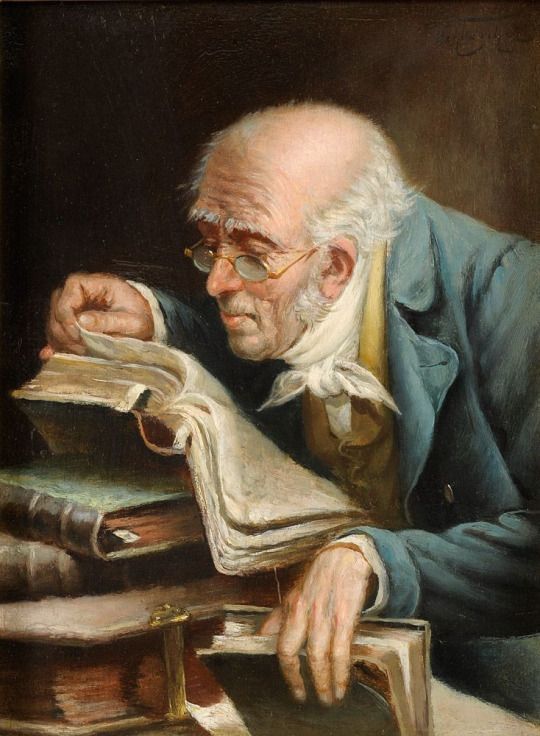
Old man reading, by Carl Spitzweg

Old man reading, by Carl Spitzweg

The subpoenas issued to Karen Fann, president of the Arizona Senate, and Sen. Kelly Townsend also seek communications “relating to any effort, plan, or attempt to serve as an Elector” in favor of the then-president and then-vice president.

A subpoena is not an accusation but rather a demand for information that investigators believe may help them solve a crime. The documents released Monday cast a wide net for any communications that Fann and Townsend may have had with any member of the executive or legislative branch of the federal government; any representative or agent of Trump or his campaign; or Trump boosters Jenna Ellis, Bernard Kerik, Rudy Giuliani, Boris Epshteyn, James Troupis, Joe DiGenova, John Eastman, Joshua Findlay, Justin Clark, Kenneth Chesebro, Mike Roman or Victoria Toensing.

That’s a pretty wide net. Read more about the Arizona investigation at the WaPo link.

CNN’s Joan Biskupic has a scoop on the SCOTUS fight over Roe v. Wade: The inside story of how John Roberts failed to save abortion rights.

Chief Justice John Roberts privately lobbied fellow conservatives to save the constitutional right to abortion down to the bitter end, but May’s unprecedented leak of a draft opinion reversing Roe v. Wade made the effort all but impossible, multiple sources familiar with negotiations told CNN….

New details obtained by CNN provide insight into the high-stakes internal abortion-rights drama that intensified in late April when justices first learned the draft opinion would soon be published. Serious conflicts over the fate of the 1973 Roe were then accompanied by tensions over an investigation into the source of the leak that included obtaining cell phone data from law clerks and some permanent court employees.

In the past, Roberts himself has switched his vote, or persuaded others to do so, toward middle-ground, institutionalist outcomes, such as saving the Affordable Care Act. It’s a pattern that has generated suspicion among some right-wing justices and conservatives outside the court.

Multiple sources told CNN that Roberts’ overtures this spring, particularly to Kavanaugh, raised fears among conservatives and hope among liberals that the chief could change the outcome in the most closely watched case in decades. Once the draft was published by Politico, conservatives pressed their colleagues to try to hasten release of the final decision, lest anything suddenly threaten their majority.

Bonnard, Pierre - Interior with boy reading, 1910-2

Pierre Bonnard, Interior with boy reading, 1910

Roberts’ persuasive efforts, difficult even from the start, were thwarted by the sudden public nature of the state of play. He can usually work in private, seeking and offering concessions, without anyone beyond the court knowing how he or other individual justices have voted or what they may be writing.

That was what many observers argued at the time–that a right wing source release the draft to prevent any of the justices who supported Alito’s draft from getting cold feet.

Even if Roberts had won the battle to save Roe, he would have supported the Mississippi law that banned abortion at 15 weeks; but we would technically still have a Constitutional right to choose. There’s much more about the SCOTUS machinations at the CNN link.

Meanwhile, women’s lives are in danger in red states. NPR: Because of Texas abortion law, her wanted pregnancy became a medical nightmare.

Elizabeth Weller never dreamed that her own hopes for a child would become ensnared in the web of Texas abortion law.

She and her husband began trying in late 2021. They had bought a house in Kingwood, a lakeside development in Houston. Elizabeth was in graduate school for political science, and James taught middle-school math.

The Wellers were pleasantly surprised when they got pregnant early in 2022.

In retrospect, Elizabeth says their initial joy felt a little naive: “If it was so easy for us to get pregnant, then to us it was almost like a sign that this pregnancy was going to be easy for us.”

Things did go fairly smooth at first. Seventeen weeks into the pregnancy, they learned they were expecting a girl. They also had an anatomy scan, which revealed no problems. Even if it had, the Wellers were determined to proceed.

Edouard John Mentha

By Edouard John Mentha

But then disaster struck.

It was May 10, 2022. Elizabeth was 18 weeks pregnant. She ate a healthy breakfast, went for a walk outside and came back home….

Elizabeth stood up to get some lunch. That’s when she felt something “shift” in her uterus, down low, and then “this burst of water just falls out of my body. And I screamed because that’s when I knew something wrong was happening.”

Her waters had broken, launching her into what she calls a “dystopian nightmare” of “physical, emotional and mental anguish.” She places the blame for the ensuing medical trauma on the Republican legislators who passed the state’s anti-abortion law, on Texas Gov. Greg Abbott, who signed it, and on the inflamed political rhetoric, which Elizabeth says only sees abortion “as one thing, a black-and-white issue, when abortion has all of these gray areas.”

Read the horror story at the link, if you can deal with it. This is what happens when men who have no clue how women’s bodies work think they have the right to tell control women’s choices.

It looks like Biden is considering another extension of the student loan moratorium. NBC News: Student loan servicers told not to contact borrowers as payment pause deadline nears.

A little more than a month before the student debt moratorium is scheduled to end, the federal government has told loan servicers not to contact borrowers about resuming payments, a trade group official said Monday.

The Education Department has been telling loan servicers not to reach out to borrowers as recently as “the last couple weeks,” said Scott Buchanan, the executive director of the Student Loan Servicing Alliance, which represents all of the companies that service the federal loans subject to the administration’s moratorium….

painting-reading-boys Steven Christopher Seward

Painting of boys reading by Steven Christopher Seward

A White House official said Monday night that “no decision has been made” about whether to extend it again. The official said Biden will make a decision before Aug. 31….

Biden has repeatedly extended the moratorium — starting on his first day in office and most recently in April. The moratorium doesn’t apply to borrowers with privately held loans.

Buchanan said his group has previously warned the government about issues that may arise from resuming payments.

It sounds like Biden will extend the moratorium. Ending it right before the midterms wouldn’t be good for Democrats.

Resuming payments would come at a high political cost for Biden and congressional Democrats, who are pushing to energize their base ahead of the midterm elections.

A source familiar with the matter said an extension of the pause on repayment is likely. “I just don’t see how they don’t,” the source said.

“While theoretically they can wait until the 31st, if they do, they are de facto delaying it,” the source added, citing the operational challenges of restarting the program.

That would be good news, in my opinion. I don’t actually have to pay anything on my loans, because my income is so low; but there are lots of young people with massive debt who need this help.

I’m going to end here, because this post is so late. What stories are you following today?


Lazy Caturday Reads

cats-on-strike-leah-saulnier-the-painting-maniac

Cats on Strike, by Leah Saulnier the painting maniac

Happy Caturday, Sky Dancers!!

As if we didn’t have enough bad news, we are now dealing with another global health emergency. Monkeypox is spreading rapidly around the world and here in the U.S. Cases have been reported in multiple states, including Massachusetts, Maine, New York, Washington, DC, Michigan, Florida, Texas, Illinois, and California. As of two days ago, there were already nearly 2,000 reported cases in the U.S.

Apoorva Mandavilli at The New York Times: W.H.O. Declares Monkeypox Spread a Global Health Emergency.

For the second time in two years, the World Health Organization has taken the extraordinary step of declaring a global emergency. This time the cause is monkeypox, which has spread in just a few weeks to dozens of countries and infected tens of thousands of people.

Dr. Tedros Adhanom Ghebreyesus, the W.H.O.’s director general, on Saturday overruled a panel of advisers, who could not come to a consensus, and declared a “public health emergency of international concern,” a designation the W.H.O. currently uses to describe only two other diseases, Covid-19 and polio.

“We have an outbreak that has spread around the world rapidly through new modes of transmission, about which we understand too little, and which meets the criteria” for a public health emergency, Dr. Tedros told reporters….

The W.H.O.’s declaration signals a public health risk requiring a coordinated international response. The designation can lead member countries to invest significant resources in controlling an outbreak, draw more funding to the response, and encourage nations to share vaccines, treatments and other key resources for containing the outbreak.

It is the seventh public health emergency since 2007; the Covid pandemic, of course, was the most recent. 

The article discusses the controversy over how W.H.O. decides when to declare a health emergency. Some experts already think the agency waited too long on monkeypox.

Center for Infectious Disease Research and Policy: Largest monkeypox study to date highlights new symptoms.

Many of the people infected in an international monkeypox outbreak experienced a single lesion or sore in their mouth or on their genitals, a departure from typical symptoms of the virus that could lead to clinicians to misdiagnose monkeypox as another sexually transmitted infection (STI).

Coffee with Henry 4, by Kazui Whitemoon

Coffee with Henry #4, by Kazui Whitemoon

That’s one of the main takeaways from the New England Journal of Medicine‘s (NEJM‘s) new international study of the current outbreak, which is the largest case-study on the virus.

“This truly global case series has enabled doctors from 16 countries to share their extensive clinical experience and many clinical photographs to help other doctors in places with fewer cases. We have shown that the current international case definitions need to be expanded to add symptoms that are not currently included, such as sores in the mouth, on the anal mucosa and single ulcers,” said Chloe Orkin, PhD, of the Queen Mary University of London, in a university press release.

The study included clinical observations from 528 confirmed infections at 43 sites from Apr 27 to Jun 24 of this year. The median incubation period is 7 days in this outbreak, and the median age of a case-patient was 38. No deaths occurred, but 70 patients (13%) required hospitalization.

In the study, authors share many patients are presenting to clinics and hospitals for pain management or difficulty swallowing. Single anal sores have been recorded in several cases. One in 10 people had only a single skin lesion in the genital area, and 15% had anal and/or rectal pain, a symptom not typically seen in other monkeypox outbreaks.

A total of 98% of the cases documented were in gay or bisexual men, and while monkeypox is not an STI, per se, the authors said 95% of transmissions documented occurred during sexual relations. Seventy-five percent of case patients are white, and 41% are HIV-positive.

CNN: CDC reports the first two monkeypox cases in children in the US.

Two cases of monkeypox have been identified in children in the United States, the US Centers for Disease Control and Prevention said Friday.

The two cases are unrelated and probably the result of household transmission, the CDC said.

One case is a toddler who is a resident of California. The other is an infant who is not a US resident. Public health officials are investigating how the children were infected.

Both have symptoms but are in good health and receiving treatment with an antiviral medication named tecovirimat or TPOXX, which the CDC recommends for children under the age of 8 because they are considered to be at higher risk from infection.

Vicky Mount

Painting by Vicky Mount

Since the monkeypox outbreak began in May, most of the cases have happened among men who have sex with men. However, anyone can catch the virus through close skin-to-skin contact. In the case of children, the agency said this could include “holding, cuddling, feeding, as well as through shared items such as towels, bedding, cups, and utensils.”

The CDC says the Jynneos monkeypox vaccine is being made available for children through special expanded use protocols. The agency has also developed new guidance for health care providers about identifying, treating and preventing monkeypox in children and teens.

Dr. Jennifer McQuiston, deputy director of the CDC’s Division of High Consequence Pathogens and Pathology, said Friday that the cases in children were not surprising and that the US should be ready to respond to more.

Politico: Biden administration considering a public health emergency for monkeypox as cases swell.

U.S. health officials are discussing whether to declare a public health emergency for the monkeypox outbreak as they work to make treatments and vaccines available to more people.

The discussions come as the virus — which is endemic in West and Central Africa but unusual in the United States — continues to spread across the country. As of Thursday, there were 2,593 cases reported, up from 1,470 last week. The federal government announced Friday it has shipped over 300,000 doses of the vaccine to states and cities to control the outbreak.

“We’re looking at … what are the ways the response could be enhanced, if any, by declaring a public health emergency,” White House Covid response coordinator Ashish Jha told reporters during a briefing Friday.

Officials at the Food and Drug Administration and Centers for Disease Control and Prevention are also working to make tecovirimat, the only treatment available for monkeypox (though only FDA–approved for smallpox), easier for physicians to prescribe to patients. A more streamlined process to get the antiviral is expected to be announced to providers next week.

The White House will also use a new research agenda, which was announced Thursday and consists of $140 million in ongoing projects, to study stretching limited monkeypox vaccine doses, find new testing methods and expand treatment options, three White House officials told POLITICO.

Lunch with cats, Pierre Bonnard, 1906

Lunch with cats, Pierre Bonnard, 1906

We haven’t talked much about the war in Ukraine lately, but it has caused a global food crisis. Yesterday Russian supposedly agreed to stop blocking shipments of grain, but the Ukraine and U.S. governments are skeptical that Russia will follow through. 

BBC News: Food crisis: Ukraine war: Deal signed to allow grain exports to resume by sea.

Ukraine and Russia have signed “mirror” deals which will allow Kyiv to resume exports of grain through the Black Sea.

The agreement will allow millions of tonnes of grain, currently trapped in Ukraine by the war, to be exported.

The world shortage of Ukrainian grain since Russia’s 24 February invasion has left millions at risk of hunger.

However, Kyiv refused to sign a direct deal with Moscow, and warned “provocations” would be met with “an immediate military response”.

Both sides attended the signing ceremony in Istanbul but did not sit at the same table. Russia’s Defence Minister Sergei Shoigu signed Moscow’s deal first, followed by Ukrainian Infrastructure Minister Oleksandr Kubrakov signing Kyiv’s identical agreement.

The deal – which took two months to reach – is set to last for 120 days, with a co-ordination and monitoring centre to be established in Istanbul, staffed by UN, Turkish, Russian and Ukrainian officials. It can be renewed if both parties agree.

The blockade of Ukraine’s grain has caused a global food crisis with wheat-based products like bread and pasta becoming more expensive, and cooking oils and fertiliser also increasing in price.

In January 6 news, CNN’s Whitney Wild and Jeremy Herb broke a story yesterday on those missing Secret Service text messages: First on CNN: Secret Service identified potential missing text messages on phones of 10 individuals.

Secret Service investigators were scrutinizing the phones of 10 Secret Service personnel that contained metadata showing text messages were sent and received around January 6, 2021, but were not retained, two sources told CNN.

grandma-and-10-cats-in-the-bedroom, Linda Benton

Grandma and 10 cats in the bedroom, by Linda Benton

The scrutiny came after the Department of Homeland Security inspector general asked for the text records last year of 24 individuals at the Secret Service who were involved in January 6, but only one text had been produced. After the issue spilled into public view this month, the inspector general launched a criminal investigation into the matter, and lawmakers demanded answers from the Secret Service to go back and find out what happened to the texts that may have been deleted.

But the Secret Service’s internal investigation ground to a halt after a July 20 letter from the DHS inspector general informed the agency there was an ongoing criminal investigation, directing the Secret Service to stop its own probe.

Investigators had been working to determine whether the content of the text messages sent by the 10 personnel contained relevant information that should have been preserved, the sources said. Among the 24 Secret Service personnel under scrutiny, 10 other Secret Service personnel had no text messages, and three had only personal records, according to the sources.

The details of scrutiny of messages from 10 Secret Service personnel caps an extraordinary week of turmoil for the agency, which started with the inspector general

demanding answers about potential missing texts and led to a congressional subpoena and a criminal investigation into the matter.

There has to be a way to recover those text messages. I’m sure The Washington Post’s Carol Leonnig, author of a book on the Secret Service, is working her sources to find out more.

Dakinikat covered the final January 6 Committee hearing yesterday, but here are some more follow-up articles:

NPR: The Jan. 6 committee isn’t done. Expect more hearings, revelations and reports.

The House Select January 6th committee made clear they are going to resume hearings in September.

Republican Vice Chair Liz Cheney, R-Wyo., opened the final summer hearing by noting the progress the committee has made, but she added that there’s now new evidence and more witnesses to consider.

“Doors have opened, new subpoenas have been issued, and the dam has begun to break,” Cheney said.

Already, in the buildup to Thursday’s presentation, select committee aides had hinted future hearings could be on tap.

Kim Haskins, psychedelic cat

Kim Haskins, psychedelic cat

And Committee Chairman Bennie Thompson, D-Miss., told reporters recently that the committee could issue an initial report in September, followed by a final report later this year. The findings would be accompanied by hearings, he said.

“We’re just getting a significant amount of information,” Thompson said. And the new evidence “pushes the timetable out.” [….]

Cheney also noted in this week’s hearing that the panel will now return to its investigative mode for the next several weeks.

“Our committee will spend August pursuing emerging information on multiple fronts, before convening further hearings this September,” Cheney said….

With plans to issue their findings in the form of reports and more hearings, the committee is racing to address new evidence along the way.

For example, the panel is now looking into allegations that the Secret Service deleted text messages during a two-day period surrounding the Jan. 6 attack. Department of Homeland Security Inspector General Joseph Cuffari has claimed the messages were erased after a request by his office, while the Secret Service has denied these allegations, saying the deletions were part of a system migration.

The Hill: Jan. 6 panel shows few signs of slowing down despite midterm risks.

The select committee’s prime-time hearing on Thursday was widely expected to mark the end of a crucial phase in the panel’s probe of last year’s riot, capping six weeks of publicly aired testimony — almost all of it from Republicans — aimed at pinning culpability for the rampage squarely onto Trump’s shoulders.

But every new revelation seems to turn up as many questions as answers, and the panel has altered its schedule to accommodate what it calls a wave of new information in need of perusal. The arrival of new witnesses has been accompanied by successful committee efforts to fight stonewalling in the form of executive privilege claims, and the panel has recently issued new subpoenas for even more evidence.

“The dam has begun to break,” Rep. Liz Cheney (R-Wyo.), vice chair of the select committee, said Thursday night. “We have far more evidence to share with the American people — and more to gather.”

The Owl and the Pussycat, 2009 by P J Crook

The Owl and the Pussycat, 2009 by P J Crook

With that in mind, the committee said it intends to use Congress’s long August recess to wade through the influx of new information, with designs to hold more hearings on its findings in September when lawmakers return to Washington. How many they’ll stage remains unclear, but the investigators are leaving themselves the flexibility to determine that schedule on the fly.

“We are pursuing many additional witnesses for testimony,” said Chairman Bennie Thompson (D-Miss.), who participated in Thursday’s hearing remotely after testing positive for COVID-19 earlier in the week. “We will reconvene in September to continue laying out our findings.” [….]

“We’re not done. The information continues to come in. The evidence is continuing to flow in,” Rep. Zoe Lofgren (D-Calif.) told CNN heading into Thursday’s hearing. “So this is … not the end of the story.”

More interesting January 6 stories to check out, links only:

Vicky Ward on her blog yesterday: What Trump World Really Thinks About Last Night’s Jan. 6 Hearing.

Alan Feuer and Michael Schmidt at The New York Times: The Jan. 6 Panel After 8 Hearings: Where Will the Evidence Lead?

Ruth Marcus at The Washington Post: Now we know the truth on what Trump sought to obscure about Jan. 6.

David Siders at Politico: ‘His life was threatened.’ But Pence isn’t talking about it.

Isaac Stanley Becker and Josh Dawsey at The Washington Post: Hearings test Trump’s clout and GOP’s wish to ‘forget about Jan. 6’

Michelle Goldberg at The New York Times: The Myth of the Good Trump Official.

That’s it for me today. I hope you’re all having a terrific weekend!