
What Obama Left Out of His SOTU Address
Posted: January 26, 2011 Filed under: Barack Obama, Gulf Oil Spill, Gun Control, jobs, SOTU, U.S. Economy, U.S. Military, U.S. Politics | Tags: Barack Obama, corporitism, right-wing talking points, Ronald Reagan, SOTU 32 Comments
After Obama’s pro-corporate, cliche-ridden SOTU speech filled with right wing talking points, I think anyone with a brain has to admit that the mask is off. This man is Ronald Reagan without the folksy anecdotes and charisma (I never saw it, but supposedly he had it).
The speech last night demonstrated once and for all that Obama is heartless, self-involved, and narcissistic. He cares nothing about the fate of ordinary Americans, or what will become of this country once he has eliminated the middle class. The only thing he cares about is making sure he has a soft life giving speeches and serving on boards of directors after he leaves the White House.
To accomplish that Obama needs to try not to piss off too many rich people and he has to finish the job that Reagan, Bush I and Bush II started–handing over the U.S. treasury to the wealthiest 1% and in the process destroying the country.
I read the SOTU speech carefully, and there are quite a number of important topics that President Obama completely failed to address. Here are some relevant words that were never even mentioned in Obama’s 2011 SOTU address:
middle class
poor
poverty
hungry
homeless
school lunches
guns
firearms
gun control
unemployment
women’s rights
reproductive rights
Guantanamo
torture
rendition
drones
Gulf of Mexico
oil spill
BP
seafood
AIDS
How could this man get up and address the country without once mentioning the rapidly ballooning poverty and homeless rates and the millions of unemployed Americans–many of whom have completely exhausted their benefits? How could he talk about our schools without mentioning the many children who are struggling to get an education while living on the streets or in families who can’t afford enough food?
How could he talk about the shootings in Tucson without discussing the need for some kind of rational gun control?
How could he freeze government salaries and ask Congress to freeze discretionary spending for five years while recommending more corporate giveaways and tax cuts for corporations?
How could he talk about cutting the deficit without getting us out of the two wars we’ve been fighting on borrowed money for longer than any other war in U.S. history?
How could he talk about competition for jobs without seriously addressing corporate outsourcing or the possibility of the government creating jobs as Roosevelt did during the last Great Depression?
I was sickened by Obama’s call for “sacrifice.”
The future is ours to win. But to get there, we can’t just stand still. As Robert Kennedy told us, “The future is not a gift. It is an achievement.” Sustaining the American Dream has never been about standing pat. It has required each generation to sacrifice, and struggle, and meet the demands of a new age.
And now it’s our turn. We know what it takes to compete for the jobs and industries of our time. We need to out-innovate, out-educate, and out-build the rest of the world. (Applause.) We have to make America the best place on Earth to do business. We need to take responsibility for our deficit and reform our government. That’s how our people will prosper. That’s how we’ll win the future.
Bullshit! What sacrifice are you going to make Mr. President? What sacrifice will you ask of your corporate masters, of Goldman Sachs, JP Morgan Chase, and Bank of America? Do tell. No, the sacrifice you talk about is to be borne by public employees (who, btw, are “disproportionately Black”), the citizens of states that will go bankrupt, the poor, the elderly, and the shrinking middle class.
I was nauseated by Obama’s call for universities to
open their doors to our military recruiters and ROTC. It is time to leave behind the divisive battles of the past. It is time to move forward as one nation.
The “divisive battles of the past?” Meaning the fight to end the Vietnam War? The endless war that has now been exceeded in length by the mess in Afghanistan?
I was also disturbed by Obama’s claim that Americans “share common hopes and a common creed.” Really? What hopes do I share in common with John Boehner or Michelle Bachmann? What “creed” is he referring to? If it’s Christianity, many of us don’t share that either.
There was so much wrong with Obama’s speech last night. But worst of all was the President’s complete lack of compassion for those who are suffering while bankers and CEOs get bailouts and tax cuts. Much of the corporate media has either praised Obama’s speech or made excuses for it. Here’s an antidote from Patrick Martin at the World Socialist website:
Obama displayed utter callousness and indifference toward the social distress of tens of millions of Americans. There was virtually no reference to unemployment or the staggering growth of economic inequality, and no proposals for creating jobs for the 17 million workers who are jobless or forced to subsist on part-time and temporary work.
The words “poverty,” “foreclosures,” “hunger” and “homelessness” were not uttered, despite sharp increases in all four during the first two years of Obama’s tenure.
Listening to Obama’s desultory remarks, one would never have guessed that just 28 months ago the American financial-corporate elite brought the American and world economy to its knees, precipitating the worst economic crisis since the Great Depression. The speech was a paean to American capitalism and the very financial bandits who are chiefly responsible for the catastrophe facing the American people.
Obama boasted of the good fortune of corporate America, which is making more money than ever. “The stock market has come roaring back,” he declared. “Corporate profits are up. The economy is growing again.” Under conditions of near double-digit unemployment, he claimed to have “broken the back of this recession.”
The state of our union is not strong. Our society is sick and getting sicker by the day. We desperately need leadership, but it doesn’t seem like we’re going to get it soon. I don’t know what the answer is, but Barack Obama is not going to help us find it.
Our Dismal Job Market
Posted: January 7, 2011 Filed under: Barack Obama, Breaking News, financial institutions, Global Financial Crisis, jobs, Team Obama, The Great Recession, The Media SUCKS, the villagers, U.S. Economy, U.S. Politics, We are so F'd | Tags: Gene Sperling, labor force participation rate, long term unemployment, rigid wages, Sticky wages, unemployment 11 Comments Economists–well at least NeoKeynesian economists that look at data–frequently use words like “rigid” and “sticky” to describe the jobs market. Rigid is a good word. It means “deficient in or devoid of flexibility”. The Labor Markets are the biggest empirical hurdles to jump if you want to buy into some variant of supply-side economics or NeoClassical economics.
Wages and quantities of labor used to adjust very slowly. They appear to be dismally slow these days. Part of this is obviously due to outsourcing. The substitution of foreign (e.g. outside of our borders; legal status really doesn’t matter for purposes of macro growth) for US-based workers seems to have made the NeoKeynesian assumptions of sticky and rigid wages even more so.
What’s very interesting about today’s BLS report on jobs is that the unemployment rate inched down but the fundamentals in the job market don’t appear to be changing much. Plus, the unemployment rate inched down based on the way it’s calculated by more than anything else. It’s not really fooling people that know economics or finance, but will the public at large embrace the nuance? A huge portion of the populace is simply leaving the job market.
Felix Salmon explains some of the nuances in his Reuters Blog today called “No good news for the long-term unemployed”. He focuses on some of the buried numbers rather than the top number. Yes, he has a nifty graph you should check that out too.
The December jobs report turns recent history on its head. We’ve been used to healthy increases in employment making no dent in the unemployment rate, but this time a mediocre jobs figure—just 103,000 new jobs were created—coincides with a gratifyingly large fall in unemployment, to 9.4% from 9.8%. For those keeping track at home, that’s employment up by 103,000 and unemployment down by a whopping 556,000.
There’s no doubt that the headline payrolls number is a disappointment. The economy just doesn’t seem to be creating jobs: we need to see 150,000 new jobs a month just to keep pace with population growth. But is there some good news, at least, on the unemployment front?
I’m not sure. While unemployment is down from both December 2009 and December 2010, it’s down only for those who have been out of work for less than 26 weeks. The ranks of the long-term unemployed are still rising
Well, it’s not so ‘whopping’ in context–as we’ll see in a moment–but let’s look at some other things. The underlying numbers appear to be a total disconnect–and Salmon’s analysis is not unique among economists’ take on the situation–with the assessment of the President who just appointed lawyer Gene Sperling to do an economist’s job. President Obama also continued his rhetoric on substanial job creation being just around the corner and how the trend is just so much rosier under his leadership. Does any one outside of his circle actually believe this?
Now, read this Bloomberg article and notice the part at the end that I highlighted.
Obama said Sperling has been an “extraordinary asset” over the past two years as a senior adviser to Treasury Secretary Timothy Geithner, helping to pass a small-business jobs bill and a tax-cut compromise.
Obama said one of the reasons he selected Sperling is that “he’s done this before,” a reference to Sperling’s 1996-2000 leadership of the NEC during the Bill Clinton administration.
Obama also named Jason Furman as principal deputy director of the NEC, and nominated Katharine Abraham to the Council of Economic Advisers. He also nominated Heather Higginbottom as deputy director of the Office of Management and Budget.
Obama spoke on the same day that government data showed that the U.S. added 130,000 jobs in December and the unemployment rate dropped to 9.4%. Read MarketWatch’s story about jobs report.
Obama trumpeted 12 straight months of private-sector job creation and said, “the trend is clear.” But he said there’s a lot of work to do to get more people back in the labor force, and pledged to forge ahead with more job-creation efforts.
Sperling was also deputy NEC director during Clinton’s first term, which was marked by standoffs that resulted in government shutdowns. Sperling helped negotiate a balanced budget agreement in 1997 and was an advocate for the repeal of the Glass-Steagall law that separated commercial and investment banking.
Economist Heidi Shierholz: “There’s never been a pool of missing workers this large”
Posted: January 7, 2011 Filed under: jobs, Stock Market, Team Obama, The Great Recession, the villagers, U.S. Economy, U.S. Politics | Tags: Heidi Shierholz, Huffington Post, jobs, Lila Shapiro, Stock Market, Team Obama, The Great Recession, the villagers, U.S. Economy, U.S. Politics, unemployment, Wall Street Journal 16 Comments
Economics isn’t my area of expertise, but I can read, and the top story at Huffpo right now is pretty disturbing. Author Lila Shapiro spoke to some economists, including Heidi Shierholz, about the December jobs report, which came out today.
Although the unemployment rate fell to 9.4 percent from 9.8 percent in December, bringing the total number of officially unemployed Americans to 14.5 million, only 103,000 jobs were added in December according to the Labor Department’s BLS report — a number significantly lower than expected. (The Wall Street Journal reported that many Wall Street analysts were predicting “at or above 200,000” new jobs.)
The news gets worse: less than half of the drop in unemployment rate can be attributed to new job creation — the other half came from 260,000 Americans who have dropped out of the labor force altogether.
This brings the percentage of Americans who are either employed or actively looking for work down to 64.3 percent, what economist Heidi Shierholz calls “a stunning new low for the recession.”
[….]
“We have now added jobs every single month for a year,” Schierholz said. “So you would think that there would be labor force growth, these missing workers starting to come back in. Not only is that not happening, it’s actually starting to go in the other direction. There’s never been a pool of missing workers this large. It’s not clear to me when they’ll come back.”
That can’t be good, no matter what the White House and CNN try to get us to swallow.
At the Wall Street Journal the reaction to the jobs report doesn’t make things sound much better. One headline reads: Markets Whipsawed After Jobs Report. Here’s the gist:
Investors hoped that the jobs report would confirm expectations that a robust recovery was finally filtering through to long-stagnated labor markets. But after traders positioned aggressively this week on lofty expectations of a strong payrolls figure, the disappointing data had a relatively muted impact.
[….]
The Labor Department reported that the U.S. economy created 103,000 new positions last month, far below market consensus expectations for a 150,000 gain. In November, the economy added 39,000 jobs. The unemployment rate fell sharply to 9.4% from 9.7%.
Sustainable job creation has been elusive in an economy that is still recovering from the 2008 financial crisis. As a result of the troubled job market, analysts think the Federal Reserve is likely to continue full steam ahead with its controversial $600 billion plan to reinflate the economy.
Dakinikat can give us her expert take on this, but as a layperson, I think it’s obvious that the country is on the wrong track and some one needs to light a fire under the President and his incompetent economic advisers.
HEY VILLAGERS! WE NEED JOBS!!!
Tuesday Reads
Posted: December 28, 2010 Filed under: Global Financial Crisis, Gulf Oil Spill, investment banking, jobs, New Orleans, the blogosphere, The Bonus Class, The Great Recession, the villagers, U.S. Economy, U.S. Politics, We are so F'd, Wikileaks | Tags: AIG, Bradley Manning, cylical unemployment, Dispersant, Emeril, Gulf oil Gusher, Harry Shearer, Hoppin' John, Labor Unions, Levee failure during Hurricane Katrina, Levees.org, Nancy Pelosi, structural unemployment, The Big Uneasy, The New Orleans Saints, Those Crazy Pauls!!, Wikileaks, Wired won't release documents 29 CommentsGood Morning!
I had a productive day yesterday for a change and I hope you did too! Dare I go shop for plumbing stuff today? I was bemoaning a shortage of headlines on Sunday. I should be a bit more careful about wishing for things because today’s list of reads will be long.
The other good news for me is that we’re going from hard freeze warnings to weather in the 70s this weekend. It sounds like it’s going to be a fun New Year’s Eve here in New Orleans! That should explain the picture! I also wanted to give you a bit of New Orleans News before I moved on to other things.
First, if you haven’t had a chance to read Sandy Rosenthal’s piece at HuffPo on the failure of the Levees during Hurricane Katrina, please do so. There are still folks out there that think our devastation was from Hurricane Katrina and that just isn’t so. I was on the edge of the bowl. I know. My house experienced very little actual damage because my house was on high ground and above the waters. A failure of engineering devastated my city. It was not an act of nature. I signed the petition. Will you?
Last week, I wrote to the New York Times asking them to please resist using fast and easy “Katrina shorthand.” Forty-eight hours passed and we heard no response, so we decided to let our supporters step in. We urged our followers to sign our petition to the NY Times urging the paper to be more specific when referencing the flood disaster.
Over 1,000 people all across the nation signed our petition in under 48 hours. This immediate huge response – during the holiday no less – will hopefully show the New York Times that informed citizens understand that “Katrina” did not flood New Orleans. Civil engineering mistakes did.
Saying Katrina flooded the city protects the human beings responsible for the levee/floodwall failures. It is also dangerous since 55% of the American people lives in counties protected by levees.
If you haven’t yet, please sign our petition. We will keep it live until Jan 4, 2011.
In a similar vein, I would like to shout out HAPPY BIRTHDAY HARRY!!! to fellow New Orleans Blogger, neighbor, actor, musician, and polymath Harry Shearer (12/23/49) who made his film debut in the great epic ‘Abbott and Costello Go To Mars’ in 1953. There’s another New Orleans connection in that movie. The Abbot and Costello characters–Lester and Orville–accidentally launch a rocket that should’ve been Mars bound. They land in New Orleans for Mardi Gras instead. Harry plays an uncredited “Boy”.
I also want to offer up a plug for Shearer’s wonderful documentary on the Levee Failure called ‘The Big Uneasy’ that was released last August on our 5th Katrina Anniversary. It’s going to be re-released in 2011. I’m including an interview with him by local radio show host Kat (not me). You’ll learn that the Golden Globes are a simple piece of business and that Harry’s songstress wife is spoonable. Who knew? Also there seems that there’s a chance his documentary will be shown on PBS so you may get to see it there. I wonder if we can help encourage that situation.
I’d like to take another chance to remind you that we’re still living with the results of the BP Oil Gusher here on the Gulf Coast. There also appears to be covered-up as well as forgotten stories down here. You may want to take a look at this from Open Channel on MSNBC.com: ‘ Is dispersant still being used in the Gulf?” This story reports on pictures and samples take in early August that are being investigated now. I’d written about some of these reports earlier.
Kaltofen is among the scientists retained by New Orleans attorney Stuart Smith to conduct independent environmental testing data from the Gulf on behalf of clients who are seeking damages from BP. (Click here to read about their effort.)
An independent marine chemist who reviewed the data said that their conclusion stands up.
“The analytical techniques are correct and well accepted,” said Ted Van Vleet, a professor at the College of Marine Science at the University of South Florida. “Based on their data, it does appear that dispersant is present.”
Why responders would continue to use chemical dispersants after the government announced a halt is a mystery. If the oil was gone or already dispersed, as the federal government and BP have said, what would be the point? And, because dispersants don’t work very well on oil that has been “weathered” by the elements over long periods of times, there would be little point in spraying it that situation.
I wanted to share a New Orleans and indeed a Southern New Year’s eve tradition. We serve a concoction of black eyed peas, cabbage and sausage/ham called ‘Hoppin’ John’ to bring us luck and wealth in the New Year. I evidently didn’t make enough of it last year, so I’m planning to cook more this year. The pea’s black eyes represent coins, the cabbage represents cash, and the sausage or ham is meat that always symbolizes luxury to hungry, poor people.
Here’s Emeril’s ‘Hoppin’ John’ recipe provided courtesy the Food Network:
Hoppin’ John
Prep Time: 15 min Cook Time:50 min Serves: 10
Ingredients
1 tablespoon olive oil
1 large ham hock
1 cup onion, chopped
1/2 cup celery, chopped
1/2 cup green pepper, chopped
1 tablespoon chopped garlic
1 pound black-eyed peas, soaked overnight and rinsed
1 quart chicken stock
Bay leaf
1 teaspoon dry thyme leaves
Salt, black pepper, and cayenne
3 tablespoons finely chopped green onion
3 cups steamed white rice
Directions
Heat oil in a large soup pot, add the ham hock and sear on all sides for 4 minutes. Add the onion, celery, green pepper, and garlic, cook for 4 minutes. Add the black-eyed peas, stock, bay leaves, thyme, and seasonings. Bring to a boil, reduce the heat and simmer for 40 minutes, or until the peas are creamy and tender, stir occasionally. If the liquid evaporates, add more water or stock. Adjust seasonings, and garnish with green onions. Serve over rice.
Okay, so enough about my home town.
The AFL-CIO wants to talk unions this holiday season because there is so much misinformation about these days. It’s a nice list of myths and facts that you may want to arm yourself with when talking to those right wing nattering nabobs of negativism.
MYTH: Unions only care about their members.
FACT: Unions are fighting to improve the lives of all workers.
- It’s easy to forget that we have unions to thank for a lot of things we take for granted today in today’s workplaces: the minimum wage, the eight-hour work day, child labor laws, health and safety standards, and even the weekend.
- Today, unions across the country are on the frontlines advocating for basic workplace reforms like increases in the minimum wage, and pushing lawmakers to require paid sick leave.
- Studies show that a large union presence in an industry or region can raise wages even for non-union workers. That means more consumer spending, and a stronger economy for us all.
- So it’s no wonder that most Americans (61 percent) believe that “labor unions are necessary to protect the working person,” according to Pew’s most recent values survey.
Here’s a gift that keeps on giving er… taking from FT: “AIG secures $4.3bn in credit lines“.
AIG, took a step closer to independence from government as it said it had secured $4.3bn in credit facilities.
The US insurer bailed out by Washington during the financial crisis is is in the process of repaying the $95bn the US Treasury and the Federal Reserve Bank of New York lent following its disastrous decision to insure billions of dollars worth of securities backed by mortgages.Under the facilities arranged by 36 banks and administered by JPMorgan Chase, AIG can borrow $1.5bn over three years and an additional $1.5bn over 364 days, according to a regulatory filing. Separately, Chartis, an AIG division, obtained a $1.3bn credit line.
Let’s just hope they clean up their act this time. I’m not holding my breath or any stock offers that may come up. Notice one of the usual suspects is ‘facilitating’ the arrangements. Cue ‘The Godfather’ music, please.
There’s an item from Slate that you may want to check out. It’s “A selection of gaffes from the 2010 campaign we should forgive”. Here’s one from Pelosi that gave me a chuckle.
Nancy Pelosi: “We have to pass the bill so that you can find out what is in it.”
On March 9, the Speaker of the House spoke to the National Association of Counties about the health care bill that was days away from final passage. This was the phrase that launched a thousand campaign ads. Nine months later, this is remembered as Pelosi admitting what Tea Partiers had feared: that Democrats were ramming through bad bills without reading them.
BostonBoomer sent me to Glenn Greenwald’s latest which really is a must read: ‘ The worsening journalistic disgrace at Wired’. Greenwald’s work on behalf of massacre leaker Bradley Manning is Nobel Peace Prize worthy. I don’t mean aspirational prizes either.
For more than six months, Wired‘s Senior Editor Kevin Poulsen has possessed — but refuses to publish — the key evidence in one of the year’s most significant political stories: the arrest of U.S. Army PFC Bradley Manning for allegedly acting as WikiLeaks’ source. In late May, Adrian Lamo — at the same time he was working with the FBI as a government informant against Manning — gave Poulsen what he purported to be the full chat logs between Manning and Lamo in which the Army Private allegedly confessed to having been the source for the various cables, documents and video that WikiLeaks released throughout this year. In interviews with me in June, both Poulsen and Lamo confirmed that Lamo placed no substantive restrictions on Poulsen with regard to the chat logs: Wired was and remains free to publish the logs in their entirety.
We’re waiting for a response from Wired since vacation seem to preempt media responsibility these days. Will we find out that there’s been some active media suppression of the truth regard Manning’s accusations today? This morning, Greenwald continued his admonition to fellow journalists in the excellent article “The merger of journalists and government officials”.
From the start of the WikiLeaks controversy, the most striking aspect for me has been that the ones who are leading the crusade against the transparency brought about by WikiLeaks — the ones most enraged about the leaks and the subversion of government secrecy — have been . . . America’s intrepid Watchdog journalists. What illustrates how warped our political and media culture is as potently as that? It just never seems to dawn on them — even when you explain it — that the transparency and undermining of the secrecy regime against which they are angrily railing is supposed to be . . . what they do.
There’s another economics story covered on The New Yorker‘s The Financial Page headlined: ‘The Jobs Crisis’ by James Surowiecki. It’s a good explanation of a debate between economists and politicians right now. Guess which one knows best on this?
Why have new jobs been so hard to come by? One view blames cyclical economic factors: at times when everyone is cautious about spending, companies are slow to expand capacity and take on more workers. But another, more skeptical account has emerged, which argues that a big part of the problem is a mismatch between the jobs that are available and the skills that people have. According to this view, many of the jobs that existed before the recession (in home building, for example) are gone for good, and the people who held those jobs don’t have the skills needed to work in other fields. A big chunk of current unemployment, the argument goes, is therefore structural, not cyclical: resurgent demand won’t make it go away.
Though this may sound like an academic argument, its consequences are all too real. If the problem is a lack of demand, policies that boost demand—fiscal stimulus, aggressive monetary policy—will help. But if unemployment is mainly structural there’s little we can do about it: we just need to wait for the market to sort things out, which is going to take a while.
The structural argument sounds plausible: it fits our sense that there’s a price to be paid for the excesses of the past decade; that the U.S. economy was profoundly out of whack before the recession hit; and that we need major changes in the kind of work people do. But there’s surprisingly little evidence for it. If the problems with the job market really were structural, you’d expect job losses to be heavily concentrated in a few industries, the ones that are disappearing as a result of the bursting of the bubble. And if there were industries that were having trouble finding enough qualified workers, you’d expect them to have lots of job vacancies, and to be paying their existing workers more and working them longer hours.
Here’s a fun read at New York Magazine about living large in a libertarian world.
No one exemplifies that streak more than Ron Paul—unless you count his son Rand. When Rand Paul strolled onstage in May 2010, the newly declared Republican nominee for Kentucky’s U.S. Senate seat, he entered to the strains of Rush, the boomer rock band famous for its allegiance to libertarianism and Ayn Rand. It was a dog whistle—a wink to free-marketers and classic-rock fans savvy enough to get the reference, but likely to sail over the heads of most Republicans. Paul’s campaign was full of such goodies. He name-dropped Austrian economist Friedrich Hayek’s seminal The Road to Serfdom. He cut a YouTube video denying that he was named after Ayn Rand but professing to have read all of her novels. He spoke in the stark black-and-white terms of libertarian purism. “Do we believe in the individual, or do we believe in the state?” he asked the crowd in Bowling Green, Kentucky, on Election Night.
It’s clear why he played coy. For all the talk about casting off government shackles, libertarianism is still considered the crazy uncle of American politics: loud and cocky and occasionally profound but always a bit unhinged. And Rand Paul’s dad is the craziest uncle of all. Ron Paul wants to “end the Fed,” as the title of his book proclaims, and return the country to the gold standard—stances that have made him a tea-party icon. Now, as incoming chairman of the subcommittee that oversees the Fed, he’ll have an even bigger platform. Paul Sr. says there’s not much daylight between him and his son. “I can’t think of anything we grossly disagree on,” he says.
Well, they must have both been impacted by the same disease or environmental catastrophe to share so many views so out of the mainstream and be so far removed from experience, data, and science. I can’t help but believe the more the media shines a bright light on them, the more the warts and the brain damage will become noticeable.
So, one more suggested read comes via Lambert and Corrente. It’s really interesting piece from The Atlantic on ‘The Hazards of Nerd Supremacy: The Case of WikiLeaks’. It talks about Hackers, Assange, and the Hacker code of conduct. Any one who as read Assange’s manifest can see the connect and disconnect that simultaneously occur in the ideas. BB and had discussed that Assange might have a form of Aspergers disease about a month ago and I was also interested to see that Lambert, Valhalla, and some others had similar thoughts. It frequently runs in brilliant people who can decode a lot of things with the exception of other people. Anyway, here’s a taste of Jaron Lanier.
The strategy of Wikileaks, as explained in an essay by Julian Assange, is to make the world transparent, so that closed organizations are disabled, and open ones aren’t hurt. But he’s wrong. Actually, a free flow of digital information enables two diametrically opposed patterns: low-commitment anarchy on the one hand and absolute secrecy married to total ambition on the other.
While many individuals in Wikileaks would probably protest that they don’t personally advocate radical ideas about transparency for everybody but hackers, architecture can force all our hands. This is exactly what happens in current online culture. Either everything is utterly out in the open, like a music file copied a thousand times or a light weight hagiography on Facebook, or it is perfectly protected, like the commercially valuable dossiers on each of us held by Facebook or the files saved for blackmail by Wikileaks.
The Wikileaks method punishes a nation — or any human undertaking — that falls short of absolute, total transparency, which is all human undertakings, but perversely rewards an absolute lack of transparency. Thus an iron-shut government doesn’t have leaks to the site, but a mostly-open government does.
I’m still fascinated by the sideshow that is driving ad hominem attacks on Assange and the women involved with the charges. Still, that does not cloud my appreciation of what’s being released by Wikileaks. We’ll definitely have more coming. I’m personally waiting for the BOA stuff as that’s the stuff that I can personally decode. I’m glad we’re extending the Front Page Team to include more and more people that can tackle some of the other technical stuff from their vantage points. Stay tuned for more on all of this.
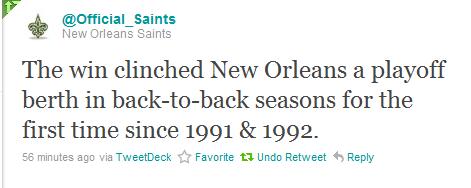
Just ONE MORE NAWLINS THANG: New Orleans Saints 17 – Atlanta Falcons 14. My home town continues to be the Great American Comeback Story.
So, what’s on your reading and blogging list today?
Senate Fails on Dream Act
Posted: December 18, 2010 Filed under: Civil Rights, Democratic Politics, Human Rights, jobs, legislation | Tags: senate fail, The Dream Act 12 Comments
People are NOT Political Pinatas
Right after Hurricane Katrina, New Orleans had an influx of Mexican workers. Many spent their evenings at Vaughn’s because owner Cindy has a house in Mexico and has a lot of cantina music on the juke box. She also runs a gift store that sells native art from all over Mexico. There’s a side room with a TV that’s mostly on soccer too. We’re a very welcoming neighborhood. The upper 9 is pretty diverse and tolerate. We’re known as the place where the gay community, artists, writers and musicians live as well as a huge number of working class people. It’s an inner city hood. Make no doubt about that. Most of the neighborhood didn’t didn’t flood since it’s so close to the Mississippi. It was a natural place for recovery workers to dwell. We’re one mile east of the French Quarter via the River Road. Close enough to walk, bike or take the shuttle, but far enough to miss Mardi Gras madness and tourists.
Anyway, I got to meet a young man in his early 20s there. He was extremely cute, had a wicked crush on my neighbor, and you wouldn’t know he was Mexican because he could barely speak Spanish. He’d been brought to the country as a baby and was educated in U.S. schools. For all intents and purposes, Juan is a typical American young adult about the age of my oldest daughter. But, if he were picked up by ICE, he would be sent back to a country where he knows no one, can’t speak the language very well, and has absolutely no attachments. Why would we do that? His story compelled me to find out more about the Dream Act. I can’t see visiting the ‘sins’ of the elders on kids like these. Current immigration policy is way too harsh.
Evidently, Senate Republicans and RINOs disagree with me.
The Senate failed Juan and many other kids of various foreign births in similar situations. (I was surprised to find how many Irish and New Zealand illegals we have in New Orleans so it’s not just all about Mexicans, but their numbers are obviously larger.) This information is from the NYT and David Herszenhorn. To me, Passing the Dream Act should’ve been a no brainer. The Republicans held together in their block of “no to everything we didn’t think of” and then there were the usual RINOs like Ben Nelson who represent the neanderthal wing of the Democratic Party.
The Senate on Saturday blocked a bill that would have created a path to citizenship for certain young illegal immigrants who came to the United States as children, completed two years of college or military service and met other requirements, including passing a criminal background check.
The vote by 55-41 in favor of the bill, which is known as the Dream Act, effectively kills it for this year, and its fate is uncertain. The measure needed the support of 60 senators to cut off a filibuster and bring it to the floor.
Supporters said they were heartened that the measure won the backing of a majority of the Senate. They said they would continue to press for it, either on its own or as part of a wide immigration overhaul that some Democrats hope to undertake next year and believe could be an area of cooperation with Republicans, who will control a majority in the House
Most immediately, the measure would have helped grant legal status to hundreds of thousands of illegal immigrant students and recent graduates whose lives are severely restricted though many have lived in the United States for nearly their entire lives.
Young Hispanic men and women filled the spectator galleries of the Senate, many of them wearing graduation caps and tassels in a symbol of their support for the bill. They held hands in a prayerful gesture as the clerk called the roll and many looked stricken as its defeat was announced.
President Obama had personally lobbied lawmakers in support the bill. But Democrats were not able to hold ranks.
Five Democrats joined Republicans in opposing the bill. They were Democratic Senators Max Baucus of Montana, Kay Hagan of North Carolina, Ben Nelson of Nebraska, Mark Pryor of Arkansas and Jon Tester of Montana.
I’ve never been sure why we make it so hard for people to get citizenship here. My Lama–a Sherpa from Nepal– just got his citizenship last year via his religious VISA and green card being the lama at our Dharma Center. I’m sponsoring his young son who just started at UNO and wants to be a doctor. His daughter is in Massachusetts now with other sangha family going to community college. I’ve been sponsoring Sherpas for some time now.
There are lots of students I meet from other countries that major in areas where we could used some help. Of course, any service to our country through military or other duty should be rewarded. But, some folks just cling to some xenophobic idea of being overrun by outsiders or something. This confuses me because if some one really wants to be an American and contribute, we should reward it. We shouldn’t make villains of the very people that want to be us. The senate garnered 55 votes. That’s a clear majority. Something is very wrong right now with the beltway. So many people’s lives should not be held hostage by a belligerent minority. People are not political pinatas.

 peej
peej Carissa
 bostonboomer
 dakinikat
 ecocatwoman
 mablue2
 Mama Lopez
 peggysue22
 quixote
 skydancingguestblogger
 Mona (aka Wonk the Vote)



 Sky Dancing
Recent Comments