
Goolsbee goes au naturel
Posted: June 5, 2011 Filed under: Economy, jobs, unemployment, We are so F'd | Tags: Austan Goolsbee, fiscal policy, jobs, natural path to recovery, the economy 20 CommentsI never thought I’d ever hear an economic adviser to a Democratic administration justify taking a natural path to recovery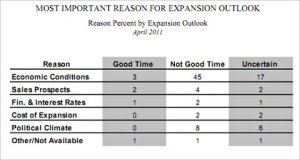 when the US economy is reeling from a basic lack of aggregate demand. The comments were just about as Chicago school as you could get. It was just another reheated bowl of smoking green shoots.
“Our effort now as a government should be to get the private sector to help them stand up and lead the recovery,” Goolsbee told “This Week” anchor Christiane Amanpour, citing efforts on regulatory review, while maintaining policies such as reduced payroll taxes through the end of the year. “We’ve got to rely on policies that are trying to leverage the private sector and give incentives to private sector to be doing the growth.”
I didn’t catch Obama economist Austan Goolsbee with Christian Amanpour on ABC which is where I got that quote. I caught up with him on Candy Crowley’s Sunday show. From what I can tell, the story line was about the same. According to Goolsbee, whatever recovery we’re experiencing from the worst financial crisis we’ve had since The Great Depression is in the hands of the private sector who just needs to appreciate the gentle nudge they’ve already gotten. Goolsbee conveniently ignored every thing going on in the recent economy except a small window’s worth of job creation. He declared that there was no downward trend in the economy. I felt like I was watching a big ol’ flaming head tell me to ignore the man behind the curtain. But, I musn’t be the only one that was watching the little man behind the curtain given that the one month’s worth of data turned into “DOW plunges into longest weekly losing streak since 2004” last week. I don’t think that’s the end of that either.
Scarecrow at FDL calls it the best speech evah given by President Romney’s chief economic adviser.
Goolsbee correctly told us that a smart economist wouldn’t get overly excited about one month’s jobs and growth numbers but would instead look at the overall trend. Of course what he wouldn’t want to concede is that GDP grew at a meager annual rate of 1.8 percent over the first three months of 2011 and so far was predicted to grow at only 2.8 percent for the next three. And the overall trend for job growth was still not enough to make a serious dent in unemployment unless you believe taking 5-10 years to get back to full employment is okay.
So Goolsbee was in denial from the opening moment because he didn’t have a decent story to tell even in his own framework. When Amanpour asked him what the Administration could or should be doing to improve conditions, he ticked off items you’d expect to hear from a typical GOP Presidential adviser: we’ve got to get the debt under control; we have a White House effort to identify and get rid of governmental regulations that are preventing the private sector from growing the economy; we should pass “free trade” agreements backed by the Chamber of Commerce; and we should leverage limited public dollars to release billions in private funding for investments.
Goolsbee’s bottom line: “It’s now up to the private sector.” That’s exactly what you’d expect from President Romney’s economic adviser.
It took Paul Krugman and Chrystia Freeland, over the absurd denials by Martin Regalia of the Chamber of Commerce, to remind ABC’s audience that business confidence and concerns about taxes and regulations aren’t the problem: business polls repeatedly show businesses aren’t expanding/hiring much because the demand for their products is weak. Demand is weak because the recession and the housing market crash depleted consumers’ wealth and they’re worried about losing their homes and jobs. You don’t need a degree in economics to grasp the logic of that. When private spending is still depressed, only government spending is keeping the economy afloat, and the stimulus is phasing out.
Now, I hate to keep writing about the same things over and over again. I know I’m not the only one. Brad DeLong has finally discovered there is no Plan B. There is only full speed ahead with deficit reduction which is a great long term goal but a disastrous short term strategy. Mark Thoma is even more straightforward.
Policymakers have been telling us to have patience for some time now, but patience ran thin long ago. We need action, not excuses to do nothing based upon Republican talking points. We have millions of people out of work, we face the prospect of a five to ten year recovery for employment, yet the administration has no plans to even try to push Congress to do more.
The percent of owners planning capital outlays in the next three to six months fell 3 points to 21 percent, a recession level reading. Money is cheap, but most owners are not interested in a loan to finance equipment they don’t need. Prospects are still uncertain enough to discourage any but the most profitable and promising investments. Four percent characterized the current period as a good time to expand facilities (seasonally adjusted), down 1 point from March and 4 points lower than January. The net percent of owners expecting better business conditions in 6 months slipped another 3 points to negative 8 percent, 18 percentage points worse than in January. Uncertainty is the enemy, and there is plenty of it to convince owners to “keep their powder dry”. Apparently consumers feel much the same way, as more customers spending more money would overcome the reluctance of owners to hire and make capital outlays. One in four still cite “weak sales” as their top business problem.
There is nothing mysterious about the fiscal policy solution to your basic lack of aggregate demand. What’s mysterious is the complete lack of concern about the significantly high unemployment rates, the continued foreclosure crisis, and the downward trends in both consumer and business confidence.
I guess I know what happens with the phone rings at 3 a.m.
No one picks it up and then some one goes on TV the next day and says we’ve done all we can do. For this they expect re-election?
It’s still the Economy, and Jobs, and the stupid Bush Tax Cuts
Posted: May 26, 2011 Filed under: Democratic Politics, Economy, Federal Budget, Federal Budget and Budget deficit, jobs, Republican politics, unemployment | Tags: budget defifit, jobless claims, unemployment 22 Comments If you do not take a path different from the path that wrecked the economy, the economy will not improve. So, why–for the umpteenth time since I started this blog 3 years ago–do I find myself writing on the same economic dynamics? Wasn’t there supposed to be a game changing election in there somewhere?
First, we just got the news that jobless claims are up. The new twist is that corporate profits are down. It had to happen sooner or later. There are only so many profits you can wring out of your business by ‘austerity’ measures like lay offs and not ordering as many office supplies. It’s obvious the ‘Economy is still Struggling’.
Unexpectedly weak consumer spending kept the economy stuck in a slow growth gear in the first quarter and would likely struggle to regain speed amid signs of a slowdown in the pace of job creation.
Data on Thursday showed the economy expanded at an unrevised 1.8 percent annual rate in the first three months of this year, while the number of Americans claiming unemployment benefits unexpectedly rose 10,000 to 424,000 last week.
The rise in jobless claims and the weakness in first-quarter consumer spending, which offset upward revisions to business inventories and investment, set the tone for more lackluster growth this current quarter.
Some businesses were surprised by the weak consumer spending. Their CEOs need to get out of their offices and country clubs and go see how the other 99 percent lives. Our wealth is down because our house values keep falling. We’ve lost at least 2-3 years of returns in our investments and pensions and many folks still haven’t recovered their pre-recession balance. Gas prices and food prices are taking larger percentages of folks’ budgets. The very rich are the only ones that can really fling the bucks around at this point and they can go anywhere they want to do that. They’re not stuck with the offerings at the local strip mall. We ignore the sluggish labor markets at our own peril.
Business investment–the smallest contributor to the GDP–was up and Government spending was down. Exports looked better than expected but they are still a very small part of our economy these days. This is now the seventh straight week that jobless claims were above the 400,000 mark. What is even more remarkable is that the BLS could not name any factor that could be an outlier contributing to this persistent trend.
Meanwhile, the conversation in Washington DC continues to be the Ryan budget and Medicare. The U.S. Senate voted down the Ryan budget I was amused by Karl Rove’s WSJ op-ed today that explained that folks would like their plan if it was just put into a populist message. I guess when you’ve got people buying into such nonsense as decreasing taxes raises tax revenues you get to thinking that you can sell them anything with the right spin on it. However, George Bush and the Republican Party own the Deficit. Their cronies should be the ones to pay it down.
The nonpartisan Center on Budget and Policy Priorities has updated research that projects nearly half of public debt in 2019 will be attributable to President George W. Bush’s tax cuts plus the ongoing wars in Iraq and Afghanistan. The tax cuts left the American treasury particularly vulnerable when the financial crisis hit, the CBPP reports: “The events and policies that pushed deficits to these high levels in the near term were, for the most part, not of President Obama’s making. If not for the Bush tax cuts, the deficit-financed wars in Iraq and Afghanistan, and the effects of the worst recession since the Great Depression (including the cost of policymakers’ actions to combat it), we would not be facing these huge deficits in the near term.”
It simply baffles me that we can’t even get the most stalwart Democratic politicians to pay attention to the miserable jobs market. It’s two years into a Democratic administration. Where is the will to put America back to work?
Whither our Middle Class?
Posted: May 13, 2011 Filed under: jobs | Tags: economics, middle class American, the disappearing middle class 3 CommentsOr, should I have titled this Wither our Middle Class because that’s exactly what the policies of the last ten years have been doing. This is a report from Russia’s 24/7 English broadcast station. Isn’t it ironic?
Still no answers for the Jobs Crisis
Posted: May 5, 2011 Filed under: Domestic Policy, Economy, Equity Markets, Federal Budget, Federal Budget and Budget deficit, jobs, The Great Recession, U.S. Economy, unemployment | Tags: joblessness, unemployment 27 Comments It’s difficult for me to watch the job market continue to dither knowing full well that nothing is being done about it. Just in case you’ve missed the other headlines today, U.S. jobless claims “unexpectedly” jumped. It wasn’t unexpected on my part.
Applications for jobless benefits jumped by 43,000 to 474,000 in the week ended April 30, the most since August, Labor Department figures showed today. A spring break holiday in New York, a new emergency benefits program in Oregon and auto shutdowns caused by the disaster in Japan were the main reasons for the surge, a Labor Department spokesman said as the data was released to the press.
Even before last week, claims had drifted up, raising concern the improvement in the labor market has stalled. Employers added 185,000 workers to payrolls in April, fewer than in the prior month, and the unemployment rate held at 8.8 percent, economists project a Labor Department report to show tomorrow.
“We’re seeing so many distortions in the claims numbers week to week that it’s hard to say, but I’m willing to be patient and wait and see,” said Stephen Stanley, chief economist at Pierpont Securities LLC in Stamford, Connecticut. “Other reports show an improvement in the labor market. It’s going to take a while to dig out of the hole we have in relation to the jobs the economy lost during the recession.”
Yes, it is a hole, and there’s very little being done to fill it. There are quite a few factors that contribute to the current appalling job market. The Fifth Fed District’s Macroblog looks at the contribution of offshoring. Offshoring basically means that part of a production process is moved to an overseas location. That can mean anything from a call center to manufacturing of a good. You can see that the impacted industries include both service and manufacturing sectors. The nifty table up there in the left hand corner will give you an idea of the impact of offshoring by industry. The numbers are tabulated from data during the years of 1999 – 2008. The changes and content of the ‘other’ category is further elucidated in the macroblog piece. It includes another table that you may review too.
Sixty-nine percent of the foreign employment growth by U.S. multinationals from 1999 to 2008 was in the “other industries” category, and 87 percent of that growth was in three types of industries: retail trade; administration, support, and waste management; and accommodation of food services. Some fraction of these jobs, no doubt, reflect “offshoring” in the usual sense. But it is also true that these are types of industries that are more likely than many others to represent production for local (or domestic) demand as opposed to production for export to the United States.
This is a bit interesting. There are two main types of Foreign Direct Investment that involve ‘offshoring’. One is called vertical and the other is horizontal. Horizontal FDI means that one segment of the process is moved to another country but the final good or service still goes to the consumer in the company’s home country. The last analysis from macroblog implies that a substantial part of that offshoring is actually Vertical FDI. This means that the company is moving itself over to the country to take advantage of end consumers in the other country.
This finding isn’t surprising if you consider the number of countries that are experiencing booms in the number of middle class citizens. There are more middle class Chinese than there are US citizens, as an example. There is also the fact that the middle class in the US has been losing income and purchasing power for nearly 30 years. It only figures that these companies would look for greener pastures elsewhere. Why expand here when your customer base is unlikely to be expanding and unable to afford your products in any meaningful way?
Macroblog points out that this is unlikely to explain all the doldrums in the US job market, but it does provide one factor and and interesting one at that. I would say that this analysis basically says that US businesses are much more bullish on foreign markets than they are on their own. (Capital flows for investment suggest this too.) This should give all of us pause.
Interestingly enough, another FED President also suggested that the economy and the US job markets weren’t as stable as they could be and suggested more stimulus. Three Fed Presidents rotate in and out of the Open Market Committee–that’s the monetary policy decision body–and each district is a world unto itself in many ways. Fed Boston is not in the current rotation.
Federal Reserve Bank of Boston President Eric Rosengren yesterday said record stimulus is necessary to spur the “anemic” economy and that raising interest rates to combat increasing food and fuel prices would impede growth.
“With significant slack in labor markets, stable inflation expectations, and core inflation well below our longer run target, there is currently no reason to slow the economy down with tighter monetary policy,” Rosengren said during a speech in Boston.
Not surprisingly, equity markets seemed to be caught a bit off guard with this news. Right now, I think the market seems to be in one of those periods where it’s not paying much attention to fundamentals. Bloomberg.com notes that Futures Fell on the news. Some times Wall Street thinks as long as their churning out fees and capital gains, all is right with the world. This is definitely not the case. It does explain why their economists tend to get caught off guard though. Hello? Real World anyone?
Stock-index futures dropped after the report. The contract on the Standard & Poor’s 500 Index maturing in June fell 0.6 percent to 1,334.8 at 8:58 a.m. in New York. Treasury securities rose, sending the yield on the benchmark 10-year note down to 3.18 percent from 3.22 percent late yesterday.
Dean Baker from CEPR is pretty pessimistic about the entire thing.
Weekly unemployment claims jumped to 474,000 last week, an increase of 43,000 from the level reported the previous week. This is seriously bad news about the state of the labor market. It seems that the numbers were inflated by unusual factors, most importantly the addition of 25,000 spring break related layoffs in New York to the rolls due to a changing vacation pattern, however even after adjusting for such factors, claims would still be above 400,000 for the fourth consecutive week.
This puts weekly claims well above the 380,000 level that we had been seeing in February and March. This suggests that job growth is slowing from an already weak level. This is news that should be reported prominently.
Unfortunately, the lackadaisical job market is off the front pages. Much of the political focus on the economy remains honed in on the federal debt. Again, this is the silly because one of the best ways of increasing tax revenues and closing the debt is for people to be employed. It’s an uphill battle to expect the deficit to close with this unacceptable level of unemployment. I still can’t figure out where they’ve placed their heads back their in Washington, D.C. Oh, well, look over there … it’s a dead Osama Bin Laden and we’ve not got any pictures yet!
Like We Need More Austerity …
Posted: April 28, 2011 Filed under: Economy, jobs | Tags: BEA, GDP growth, still feels like a recession, U.S. Economy 19 Comments
Too bad we can't buy some stock in soup kitchens ...
U.S. Economic Growth did exactly what most economists expected during the first quarter of 2011, it slowed substantially. There is some hope that the low rate was due to temporary factors like bad weather and political unrest in the MENA region that’s contributed to higher gas prices.
Of these various economic menaces, the most enduring is probably higher commodity prices, which reduce the amount of pocket money that households and businesses have available to spend on other purchases and, in the case of companies, hires. Gasoline prices have shown little sign of falling in recent weeks, and have nearly neutralized the 2011 payroll tax cuts that were intended as a stimulus.
“Consumers are spending more, but it’s getting soaked up in higher gas prices and higher food prices,” the chief economist at RDQ Economics, John Ryding, said. “That’s not leaving nearly as much left over for discretionary spending.”
Declines in government spending will continue to drag on the economy throughout the year, as strapped state and local governments cut back and the federal government tries to cut down on nonmilitary spending. Last quarter’s steep drop in military spending, which tends to be volatile, will probably reverse itself later in the year, economists said.
It’s pretty easy to tell who is experiencing the worst end of this lackluster recovery. Hint: It’s not the wealthiest Americans. But, if you had any doubts, Wal-Mart reports their shoppers are “running out of money”. Again, there’s low overall inflation but higher gas and food prices make up a large portion of the family budget for ordinary Americans.
Wal-Mart’s core shoppers are running out of money much faster than a year ago due to rising gasoline prices, and the retail giant is worried, CEO Mike Duke said Wednesday.
“We’re seeing core consumers under a lot of pressure,” Duke said at an event in New York. “There’s no doubt that rising fuel prices are having an impact.”
Wal-Mart shoppers, many of whom live paycheck to paycheck, typically shop in bulk at the beginning of the month when their paychecks come in.
Lately, they’re “running out of money” at a faster clip, he said.
“Purchases are really dropping off by the end of the month even more than last year,” Duke said. “This end-of-month [purchases] cycle is growing to be a concern.
This would explain the results of this Gallup Poll where “More than Half Still Say U.S. is in a Recession”. This amount of consumer depression in an economy driven by 70% household spending cannot bode well for future GDP growth. Businesses are expanding overseas and will not create any jobs or businesses here unless they see customers. This, in the Keynesia mold, calls for increased government spending. What we have been getting is decreases in taxes to people whose investments and job creation efforts are going outside of the country. It’s not hard to see why most citizens do not think we’re in any kind of recovery other than a technical one.
More than half of Americans (55%) describe the U.S. economy as being in a recession or depression, even as the Federal Open Market Committee (FOMC) reports that “the economic recovery is proceeding at a moderate pace.” Another 16% of Americans say the economy is “slowing down,” and 27% believe it is growing.
Meanwhile, every one within the D.C. beltway continue to eye the dwindling American safety net with greedy eyes. This has elicited comments from all over but none is perhaps more jaw-dropping than a pronouncement from Former Dubay Treasury Secretary Paul O’Neill who likened Republicans threatening to block the increase in the debt ceiling to Al Qaeda Terrorists. It does indeed seem that Republicans would like to bring on a great depression rather than find middle ground on spending and taxing priorities.
“The people who are threatening not to pass the debt ceiling are our version of al Qaeda terrorists. Really,” O’Neill, Treasury secretary in the Republican administration of George W. Bush, said Wednesday in an interview with Bloomberg Television’s InBusiness with Margaret Brennan.
“They’re really putting our whole society at risk by threatening to round up 50 percent of the members of the Congress, who are loony, who would put our credit at risk,” O’Neill said.
It’s as if our elected officials are deliberately sabotaging the country. The details in the National Income and Spending accounts are given here at the BEA. You can see that we’re not getting stimulus from either Federal Spending, Business Investments or Exports. (There’s a pretty much a wash when you look at Net Exports or you subtract Imports from Exports.)
Real exports of goods and services increased 4.9 percent in the first quarter, compared with an increase of 8.6 percent in the fourth. Real imports of goods and services increased 4.4 percent, in contrast to a decrease of 12.6 percent.
Real federal government consumption expenditures and gross investment decreased 7.9 percent in the first quarter, compared with a decrease of 0.3 percent in the fourth. National defense decreased 11.7 percent, compared with a decrease of 2.2 percent. Nondefense increased 0.1 percent, compared with an increase of 3.7 percent. Real state and local government consumption expenditures and gross investment decreased 3.3 percent, compared with a decrease of 2.6 percent.
The change in real private inventories added 0.93 percentage point to the first-quarter change in
real GDP after subtracting 3.42 percentage points from the fourth-quarter change. Private businesses
increased inventories $43.8 billion in the first quarter, following increases of $16.2 billion in the fourth
quarter and $121.4 billion in the third.
None of this is good news when coupled with the still high rates of unemployment. Despite all these tax cuts, the business sector is clearly not going anywhere. Here’s a link to some further analysis and nifty graphs from Econbrowser. This analysis is particularly germane to our conversation.
Inventory rebuilding and a gain in exports made positive contributions, but these were essentially undone by increases in imports and decreases in government spending. Perhaps the most disappointing detail was investment spending by businesses, which had been making solid contributions to growth the previous three quarters, but was essentially flat for Q1. Housing remains stuck at very low levels, but at least it’s no longer a significant factor dragging the level of GDP down.
But until housing and business investment start making a positive contribution, we’re likely to be disappointed by the employment and GDP reports.
It’s pretty obvious that fiscal policy in this country has gone to VooDoo land because we’re still in deep DooDoo. What we have here is fiscal policy malpractice. Too bad we can’t all join in a massive lawsuit and sue the Congress. Thanks a lot SCOTUS!!!

 peej
peej Carissa
 bostonboomer
 dakinikat
 ecocatwoman
 mablue2
 Mama Lopez
 peggysue22
 quixote
 skydancingguestblogger
 Mona (aka Wonk the Vote)



 Sky Dancing
Recent Comments