
Saturday Reads: Dismal Science Edition
Posted: February 4, 2012 Filed under: Economy, income inequality, morning reads, poverty, unemployment, We are so F'd | Tags: Paul Krugman, social safety net, unemployment 62 Comments Good Morning!
I’m going to concentrate on the economy this morning. You better grab some coffee.
The unemployment rate dropped yesterday for a variety of reasons. I thought I’d talk a little about that first. The job growth was fairly strong this month in every sector but government. This improved the labor outlook for some of the workers hardest hit by the last recession. However, it was a mixed report–although you wouldn’t know that from the stock market–in that it still showed a number of people who are working part time that don’t want to be and again, a large number of people simply disappeared from the labor force. Temp jobs surged. Wage growth is “meager” as shown by graphs in this blog post by Tim Duy. He also notes that the employment to population ratio remains at a levels not seen since the early 1980s. This is an interesting situation. We’re still in a huge hole. At this growth rate, it will take us until 2019 just to gain back the jobs we had in 2008.
One interesting trend pointed out at Zero Hedge by Tyler Durden is that older workers are increasing the number of hours worked. There appears to be a basic shift in many of the ‘normal’ labor habits. Durden calculates an alternative measure to the unemployment rate by including workers that the BLS ignores. He uses the long-term average labor force participation rate instead of the number of people that are participating now which is shrinking in a very odd way.
… do the following calculation with us: using BLS data, the US civilian non-institutional population was 242,269 in January, an increase of 1.7 million month over month: apply the long-term average labor force participation rate of 65.8% to this number (because as chart 2 below shows, people are not retiring as the popular propaganda goes: in fact labor participation in those aged 55 and over has been soaring as more and more old people have to work overtime, forget retiring), and you get 159.4 million: that is what the real labor force should be. The BLS reported one? 154.4 million: a tiny 5 million difference. Then add these people who the BLS is purposefully ignoring yet who most
certainly are in dire need of labor and/or a job to the 12.758 million reported unemployed by the BLS and you get 17.776 million in real unemployed workers. What does this mean? That using just the BLS denominator in calculating the unemployed rate of 154.4 million, the real unemployment rate actually rose in January to 11.5%. Compare that with the BLS reported decline from 8.5% to 8.3%. It also means that the spread between the reported and implied unemployment rate just soared to a fresh 30 year high of 3.2%.
So, the deal is that the labor force participation rate is at a 30 year low. That’s still the number that puzzles and bothers me despite the good looking job growth. Why are people leaving the job market? As shown in Durden’s numbers, it’s not baby boomers. Here’s some speculation by Edward Harrison of Credit Write Downs who is concerned like me. Look at the graph on the right from Durden that shows why reason number three isn’t the explanation right now. The blue line is the participation rate by the older workers (55+) and as you can see it’s headed straight up.
My take on this: A declining labor force participation rate is a bad thing. It says people are dropping out of the labor force. So despite the bullish headline figure, the question still remains as to how robust the jobs market is.
Here are three things to consider:
- Cyclical: that’s the point I made above. Low participation is a negative signal.
- Structural: A lot of people have been pointing to long-term unemployment as a sign that the jobs market is weak. This makes sense and it should put downward pressure on the participation rate as people drop out of the labor force. The difference here is that if the problem is structural and not cyclical, the so-called output gap will continue to be large as throngs of people remain out of the labor force.
- Secular: The first cohorts of boomers started to retire last year. I know many people that were close to retirement when the recession began in 2007 that have had to change plans. Some have delayed retirement because of financial turmoil. But many others have accelerated retirement unwillingly because they were forced out of the labor force. Expect the loss of boomers to put downward pressure on the labor force for years to come.
My guess is that all three factors are affecting the labor force participation rate here. But I am beginning to think that the structural and secular forces are starting to predominate.
I’m still thinking that younger people may be holding up in school for awhile until things get better but I’d have to do some research to see if the university population is up. I also think that there’s the discouraged worker factor too. I actually know a lot of folks that are just hanging in there and cashing in their IRAs or have gone back to school and are living on student loans and or going back and forth between short term jobs and contract work. I guess we’ll see if the trend holds, but to me it’s a worrisome one. If things were really getting better, those folks should be entering the job market now driving the participation rate up. Since I’m a financial economist and not a labor economist, I really don’t know the flows well enough to speculate on anything beyond a theoretical level. It’s not my research area.
Thomas Fran has written an interesting post at Alternet on “Why We Got Ayn Rand Instead of FDR”.
An appropriate metaphor for the conservative revival is the classic switcheroo, with one fear replacing another, theoretical emergencies substituting for authentic ones, and a new villain shuffling onstage to absorb the brickbats meant for another. The conservative renaissance rewrites history according to the political demands of the moment, generates thick smokescreens of deliberate bewilderment, grabs for itself the nobility of the common toiler, and projects onto its rivals the arrogance of the aristocrat. Nor is this constant redirection of public ire a characteristic the movement developed as it went along; it was present at the creation. Indeed, redirection was the creation.
…
Here, in one sentence, was a key to the amazing success the Right would shortly enjoy. They had an answer to the bailout outrage, and it was not modulated by lawyerly subtleties or votes-taken-with-nose-held, like the House Democrats who had voted for the TARP. “Let the failures fail”: it was a line that would allow the revived Right to depict itself as an enemy of big business, rooting for the collapse of the megabanks. The Tea Partiers may have looked ridiculous in their costumes, but their central demand was anything but.
Not all “failure” is the same, however. What the newest Right has in mind is something philosophical, something both personal and sweeping. It demands liquidation across the board, a sort of deserved doomsday for the borrowing-based way of life. But in the great die-off it delights in imagining, the real culprits of 2008 have a way of disappearing from view.
If we watch closely, we can see the cards being switched. Whenever our tea-partying friends warm to the subject of letting-the-failures-fail—and they do so often—sooner or later they inevitably turn from the bailed-out banks to those spendthrift “neighbors” identified by Santelli, those dissolute people down the street who borrowed in order to live above their station.
This could be why the Republican Presidential Wannabes sound so down right Dickensian. We’ve had school children offered up as janitorial help. We’ve had Willard talking about enjoying a good firing and ranting on about how he’s not worried about the poor because they are safe in their safety nets. Instead of pointing to the business welfare queens, we’ve got poor children being held up as not having the fortitude and values. As Krugman says, Willard doesn’t feel any one’s pain.
Now, the truth is that the safety net does need repair. It provides a lot of help to the poor, but not enough. Medicaid, for example, provides essential health care to millions of unlucky citizens, children especially, but many people still fall through the cracks: among Americans with annual incomes under $25,000, more than a quarter — 28.7 percent — don’t have any kind of health insurance. And, no, they can’t make up for that lack of coverage by going to emergency rooms.
Similarly, food aid programs help a lot, but one in six Americans living below the poverty line suffers from “low food security.” This is officially defined as involving situations in which “food intake was reduced at times during the year because [households] had insufficient money or other resources for food” — in other words, hunger.
So we do need to strengthen our safety net. Mr. Romney, however, wants to make the safety net weaker instead.
Specifically, the candidate has endorsed Representative Paul Ryan’s plan for drastic cuts in federal spending — with almost two-thirds of the proposed spending cuts coming at the expense of low-income Americans. To the extent that Mr. Romney has differentiated his position from the Ryan plan, it is in the direction of even harsher cuts for the poor; his Medicaid proposal appears to involve a 40 percent reduction in financing compared with current law.
So Mr. Romney’s position seems to be that we need not worry about the poor thanks to programs that he insists, falsely, don’t actually help the needy, and which he intends, in any case, to destroy.
Still, I believe Mr. Romney when he says he isn’t concerned about the poor. What I don’t believe is his assertion that he’s equally unconcerned about the rich, who are “doing fine.” After all, if that’s what he really feels, why does he propose showering them with money?
The New York Review of Books has an entire list of economics books up that have to do with austerity and income inequality. The heading basically sums it up. We’re more unequal than you think. Here’s a review of two that I found particularly interesting.
Robert Frank’s The Darwin Economy and Thomas Edsall’s The Age of Austerity provide much-needed information and analysis to explain why so much of the nation’s money is flowing upward. Frank, an economist at Cornell, draws on social psychology to shatter many myths about competition and compensation. While he doesn’t explicitly cite the classical French economist Jean-Baptiste Say, much in his exposition echoes Say’s axiom that “supply creates demand.” This doesn’t mean that if items are put on display, people will automatically buy them. Consumers decide what or if they’ll purchase, and clearly can only do so if they have the credit or money. Even so, the items they decide they want have been created by the suppliers, who put things on the shelves.
Frank carries this a step further. In recent years, he argues, the products and enjoyments set before us have become increasingly enticing—including houses, vacations, television programs, video games, electronic devices, and the attractions of the Internet. In many cases, the rich acquire them first; since what they have and do becomes widely known, emulation descends down the line.
Nor are these just Tiffany trinkets. Frank’s most vivid examples are newly built houses. As the very rich installed grander entrance halls and rarely used bathrooms, the professional classes felt they should have a semblance of such amenities. “By 2007,” Frank writes, “the median new single-family house built in the United States had an area of more than 2,300 square feet, some 50 percent more than its counterpart from 1970.” Indeed, it’s revealing that this expansion was happening as people were having fewer children. However, these homes—along with more elaborate wardrobes, holidays, and technical gear—are costly. If they were to be bought, salaries needed to keep pace.
Hence, I would argue, an unstated but still real compact was made between the employers and the new upper-middle class. Their pay would be raised to support their ascending status. As the samplings in Table B show, while real earnings for the overall workforce have risen only 7 percent since 1985, professions like physicians and professors have done several times better. Incomes of lawyers and executives, for their part, have soared much further than anyone would have forecast a few decades ago.2
One of the reasons the poor do so poorly is that the states have tax structures that are very regressive. If you didn’t see me link to this down thread yesterday, take a look at how regressive state taxes really are. Kevin Drum includes a table where you can check on how bad your state treats you.
And then there are state taxes. Those include state income taxes, property taxes, sales taxes, and fees of various kinds. How progressive are state taxes?
Answer: They aren’t. The Corporation for Enterprise Development recently released a scorecard for all 50 states, and it has boatloads of useful information. That includes overall tax rates, where data from the Institute on Taxation and Economic Policy shows that in the median state (Mississippi, as it turns out) the poorest 20 percent pay twice the tax rate of the top 1 percent. In the worst states, the poorest 20 percent pay five to six times the rate of the richest 1 percent. Lucky duckies indeed. There’s not one single state with a tax system that’s progressive.
So, hopefully, you’re still awake! What’s on your reading and blogging list today.
Is This the Conversation We’ve Been Waiting For . . . Or Not?
Posted: January 14, 2012 Filed under: #Occupy and We are the 99 percent!, 2012 primaries, Banksters, Congress, Corporate Crime, corporate money, Economy, income inequality, Regulation, Republican Tax Fetishists | Tags: crony capitalism, Financial Crisis, Mitt Romney, Newt Gingrich, U.S. Economy 22 CommentsThe recent brouhaha over Newt Gingrich and Mitt Romney locking horns over Romney’s involvement [I created 100,000 jobs] at Bain Capital  has raised speculation that a conversation about capitalism, the way it’s been practiced these last 30-40 years, is about to commence, a conversation that is way overdue.
The irony is that the issue has been brought to the fore by Republican candidates, none of whom questioned the blowback of leveraged buyouts [LBO] and private equity firms in the past or even whispered the traitorous phrases–crony capitalism, vulture capitalism–in public. In fact, the centerpiece of GOP economic theory is free market fundamentalism—set the market free, unfetter business from governmental regulation and Heaven’s Gate will open.
Not quite.
There’s the 2008 meltdown to contend with, the abuses of Wall Street and a clear example that Greenspan’s ‘self-regulating’ market theory was a cruel and greedy joke. Following the meltdown, Greenspan himself glumly admitted his worldview was incorrect.
In addition, we have plenty of evidence that the so-called Trickle-Down philosophy has not ‘raised all ships’ as heralded by the true believers but rather led to huge income disparities, flat wages and the death-rattle of the middle-class.
Yes, there is the question of globalization. Like it or not, we have grown interconnected. But when decisions are made purely on profit, the quicker the better, then transferring manufacturing abroad, exploiting cheap foreign labor, taking advantage of lax worker safety rules and nonexistent environmental regulations begins to make a twisted sort of sense. So, too with trade agreements made deliberately lopsided and unfair because these ‘deals’ have no national loyalty. Profit is king; all else is subservient.
The long-term damage is massive. We don’t have to speculate about this. The evidence is everywhere in our unemployment numbers [which are far worse than reported] and the slide into poverty for alarming numbers of Americans. Add in the housing crisis, still escalating health care costs, the Gulf oil spill, endless wars, the battles over extracting oil, coal and natural gas while refusing to work on rational and workable alternative energy policies, and . . .
Well, it’s enough to make your head explode.
But suddenly, the door has flown open for a conversation on what it means to be a shareholder capitalist. The unquestioned virtue of profit over all else has begun to raise its ugly head.
For instance, what value [if any] is created for a society when money is valued above all else, valued over the welfare of fellow citizens–the sick, the disabled, even our children. What value is maintained when corners are cut, laws rewritten, ridiculous tax policies hyped as necessary for growth and future job creation? But the mythical jobs, positions offering a living wage, never come. What does it mean when massive profits stream only to the top tier of the population, the so-called job creators, while everyone and everything else is left to flounder?
I call it a no-value deal–a lie, a theft–the magnitude of which hollows out a society, sucks it dry.
For too long Newt Gingrich [for all his caterwauling now] and his like-minded buddies have called it the free enterprise system. Free for whom? Certainly not for the families who have lost their homes, seen their jobs exported and have no reasonable expectation that their own children will ever see better times. Not with the continuation of what Dylan Ratigan has termed Extractionism, a system that takes money from others without offering anything of value, anything that actually promotes growth or improves society. This is a system that merely fills the coffers of the Extractionists, while they play a heady game of King of the Mountain and continue to spread the folklore that this is what freedom and liberty look like.
 But let’s be fair. Mitt Romney is not the devil incarnate, nor is Bain Capital the worst of the worst. Much of what Newt Gingrich’s SuperPac is selling to the electorate conveniently let’s Wall Street and multinational corporations off the hook. The ads fail to mention the cushy collusion of legislators who push laws and tax breaks to keep the circle spinning. And Washington Democrats who may be dancing the happy dance now are just as guilty of supporting the status quo, going along to get along, eagerly taking campaign donations from their own smiling Extractionists.
Is this the conversation Republicans are offering?
Sorry, no.
Rush Limbaugh has been apoplectic on the issue. According to Limbaugh, Gingrich has ‘Gone Perot.’
So you might say that Newt now has adopted the Perot stance, because he just said it: ‘I’m gonna make sure that Romney doesn’t come out of New Hampshire with any momentum whatsoever.’ And he’s using language that the left uses, and he’s attempting to make hay with this. You know, he’s trying to dredge up and have long-lasting negatives attach to Romney [this is what’s so unsettling about this] in the same way the left would say it. You could, after all these bites, say, “I’m Barack Obama, and I approve this message.
Rudy Giuliani also weighed in.
What the hell are you doing, Newt?” Giuliani said this morning on “Fox and Friends.” “The stuff you’re saying is one of the reasons we’re in this trouble now.
This whole ignorant populist view of the economy that was proven to be incorrect with the Soviet Union with Chinese communism.
Oh yes, the ‘ignorant populist’ view that has beamed a light on business as usual. Which btw, is not working, except for a tiny fraction of the American public. If anything, Uncle Newt has pulled back the curtain and revealed an unsettling truth.
This might not be the full-throated conversation Americans need to engage in. Still it’s a beginning from a most unexpected quarter, whose raison d’etre is as caught up in short-term results as are its economic principles. Almost Occupy Wall St. in nature, the conversation is now in the open. This is a conversation that defies Mitt Romney’s suggestion that sensitive subjects are better left to the privacy of ‘quiet rooms.’
This is the conversation of the moment. The first word, the opening sentence. It has just begun.
Thursday Reads: Defense Authorization Bill, Ron Wyden, the Filthy Rich, and Bird Crashes
Posted: December 15, 2011 Filed under: #Occupy and We are the 99 percent!, 2012 presidential campaign, Banksters, Barack Obama, Civil Liberties, George W. Bush, income inequality, indefinite detention, Medicare, morning reads, net-neutrality, Psychopaths in charge, Republican presidential politics, U.S. Economy, U.S. Military, U.S. Politics, We are so F'd, WE TOLD THEM SO | Tags: ACLU, Afghanistan War, AUMF, Carl Levin, CEO salaries, defense authorization bill, Diane Feinstein, Emptywheel, Harry Truman, Human Rights Watch, indefinite detention, Iraq War, John McCain, Newt Gingrich, taxes, terrorism 71 Comments
Good Morning!!
So far I haven’t been locked up in Guantanamo or debtors’ prison. I hope the rest of you Sky Dancers still have your freedom too, such as it is.
Yesterday the U.S. House of Representatives passed the Defense Authorization bill, which includes language permitting indefinite detention by the military of “al Qaeda members” without specific charges or trials. You can read the bill here.
Our craven and cowardly President had promised to veto this bill, but today the White House reneged on that promise, and Obama is set to sign it once it passes the Senate tomorrow or Friday.
The White House backed down from its veto threat of the defense authorization bill Wednesday, saying that the bill’s updated language would not constrain the Obama administration’s counterterrorism efforts.
While the White House acknowledged it still has some concerns, press secretary Jay Carney said President Obama’s advisers wouldn’t recommend a veto, a threat that had been hanging over the Pentagon policy bill for the past month.
Obama and his crew don’t care about the fifth amendment, habeas corpus and all that jazz–just that the president is the one who decides who is an “al Qaeda member” and therefore will be whisked away to indefinite detention. Wanna bet there are suddenly going to be a lot of “al Qaeda members” in the Occupy movement? From Anti-War.com:
As revealed in the Senate deliberations last week, the Obama administration itself requested the principal authors of the provision – John McCain and Carl Levin – to include language authorizing due-process-free military custody for American citizens. The initial threat of veto was apparently nothing more than political theater on the part of the White House.
According to The Hill, the following changes satisfied the White House concerns:
The bill deleted the word “requirement” from the section on the military detention of terror suspects, which was among the most contentious parts of the bill.
The national security waiver allowing the executive branch to move terror suspects from military to civilian courts was placed in the president’s hands rather than the Defense secretary’s, a change Levin said Obama had asked for.
The conference bill was based on the Senate language, which was not as harsh as the House bill when it came to trying terror suspects in civilian courts.
The administration called the provision in the bill that establishes the authority for military detentions unnecessary because the executive branch already was given this authority following Sept. 11.
Carney’s statement said if the administration finds parts of the law “negatively impact our counterterrorism professionals and undercut our commitment to the rule of law,” it expects the bill’s authors will correct those problems.
Oh well, then no worries… Except that lots of people who care about the Constitution aren’t so happy about it. Here’s a statement from Laura Murphy of the ACLU:
“The president should more carefully consider the consequences of allowing this bill to become law,” Laura W. Murphy, director of the ACLU Washington Legislative Office. “If President Obama signs this bill, it will damage both his legacy and American’s reputation for upholding the rule of law. The last time Congress passed indefinite detention legislation was during the McCarthy era and President Truman had the courage to veto that bill. We hope that the president will consider the long view of history before codifying indefinite detention without charge or trial.”
Unfortunately, Barack Obama is no Harry Truman.
Here’s a statement from Human Rights Watch:
“By signing this defense spending bill, President Obama will go down in history as the president who enshrined indefinite detention without trial in US law,” said Kenneth Roth, executive director of Human Rights Watch. “In the past, Obama has lauded the importance of being on the right side of history, but today he is definitely on the wrong side.”
The far-reaching detainee provisions would codify indefinite detention without trial into US law for the first time since the McCarthy era when Congress in 1950 overrode the veto of then-President Harry Truman and passed the Internal Security Act. The bill would also bar the transfer of detainees currently held at Guantanamo into the US for any reason, including for trial. In addition, it would extend restrictions, imposed last year, on the transfer of detainees from Guantanamo to home or third countries – even those cleared for release by the administration.
There are currently 171 detainees at Guantanamo, many of whom have been imprisoned for nearly 10 years. As one of his first acts in office, Obama signed an executive order for the closure of Guantanamo within one year. Instead of moving quickly to close the prison and end the use of the discredited military commissions, he supported modifications to the Military Commissions Act.
“It is a sad moment when a president who has prided himself on his knowledge of and belief in constitutional principles succumbs to the politics of the moment to sign a bill that poses so great a threat to basic constitutional rights,” Roth said.
The bill also requires the US military take custody of certain terrorism suspects even inside the United States, cases that previously have been handled by federal, state and local law enforcement authorities. During debate over the bill, several senior administration officials, including the secretary of defense, attorney general, director of national intelligence, director of the FBI, and director of the CIA, all raised objections that this provision interfered with the administration’s ability to effectively fight terrorism. In the last 10 years over 400 people have been prosecuted in US federal courts for terrorism related offenses. Meanwhile during that same period, only six cases have been prosecuted in the military commissions.
“President Obama cannot even justify this serious threat to basic rights on the basis of security,” Roth said. “The law replaces an effective system of civilian-court prosecutions with a system that has generated the kind of global outrage that would delight recruiters of terrorists.”
The bill also reauthorizes the AUMF that Bush used to get us into Iraq. Emptywheel has a lengthy post in which she wonders: Feinstein’s “Fix” on AUMF Language Actually Authorize Killing American Citizens? You probably should read the whole thing, but here’s the summation:
…by affirming all purportedly existing statutory authority, DiFi’s “fix” not only reaffirmed the AUMF covering a war Obama ended today, but also affirmed the Executive Branch’s authority to use deadly force when ostensibly trying to detain people it claimed present a “significant threat of death or serious physical injury.” It affirms language that allows “deadly force” in the name of attempted detention.
In any case, it’s one or the other (or both). Either the AUMF language became acceptable to Obama because it included American citizens in the Afghan AUMF and/or it became acceptable because it affirmed the Executive Branch’s authority to use deadly force in the guise of apprehending someone whom the Executive Branch says represents a “significant threat.”
My guess is the correct answer to this “either/or” question is “both.”
So DiFi’s fix, which had the support of many Senators trying to protect civil liberties, probably made the matter worse.
In its more general capitulation on the veto, the Administration stated that the existing bill protects the Administration’s authority to “incapacitate dangerous terrorists.” “Incapacitate dangerous terrorists,” “use of deadly force” with those who present a “significant threat of death or serious physical injury.” No matter how you describe Presidential authority to kill Americans with no due process, the status quo appears undiminished.
Finally Al Jazeera asks: Is the principle of indefinite detention without trial now an accepted and permanent part of American life? I wonder if Michelle Obama is still proud to be an American today?
There is some other news, of course. For one thing, it seems as if Rep. Ron Wyden of Oregon must have more energy I can imagine having. As of today he managed to get the decisions on rural post office closings postponed until next May; he joined with Rep. Paul Ryan (!) to propose a medicare overhaul; and he and Darrel Isa (!) have proposed an alternative to the entertainment industry bill that would effectively shut down social networking on the internet. Check out those links if you’re interested.
One of my favorite economists, Robert Reich, has an analysis of Newt’s Tax Plan, and Why His Polls Rise the More Outrageous He Becomes.
Newt’s plan increases the federal budget deficit by about $850 billion – in a single year!
….
Most of this explosion of debt in Newt’s plan occurs because he slashes taxes. But not just anyone’s taxes. The lion’s share of Newt’s tax cuts benefit the very, very rich.
That’s because he lowers their marginal income tax rate to 15 percent – down from the current 35 percent, which was Bush’s temporary tax cut; down from 39 percent under Bill Clinton; down from at least 70 percent in the first three decades after World War II. Newt also gets rid of taxes on unearned income – the kind of income that the super-rich thrive on – capital-gains, dividends, and interest.
Under Newt’s plan, each of the roughly 130,000 taxpayers in the top .1 percent – the richest one-tenth of one percent – reaps an average tax cut of $1.9 million per year. Add what they’d otherwise have to pay if the Bush tax cut expired on schedule, and each of them saves $2.3 million a year.
To put it another way, under Newt’s plan, the total tax bill of the top one-tenth of one percent drops from around 38 percent of their income to around 10 percent.
What about low-income households? They get an average tax cut of $63 per year.
Oh, I almost forgot: Newt also slashes corporate taxes.
Wow!
Dakinikat clued me in to this post at Naked Capitalism: “Let Them Eat Pink Slips” CEO Pay Shot Up in 2010, which links to this article in the Guardian.
Chief executive pay has roared back after two years of stagnation and decline. America’s top bosses enjoyed pay hikes of between 27 and 40% last year, according to the largest survey of US CEO pay. The dramatic bounceback comes as the latest government figures show wages for the majority of Americans are failing to keep up with inflation.
America’s highest paid executive took home more than $145.2m, and as stock prices recovered across the board, the median value of bosses’ profits on stock options rose 70% in 2010, from $950,400 to $1.3m. The news comes against the backdrop of an Occupy Wall Street movement that has focused Washington’s attention on the pay packages of America’s highest paid.
The Guardian’s exclusive first look at the CEO pay survey from corporate governance group GMI Ratings will further fuel debate about America’s widening income gap. The survey, the most extensive in the US, covered 2,647 companies, and offers a comprehensive assessment of all the data now available relating to 2010 pay.
And these oligarchs couldn’t care less if we like it or not. They own the White House and the Congress and we don’t.
I’ll end with a bizarre and very sad story out of Utah:
Thousands of migratory birds were killed or injured after apparently mistaking a Wal-Mart parking lot, football fields and other snow-covered areas of southern Utah for bodies of water and plummeting to the ground in what one state wildlife expert called the worst mass bird crash she’d ever seen.
Crews went to work cleaning up the dead birds and rescuing the injured survivors after the creatures crash-landed in the St. George area Monday night.
By midday Wednesday, volunteers had helped rescue more than 3,000 birds, releasing them into a nearby pond. There’s no count on how many died, although officials estimate it’s upwards of 1,500.
“They’re just everywhere,” said Teresa Griffin, wildlife program manager for the Utah Division of Wildlife Resource’s southern region. “It’s been nonstop. All our employees are driving around picking them up, and we’ve got so many people coming to our office and dropping them off.”
Those are my recommendations for today. What are you reading and blogging about?
A War of a Different Sort
Posted: December 14, 2011 Filed under: Austerity, Banksters, Democratic Politics, Economy, globalization, income inequality, poverty, productivity, U.S. Economy, unemployment | Tags: Federal Reserve, investment, the Great Depression, The Great Slump 25 Comments
In the May edition of Vanity Fair, Joseph Stiglitz [economist and professor at Columbia University and recipient of the Nobel prize in economic sciences, 2001] wrote a prescient essay entitled, “Of the 1%, For the 1% and By the 1%.”
In a strange way, the piece voiced what would months later become the rallying cry of the Occupy Wall Street Movement, a foreshadowing of the public’s growing discontent with high unemployment, rising poverty and income disparity as well as the social damage resulting from Government failure to address the problems: the distortion it creates, how income disparities breed a climate of imbalance and lack of restraint, encouraging:
. . . no limit to the adventures we can undertake; corporations and contractors stand only to gain. The rules of economic globalization are likewise designed to benefit the rich: they encourage competition among countries for business, which drives down taxes on corporations, weakens health and environmental protections, and undermines what used to be viewed as the “core” labor rights, which include the right to collective bargaining.
In addition, Stiglitz underscored how inequality erodes our national identity–the sense of fairness, equal opportunity, our sense of community–the very elements we consider American staples. In fact, while listening to the GOPs’ endless political debates these past months, I’ve felt like a stranger in a strange land. Abandon child labor laws? Let the uninsured die? Begin massive deportations?
Really?
In any case, Stiglitz was the first to sound the warning in clear, concise and effective prose.
Which is why I found Stiglitz’s recent VF piece, ‘The Book of Jobs,’ required reading. Great title, btw. Even better is the comparison made between the Great Depression of the 1930s and the present downturn. Or as Stiglitz refers to our current dilemma: the Great Slump. An interesting aside, Paul Krugman pulled out all the stops over the weekend and called our economic crisis a depression, period. Hardly a surprise for the underwater homeowner, the long-term unemployed or those juggling multiple part-time positions to make ends meet.
 I’d encourage readers to take a few minutes and read Stiglitz’s recent essay. It’s amazingly concise and clear, even for non-economic types [like myself]. But here’s the gist: Ben Bernanke, a self-proclaimed scholar of the Great Depression, turned on the money spigots in response to the 2008-2009 meltdown because traditional wisdom said the Great Depression was the result of excessive money tightening by the Federal Reserve. So, doing the opposite would be the charm, right?
Not quite. As Stiglitz notes, this time we have proof that monetary manipulations were neither the cause nor the answer.
Why?
Because despite the flood of money, we’re still in the crapper. Consider this an Advanced Economics Lab experiment, playing out before your eyes.
So what is the root problem?
The economy itself, Stiglitz contends, a structural dislocation, a weak economy disguised by whopping bubbles in the real estate and financial markets, the easy, even crazy availability of credit, but basically a shift in the jobs we have to the jobs we need.
This is eerily similar to the precursor of the Great Depression. Then, massive unemployment resulted as the country moved from agriculture to industry. The cause? Increased agricultural productivity. What was once done by 20% of the population would be accomplished [with surplus] by 2%. Currently, the economy is moving from industry to service. Again, this shift has been provoked by increased productivity.
What is old is new again. With a twist, of course: the impact of globalization.
Industry to service? you say. Most Americans wince at the prospect of ‘service’ jobs—low skills, lower pay, 8 hours of mindless burger flipping.
Not really.
For instance, addressing our energy needs alone will require an abundance of high tech skills [and commensurate wages] to develop cleaner,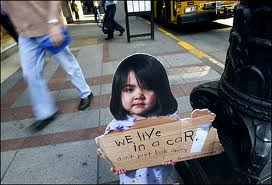 more efficient fuels. Support of basic research work is critical in this and other areas and leads to increased innovation and economic growth. Examples are plentiful—research produced the Internet and biotech industry, spawning huge upticks in economic growth. And this is something Americans excel at—thinking outside the box. Education will be required to retrain the work force and prepare and encourage our children with requisite skills and creative know how. In addition, infrastructure, a growing national concern, offers years of labor for out-of-work construction crews. We certainly don’t need an American version of ‘London Bridge is falling down.’ The Minneapolis bridge collapse in March was one too many.
Yes, Stiglitz says, we will need to rein in the banks, turn them back into the boring businesses they once were [they’re suppose to be serving us, not the other way around]. And we will need to seriously re-evaluate our tax policies, most of which favor the rich. But to solve the most critical problem—structural change—will require investing in our future, our own people. Private enterprise will not and cannot do that on a massive scale [I can hear Republicans wailing in unison].
FDR had World War II, spurring the necessary investment [spending] that launched the US into an unparalleled cycle of growth and prosperity. We are now faced with another war, a battle of ideology and political one-upmanship. Yet the solutions are real and within our grasp, Stiglitz suggests. I, for one, believe him.
Now it’s a matter of mustering the national will. We employed that fierce will during the Second World War; our survival and ultimate victory depended on it.
As it does once again.
Tuesday Reads: Targeting Citizens with Predator Drones while Failing to Protect and Nurture Children
Posted: December 13, 2011 Filed under: child sexual abuse, children, Crime, Domestic Policy, education, George W. Bush, hunger, income inequality, morning reads, physical abuse, poverty, psychology, public education, U.S. Economy, U.S. Politics | Tags: Air Force, Catherine Snow, cortisol, crime, Glenn Greenwald, Hollywood sexual abuse scandal, Jane Harmon, law enforcement, literacy, No Child Left Behind, nutrition, obesity, poverty and education, Predator drones, standardized testing, U.S. Customs, violence 62 Comments
Good Morning!! Yesterday Dakinikat wrote about predator drones being used by local law enforcement in North Dakota. According the the LA Times story Dakinikat referenced,
Michael C. Kostelnik, a retired Air Force general who heads the office that supervises the drones, said Predators are flown “in many areas around the country, not only for federal operators, but also for state and local law enforcement and emergency responders in times of crisis.” Yet Congress never approved the use of drones for this purpose.
…former Rep. Jane Harman (D-Venice), who sat on the House homeland security intelligence subcommittee at the time and served as its chairwoman from 2007 until early this year, said no one ever discussed using Predators to help local police serve warrants or do other basic work.
Using Predators for routine law enforcement without public debate or clear legal authority is a mistake, Harman said.
But the article makes clear that law enforcement types are slavering over the possibility of using the sophisticated surveillance technology offered by drones–and without a warrant.
Glenn Greenwald had more at his blog yesterday. He says that the so-called “approval” for the use of predator drones on U.S. soil came because Customs administrators included the words “interior law enforcement support” in their budget request! And since Congresspeople rarely read the bills they vote on, no one noticed. So now government agents can spy on us and track us whenever they want, apparently.
Greenwald:
Whatever else is true, the growing use of drones for an increasing range of uses on U.S. soil is incredibly consequential and potentially dangerous, for the reasons I outlined last week, and yet it is receiving very little Congressional, media or public attention. It’s just a creeping, under-the-radar change. Even former Congresswoman Harman — who never met a surveillance program she didn’t like and want to fund (until, that is, it was revealed that she herself had been subjected to covert eavesdropping as part of surveillance powers she once endorsed) — has serious concerns about this development: ”There is no question that this could become something that people will regret,” she told the LA Times. The revelation that a Predator drone has been used on U.S. soil this way warrants additional focus on this issue.
You’d better not be doing anything suspicious on your own property–like smoke a joint in the backyard or something. You could be spotted, raided, and thrown in jail in no time flat, all without a warrant.
Dakinikat sent me a link to this article at the NYT on the relationship between poverty and education: Class Matters. Why Won’t We Admit It?
No one seriously disputes the fact that students from disadvantaged households perform less well in school, on average, than their peers from more advantaged backgrounds. But rather than confront this fact of life head-on, our policy makers mistakenly continue to reason that, since they cannot change the backgrounds of students, they should focus on things they can control.
No Child Left Behind, President George W. Bush’s signature education law, did this by setting unrealistically high — and ultimately self-defeating — expectations for all schools. President Obama’s policies have concentrated on trying to make schools more “efficient” through means like judging teachers by their students’ test scores or encouraging competition by promoting the creation of charter schools. The proverbial story of the drunk looking for his keys under the lamppost comes to mind.
The Occupy movement has catalyzed rising anxiety over income inequality; we desperately need a similar reminder of the relationship between economic advantage and student performance.
As a developmental psychologist I can tell you there are tons of studies that show that socioeconomic status (SES) is related to many different variables. This is a fairly complex issue, because poor people are disadvantaged in so many ways. Poor families are more likely to have only one breadwinner–usually a mother–who is probably overwhelmed by stress and worry. That leaves mom with much less energy to spend talking to and reading to her children.
A researcher I know slightly, Catherine Snow of the Harvard School of Education, worked on a number of government-funded longitudinal studies that investigated this. The research showed that very young children who are talked to, encouraged to tell stories about things that happened to them, and are read to in an interactive way are better prepared for literacy and will perform better in school than children who don’t get those kinds of attention. Interestingly, they found that the best predictor of academic success is a child’s vocabulary.
Children in poor families may also be stressed by inadequate nutrition, abuse from stressed-out parents, and perhaps exposure to violence in their neighborhoods. This kind of stress leads to higher cortisol (stress hormone) levels, which in turn can cause all kinds of problems, including obesity.
Back to the NYT article:
The correlation has been abundantly documented, notably by the famous Coleman Report in 1966. New research by Sean F. Reardon of Stanford University traces the achievement gap between children from high- and low-income families over the last 50 years and finds that it now far exceeds the gap between white and black students.
Data from the National Assessment of Educational Progress show that more than 40 percent of the variation in average reading scores and 46 percent of the variation in average math scores across states is associated with variation in child poverty rates.
International research tells the same story. Results of the 2009 reading tests conducted by the Program for International Student Assessment show that, among 15-year-olds in the United States and the 13 countries whose students outperformed ours, students with lower economic and social status had far lower test scores than their more advantaged counterparts within every country. Can anyone credibly believe that the mediocre overall performance of American students on international tests is unrelated to the fact that one-fifth of American children live in poverty?
Why does the government ignore this research–much of which has been done with government funding? There has been no effort to deal with the source of the problem–poverty–just bullheaded efforts to force schools to meet unrealistic standards. The authors admit that many in the government want public schools to fail so that education can be privatized and turned into a profit-making corporate enterprise.
The authors offer some suggestions, but since none of our elected officials seems to want to deal with the problem of increasing poverty among children in this country, their ideas come off sounding pretty weak.
This article really hit home with me, because I’ve been thinking a lot lately about why America as a whole doesn’t seem to care about children. I’ve been trying to write about post about it, but have struggled to put my ideas into words. I might as well just put some of it down here. My thoughts were not only about education, but also about the problems of protecting children from abuse and exploitation.
Children are our future. It’s a cliche because it’s true. We spend billions of dollars on the ridiculous and dangerous Department of “Homeland Security,” and we do very little at the federal level to protect children from poverty (one in four young children in the U.S. live in poverty), violence, abuse, and exploitation.
We are destroying our system of public education by requiring standardized tests instead of teaching children critical thinking. We encourage profit-making charter schools instead of providing more support for public schools.
In my fantasy future government, the President would have a cabinet level department devoted exclusively to children’s issues. This department would focus on designing the very best possible educational system for young children. There would be a strong focus on early childhood education, and especially on educating parents about the best ways to foster future academic success for their children, based on serious research. The department would work with the NIH and NSF to provide research grants to study these educational issues.
In addition, the department could develop ways to deal with the rampant abuse of children–physical, emotional, and sexual–that takes place in this country. The need for this is obvious if you read the news regularly. Children are beaten, raped, and murdered in their own homes every day. They are sexually abused in schools and in organized activities by people who should be protecting and guiding them. And people who hurt and kill children generally receive lighter sentences than those who prey on adults.
What has prompted me to think about these issues is not only the recent high-profile sexual abuse scandal at Penn State, but the stories that have been breaking recently about child sexual abuse in the Hollywood entertainment industry.
Two men who worked with child actors were recently arrested, Jason James Murphy, who worked on the well-received movie Super-8, and Martin Weiss, a talent agent.
The arrests have led a number of former child actors to come forward and talk about being abused as children. Reuters covered the story last week.
First, it was the Catholic Church. Then Penn State. Now, a new child-abuse scandal in Hollywood is raising questions over the safety of minors in the entertainment business and sparking calls for new child-labor regulations.
Last week Martin Weiss, a longtime manager of young talent, was arrested on suspicion of child molestation after an 18-year-old former client told police he had been abused by Weiss 30 to 40 times from 2005 to 2008.
Weiss’ arrest came just weeks after it was discovered that a convicted child molester and registered sex offender under the name Jason James Murphy was working in Hollywood and helping cast children for movie roles.
TheWrap contacted a wide array of professionals and found a mix of surprise, and those that say that this type of abuse is an ongoing concern, pointing to abuse allegations over the years by actors such as the late Corey Haim and Todd Bridges.
Other former child actors who have talked openly about the problem are Paul Peterson who appeared on The Donna Reed Show, Allison Arngrim from Little House on the Prairie, and Corey Feldman, who appeared on Nightline in August to talk about his own abuse.
“I can tell you that the No. 1 problem in Hollywood was and is and always will be pedophilia. That’s the biggest problem for children in this industry. … It’s the big secret,” Feldman said.
The “casting couch,” which is the old Hollywood reference to actors being expected to offer sex for roles, applied to children, Feldman said. “Oh, yeah. Not in the same way. It’s all done under the radar,” he said.
“I was surrounded by [pedophiles] when I was 14 years old. … Didn’t even know it. It wasn’t until I was old enough to realize what they were and what they wanted … till I went, Oh, my God. They were everywhere,” Feldman, 40, said.
The trauma of pedophilia contributed to the 2010 death of his closest friend and “The Lost Boys” co-star, Corey Haim, Feldman said.
“There’s one person to blame in the death of Corey Haim. And that person happens to be a Hollywood mogul. And that person needs to be exposed, but, unfortunately, I can’t be the one to do it,” Feldman said, adding that he, too, had been sexually abused by men in show business.
This Fox News article gets a little graphic, so skip over it if you prefer.
Another child star from an earlier era agrees that Hollywood has long had a problem with pedophilia. “When I watched that interview, a whole series of names and faces from my history went zooming through my head,” Paul Peterson, 66, star of The Donna Reed Show, a sitcom popular in the 1950s and 60s, and president of A Minor Consideration, tells FOXNews.com. “Some of these people, who I know very well, are still in the game.”
“This has been going on for a very long time,” concurs former “Little House on the Prairie” star Alison Arngrim. “It was the gossip back in the ‘80s. People said, ‘Oh yeah, the Coreys, everyone’s had them.’ People talked about it like it was not a big deal.”
Arngrim, 49, was referring to Feldman and his co-star in “The Lost Boys,” Corey Haim, who died in March 2010 after years of drug abuse.
“I literally heard that they were ‘passed around,’” Arngrim said. “The word was that they were given drugs and being used for sex. It was awful – these were kids, they weren’t 18 yet. There were all sorts of stories about everyone from their, quote, ‘set guardians’ on down that these two had been sexually abused and were totally being corrupted in every possible way.”
Yes, Virginia, child sexual abuse is common in every strata of our society. It’s not rare, and it’s time we got serious about dealing with it. If we had a Cabinet department of children’s issues, we could address the problem with public education programs. It worked for smoking and littering–why not try it with child abuse?
The department could request that the media show public service announcements to educate parents about nonviolent ways of disciplining their children and about the dangers of hitting or otherwise abusing children. I firmly believe that child abuse is the root cause of many of society’s ills–including domestic abuse, pedophilia, rape, murder, and serial murder. The majority of abused children don’t grow up to be perpetrators, but they often turn their anger on themselves, becoming depressed or suicidal or self-medicating with drugs and alcohol.
High profile cases like the Penn State and Hollywood casting scandal can often spur changes in societal attitudes. We should seize upon these issues to push Federal, state, and local governments to take positive action to improve the lives of American children.
Now I’ve rambled on too long and haven’t covered many stories. I’ll have to leave it to you to post what you’ve been reading and blogging about in the comments. If you made it this far, thanks for reading my somewhat incoherent thoughts.

 peej
peej Carissa
 bostonboomer
 dakinikat
 ecocatwoman
 mablue2
 Mama Lopez
 peggysue22
 quixote
 skydancingguestblogger
 Mona (aka Wonk the Vote)



 Sky Dancing
Recent Comments