
The Little Engine That Could
Posted: November 1, 2011 Filed under: #Occupy and We are the 99 percent!, Banksters, commercial banking, Corporate Crime, Global Financial Crisis, income inequality, U.S. Economy 10 CommentsThere’s a fascinating story that’s been brewing right under the radar that is beginning to sprout legs. And I hope continues and receives a larger audience. It’s the battle between Goldman Sachs [and by association the other TBTF’s] and the Lower East Side People’s Credit Union in NYC. Why? Because it’s the perfect metaphor for what’s been going on in the US since deregulation turned our financial system into an iron-fisted bully.
Occupy Wall St. [OWS] as everyone recalls was ignored at first, ridiculed and dismissed, and now has become a fixture and swirl point of political discussion. Conversations are changing. People are beginning to pay attention in both positive and negative ways. OWS started to receive donations from across the country because many Americans are simply fed up with what they see as the gross corruption of money and power on our political system.
And so the Movement that was doomed at the start, who railed against the Big Banks suddenly found itself [by some accounts] with over $300,000. What to do? They needed a bank. And where did they go? To the Lower East Side People’s Credit Union, servicing the City’s low income citizens, primarily Latinos. The People’s Credit Union decided to hold an honorary benefit for their generous depositor, the Occupy group.
And then . . . Boom!
Goldman Sachs had a near hissy fit. Why? Because Goldman had given People’s Credit $5000. This was not a gift, not a donation of goodwill but a drop of cash they are required under the TARP agreement to give through the Community Reinvestment Act [CRA]. They are legally required to give this money out to the community under the original deal. But Goldman in their infinite wisdom and with hackles up over any mention of OWS has decided to use this required reinvestment as a hammer to exert their will. Goldman Sachs has demanded their $5000 back. And also, I would suggest, they wish to set an example: You play it our way or you don’t play at all. It’s been reported the heat has been turned up with a nasty message to People’s:
“You will never get a dime from another bank again.”
Democracy Now has been following this story. A reporter by the name of Greg Palast has done the investigative work from the start and has tried to get Goldman Sachs to give their side of the story. Quelle surprise! No response. I encourage you to watch the clip from Democracy Now. If it doesn’t get your blood boiling then I want to know what mega-tranquilizers you’re on.
This is what Occupy is all about. This is what must change.
The Clash of the Titans: Ideology vs. History
Posted: October 29, 2011 Filed under: #Occupy and We are the 99 percent!, academia, Banksters, Corporate Crime, Economy, financial institutions, Global Financial Crisis 19 Comments
Thursday night I caught an amazing piece of political dialogue on the Anderson Cooper show between Peter Schiff and Cornell West. What an odd pairing!
Peter Schiff, as many will recall, ran an unsuccessful Connecticut senatorial primary bid in 2010. He’s described as an adherent of the Austrian School of Economics, from the same branch Ron Paul falls: libertarian, believer in free market fundamentalism–unchain capitalism and all things will fall from Heaven. Schiff is currently the CEO of Euro-Pacific Capital, Inc. and Euro-Pacific Precious Metals.
In contrast, Cornell West is an academic, sometimes referred to as a ‘public intellectual,’ a professor at Princeton where he teaches from the Center for African American Studies and the Department of Religion. He has been a consistent voice for the underclass, the working poor and speaks to the effects of race, gender and class in American society.
Though both men have engaged the Occupy Wall St. [OWS] movement, their approaches could not be more different. Peter Schiff went to Zuccotti Park with a sign–I am the 1%–presumably to start a conversation with the protesters. Hummmm. Mr. Schiff’s definition of ‘conversing’ must be different than mine. From the clip below? I’d use the word confrontation.
Cornell West on the other hand has been arrested twice during the Occupy encampment—once in DC before the Supreme Court protesting the Citizens United decision, where corporate political funding was equated with free speech, using the precedent that corporations = personhood. A decision, I might add that I and many others view as horrifically destructive, only adding to the problem of money swamping our electoral process. Dr. West was arrested for the terrifying crime of holding a sign [a no-no on the steps of Supreme Court] which read: Poverty is the Greatest Violence of All. On a second occasion, Dr. West was arrested in Harlem for marching with other Occupy members in front of the 28th Precinct, protesting the NYPD’s practice of ‘stop and frisk,’ which allows police to search citizens at will, a procedure that involves primarily people of color. Reportedly 600,000 stops were made in 2010, with 7% of those stops resulting in arrests.
So, we have two men, both educated, articulate and successful, both engaging OWS from 180 degree positions. Peter Schiff takes the view that unfettered capitalism will save the world as opposed to West’s humanistic viewpoint that unregulated capitalism has brought the world to its knees and threatens to scrap the very safety nets and programs that allow people to better themselves [education, for instance] and escape the violent confines that poverty and hopelessness exact.
We can argue these principles till the cows come home but a debater makes a serious mistake when they rewrite history to support their ideology, willfully fabricating, tweaking the facts to make their points more relevant and sound.
Peter Schiff, to his shame, pulled out all the old tricks like a fumbling magician who has no talent for sleight of hand. He like so many others who deify free market fundamentalism come off sounding remarkably reasonable, even simpatico with many of the concerns of average Americans. But they always slip up, only to expose the trickster; those disappearing cards are simply stuck up their sleeves.
In Zuccotti Park, Schiff claims he pays ‘almost 50% of his income in taxes’ under the current tax system. 50%. No one in the top 1% pays anything close to 50% in personal income tax and if they did then their accountant deserves to be marched to the wall and executed, toute suite. The rich have all sorts of tax breaks, exemptions, loopholes and shelters that average working people can only dream of. The claim is sheer nonsense by those who, in their heart of hearts, don’t wish to pay any tax at all. The same is true of claiming they want to return to the ‘golden’ 1950s when things were on an upswing and America was the most productive nation in the world [as Schiff remarks, as if it were a 1000 years ago]. And the top marginal tax rate was? 91%.
Yes, records were actually kept in the 1950s and we can look up false statements! Maybe Schiff really meant the roaring mid-20s to 1931 were the rate was 25%, and then BOOM! Depression time.
I must say I enjoyed the explanation of Wall St. greed as a by-product of Government manipulation. This is a turn on that old Flip Wilson skit line, But . . . But . . .The Devil Made Me Do it.
In addition, there is the sweet comment—“The regulation we want is the market. Markets regulate themselves.” This makes a great sound byte but is nothing more than the same garbage philosophy that brought us to this moment of economic woe, something that even Alan Greenspan, former Fed chairman finally admitted in hound-dog fashion: Did. Not. Work.
But Schiff’s greatest leap into fantasy is saved for the CNN segment I initially mentioned, where he claims that capitalism, free-market capitalism alone led to changes in the workplace: Child Labor Laws, Worker’s Safety laws, the 40-hour work week [see at the 8 minute mark].
I give Cornell West props for not coming through the screen with that claim. I guess Schiff never heard of the Radium Girls, the Triangle Shirtwaist Factory Fire, the Battle of Blair Mountain or the entire Labor Movement for that matter. The unregulated capitalists of that long ago era were not willing to give an inch, let alone provide workers with anything amounting to change. Justice was wrenched out through struggle, protest, suffering and deprivation. Justice was long in coming but come it did.
West’s suggestion that he and Schiff need to sit down over coffee and cognac is way too easy and polite. West would be advised to bring a straight jacket in Peter Schiff’s size for safety purposes. Or march him to church to beg forgiveness for fibbing [also known as spreading disinformation] to the public.
There’s a quote attributed to the late Daniel Moynihan:
“You’re entitled to your own opinion, but you’re not entitled to your own facts.”
In the Clash of the Titans, history always wins.
Chickens coming Home to Roost
Posted: October 18, 2011 Filed under: Austerity, Global Financial Crisis | Tags: Bank loan loss reserves, Defaults, deficits, fiscal policy 6 Comments What happens to your bank when you overlook due diligence in lending, borrow money from the Fed at near zero interest rates but lend it out to very few people at 10 to 20 times the inflation rate, slack off on renegotiating loans, charge customers fees on everything, and engage in practices that basically drain resources from your clientele? Well, your customers eventually suffer so much economic destress they start bringing you down with them by defaulting. Big US banks are suffering because their customers are suffering. Kind’ve Karmic isn’t it? Well, it’s karmic in the sense that that’s what you get from engaging in really short-sighted bad business practices made to enrich your executives and prop your stock prices up over actually doing your core business intelligently.
Fears about the health of US consumer balance sheets grew on Monday as Citigroup and Wells Fargo joined JPMorgan Chase in reporting new signs that homeowners and credit-card borrowers are falling behind on their payments.
The banks’ third-quarter results were hit by expected declines in investment banking, reflecting turbulence in global markets. But the reports also revealed weakness in the consumer side of their businesses – with mortgage delinquency numbers suggesting that record low mortgage rates and government loan modification programmes are failing to help a large swathe of homeowners.
Overall revenues fell 8 per cent at Citigroup year-on-year and 6 per cent at Wells, sending their shares down 1.7 per cent and 8.4 per cent, respectively. The S&P 500 index fell 1.9 per cent.
Wells said delinquencies of more than 90 days in its main portfolio of consumer loans – including mortgages and credit cards – rose 4 per cent to $1.5bn, the first increase since 2009. Early stage delinquencies in its retail business remained flat at 6.13 per cent after falling for three quarters. The bank increased its provision for consumer-banking losses for the first time in two years.
“The economic recovery has been more sluggish and uneven than anyone anticipated,” said John Stumpf, Wells chief executive
Federal policy that emphasizes bailing out failing businesses while leaving their customers high and dry with extremely high unemployment rates and costs of borrowing and living is having ongoing effects. Here’s some more info on banks beefing up their loan loss reserves from that FT article.
JPMorgan last week increased its provision for losses on consumer loans to $2.3bn from $1.9bn in the previous quarter. JPMorgan said delinquencies on goverment-insured mortgages hit $9.5bn, up from $9.1bn in the second quarter and $9.2bn a year ago.
“The residential mortgage problems are unprecedented,” said Gerard Cassidy, analyst at RBC Capital. “The rate of improvement in the delinquencies has slowed down dramatically in the last two years and even over the more recent quarters.” He said the problems were no longer in “subprime” but “prime” mortgages.
Capital One, among the top six US card issuers, reported rising 30-day delinquencies in June and July. “Defaults on credit card debt are certain to rise from here,” said James Friedman at Susquehanna Capital Group.
So, what’s not to be surprised about given that the unemployment rate has been sitting around 9% now for three years in a row? All of these really bad metrics on consumer finances should be signalling policymakers to act. But, that’s not happening. Well, not unless you count all the finger pointing at Ben Bernanke. I am continually flummoxed by the inability of every one in policy circles to get the basic economics right. The obsession with austerity is killing this country and it’s doing the same in others. The data just screams ongoing murder.
Here’s some thoughts on the absolute disconnect of policy from reality from Josh Bivens at the Economic Policy Institute Blog who also can’t figure out why nuts and bolts economics has suddenly been termed radical. If we’d have done something differently about three years ago, these statistics that indicate horrible stress on US households could’ve been dealt with by now. It’s odd that the very policymakers that were so concerned about Banks and Businesses have no problem slowly killing their customers.
There is nothing inherent in the economics of financial crises that makes slow recovery inevitable – they just require that policymakers figure out how to engineer more spending in their wake, same as in response to all other recessions.
Rather, the real problem they pose to policymakers is that engineering such spending increases in the wake of financial crises often requires policy responses that seem unorthodox or radical relative to the very narrow range of macroeconomic stabilization tools that enjoy support across the ideological spectrum. To put this more simply – they require policymakers do more than watch the Federal Reserve pull down short-term interest rates. For decades, all recession-fighting was outsourced to the Fed’s control of short-term “policy” interest rates – this despite the fact that in the U.S. this recession-fighting tool hasn’t actually been all that successful since the 1980s (see Table 2 in this paper).
The best response to a recession that is either so deep or so infected by debt-overhangs that conventional monetary policy is not sufficient, is simply to engage in lots of fiscal support – think the American Recovery and Reinvestment Act (ARRA) – but (as Ezra notes) much, much bigger in the case of the Great Recession.
But, this kind of discretionary fiscal policy response to recession-fighting (and jobless-recovery fighting) had fallen deeply out of favor in the same decades that saw increasing reliance on conventional monetary policy[1]. In fact, advocating fiscal policy that was up to the task of providing a full recovery in the wake of crises that defanged conventional monetary policy somewhere along the way got labeled radical, rather than simply nuts-and-bolts economics.
Further, this rejection of discretionary fiscal policy was done on very thin analytical reeds – essentially the fear was that it took too long to debate, pass, and see an effect from fiscal policy – and that if the recession was “missed” in real-time by policymakers, we would end up providing lots of fiscal support to an already-recovered economy – and might even cause economic overheating that would lead to runaway inflation and interest rate spikes.
This fear led to the strange mantra in the debate over fiscal stimulus in 2008 that policy had to be targeted, temporary and timely – which basically ruled out most things but tax cuts. But, given that the last three recessions have seen extraordinarily sluggish return to job-creation in their wake, this timely obsession was clearly misplaced (and, plenty argued so in real-time).
What we’ve been experiencing the last three years is the fall out of a financial crisis exacerbated by extremely bad policy. It’s easy to pin the blame on the recalcitrant republicans who are willing to tank all of us to regain the White House, but there’s definitely some blame to pin on the Obama White House. It’s clear that the White House simply did not manage the situation well at all. The question that keeps me up nights is this. Has the Obama administration learned its lessons? I’m not certain on that. But, I am certain that if some one like a Herman Cain gets in, there will be more hell to pay in terms of inexperience and bad policy than if we muddle through with more Obama incompetency. I’m not sure if Romney will be about as inept as we’ve seen the current occupant or will be lead to worse policies of the sort put forth by the Cains and Bachmanns.
Bivens wonders who the Democrats are that suddenly decided that that nothing could be done about recessions except to dither and hope for the best efforts by the FED. Hoping for miracles from the Fed at the zero bound is delusional. There is no historical or theoretical argument for any of this silly behavior. We continue to see the deficit hawk arguments on all sides to the point that one can only assume that there’s very little difference between Republican and Democratic orthodoxy on voodoo economics any more. This includes shilling for useless tax cuts.
But, I would also want to make sure to include much of the policymaking apparatus of the Democratic Party, who became far too enamored of the unalloyed virtues of deficit-cutting in the past two decades. The excellent labor market performance of the late 1990s, for example, is labeled a pure result rather than an important cause of substantially lower budget deficits during that time. And the regressive and stupid tax cuts pursued under the Bush Administration were generally not fought on the grounds that they were regressive and stupid, but that they would lead to intolerably large deficits – deficits so large they might even lead to Greek-like financial crises when, in fact, deficits as a share of GDP averaged less than 2 percent in 2006 and 2007. To be clear – the Bush tax cuts were expensive as well as regressive and stupid, and letting them (or at the very least the most regressive set of them) expire would be a real policy victory, freeing up public resources for much more valuable ends. But they did not cause deficits in the 2000s to reach terrifying levels.
Sadly, this same Democratic policy apparatus seems to be repeating many of these mistakes, by continually insisting that aggressive maneuvers to help alleviate the jobs-crisis must be done simultaneously with efforts to close what are actually pretty non-scary medium term deficits. Would the “very-big-stimulus-now-cum-progressive-measures-to-bring-medium/long-term-spending-and-revenues -in-balance-when-we-get-back-to-full-employment” plan be the best of all worlds? Sure.
So, what changed between the Reagan legacy of huge deficits “as far as the eye can see” or the “deficits don’t matter” mantra of old Dick Cheney to the mantra now that only deficits matter? What’s caused this idea that you can spend hugely on unjustifiable wars, bailing out failing banks and businesses, and giving tax cuts and credits to every one under the sun with no real rationale but you have to say no now to stopping macroeconomic seppuku? To a certain extent, we have Robert Rubin to thank for that. Many of Rubin’s acolytes are still planted in the Treasury and were sent to the Obama White House early on. Here’s a brief bit on that from an Allan Blinder Working Paper at Princeton that gives a good overview on how our approach to fiscal policy went completely off the track.
The fact that the Clinton boom started almost immediately after Congress passed a budget reduction package gave rise to some rethinking—some of it serious, some of it muddled—of even the sign of the fiscal-policy multiplier. Among politicians and media types, the notion that raising taxes and/or cutting spending would expand (rather than contract) the economy took hold rapidly and uncritically—with seemingly little thought about exactly how this was supposed to happen. Quicker than you can say “Robert Rubin,” the idea that reducing the budget deficit (or increasing the surplus) is the way to “grow” the U.S. economy—even in the short run—came to dominate thinking in Washington. This thinking was, of course, profoundly anti-Keynesian.
Is this why no longer seem to be able to get our act together and just do the basic right thing when it comes to helping US consumers deal with the Great Recession and its ongoing aftermath? That would seem feasible except that right after 2001, George W Bush and and Allan Greenspan went right back on the stimulation on steroids policy of previous administrations. Both parties want happily along with that. So, I continue not to get it and the policy continues not to get it right and if you look measurements of economic health like defaults and unemployment, it’s pretty clear that US Households aren’t going to get any thing either. It’s no wonder people are starting to take to the streets.
Is this a Naughty list that will get the Nice Treatment?
Posted: October 16, 2011 Filed under: Economy, financial institutions, Global Financial Crisis | Tags: G-20, Global TARP, shadow banking system, Systemically risky banks 10 Comments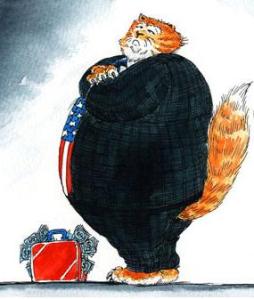 Okay, this is confusing me. What exact policies are implied from being on the G-20 list of “50 Systemically Important Banks”? It appears to me that you could be subjected to capital injections (i.e. free taxpayer money) for being so big you could bring down the global economy. No wonder Occupy is going global.
Group of 20 governments are considering naming as many as 50 banks as systemically important to the global economy and in need of extra capital, two officials from G-20 nations said.
The list, drawn up by Financial Stability Board Chairman Mario Draghi, will be published in time for a G-20 leaders meeting in Cannes, France, on Nov. 3-4, said the officials, who declined to be identified because the discussions are private. Regulators have said the banks named will be forced to take on more capital.
Regulators are at loggerheads with some institutions over the additional capital rules, with lenders arguing the requirements may harm the world’s economic recovery. Jamie Dimon, chief executive officer of JPMorgan Chase & Co. (JPM), and Bank of America Corp. (BAC) CEO Brian T. Moynihan are among bankers who have suggested this year that the new rules will constrain lending and hurt growth.
G-20 finance ministers and central bankers meeting in Paris yesterday discussed the standards that will be applied when compiling the list of systemic banks.
Twenty-nine to 40 banks could be designated depending on the potential impact on financial markets, according to one person familiar with the matter. Two officials from G-20 nations said the list could even be expanded to about 50 institutions. The regulators are also contemplating including the institutions in categories according to their ability to absorb losses.
So, the G-20 finance ministers “endorsed a framework to reduce the risks posed by systemically important institutions through strengthened supervision, a cross-border resolution plan and additional capital requirements”. No wonder occupy is going global. It seems bankers are draining funds from countries everywhere because they keep losing their mittens in the world’s largest gambling casinos. So, if you’ve got a bunch of what looks like really bad institutions, why-oh-why do you just simply give them more of your treasury? Good thing these guys went for that monopoly power! Now they can bully just about any one with a threat of bringing down the global economy. The World Bank and the IMF don’t even let entire countries do that!
The FSB is assessing how systemically important institutions are on the basis on five broad categories: size, interconnectedness, lack of substitutability, global activity and complexity.
Yup. The bigger you are and the more difficult you are to figure out, then it looks like you win a prize! Since when are we supposed to reward the creation of moral hazard and information asymmetry? The government is supposed to regulate to clear that up, not provide cash infusions to the worst culprits in the market. Oh, let me rephrase that because were talking about TWENTY governments doing that. The leading candidate to head all this up is the head of the Bank of Cananda–Canada’s version of the Federal Reserve Bank–who just happens to be (yes, wait for it, you know it’s coming)a former employee of Goldman Sachs.
Here’s the sole sentence in the entire article at Bloomberg that indicates there may some be some push for some change. The FSB is the Financial Stability Board. They are in the process of doing a number of things under the jurisdiction of the G-20 group including derivatives reform.
The FSB suggested assessing banks’ involvement with shadow banks, reform of money-market funds, securitization regulation, supervision with an emphasis on risk and scale, and regulation of lending and repo markets, the official said.
Obviously, the soverign debt crisis of the Greece, Portugal, Spain, and Ireland are foremost on every one’s mind. The deals are being worked out now to try to head off the potential calamity. I have to wonder if this is going to turn into a world wide TARP plan where we all foot the bill and the banks continue on their merry way with a lot of public funds and mostly symbolic regulation and over sight. I guess we’ll see. This inquiring mind really wants to know. Now, where’s the next G-20 meeting location and the nearest pitchfork store?
Monday Morning Reads
Posted: October 10, 2011 Filed under: Global Financial Crisis, Marriage Equality, morning reads, Surreality, U.S. Military, U.S. Politics, unemployment, Women's Rights | Tags: Anita Hill, Crackerbox Palace, DOMA, George Harrison, Indigenous People's Day, National Coming Out Day, Native American Day, Occupy, Paul Krugman, plutocracy, Subprime mortgage crisis and the CRA, Taxes and poor people, technology, the Great Depression 25 Comments Good Morning!
and Happy Native Americans’ Day!
The second Monday of October annually marks Columbus Day in many parts the United States but not all states or region follow this observance. Instead, they celebrate other events on the day. For example, South Dakota’s official holiday on this date is Native Americans’ Day (also known as Native American Day), while people in Berkeley, California, celebrate Indigenous People’s Day.
 I think it’s a great idea to switch the current federal holiday out to a celebration of indigenous cultures or maybe find a better thing to celebrate!
BTW, National Coming Out Day is Tomorrow. That’s something to remember as you read that Speaker Boehner is threatening to withold funds from the Justice Department if that don’t vigorously enforce DOMA. There he goes again!!! The Republican Jobs Agenda is just always topmost on the priority list.
“We’re going to take the money away from the Justice Department, who’s supposed to enforce it, and we’ll use it to enforce the law,” Boehner told the conservative Value Voters Summit.
Boehner is engaged in an ongoing dispute with Attorney General Eric Holder over his refusal to defend in court the Defense of Marriage Act. President Obama has taken the stance that the law is unconstitutional. While the Justice Department usually defends laws passed by Congress against legal challenges, the Obama administration has stopped defending DOMA while Democrats work to repeal the law.
In March, Boehner announced that if Obama wouldn’t defend DOMA, he would, hiring a private law firm to defend it on behalf of the House.
“As the Speaker of the House, I have a constitutional responsibility. I’ve raised my hand to uphold and defend the Constitution of the United States and the laws of our country,” Boehner said Friday.
You know, he’s all about saving those taxpayer dollars too. True Story.
Here’s a movement I want to join if this California Republican Nutter would only give me the location where they’re taking on volunteers. And yes, it’s a REAL tweet.
@RepJackKimble After Value Voters I am more convinced than ever about the radical atheist agenda to secularize Columbus Day
Okay, I’d like to use the next bit of space to clear up a few right wing memes with actual research. I know, you’re shocked, it’s so unlike me to do so. First, while Fannie and Freddie exacerbated the meltdown and behaved as irresponsibly as any Wall Streeter, there is absolutely no connection between the meltdown and the Community Reinvestment Act. I have never been able to figure out how folks jumped the shark to make this connection, but it happened. I’ll give you the bottom line from the abstract but if you want to chase after the econometrics, feel free to follow the link.
In this paper we examine more directly whether these programs were associated with worse outcomes in the mortgage market, including delinquency rates and measures of loan quality.
We rely on two empirical approaches. In the first approach, which focuses on the CRA, we conjecture that historical legacies create significant variations in the lenders that serve otherwise comparable neighborhoods. Because not all lenders are subject to the CRA, this creates a quasi-natural experiment of the CRA’s effect. We test this conjecture by examining whether neighborhoods that have been disproportionally served by CRA-covered institutions historically experienced worse outcomes. The second approach takes advantage of the fact that both the CRA and GSE goals rely on clearly defined geographic areas to determine which loans are favored by the regulations. Using a regression discontinuity approach, our tests compare the marginal areas just above and below the thresholds that define eligibility, where any effect of the CRA or GSE goals should be clearest.
We find little evidence that either the CRA or the GSE goals played a significant role in the subprime crisis. Our lender tests indicate that areas disproportionately served by lenders covered by the CRA experienced lower delinquency rates and less risky lending. Similarly, the threshold tests show no evidence that either program had a significantly negative effect on outcomes.
Okay, one more meme to shoot down. You know how all those Republican presidential wannabes are trotting around saying about half of Americans don’t pay taxes and the rich are still burdened? I’ve shot down some of that argument before, but here’s some further details. I’m quoting from the executive summary and not the study itself. Again, you can go into the methodology if you want here.
A recent finding by Congress’ Joint Committee on Taxation that 51 percent of households owed no federal income tax in 2009 [1] is being used to advance the argument that low- and moderate-income families do not pay sufficient taxes. Apart from the fact that most of those who make this argument also call for maintaining or increasing all of the tax cuts of recent years for people at the top of the income scale, the 51 percent figure, its significance, and its policy implications are widely misunderstood.
- The 51 percent figure is an anomaly that reflects the unique circumstances of 2009, when the recession greatly swelled the number of Americans with low incomes and when temporary tax cuts created by the 2009 Recovery Act — including the “Making Work Pay” tax credit and an exclusion from tax of the first $2,400 in unemployment benefits — were in effect. Together, these developments removed millions of Americans from the federal income tax rolls. Both of these temporary tax measures have since expired.
In a more typical year, 35 percent to 40 percent of households owe no federal income tax. In 2007, the figure was 37.9 percent. [2]- The 51 percent figure covers only the federal income tax and ignores the substantial amounts of other federal taxes — especially the payroll tax — that many of these households pay . As a result, it greatly overstates the share of households that do not pay any federal taxes. Data from the Urban Institute-Brookings Tax Policy Center show only about 14 percent of households paid neither federal income tax nor payroll tax in 2009, despite the high unemployment and temporary tax cuts that marked that year.[3]
- This percentage would be even lower if federal excise taxes on gasoline and other items were taken into account.
- Most of the people who pay neither federal income tax nor payroll taxes are low-income people who are elderly, unable to work due to a serious disability, or students, most of whom subsequently become taxpayers. (In a year like 2009, this group also includes a significant number of people who have been unemployed the entire year and cannot find work.)
- Moreover, low-income households as a whole do, in fact, pay federal taxes. Congressional Budget Office data show that the poorest fifth of households as a group paid an average of 4 percent of their incomes in federal taxes in 2007 (the latest year for which these data are available), not an insignificant amount given how modest these households’ incomes are — the poorest fifth of households had average income of $18,400 in 2007. [4] The next-to-the bottom fifth — those with incomes between $20,500 and $34,300 in 2007 — paid an average of 10 percent of their incomes in federal taxes.
- Even these figures understate low-income households’ total tax burden, because these households also pay substantial state and local taxes. Data from the Institute on Taxation and Economic Policy show that the poorest fifth of households paid a stunning 12.3 percent of their incomes in state and local taxes in 2010.[5]
- When all federal, state, and local taxes are taken into account,the bottom fifth of households paid 16.3 percent of their incomes in taxes, on average, in 2010. The second-poorest fifth paid 20.7 percent. [6]
I know it’s statistics heavy, but some times that’s the best way to see what is actually going on. Right wing memes seem to thrive on taking things completely out of context and this one about tax dodging poor people is a doozy. See exactly how many taxes that get paid that weren’t counted in that famous figure which is an anomaly as it is.
Here’s an interesting article at NYT by David Leonhardt on how today’s economy makes the Great Depression look like the halcyon days.
Still, the reasons for concern today are serious. Even before the financial crisis began, the American economy was not healthy. Job growth was so weak during the economic expansion from 2001 to 2007 that employment failed to keep pace with the growing population, and the share of working adults declined. For the average person with a job, income growth barely exceeded inflation.
The closest thing to a unified explanation for these problems is a mirror image of what made the 1930s so important. Then, the United States was vastly increasing its productive capacity, as Mr. Field argued in his recent book, “A Great Leap Forward.” Partly because the Depression was eliminating inefficiencies but mostly because of the emergence of new technologies, the economy was adding muscle and shedding fat. Those changes, combined with the vast industrialization for World War II, made possible the postwar boom.
In recent years, on the other hand, the economy has not done an especially good job of building its productive capacity. Yes, innovations like the iPad and Twitter have altered daily life. And, yes, companies have figured out how to produce just as many goods and services with fewer workers. But the country has not developed any major new industries that employ large and growing numbers of workers.
There is no contemporary version of the 1870s railroads, the 1920s auto industry or even the 1990s Internet sector. Total economic output over the last decade, as measured by the gross domestic product, has grown more slowly than in any 10-year period during the 1950s, ’60s, ’70s, ’80s or ’90s.
Perhaps the most important reason, beyond the financial crisis, is the overall skill level of the work force. The United States is the only rich country in the world that has not substantially increased the share of young adults with the equivalent of a bachelor’s degree over the past three decades. Some less technical measures of human capital, like the percentage of children living with two parents, have deteriorated. The country has also chosen not to welcome many scientists and entrepreneurs who would like to move here.
I’m still of the opinion that we should hand out citizenship to any of our highly skill foreign students and do everything we can to keep them here. I have a feeling I’m in the minority on that opinion, however.
If you want to do some time tripping to a really upsetting period of history for women, here’s The Nation on The Legacy of Anita Hill. We’re now stuck with this total jerk on SCOTUS because of people like Joe Biden. I’ll never forget one of those senators that let Clarence Thomas get away with it. They hid the women that could verify her stories and put her squarely in the worst position possible. She handled it with dignity and we all lost.
Anita Hill remains an icon to whom subsequent generations are rightfully indebted. At the same time, she has not remained trapped by her own symbolism or frozen in time. It is sometimes forgotten that she is a respected scholar of contract jurisprudence, commercial law and education policy. She is a prolific author, publishing numerous law review articles, essays, editorials and books. Today, Hill is a professor of social policy, law and women’s studies at Brandeis University. Much of her most recent research has been on the housing market, and her most recent book, published this month, is Reimagining Equality: Stories of Gender, Race, and Finding Home.
It is ironic that the full substance of Hill’s remarkable intellectual presence remains so overshadowed by those fleeting, if powerful, moments of her Senate testimony. If the larger accomplishments of her life aren’t quite as iconic as that confrontation with Clarence Thomas, they nonetheless merit attention by feminists and scholars alike. To begin with, Hill is a remarkably elegant and accessible writer. For those who wish to apprehend the gravitas of her intelligence and dignity, Reimagining Equality would be a good place to start.
Krugman gets the Occupy protestors and has some delightful comments up on the Panic of the Plutocrats. He eloquently lays out the hype coming from the Cantors and the Bloombergs as well as CNBC and Fox that paints every one upset with their behavior as Leninist. The descriptions are a hoot but here’s the meat.
The way to understand all of this is to realize that it’s part of a broader syndrome, in which wealthy Americans who benefit hugely from a system rigged in their favor react with hysteria to anyone who points out just how rigged the system is.
Last year, you may recall, a number of financial-industry barons went wild over very mild criticism from President Obama. They denounced Mr. Obama as being almost a socialist for endorsing the so-called Volcker rule, which would simply prohibit banks backed by federal guarantees from engaging in risky speculation. And as for their reaction to proposals to close a loophole that lets some of them pay remarkably low taxes — well, Stephen Schwarzman, chairman of the Blackstone Group, compared it to Hitler’s invasion of Poland.
And then there’s the campaign of character assassination against Elizabeth Warren, the financial reformer now running for the Senate in Massachusetts. Not long ago a YouTube video of Ms. Warren making an eloquent, down-to-earth case for taxes on the rich went viral. Nothing about what she said was radical — it was no more than a modern riff on Oliver Wendell Holmes’s famous dictum that “Taxes are what we pay for civilized society.”
I have one more offering that is just for pure delight. It’s a short bit from the daughter of George Harrison’s Business Manager on what it was like to run the halls of crackerbox palace as a child.
Harrison’s wife, Olivia, always took good care of us and, like her husband, had a gentle, calming disposition. I loved going up the great gothic staircase in the living room to the recording studio on the first floor. I was fascinated by the recording console and the selection of instruments. Sometimes, Harrison would play new music for us and ask for our feedback.
Adjacent to the recording studio was a room with gold records and awards and an Oscar statuette. I remember the exhilarating sensation I got picking up the Oscar earned for “Let It Be” and feeling it weigh down my hand.
When it got late, and Dad was still in meetings, we would go to bed in one of the guest rooms down the hall from the studio with sounds of Harrison’s sitar lulling us to sleep.
You can see I’m full throttle academic today. What’s on your reading and blogging list today?

 peej
peej Carissa
 bostonboomer
 dakinikat
 ecocatwoman
 mablue2
 Mama Lopez
 peggysue22
 quixote
 skydancingguestblogger
 Mona (aka Wonk the Vote)



 Sky Dancing
Recent Comments