
Quantifying the Unquantifiable
Posted: February 25, 2009 Filed under: Equity Markets, Global Financial Crisis, U.S. Economy | Tags: Black Swan, Malcom Gladwell, Nasim Nicholas Taleb, Paul Farrell, Random Markets, randoms walks, rational markets, The Tipping Point Comments Off on Quantifying the UnquantifiableI found this neat article on 13 tipping points by Market Watch’s Paul Farrell. I managed to read it in between multi-napping and watching the Dow go down in response to the the State of the Union Address and bad numbers coming out of housing. Then, I watched the market return to a more neutral position following Ben Bernanke’s second day of congressional testimony . I decided it might be a good idea to talk about how information comes into markets and how markets react to that information using his article.
The article is subtitled why “Obamanomics may backfire, triggering the next Great Depression”. It’s actually less about Obamanomics than it is about the number of unquantifiable ‘shocks’ to the macroeconomy that may lurk out there and panic or entice Wall Street. These shocks (called so because they shock the economy and frequently appear unforeseeable) represent a huge amount of risk but can’t be easily written into the mathematical models. They wait out there like a cat ready to pounce on an unsuspecting mouse. Farrell’s basic point is that we don’t know right now if the stimulus package will work because there is too much unquantifiable risk out there. However, just because the mouse is unsuspecting, I always think that there must be ways of detecting that big old cat. Hence, I research.
Usually the chance of the shock can be added into a model using Bayesian ‘dummy’ variables. They take on either a 1 or 0 value and are ‘weighted’ by the probability of realizing the event. So, the 13 variables that Farrell lists could be used to cause a negative shock (using a negative one for the occurrence of the event) times its Bayesian probability (say something like a 20 % chance of occuring vs a 80% chance of not occuring). Shocks can also positive impact by using a positive 1 for the occurrence of the event say like a technological advance that just suddenly happens.
Farrell identifies these 13 things that are possibilities that haven’t been “quantified” by most Wall Street Risk models because these models focus on getting at the risk and pricing of an asset using asset-related events, rather than macroeconomic-related events. Here’s his list. It’s a basic what’s what of tinfoil hat scenarios.
- Massive debt: government, private; Fed printing money, tax increases
- Population: exploding demand, resources depleting, conflict, rebellion
- Lobbyists: feeding frenzy, 40,000 run Washington, sabotaging democracy
- Derivatives: $683 trillion hiding in shaky global “shadow banking system”
- Petro czars: Exxon, Saudis, Chavez, Iran — all vulnerable, unstable, risk
- Universal health care: 46 million uninsured; costs inflating debt
- War on drugs: massive global failure: Afghan, Mexico, Latin America.
- Deflation? Inflation? Stagflation? 1970’s sideways market ahead?
- Entitlements: Social Security, Medicare, drug benefits may soon sink us
- Politics: “Grand Obstructionist Party” Or “New Contract with America?”
- Savings: sabotaging consumer spending, the engine driving the economy
- Climate change: Pentagon sees increasing tension, triggering new wars
- Socialism and nationalization: will free markets return, or sink us?
 Using Malcom Gladwell’s idea from the Tipping Point (a book club selection that Readers of the Confluence will recognize,), Farrell isn’t sure if any of these dicey situations will actually reach that critical place where the event impacts everything it touches. Hence, becoming one of Gladwell’s Tipping points.
More significant, although invariably left out of Wall Street’s equations, true economic tipping points will grow to a “moment of critical mass, the threshold, the boiling point,” according to author Malcolm Gladwell, where “change” (whether positive or negative) is “unstoppable.” And although left out, these macroeconomic variables can account for over 90% of the risk in an economic equation or derivatives contract, as we’ve discovered so painfully this past year.
It’s Mardi Gras: You know, the Party before Penitence?
Posted: February 24, 2009 Filed under: Equity Markets, Global Financial Crisis, New Orleans, No Obama, president teleprompter jesus, Team Obama, U.S. Economy | Tags: bad banks, bailouts, fat tuesday, mardi gras, treasury department, zombie banks Comments Off on It’s Mardi Gras: You know, the Party before Penitence? I’m sitting here watching the kids get their costumes together for the big day of celebration called Fat Tuesday. That’s the day when you pull out all the stops because you know lean days (no meat, no alcohol, no fun) starts tomorrow. I guess I must be in hyper-metaphorical mode because it’s really striking me this year as a good fable. Tonight at midnight, the Krewe of Klean will take to the streets of the French Quarter to shovel all the leftovers into the dump trucks. The police will ride their horses down Bourbon street and announce that the Party’s over. They arrest anyone who want the party to continue at that point. You can either spend Ash Wednesday doing penitence in your bed or the Parish Prison.
When I first got out of graduate school I went to work at a small bank. I was soon lured to the biggest Savings and Loan in the middle of the country. I’d been working on loan pricing models and arranging bank income statements into an exercise called spread management and asset-liability matching. Big time company working for a big time CEO!
I have to admit, the only person that I really knew that was a CEO was my dad and he was great. His employees loved him. He gave them wonderful benefits and when they had sick children or they were gravely ill, he gave them time off with pay. His office manager was openly gay. His mechanics and body technicians were a diverse group for small town Iowa. Most of them worked for my dad the entire 30 years and loved him as much as I did. From the time he bought it when I was one, until he retired when I was in my 30s, the entire employee base was my extended family. So, I entered the business world thinking this was the model for management and boy, was I wrong.
WTF? Pre-Determined Stress Tests?
Posted: February 22, 2009 Filed under: Global Financial Crisis, No Obama, president teleprompter jesus, Team Obama, U.S. Economy, Uncategorized | Tags: Bank Stress Tests, Obama Bailout, Predeterimined Stress Tests 2 CommentsI finally have a bit of time to catch up on reading. I’m hosting 10 of my youngest daughter’s college friends for Mardi Gras in a very small house and it’s as wild as it sounds. I read this on Naked Capitalism and just didn’t even know what to say. So I’m going to throw it to you. Now mind you, this is an economics site and not a political one.
We have been skeptical that the pending Treasury stress tests on banks, designed to ascertain their state of health, were inadequately staffed and therefore could not do the job properly. Our big concerns were that they had too few bodies to e test financial data versus underlying documentation adequately (usually done on a sampling basis) and they lacked the expertise (and perhaps the mandate) to vet risk models (which we all know have performed impeccably over the last two years.
Is it a test if the results are pre-determined? Apparently Team Obama thinks so.
I’ve been wondering what exactly this stress test was going to be myself and how they were going to pull it off. I’ve worked in commercial banks, savings and loans, and at the Fed as well as the educational background and I’ve been scratching my head since it was first announced. No wonder the Obama administration is sounding so firm on the no nationalization issue. They’ve planned what they’re going to get ahead of time.
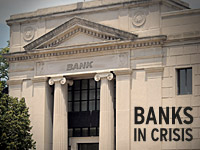 This report and picture from CNBC.
Said one high-level official, “I think the market is missing that the whole intent of this process is to show that the banks have enough capital for even worse outcomes than we currently envision and to show there’s a program in place to give banks access to that capital if they need it.”
Yes, read it again. The process is to show us that the banks are okay. No wonder there’s no discussion of the Swedish or German approach to Banking crises. We’re going to be ‘shown’ everything is okay even under the ‘worse’ outcomes. Details on the worst scenarios are supposed to be out on Wednesday, but really, we’ve heard this before. Remember I mentioned in my last thread that much of the definitions had to do with what type of stock (common, preferred, some hybrid) winds up flowing from the Treasury to the target banks? Here’s another on the money paraphrase from the CNBC story.
The key misunderstanding in markets, officials believe, is how the public-private partnership will work and the way that new government capital, in the form of mandatory convertible preferred shares will become common equity.
One official said the public-private partnership will be voluntary so there will not be no mandate that banks offload assets at a loss. The official added that additional government capital will go into the banks as mandatory convertible preferred. Those shares remain preferred until realized losses and capital needs trigger conversion to common. As a result, the official said, the government may end up with a large stake in a given bank over a period of time, but it wont’ happen overnight.
May I suggest some new Savings Vehicles for the Obama Years?



It Ain’t Over until the Eagle Grins
Posted: February 20, 2009 Filed under: Global Financial Crisis, U.S. Economy | Tags: Ben Bernanke, Economic Forecast, Economic Outlook, FED, Open Market Commitee 1 Comment Paul Krugman’s column in yesterday’s NY Times talked about the economic outlook report released by the Federal Reserve’s monetary policy ‘deciders’, the Open Market Committee. He’s been obsessing on one little sentence.
But my eye was caught by the following chilling passage (yes, things are so bad that the summarized musings of central bankers can keep you up at night): “All participants anticipated that unemployment would remain substantially above its longer-run sustainable rate at the end of 2011, even absent further economic shocks; a few indicated that more than five to six years would be needed for the economy to converge to a longer-run path characterized by sustainable rates of output growth and unemployment and by an appropriate rate of inflation.”
I used to participate every so often in the gleaning of the data for the Atlanta Fed’s report back in my days which were back in Greenspan’s days at the Fed. (Bill was President and all was well in the world, so completely different environment than now.) It’s a rather interesting exercise that combines the sweat of wonky economists dropping numbers into black boxes and anecdotal evidence gathered by holding meetings with business folk out in meeting rooms to gauge what’s going on in reality-based USA. The anecdotes we try to catch are things like: Are you hiring? Are you buying inventory? Are you expanding your business? What are your customers saying? How happy is every one in your city? You just basically chat them up after you’ve plied them with food and booze. We used to have the meetings at the Gulf Coast Casinos. I’m not sure what the other Feds do, but I’m sure I’d love to be around for some of them as the ones down here could be pretty interesting.
Each of the Fed Banks print their assessment of the economy. Some stick to their regions. Some have particular interests. For example, the St. Louis Fed is considered to be the center of the monetary policy wonks. San Francisco Fed tends to focus on issues dealing with the Pacific Rim. You can visit each of the sites and get a feeling for not only the country’s outlook, but the area where you live.
Mortgaged Home, Sweet Mortgaged Home
Posted: February 18, 2009 Filed under: Global Financial Crisis, Team Obama, U.S. Economy | Tags: Fannie, Freddie, home owner bailouts, obama housing plan, subprime mortages, underwater mortgages 9 Comments Obama announced more details on his bailout plan that was focused more on borrowers instead of the lenders. He released a four page fact sheet here. There are three portions and The Economist does a pretty good job of summarizing them here.
First, the administration will increase the number of homeowners able to refinance at current, low mortgage rates. Borrowers whose mortgages are owned or guaranteed by Fannie Mae or Freddie Mac will be able to refinance a loan up to 105% of the home’s value (up from 80%, previously). This is expected to help about 4 to 5 million households who owe nearly as much or more than the value of their homes. This seems like a reasonable step to take, though as Calculated Risk notes, it’s a bit of a lottery. Those whose mortgages haven’t been purchased by Fannie or Freddie are basically out of luck.
The second part is the one that’s grabbed headlines; the president has dedicated $75 billion toward efforts to prevent foreclosures. Chief among these efforts is a plan to reduce monthly payments for troubled borrowers. For those spending greater than 38% of their income on mortgage payments, up to 43%, the government will ask lenders to reduce interest rates to bring payments down to the 38% level. The government will then match lender dollars, one-for-one, in bringing down interest payments until the borrower is only spending 31% of income. Both borrower and lender will be eligible for $1000 payments when payments are reworked, and if the planned payments are made. If it’s necessary to reduce principle, then Treasury will provide assistance with this, as well.
This portion of the plan has drawn criticism, since many homeowners with too-large payments are those who took on irresponsible loan structures or who simply purchased too much house—who behaved irresponsibly, in other words. Ideally, officials would no doubt prefer not to help such borrowers (just as they’d no doubt prefer to let bankers who’d made bad decisions go under). But frankly, that’s not a top concern of mine. Rather, I’m interested in whether or not this is the best way to use $75 billion to halt foreclosures.
The Economist has two concerns. The first is that it may just delay foreclosure rather than solve it because:
… interest payments are being reduced first, and principle written down only as a last resort (such that many who take advantage of the programme will nonetheless remain underwater). Perhaps, but by trying to leave principle alone, the government is avoiding excessive transfers of wealth to borrowers. A shared-equity plan might have been better, but this will halt some foreclosures and incent homeowners to stay in their homes longer.
The second issue there are enough incentives in the bill to rework the payments. On this point, they say:
Presumably, it’s already in the interest of lenders to reduce payments rather than foreclose, so it’s unclear whether $1000 is going to alter the balance. This, I think, is a more serious point. The housing plan passed last year to help rework problem mortgages seriously underperformed—where some 400,000 borrowers were deemed to be eligible, actual applications numbered in the tens.
The third portion of the plan seeks to “strengthen” Fannie and Freddie and to keep mortgage credit available and loan terms to ensure housing affordability. The amount scheduled for this is $200 billion.
David Leonhardt of the New York Times had this to say. His blog thread concentrates on who is most likely to benefit from the plan. If you watched Obama’s speech, supposedly the plan won’t help the ‘irresponsible’ speculator. Leonhardt questions if the plan can successfully separate the homeowner is trouble by purchase motives.
But the lines aren’t quite as clear as Mr. Obama suggested. In fact, his plan will end up helping a fair number of people who bought homes that they should have known they would never be able to afford. The core of the plan gives banks a financial incentive to reduce many mortgage payments to no more than 31 percent of a borrower’s income.
Which homeowners will benefit from this reduction?
Certainly, some who took out a reasonable mortgage and later lost their job will be helped. But people who bought too much house — and banks that allowed people to do so, or even encouraged them to do so — will also benefit. As distasteful as this may be, it’s the only way to make a serious dent in foreclosures and, in the process, to help the financial system.
These same political calculations help explain the public emphasis that the White House is giving to the relatively modest steps it is taking to help underwater homeowners — those with a mortgage worth more than the value of their house — who can afford their monthly payments.
The actual details of the plan aren’t due out until March 4th when it goes into effect. Market Watch had some interesting statistics for the plan today. Here are the number of homeowners the plan itself says it will help.
The bill is supposed to help s many as 9 million households in fending off foreclosures:
- Allows 4 million–5 million homeowners to refinance via government-sponsored mortgage giants Fannie Mae and Freddie Mac.
- Establishes $75 billion fund to reduce homeowners’ monthly payments.
- Develops uniform rules for loan modifications across the mortgage industry.
- Bolsters Fannie and Freddie by buying more of their shares.
- Allows Fannie and Freddie to hold $900 billion in mortgage-backed securities — a $50 billion increase

 peej
peej Carissa
 bostonboomer
 dakinikat
 ecocatwoman
 mablue2
 Mama Lopez
 peggysue22
 quixote
 skydancingguestblogger
 Mona (aka Wonk the Vote)



 Sky Dancing
Recent Comments