
Greenshoots or False Spring?
Posted: April 6, 2009 Filed under: Equity Markets, Festivities, Global Financial Crisis, U.S. Economy | Tags: altman, bernanke, cowen, Depression, greenshoot, recession, recovery, thoma Comments Off on Greenshoots or False Spring?
Miss Strawberry with the Winners of the Strawberry Bakeoff
I woke up this morning to a chill in the air. When I came back home from university today it was a chilly 60 in the house. There’s a frost warning for the North Shore and I had to put the heater back on and pull at the flannels. I walked the dog in a fleece jacket and had to put socks on. This weekend was just warm, sunny, and great and the Strawberry Festival was in full swing? WTF happened here in Southeastern Louisiana? One day I’m basking in the first hint of a warm sun enjoying fresh strawberry shortcake and the next I’m hoping that the magnolia blossoms are safe. Yes, there’s a Strawberry Queen, a Strawberry Ball, and Strawberry Royalty. If you gotta work somewhere, it might as well be the Strawberry Capitol of the Word.
So, having been raised in the Great Flyover and spent most of my childhood watching my Dad’s business sell F-150s to the local farmers, I know a lot about a false spring. That’s when Mother Nature messes with you by giving you just enough spring to think the worst of winter is over and then hits you with the cold blast of reality. Thankfully, my cold blast didn’t include the blizzard that hit the heartland, but it is a cold blast. That’s why I’m having so much fun with the economic word-de-jour. That would be Ben Bernanke’s “green shoots”. An Ivy-leaguer from South Carolina should know about about false springs. Bloomberg picks at the analogy too in Bernanke ‘Green Shoots’ May Signal False Spring Amid Job Losses.
April 6 (Bloomberg) — It will be months before it’s clear whether what Federal Reserve Chairman Ben S. Bernanke calls the U.S. economy’s “green shoots” represent the early onset of recovery, or a false spring.
The Labor Department’s April 3 report that the economy shed an additional 663,000 jobs last month, while the unemployment rate rose to 8.5 percent, will be followed by months more of bad-news headlines, economists say. The recession, now in its 17th month, has already cost 5.1 million Americans their jobs, the worst drop in the postwar era; unemployment may hit 9.4 percent this year, according to the median estimate in a Bloomberg News survey, and may top out above 10 percent in 2010.
The risk is that the jobs picture turns even more bleak than forecast or the drumbeat of bad news still to come causes consumers, whose spending has firmed up in recent months, to hunker down again.
“If something happens to spook consumers and they crawl back into their tortoise shells, that would be terrible news,” says Alan Blinder, former Fed vice chairman and now an economics professor at Princeton University.
Consumer spending, which accounts for more than 70 percent of the economy, rose 0.2 percent in February after climbing 1 percent in January, breaking a six-month string of declines.
Inquiring Minds also Blog
Posted: April 5, 2009 Filed under: Equity Markets, Global Financial Crisis, Team Obama, U.S. Economy | Tags: audit failure, bank bailout, bank failure, Elizabeth Warren, PKMG, regulator failure, Tyler Cowen Comments Off on Inquiring Minds also Blog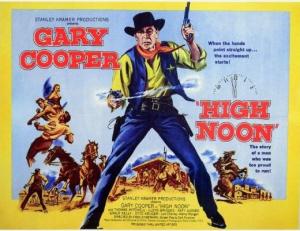
The two regulators who don’t appear captured by the regulated are both women. FDIC’s Sheila Bair has been quietly closely down the bankrupt quite efficiently and ensuring every one knows that the FDIC will stand by its insurance commitments. Elizabeth Warren who is the head of the group watching the TARP funds is calling this week for the ousting of derelict bank executives. This includes Citibank and AIG. Is this the beginning of High Noon on Wall Street?
Warren also believes there are “dangers inherent” in the approach taken by treasury secretary Tim Geithner, who she says has offered “open-ended subsidies” to some of the world’s biggest financial institutions without adequately weighing potential pitfalls. “We want to ensure that the treasury gives the public an alternative approach,” she said, adding that she was worried that banks would not recover while they were being fed subsidies. “When are they going to say, enough?” she said.
She said she did not want to be too hard on Geithner but that he must address the issues in the report. “The very notion that anyone would infuse money into a financially troubled entity without demanding changes in management is preposterous.”
Meanwhile, many finance and economics bloggers have looked into legal issues surrounding the Obama/Geithner bailout and believe laws are being broken. Both Boston Boomer and Sam point to this at George Washington’s Blog.
Geithner’s statements that he didn’t have the power to close down the big banks is false. Moreover, Geithner and Paulson actually broke the law which requires the government to close down insolvent banks, no matter how big.
The Prompt Corrective Action Law (PCA) – 12 U.S.C. § 1831o – not only authorizes the government to seize insolvent banks, it mandates it.
An earlier post here contains the interview with William K. Black, a senior regulator during the S&L crisis and Associate Professor of Economics and Law at the University of Missouri and Bill Moyers. Even more interesting news has appeared recently as it looks like regulators aren’t the only ones dropping the ball. Is this a repeat of the Aurthur Anderson/Enron failure of Public Accounting?
New Century, one of the country’s top subprime lenders, went bankrupt shortly after disclosing that its financial statements were misstated. Its creditors are now suing KPMG, New Century’s auditor, for at least $1 billion in damages. In the years leading up to the financial crisis, some of the nation’s largest accounting firms failed to properly examine the reserves that banks and other lenders set aside to cover losses, records from a federal oversight board show.
Is this ANY way to run an Economy?
Posted: April 4, 2009 Filed under: Equity Markets, Global Financial Crisis | Tags: bailout, DeLong, Depression, Financial Crisis, Krugman, Obama/Geithner Bailout Plan, recession, Stiglitz, Summers Hedge Fund Salary, unemployment 4 Comments The US economy is in a fragile state right now which begs the question: Why do our policy makers seem oblivious to lessons from the great meltdowns of the past? Adam Posner of the Daily Beast asks the question out right: Does Obama Have a Plan B? Posner asserts that the administration appears to be hellbent on recreating the Japanese Lost Decade. This is something that I’ve been harping on for months as has Paul Krugman and Joseph Stiglitz–two big brained economists with Nobel prizes.
So it is with some irony if not humility that we should approach Treasury Secretary Geithner’s Public Private Investment Plan presented on March 23. A number of major American banks have lost huge amounts of money, and clearly have insufficient capital if they are not literally insolvent. Why else would they be pushing so hard to change the accounting rules to avoid showing what they really have on their books instead of raising private capital? Why else is the U.S. government taking so long to perform “stress tests” and trying to get expectations of overpayment for some of the bad assets on the banks’ books before the test results are out? In short, the U.S. government is looking to shovel capital into the banks without sufficient conditions, hiding rather than confronting the actual situation.
That is just like the Japanese government in their lost decade, or the U.S. officials during the 1980s before they really tackled the savings-and-loan crisis. In those cases, the delay simply made the problem worse over time and in the end the government had to put more money into the troubled banks directly, taking over or shutting down the weakest of them. Whatever the political culture, it would seem we have not learned from experience. Or perhaps we cannot act on our learning. The universal barrier would appear to be the political difficulty of recapitalizing banks. That seems obvious, but the constraint it puts on good policy is enormous.
That is why the Geithner plan is so complex and jury-rigged, to avoid the need for public requests for more money for banks. Unfortunately, it is unlikely to succeed absent additional public money and more-intrusive government action. The plan will buy some time and certainly some appreciation in bank share prices. Current shareholders will be getting a new lease on life with subsidies from taxpayers. For that reason alone, the plan certainly will cost the taxpayer more in the end than a more direct recapitalization with public control would have.
The Zombie Connection
Posted: April 2, 2009 Filed under: Equity Markets, Global Financial Crisis, Team Obama, U.S. Economy | Tags: AIG, Azora, Cerebus, Credit Default swaps, GM, GMAC, Madoff 6 Comments
Goverment Motors?
Bloomberg.com is reporting that GM is unlikely to survive the government’s latest requests and will head towards bankruptcy. This begs the question: Why have we poured so much money into what most folks thought was a lost cause anyway? My first response to that would be to point to the timing of requests which occurred around election time. No Republican or Democratic Pol in their right mind would want to irritate the huge number of states that will be impacted by the fall of GM. The second reason is one that is just becoming obvious with the Obama approach. It appears the administration is much more concerned about the impact on the investment banking sector and AIG than with GM.
There’s some very interesting relationships in these deals. First, take a look at Seven Things You Should Know about the next GM CEO at Business Insider.
So who is this Fritz guy? Here are seven things you should know.
- He’s a native of Detriot, born there in 1958.
- University of Michigan, 1980. Harvard Business School, 1984.
- Started at GM the year he got his MBA, in the Treasurer’s office.
- Came up through GMAC, eventually becoming the head of mortgage finance.
- He has run GM’s Latin American, Africa and Middle East division, as well as the Asia Pacific and European units.
- Became vice chairman and chief financial officer in January, 2006.
- Became president and chief operating officer in March, 2008.
Now isn’t that red point interesting? (Thanks to Jonas8 for this.) Let’s look at a few other interesting things. GMAC is owned by Cerberus who acquired 51 percent of GMAC from General Motors in 2006 for $7.4 billion. You may also know that Cerberus owns 80+% of Chrysler. Cerberus is having its own interest issues like this:
Embattled Cerberus Capital Management, a private-equity firm named for the mythological three-headed dog that guards the gates of Hades, has been overwhelmed by clients seeking to withdraw money from its $2 billion hedge fund, Cerberus Partners.
Website FINAlternatives said that fund investors representing 17 percent of the assets wanted to withdraw their money in December, the most recent month for which statistics are available. Now, with Cerberus’s investments in Chrysler and GMAC going bad and unemployed investors needing to tap more funds, that figure may be heading higher.
Just look at this Wiki list of what things they also own:
- Real Estate – Through investment affiliate Cerberus Real Estate, the company has been making direct equity, mezzanine, first mortgage, distressed and special situation investments in all asset types. It also controls Miami Beach-based LNR Property, a large real estate development and investment firm through subsidiary Riley Property. Cerberus also controls Kyo-ya, a Japan based group of entities that owns several Starwood managed assets in California, Hawaii and Florida.
- Government Services (Military, Energy, and Food & Drug) – owns IAP Worldwide Services, which bought Johnson Controls‘ World Services division in February 2005, and Netco Government Services.
- Financial Services – General Motors sold a 51% stake in its GMAC finance unit to an investor group led by Cerberus Capital Management in November 2006. GM expected to receive $14 billion over the next three years from the sale of General Motors Acceptance Corp. In December 2006, Cerberus acquired the Austrian bank BAWAG P.S.K. for a reported EUR3.2 billion. In August 2007, Cerberus announced that it was closing one of their mortgage companies, Aegis Mortgage. It owns half of a 9.9 % share (5%) with the Gabriel Group in Bank Leumi
I want to jump on over to something BostomBoomer sent me this morning at the Market Ticker by Karl Denninger. Just start connecting the dots here and start with an earlier piece here. This is the line that starts connecting ALL these little dots.
And then there’s the nearly $1 trillion in CDS that will trigger. There is no accurate way to know what the net exposure is on those, but I’d take the “over” on $100 billion, focused in you-know-where.
CDS would be Credit Default Swaps. Yup, those would be those toxic assets that are still sitting out there in banks and most likely AIG. So, who exactly are we worried about here? GM? GM’s stock holders? GM’s auto workers? GM’s retirees? If you’re any where as pessimistic as I am about this, you’re going to say, I bet it’s the bondholders and the holders of the CDS based on GM. DING! Let’s go a little bit further into that Denninger thread.
The government has provided a history now that says that if you are a holder of CDS written by AIG, you will get 100 cents on the dollar, even if the notes don’t default. In addition that 100 cents is above what you would normally get even if there IS a default, because normally you have to tender the defaulted bond or the payout is limited by the recovery, and recovery on a defaulted bond is almost never zero.
So in this case the winning play, if you’re a big bondholder, is to tell GM to suck eggs; you’ll get paid 100 cents on your CDS even though AIG has no money, because the taxpayer will make you whole on those CDS, even if the bonds have a recovery in bankruptcy.
In other words you could conceivably get more than 100 cents if you hold those bonds – so long as you also hold a CDS as a hedge.
It must be nice to be able to screw the taxpayer for more than a 100% payout, right?
The bondholders “committee” is all made up of big players who presumably are hedged, ergo, this has to be assumed to be part of their “thought process” – if not the controlling factor.
Small bondholders on the other hand (who have no hedge, unless they were smart enough to buy lots of PUTs a few months ago) are just going to get plain old-fashioned screwed.
Since the only way GM survives is for it to get the bondholder committee to agree to restructuring it therefore follows that the only way this can happen is if the administration (and Fed!) makes very clear that all funding to AIG has been cut off and therefore no further “pass through” payments will (or can) occur.
That is, The Obama Administration has to bankrupt AIG to save GM, or we will instead see the banks again rip off the American Taxpayer through yet another “passthrough” CDS payout stream AND GM will go bankrupt.
Get ready America – you’re about to get it in BOTH holes this time.
This is analysis and deduction based on the available and public facts – I have no proof – but I’ll bet this is exactly how this deal will go down, and why.
PS: Every firm in America that has a significant amount of CDS outstanding is potentially subject to this same attack. It’s all very nice that our government is permitting banks to rob the citizens like this, isn’t it?
So, let’s see. Cerebus, through its financial holdings gets TARP money. Cerebus through its Chrysler holdings gets cheap government loans. AIG and all those investment banks holding those swaps get taxpayer money. GM’s getting cheap loans and has bonds that have been securitized into CDS. I’m with Denninger on this one.
Oh, and just in case you’re not seeing a lot of stuff on Cerebus, let’s try these little tidbits:
On October 19, 2006, John W. Snow, President George W. Bush‘s second United States Secretary of the Treasury, was named chairman of Cerberus.
J. Ezra Merkin is a partner in Cerberus. Merkin invested his funds into Cerberus and its portfolio companies. His Gabriel fund invested $79 million in Chrysler, $66 million in GMAC and $67 million in Cerberus partnerships, according to year-end statements. The Gabriel Fund was a feeder fund for Bernard L. Madoff Investment Securities LLC.[3]
Japanese bank, Aozora, a Cerberus company lost $ 137 million to Bernard L. Madoff Investment Securities LLC. Aozora was part of the investment group that acquired 51 percent of GMAC from General Motors.
I’m just hoping some one in the MSM can pick up on this and go after it. If not that, then Cuomo needs to get a forensic accountant and go after it all. This just doesn’t look right to me AT ALL.
SHARE THIS POST:


Does this Worry You?
Posted: April 1, 2009 Filed under: Equity Markets, Global Financial Crisis, Team Obama, U.S. Economy | Tags: auto industry bailout, Chrysler Merger, dealer network, FORD, GM, Obama team, UAW 5 Comments I‘m one of the first folks to argue that government intervention is necessary in a failed market and is usually a positive thing. There are several US markets that need rebooting and government oversight and participation is the only way. In my opinion, the markets for health care, financial services, and transportation are all pretty messed up. There’s always this fine line, however, between rebooting a market so that it works again and booting the failed market deeper into a hell realm. That’s why I’m concerned about the auto industry. While the financial markets have been assigned to limbo, the automobile industry appears to be waiting in purgatory for the final blow.
I have to say that I’m mostly displeased about the way government has been handling the auto industry in this country. They have ignored the foreign owned plants which also contribute to our GDP and create local jobs and suppliers. They initially wanted to drag Ford, which is relatively healthy, into the bailout equation. They extended loans in the fall with nearly everyone knowing that they were stopgap at best. I believe this was because of the election and neither party wanted to compromise seats in states with UAW, creditors, and small businesses dependent on the industry. The Bush administration punted. The Obama administration has a fair catch but appears unable to to move the ball forward. They’ve called a time out. They’ve replaced one of the coaches, mid-game. They’ve put in referees that primarily represent creditors. I own some Ford stock so I have a bet on this game and I can’t stand it when the rules and the players are changed while the action is still on.
The car business just appears to be getting worse. We’ve learned that investment bankers have generally screwed the pooch in just about every recent endeavor, yet Obama has put one in charge of the GM and Chrysler ultimatums. The first move, seen last week, was quite investment banker-like. Chrylser is being married off to a perceived white knight, Fiat. GM’s CEO was told to walk the plank. At first I wasn’t sure if POTUS was just trying to challenge Donald Trump’s standing in TV ratings with the District version of “You’re Fired!” or trying to remove public attention from AIG anger.
Obama also announced (Treasury Secretary Geithner by his side) a series of initiatives meant to calm potential US auto buyers. Will these cheer up already nervous American consumers?
He also announced several steps to reassure consumers, and improve the chances that U.S. automakers will be able to sell their cars and trucks. The president said the government will now stand behind warranties issued by the carmakers, a sweeping new guarantee that some in Congress had sought.
He also noted that the economic stimulus legislation he recently signed allows the purchasers of new domestic cars to deduct the cost of any sales and excise taxes.
Obama said this provision could “save families hundreds of dollars and lead to as many as 100,000 new car sales.” He also said funds ticketed for the purchase of new vehicles for government agencies would be spent as quickly as possible.
It will be interesting to see exactly how the market handles these moves. Today’s Market Watch announced that both Ford and GM had experienced Sales declines in excess of 40%. Chrysler, Honda and Toyota also experienced declines but not to that extent.
“Despite some improvements this month, we just don’t expect to see a big recovery this year,” Edmunds.com analyst Jesse Toprak said. He added, however, that there’s now more upside to his 2009 sales target of 10 million vehicles than there is downside.
The monthly results, no matter how promising, take a back seat to further speculation as to what’s next for GM. With the CEO Rick Wagoner gone and a new deadline imposed by the White House, viability concerns are again dogging the company.
“Bankruptcy risk is real and running higher than ever for GM and Chrysler, even though the automakers and the government will do whatever it takes to avoid it,” Toprak said.
Still, President Barack Obama reportedly said he believes a “quick and surgical” bankruptcy for GM is most likely the next step.
So, that’s what we’ve seen to date, but what worries me is what comes next. We’ve just had the US government basically remove a CEO and several board members of one of the largest companies in the US. What role will the US government play in the future? How will they influence the pick of a new CEO and new board members? What exactly will be their priorities? Will it be corporate governance changes? More efficient operations? Payment to creditors above all us? Fair dealings with the unions? This is unprecedented territory and I’m not sure we can actually speculate about this.
Today’s Washington Post has brought the topic up. What does it mean to give the government control over a major US manufacturer?
The president’s auto task force plans to consult with the company as it replaces a majority of its board, a White House official said. The board today largely consists of the current and former chiefs of major U.S. corporations such as Coca-Cola, Ernst & Young, Pfizer and Eastman Kodak. It is not known which of the 12 board members will leave.
The president said Monday that “the United States government has no interest in running GM.” But in practice it is already exerting tremendous influence over it, a situation that has triggered fierce debate over how much power the government should wield over the companies that it aids.
Kent Kresa, 71, GM’s new chairman, said yesterday that company officials will seek to replace a majority on the board by August, as the automaker moves to restructure operations.
Downsizing GM means downsizing supply chains and dealer networks. It means deciding which small town keeps its
Goverment Motors?
major employer and which small town dies. It means one little league team will keep its sponsor and another one will have to look for another. I’m the daughter of a retired Ford dealer raised in small town, middle america. My dad was head of the local chamber of commerce at one time. He also served as chair of the United Way Fund drive. We employed a large number of people in our small little Iowa town. I was trained by Dr. W. Edwards Deming in the 1980s to go around and help auto suppliers in small town Nebraska and Iowa implement SPC to keep their GM and FORD contracts. These are towns that are totally reliant on one or two little manufacturing units. Which town will live and which town will die? Who is going to decide and on what basis?

 peej
peej Carissa
 bostonboomer
 dakinikat
 ecocatwoman
 mablue2
 Mama Lopez
 peggysue22
 quixote
 skydancingguestblogger
 Mona (aka Wonk the Vote)



 Sky Dancing
Recent Comments