
James K. Galbraith and the Sorceror’s Stone
Posted: April 24, 2009 Filed under: Global Financial Crisis, Uncategorized | Tags: James K Galbraith Comments Off on James K. Galbraith and the Sorceror’s Stone Forecasts of economic activity are always a mixture of alchemy and bias. You always have to check the assumptions before you evaluate the output. Assumptions can turn a model up side down or inside out. Economist James K. Galbraith gave a speech this month at the Minsky Conference. His speech included terse evaluations of some of the biggest baseline forecasting models including one used by the Congressional Budget office. He found some of the rationale “purely mystical”. He’s currently questioning what some folks see as a future “Obamaboom” that assumes a really quick turnaround in the economy followed by manic expansion. (This scenario is actually coming out of bank economists and you know how well they’ve been assessing things recently.)
Galbraith looks at this giddy scenario skeptically, and rightly so. I want to discuss his caveats. He has reservations about this overly optimistic scenario similar to mine. Yesterday, during discussion of my post, I was asked about the L shaped recovery scenario. This is something I find likel, although I’m not using sophisticated models to wank out numbers. I mentioned that I thought it likely because of some structural changes going on in the underlying economy. Laurie asked me if I could elucidate further. I did a little of that yesterday. I’ll continue it today.
Basically, I see the households and their relationship to debt and their assets undergoing some fundamental changes. House values are way down and unlikely to escalate to bubble levels again which is going to deprive households of their big cash cow. Also, I don’t really see the credit markets churning out the kinds of expedient loans they did in the past. If anything, I see banks becoming overly prudent in their underwriting practices–a sort’ve over reaction to the subprime toxins. Because household spending represents about 67% of our overall economy’s spending, any significant drawback of consumer spending, or the relationship between what they spend, save, pay in taxes and buy in imports is going to have a significant impact on the multiplier process.
I just see a new American thrift paradigm. I don’t think that households will be enabled by banks any more. I think their wealth (primarily houses and retirement savings) will not recover to levels that will make the feel secure about their futures. I think the uncertainty of the job market will make them spooked for some time. All of this means, to me, a very long drawn out slow, scuttling along the bottom, L shaped recovery.
W(h)ither Geithner and his TALF
Posted: April 23, 2009 Filed under: Bailout Blues, Equity Markets, Global Financial Crisis, U.S. Economy, Uncategorized | Tags: banks, Elizabeth Warren, TALF, TARP, Timothy Geithner Comments Off on W(h)ither Geithner and his TALF Neil Irwin of WAPO reported today that the TALF is not having the results trumpeted by the Obama administration. This is leading, again, to speculation about the relevancy of most of these plans and, of course, job security of Treasury Secretary Timothy Geithner.
In its first two months, the government’s signature initiative to support consumer lending has fallen well short of expectations, deploying only a fraction of the amount officials had hoped to extend to stimulate auto loans, student loans and credit card lending.
The slow rollout of the program has frustrated staff at government agencies working on the effort and diminished hopes that they could engineer a rapid return to healthy lending levels, according to interviews with government and industry sources. The initiative also serves as a window into the complexities of designing a giant rescue of the financial system.
The TALF is the private-public partnership that couples the funds of private investors, like hedge funds, and the FED. The hedge funds invest small amounts that are matched by much larger amounts that would presumably come from the Treasury and Tax Payers if they wind up being nonprofitable. The combined funds will supposedly purchase non-toxic, virgin, high rated rated securities to fund everything from student loans and car loans to inventory and capital loans for business. As of yet, they really have failed to do so.
Officials envisioned TALF supporting tens of billions of dollars a month in new lending, saying it could eventually total $1 trillion. But in March, when it was launched, it backed only $4.7 billion in auto loans and credit cards. For April, it logged only $1.7 billion.
Sources involved in the program said private investors have been reluctant to work with the government, which they view as an unreliable business partner. Separately, the brokerage houses that are crucial intermediaries are being exceptionally cautious in the contracts they draw up with participants in the program, in part out of wariness that any mistakes could draw the ire of Congress or the media.
In congressional testimony on Tuesday, Treasury Secretary Timothy F. Geithner said that overall progress is “pretty good” for a program in its early days. Still, he acknowledged that participation was “lower than expected” because of “concern about the conditions that come with the assistance in the program . . . and uncertainty about whether they may change in the future.”
Meanwhile, on the bank front, stupid accounting tricks abound! Which begs the question is any one stupid enough to believe the numbers? Every large financial institution appears to be jumping on the band wagon of conveniently forgetting the month of December. What does this say about the state of public accounting today and Wall Street’s gulliblity?
Irrational numbers
Posted: April 21, 2009 Filed under: Equity Markets, Global Financial Crisis | Tags: behavioral economics, behavioral finance, Daniel Kahneman 7 Comments I’ve sat in two doctoral level investment classes for my degree. It’s not one of my fields because I just don’t want to take the derivatives seminar. I actually have a lot of disdain for the field now that I’ve done the proofs on the major models. My ex husband worked 20 years for an insurance company in their investment department doing the real thing. It was one of the reasons I actually left him. I find the entire field pretty insufferable. Unfortunately, it’s also one of the highest paying fields you can have as an academic. It’s much easier to get big publications in Finance than Economics. That’s basically because there really isn’t an awful lot of theory in finance. It’s mostly data mining looking for some kind of theory. As you can probably tell by now, I’m not really popular with the Investment professors. They don’t understand me primarily because I’m not out to make money. (Well, that and I refuse to call Eugene Fama God) My research is always based on contrariness about the current asset pricing models we teach. I especially disdain the ones that we teach to MBAs and Finance majors.
A lot of Finance is based on two assumptions that I can’t buy. One is that the market follows a random walk. (This is Fama’s big contribution for which he expects to get a Nobel, but hasn’t managed to date.) A lot of time is spent looking at the equity markets saying you can’t beat the market or really forecast it because it’s a completely random series. The second is that the investor is a rational being. Most of the field total ignores the old Keynesian idea of ‘animal spirits’. That’s the idea that the market can get a herd mentality and spook at various events and move like a bunch of scared cows.
There’s a field in Finance that’s beginning to get a little bit of respect but still is considered a little out there. That’s probably, why it’s the only parts of Finance and Investment theory that intrigues me. It’s called Behavioral Finance. It looks for anomalies in the market and tries to find the reasons for them based more on human psychology rather than trying to just call them odd events. That’s why I was happy to read this account, Irrational everything, written by Guy Rolnik on Prof. Daniel Kahneman. Kahneman’s a collector of stories of irrational behavior when it comes to people and finance decisions. His voice would really add some flavor to the current collapse of modern finance. Here’s a non finance example that just tickles me every time I read it.
But the story Kahneman recalls when asked about the economic models at the root of the current financial crisis is actually taken from history, not an experiment. It concerns a group of Swiss soldiers who set out on a long navigation exercise in the Alps. The weather was severe and they got lost. After several days, with their desperation mounting, one of the men suddenly realized he had a map of the region.
They followed the map and managed to reach a town. When they returned to base and their commanding officer asked how they had made their way back, they replied, “We suddenly found a map.” The officer looked at the map and said, “You found a map, all right, but it’s not of the Alps, it’s of the Pyrenees.”
According to Kahneman, the moral of the story is that some of our economic models, perhaps those of the investment world, are worthless. But individual investors need security – maps of the Pyrenees – even if they are, in effect, worthless.
Bernanke Rules
Posted: April 18, 2009 Filed under: Global Financial Crisis, U.S. Economy, Uncategorized | Tags: bernanke, Credit Default swaps, Credit Derivatives, Fannie Mae, FED, Freddie Mac, Regulations, Subprime mortgages Comments Off on Bernanke Rules Is The Fed under Chairman Ben Bernanke finally beginning to adopt the tougher lending regulations and rules that would’ve prevented much of the havoc of the last two years? In a speech on April 17, Bernanke stated that damage done to the economy was not likely to be undone any time soon. This gives more credence to the idea that we may see an L-shaped recovery. In other words, be prepared to scuttle across the bottom for a very long time. But did the speech deliver the assurances we need that necessary steps and regulations w lending practices and financial innovations are in the works? I don’t think so.
Here’s some interesting analysis by Craig Torres at Bloomberg.com.
Federal Reserve Chairman Ben S. Bernanke said the collapse of U.S. lending will probably cause “long-lasting” damage to home prices, household wealth and borrowers’ good credit score.
“One would be forgiven for concluding that the assumed benefits of financial innovation are not all they were cracked up to be,” the Fed chairman said today in a speech at the central bank’s community affairs conference in Washington. “The damage from this turn in the credit cycle — in terms of lost wealth, lost homes, and blemished credit histories — is likely to be long-lasting.”
The U.S. central bank has cut the benchmark lending rate to as low as zero and taken unprecedented steps to stem the credit crisis through direct support of consumer finance and mortgage lending. The Fed plans to purchase as much as $1.25 trillion in agency mortgage-backed securities this year to support the housing market and is providing financing for securities backed by loans to consumers and small businesses.
Bernanke and the Federal Reserve Board approved rules last July to toughen restrictions on mortgages, banning high-cost loans to borrowers with no verified income or assets and curbing penalties for repaying a loan early. The action came after members of Congress and other regulators urged the Fed to use its authority to prevent abusive lending.
This suggests Bernanke does not see home values going back up any time soon. It also suggests that the lending markets are not likely to return to their heyday. Does this mean, however, that we’re finally going to see the regulation and enforcement of prudent underwriting standards and no more hide the trash in a bundle and pass it to the next sucker?
Mission Creep: The Incredible Expanding Power to Bailout
Posted: April 7, 2009 Filed under: Bailout Blues, Global Financial Crisis, U.S. Economy | Tags: FDic, Hedge Fund Bailout, LTCM, Mission Creep, SEC, Sheila Bair, Timothy Geithner 2 CommentsI’ve been watching the three big regulators in the Financial Crisis (the Fed, the FDIC, and the SEC) start doing things 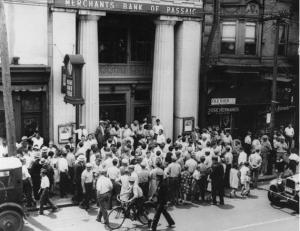 unheard of only a year ago. What has been baffling is no one has changed any laws or charters while these things keep happening. I’m not a lawyer and I don’t have the time to go poking around a lot of the charters and laws surrounding these institutions, but you have to start wondering if some of their more unconventional moves are technically legal.
I’ve been watching the Fed Open borrowing at the Discount Window and accepting some really strange collateral. The Discount Window used to be exclusive to member banks. I’ve been looking over what they now accept as collateral and am surprised. Take a look at the list and see if you’d like to be left holding the bag on some of these things. I’m not sure I want these off budget quasi agencies turning their balance sheets into dumping grounds for some of the most heinous looking gambles available on the market.
The NY Times Reporter Andrew Ross Sorkin has been poking around the charter and law concerning the FDIC. The FDIC was chartered to provide deposit insurance to bank deposits. You would think that is a fairly straight-forward task. However, when the charter was written, the size of the task at hand today was unfathomable and it seems the FDIC is tiptoeing around some of its charter provisions. The FDIC is barred from incurring any obligation greater than $30 billion and its about to take part in guarantees that would commit $1 trillion in the PPIP bank bailout program. Sorkin reports on what he calls “mission creep” here.
Now, because of what could politely be called mission creep, it’s elbowing its way into the middle of the financial mess as an enabler of enormous leverage.
In the fine print of Treasury Secretary Timothy F. Geithner’s plan to lend as much as $1 trillion to private investors to help them buy toxic assets from our nation’s banks, you’ll find some details of how the F.D.I.C is trying to stabilize the system by adding more risk, not less, to the system.
It’s going to be insuring 85 percent of the debt, provided by the Treasury, that private investors will use to subsidize their acquisitions of toxic assets. The program, extraordinary in its size and scope, is the equivalent of TARP 2.0. Only this time, Congress didn’t get a chance to vote.
These loans, while controversial, were given a warm welcome by the market when they were first announced. And why not? The terms are hard to beat. They are, for example, “nonrecourse,” which means that if an investor loses money, he owes taxpayers nothing. It’s the closest thing to risk-free investing — with leverage! — around.

 peej
peej Carissa
 bostonboomer
 dakinikat
 ecocatwoman
 mablue2
 Mama Lopez
 peggysue22
 quixote
 skydancingguestblogger
 Mona (aka Wonk the Vote)



 Sky Dancing
Recent Comments