
The Hedge Fund Empire Strikes Back
Posted: May 1, 2009 Filed under: Bailout Blues, Equity Markets, Global Financial Crisis, Uncategorized | Tags: bond holders, Chrylser bankruptcy, Chrysler bailout, hedge funds 2 Comments The role of hedge funds in the bankruptcy of Chrysler and GM will probably be discussed and studied for some time. It’s not often this POTUS singles out a Financial Institution for scorn since they’ve all been major donors to his campaign but POTUS made an exception when announcing the Chrysler bankruptcy. Evidently, POTUS was not amused that a few of them would not bend to his will on the deal.
The most interesting thing is that the spoilers are now responding. They are not only responding, they are making it clear that the group the cut the deal were TARP fund babies and they were not. They are actively referring themselves as the No-Tarp Gang just to make that perfectly clear.
Also, interesting is the tone of the coverage concerning the bankruptcy. A Motor Trend blog has a headline screaming Chrysler Bankruptcy “Cruel” Result of Hedge Fund Greediness. Motor Trend obviously has more interest in the Car Makers than the Deal Makers and there in lies the rub. The government-brokered deal, led by four of the biggest Tarp Babies, puts interests that are usually at the back of the line in corporate bankruptcy at the front. Basically the union employees could potentially lose it all in the bankruptcy court.
This deal, turns the entire idea of the safety and primacy of bonds in a bankruptcy deal upside down which could argueably further destabilize financial markets. So, before you accuse me of being anti-union here, which I’m not, let me talk about that. Bonds are usually first in line in any bankruptcy. It’s why they are considered less risky and yield less than their riskier cousins, the equities. Folks that buy corporate bonds play an important role in the market. They provide corporations with huge, long term sources of cash at better terms than any one of them could get from a bank.
If a deal can be cut that undercuts the nature of bonds, what would this mean to other bond holders in other deals that are likely in the bankruptcy pipe? (This would include GM and other industries.) Could this deal actually destabilize the primacy of bonds in the bankruptcy hierarchy? Is that what the fuss is about? Are they being greedy? Are they looking out for their investors? Are they posturing? I don’t think we quite know yet. But, the Hedge Funds spoke up as reported in today’s WAPO.
President Obama’s harsh attack on hedge funds he blamed for forcing Chrysler into bankruptcy yesterday sparked cries of protest from the secretive financial firms that hold about $1 billion of the automaker’s debt.
Hedge funds and investment managers were irate at Obama’s description of them as “speculators” who were “refusing to sacrifice like everyone else” and who wanted “to hold out for the prospect of an unjustified taxpayer-funded bailout.”
“Some of the characterizations that were used today to refer to us as speculators or to say we’re looking for a bailout is really unfair,” said one executive who spoke on condition of anonymity because of the sensitivity of the matter. “What we’re looking for is a reasonable payout on the value of the debt . . . more in line with what unions and Fiat were getting.”
George Schultze, the managing member of the hedge fund Schultze Asset Management, a Chrysler bondholder, said, “We are simply seeking to enforce our bargained-for rights under well-settled law.”
“Hopefully, the bankruptcy process will help refocus on this issue rather than on pointing fingers at lenders,” he said.
I supposed that I don’t have to tell you that hedge funds are not charitable organizations but many of them actually invest for charitable organizations, along with unions and state and government workers. Their clientele can be anything from a small group of rich investors, to you and me, actually. We’ve heard a lot about them recently but most people, I’d speculate, don’t know a lot about what they are and what they do. Hedge funds came onto the scene in the 1950s and what mostly defines them is their regulation regime.
Here’s an easy definition from a website at the University of Iowa.
“Hedge fund” is a general, non-legal term that was originally used to describe a type of private and unregistered investment pool that employed sophisticated hedging and arbitrage techniques to trade in the corporate equity markets. Hedge funds have traditionally been limited to sophisticated, wealthy investors. Over time, the activities of hedge funds broadened into other financial instruments and activities. Today, the term “hedge fund” refers not so much to hedging techniques, which hedge funds may or may not employ, as it does to their status as private and unregistered investment pools.
Hedge funds are similar to mutual funds in that they both are pooled investment vehicles that accept investors’ money and generally invest it on a collective basis. However, they are regulated in significantly different ways. Up until 2005, hedge funds in the United States often relied on Section 4(2) and Rule 506 of Regulation D of the Securities Act of 1933 to avoid having to register their securities with the Securities and Exchange Commission of the United States (SEC). Further, to avoid regulation regarding mutual funds (a type of “investment company”), hedge funds relied on Sections 3(c)(1) and 3(c)(7) of the Investment Company Act of 1940. In short, hedge funds escaped most U.S. regulation directed at other investment vehicles such as mutual funds.
European nations regulate hedge funds by either regulating the type of investor who can invest in a hedge fund or by regulating the minimum subscription level required to invest in a hedge fund. In the years to come, experts are predicting the rise of an alternative regulatory framework that will be tiered yet flexible.
Living La Vida Nada
Posted: April 29, 2009 Filed under: Bailout Blues, Equity Markets, Global Financial Crisis, U.S. Economy | Tags: Financial Crisis, Financial Times., FOMC, GDP, Martin Wolf, Quantative easing, recession, Willem Buiter, zombie banks 7 Comments From the Federal Open Market Committee’s (FOMC) policy statement earlier today:
Information received since the Federal Open Market Committee met in January indicates that the economy continues to contract. Job losses, declining equity and housing wealth, and tight credit conditions have weighed on consumer sentiment and spending. Weaker sales prospects and difficulties in obtaining credit have led businesses to cut back on inventories and fixed investment. U.S. exports have slumped as a number of major trading partners have also fallen into recession. Although the near-term economic outlook is weak, the Committee anticipates that policy actions to stabilize financial markets and institutions, together with fiscal and monetary stimulus, will contribute to a gradual resumption of sustainable economic growth.
In light of increasing economic slack here and abroad, the Committee expects that inflation will remain subdued. Moreover, the Committee sees some risk that inflation could persist for a time below rates that best foster economic growth and price stability in the longer term.
In these circumstances, the Federal Reserve will employ all available tools to promote economic recovery and to preserve price stability. The Committee will maintain the target range for the federal funds rate at 0 to 1/4 percent and anticipates that economic conditions are likely to warrant exceptionally low levels of the federal funds rate for an extended period.
It goes on to state that its goal is to bring long term rates down farther by buying “up to an additional $750 billion of agency mortgage-backed securities”, “$300 billion of longer-term Treasury securities over the next six months” and “agency debt this year by up to $100 billion”. The Fed is aggressively using its balance sheet to inject liquidity into the financial system since the already low fed funds rate target is technically as low as it can get now. The Fed is hinting that we may be looking at the recession’s trough soon. Given the release of today’s 1st Quarter GDP, we can only hope and pray.
From Market Watch:
The central bank’s Federal Open Market Committee said that spending has stabilized and that the pace of the downturn appeared to be somewhat slower. The economy could remain weak in coming month but policy actions and “market forces” were aligned to create a gradual upturn, the statement said.
Fed watchers saw little drama in today’s announcement.
“The only major difference between today’s statement and the previous one on March 18 is that today’s cited the fact that most evidence points to a slowing rate of economic decline. Anyone with two eyes and a brain knows this to be the case,” wrote Josh Shapiro, chief U.S. economist at MFR Inc. in a note to clients.
Economists had expected the policy-setting panel to maintain the status quo. The FOMC kept its target interest rate unchanged at an ultra-low 0%-to-0.25% range.
The economy has fared dismally over the past six months — collapsing by the sharpest rate in more than 50 years. The unemployment rate has spiked and business investment has slowed.
The Chicago School v. The Rest of Us
Posted: April 28, 2009 Filed under: Global Financial Crisis, U.S. Economy, Uncategorized | Tags: fresh water economists v. saltwater economists, macroeconomics 8 Comments There’s a very big debate between economists that’s beginning to spill on to the pages of major newspapers. Suddenly, people that I usually only read in scholarly articles are attending conferences where they give papers in what passes off more as the lessons of theory and empirical evidence instead of the theory and evidence itself. So many folks are coming down out of the ivory towers these days that I think some kind of tipping point about the financial crisis has been reached. The only thing I can think that may have caused this escalation is the back and forth that is now the blogosphere and the financial crisis which is making a lot of folks defend their models.
Many, many academic economists keep blogs now. The readership of these blogs was originally every one’s students or the adopters of your textbook. It then became a way to pass your working papers and pubs back and forth to avoid the journals. Even a few folks have actually put their databases up for use by doctorate students. Believe me, both a blessing and a curse having been in the position of having to reproduce a bunch of stuff I’d rather have not. Many finance folks keep blogs because they make money giving advice to Wall Street Types and investors. But their blogs have taken an interesting twist too. Maybe it’s because I live blocks from the Mississippi and a few miles from a salt water lake but watching this back and forth is like watching the world’s longest intellectual and philosophical tennis match. Do we really have to repeat the Great Depression for the Chicago School to get it this time?
Yesterday, Teabagging, Today Sandbagging
Posted: April 26, 2009 Filed under: Bailout Blues, Global Financial Crisis, Team Obama | Tags: bailout, COP, Elizabeth Warren, financial system meltdown, Nancy Pelosi, TALF, TARP, Yves Smith 3 Comments I can’t tell you how disappointed I am that America’s first woman Speaker of the House has turned into a player for all seasons. First, we find out exactly how much she knew about the torture methods of the Bush Administration and when she knew about it. Then she tells a big lie about it. Rumors still abound that she was wanted Obama as POTUS because she could be the Queen Bee of Capitol Hill. His lack of knowledge and experience was certain to put her in a position of power. Too bad she is more of a demagogue than a democrat because if there was ever a chance to be the Queen of the Hill, it would’ve been with reform of the financial system.
Instead, we’re seeing her go after yet another woman who has tried to champion the voters/taxpayers over big party money. A head line from Yves Smith at Naked Capitalism says it all for you: “On Pelosi’s Duplicity and Apparent Sandbagging of Elizabeth Warren, watch dog of the TARP”. It’s a typical Capitol Hill soap opera if there ever was  one. As appears customary with everything economic coming out of the democratic wing of our congressional whores, Pelosi is siding with the financial services industry over the voters/taxpayers. Yves first reminds us of the strange dance surrounding the birth of TARP. Remember, life was supposed to be different once the Democrats retook the Congress.
Recall how instrumental Pelosi was in getting the TARP passed. The widely mentioned gambit of Paulson getting on bended knee to plead for her support was a nice bit of theater to cover how readily she fell into line. The other justification for the Democratic leadership support was the claim that Treasury had given a closed door briefing to Senate and House leadership telling them the world would end if the TARP was not passed yesterday.
Some have suggested that Treasury provided data on the potentially disastrous money market fund withdrawals around the time of the Lehman failure (recall the death of Lehman led Reserve to break the buck). but that problem had already been addressed in September in part via the Fed providing non-recourse loans to purchase asset backed commercial paper, and more fully in October via yet another Fed facility. In other words, if the money market fund panic was indeed the scare tactic, the TARP was not the remedy.
But even if we give the devil its due, the performance of the Democratic leadership was pathetic. The most heinous aspect of the bill, putting the Treasury secretary outside the reach of law, was never cut back. The first draft, a doodle on a napkin, was offensive to democratic processes, the second draft added a lot more words but was still way too thin on basics, like objectives, criteria, procedures, and the final draft loaded tons of pork in to assure passage. And the ironies kept multiplying. The bill was wildly unpopular even with the media falling into line (and in the later stages, a clearly orchestrated campaign to have financial services industry employees contact legislators to counter the groundswell of opposition). And it was Senate Republicans who were the last holdouts.
Here’s the soap opera, errr, money line.
So why are we pointing a finger at Pelosi in particular? The next chapter is her appointment of one Richard Nieman to the Congressional Oversight Panel. Under the TARP rules, the House Majority leader selects one of the oversight panel members, so this choice was completely under her control.
Looking for the Copper Lining
Posted: April 25, 2009 Filed under: Global Financial Crisis | Tags: Andres Velasco, Chile, copper industry 3 CommentsI’ve been earning my creds as a dismal scientist lately. However, it’s spring, it’s sunny here in the Big Easy where Jazz  Fest season is rocking on and I’d just like to share an example of an administration somewhere in the world that’s done the right thing. I’d like to introduce you to a dismal scientist that’s doing the right thing for his country. I found the news at Dani Rodrik’s weblog Unconventional thoughts on economic development and globalization and it’s about Chile and the Minister of Finance, Andres Velasco.
When macroeconomists talk about Keynesian policy, politicians only like the one side. That would be the side where they get to cut taxes and increase spending. This usually leads to re-election. However, that’s the one side of fiscal policy. You get to deficit spend, throw every one tax cuts, and run up your budget when the economy is in a recession. The other side is that the government should restrain itself and run a surplus during the good times. We had that after Bill Clinton left office. Dubya blew it with his rebates for every one. Then he started a war and kept spending and giving tax cuts when the economy was recovering. This is a classic no-no because it leaves you very little wiggle room when you need to take care of a recession. This is especially true when it’s as bad as it is now. The U.S. generally has a larger national credit card than most countries so we might not hit our limit any time soon although China and taxpayers have been grumbling recently as well as Republicans for whom bellicose grumbling is a fine art. However, small countries, especially those in Latin America, don’t have the national credibility of European countries or North America. They can only borrow so much.
Enter Chile, it’s nationally owned copper industry, and its finance minister, a macroeconomist, Andres Velasco. He 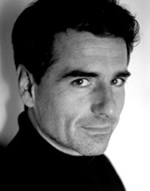 actually did the politically unpopular thing of not increasing Chile’s spending or decreasing its taxes during the good times and because of this huge surplus Chile now enjoys, Chile’s in excellent shape to weather the current global economic crisis.
So, here’s Dani’s bragging on his friend and colleague who deserves the accolades and popularity he now enjoys.
Until the current crisis hit, Chile’s economy was booming, fueled in part by high world prices for copper, its leading export. The government’s coffers were flush with cash. (Chile’s main copper company is state-owned, which may be a surprise to those who think Chile runs on a free-market model!) Students demanded more money for education, civil servants higher salaries, and politicians clamored for more spending on all kinds of social programs.
Being fully aware of Latin America’s commodity boom-and-bust-cycles and recognizing that high copper prices were temporary, Velasco stood his ground and decided to do what any good macroeconomist would do: smooth intertemporal consumption by saving most of the copper surplus. He ran up the largest fiscal surpluses Chile has seen in modern times.
This didn’t make Velasco very popular. Last November, public sector workers marched in downtown Santiago, burning an effigy of Velasco.
But by the time the financial crisis hit Chile, Velasco (and the Central Bank governor Jose de Gregorio, another fine macroeconomist) had accumulated a war chest equal to a stupendous 30% of GDP.
The price of copper plummeted 52 percent from Sept. 30 to year-end, and Velasco dusted off his checkbook. In the first week of January, he and Bachelet unveiled a $4 billion package of tax cuts and subsidies… Velasco’s stimulus spending, includ[ed] 40,000-peso ($68.41) handouts to 1.7 million poor families…
The surpluses accumulated during the good years has given the Chilean government unusual latitude in responding to the crisis. As a result, the economy is doing much better than its peers. As Bloomberg reports, “the country’s economy is expected to grow 0.1 percent in 2009, as the region contracts 1.5 percent, according to the International Monetary Fund.”
And does good economics pay off politically? Eventually, yes. Five months after being burned in effigy, Velasco is currently President Bachelet’s most popular minister.

 peej
peej Carissa
 bostonboomer
 dakinikat
 ecocatwoman
 mablue2
 Mama Lopez
 peggysue22
 quixote
 skydancingguestblogger
 Mona (aka Wonk the Vote)



 Sky Dancing
Recent Comments