
There Will Be Blood
Posted: February 23, 2012 Filed under: alternative energy, energy, Environment, First Nation, health hazard, Keystone XL pipeline, Northern Gateway pipeline, Regulation, tar sand oil, toxic waste, US & Canada, Water 22 CommentsIf you listen to the GOP, you’d be convinced that the WH, Democrats in general and crazed environmentalists specifically had nixed the Keystone Pipeline out of sheer orneriness or a deep-seated hatred of good ‘ole American Capitalism. Rick Santorum and his Prince of Darkness tour would no doubt smell brimstone in the midst of any pipeline dissent.
Well, surprise, surprise. The push back is not limited to protestors in the United States. Our northern neighbors in Canada have as many if not 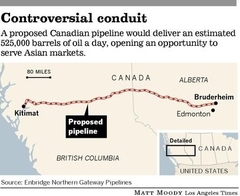 more objections to the Petro State ripping through their country, poisoning watersheds, destroying wildlife and property, causing disease and health problems among citizens, all in the name of King Oil and the desire to wring every last drop out of the planet.
The Hell with Consequences!
First Nation, the indigenous population of Canada, has already predicted:
There will be blood!
Why the outcry? Enbridge, Inc. and the conservative government in Canada is pressing forward with their own pipeline project, Northern Gateway, which would carry 500,000+ barrels a day 731 miles from a town near Edmonton, westward through the Rocky Mountains to a port on the British Columbia [BC] coast. Over 60 indigenous organizations have expressed their opposition, refusing to be moved by the promise of revenue, jobs and an increase in their quality of life because their lives are deeply attached to the natural resources of BC, most importantly the integrity of the salmon trade that depends on the streams and tributaries of the Fraser and Skeena Rivers. In addition, the proposed port on the coast, which would host over 200 oil tankers a year, could expose the Great Bear rainforest to irreparable damage.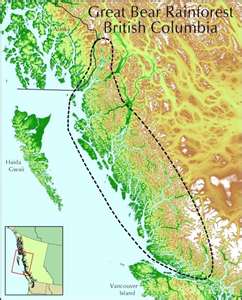
Think Valdez!
Interestingly enough, First Nation opposition is the most serious threat to the Harper government’s enthusiastic endorsement of the pipeline. Unlike other indigenous groups, First Nation never signed treaties with the Canadian government and consequently never relinquished their lands to the Federal government. On the other hand, the government and oil companies have nearly unlimited funds to fight this battle in court.
According to the LA Times report Tribal Chief Jackie Thomas has said:
“It’s going to be a war. The only question is, who’s going to draw the first blood.”
And here’s a chilling factoid: Enbridge is the same company responsible for the leak of 800,000+ gallons [the EPA now reports over 1 million gallons] of tar sand oil into the Kalamazoo River, Michigan. Presumably, the oil company has spent $700 million in reclamation procedures. The area is still a gigantic mess.

Kalamazoo River Spill
Added to the environmental risks [the cost of which is usually ignored] the Northern Pipeline is likely to boost the price of oil for Canadian consumers because like the Keystone proposal, the oil would be exported, not available domestically. The video below is instructive in a grim way.
Why are we having these bitter disputes?
Because we desperately need new energy sources. And there’s tons of money on the line. More importantly, we need an Energy Policy/Strategy, where the pros and cons of transitional sources are seriously considered–the trade-offs, the costs, what we as a culture are willing to put up with or risk until renewable, clean sources are developed and brought online. That’s a plan that would look at what we need today, five years down the road, 10, 20, 30 years. You set benchmarks. You invest in, encourage and unleash innovation, while focusing on increased efficiency from power plants–the traditional US coal power plant is only 35% efficient, meaning we’re wasting most of the energy we’re producing–to autos to buildings to everything else.
Where is that policy? Nada.
The Department of Defense’s push towards alternative energy is not a sign of the US military becoming rabid tree huggers. As the world’s largest institutional energy consumer, the DOD knows the score: the days of cheap fossil fuel are over and our dependence on foreign and unfriendly suppliers is a serious security issue. The Department’s commitment to this reality can be seen in proposed budget expenditures: $3 billion by 2015; $10 billion by 2030.
As GreenTech Media reported, this sort of shift has historical parallels:
Military spending in support of energy is not new. Winston Churchill’s decision in 1911 to move the British Navy, then the world’s then most dominant military force, from coal to oil changed the world’s energy marketplace. The emerging trend in DoD spending on renewables is an equally historic marker.
Neither American or Canadian energy needs should come down to an either/or contest: shut off the electricity or rip the environment apart, robbing people, wildlife, the very planet of their health, sustainability and future. We cannot poison our watersheds, jeopardize our aquifers or damage fertile farmlands for the sake of profits or our unwillingness to conserve and efficiently utilize what we have. King Oil has ruled long enough. The damage they’re willing to exact is unacceptable, even obscene.
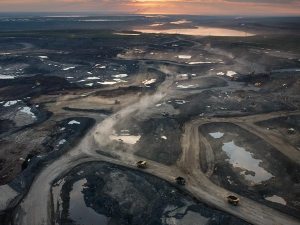
Alberta Tar Oil Sands, Aerial Satellite Shot
First Nation peoples of British Columbia know this and are willing to fight tooth and nail to preserve what’s left of their way of life and cultural traditions. To save the irreplaceable.

Great Bear Rainforest
There may very well be blood. It’s a worthy fight.

 peej
peej Carissa
 bostonboomer
 dakinikat
 ecocatwoman
 mablue2
 Mama Lopez
 peggysue22
 quixote
 skydancingguestblogger
 Mona (aka Wonk the Vote)



 Sky Dancing
Recent Comments